Posts Tagged ‘mental health’

More Than A Meal

Tuesday, June 28th, 2022

My boyfriend and I have started a tradition of cooking over Facetime once a week together. We’re currently long distance so this is a nice way to spend time together and it helps him get more comfortable in the kitchen. We’ll spend the previous night picking out a recipe, go and get the ingredients, and then hop on Facetime to cook the meal together. However, my boyfriend is not super comfortable in the kitchen yet. This has led to several hilarious mishaps. One of the first meals we cooked together was orange chicken. My boyfriend was struggling to get his sauce to thicken so, as the recipe suggested, he kept adding more cornstarch. Suddenly, I saw him freeze and a look of mild horror started to blossom on his face. “Babe,” he whispered, “I think I’ve been using corn syrup instead of cornstarch.” I couldn’t help but burst out laughing, and he soon followed suit.

Food can be such an important part of life, far beyond our dependence on it to keep living. It has become a centerpiece for social events. I can’t tell you the amount of times the words “free food” have gotten me and my friends to go to an event that we otherwise would not have considered. Food is used as an excuse to see people and catch up – “going out for lunch” or “getting coffee” are often used to suggest a reason to hang out with someone. It can help build memories and strengthen relationships, like my boyfriend adding copious amounts of sugar instead of a tablespoon of dry starch. In America, we have whole holidays that center around the food being eaten at them. Thanksgiving is pretty much just an excuse to eat way too much with your family, and I don’t think anyone is in any rush to change that. On top of its importance to our physical health, food has a huge social aspect to it. 

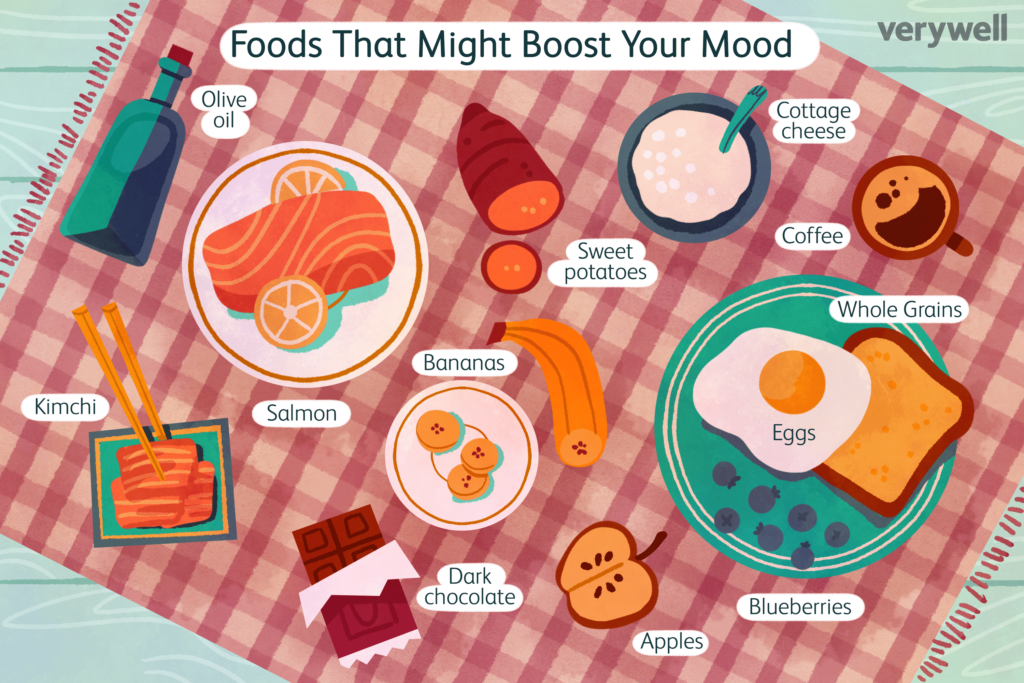
While food’s impact on our social and physical wellbeing are, for the most part, common knowledge, few people consider food’s impact on our mental health as well. According to Dr. Eve Selhub in her article “Nutritional Psychiatry: Your Brain on Food”, what people eat and how much of it can greatly impact their brain functions and mood. This is not only because our brain uses the energy from food to run smoothly but also because good food helps the bacteria and neurons in our gut to stay healthy and help neurons send and receive neurotransmitters such as serotonin and dopamine.  Essentially, the food you eat can affect your mood and energy levels. If someone eats too much, they might feel bloated or tired. If someone eats too little, they won’t have the energy to do what they need to do in the day. This is especially important for people with depression who struggle with energy levels and mood already. The kind of food you eat can also affect your mood with processed foods causing inflammation and blocking neurons in your stomach from sending and receiving neurotransmitters. Overall, the food you eat has a huge impact on your mental health and vice versa.

Mood boosting foods come in all shapes and sizes

I found this out the hard way. I had a pretty good relationship with food until about the end of eighth grade when I started getting incredibly stressed out. This caused me to feel like I was going to be sick every time I ate. I never threw up but I started eating less and less to try to avoid feeling sick. I remember thinking that I would rather be hungry because it meant I didn’t feel sick and I started to enjoy feeling hungry. While this went away halfway through that following summer, the mindset of rather being hungry than sick is still something that I’m trying to get over. In the summer before junior year, I started exercising to try to help my declining mental health. I started doing at home workouts and really getting into fitness. This did help my mental health a little bit but it opened a whole new avenue for hurting my mental health: I started to track my calories. It was pretty harmless at first. I was just curious about how much I was eating and how I needed to change it to fit my fitness goals. However, it quickly became an obsession, with me consistently eating less and less just to see the number on the calorie tracker (and, subsequently, the scale) go down. If I felt like I ate too much that day, I would work extra hard to burn off those calories. I rarely could, and I felt like a failure every time this happened. This is similar to an eating disorder called Orthorexia nervosa. According to NEDA (National Eating Disorder Association) in their article on the disorder, Orthorexia is an obsession with healthy or “clean” eating to the point of damaging someone’s health and wellbeing. This is a very real and serious eating disorder and, while I don’t consider myself as someone who suffered from this disorder, I know I was very close. Luckily, I had friends who knew what was going on and were able to help pull me out of that mindset before it got too dangerous. I was able to forget calorie tracking and, while I still sometimes have the urge to obsessively work out and track my food, I have been able to let it go and start to rebuild my relationship with food.

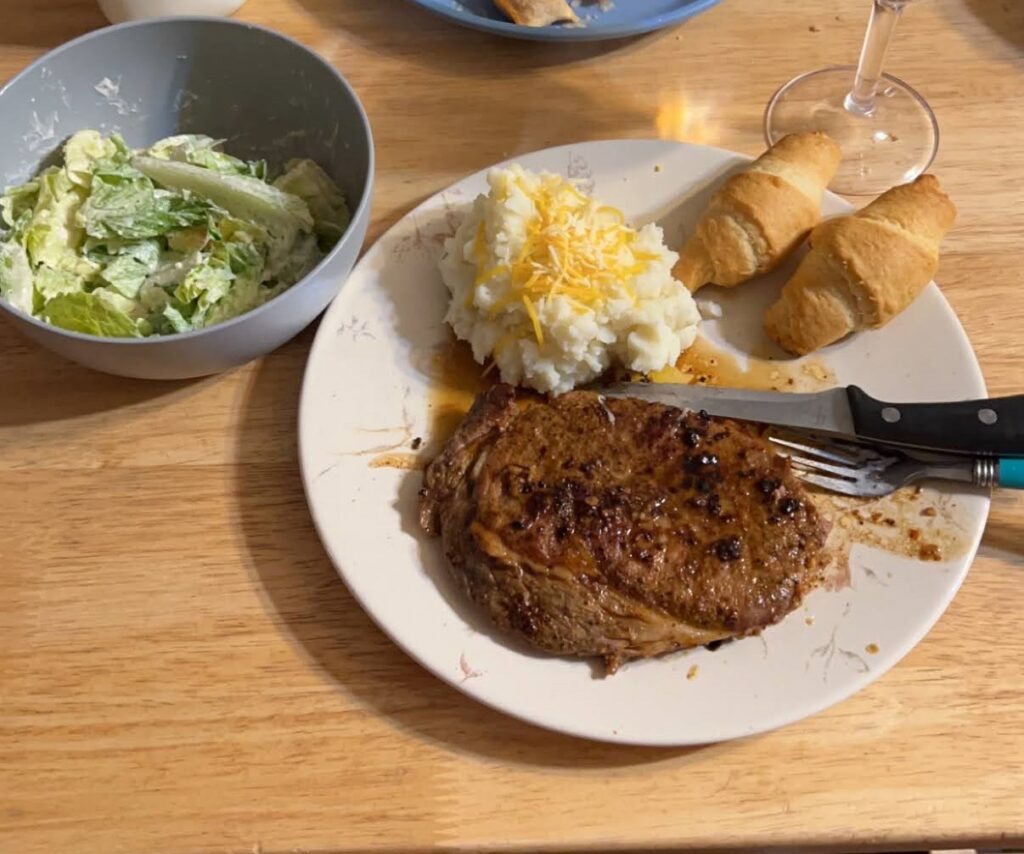
My Easter meal of steak, potatoes, salad and dinner rolls!

The biggest thing that has helped me overcome this struggle is learning how to cook my own meals. About two years ago, I moved into my first apartment and finally had access to my very own kitchen. It took a little bit to learn what I was doing but I quickly found a joy and passion for cooking. I also found that having more control over my food and knowing exactly what went in it helped me tremendously. I’ve been able to reframe my mindset around food from being solely used to further my physical health to being a fun social activity that helps my whole body function properly. While I’m still growing out of unhealthy mindsets, I have been able to find excitement in searching for new recipes, learning to cook them, and doing it for and with the people I love…even when they add too much corn syrup to an orange chicken recipe! 

Takeaway: Food can and should be much more than calories in and out.

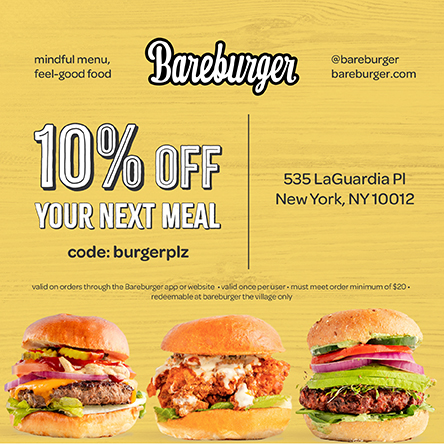
All good meals require grocery shopping. Get started with this coupon!

By: Callie Hedtke

Callie is going to be a senior at DePaul University in Chicago where she is studying Graphic Design. If she’s not at her computer designing (or playing video games), you can find her in the kitchen trying out new recipes. She also likes to be outside exploring and enjoys hiking with her friends and family.


For over 20 years, the Campus Clipper has been offering awesome student discounts in NYC,  from the East Side to Greenwich Village. Along with inspiration, the company offers students a special coupon booklet and the Official Student Guide, which encourages them to discover new places in the city and save money on food, clothing, and services.  At the Campus Clipper, not only do we help our interns learn new skills, make money, and create wonderful e-books, we give them a platform to teach others. Check our website for more student savings and watch our YouTube video showing off some of New York City’s finest students during the Welcome Week of 2015.

Share

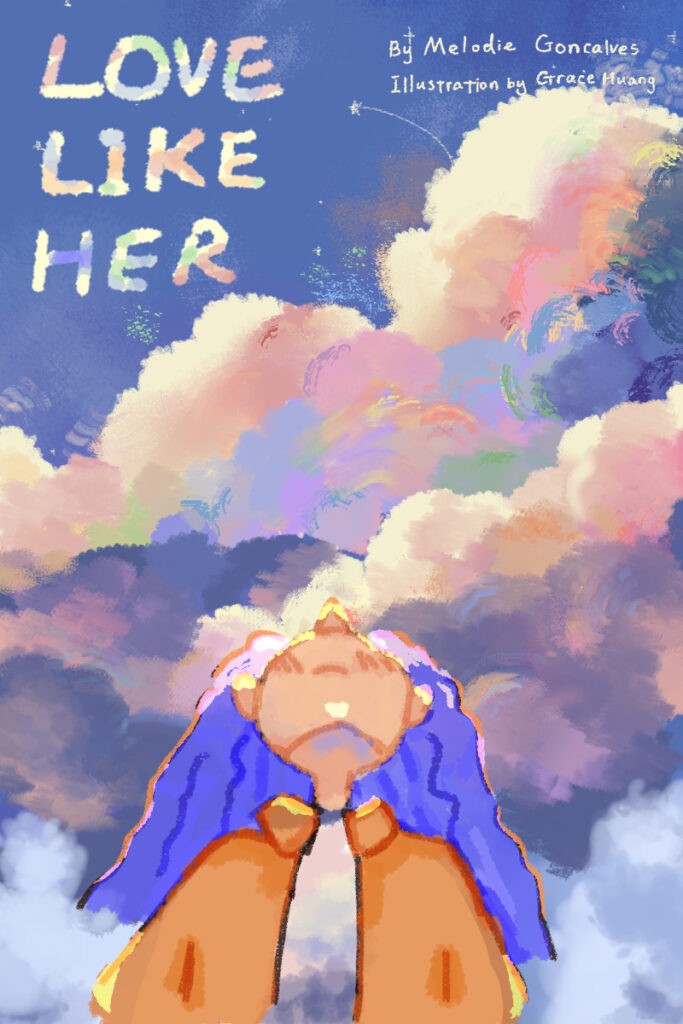
Love Like Her: Movie Kisses

Friday, June 24th, 2022

As a little girl, every so often, my teenage parents and I would go to a Blockbuster, buy snacks, and escape the world to watch a movie together. We would return home to a room just below three apartments, occupied by my mother’s parents, their children, and their children’s children. As a three/four-year-old, I grew up constantly running upstairs, fighting with my cousins, hopping fences, singing Keyshia Cole with my mom’s baby sister, crying, running, and dancing. It was so loud all the time – except for our little room in the basement where I first met love. Just like many others, my first love manifested in the first home I can remember. In that home with the scraggly carpet and the coldest air, love was the personification of two people: my mom and dad. Every detail of the love they gave to each other and gave to me illustrated the way I would soon love. With that, I learned there were parts of loving that were meant for movies, and then there were parts that hid in basements. 

I did not become interested in boys until I felt I truly had to. I was a kid busy being an adult for most of my life. I was always told I was so mature—so socially intelligent for my age, and I was never worried for. During my second semester in college, I was all the way down in Florida, purposefully far from that first home and all the people that occupied it. I was able to try on different versions of myself and be a kid in that way. I had only myself to think about until I met someone familiar. We met in a weird way; his best friend and I were interested in each other, and because this familiar boy and I were both part of the low sum of brown kids at this Florida college we quickly became friends. We hung out all the time, we talked, and we played video games. Our personalities aligned well, and again, something about him was just so familiar. I was convinced that the familiarity was something meaningful, so I stuck around. I got into fights with my friends about him, even letting an important friendship slip away, but I counted on that feeling I had with him. I protected him in all the ways a person could and began to care deeply. One night alone with him, we watched movies, got snacks, and escaped the world for a little while.  He never offered me a conversation with my own spotlight—everything was always about him. I mustered up courage anyhow and told him how I needed a friend because everything I knew so far about college made me sad. It was too different, and I wasn’t connecting the way everyone else was. I explained that as a first-generation, I had always wanted to go to college, never really understanding what it was. And when vulnerability poured from me, a gate opened for him, and things started to play like a film. 

My dad always wanted to be the favorite and my mom always wanted to make sure I was okay. In our little home, they had horrendous fights. My mom would always be sure that he was cheating and they’d scream back and forth. If I knew anything about love then, it’s that it was all about loyalty. Since my mom was the one who I was with the most, I knew she was as loyal as they came. She completed little acts of service with such love and effort that even in her complete exhaustion, she would still prioritize the person she loved. She’d give and give so much to my dad and be returned with clues that he was with someone else. Because my mother made me brush my hair into tight ponytails so I wouldn’t get head lice, and because he bought me a new toy every week, I was loyal to him too. “Mommy, you crazy,” I’d say. “Stop yelling at daddy.” It was so natural of me to take his side because it was the side that was always taken by her, too, even when she was hurt. That kind of loyalty, I learned from my mother, and it is the kind of loyalty I carry into my relationships, today. 

Later on that movie-esque night, we turned on some music and tried out some goofy dance moves until the gate opened wider and our dancing slowed. I was never interested in any boy like I was interested in him. I wrote a plot in my head about how this night could end perfectly, and he followed it perfectly. I wanted to see where the night could go, and eventually, we kissed. It was a comfortable kiss. I didn’t want anything less and certainly not anything more, because that sort of thing didn’t happen in movies—not in moments like these. He looked at me and said, “I think I’m falling in love with you.” I couldn’t say anything back, of course. I just kind of looked at him, shocked. No one had ever said those words to me before. It was scary and special, and he was giving me everything I wanted. Oh, how familiar it was. 

It wasn’t very cool to live in a basement, according to everyone and their kid. They explained that it was more of a sad thing, but I never minded their judgment because my dad bought me the coolest of things. My dad prioritized wants over needs, and because I always had the things I wanted, life was euphoric. And since my mother would give and give, she would also never need. After all, it wasn’t good to need or depend on someone else. 

Soon enough on that night, the boy would ask for something that would lead me closer to his true intentions. Even though no one had ever wanted me like this and I had never had a night like this, it was disingenuous, and I couldn’t admit that. I was desperate for this story—desperate to be loved—and he reminded me so much of home. I found out later in our relationship that he was not the kindest person, but I didn’t need to be told I was beautiful. I learned that he was not the most truthful, but I didn’t need him to be genuine. I knew he wasn’t the most empathetic, but then again, I didn’t need to be cared for. 

Somehow and somewhere I found myself giving more to the boy than I did to myself because I just wanted him around. I counted on those movie nights because I was convinced that was really all I needed. I was trying to replicate a fragile love between my mother and father. That was all I knew love was. 


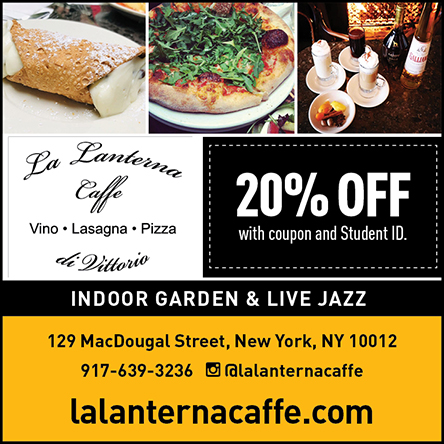
La Lanterna Caffe in NYC is a great spot for a date night or a night out with friends. Save 20% with this coupon and your student ID.


By Melodie Goncalves

Melodie Goncalves is a rising senior at Rhode Island College pursuing her degree in English/Creative Writing and Sociology. She has passions for reading, writing, caring for others, and music. Spending lots of her time with friends and family.


For over 20 years, the Campus Clipper has been offering awesome student discounts in NYC,  from the East Side to Greenwich Village. Along with inspiration, the company offers students a special coupon booklet and the Official Student Guide, which encourages them to discover new places in the city and save money on food, clothing, and services. At the Campus Clipper, not only do we help our interns learn new skills, make money, and create wonderful e-books, we give them a platform to teach others. Check our website for more student savings and watch our YouTube video showing off some of New York City’s finest students during the Welcome Week of 2015.

Share

Am I a Good Friend?

Monday, June 20th, 2022

I think, often, within my friendships, I search for a constant and consistent kind of validation. A certain type of validation that’s able to offer reassurance and justification that I am, in fact, a good friend. 

Recently, a friend of mine had been experiencing some anxiety over some recent big changes in their life. While she was talking to me about her feelings and thought processes, I felt that I didn’t really have the capacity to handle the emotional state of the conversation, and I felt that I wasn’t offering enough support. Even if she did just want a listening ear to rant about a current situation that was happening to her, my replies to her stories and shared feelings were usually short and came across as detached, consisting of “that sucks” and “Yeah, oh my god.” Beyond that, I wasn’t really sure I was doing much to be a helpful friend, which led me down a spiral of questioning my ability to actually be a good friend. 

Dealing with emotionally charged conversations or feelings has never really been my strong suit in friendships, and I have become increasingly aware of it. I tend to avoid leaning toward my emotions and instead try and distance myself from the person and the situation. It’s not that I don’t feel any sympathy for my friends; I really do share in the awful things they are feeling and I want to make it better for them. But, at the same time, it makes me uncomfortable and that feeling of discomfort makes me feel like I am falling short as a friend. I just wish I could express in some way, “Hey, I’m glad you feel like you can talk to me about this stuff. But, I’m not the best at handling emotional situations. I’m here for you though and I will continue to support you.” At one point, I actually did reach out to my friend to apologize for my lack of helpful responses and for the insincere tone that came across. I did really care about what she was going through, and I tried to convey that to her.

Image Credit: https://clipart.world

I wanted to delve into why I continue to react in a short and distant manner when it comes to emotional issues or discussions with friends. I strive to understand why this detachment feels like it is out of my control at times. Kimberly Holland, the author of the article “Emotional Detachment: What It Is and How to Overcome It” for healthline.com, describes this idea of emotional detachment as sometimes being voluntary or involuntary and oftentimes used by individuals to set up boundaries within friendships. Holland then goes further in-depth to discuss how emotional detachment can be enacted by choice or as a result of abuse. This detachment can, at times, be a normal method that people use in friendships to conserve their energy. However, it can sometimes be a more severe form of detachment and lead to commitment issues or substance abuse. 

Overall, if I’m aware that I’m not responding to a situation in the best way, to avoid spiraling I remind myself to check in with my friend to make sure I am at least helping them in a way that supports them. But, I also know I need to conserve my own mental health without letting their situation and emotions become my own. And by checking in with myself, I am not allowing the emotions to overwhelm me, and simultaneously, I am showing up for my friend in a way that works for both of us.

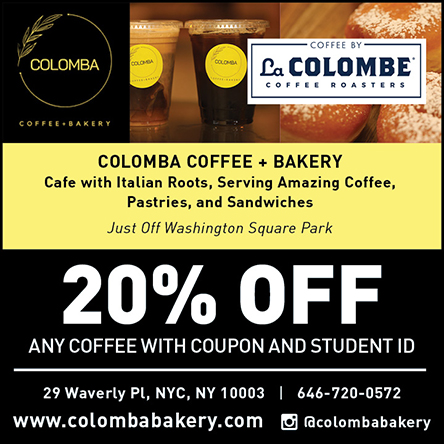
A great place to go and maybe have these conversations about boundaries with your friends is Colomba Bakery! And use this coupon to get 20% off your coffee order, when you bring your student ID!


By: Ashley Geiser

Ashley Geiser is a Junior studying English with a concentration in Creative Writing at Pace University. She is also the Editor-in-Chief and Co-President for Her Campus at Pace. She loves reading and editing. And when she is not reading or editing, she can be found baking in her kitchen.


For over 20 years, the Campus Clipper has been offering awesome student discounts in NYC,  from the East Side to Greenwich Village. Along with inspiration, the company offers students a special coupon booklet and the Official Student Guide, which encourages them to discover new places in the city and save money on food, clothing, and services.  At the Campus Clipper, not only do we help our interns learn new skills, make money, and create wonderful e-books, we give them a platform to teach others. Check our website for more student savings and watch our YouTube video showing off some of New York City’s finest students during the Welcome Week of 2015.


Share

Chapter Three: Exercise & Mental Health in the Big Picture

Sunday, August 29th, 2021

I have had a complicated relationship with exercise since I was a child. I began swimming when I was six years old at the behest of my mother. I am not a competitive person, and being forced to competitively swim through elementary, middle, and high school wore significantly on my mental health, past even the point of depression. My mother had no sympathy for me when I explained to her how horrible competitive swimming made me feel, and accused me of “laziness” among other things. I quit the day I turned 18 and now, at age 23, I still have not stepped in a pool since.

Seeing Simone Biles’ journey during the Tokyo 2021 Olympics has been incredibly validating because she respects the seriousness of mental health and recognizes how difficult it is to maintain as a serious athlete. Simone withdrew from part of it because of the physical danger her mental health posed toward her ability to complete her routine without becoming injured. When the (potential) injury is physical, it is often easier for others (not speaking for Piers Morgan) to understand the implications of poor mental health. When there are simply ambiguous ideas of depression or anxiety, one’s mother or coach can thoughtlessly reply: “Stop being so negative.” This gaslighting is incredibly infuriating, but mostly hurtful. 

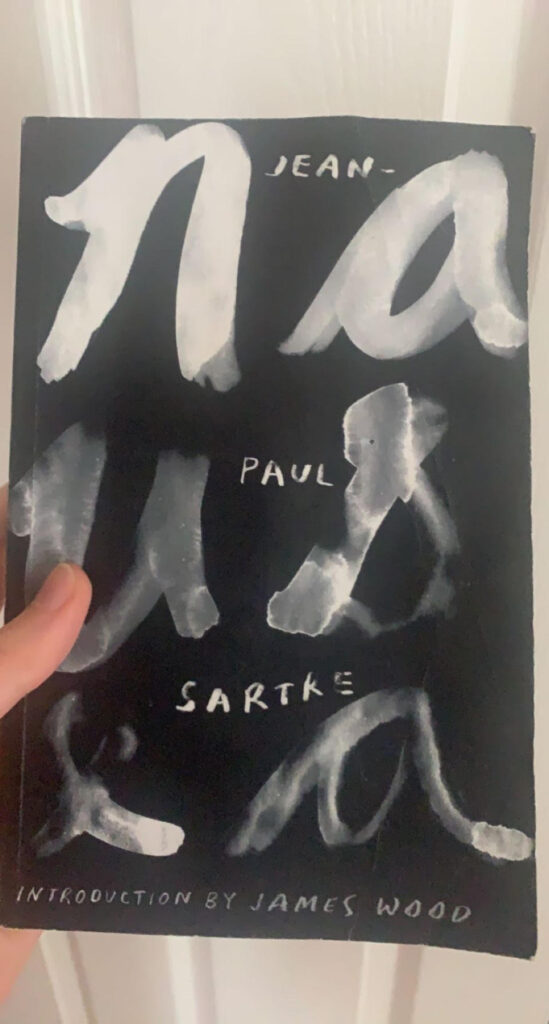
These days, I crave a routine, when I used to detest it. The book Nausea by John Paul Sartre gave me the words to describe how I had previously felt in a creative writing piece: “I felt disgust and disappointment toward myself and toward everyone. Why can’t everyone just do what they want? Why must we play roles and condemn ourselves to routine? I need routine; my need for the right way to live is despicable.” 


My well-used and cherished copy of Nausea.

But now I’m not so weirdy resentful: routine helps me feel more in control of my daily life rather than suffocated by it. In your daily life, as long as you feel, and you are affected by the consequences of your own and others’ actions, everything you do matters. I love that notion because, while it used to make me anxious (since how I exercised was dictated by others), it now bolsters my individual agency. I am not telling you what I think you should do to make your body feel better or stronger or more yours. There is no “secret” to total self-acceptance. All I know is that only you know how you feel; even your therapist does not live in your mind. Neither do your parents, coaches, or teachers. Although ideally these figures should want to help you, sometimes they can’t because they don’t think the same way, and their lives have been informed by different circumstances. 

It’s okay to take your time and experiment with a routine. Mine still changes year to year. With COVID-19, it has been a particularly difficult year of coping, especially after my routine was entirely upended from one day to the next. I had been going to the gym for three days a week consistently over the prior year. I felt confident in my strength and endurance, and I was proud of myself. 


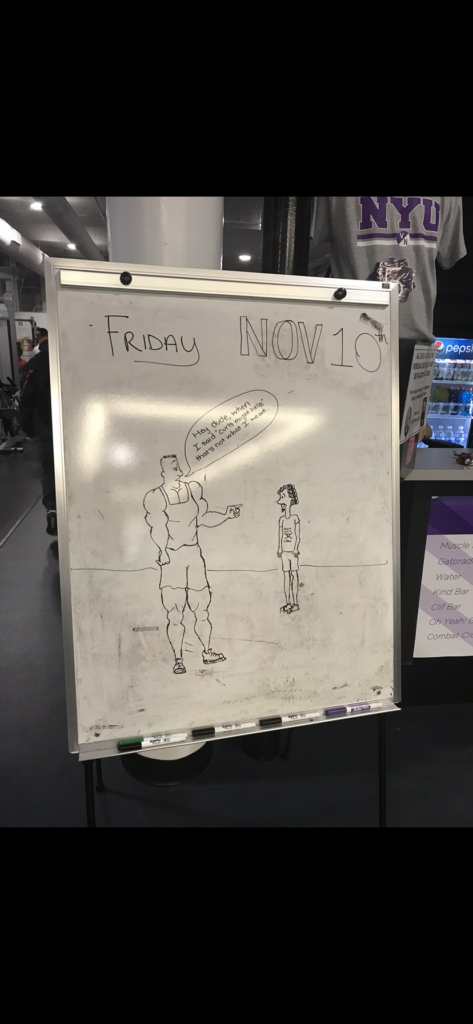
They usually draw a funny comic on the whiteboard at 404 (to get your workout started with a smile?): “Hey, dude, when I said ‘curls might help’ that’s not what I meant.”

Without a gym, I have no desire to exercise. During my year in isolation I lost all of the aforementioned progress and now have to start over. It’s okay, though: day by day. 

If you’re like me, and prefer to work out independently without instruction, colleges usually have a free gym you can attend as a student. My go-to gym at NYU is 404 Fitness, near which you can also find a Rumble boxing studio, and SoulCycle. If you want to be part of a club team in college, you can join intramural sports. If you want to do something more competitive you can look for sports within college divisions. If you don’t feel quite ready to take a class or go to the gym, or you just need a break from building your intensity, taking walks offers a more casual, but effective form of movement. 

 It’s okay to not “seamlessly” transition your lifestyle into going to the gym three times a week instead of none, or toward becoming a vegetarian, for example. Sometimes you will step outside of those goals simply because the world is not currently allowing for it, or you want to do something more, or maybe the transition doesn’t feel good anymore, which is okay. When you cannot control things, that is when it’s fun to simply be along for the ride (a passenger, as I like to say). In the big picture, your mental health should have a mutualistically symbiotic relationship with when and how you exercise. 

A brief summary of advice:

  • During college, take advantage of free gym memberships/ collegiate club sports
  • I am not telling you what I think you should do to make your body feel better or stronger or more yours. There is no “secret” to total self-acceptance; it occurs on a rolling basis throughout your life. 
    • Being a “passenger” is my way of describing my most reliable mode of self-preservation; you are not at fault for what you can’t control
  • Check out Jameela Jamil’s social media (Twitter/Instagram) and her podcast “iWeigh” through both of which she deeply and personally discusses a multitude of topics with individuals with personal experiences/experts regarding mental health, eating disorders, working out, feminism, etc. 
    • This has grown to largely inform a lot of my mindset regarding the language I use to discuss exercise, physicality, and nutrition


By: Anna Matefy

Anna Matefy recently graduated from NYU with a Bachelor’s in Media, Culture, and Communication. She has been working in politics for the past few years, and wants to transition into a career in media entertainment/comedy. She will be attending NYU as a graduate student in Media beginning in 2021.


For over 20 years, the Campus Clipper has been offering awesome student discounts in NYC,  from the East Side to Greenwich Village. Along with inspiration, the company offers students a special coupon booklet and the Official Student Guide, which encourages them to discover new places in the city and save money on food, clothing, and services.  At the Campus Clipper, not only do we help our interns learn new skills, make money, and create wonderful e-books, we give them a platform to teach others. Check our website for more student savings and watch our YouTube video showing off some of New York City’s finest students during the Welcome Week of 2015.
Share

The Creative Mind in a Chaotic World: Balancing Mental Health, Art, and Political Involvement

Wednesday, July 28th, 2021
https://www.instagram.com/chann.smith/

Channing Smith is a woman of many talents: filmmaking, photography, and screenwriting being a small few. I spoke with her one on one about how she balances her artistic inclinations with her mental health and political involvement as a student. 


TC: Can you give me the official rundown of your major? 

CS: I am a senior film major. I’ve really concentrated on documentary [film] just because I think it’s a really amazing social justice tool to teach and inform other people about issues that they might think is not a concern to them. Documentary film tells you, Hey, this is happening. And you might not know it, but you should know about it now. And here’s why you should know about it.

So currently–you’re kind of getting a new exclusive here– my senior thesis is going to be about women’s experiences in solitary confinement. And I’ve actually been speaking with women for months now who have experienced solitary, whose wives are in solitary, whose mothers, sisters, and daughters are in solitary. Because I think that the narrative around incarceration, especially working with Re/Creation is really centered around men, which there’s nothing wrong with that because there are disproportionately a lot of Black men that are in prison. But I think we also need to not forget women. As a woman myself, I would want to be included in that story. So it’s about women in solitary confinement and the treatment that we don’t see. 

TC: I think the project that you’re describing is so necessary in the representation and the work that it does. It reminds me of Just Mercy by Bryan Stevenson and how heartbreaking it was to read. It’s reporting live and it’s giving these people humanity. 

How does your art relate to your political stances? 

CS: So first I would like to say one that I am Black. I am a woman and a member of the LGBTQIA+ community. And all of that is already enough to make a statement when I’m in the room, you know? I am a masculine presenting woman. I don’t conform to what women should do or what women should say or how women should act [according to] patriarchy and racism. So with that being said, my being is political. My personhood is being policed in multiple ways every day. And so in order to combat that my work has to be political because that’s my life.


https://www.instagram.com/lightandsmith/

TC: How does your art relate to your mental health?

CS: In terms of mental health I definitely will say that there’s kind of a bifurcation between helping and hindering. Meaning, [I’m often] stuck on something for so long and I’m just beating myself up about it when it’s not perfect yet, but then really when is a piece ever finished? When is a piece ever perfect? When will it ever be exactly the way I see it in my head? Probably never; it never really ends up happening that way. And I just have to have someone tell me to stop and just put it down. 

My mind is really full all the time, racing all the time. And some of that is in my control and some of it isn’t, but I will say that art, my medium specifically, really helped with being able to relieve that sense of busy-ness. Even if I’m writing a script and to a normal person it may seem like there’s a lot going on, [for me] that’s the most still my brain can be. I feel the most energized after I’ve done a shoot with someone. I love being on sets. I feel like my mind is most still when there’s chaos going on around me which is very hard to explain to people who don’t understand or have some sort of mental illness.

TC: How would you say that you manage stress and anxiety as it relates to your work? And then also as it relates to world events? Because I personally could only imagine working in a field that relates so closely to heavy subjects like mass incarceration and inequality. At some point it can weigh on you.

CS: One, I will be completely transparent and say medication. [It’s important to] just take care of myself first. And if that means medication, if that means therapy, if that means working out [that will help me] to optimize myself. Also, probably the thing that I’ve found to be most important is finding community in those areas.

I definitely have different sets of communities. When I’m dealing with mass incarceration work, I have my Re/Creation family. And we’ve all been in the thick of it since the very beginning of Re/Creation. And then I have my film community. So that has really helped.

Because it is a tough thing to also learn that a lot of artists in any medium deal with anxiety and depression. It’s kind of a weird reality to live in where some of the most beautiful art or the most thought provoking or the most emotionally provoking art in whatever medium was made by someone who had a mental illness. I can still create art in the mental state just exactly how I am. So that’s also kind of cool, but in a creepy cool kind of way. 


https://www.instagram.com/lightandsmith/

TC: Do you have any advice for other artists and other creatives about how to balance mental health, art, and political involvement? 

CS: One day at a time, honestly. I feel like people with depression and anxiety often think about the world on a much broader level. And it’s just like, man, everything kind of sucks. 

And so I was thinking about that and [talking with] my friends and they were just like, you just got to be gentle with yourself. You just gotta take it one day at a time and one project at a time, one idea at a time. 


To learn more about Channing’s prison abolition work with Re/Creation, visit: https://reslashcreation.com/

To see Channing’s latest artistic projects, visit her art Instagram page @Lightandsmith


By Taylor Custis

Taylor Custis is a recent graduate of NYU where she made her own major because it sounded like a cool thing to do. She enjoys stories of all kinds, ethnic foods, and spiritually charged candles. She is currently in Queens embarking on a career in written and visual storytelling.


For over 20 years, the Campus Clipper has been offering awesome student discounts in NYC,  from the East Side to Greenwich Village. Along with inspiration, the company offers students a special coupon booklet and the Official Student Guide, which encourages them to discover new places in the city and save money on food, clothing, and services.  At the Campus Clipper, not only do we help our interns learn new skills, make money, and create wonderful e-books, we give them a platform to teach others. Check our website for more student savings and watch our YouTube video showing off some of New York City’s finest students during the Welcome Week of 2015.
Share

Staying Sane in NYC: Tips for De-Stressing Beyond Your Apartment

Thursday, July 22nd, 2021

When I first moved to New York City in the Summer of 2017, wide eyed and ready to take on the world, I was ill equipped for the stressful, constant movement and the expectations that the city enforces upon its youth. A freshman with an intense romantic passion for literature, philosophy, and religious studies at The New School, I immersed myself in as much school reading and classwork that I could; after all, I had never had such resources available to me before. The stimulating content on one shelf alone in the List Center library was overwhelming; who knew there could be so many books under Queer New York Literature? Even though I had visited the city often and had lived with my family in nearby New Jersey, the city always thrilled me to no end both on paper and in the real world. As a bibliophilic child, I had grown into a romanticist who wanted nothing more than to experience the streets that Patti Smith had called her stomping grounds, that Joan Didion had marked a perishable dream, and that James Baldwin had portrayed time and time again. Even Percy Jackson had fought his most gruesome battles in the city streets! I needed to make the city my own now. Meanwhile, an idealistic mentality drove me to further excel in my classes because I understood that my time in such an institution and location was a privilege and something I wanted to be proud of when I reflected back on my time spent there. Located just on the border of the East and West Village, The New School gave me the opportunity to walk around the neighborhoods I had once merely read about, to experience the freedom that I did not realize I craved so badly. And best of all, to create my own legacy beyond the pages I had already read.

And then came the burnout from classes. By the time midterm season rolled around, I was exhausted from spending time in the library hunching over my laptop to write papers. I could not blame anyone but myself, for my hunger for literary excellence forced me into perfectionism and my drive to experience everything all at once left me terribly overstimulated. I needed a break from the rush of student life in New York. It did not help that once I stepped out of the University Center on 13th and fifth ave, I was hit with the scramble of New Yorkers moving on with their own lives. How could I deal with this mad rush without being holed up in my freshman shoebox dorm room? It was midterm season and there was no time to revel in this so-called “self-care” that I heard whispered around by students and faculty alike. Or was there?

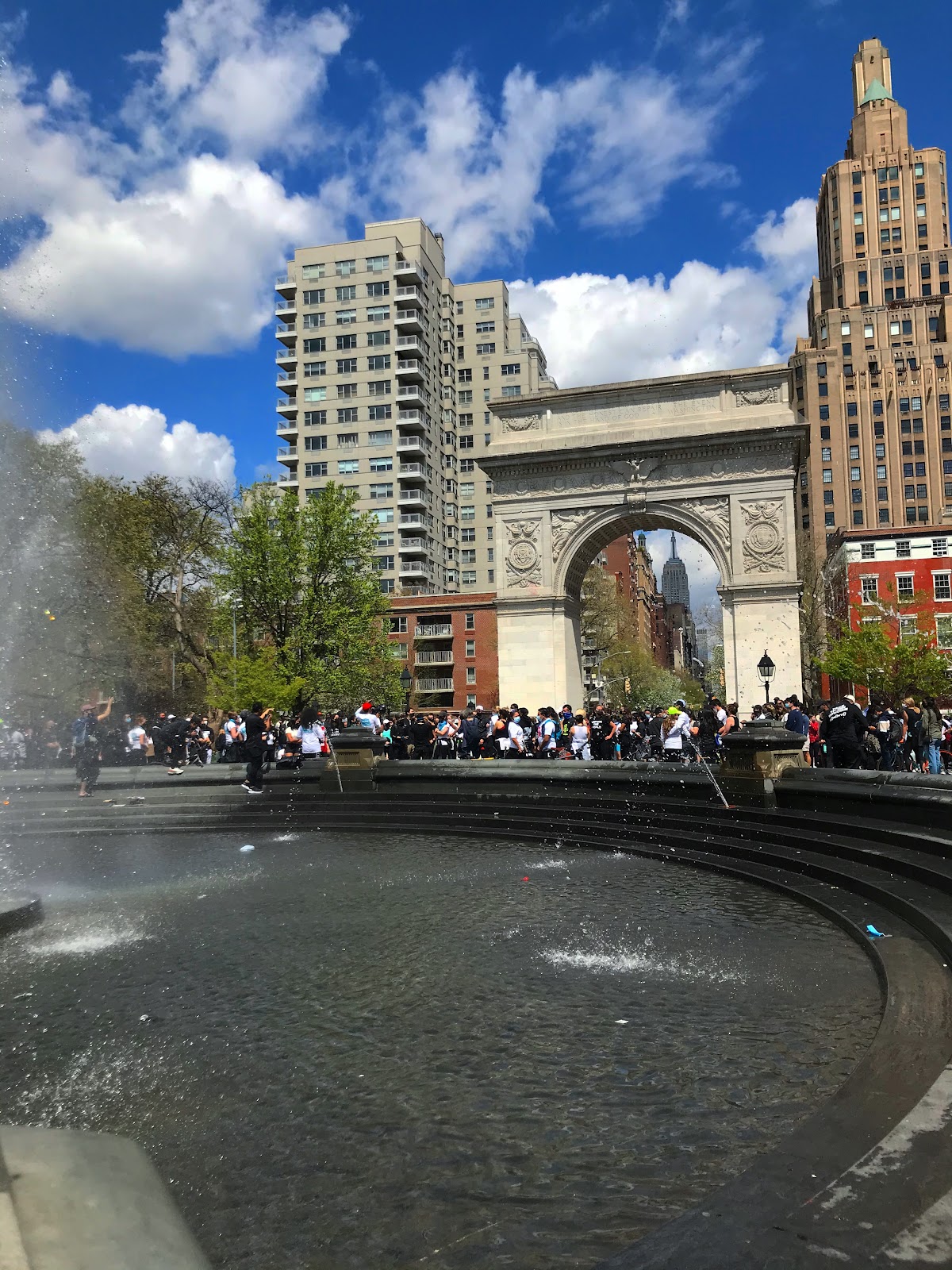
This was the year that I discovered the quieter side of New York; the lush green of city parks, new neighborhoods, and the realization that I could step back and still feel like a participant of city life. 

Washington Square Amidst a Protest

Taking Advantage of Green Spaces

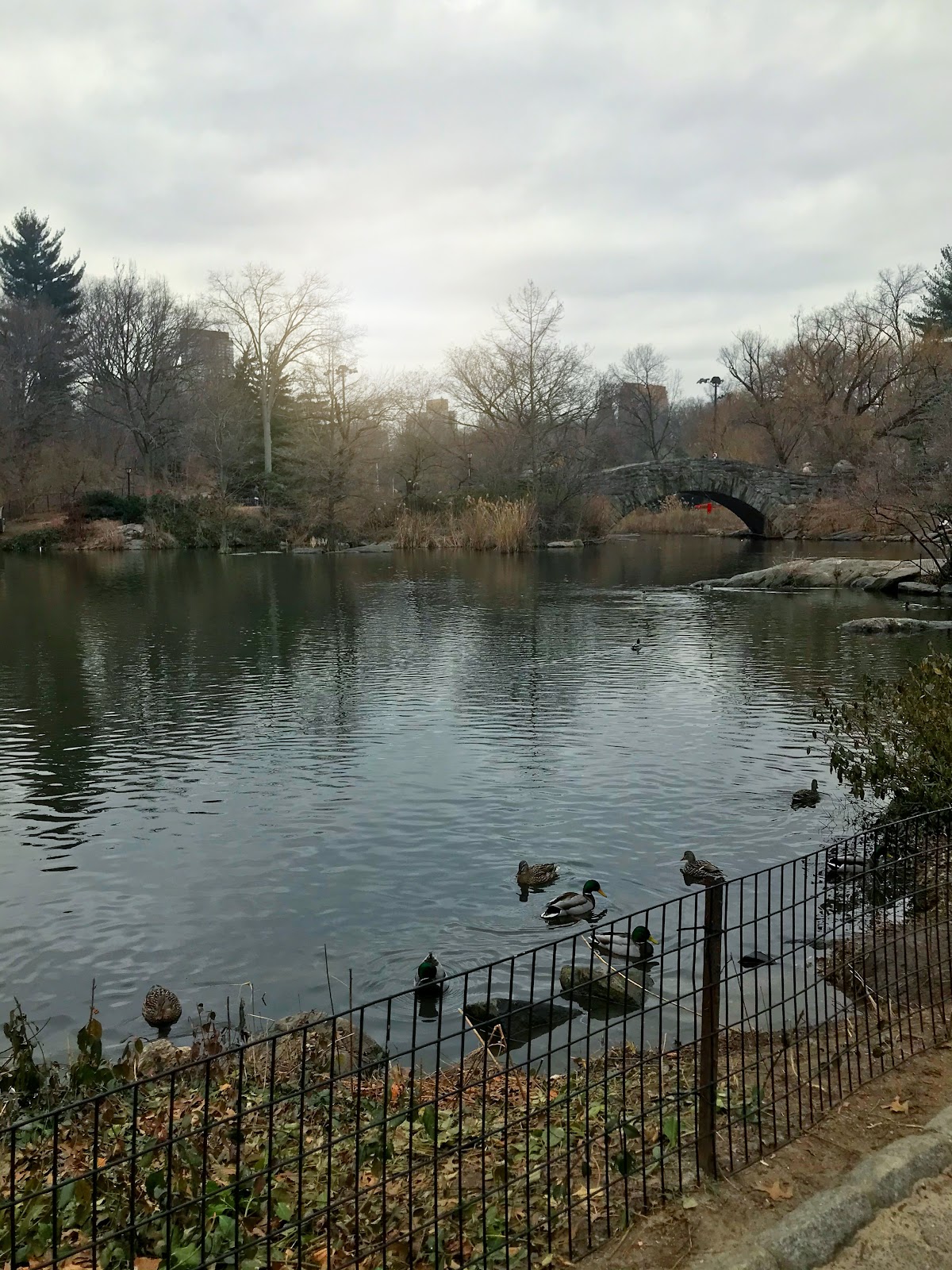
The Pond

One of my favorite relaxing after class activities was to visit the dog park in Washington Square, just a few much-needed steps away from the jumping atmosphere of the main square. As the sun began to set following a tiresome day in the library or a particularly heated debate in the classroom, I would find myself tucked into the back right of Washington Square watching the dogs frolic in their own designated space. As a student, it is almost impossible to have a dog in a shoebox apartment or communal dorm and as a dog person, this space is the next best thing! One of my close friends would often text me after she got out of class on a particularly anxious day to meet her at the dog park so that we could sit together and watch the puppies for a while while we cleared our heads. Afterwards, try having a late lunch or hot drink at the famous Cafe Reggio, home of the original cappuccino and just steps away on MacDougal Street or getting ice cream on that same street at Van Leeuwen.

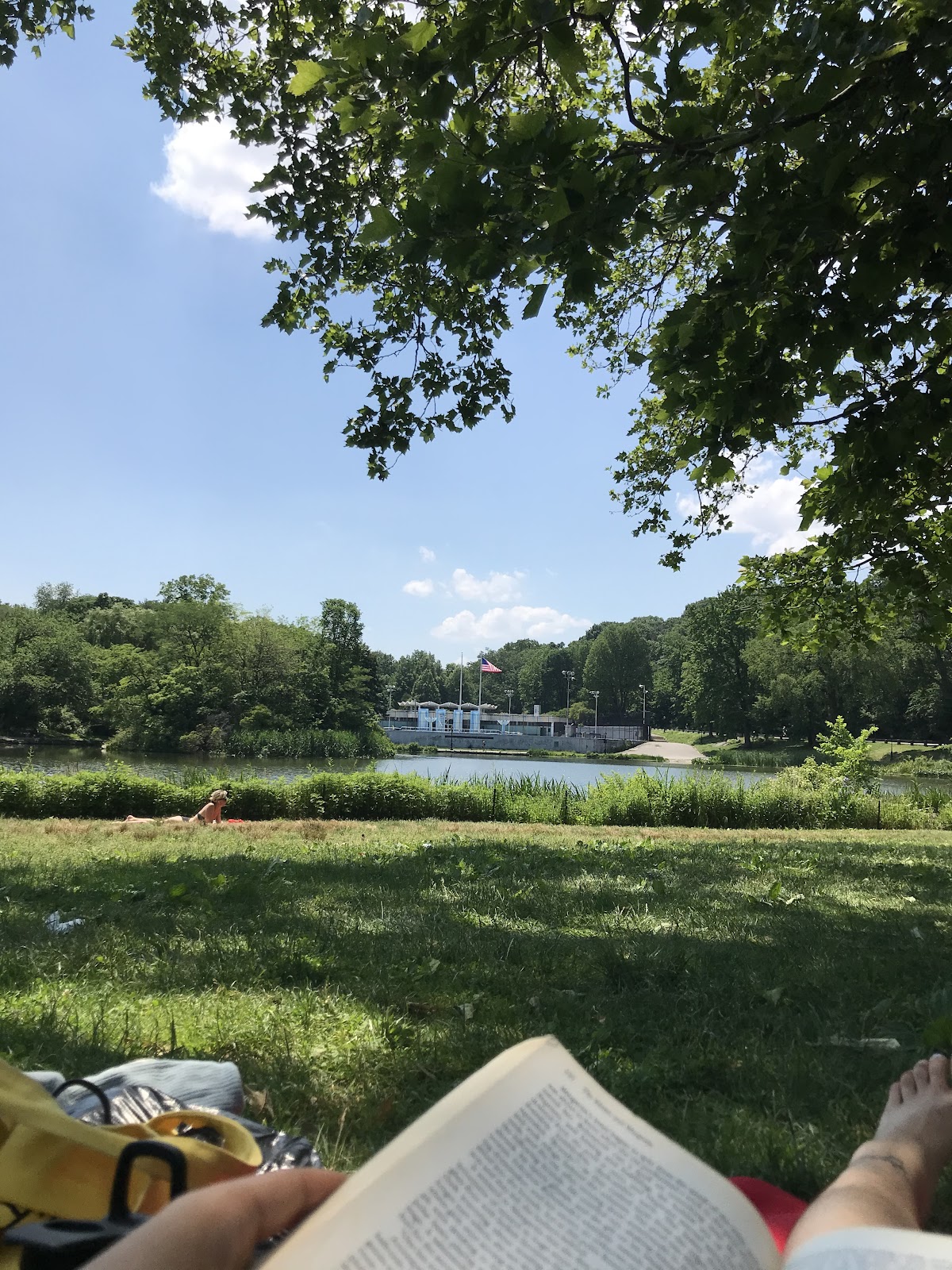
Harlem Meer

My favorite park to relax solo in has always been Central Park. Relaxing alone is important for my self care regime, as it allows me to sit with my thoughts before I journal my feelings in order to relieve stress. Never ignore your feelings, this can lead to a build up of anxiety that will be difficult to relieve all at once later on. When you are overworked from school, it is okay to admit when you are at your limit and need a break or some alone time! The key to finding the perfect secluded location to enjoy my own company is proximity to water. Wildlife like ducks and remarkable birds are more likely to inhabit areas that are not oversaturated with people and that have natural resources like streams and lakes. If you forgot your blanket, don’t worry! The best location for sitting and enjoying your book on a bench would be The Pond, which is just a short walk away from the Fifth ave and E. 59th street Central Park entrance, right across from the famous Plaza Hotel. The Plaza Hotel also has a food court in the basement, which is open to the public! Even on cool afternoons, this location is ideal because it is not too secluded so as to feel lonely, nor is it overpopulated. There is also a tiny bridge that you can take photos from with the New York city skyline behind you! I have spent many afternoons reading The Goldfinch by Donna Tartt here to clear my mind after a busy school week. 

If you would rather sprawl out on a blanket and are located further uptown, I recommend the Harlem Meer, which is located just off of the 2 and 3 train 110th street subway stop. There is both a perfect mix of bench seating and grass that surrounds the peaceful lake. Here you can even find turtles swimming in the water! I loved to run through the park starting in this location because it affords me the fulfilling view of a calm landscape that eases me into my daily jog. When you want to sit and relax, there are wonderful, well maintained spots to sit in the grass and enjoy the day!

City Walks

New York city is also the perfect location for people watchers! Whether it be to gain writing inspiration or even just to wind down, people watching is a fantastic pastime for me in the city. Try walking around a new neighborhood to see different things; soon you will be able to tell the different communities that are present all across the city. While I was living on the upper east side as a student from my sophomore to junior year, I loved walking down Madison Avenue to people watch and window shop. This allowed for socialization as I was still immersed in city life while not necessarily forcing myself into social situations. As someone who creates best in their alone time, city walks like this have been particularly healing to me on stressful days and has helped me gain inspiration for my fiction writing. When you need to take a rest, try the Great Lawn just behind the Metropolitan Museum of Art on 86th street. In the summertime, the Delacorte Theatre, which is located a few paces away, hosts free Shakespeare in the Park events! 

___

Overview: 

  • Find some alone time amidst the rush of constant city activity to decompress after classes!
  • Try: the dog park in Washington Square, The Pond and Harlem Meer in Central Park.
  • Stop by Cafe Reggio and Van Leeuwen  after a day in Washington Square.
  • Have a meal at the Plaza Hotel Food Court before going to The Pond. 
  • Take city walks and discover new neighborhoods for both inspiration and to unwind!
  • Try: walking down Madison Avenue before visiting the Great Lawn and Delacorte Theatre.

These are just a few examples of places I like to go when I need to slow down after a grueling day as a New York city student. Eventually, you will be able to find which neighborhoods you like the most, thus opening up new communities for you to discover and be a part of! 

____________________________________________________________________

Helisoa Randriamanana is an aspiring writer, academic, and recent Spring 2021 graduate of The New School with a BA in literary studies and a double minor in philosophy and religious studies. She is interested in jump starting a career in the world of book publishing and most of her work, both fiction and non-fiction, reflects the humanist philosophy of Emmanuel Levinas.

Share

Quarantine Contemplation: We’re all just doing.

Wednesday, March 31st, 2021

At the close of 2020, I promised myself that I would take a gap year. After four years of juggling my academics, extracurriculars, relationships, and well-being, and considering the tumultuousness of the past year, I figured that everyone could use a break. I started planning my summer. Wake up, eat, eat, eat, sleep, repeat—the closest that humans can get to hibernation.

Then came January, February, and March, and upon a string of fortunate events, from becoming a mentor, to landing my first part-time job, to applying to graduate school, to entering an internship, to volunteering with an organization, to landing my second part-time job, to becoming a mentor (again), to accepting a fellowship, to being invited to present at a research conference, I decided to accept an offer for a third part-time job. I thought I’m already wearing all these hats, might as well fill up the closet.       

You don’t have to be a nurse to appreciate these busy-bee nursing memes. You just have to be…busy.

The dominoes fell, and my mind whirl winded.

Advocate in more spaces. Volunteer with more organizations. Pursue a remote global internship. Apply to the Fulbright program. Enroll in a TEFL certification course. Learn a new language. Join a research lab. Run a virtual marathon. Look for a fourth part-time job.

By mid-March, I was the most involved I’ve ever been. Feeling like I not only was capable but obligated to take on every opportunity I was extended, I cast myself a vote of confidence. No doubt I could balance these responsibilities and achieve my quality (and quantity) standard all the while maintaining my physical and mental health.

Super-busy-girl memes can be very helpful when you’re too tired to express how tired you are.

Right!

Right?

Certainly!

Uncertainly.

With summer inching closer by the day, I’m filled with what I can only describe as a bidirectional spiral of invigorating uncertainty. Over these last three months, I have thought more about my future than I ever have before, and yet, I still feel like I have no idea why I’m doing what I’m doing or what it even is that I’m trying to accomplish. On top of the shakiness of simply being a graduating senior and young professional, the blow and the blur of the pandemic only exacerbate this uncertainty.

While I’m determined to bat at nearly every pitch, I have friends who are ready to build their careers in full-time positions with laser focus. Some friends are preparing for medical school and higher education, wracking their brains, and wrecking their sleeping schedules. Others are siphoning their resources into self-care, determined to dedicate their summer and immediate post-grad plans to self-development and nurturing their passions.

All of these plans and proposals, all of these actions and initiatives, and yet, the question persists in so many people’s heads—now what?

Through all the spaces that I’m involved in, I’ve come to two (One-and-a-half? One? I’m not sure, I’ve never really been good with numbers) revelatory realizations. I do my best to avoid blanket statements, but here’s a comforter for you—no one knows exactly what they want to do or what they’re doing.

We’re all just doing.

And that’s okay.


Thoughtful consumption and self-care have never been more important — try some clean eats at LifeThyme Natural Market

by Christianne Evasco

Christianne is a senior at New York Univerity, majoring in Psychology and minoring in Child and Adolescent Mental Health Studies (CAMS) and Creative Writing. Christianne’s endeavors are fueled by her passion to use her voice to help others harness the power of their own voices through therapeutically-creative means and to connect people through language and cultural exchange. In her free time, you can find her catnapping with her cats.

For over 20 years, the Campus Clipper has been offering awesome student discounts in NYC,  from the East Side to Greenwich Village. Along with inspiration, the company offers students a special coupon booklet and the Official Student Guide, which encourages them to discover new places in the city and save money on food, clothing, and services.  

At the Campus Clipper, not only do we help our interns learn new skills, make money, and create wonderful e-books, we give them a platform to teach others. Check our website for more student savings and watch our YouTube video showing off some of New York City’s finest students during the Welcome Week of 2015.
Share

An Honest Discussion About Therapists

Wednesday, December 9th, 2020

In recent years there has been a lot of  talk about normalizing therapy, coinciding with the recent uptick in mental health awareness, and for good reason. In this world of climate change, political hell, literal plague, and the hundred other disasters going on globally, I’m pretty sure that everyone can use a good therapist. You don’t have to suffer from mental illness to see a therapist; everyone’s life is full of daily anguishes– even if they seem “minor” or “petty,” they can still linger in your thoughts. The world of the college student is especially susceptible to this;  problems that seem manageable on their own quickly and frequently gather until you are overwhelmed. But, a therapist can help you get through them! They should be someone who you are comfortable confiding in because they are isolated from all other facets of your life. The unfortunate catch with therapy, however, is that you have to be comfortable with them.

Not all therapists are created equal. Finding the right one can feel like going on a blind date, because you can never be quite sure what you’re going to get. A therapist can have the best credentials in the world, sometimes, your personalities just don’t quite mesh. In fact, it seems that many people tend to be unsatisfied with their therapy. Anywhere from 20 to 57% of patients don’t come back after their first visit, and of those who come back, 37-45% of them don’t come back after the second visit. Unfortunately, the number one most cited reason for client termination is dissatisfaction with their therapist. While that dissatisfaction could stem from any number of sources, the indication is clear: therapy is a service with high turnover, and you should expect to have some negative experience with your therapist/therapy. I don’t say this to discourage you from exploring therapy, because proper therapy with a well-fitting therapist will always be beneficial. Improving your mental health is an active process that requires dedication, a desire to better yourself, as well as someone or something to help guide you. For many, that person may be a therapist! That being said, here are some tips I can offer to those looking to enter the world of therapy.

Fader, Sarah. “Difference between a Therapist and a Psychologist” 24 Nov 2020 https://www.betterhelp.com/advice/psychologists/what-is-the-difference-between-a-therapist-and-a-psychologist/
  • Don’t be afraid to keep your guard up. Therapy is a strange thing; there are not many times where you have a conversation with a total stranger about your inner thoughts and feelings. It’s uncomfortable– and it’s entirely valid to not want to immediately open up to your therapist. Most will understand this, but some will egg you on to let your guard down. Remember that you are the one paying for this service, and you should be comfortable vocalizing your desired pace with your therapist. If you don’t feel comfortable doing so, then perhaps it’s time to look for a new one. 
  • Beware the sunk cost fallacy. One reason people will stay with a therapist is that they believe that, because they’ve already invested so much time and money visiting one therapist, they should just commit to them– regardless of the quality of the therapy. This is known as the sunk cost fallacy, and while it generally refers to economics, it absolutely applies here. Opening up to a therapist about deeper traumas is an exhausting thing, and many will stay with their therapist only because they know so much about them. If, over time, you feel that your relationship with your therapist has changed for the worse for whatever reason, remember that therapy is supposed to be a beneficial process, but it can’t be beneficial if you don’t like your therapist. 
  • The path to recovery is never linear. This isn’t to say that, if you’re in therapy, you’re “damaged” in some way. Rather, “recovery” can refer to any difficulty you’re having, and discussing with your therapist. As you attend therapy you will discover aspects of yourself you’ve never noticed before, and sometimes that will be an unsettling experience. You will have highs and lows as you perceive yourself and your experiences in new lights, and it’s important to remember that just because you are feeling particularly “low” does not mean that your therapy is not working. Try to keep that in mind when and if you feel frustrated with the process. On the opposite side of the coin, if you have been feeling worse about your issues consistently, then maybe the process is not working for you.
  • Your college probably has resources for you. Use them! Many college students can’t afford therapy. For me, therapy would cost $50 per session thanks to my incredible health insurance. As a result of that, I am ironically not in therapy at this moment. Thankfully, my college has counseling sources, as do many colleges across the states. If you can’t afford therapy, it doesn’t hurt to reach out to these sources; they will help you! 
  • Therapy might not be for you. But you should at least try it! In my opinion, the increased presence of therapy in popular culture is a great thing. Taking care of your mental health has tragically been stigmatized for a long time, but it has finally gained its legitimacy in the court of public opinion. As more people call for the normalization of therapy, it’s important to remember that not everyone is at the point where they will benefit from therapy. And that’s okay, too! But be careful not to use this as an excuse to avoid therapy. At least give it a try and see how you feel; if you’ve never tried it, how do you know it’s not for you?

You can find all of our active coupons at this link. Redeem them here:


By Sebastian Ortega

Sebastian is a student at the Fashion Institute of Technology, where he majors in Fashion Business Management. He’s worked behind the scenes of New York Fashion Week with the company Nolcha Shows, and in the office of Elrene Home Fashions. Someday, he hopes to be able to make his own claim in the fashion industry by starting his own business.

For over 20 years, the Campus Clipper has been offering awesome student discounts in NYC,  from the East Side to Greenwich Village. Along with inspiration, the company offers students a special coupon booklet and the Official Student Guide, which encourages them to discover new places in the city and save money on food, clothing, and services.  

At the Campus Clipper, not only do we help our interns learn new skills, make money, and create wonderful e-books, we give them a platform to teach others. Check our website for more student savings and watch our YouTube video showing off some of New York City’s finest students during the Welcome Week of 2015.

Share

Social Media, & Why It Sucks

Wednesday, December 2nd, 2020

Social media apps like Instagram and Snapchat are the main mode of communication among college students. Most (myself included) are so ingrained in the culture of social media that we couldn’t imagine life without it; in some industries, if you aren’t actively on social media, you are at a tangible disadvantage compared to your peers. It’s inescapable, and understandably so; social media is a powerful tool, a great way to connect with your friends, share your life, and it can even be a solid tool for venting. I know that, for me, randomly tweeting complaints into the void is a good way to get things out of my system. 

I’m not gonna patronize any potential readers here by going, “oh but did you KNOW that social media is actually bad?” At this point, I feel the fact that social media can severely damage your mental health in a number of ways is well known. However, people tend to only focus on certain dangers of social media, like addiction, oversharing, or cyberbullying. While others remain lesser-known. For instance, warnings about cyberbullying are plentiful, but people also don’t talk as much about “echo chambers” that can occur in communities over social media. By “echo chambers,” I am referring to the fact that you are more likely to surround yourself with people who have similar beliefs to you, which means that your beliefs are also more likely to go by unchallenged. This reinforces your beliefs and can entrench you within them, making you more stubborn and unwilling to listen to anyone who might disagree. It’s this concept that drives the growth of developing anti-intellectual movements on the net, such as COVID-19 deniers or anti-vaxx, but it can also subconsciously affect anybody on social media. When you’re on social media, you need to make sure that you aren’t reinforcing your own biases by engaging with sources outside of your “bubble.” I think social media has failed to encourage this kind of behavior, which results in a lot of tribalism where people attack anyone who disagrees with them; this makes social media a toxic environment for everyone involved. While everyone inevitably falls into this behavior, it’s important to be aware of it so you can recognize it and avoid it. 

https://world.edu/6-ways-to-protect-your-mental-health-from-social-medias-dangers/

Social media, much like anything else, can also burn you out if used in excess. As social media continues to take more of our attention it is easy to slip into an obsession, which is terrible for your mental health for so many reasons. It can lead to feelings of isolation and anxiety; when I spend too much time on social media, I feel a sense of hopelessness. Especially on Twitter– many people tend to focus on the negatives of life, with doom and gloom news spreading more frequently than anything else. And while that is understandable, given the state of, well, everything, that doesn’t make it any less exhausting. It’s important to be aware of social media burnout so you can recognize it; oftentimes I find myself so immersed in social media that I don’t realize the negative impact it’s having on me until I step away from the screen and detox. That’s really the best response to it; many apps have the option to temporarily deactivate your account in order to motivate you to take a break and ground yourself in reality. 

One of the most powerful features of the internet age, social media is inescapable. We all indulge in it because of how enjoyable it is, it’s important to maintain a level of self-awareness and metacognition when you consider your time on social media. Try to be aware of the influence social media can have on the way you think, your biases, and how it harms your productivity & well-being, so you engage in social media in a healthy way.

You can find all of our active coupons at this link. Redeem them here:


By Sebastian Ortega

Sebastian is a student at the Fashion Institute of Technology, where he majors in Fashion Business Management. He’s worked behind the scenes of New York Fashion Week with the company Nolcha Shows, and in the office of Elrene Home Fashions. Someday, he hopes to be able to make his own claim in the fashion industry by starting his own business.

For over 20 years, the Campus Clipper has been offering awesome student discounts in NYC,  from the East Side to Greenwich Village. Along with inspiration, the company offers students a special coupon booklet and the Official Student Guide, which encourages them to discover new places in the city and save money on food, clothing, and services.  Paragraph

At the Campus Clipper, not only do we help our interns learn new skills, make money, and create wonderful e-books, we give them a platform to teach others. Check our website for more student savings and watch our YouTube video showing off some of New York City’s finest students during the Welcome Week of 2015.
Share

Wait a Minute, Who ARE You?

Tuesday, December 1st, 2020

How often do you check in with yourself?  Oftentimes, college life goes at such a fast pace that students will “leave” themselves behind, putting deadlines ahead of their well-being. It definitely doesn’t help that many professors like to think that students can afford to devote 100% of their time to their class, but when you have five classes, the math doesn’t quite add up. Considering most can’t afford to devote 100% of our attention to education in general- let alone a single class- one can very easily feel overwhelmed. Without a doubt, stress is a frequent and unfortunate element of college culture; more than 40% of college students experience an above-average level of stress, as reported by the National College Health Assessment– though, anecdotally, I suspect the number is much higher than reported. 

When you can’t relieve your stress in a healthy way, it builds up within you and quickly you can find yourself experiencing burnout, which is a miserable thing. Personally, when I am burnt out, I dissociate– it feels like you’re watching yourself from the first person, as though you were merely an observer in your daily life, rather than an active participant. The advantage of this state of “autopilot” is that I can push through daily life, even if I am overextending myself. The obvious consequence, though, is that it can be easy to lose yourself in your daily routine. Do note that dissociation is a common thing, and just about everyone will experience it at least a few times in their life. But, if you feel that way all the time, that is when it becomes a problem. It took me a very long time to realize that I had a problem with dissociation as it was (and still is) a coping mechanism of mine. While not everyone may relate with dissociating as a reaction to burnout, everyone will develop coping mechanisms to deal with burnout and daily strife. The important thing is that you must be able to identify when you are using these coping mechanisms, and then be able to be honest with yourself; is this healthy?

The ability to check in with yourself is an important life skill that often gets swept under the rug. Certainly, nobody, throughout all my years, of education taught me to ask myself, “Hang on a minute. Who am I? Is this what I want?” and I expect that many will relate to that notion. From a young age, many feel pressured to do well in school, and while education is an important thing, it’s almost important to understand why you do the things you do in life. Don’t just go to college because it’s the expected thing to do, go to college because it’s what you want to do. It can have a sizable difference in the actual quality of your education; a study from 2018 found that students who engage an activity out of their own free will were less likely to be exhausted and cynical, and are more efficient when compared to those who engage in an activity due to external pressures (such as parental pressure). Unfortunately, the reality is that many students are unable to pursue what they want because of external pressures, and so are subject to higher levels of burnout. Therefore, here are some tips I can offer on how to deal with burnout.

https://www.abreva.com/amp/how-to-avoid-burnout.html
  • Recognize how burnout feels for you. It’s an important level of self awareness to have, to acknowledge when you are feeling run down. It will help you pace yourself and will, in the long run, benefit your mental health, which will translate into more productivity. Burnout can be procrastination, a loss of motivation, imposter syndrome, general exhaustion and depression, or really any number of things. It’s a general sense of resentment towards your work (or study) that impedes your daily function. Remember– it’s totally normal; nobody can devote 100% of themselves to something 100% of the time. 
  • Find something to break up your daily schedule. Oftentimes burnout can result from a monotonous schedule. Thus, introducing something new will keep things interesting and can be a good distraction from a busy schedule. It could be a new hobby, or impulsive plans with your friends, or just anything different; but it will help energize you and make you more productive. 
  • Avoid negative people. It’s a pretty general thing, but the thing with burnout is that it drains your energy and your motivation, and dealing with toxic people will only waste the energy you have left. 
  • Get some sleep. We’re all guilty of it; sleep deprivation is a pretty regular thing for most students. For most people in general, too. But the impact a good night’s sleep can make is woefully underrated. There’s a point of exhaustion where studying just won’t help anymore, and you’re better off getting some rest instead. 

You can find all of our active coupons at this link. Redeem them here:


By Sebastian Ortega

Sebastian is a student at the Fashion Institute of Technology, where he majors in Fashion Business Management. He’s worked behind the scenes of New York Fashion Week with the company Nolcha Shows, and in the office of Elrene Home Fashions. Some day, he hopes to be able to make his own claim in the fashion industry by starting his own business.

For over 20 years, the Campus Clipper has been offering awesome student discounts in NYC,  from the East Side to Greenwich Village. Along with inspiration, the company offers students a special coupon booklet and the Official Student Guide, which encourages them to discover new places in the city and save money on food, clothing, and services.  

At the Campus Clipper, not only do we help our interns learn new skills, make money, and create wonderful e-books, we give them a platform to teach others. Check our website for more student savings and watch our YouTube video showing off some of New York City’s finest students during the Welcome Week of 2015.
Share