Archive for June, 2026

The Art of the Food-Crawl

Tuesday, June 30th, 2026
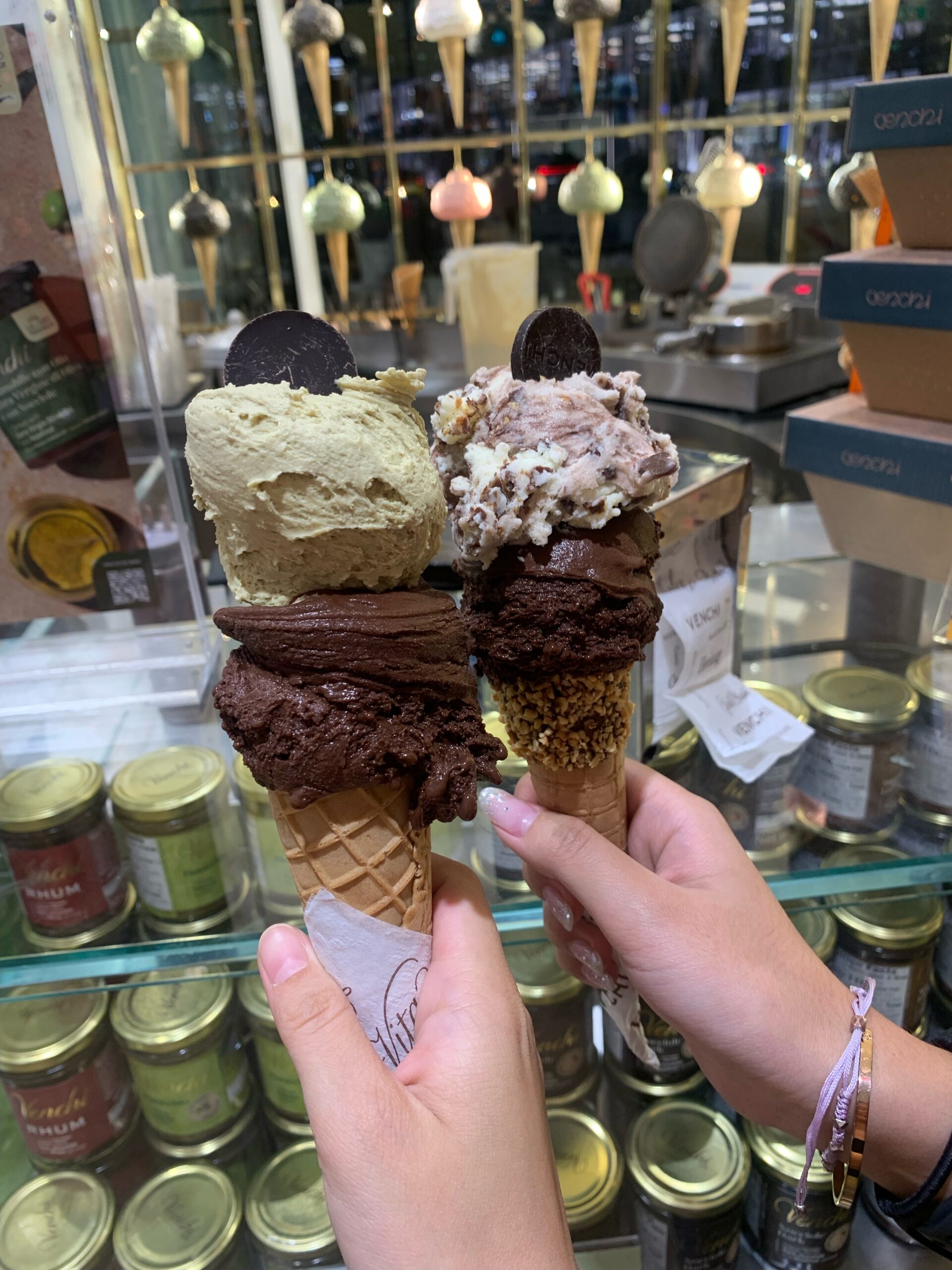
Photo by Alyssa Hong. Image is of two cones of Venchi Gelato.

West Village: Rain is flooding the roads and soaking our clothes. Ky and I are sharing an umbrella while walking through Bleeker Street. Hunger shoots through our bodies, enraging our souls nonetheless. In front of us is our savior: a Japanese grocery store. We carefully wrap up our umbrella before entering through the doors. Snagging affordable sushi, our selections are being scanned quickly by the impatient cashier. I hand them a twenty and receive my change before I can put the receipt in my bag. I fumble. On the same street, we find our guilty pleasure: matcha. We secure a matcha parfait, napkins, and some forks for our food. It is only then that we begin to scout for a non-soaked place to devour our food. Pushing each bite into my mouth, the insatiable hunger subsides, overtaken by a taste of pleasure. We are not done. A sweet treat is a necessity to our food crawl before we may return to campus; so we hunt. 
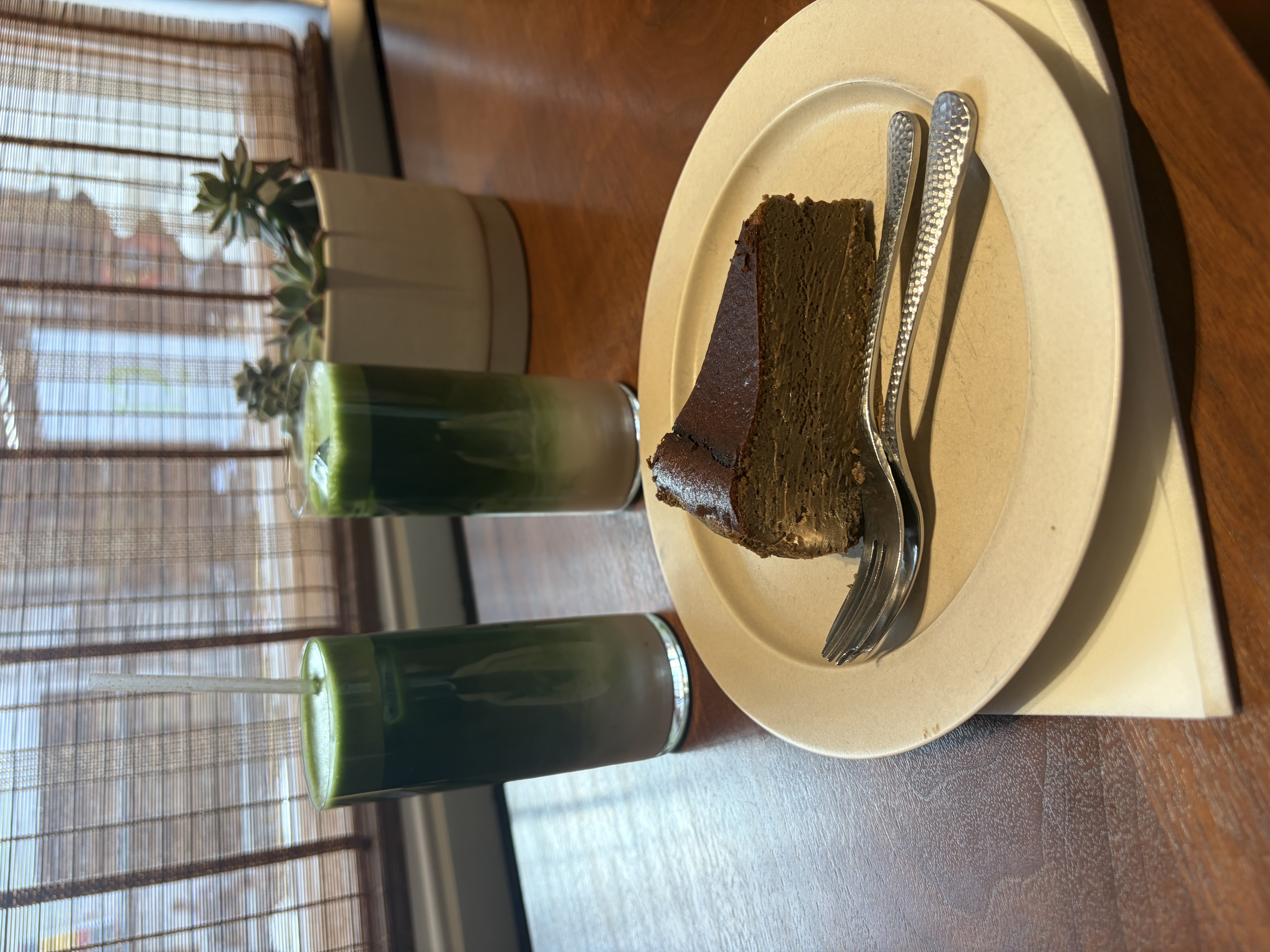
Photo by Alyssa Hong. Image of Hojicha basque cheesecake with two glasses of matcha lattes at 12 Matcha in Soho.

Flushing: Monica knows food better than I know myself — a severe understatement. Monday, she feels a craving for hotpot and I, the tag-along, devote my Friday to scheduling our outing. With each day, I can almost smell the sauce bar. Friday rolls around and there is a fire in Monica’s eyes like no other: a fire that tells you it is time for a feast. From 116th to 42nd, then we transfer to make our way towards Queens. As we emerge, a sense of panic hits me. My vision is engulfed in a sense of crowdedness that I have never felt so helpless to. Taking my hand, Monica guides me through the maze of people to the most gorgeous hotpot place I have ever been to. A giant wheel sits in the very center. We order to share and the glory begins. Bite by bite, we extinguished the fire that began on Monday. Even soon, we find ourselves satisfied and grabbing the check. Every time is the same: Monica pays using her credit card and I sell her back. As we exit the huge wooden door of the soup-haven, we find milk tea surrounding us. Monica, however, is an outlier to this treat. She prefers the comfort of a Venchi gelato so we ride the train all the way down to her favorite location by 14th street. Sitting vibrantly, we are revived to our former selves. We remember the spark we had prior to the swap of exams or stress of early career development. We relax. 
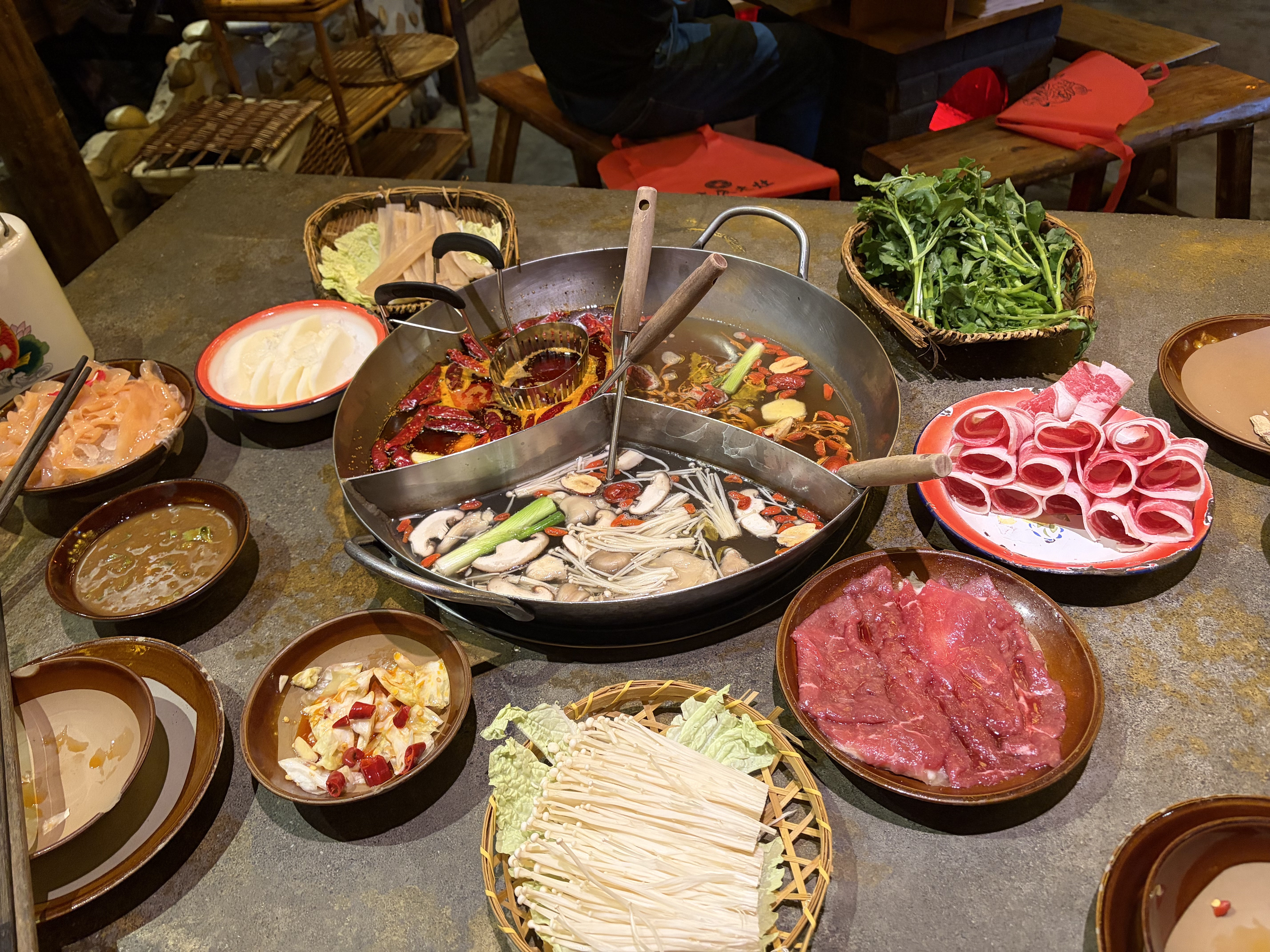
Photo by Alyssa Hong. Hotpot spread in Flushing, Queens.

Local: “Have you ever tried MAKI?” This is how I spontaneously implore an idea to Irlene after our gym session. We are walking down Broadway after hitting the gym and I am in no condition to be starved. She luckily agrees to my sudden craving; thus, here we are walking towards Harlem. I order then she does too. She gets beef and I get tuna. As we wait, our conversation flows towards her week and mine. Soon enough, I found myself in an intensive discussion on race and gender in the middle of this small shop. Questions are being raised and we know better than to give each other fake assumptions. Taking our bags home, we head towards our dorm together as she is also my suitemate. Our strides slow to match our discourse about the world, and I take in her perspective as much as I can. Her insightful comments linger longer as I smell the sauces of our bowls leaking through the bags. My head is full of imagination — one about the picture of what this donburi will look like and two about the conditions of society and politics. From one another, we learn.
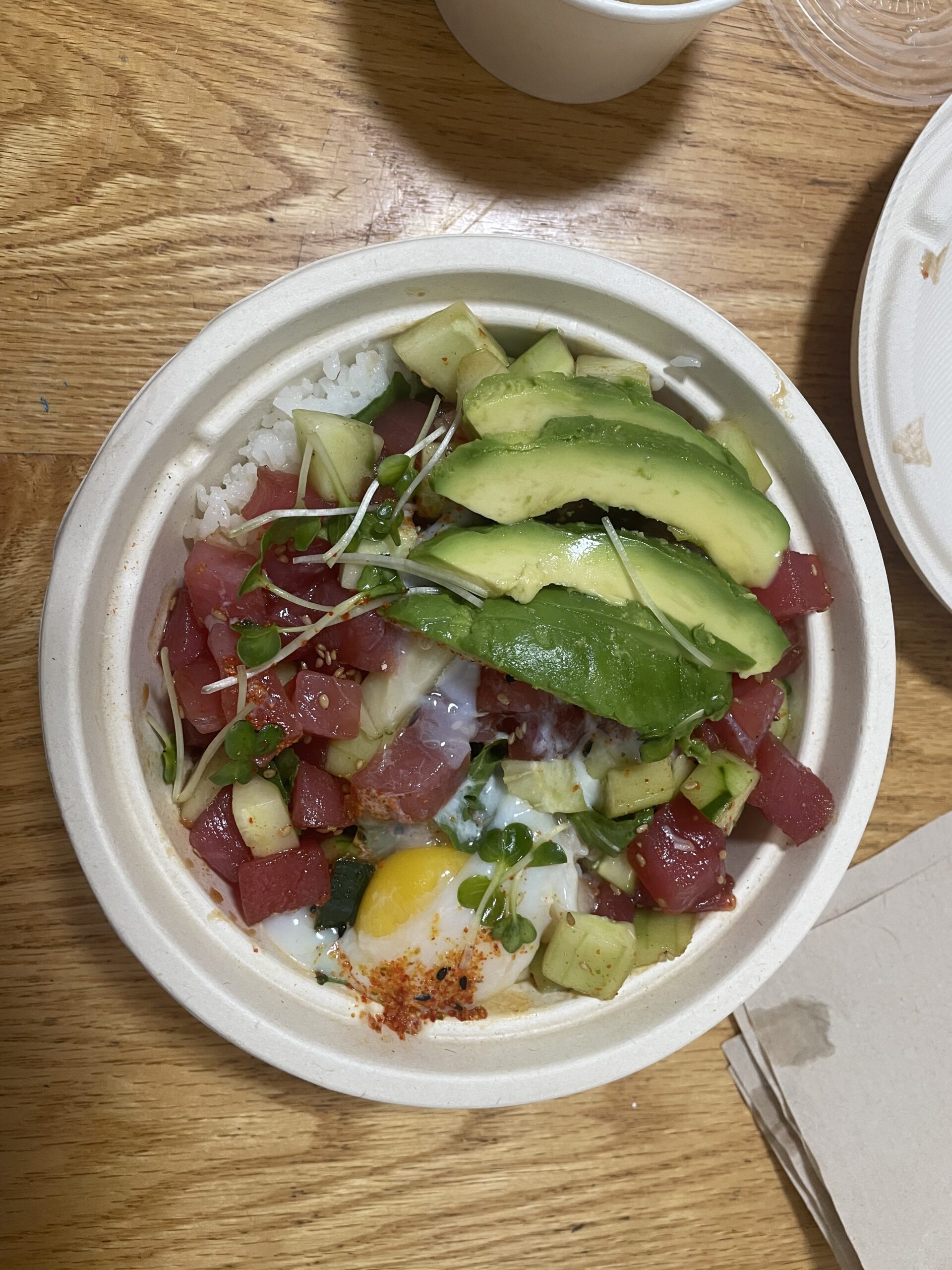
Photo by Alyssa Hong. Image is of a tuna doanburi from MAKI by Columbia University.

The essence of expected or unexpected food runs is that they create time for connecting with others and even learning from one another. Setting aside time to grab food with someone can be so meaningful even in the smallest of actions like choosing where to eat. It is an understatement to implore everyone to make food-crawls with friends a forefront activity.

In any case, your foodie author advises this as a crucial part of survival for college as a method to getting to know others outside the campus bubble you quickly become trapped in.


Sometimes a sweet treat can relieve us (even if temporarily) of our problems, especially when sharing with a friend. Use this coupon to have a taste of delicious treats!

By Alyssa Hong

Alyssa Hong is a rising Junior at Barnard College, studying Political Science with a minor in English. As a first-generation, low-income student, she writes about moving across the country for college and its adjustments. She utilizes entertainment, wellness/health/food, and fashion/beauty as methods to making new connections with others whilst always learning.


For over 25 years, the Campus Clipper has helped college students in New York City—and later in Boston and Philadelphia—save money and succeed in city life. We offer a digital coupon booklet with discounts on food, clothing, and services, plus an Official Student Guidebook with real advice on how to navigate college life in a big city. Our internship program lets students build skills, earn money, and publish their own e-books. Follow us on Instagram and TikTok @CampusClipper, and sign up for our newsletter to get deals straight to your inbox. To access the digital coupons, scan the QR code on our printed card—available in dorms, student centers, and around campus.

Share

Creating Comfort With Personal Style

Tuesday, June 30th, 2026
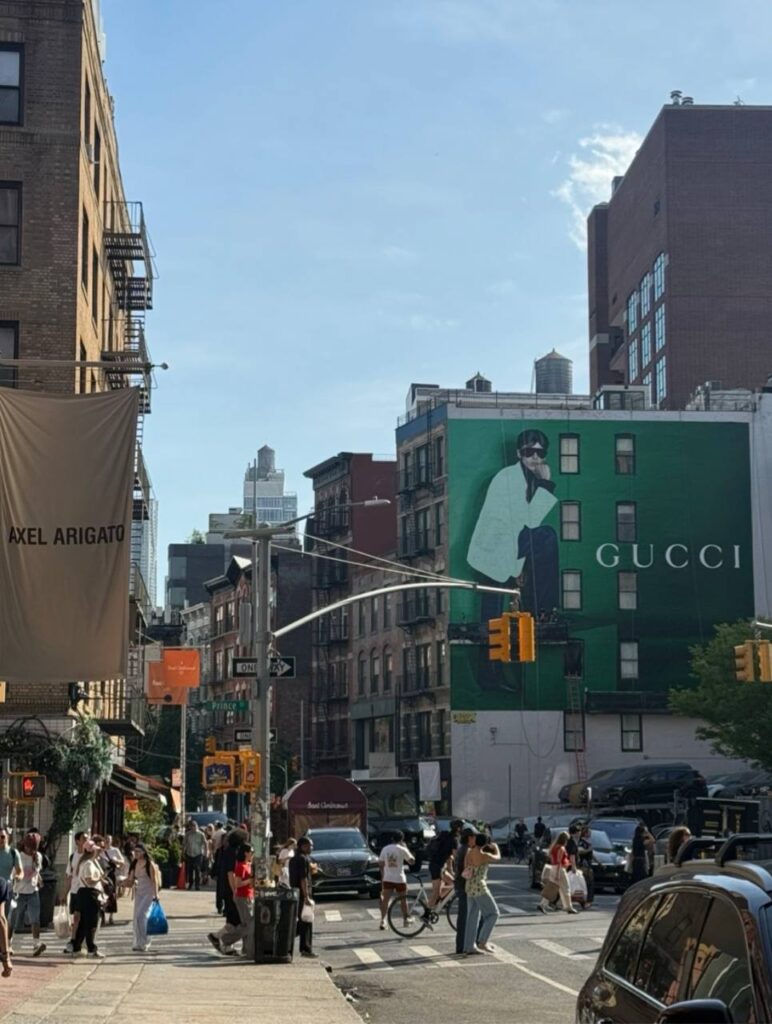
Photo by Polina Makarova. SoHo, New York City.

When people think about comfort, they often imagine relaxing at home in comfortable clothes or wrapping themselves in a warm blanket. While those things can certainly feel comforting, I discovered another kind of comfort after moving to New York. It came from creating small daily routines, and one of those routines was getting dressed each morning.

When I first moved to the city, many days felt overwhelming and unfamiliar. I was adjusting to college, learning my way around New York, and getting used to being far away from home. Some mornings I woke up already feeling stressed about classes or everything I needed to accomplish that day. Instead of rushing out the door, I started taking a few extra minutes to choose an outfit that made me feel comfortable and confident.

Those few minutes gradually became an important part of my routine. Even when everything else felt uncertain, deciding what to wear was one thing I could control. It gave me a chance to slow down, organize my thoughts, and start the day feeling calmer.

Over time, I realized that comfort is not only about wearing soft clothes. Sometimes it comes from wearing something that feels like you. On certain days, putting on my favorite jacket or a comfortable pair of jeans made me feel more prepared to face classes or stressful situations. On other days, an oversized sweater and comfortable sneakers were exactly what I needed.

Walking through neighborhoods like SoHo also changed the way I thought about fashion. I noticed how differently people expressed themselves through their clothing. Some wore bright colors and bold accessories, while others preferred simple and timeless outfits. The more I observed, the more I realized there were no real rules. Everyone had their own style, and that encouraged me to become more comfortable with my own.

At one point, I felt pressure to keep up with trends or buy expensive pieces that I saw online. Eventually, I realized that my favorite outfits were rarely the most expensive ones. They were the ones that made me feel the most comfortable and authentic. Feeling good in my clothes became much more important than following trends or wearing designer brands.

I also noticed that getting dressed thoughtfully could change the way the rest of my day unfolded. On mornings when I felt anxious about exams or deadlines, spending a few extra minutes choosing an outfit helped me slow down before facing a busy schedule. It was never about looking perfect. It was about creating a small moment of stability before stepping into the outside world.

Looking back, I think personal style became part of a larger self-care routine. Along with taking walks, staying organized, making time for friends, and getting enough rest, choosing clothes that made me feel good became another small habit that supported my mental well-being. None of these routines solved every problem, but together they helped difficult days feel more manageable.

Today, I see fashion differently than I did when I first arrived in New York. It is no longer about impressing other people or trying to fit in. Instead, it has become one of the ways I take care of myself. Creating comfort through personal style is not about buying more clothes or chasing trends. It is about wearing things that make you feel like yourself and help you start each day feeling confident and comfortable.

Takeaway

Personal style is about more than appearance. Small routines, like choosing an outfit that makes you feel comfortable and confident, can provide stability during stressful times. Sometimes the simplest daily habits are the ones that help us feel grounded, reduce stress, and face each day with confidence.


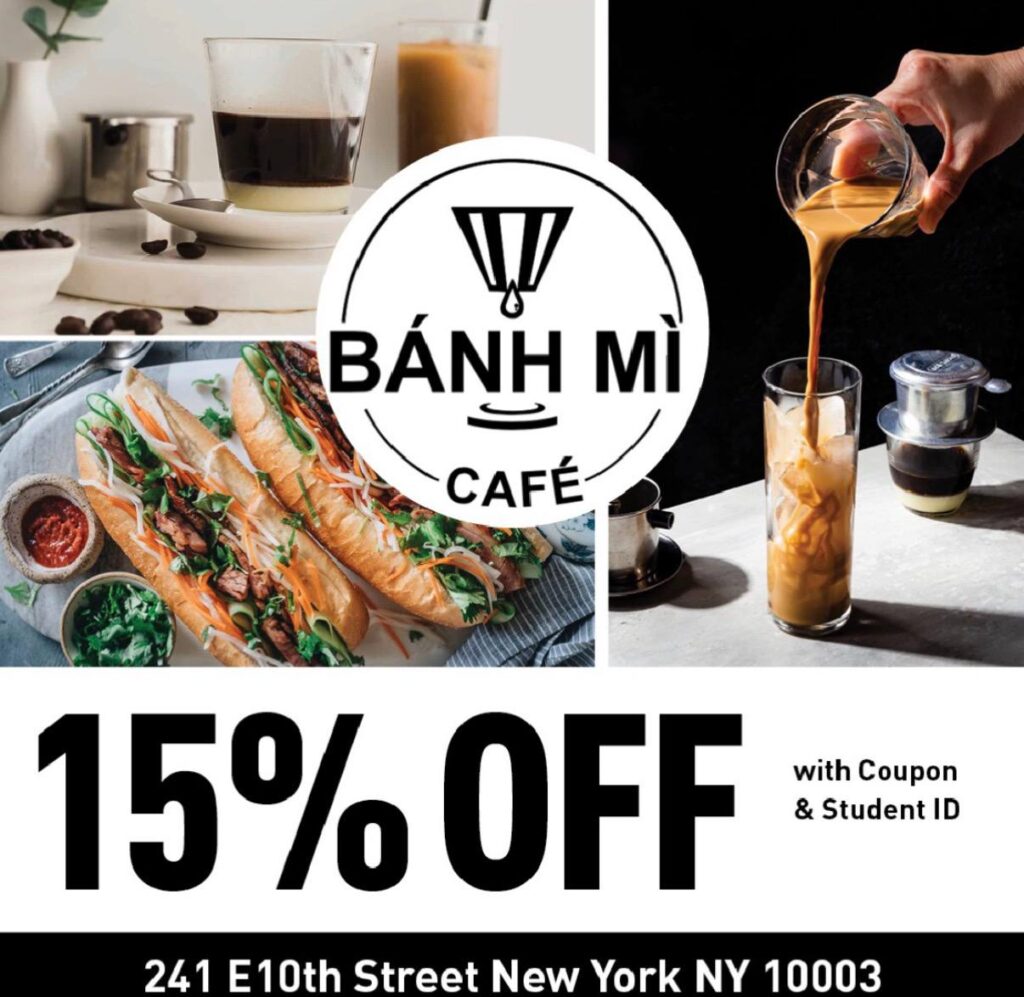
Enjoy authentic Vietnamese sandwiches and coffee at Bánh Mì Café. Show this coupon with your student ID to receive 15% off!

By Polina Makarova

Polina Makarova is an English Literature major at Pace University and a Publishing Intern at Campus Clipper. Originally from Russia, she writes about student life, wellness, fashion, and personal growth while navigating college life in New York City.


For over 25 years, the Campus Clipper has helped college students in New York City—and later in Boston and Philadelphia—save money and succeed in city life. We offer a digital coupon booklet with discounts on food, clothing, and services, plus an Official Student Guidebook with real advice on how to navigate college life in a big city. Our internship program lets students build skills, earn money, and publish their own e-books. Follow us on Instagramand TikTok @CampusClipper, and sign up for our newsletter to get deals straight to your inbox. To access the digital coupons, scan the QR code on our printed card—available in dorms, student centers, and around campus.
Share

Keeping an Open Mind

Wednesday, June 24th, 2026

My biggest advice to new college students is the theory of “keeping an open mind”. At 18 years old, when I started my first year of undergrad, I had a clear vision of who I perceived myself to be at that moment in time. I knew exactly what I wanted out of a ‘college experience’. However, I started college during the height of the Covid-19 pandemic. With that came upheavals in campus life and classroom function. My daydreams of college life were a mismatch to the reality of the pandemic’s limitations.

Though I knew I wanted to be an English major since my sophomore year of high school, which is a blessing to have a passionate goal so young, I didn’t exactly know what that entailed. I knew I wanted to write, and knew I wanted to become this marvelous author one way or another. The way my major was broken down, I had to take core courses that covered a couple different writing bases. One of the first English course classes I chose was Genres: Poetry. I always liked poetry but never paid it much attention. I always considered myself a short-story fiction writer in search of the feat of writing a full-length novel manuscript.

The poetry course surprised me, however. I found writing poetry to be quite cathartic during the tumultuous and depressing time of quarantine. Instead of going to classes, I was on Zoom at home in my bedroom for the first semester of my college experience. The days that my poetry course fell on started to become the days I looked forward to the most, loving being able to workshop and talk to other like-minded individuals about this style of writing. Soon, I was writing poetry on my own time in addition to the required coursework.

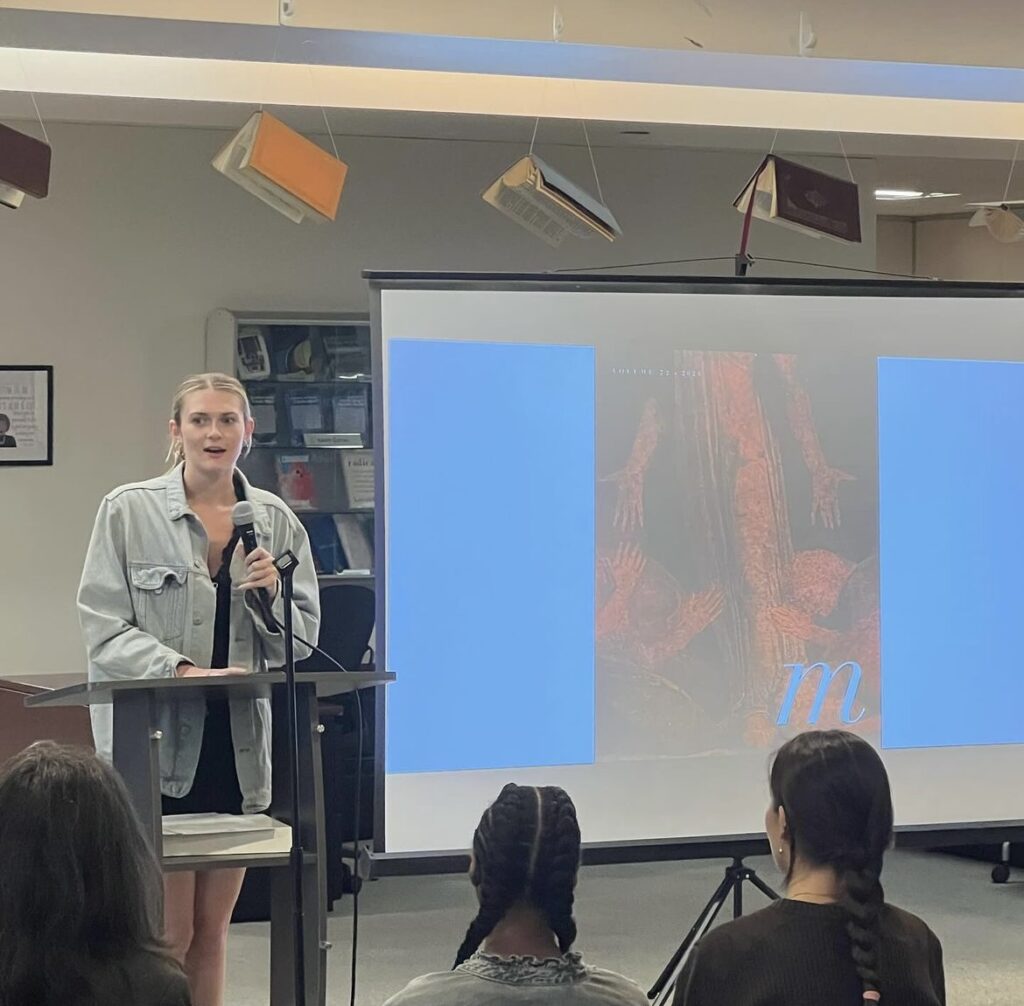
Once I was able to live and take classes on campus, this newfound love of writing poetry stuck to me. I sought out even more classes that would allow poetry workshops and close reading. While I still took fiction writing courses, poetry became a true love of mine. It changed the whole trajectory of where I thought my English major would take me, as well as a huge portion of my undergraduate experience as a whole. Through my workshop courses, I learned about the on-campus, student-lead creative writing and visual arts journal, LA Miscellany. There was no question that I not only wanted to submit my work for publication but wanted to become apart of the editorial team. By the time I graduated, I had earned the title of Editor-in-Chief of the journal and worked on the board for two years. I was able to find other poets on campus and collaborate with them on their pieces. I then went on to win a first-place award for one of my poems, and was asked to speak about LA Miscellany at the end of the year English Department Award Ceremony.

Me speaking in the English Village about my experience as an Editor-in-Chief

When actively working on versatility to what balance can mean as an undergraduate student, that frees up an open mind in which your inner talents can come to the surface in ways you may not have expected. I never expected writing poetry to take on the role of creative craft, emotional outlet, and productive purpose when I signed up for that first class. Let sudden interests have room to be able to snowball, saying ‘yes’ to many aspects of pursuing an academic or extracurricular community. It could be a very important area of your life, with a glorious trajectory by the time graduation rolls around.

Something I miss about my undergraduate experience was the amazing taco place right by campus – I’m in search of a new one! Café Habana offers great tacos at an amazing student-friendly deal!

By: Madeleine Misner

Madeleine Misner is a writer and NYU graduate student in the MS in Publishing program. She loves going out to dinner with her friends, reading long books, and attending spoken-word poetry events. Madeleine always loves to connect with other writers and creative thinkers alike!


For over 25 years, the Campus Clipper has helped college students in New York City—and later in Boston and Philadelphia—save money and succeed in city life. We offer a digital coupon booklet with discounts on food, clothing, and services, plus an Official Student Guidebook with real advice on how to navigate college life in a big city. Our internship program lets students build skills, earn money, and publish their own e-books. Follow us on Instagram and TikTok @CampusClipper, and sign up for our newsletter to get deals straight to your inbox. To access the digital coupons, scan the QR code on our printed card—available in dorms, student centers, and around campus.
Share

Ambition and Commitment: An Interview with River

Wednesday, June 24th, 2026

Growing up, we are encouraged to dream big. We are promised that there is no shortage of opportunities available to us. But as adulthood approaches, the stakes for bringing our dreams to fruition become more apparent. More demanding. More real. Instead of endless possibilities, we learn that we are faced with endless decisions to be made. Like, “What steps do I take to get where I want to go?” Or, “How can I optimally spend my time and energy?”

We are warned against falling into patterns that reflect lazy ambition. However, in the midst of the decision-making, it can be easier said than done to not give in to burnout, our desire to be instantly gratified, or relying on inconsistent bursts of energy to be our driving force of motivation.

Thinking about how best to turn ambition into activity, what better group of people to consider than college students, who daily experience fluctuations in their confidence and drive while getting accustomed to quickly evolving and high-pressure environments? With this in mind, I decided to interview my friend River, who demonstrates as much commitment to achieving her goals as she does ambition. Though she too struggles at times with finding the right balance between work and rest, her natural enjoyment of being a busybody leads me to trust no one more to speak on the subject.

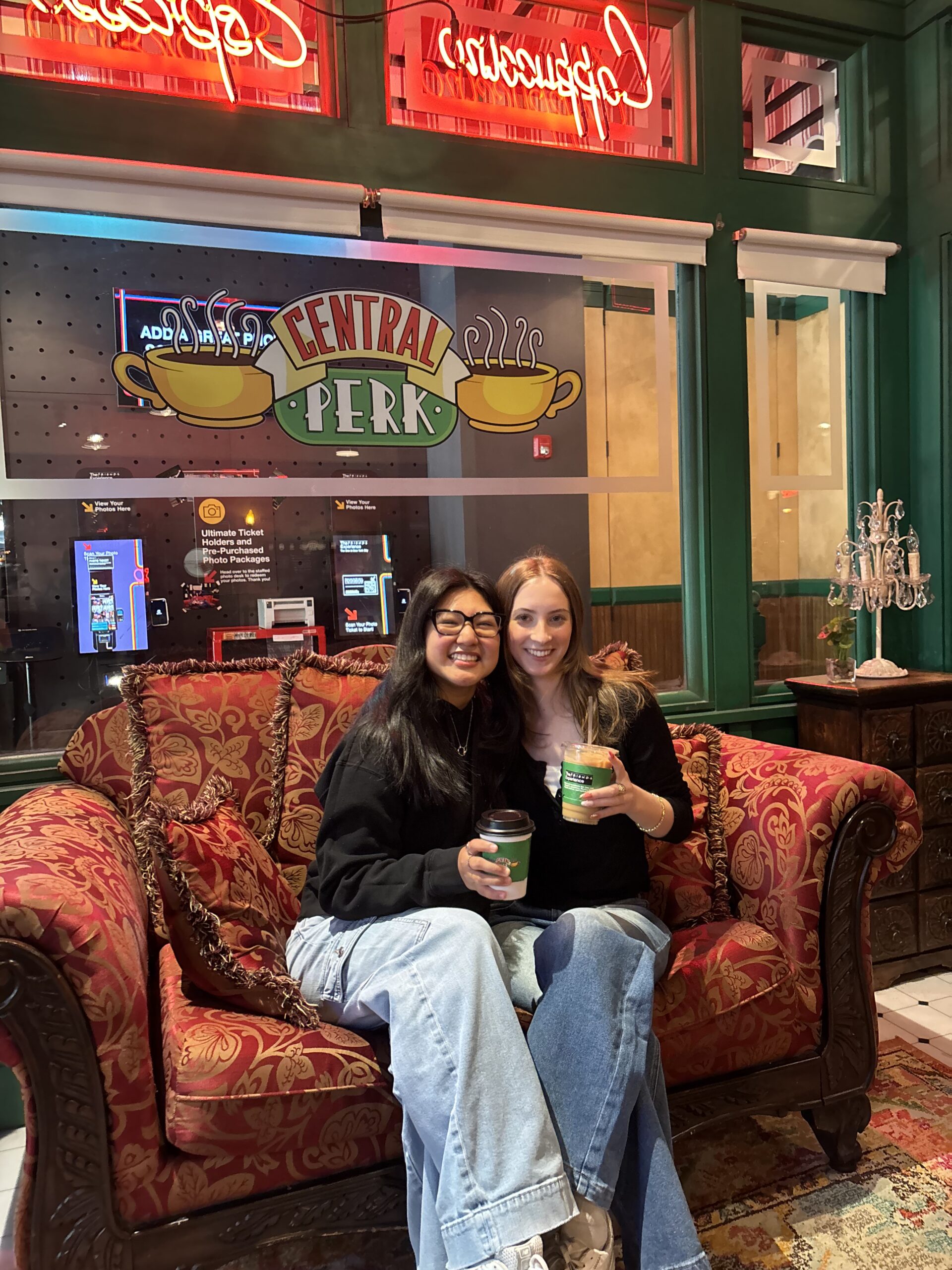
River and I grabbed coffee at The FRIENDS Experience to de-stress during finals week

A double-major student at NYU and one who is also interested in declaring a double minor, River is involved with eighteen different social and scholastic organizations at the university. Hoping to pursue a career in politics, she spends the majority of her time participating in courses and extracurriculars dedicated to studying and engaging with social and political issues. Outside of her academic and organizational commitments, River shared that “[she] loves engaging with local politics, spending time with [her] friends, learning new arts & crafts, and exploring as much of New York City as [she] can.”

As with many undergraduate students, it may appear that she is at risk of spreading herself too thin. Maybe it even appears that, in the name of productivity and impressiveness, she has adopted the young and naive notion that she “can do it all.” However, River’s seeming tendency to overcommit actually strongly aligns with her personality and interests. She describes herself “as a very ambitious person overall” and is no stranger to times when she feels that she’s not doing enough to keep her occupied. When asked how she balances all of her time investments, she laughed and shared, “This is an ongoing area of improvement for me. The best metric I have right now is to check that low-priority commitments aren’t interfering with my ability to complete things that matter to me and that other people rely on me for.”

However, she does try to remember to break from her spells of productiveness from time to time. When it comes to deciding where to invest her effort, “[she’s] learned to listen to [her] energy levels when applying [herself] where [she’s] not necessarily needed.” Always prioritizing events and organizations where her commitment affects the responsibilities and enjoyment of other members, for non-mandatory occasions, she took up this mentality: “I won’t be missing out and I won’t be letting others down by not going.”

As for dealing with overwhelm, when catching up with other people isn’t the form of self-care she is needing, she finds that “the best thing [she] can do to reset is to intentionally set aside time to be by [herself].” However, River also heavily relies on her family and friends for support. Her social circle simultaneously offers “a safe space to step back from intensity,” inspiration “to continue working towards [her] goals,” and a litmus test for determining when it’s time “to reassess [her] priorities.”

Her advice to other students includes a reminder that they are not alone when it is difficult to commit time and energy to achieving their goals. For River, ambition and commitment ought to “work symbiotically.” So as she suggests, when your dreams are not enough to motivate, “give yourself grace to take a step back,” note that “burnout is often a sign that you need to reprioritize given the energy you have,” and “make friends that will always push you to keep going”—because aligning your activity with your energy will produce more fulfilling work and “it’s hard not to feel motivated when you have equally awesome friends who are achieving alongside you.”


Needing to refuel to tackle your own busy schedule? Try out Mexiterranean Grill Express with these student coupons!

By Lauren Gascon 

Lauren Gascon studies Media, Culture, and Communication at NYU and enjoys discussing people’s relationships with each other and themselves. When she’s not on campus, you can find her café hopping, browsing bookstores, or enjoying lunch in one of New York City’s many beautiful parks.


For over 25 years, the Campus Clipper has helped college students in New York City—and later in Boston and Philadelphia—save money and succeed in city life. We offer a digital coupon booklet with discounts on food, clothing, and services, plus an Official Student Guidebook with real advice on how to navigate college life in a big city. Our internship program lets students build skills, earn money, and publish their own e-books. Follow us on Instagram and TikTok @CampusClipper, and sign up for our newsletter to get deals straight to your inbox. To access the digital coupons, scan the QR code on our printed card—available in dorms, student centers, and around campus.

Share

Discovering My Talents

Wednesday, June 24th, 2026

As a child, before smartphones became a major part of everyday life, I developed a passion for photography. I especially enjoyed travel photography and capturing moments from the places I visited. Whether it was a historic landmark, a unique building, or a beautiful landscape, I loved finding the right angle and lighting to create a memorable photograph. Photography allowed me to see the world differently and helped me develop an eye for detail and creativity at a young age.

As I grew older and entered college, my interests began to expand. I developed a strong passion for nonprofit and humanitarian work to make a positive impact on the lives of others. I became interested in how organizations address social issues, support vulnerable communities, and create meaningful change. At the same time, I discovered a passion for media, particularly marketing, writing, and communications. I enjoyed learning how messages are created, shared, and used to connect with people.

As someone who was diagnosed with autism at the age of three, I often faced challenges with social cues and communication. There were times when understanding social situations did not come naturally to me, and I sometimes struggled to fit in with my peers. However, these challenges also helped me develop resilience and self-awareness. Over time, I learned to embrace my strengths, including my creativity, attention to detail, and determination.

Looking back, photography, writing, media, and humanitarian work all share a common theme: they allow me to connect with people and better understand the world around me. Discovering these talents helped shape my goals and continues to influence the path I want to pursue in the future.

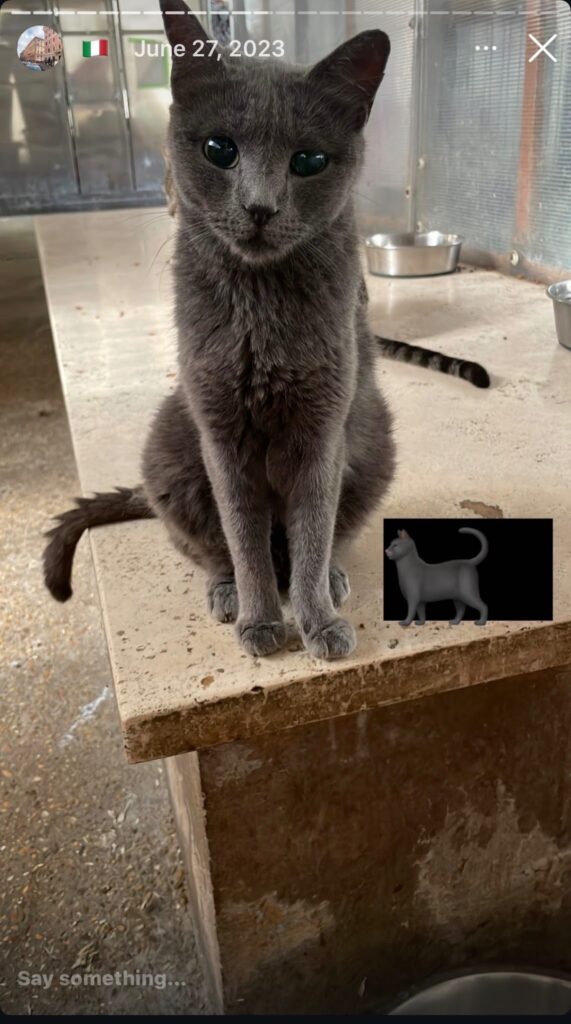
One of the experiences that helped me discover my interests was my first trip to Europe at eighteen. During the summer after my junior year of high school, I spent five weeks in Rome completing volunteer work required for graduation. While there, I worked with a group of volunteers helping to care for cats at a shelter. Beyond the volunteer work itself, the experience gave me the opportunity to meet people from different backgrounds, build friendships, and experience a new culture for an extended period.

My Time Abroad

That trip helped me realize how much I enjoyed connecting with people and contributing to causes larger than myself. It also strengthened my interest in humanitarian and nonprofit work. I became increasingly interested in organizations that bring people together, support communities, and work toward positive social change.

What inspires me most about nonprofit and humanitarian work is the idea of solidarity and making a meaningful difference in people’s lives. Over time, as I explored my own beliefs and perspectives, I found inspiration in individuals and organizations working to promote dialogue, peace, and understanding. Seeing people from different backgrounds work together toward common goals reminded me that I was not alone in my desire to build connections and contribute to a better future. One of my favorite organizations is Standing Together that fights for equality for Jews and Palestinians in the State of Israel and abroad. 

Solidarity Interest and Potential Work. Logo Credit: https://www.standing-together.org/en

These experiences helped shape my interests in both humanitarian work and communications. They showed me the importance of listening to others, sharing stories, and using my skills to connect with people in meaningful ways.

When it came time to choose a major in college, I found myself drawn to Education Studies. While some people associate education solely with teaching, I saw it as something much broader. I was interested in understanding how people learn, how communities are supported, and how social change can be achieved through education and advocacy.

Education Studies felt like the closest fit to my interests in nonprofit and humanitarian work. Many nonprofit organizations focus on education, community development, youth programs, and social services. I wanted to learn skills that could help me work in those areas in the future.

I was also excited that the major allowed me to explore topics related to communications and media through elective courses. My interests have never been limited to one field. Instead, I have always been drawn to the intersection of education, communications, and social impact. I enjoy learning how ideas are shared, how people connect with one another, and how organizations can use storytelling to create positive change.

Choosing Education Studies was not just about selecting a major; it was about finding a path that connected many of the interests and values that I had developed throughout my life.

Part of the reason I became interested in nonprofit and humanitarian work comes from my own experiences growing up. As someone diagnosed with autism at a young age, there were many times when I felt different from the people around me. I often struggled to relate to others and sometimes felt unseen or misunderstood. There were moments when I felt like an outcast because I had difficulty connecting with my peers the way others seemed to.

Those experiences were challenging, but they also shaped my perspective. They helped me develop empathy for people who feel excluded, overlooked, or unheard. Because I know what it feels like to struggle with belonging, I have always been drawn to causes that focus on inclusion, community, and support for others.

Over time, I realized that many people experience feelings of isolation for different reasons. Whether because of their background, beliefs, identity, or personal circumstances, everyone wants to feel seen and valued. This understanding is one of the reasons I became interested in nonprofit and humanitarian work. I want to contribute to organizations and communities that help people feel supported and connected, not alone.

Share

Video Games Are Not The Root of All Evil

Wednesday, June 24th, 2026
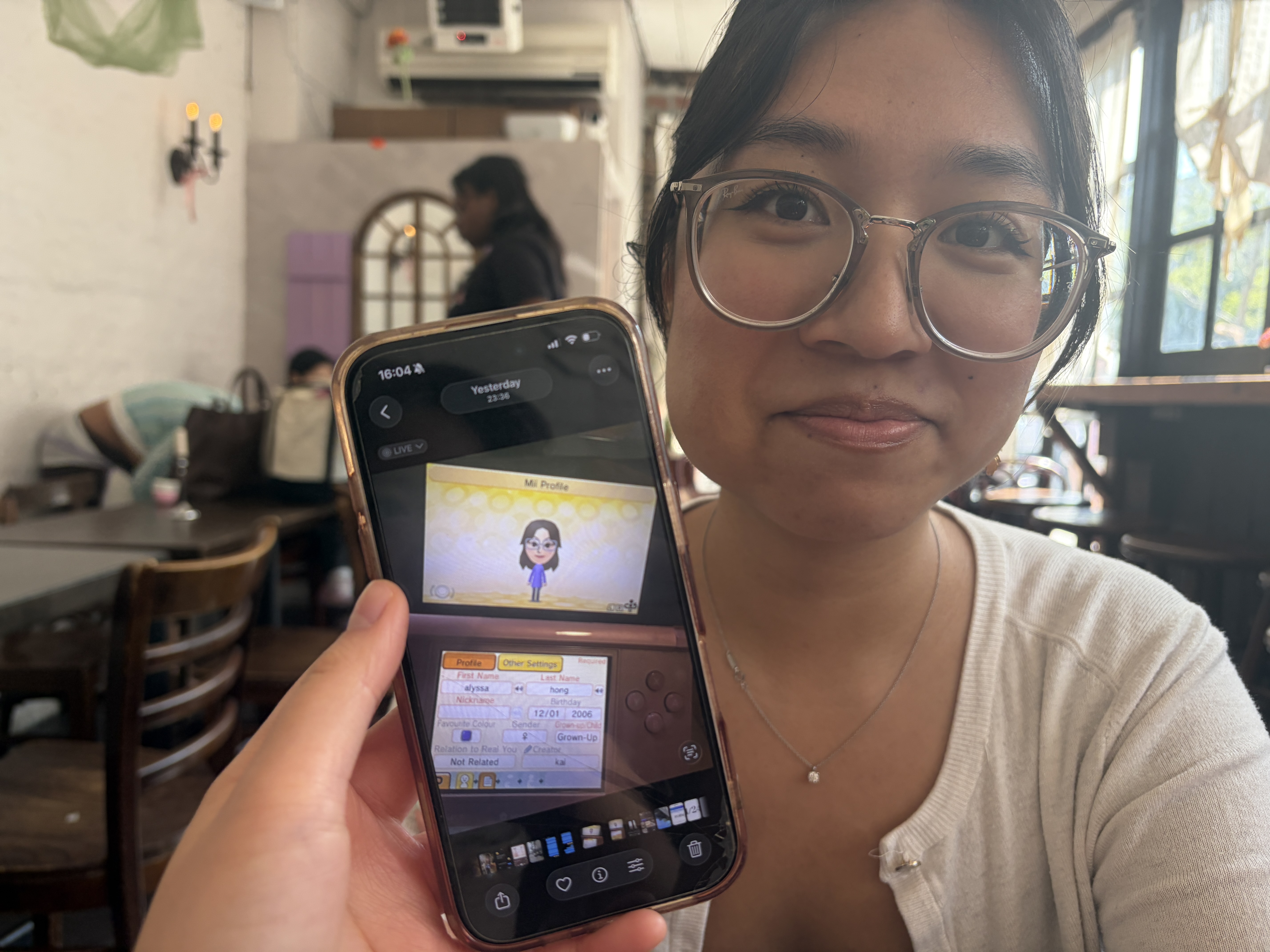
Photo By Ky. This is a picture of yours truly with the Tomodachi Life character that my friend, Ky, made of me for side-by-side comparison while we were getting coffee.

As I grew up, hearing my brother yelling throughout the house over his game was a common occurrence. I thought it was annoying and would fiercely yell at him back to “Shut Up!” or “Be Quiet!” He never shared his console with me so I could never even fathom just what was so enraging that made him scream so violently every passing half hour. It was not until my first year of college that I found the answer. 

My first semester was a repeated cycle: thinking about home, wanting to go home, ultimately never buying that ticket home because I didn’t move all this way to leave right when I was uncomfortable. Everything felt foreign and I could not find a way to belong. People’s mannerisms were different e.g. I would hold the door open and people could pass by without uttering a quick ‘thank you’ and it became inappropriate to meet people’s gazes on the street. I wanted to disappear; so I did. 

Most of that year I spent holed up in my dorm room contemplating my choice to move away from everything I thought of as home. Luckily, my two best friends had done the same so we would call and chat about it often. 

“I miss In-n-Out!” “It’s so cold here!” “I miss my mom!” were just some of the common phrases being thrown around, but “Nobody gets me!” was probably the one we all felt the most. Our friendship had transpired from English class in Junior year of high school to seeing each other multiple times a week over the summer to do everything including bed-rotting. Now, we were all miles apart, blocked by the necessity of traveling just to see one another. 

Of all the things that changed my freshman year of college, one thing stayed the same: video games. My laptop made a courageous cross-country journey, and yet never stayed untouched. Every night, I would call my best friends and we would play video games together. It didn’t matter that our time zones were different because I would just stay up just to play a little longer even if I had class the next day. 

Tapping each button, clicking my mouse aggressively — we could release any stress or ponderance out as we imaginatively solved puzzles. Strategies were minute as we just focused on what was in front of us while discussing the reality that surrounded us. Staring intently at a screen, I could hear Emma yelling at our teammates from the other side of the country. 

Not only did I get to hear about her day and connect with her during our sacred gaming time, but I was able to learn new skills because we would always switch between games. From Minecraft to Overwatch, we could be in a free world where we would strategize about roaming for the best place to build a house to complaining about how our teammates were not fulfilling their roles and how we surpassed the enemy team’s healing. Our constant gaming taught me how to be independent and how to be in a team. 

Even today, I play video games to escape reality alongside my friends. It can be quite a resource for making new friends as an activity to get to know each other through the various roles we take on or our responses to challenges. Although I don’t play as much as I previously had, it is always a resource I lean on to feel connected to my friends despite being so far away.

Video games aren’t always a tool of aggression and violence as many parents might be concerned about. It can be a source of release and connection that brings community despite distance. 


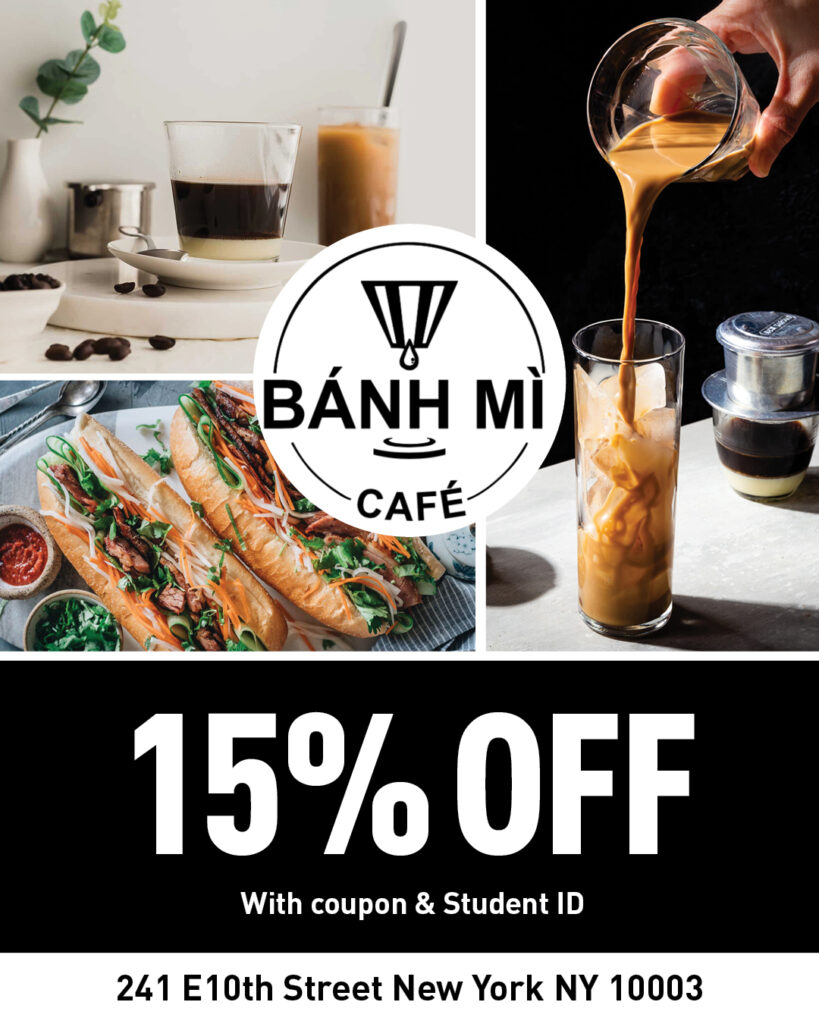
Sometimes we just need to cafe-rot with our friends so use this coupon as an excuse to yap about new video games to play over Vietnamese coffee and sandwiches!

By Alyssa Hong

Alyssa Hong is a rising Junior at Barnard College, studying Political Science with a minor in English. As a first-generation, low-income student, she writes about moving across the country for college and its adjustments. She utilizes entertainment, wellness/health/food, and fashion/beauty as methods to making new connections with others whilst always learning.


For over 25 years, the Campus Clipper has helped college students in New York City—and later in Boston and Philadelphia—save money and succeed in city life. We offer a digital coupon booklet with discounts on food, clothing, and services, plus an Official Student Guidebook with real advice on how to navigate college life in a big city. Our internship program lets students build skills, earn money, and publish their own e-books. Follow us on Instagram and TikTok @CampusClipper, and sign up for our newsletter to get deals straight to your inbox. To access the digital coupons, scan the QR code on our printed card—available in dorms, student centers, and around campus.
Share

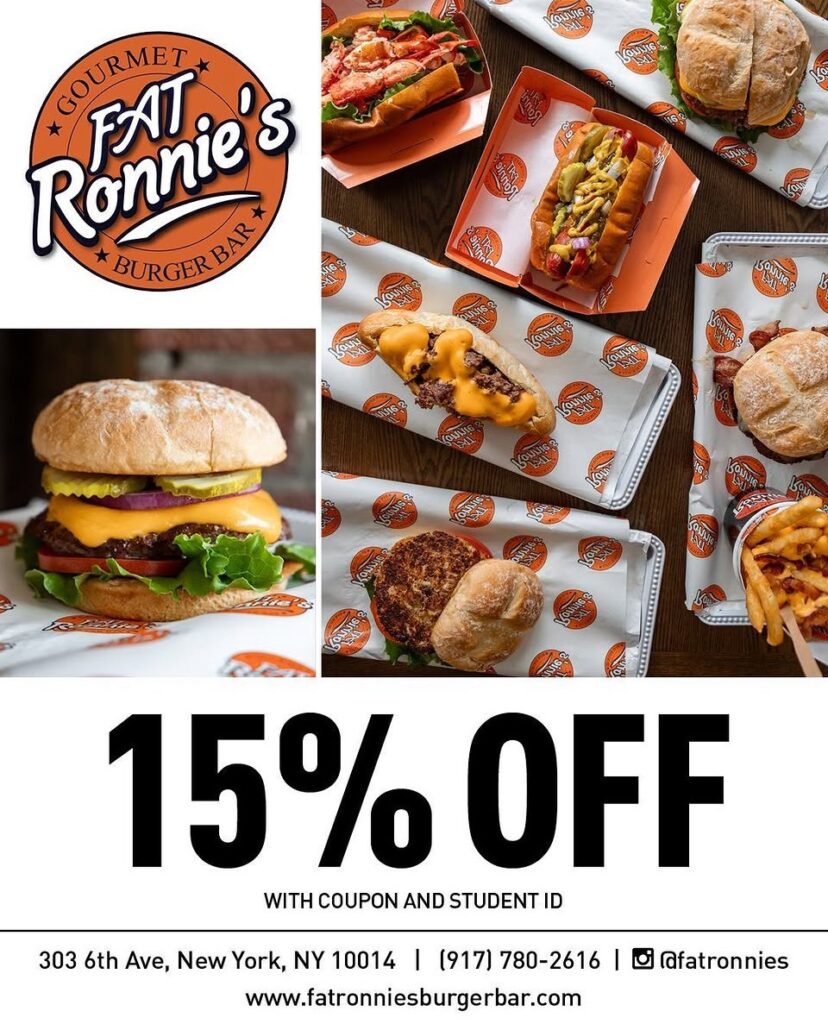
Fat Ronnie’s Burger Bar & Strolling In West Village

Wednesday, June 24th, 2026

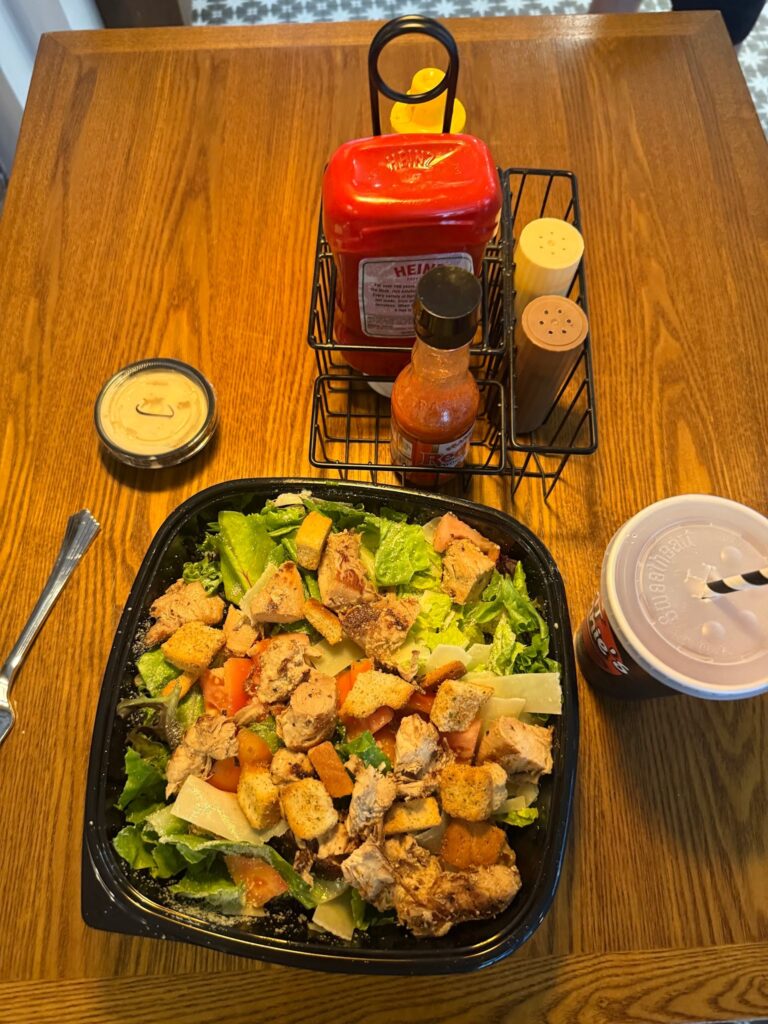
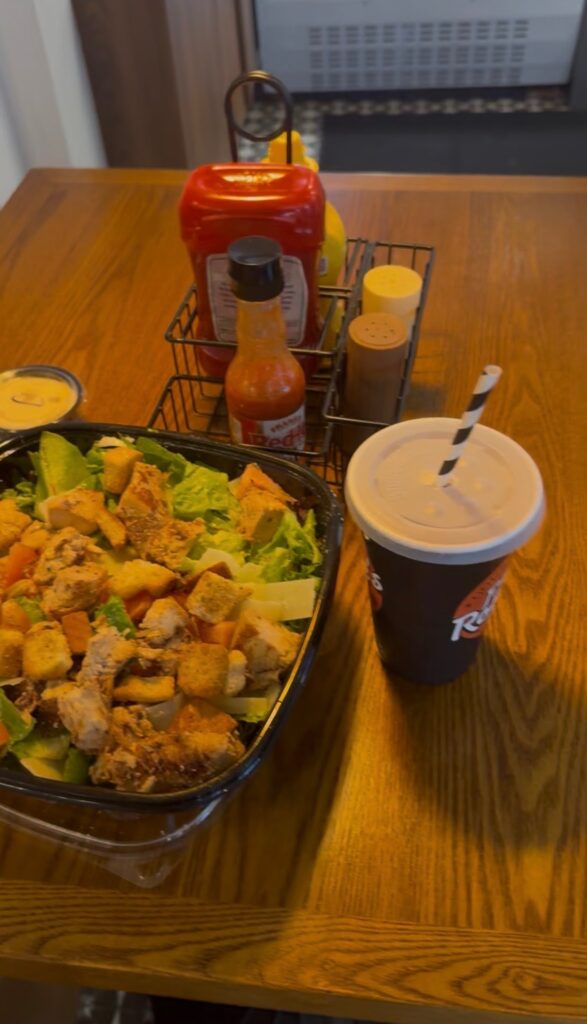
Just next door to IFC Center, a burger bar resides within the West Bank. Fat Ronnie, a meat restaurant, offers chicken, burgers and sandwiches. As I entered the establishment, I was welcomed by Ronnie and Cece with kindness and was shown the menu and ultimately I chose the chicken caesar salad. 

I’m someone who tends to be a picky eater so to be able to choose something from the menu that is healthy and doesn’t have large portions is the best. This allows me to obtain a healthy meal without experiencing stomach aches, but overall I enjoyed the meal.

As I started eating the caesar salad it felt crunchy at the same time but not too hot as well when I ate the chicken. The ginger ale tasted good and I liked that it was iced. I got to witness employees making the salad which was nice. 

Overall, I had an excellent time at Fat Ronnie’s Burger Bar NYC in the West Village. The staff was helpful, kind and provided great service. I would recommend this restaurant to friends and family. If you would like to try their chicken and burger sandwiches. Bring the coupon below for 15% off your purchase. 

Share

Mental Health Behind the “Perfect” Image

Tuesday, June 23rd, 2026
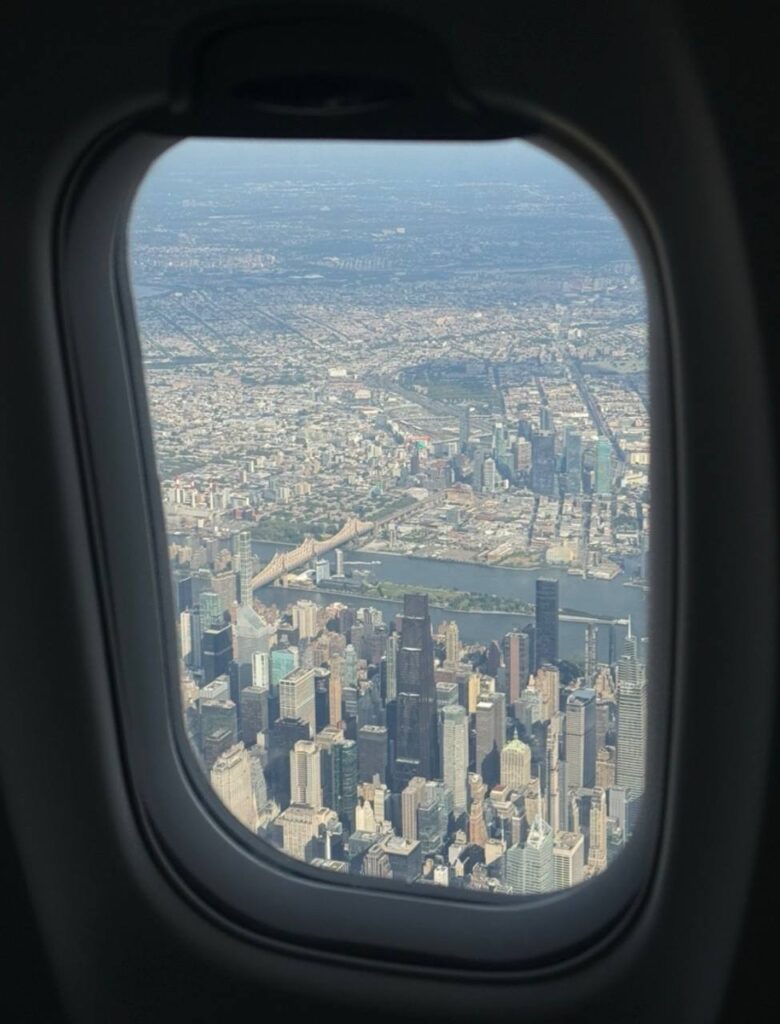
Photo by Polina Makarova. Arriving in New York City.

One of the biggest things I have learned during college is that people are often struggling with things you cannot see. Looking around campus, it can seem like everyone has their life together. Students are balancing classes, internships, clubs, social events, and future plans. Social media makes it look even more convincing. People post their achievements, exciting experiences, and happy moments, creating the impression that everything is going perfectly.

For a long time, I believed I was the only one feeling overwhelmed.

When I first moved from Russia to the United States, I put a lot of pressure on myself. I wanted to do well academically, make friends, adapt to a new culture, and build a life in New York City. At the same time, I was dealing with homesickness, uncertainty, and the emotional challenges that come with starting over in a completely new environment.

There were days when everything felt exciting. I was exploring the city, meeting new people, and experiencing things I had dreamed about for years. But there were also days when I felt lonely, anxious, and unsure of myself. What made it difficult was that I often felt like everyone else was adjusting better than I was.

Social media played a big role in that feeling.

Whenever I opened Instagram, it seemed like everyone was having the perfect college experience. People posted photos with large groups of friends, exciting internships, beautiful apartments, and busy social lives. Meanwhile, I was often sitting in my dorm room missing home or worrying about classes. It became easy to compare my reality to other people’s highlight reels.

Over time, I realized that social media only shows a small part of someone’s life. We see the internship announcement but not the rejected applications. We see the smiling group photo but not the loneliness that may exist behind it. We see achievements, but we rarely see the stress, anxiety, or self-doubt that often come before them.

The more people I got to know, the more I realized that everyone is dealing with challenges of their own.

Some students struggled with anxiety. Others felt pressure from family expectations. Some worried about finances, relationships, or their future careers. Even the people who appeared the most confident often had insecurities that nobody else knew about. Many of us were experiencing similar feelings but keeping them to ourselves.

College can sometimes create unrealistic expectations. There is often pressure to be productive all the time. It can feel like you should always be studying, networking, exercising, socializing, and planning for your future. While ambition can be a good thing, constantly feeling like you need to do more can quickly become exhausting.

Eventually, I learned that taking care of my mental health was just as important as achieving academic success.

For me, that meant creating small routines that helped me feel more balanced. Going for walks around New York City, spending time with friends, focusing on hobbies, limiting social media when it became overwhelming, and allowing myself time to rest all made a difference. These habits did not solve every problem, but they helped me manage stress in a healthier way.

I also learned that it is okay to ask for support. During difficult moments, talking to family members, friends, professors, or other people I trusted helped me feel less alone. Sometimes simply sharing what you are going through can make a situation feel much more manageable.

Looking back now, I wish I had spent less time comparing myself to other people. Everyone’s journey looks different, especially in college. Some people adjust quickly, while others need more time. Some people seem confident on the outside while quietly struggling on the inside. The truth is that nobody has everything figured out.

One of the most important lessons I learned is that mental health deserves the same attention as physical health. Taking care of yourself is not a sign of weakness or laziness. It is a necessary part of growth. College is not only about academic achievements and future careers. It is also about learning how to take care of yourself while navigating change, uncertainty, and personal growth.

Takeaway

Social media and college culture can sometimes create unrealistic expectations and make it seem like everyone else has life figured out. In reality, many students experience stress, anxiety, loneliness, and self-doubt. Prioritizing mental health, creating healthy routines, and remembering that nobody is perfect can make the college experience healthier, more balanced, and more enjoyable.


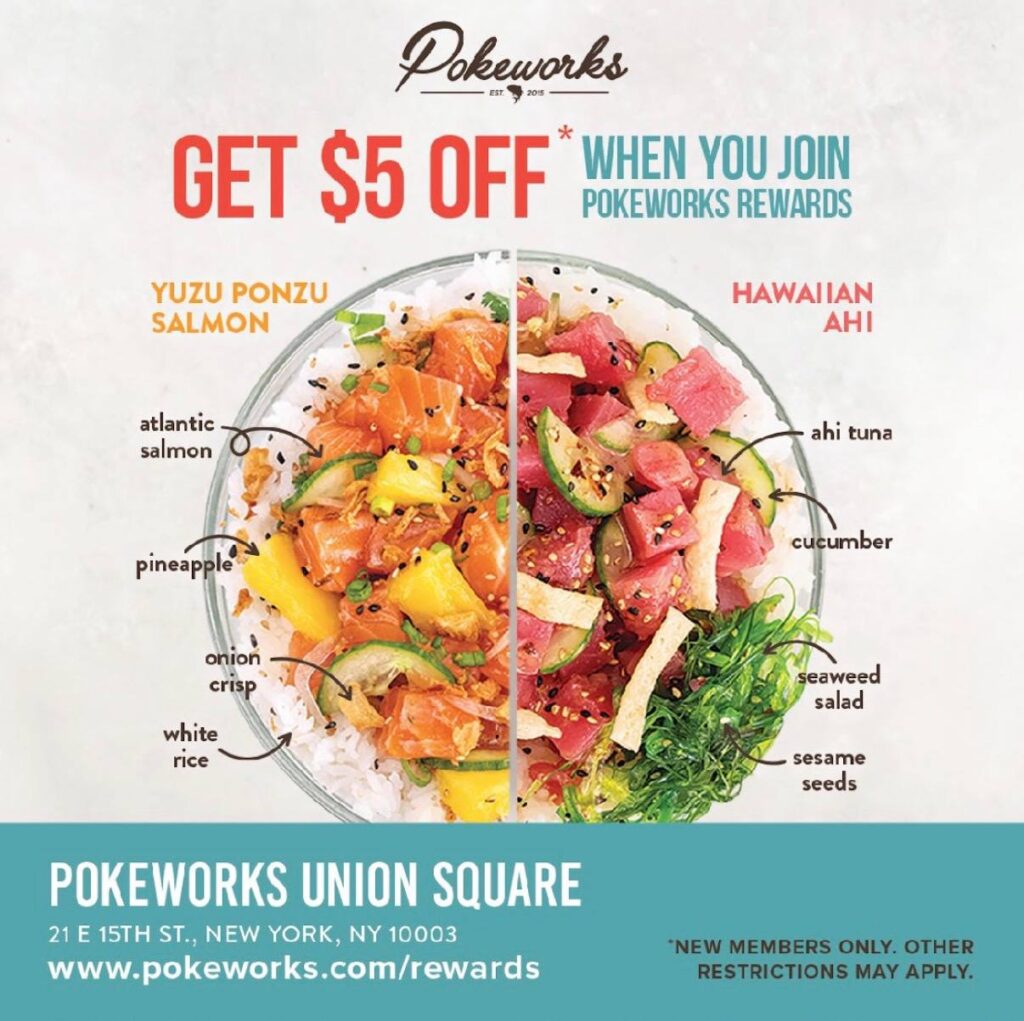
Looking for a quick and customizable meal near campus? Pokeworks Union Square offers fresh poke bowls, salads, and burritos with a wide selection of proteins, toppings, and sauces. Students can join the Pokeworks Rewards program to receive $5 off and earn rewards on future visits.

By Polina Makarova

Polina Makarova is an English Literature major at Pace University and a Publishing Intern at Campus Clipper. Originally from Russia, she writes about student life, wellness, fashion, and personal growth while navigating college life in New York City.


For over 25 years, the Campus Clipper has helped college students in New York City—and later in Boston and Philadelphia—save money and succeed in city life. We offer a digital coupon booklet with discounts on food, clothing, and services, plus an Official Student Guidebook with real advice on how to navigate college life in a big city. Our internship program lets students build skills, earn money, and publish their own e-books. Follow us on Instagramand TikTok @CampusClipper, and sign up for our newsletter to get deals straight to your inbox. To access the digital coupons, scan the QR code on our printed card—available in dorms, student centers, and around campus.

Share

Nuovo Pizza & My Relationship with Pizza

Saturday, June 20th, 2026

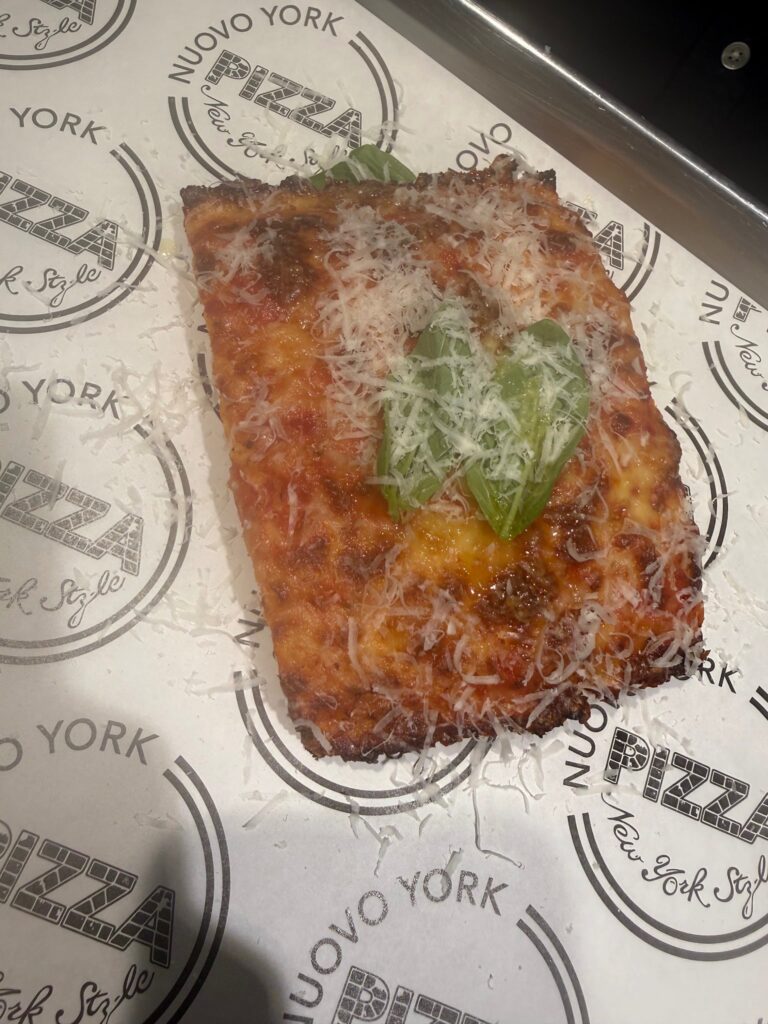
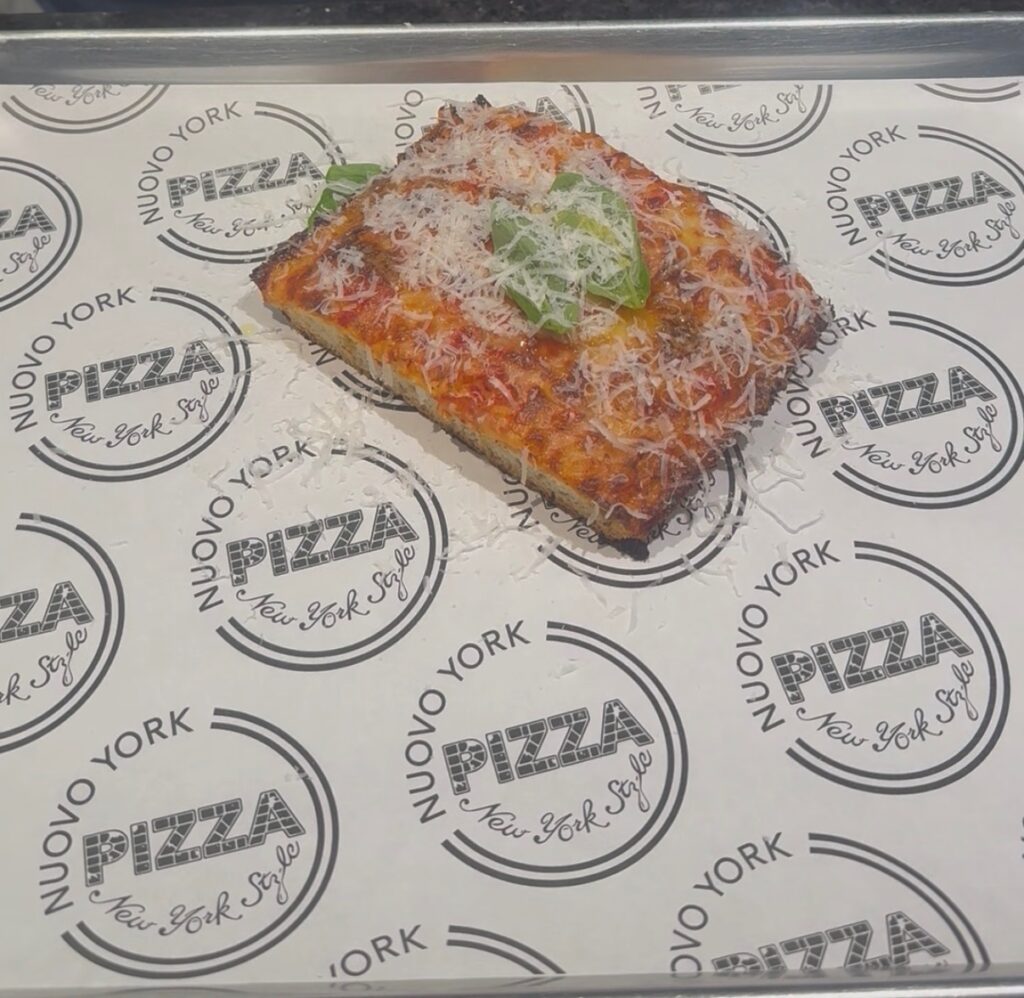
Just a block away from NYU on east ninth street rests a pizza shop, Nuovo York, an italian pizza shop offering different kinds of pizza from mozzarella to vegan choices. As I stepped in, I was greeted by Atalay the owner and his employee Angel who were both so warm and welcoming to me and even showed me the bathroom when I had to use it.

I’m someone who doesn’t eat a lot of dairy products due to health reasons, stomach aches, acne prone skin and inflammatory reactions from food, especially dairy. As I ate the slice of pizza I didn’t feel like that at all, it’s actually one of those pizzas that didn’t make me have stomach pain.

For the food, I got a slice of square pizza and sprite & water. As I ate the pizza with basel and shredded cheese it tasted something that I hadn’t eaten before even though I ate pizza multiple times in my life. I got to go behind the scenes and visualize and see the pizza chef shred the cheese and put oil. It was fascinating because I don’t usually see people cook close up to me but I got to see it from a nearby presence.

Afterwards I sat down and watched people walk outside while eating the pizza and drinking my soda. It was well deserved after walking in the humid weather that so much reminded me of my hometown Fort Lauderdale/Miami. The food tasted like the ones I’ve eaten in Italy when I was there 3 years ago. 

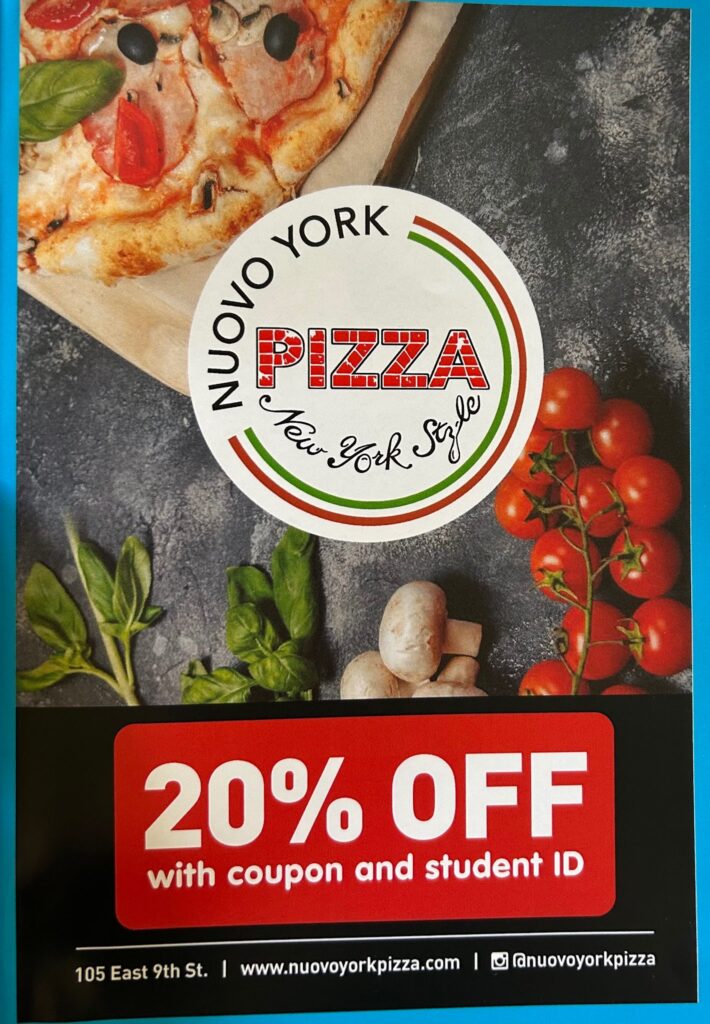
Overall, I had a great time dining at Nuovo Pizza in the East Village within proximity to my campus. The staff was kind, helpful and provided excellent customer service. I’m recommending this place to my friends. If you like to try some of their pizzas, bring the coupon below and student discount for 20% off. 

Share

Making Decisions and Changing Your Mind: An Interview with Emerson

Thursday, June 18th, 2026

Being a new adult, you become very familiar with feeling pressured to lay out a foolproof plan for your future and execute it perfectly. Maybe your loved ones have tried to encourage you by stating that “it’s unfair to expect an eighteen-year-old to have their whole life figured out.” However, when placed in a collegiate space—where every student feels this weight, fronts that they have it all together, and, in turn, feeds the insecurities and uncertainties of their peers—it is easy to deceive yourself into believing that you are falling behind, incapable of achieving your goals, or trapped by the direction you have determined for yourself.

For the entirety of my first two years at NYU, I wrestled with these convictions. Thankfully, I wasn’t alone. During a debrief with two of my high school friends, one of them shared that while we were apart for the academic year, she was navigating her own period of change, self-doubt, and uncertainty. So while reflecting upon what may be the best course of action for a student interested in revising their four-year or postgraduation plan, I decided to ask Emerson for advice as someone who had undergone the revision process herself.

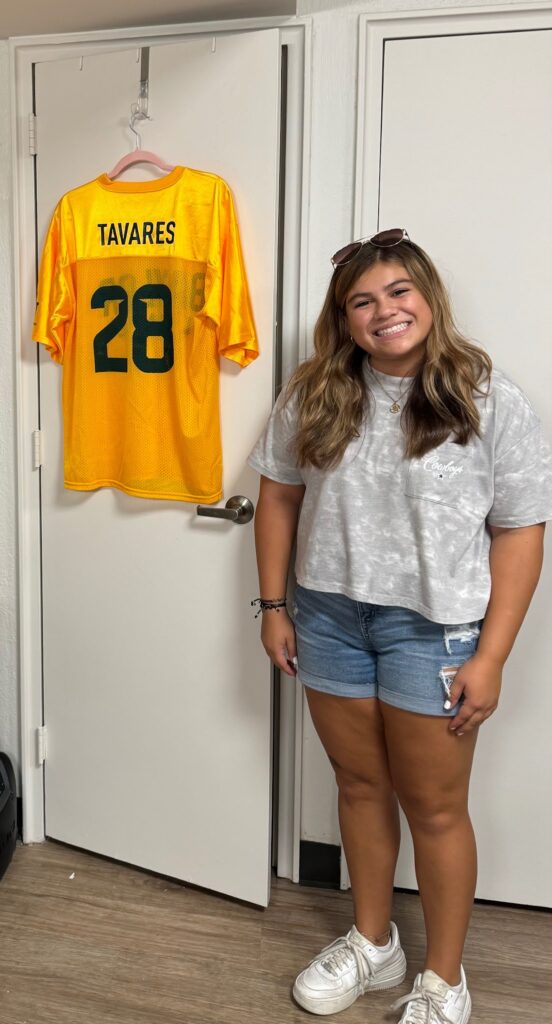
Moving into her freshman dorm, Emerson snapped a photo with her Baylor Line jersey

Now a junior at Baylor University majoring in accounting, she had originally intended to major in psychology and follow the pre-med track on her way to becoming a psychiatrist. The academic tasks demanded of her during her freshman year forced her to reflect upon her vision for life after graduation. She expanded upon her change of heart, sharing that “after the first year of college, I realized that science wasn’t something I loved, and it’s something that you have to love to be able to stick it out.” She remembered her interest in the business class she took that spring semester and, going into her sophomore year, decided to declare a business major.

Naturally, there was a hefty amount of wrestling with her own self-determination before shifting gears. She admits that she had likely sensed that she had no true desire to pursue a heavily science-oriented career by the end of her freshman fall semester. However, at the time, she was thinking, “This is what I told my parents, my friends…this is what everyone thinks that I’m going to do.” Though, despite her instinctual worry that they may be shocked or angry, it turned out that her loved ones were more than willing to encourage her new endeavor, and she explained that deep down she knew her parents would understand. Once she accepted that it was time to pursue a different path, Emerson’s friends, particularly her roommate, who was already part of the business program, and Baylor’s Major Exploration and Success and business advisors helped guide her transition.

Emerson still plans on extending her credentials beyond a bachelor’s degree. In fact, the program she is currently enrolled in will allow for her to graduate from Baylor in 2028 with a master’s degree. But beyond the security and stability that her career shift offers, it also equipped her with a new perspective on failure, success, and making decisions across life’s facets.

As a young adult, it can be easy to equate changing your mind with failure and to approach it with fear. However, looking back on her initial approach to change, Emerson learned to recognize that she didn’t fail. Rather, “what [she] had originally thought was going to be good for [her] actually [wasn’t],” and it’s okay for her to change her mind if it means finding a path that is better suited for her. 

Other than academic or professional decisions, Emerson has found herself navigating new terrain in her friendships and faith. To become better decision makers, she advises incoming freshmen to build steady support systems and develop a willingness to experiment with the unfamiliar—new relationships, interesting clubs, or different majors—even if this involves failing. Ultimately, as Emerson’s undergraduate journey thus far exemplifies, what is at first perceived as a failure may soon become an indication of better-aligned pathways, leading to a much more fruitful college experience.


Deciding to try out a new look? Experiment with this 10% coupon!

By Lauren Gascon 

Lauren Gascon studies Media, Culture, and Communication at NYU and enjoys discussing people’s relationships with each other and themselves. When she’s not on campus, you can find her café hopping, browsing bookstores, or enjoying lunch in one of New York City’s many beautiful parks.


For over 25 years, the Campus Clipper has helped college students in New York City—and later in Boston and Philadelphia—save money and succeed in city life. We offer a digital coupon booklet with discounts on food, clothing, and services, plus an Official Student Guidebook with real advice on how to navigate college life in a big city. Our internship program lets students build skills, earn money, and publish their own e-books. Follow us on Instagram and TikTok @CampusClipper, and sign up for our newsletter to get deals straight to your inbox. To access the digital coupons, scan the QR code on our printed card—available in dorms, student centers, and around campus.
Share