
Posts Tagged ‘college life’

Resilience in Routine

Tuesday, June 16th, 2026
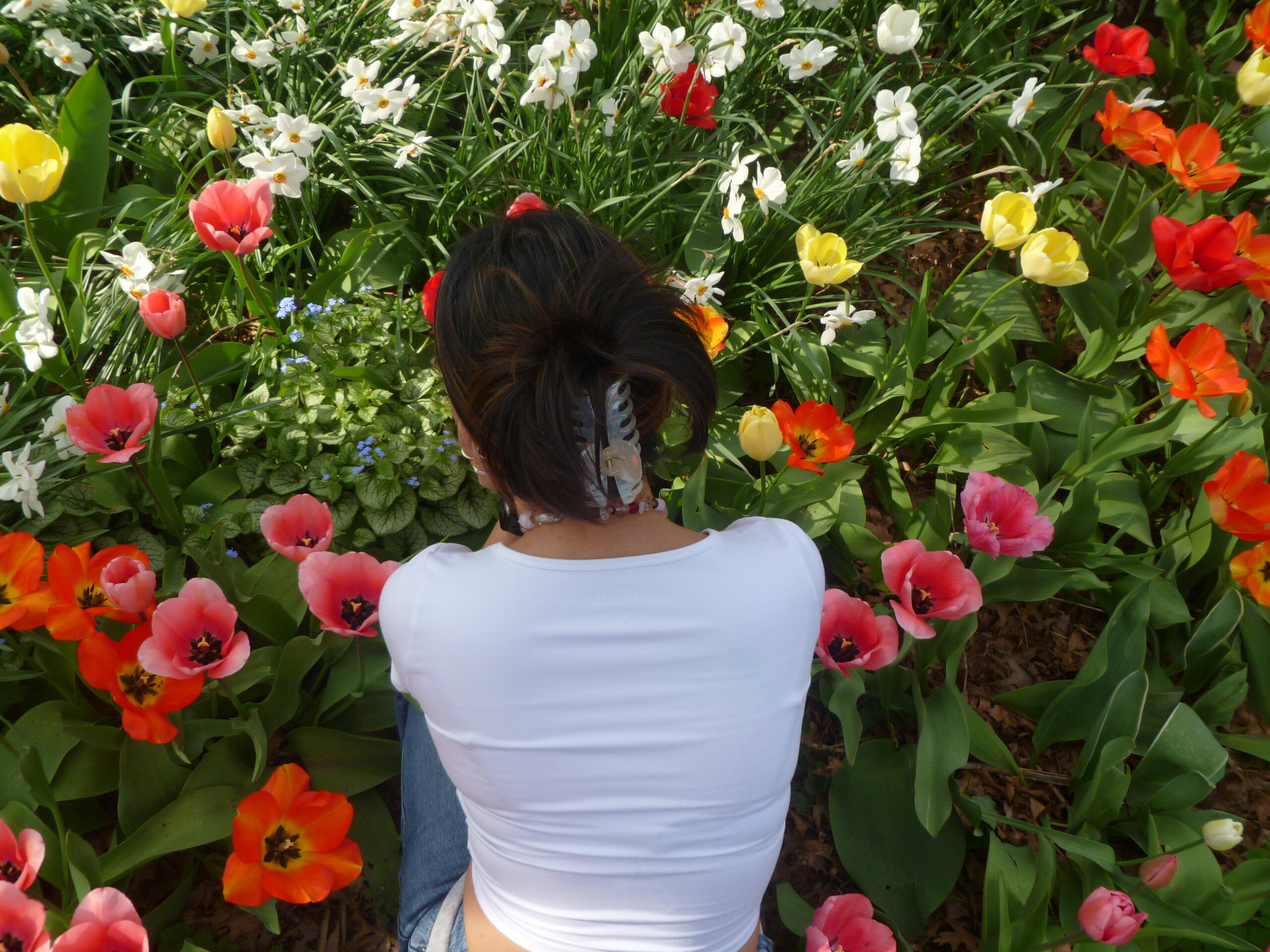
Photo by Alyssa Hong. Here I am sitting in a field of overly bloomed tulips at the Queens Botanical Garden.

One of the most essential parts of college is finding ways to continue a healthy lifestyle despite having copious amounts of free will. For this, I suggest enrolling in classes with friends for things like yoga, pilates, or anything really. 

What started out as Thursday evening classes for yoga simply began as a question: 

“Do you want to try Fitbear classes with me?”

Monica, my best friend, asked me this during our first year in college after the first semester. Still timid, my voice appeared firm in accepting her offer but the tremble of my body could not shake this anxious moment. I wondered if the class would paint us as newbies and that we would be made fun of – superficial concerns which made no sense looking back because everyone starts somewhere. 

Our first class had me looking over my shoulder constantly. I put on my leggings for the first time since COVID era, which had me doing Chloe Ting workouts in my bedroom. Highschool kept me so preoccupied I only had time for dance club so I had wildly let myself go. I went down the elevator to the first floor where the water station was and filled my Awola full of water since I was not sure how hard I would be sweating for “vinyasa” yoga. 

I did not even know what “vinyasa” meant. 

I knocked on Monica’s door since we lived in the same small hallway; we were on our way. Geared with her yoga mat, leggings, and water bottle, Monica was prepared for the next hour of downward facing dogs later. As we rode the elevator down, my face kept making the same grin of nervousness. My hands shook like no other. Soon, I found myself in the basement of the main campus building for our class with my hand gripping the handle of the door. As I opened it, the world began to shine in on me. 

Starting by reaching down towards our feet, I felt the release of all my stresses of homesickness to future career anxieties diminish. Halfway lift — holding my breath, I stared at my posture in the mirror, diligently focusing on my body and how it felt. Then down into a down-dog while bending our knees side-by-side. Stretching my body through every pose was my revenge on this fast-moving world. 

With Monica keeping me accountable, I learned the art of yoga: finding stillness and intention. Each pose should be made with intent and slow movement rather than rushing through. I thought about engaging my core, where my hands were, and finally how my body felt. The tension housed within my joints transpired as I held my intention from the beginning of the class to the very end. 

After my very first class, Monica and I continued these classes even adding two a week to our schedules if time permitted. That’s how we ended up trying a Zumba class on a random given Wednesday. 

Without her pushing me out of my own comfort (my mind), I would have never found the art of truly slowing down in yoga. We still go to these classes only now they are Friday morning classes at 9 AM instead. We always find time within our schedules and are always seeking to learn something new in our fitness journeys like how to perform frog pose or a proper chaturanga. 

I have also learned so much about Monica from this routine. She prefers cardio whereas I hate cardio entirely. I found this out after one of our conversations post-class (Total Sculpt) which was filled with cardio. 

“I like it because you can feel it.”

“I hate it for that exact reason.”

She also used to train mainly using cardio for rowing in Highschool and still does for when she scuba dives in the summer. Whereas, I only did cardio for dance in Middle School which I still hated. 

Nevertheless, yoga, or more generally, fitness classes have become our routine to resist anything college throws our way. It is not only a way to connect with others, but a chance to learn something new about them and yourself. 


Working out can be a helpful activity for the mind and soul alongside the body. Use this coupon to start your fitness training package with Nimble Fitness!

By Alyssa Hong

Alyssa Hong is a rising Junior at Barnard College, studying Political Science with a minor in English. As a first-generation, low-income student, she writes about moving across the country for college and its adjustments. She utilizes entertainment, wellness/health/food, and fashion/beauty as methods to making new connections with others whilst always learning.


For over 25 years, the Campus Clipper has helped college students in New York City—and later in Boston and Philadelphia—save money and succeed in city life. We offer a digital coupon booklet with discounts on food, clothing, and services, plus an Official Student Guidebook with real advice on how to navigate college life in a big city. Our internship program lets students build skills, earn money, and publish their own e-books. Follow us on Instagram and TikTok @CampusClipper, and sign up for our newsletter to get deals straight to your inbox. To access the digital coupons, scan the QR code on our printed card—available in dorms, student centers, and around campus.


Share

Confidence and Self Image in College

Tuesday, June 16th, 2026
Photo by Polina Makarova. A view from a study space in New York City.


Back then, beginning my time at university, I believed self-assurance came naturally – or not at all. Certain classmates appeared calm in any setting, as if belonging without effort. Their voices stayed steady during discussions; friendships formed around them like weather patterns. Watching closely, one might guess doubt never crossed their minds.

Spending more time in college slowly showed me how common confidence issues really are. What stands out is not the struggle itself, but how quietly it’s carried. Beneath cheerful faces, online updates, and packed calendars, doubt often lingers. Comparisons creep in. Pressure builds. Most keep it hidden. A few admit it. Many feel alone while surrounded by others.

Back in those days, living abroad made everything feel heavier. Moving across borders meant facing unfamiliar ways of life, classrooms that worked differently, routines without comfort. At times, doubt crept in – did I really fit here? Conversations carried hidden risks; one misstep could mark me as an outsider. Confidence rarely matched the ease others showed. During that time, I often felt uncertain about where I belonged.

Looking at social media made things worse. Everyone appeared to be living an ideal college life. Photos showed big circles of friends, impressive internships, top scores – effortless wins on display. My reality never matched those edited snapshots others chose to share.

Slowly, it became clear – measuring myself against others drained my self-assurance quickly. Whenever attention shifted to peers, my achievements felt smaller somehow. Everyone comes to college with different experiences, backgrounds, and challenges. People have different goals and are on different paths. Matching timelines across such distinct lives brings little value most times.

Success often came, not from comparison, butyet from noticing little wins. A strong mark on homework sometimes counted. At other moments, it was saying a few words during discussion, starting a conversation with a stranger, or managing stress after a long stretch of work. Slowly, these steps added up. Confidence grew without force.

One experience that helped build my confidence was getting involved outside of the classroom. At first, I often hesitated to apply for opportunities because I worried that I was not experienced enough or that someone else would be more qualified. Eventually, I realized that many students feel the same way. Applying for internships, joining new projects, and putting myself in unfamiliar situations helped me become more confident over time. Every opportunity taught me something new and reminded me that growth often happens when you are willing to step outside of your comfort zone.

Turns out, being sure of yourself does not mean having every detail locked down. Earlier, I believed certainty required full control – everything sorted ahead of time. College shifted that view: complete understanding isn’t what drives confidence. Even the students who seem the most confident are still learning, growing, and making mistakes like everyone else.

Comfort in clothes sometimes made speaking up easier. Because I liked what I wore, joining discussions felt less difficult. Though outfits do not build confidence by themselves, they support feeling like your true self. How you dress might influence how freely you show who you are.

One thing stands out most: doing things builds belief in yourself. Each attempt at something unfamiliar adds to it. Stepping into unknown territory helps it grow. Trying what feels difficult shapes it further. This growth does not arrive overnight. Small actions pile up over time. Confidence grows when you continue trying new things and challenging yourself.

Now and then, uncertainty creeps in, even today. Nearly everyone experiences this at times. Yet what has shifted is how I interpret these feelings – not as setbacks, but as signs of change. College is not only about earning a degree. It is also about learning more about yourself and becoming comfortable with who you are.

Takeaway

Confidence in college does not come from being perfect or having everything figured out. It develops through experience, personal growth, and learning to stop comparing yourself to others. Everyone struggles with self-doubt at times, but confidence grows when you focus on your own journey rather than someone else’s.


Take a break from studying and recharge with a cup of coffee at Absolute Coffee. Sometimes even a small pause can help you reset and return with a clearer mind.

By Polina Makarova

Polina Makarova is an English and Literature major at Pace University with a minor in Journalism and Digital Storytelling. Originally from Russia, she writes about student life, identity, fashion, wellness, and adapting to life in a new country.


For over 25 years, the Campus Clipper has helped college students in New York City—and later in Boston and Philadelphia—save money and succeed in city life. We offer a digital coupon booklet with discounts on food, clothing, and services, plus an Official Student Guidebook with real advice on how to navigate college life in a big city. Our internship program lets students build skills, earn money, and publish their own e-books. Follow us on Instagram and TikTok @CampusClipper, and sign up for our newsletter to get deals straight to your inbox. To access the digital coupons, scan the QR code on our printed card—available in dorms, student centers, and around campus.

Share

Fashion as Personal Expression

Tuesday, June 9th, 2026

Photo by Polina Makarova. A street view in SoHo, one of New York City’s most fashion-focused neighborhoods.

Surprisingly, when people think about fashion, they usually think about trends, brands, or appearances. While fashion can certainly be those things, my relationship with it became something much more personal after moving to the United States. During a time when almost everything in my life felt unfamiliar, fashion became one of the few things that helped me stay connected to myself. Instead of simply following trends, what I wore became a reflection of who I was becoming.

Moving to a new country can make you question many parts of your identity. Suddenly, you are surrounded by different people, different social expectations, and a completely different environment. College can make this feeling even stronger because everyone seems to be figuring out who they are at the same time. While that can be exciting, it can also feel overwhelming.

When I first arrived in New York, there were days when I felt invisible. Adjusting to a different way of life took time, and fitting in did not happen overnight. Making friends was not always easy, and homesickness stayed with me longer than I expected. Some days I felt confident, while other days I felt uncertain about where I belonged. One thing I noticed, however, was that when I put thought into what I wore, I carried myself differently. It was never about impressing other people. It was about feeling more like myself.

During that period, many things felt outside of my control. I could not instantly adapt to a new culture. I could not make homesickness disappear overnight. I could not magically become comfortable in every social situation. But every morning, I could choose how I wanted to present myself. That small decision gave me a sense of confidence during a time when everything else felt uncertain.

Fashion became another form of self-expression. Some people express themselves through art, music, or writing. For me, clothing became a way to communicate parts of my personality that I sometimes struggled to put into words. Certain outfits made me feel more confident. Others reflected my mood or mindset. Sometimes even a simple accessory could make me feel more confident throughout the day. Different outfits reflected different moods and helped me express how I was feeling.

Over time, expressing myself through fashion became more natural and helped me feel more comfortable in my own skin. One of the things I love most about New York City is how people express themselves through fashion. Walking through the city, you see people expressing themselves in countless ways. Some people dress boldly and creatively, while others prefer a simpler style. There is no single “right” way to present yourself. Seeing that freedom made me more comfortable embracing my own style.

College can sometimes create pressure to fit in. Social media often makes that pressure even stronger. It is easy to compare yourself to carefully curated photos and feel like everyone else has everything figured out. Over time, I realized that confidence comes from being comfortable with yourself rather than trying to be like everyone else. The people who seemed most confident were often the people who were simply comfortable being themselves.

One of the most important things fashion taught me is that self-expression does not have to be expensive. Confidence is not determined by designer brands or the amount of money you spend on clothes. Some of my favorite outfits have been simple combinations of pieces that make me feel comfortable and authentic. Personal style feels most meaningful when it reflects who you are rather than trying to be perfect.

As time went on, fashion also became connected to my overall wellness. Of course, clothing cannot solve every problem, but taking the time to express yourself can have a positive impact on your confidence and mindset. On days when I put effort into getting ready, I often felt more productive, motivated, and positive. It was a small act of self-care that helped me start the day feeling more confident.

Looking back, fashion helped me navigate one of the biggest transitions of my life. It gave me confidence during uncertain moments and allowed me to express parts of my identity that I was still discovering. Even when so much around me was changing, fashion helped me stay connected to who I was. Most importantly, it reminded me that self-expression is not about impressing other people. It is about feeling comfortable enough to be yourself.

Takeaway

Fashion is often viewed as something external, but it can also be a powerful form of self-expression. During times of change and uncertainty, personal style can help people feel more confident, authentic, and connected to themselves. Sometimes the smallest forms of self-expression can make the biggest difference.


Use this student discount at Amorino and enjoy a sweet treat while exploring New York City. Sometimes a small break can be the perfect form of self-care during a busy semester.


By Polina Makarova

Polina Makarova is an English and Literature major at Pace University with a minor in Journalism and Digital Storytelling. Originally from Russia, she writes about student life, identity, fashion, wellness, and adapting to life in a new country.


For over 25 years, the Campus Clipper has helped college students in New York City—and later in Boston and Philadelphia—save money and succeed in city life. We offer a digital coupon booklet with discounts on food, clothing, and services, plus an Official Student Guidebook with real advice on how to navigate college life in a big city. Our internship program lets students build skills, earn money, and publish their own e-books. Follow us on Instagramand TikTok @CampusClipper, and sign up for our newsletter to get deals straight to your inbox. To access the digital coupons, scan the QR code on our printed card—available in dorms, student centers, and around campus.

Share

Starting Over in a New Country

Tuesday, June 2nd, 2026
Photo by Polina Makarova

Excitement fills the air when people talk about moving to another country, but underneath it can also feel stressful and lonely. When I moved from Russia to the U.S., I carried more than just luggage with me. I expected the hardest part to be the language or learning how to navigate a new city, but honestly, the hardest part was adjusting to a completely unfamiliar environment while also trying to figure out who I was becoming. That question stayed in my mind constantly.

At first, nothing felt completely comfortable. Grocery stores, classes, conversations, public transportation – even small everyday things felt overwhelming because I was always trying to adjust to a different rhythm. Some days I felt excited and confident, and other days I felt completely out of place. I think a lot of people who move to a new country experience this feeling, even if they do not always talk about it openly.

College life already comes with pressure, and adapting to a different culture at the same time can make it even harder mentally and emotionally. There is pressure to succeed academically, make friends, look confident, and act like everything is fine even when it is not. Social media also makes it easy to compare yourself to other students who seem completely settled and happy. Meanwhile, homesickness, anxiety, loneliness, and emotional stress quietly build up in the background. Even when surrounded by people, it is possible to still feel disconnected and far away from home.

Over time, I realized that small things could actually make a big difference emotionally. Fashion became one of those things for me. When everything around me felt unfamiliar, putting together an outfit that made me feel comfortable and confident could genuinely improve my mood. It may sound simple, but self-expression can really affect the way you feel mentally and emotionally.

For me, fashion was never really about impressing other people. It became a way to reconnect with

myself during a period where everything felt uncertain. Moving to a new place can make you feel like you are rebuilding your identity from the beginning. College already feels like a major life transition, but moving countries at the same time makes that feeling even stronger. You begin thinking more deeply about where you belong, how you want people to see you, and who you want to become.

I also learned that wellness is not always about perfect routines or always feeling motivated. Sometimes wellness simply means giving yourself time to adjust. Starting over can feel emotionally exhausting, and I think many students put pressure on themselves to adapt too quickly. Real growth takes time.

Little by little, I started creating routines that made me feel more grounded. Walking through New York City, focusing on school, building small self-care habits, spending time with supportive people, and expressing myself more confidently all helped me emotionally. I still experience stressful moments, but I’ve realized that moving to a new country does not mean losing who you are. It means learning how to grow while still staying connected to yourself.

Looking back now, moving to another country changed me in both difficult and positive ways. It made me more independent, emotionally aware, and understanding of myself. Even though the adjustment process was difficult, it taught me that confidence does not come from being perfect or fitting in immediately. Sometimes confidence simply comes from continuing to move forward even when everything around you feels unfamiliar.

Takeaway

Moving to a new country during college can feel emotionally overwhelming and isolating at times. Adjusting takes time, and it is important not to compare your journey to other people’s experiences. Small routines, supportive people, self-expression, and self-care can make a huge difference when it comes to mental health and confidence during major life changes.


Taking care of yourself is important, especially during stressful times. Use this student discount at Baya Bar and enjoy a healthy break while exploring New York City.


By Polina Makarova

Polina Makarova is an English and Literature major at Pace University with a minor in Journalism and Digital Storytelling. Originally from Russia, she writes about student life, identity, fashion, wellness, and adapting to life in a new country.


For over 25 years, the Campus Clipper has helped college students in New York City—and later in Boston and Philadelphia—save money and succeed in city life. We offer a digital coupon booklet with discounts on food, clothing, and services, plus an Official Student Guidebook with real advice on how to navigate college life in a big city. Our internship program lets students build skills, earn money, and publish their own e-books. Follow us on Instagramand TikTok @CampusClipper, and sign up for our newsletter to get deals straight to your inbox. To access the digital coupons, scan the QR code on our printed card—available in dorms, student centers, and around campus.

Share

Crash Course Connections Ch. 9: Saying Goodbye

Thursday, August 14th, 2025

Part of me wishes college could last forever. The dorm sleepovers, late-night library hang-outs and chaotic coffee runs. Even the lecture halls hold a kind of charm. There’s a certain beauty to the rhythm of university life. Beyond aesthetics, it’s the final step before entering the adult world. It’s the last time you and your friends share the same calendar, the same milestones, the same breaks and goalposts.

But eventually, everything ends. And with that comes goodbye.

Friends tossing caps after graduating college. Credit: https://images

It’s not just a farewell to the school, professors and classes. You’re also saying goodbye to your friends. Some are close. Others are what I’d call “friends of convenience”. That may sound harsh, but it’s honest. These are people you see every day because your schedules align. You bond through routine, not necessarily through deep connection. And once the routine ends, so often does the friendship.

That doesn’t make those friendships less real, and this isn’t unique to college. You’ve had these kinds of relationships in high school, at jobs, summer camps and internships. You will continue to have these relationships throughout your life. Even when built around convenience, those friendships can be meaningful. They can brighten your day, get you through tough mornings or give you a reason to show up just to sit beside someone in class.

When those connections start to fade, it doesn’t mean they weren’t valuable. Sometimes life simply doesn’t allow space to maintain every relationship. And that’s okay.

Even the friendships you cherish most will shift. The closeness you feel while living in the same dorm, eating together every day and sharing every stress is hard to sustain. Eventually, you drift. Maybe not right away. Maybe you’ll live together after graduation or try to keep the same rhythm. But new jobs, routines and people will start to fill your time. The tight-knit group you once built becomes a web of separate paths. There might still be overlap, but there will also be space.

So this goodbye is just the end of a chapter. The story continues, you’re simply turning the page.

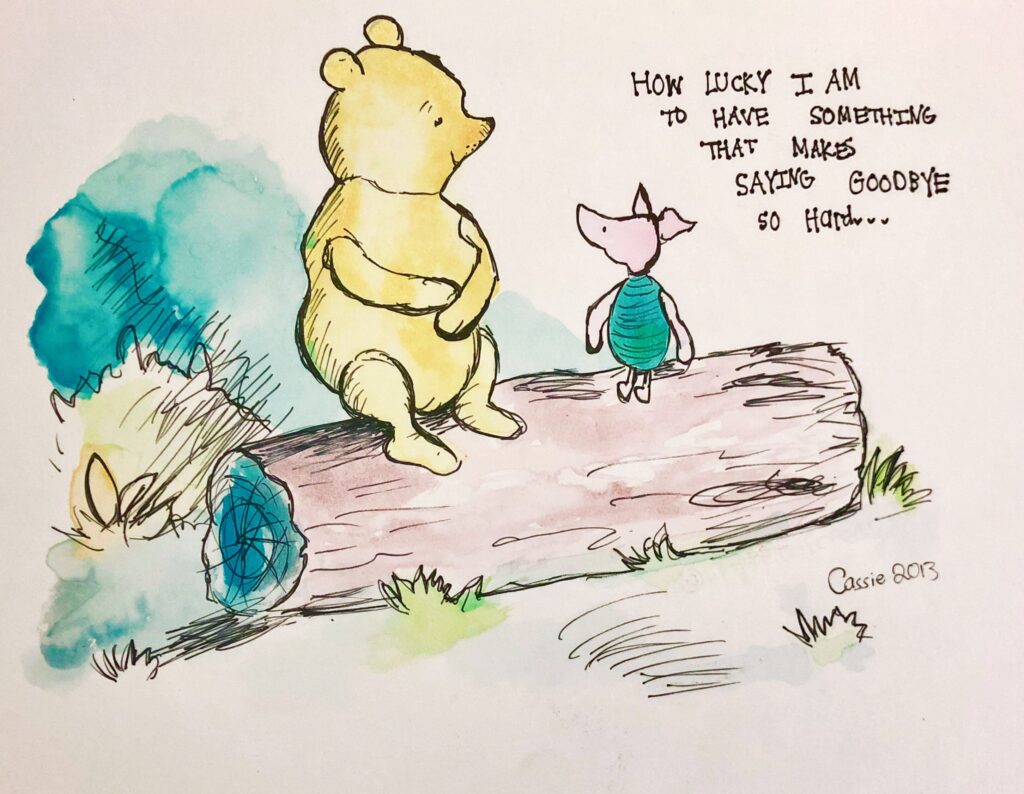
Winnie the Poo “Saying Goodbye” graphic. Credit: https://images.app

In a world where we’re all hyperconnected, physical distance isn’t the challenge it used to be. You can still meet up, plan reunions, send a message when someone crosses your mind. What you’re really saying goodbye to is the ease of it all. The built-in structure that made friendship simple. Letting go of that doesn’t mean losing the people entirely. It just means accepting change.

As I start my senior year, I’m writing this as both reflection and preparation. Part of me wants time to stop, to stay in this space a little longer. But most of me is ready for what’s next. Change is hard, but it’s also what makes life beautiful. It’s what gives this chapter meaning.

So here’s to this final year. I’m choosing to embrace it fully. To give myself grace when I mess up. To appreciate the ease while it’s still here.

Thanks for reading, and goodbye!


Show this coupon with Student ID at Candy Spa for discounts on lashes, massages and more!

By Logan O’Connor

Logan is a rising senior at NYU pursuing degrees in Journalism and Politics. She grew up on Long Island, but always dreamed of living in New York City. When she’s not in class or at her favorite local cafe, you can find her wandering the city (film camera in hand) or baking up a storm in her kitchen.


For over 25 years, the Campus Clipper has helped college students in New York City—and later in Boston and Philadelphia—save money and succeed in city life. We offer a digital coupon booklet with discounts on food, clothing, and services, plus an Official Student Guidebook with real advice on how to navigate college life in a big city. Our internship program lets students build skills, earn money, and publish their own e-books. Follow us on Instagram andTikTok @CampusClipper, and sign up for ournewsletter to get deals straight to your inbox. To access the digital coupons, scan the QR code on our printed card—available in dorms, student centers, and around campus.

Share

Balancing it All: Your City, Your Pace

Tuesday, August 5th, 2025

Living in New York City as a student can feel like being swept into a current that never slows down. There’s always something happening, somewhere to be, or something new to try. While it is exciting that the city is constantly full of endless opportunities, it can also be overwhelming. 

When I first moved here almost four years ago, I felt immense pressure to do everything. I needed to try new experiences. I needed to make new friends. And I needed to discover new versions of myself. That is what I thought college was all about.

However, I’ve learned that the key to thriving as a student in the city isn’t about chasing every opportunity. It’s about being intentional with your time, protecting your peace, and remembering that only you get to decide what your version of “making the most of it” looks like.

Maybe that means saying yes to a late-night comedy show, even when you’re exhausted, just to laugh so hard you forget why you were stressed in the first place. Or waking up early to run along the East River, where the quiet water and morning light make the city feel like it’s holding its breath just for you. Maybe it means carving out time for fitness, not to chase some goal, but because puppy yoga makes you laugh when a tiny dog climbs on your mat, or because hiking through The Ramble feels like disappearing into another world where no one can email you.

Balance does not always mean equal parts, either. Some weeks might be full of adventure, like constantly exploring different villages in the city, trying new restaurants, and making new friends. Other weekends may be filled with class readings, FaceTiming family because you are homesick, or finally doing your giant load of laundry. Both are a part of being a student in New York. 

The city is yours for the taking!

You don’t have to put everything on your plate at once. It is okay to not go out every weekend. Maybe your comfort zone is a cozy bookstore, a quiet café, or the corner of the park where you feel miles away from the city’s chaos. That can be just as valuable. At times it is hard to swallow sometimes, but you do not always have to be “doing.” You are still growing and experiencing. Even in the pauses. 

So as you navigate your own path in this city, give yourself permission to go at your own pace. Let New York’s energy inspire you, but don’t let it pressure you. You don’t need to do everything, just the things that feel right for you. Learn to say no when your body or your mind needs rest. Learn to say yes when something excites you or challenges you in a good way. And most importantly, learn to listen to yourself.

This city will teach you a lot about people, art, culture, and ambition. But maybe the most important thing it will teach you is this: You don’t have to rush to belong here. You already do. Take a deep breath, find your rhythm, and move forward with one step at a time. This is your city, so live it in your way.


Get 10% off at this NYU student staple spot!

By: Skylar Park 

Skylar Park is a Film & TV student at NYU with a passion for storytelling and city adventures. When she’s not writing or filming, you can find her running by the East River or hunting down the coziest bookstores in New York City.


For over 25 years, the Campus Clipper has helped college students in New York City—and later in Boston and Philadelphia—save money and succeed in city life. We offer a digital coupon booklet with discounts on food, clothing, and services, plus an Official Student Guidebook with real advice on how to navigate college life in a big city. Our internship program lets students build skills, earn money, and publish their own e-books. Follow us on Instagram andTikTok @CampusClipper, and sign up for ournewsletter to get deals straight to your inbox. To access the digital coupons, scan the QR code on our printed card—available in dorms, student centers, and around campus.

Share

Crash Course Connections Ch. 7: Far From Campus

Thursday, July 31st, 2025

If I could recommend one thing to do during your college experience, it would be to study abroad. After spending half of high school in lockdown, travel in coming to college started to feel like a real possibility rather than just a Pinterest board of pipe dreams. Eventually, I stopped decorating my walls with vacation photos and started packing my bags.

Since there are so many positives to this experience, I’ll start with the negatives.

The hardest part of going abroad is uprooting your comfortable little life. You don’t realize how much you take for granted until you’re away from it all – being close to home, your friends, your favorite coffee shop, or even just being able to speak the same language as everyone around you. It takes adjusting, just like moving to college took adjusting. But by the end of it, you come out of the experience as a new, and likely better, version of yourself. You become more cultured, more curious, and more empathetic. More human.

The more you embrace unfamiliar people, cultures, perspectives, and experiences, the more you discover parts of yourself you didn’t even know existed.

This series is all about connections, so let’s get into the people you meet abroad.

My first time studying abroad was in Florence, Italy. I was lucky enough to go with one of my best friends, which made for the perfect travel buddy situation. I quickly made new friends, fell into a rhythm of exploring Western Europe, and soaked up every moment. I’m still close with the people I met in Florence. In fact, I’m probably closer to them now than we were during the actual semester. Something about traveling together either bonds… or breaks.

When you’re sharing cramped Airbnbs and catching 6 a.m. flights with a group, tensions flare. Sometimes for no reason other than everyone being tired and irritable. That’s when you learn: you need a certain disposition to just go with the flow when things don’t go as planned. Because they won’t. And if you can’t, the trip will suffer.

I’ve traveled with people I thought I could barely tolerate for more than twenty minutes. But then we came home, stepped outside of the travel bubble, and became completely different people to each other. Some friendships really do blossom after the fact, but not all connections are meant to last. Fleeting encounters, whether platonic, romantic, or something in between, are practically a hallmark of solo travel.

For my second semester abroad, I went to London. Not exactly a massive departure from New York, but it was European enough to feel like an escape. This time, I went alone. I didn’t know a single soul going in, which made it both lonely and liberating.

A walk down Tower Bridge from my semester in London.

At first, the idea of traveling solo scared me. There’s comfort in having people to help plan, navigate, and share the experience with. Going to Marrakech, Morocco, by myself pushed me to manage all aspects of the trip—budgeting, timing, safety, and decision-making. I got to spend my time exactly how I wanted, without having to consider anyone else’s needs. I could fully be me, or I could be someone completely new. How exciting!

Solo travel forced me to connect in ways I wouldn’t have otherwise. From the person in the hostel bed next to mine to the local sitting beside me in a café to strangers in markets and museums, I had some instant connections. There was Puck in Dublin and the group I met in Barcelona. I flirted with strangers, danced merengue with people I’ll never see again, and made memories that feel almost dreamlike now.

And that’s okay. Those light, transient moments are beautiful precisely because they’re temporary. They exist in their purest form: no pressure, no expectations, no future to complicate the memory.

Of course, I still try to exchange socials. Why not? We live in an age where staying in touch is easier than ever. But I also make peace with the idea that not every connection is built to last. Some people are meant to be shooting stars—bright, brief, and unforgettable.


Catch 20% off of Di Fara’s slices when you use this coupon and show Student ID!

By Logan O’Connor

Logan is a rising senior at NYU pursuing degrees in Journalism and Politics. She grew up on Long Island, but always dreamed of living in New York City. When she’s not in class or at her favorite local cafe, you can find her wandering the city (film camera in hand) or baking up a storm in her kitchen.


For over 25 years, the Campus Clipper has helped college students in New York City—and later in Boston and Philadelphia—save money and succeed in city life. We offer a digital coupon booklet with discounts on food, clothing, and services, plus an Official Student Guidebook with real advice on how to navigate college life in a big city. Our internship program lets students build skills, earn money, and publish their own e-books. Follow us on Instagram andTikTok @CampusClipper, and sign up for ournewsletter to get deals straight to your inbox. To access the digital coupons, scan the QR code on our printed card—available in dorms, student centers, and around campus.

Share

Crash Course Connections Ch. 6: Dating 101

Thursday, July 24th, 2025

Ah, college dating life, where to begin? The lore of finding your “true love” on campus runs deep. We all hear the stories: two freshmen sit next to each other in an Intro to Psych class, and boom —they end up getting married ten years later. There’s a kind of romantic hope that college will be the time where it all clicks. High school was just practice for the real thing, a prequel to the great love story we’re meant to star in.

In reality, it’s quite brutal.

Some people fall into (and out of) relationships like it’s part of their routine. Others don’t date at all. And in between, there’s the strange, emotionally ambiguous purgatory that is the situationship: a non-committal “thing” that looks like a relationship, feels like a relationship, but is never named as one. It’s confusing and often exhausting.

In my world, the first year of college wasn’t about dating. I bounced around, got to know people, and explored different circles and sides of myself. I had no heavy intention to commit because I didn’t want to. I was curious and open and still figuring out who I even was. And on top of that, I knew I was going abroad to Florence, which added a natural time limit to any potential connection.

Studying abroad opens up an entirely new kind of dating landscape. In Florence, connections were usually fun, passionate, and short-term. People were in it for the experience, not the longevity. That in itself can be beautiful: learning how to live in the moment, how to flirt in another language, and how to appreciate someone’s presence without worrying about the future. But it also meant that any real commitment fell off the table until I was more grounded, until I was back “home.”

My friends and I roaming the streets of Florence, circa fall semester 2023.

It wasn’t until junior year that I went on what I would consider my first real date, right before I left for London, of course. (I seem to have a habit of falling into things right before I leave.) The idea of the date scared me more than I care to admit. Not because of the person, but because it was set up through Hinge, which comes with its own psychological rollercoaster. Online dating is, frankly, horrendous for forming genuine connections. It can work, but most of the time, it’s a quick spark of banter, a few days of chatting, then a ghosting from one side or the other. Tinder? Mostly hookups. Bumble? Well… it’s Bumble.

But Hinge—Hinge had potential, at least in theory. And that first date was sweet and chill and surprisingly easy. It helped set a gentle precedent: dating didn’t have to be a minefield. To this day, first dates still make me sick with stress and nerves. I overthink my outfit, my voice, and whether my smile looks right. But once I’m there, it’s rarely as bad as I imagine.

That being said, I have had bad dates. I’ve had awkward silences and forced affection. But I’ve also had wonderful ones, fun, flirty, or even completely platonic, where I left with a new friend instead of a crush. That’s the thing about dating in college: it’s unpredictable. If the hit dating show Love Island taught us something surprisingly real: sometimes you’re torn between committing to something good or holding out for something that might be great. There’s no easy answer.

Chris and Huda’s final date, Love Island Season 7.
credit: Ben Symons/Peacock

The best guide, in the end, is your gut.

Don’t commit just because you feel you’re supposed to. Don’t date just to prove you can. And definitely don’t beat yourself up if you haven’t had a “serious” relationship by a certain age. Everyone moves through this process at their own pace, on their own path. Love, however it looks, finds people in different ways and at different times.

That said, you do have to put yourself out there. That’s part of the process. Be open. Be brave. Be willing to laugh about the disasters and appreciate the little moments. But don’t let dating become something that drains you to the point of hopelessness. 

Dating in college should feel like an adventure, not a punishment. A search for connection, for romance, or just for a good story. Whether you’re looking for a life partner or just a dinner date who makes you laugh, remember: this is your timeline, and there’s no wrong way to move through it.

Just breathe, and have fun!


Enjoy 10% off of your next wrap or bowl at NAYA locations throughout the city!

By Logan O’Connor

Logan is a rising senior at NYU pursuing degrees in Journalism and Politics. She grew up on Long Island, but always dreamed of living in New York City. When she’s not in class or at her favorite local cafe, you can find her wandering the city (film camera in hand) or baking up a storm in her kitchen.

For over 25 years, the Campus Clipper has helped college students in New York City—and later in Boston and Philadelphia—save money and succeed in city life. We offer a digital coupon booklet with discounts on food, clothing, and services, plus an Official Student Guidebook with real advice on how to navigate college life in a big city. Our internship program lets students build skills, earn money, and publish their own e-books. Follow us on Instagram andTikTok @CampusClipper, and sign up for ournewsletter to get deals straight to your inbox. To access the digital coupons, scan the QR code on our printed card—available in dorms, student centers, and around campus.

Share

Crash Course Connections Ch. 5: The Third Space

Wednesday, July 9th, 2025

College campuses are inherently conducive to connection and community. From frat life to campus food halls, cafes, and sprawling green lawns for picnics and post-class hangouts, they often serve as self-contained bubbles of social activity. It’s easy to forget the vastness of the world beyond your college gates when everything you need seems to exist within them. NYU, however, famously brags that though it doesn’t offer the traditional campus experience, “the city is your campus.” And honestly, that mostly checks out.

During the fall and spring, from West Houston to Union Square, NYU students are everywhere. We flood the cafes, comb through the thrift shops, linger at halal trucks, and turn every bookstore into a study nook. In a borough of nearly 1.7 million people, I still manage to run into my campus crush, my favorite professor, and my academic nemesis all in the same week.

But one of the most underrated perks of going to a school “without walls” is the natural encouragement to explore third spaces—places that exist outside of school and home. These are the environments where you start to find yourself beyond your student identity.

A third space is defined as any social setting outside of one’s home (the first space) and work or school (the second space). It’s where people gather, interact, and slowly, sometimes unintentionally, build community. Coffee shops, libraries, parks, gyms, and even online spaces can all function this way. For me, third spaces have been the key to experiencing connections that extend beyond the classroom.

Photo of La Colombe off Lafayette taken from bar.

One of my favorite third spaces is La Colombe—the location on Lafayette Street, specifically. It’s a chain, sure, but there’s something about this particular cafe that drew me in. It started out as my go-to alternative when Bobst Library started to feel a little too stuffy. I liked the light, the energy, and the cold brew. But then one of the baristas told me I looked like Ariel from The Little Mermaid, and I was hooked (pun very much intended).

From that point on, I became a regular—not just because of the caffeine, but because of the people. I got to know the baristas by name, and before long, they became my first real friends outside the world of NYU. It started to feel like its own little ecosystem.

Midterms season rolled around, and I needed an outlet. I’ve always used baking to decompress, but my roommates could only eat so many brown butter cookies and Basque cheesecakes. So, I brought a few treats to the cafe. The reaction was immediate and warm: ”thank-you” free coffee, and a new kind of reciprocity. I started sitting at the bar whenever I came in. Between rushes, baristas would pause to chat. Sometimes my new friends would slide into the seat next to me on their break and catch up for a bit. Eventually, they invited me to their Friendsgiving.

There’s something grounding about having relationships with people who aren’t students, people who are still in their twenties and thirties but a few steps ahead in life. They aren’t worried about club e-board elections or what their thesis is going to be about. They remind me that life keeps unfolding beyond the classroom and that identity can exist outside of resume lines.

Third spaces give us the rare chance to be seen as full people—not just as students or workers, but as regulars, neighbors, and community members. In a city as overwhelming as New York, it’s easy to feel anonymous. But in a third space, you can start to feel known.


By Logan O’Connor

Logan is a rising senior at NYU pursuing degrees in Journalism and Politics. She grew up on Long Island, but always dreamed of living in New York City. When she’s not in class or at her favorite local cafe, you can find her wandering the city (film camera in hand) or baking up a storm in her kitchen.


For over 25 years, the Campus Clipper has helped college students in New York City—and later in Boston and Philadelphia—save money and succeed in city life. We offer a digital coupon booklet with discounts on food, clothing, and services, plus an Official Student Guidebook with real advice on how to navigate college life in a big city. Our internship program lets students build skills, earn money, and publish their own e-books. Follow us on Instagram andTikTok @CampusClipper, and sign up for ournewsletter to get deals straight to your inbox. To access the digital coupons, scan the QR code on our printed card—available in dorms, student centers, and around campus.



Share

Crash Course Connections Ch. 4: Can Men and Women Be Just Friends?

Wednesday, July 2nd, 2025

“Men and women can never be just friends.” It’s a message we’ve heard time and time again from pop culture. From the classic will-they-won’t-they dynamic of When Harry Met Sally to the heartbreak in My Best Friend’s Wedding, the suggestion is clear: platonic relationships between men and women are rare, unstable, or inevitably romantic, unless one is gay or already taken (and even that isn’t a guarantee).

Since I didn’t have male friends in high school, I decided to test this theory when I came to college. What I found was far more nuanced than Hollywood would have us believe.

As children, gender doesn’t matter much in friendships. Sure, some of us have “kindergarten boyfriends” or giggle over crushes, but there’s no real romantic intent. That all begins to change when puberty starts. Suddenly, there’s an invisible pressure surrounding every boy-girl interaction, especially if physical attraction is involved. Even when there’s no chemistry, platonic intimacy between men and women often carries social baggage. People expect something more. And that expectation complicates things.

Despite this, I believe men and women can be friends—even when there is or was attraction involved. Over my time in college, I’ve had both successful and failed friendships with men. The determining factor in every case has been maturity. Mutual respect, emotional self-awareness, and clear communication are essential. There’s no one-size-fits-all rule, because you can only control your own behavior, not how the other person feels or acts.

Man and woman signifying strictly platonic relationship https://qleanmarket.amanaimages.com/items

One of my first close male friends in college was Jack. We met in class and kept running into each other until casual conversations turned into a solid friendship. We had similar upbringings and a shared sense of humor. At first, I wasn’t sure how to navigate the friendship, and I wondered if he had ulterior motives or if I might be attracted to him. But over time, I realized we could genuinely enjoy each other’s company without anything romantic.

Jack became part of my friend group, and we even went on a group trip together that summer. But by junior year, tensions between him and others in our group escalated. Eventually, I was the only remaining tie between Jack and the rest of our circle.

I was torn. The conflict didn’t involve me directly, but I couldn’t ignore the emotional toll it was taking. I care deeply for my friends, and when they’re hurt or disrespected, I feel it too. Ultimately, I decided to create some distance between Jack and myself. That space brought clarity and peace. It’s important to recognize when a relationship is no longer mutual and nourishing (platonic or otherwise). You’re allowed to step away from connections that drain you.

Jack was my first real example of what platonic love between a man and a woman could look like. That experience helped me build fulfilling friendships later, like with Tyler, a barista I see regularly, and Brian, another friend from school.

Attraction can complicate things, but it doesn’t have to destroy the possibility of friendship. Sometimes it leads to a romantic relationship; other times, it fades or exists unreciprocated. If you sense romantic tension—yours or theirs—addressing it honestly is usually the healthiest path forward. It can be risky, especially if you have strong feelings, but clarity is better than emotional limbo. If your feelings are mild or unclear, it may be best to focus elsewhere and pay attention to how they interact with you.

If the other person is in a committed relationship, respecting that boundary is crucial. True friendship cannot thrive if it undermines someone else’s partnership.

In the end, friendships between men and women are possible, but they require maturity, honesty, and emotional intelligence from both parties. And like any meaningful relationship, they’re worth the effort.


Save 10% on your next bowl or wrap from NAYA with the above coupon!

By Logan O’Connor

Logan is a rising senior at NYU pursuing degrees in Journalism and Politics. She grew up on Long Island, but always dreamed of living in New York City. When she’s not in class or at her favorite local cafe, you can find her wandering the city (film camera in hand) or baking up a storm in her kitchen.

For over 25 years, the Campus Clipper has helped college students in New York City—and later in Boston and Philadelphia—save money and succeed in city life. We offer a digital coupon booklet with discounts on food, clothing, and services, plus an Official Student Guidebook with real advice on how to navigate college life in a big city. Our internship program lets students build skills, earn money, and publish their own e-books. Follow us on Instagram andTikTok @CampusClipper, and sign up for ournewsletter to get deals straight to your inbox. To access the digital coupons, scan the QR code on our printed card—available in dorms, student centers, and around campus.

As always, let me know if you have any questions!

Share