Posts Tagged ‘food’

Yemenat: Come as a Guest, Leave as Family

Tuesday, October 6th, 2026

Just before the dinner rush, Yemenat is calm. People talk over their meals, the staff joke with one another, and the dining room slowly fills with the evening crowd. By dinner, Bay Ridge has arrived.

That contrast captures something about Yemenat. It is welcoming without being casual about its food. Chef Mohannad Jaradat has built the menu around Yemeni flavors while bringing the discipline of his French culinary background into the kitchen.

“We wanted to have the authentic Yemeni flavor in an exciting way,” Jaradat told me.

If you want to experience Yemenat the way the chef does, follow his ideal order. Begin with shafoot and hummus, move into lahm sughar, choose between lamb haneeth or chicken aqdah for the main course, and finish with bint al sahn.

The shafoot is a chilled piece of bread soaked in an herbaceous yogurt. Jaradat admits it “can be a hit or miss,” but considers it refreshing. From there, the lahm sughar—tender lamb cooked with Yemeni spices and onions—is a standout. My favorite bite was bread dipped first into hummus and then into the lamb.

For the main course, the choice comes down to two very different dishes. The lamb haneeth is slow-cooked until tender and served over spiced rice. The chicken aqdah is a shredded chicken stew in a hearty tomato sauce. He describes it as a dish that gives you a “calm feeling,” and it is easy to understand why.

Then there is dessert: bint al sahn, a traditional Yemeni dish that Yemenat serves with a crème anglaise glaze to cut through its richness. But the food is only part of what makes Yemenat worth visiting.
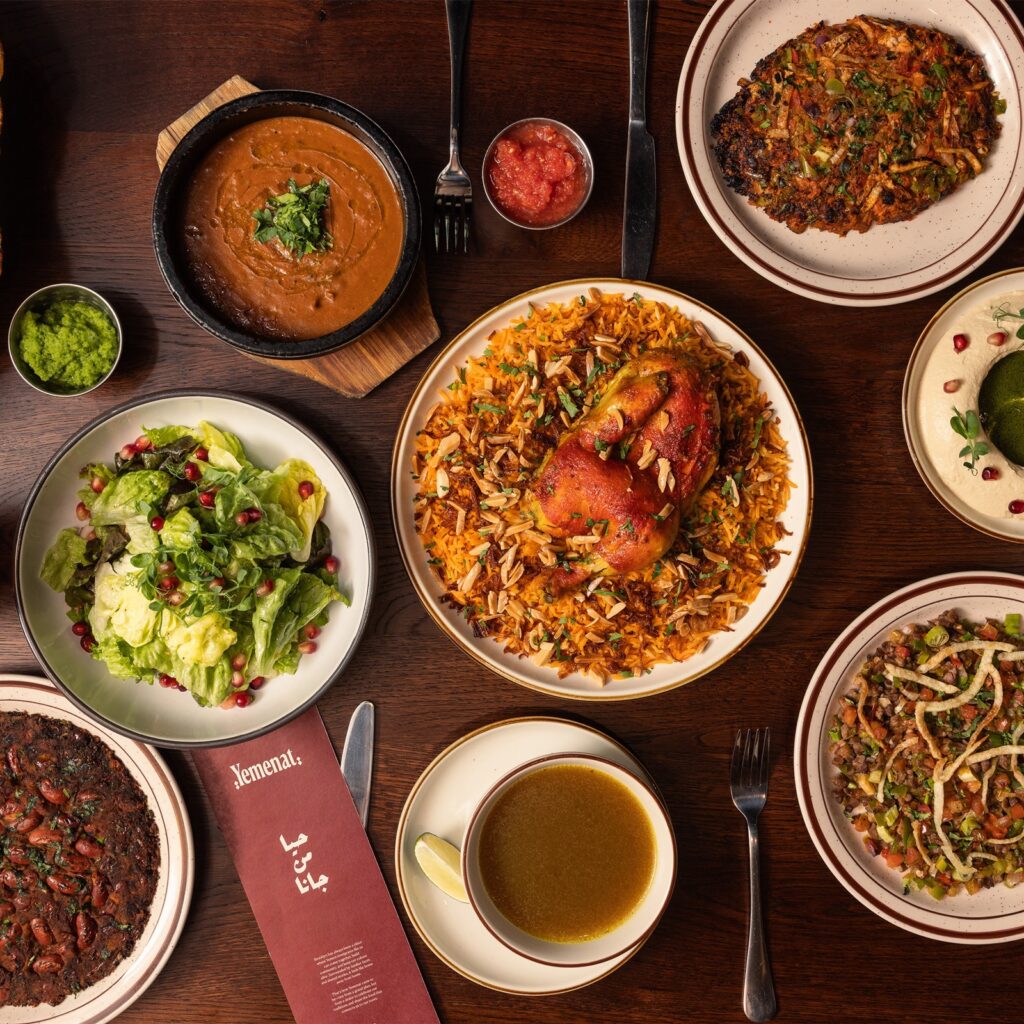
He estimates that about 95% of what the restaurant serves is made in-house. The kitchen blends its own spices from whole spices and makes its own ghee. Ingredients come from companies the restaurant trusts, and seasonal ingredients are incorporated whenever possible. Seasonal pomegranates, for example, allow the restaurant to use ingredients at their best while supporting the community around them.

Jaradat’s French culinary background also shapes how the kitchen operates. He approaches Yemeni cooking with the discipline of a French kitchen: standardization, consistency, and multiple checkpoints throughout the cooking process. The goal is every dish should taste the same whether you order it today or return months later.

That consistency matters for a restaurant that has received attention from both the Michelin Guide and The New York Times. Jaradat says that recognition comes with pressure. Once people are watching, he feels there is only one direction to go: up.

Still, Yemenat does not feel weighed down by its accolades. Much of that comes from the people behind it.

“We have a funny team in the back.” The staff comes from different backgrounds, and Jaradat himself is Jordanian, not Yemeni. That diversity has become part of the restaurant’s identity.

He also wishes more diners would explore Yemenat’s vegan and vegetarian dishes, particularly in the winter. He describes them as comforting, nutritious, and high in protein. And he encourages diners to approach the menu with curiosity. Even he has found himself surprised by Yemeni food. When he first heard about sanani kebab, he assumed kebab meant grilling. Instead, the Yemeni preparation is fried.That is part of the fun of eating somewhere new. Familiar words do not always mean familiar food.

“Yemenat is very welcoming. Have fun! Yemenat is all of us, front of house, back of house. It’s all teamwork.” That spirit is easy to recognize in the dining room. People arrive after work and school, meet friends and family, and settle in for dinner. It feels less like a restaurant trying to impress you and more like one hoping you will return.

Ultimately, Yemenat succeeds because the care extends from the kitchen to the dining room. The spices are blended in-house, the cooking is carefully standardized, and the menu balances tradition with creativity. Whether you are discovering shafoot for the first time, sharing a plate of lamb haneeth, or finishing with bint al sahn, there is a clear sense that every part of the experience is intentional. Yemenat is not simply serving Yemeni food—it is building a restaurant around food, teamwork and hospitality.

And as Jaradat puts it: “Come as a guest and leave as family.”


By Sameena Saudah

Sameena Saudah is a student at NYU studying Nutrition and Dietetics. Outside of calculating macronutrients you can find her enjoying a good book or trying to fulfill her lifetime goal of trying out a new restaurant every week. 


For over 25 years, the Campus Clipper has helped college students in New York City—and later in Boston and Philadelphia—save money and succeed in city life. We offer a digital coupon booklet with discounts on food, clothing, and services, plus an Official Student Guidebook with real advice on how to navigate college life in a big city. Our internship program lets students build skills, earn money, and publish their own e-books. Follow us on Instagram and TikTok @CampusClipper, and sign up for our newsletter to get deals straight to your inbox. To access the digital coupons, scan the QR code on our printed card—available in dorms, student centers, and around campus.

Share

Tasting with Thomas: Nai Brother Sauerkraut Fish

Sunday, October 4th, 2026

Long time no see! I’m wishing you a warm welcome back to the Tasting With Thomas series as we dive into our fourth edition: Nai Brother Sauerkraut Fish. In case you’re new here, I’m reviewing all the NYC bites that are friendly to college student budgets. Today I’ll be taking stock of what the Morningside Heights neighborhood has to offer Columbia and Manhattan School of Music students.

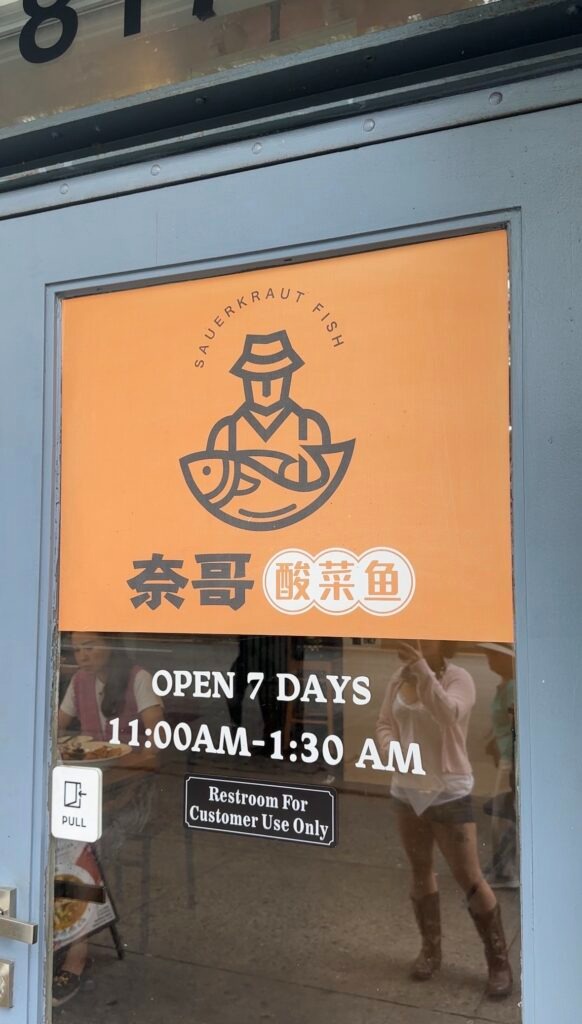
Nai Brother Sauerkraut Fish, located on Broadway and 109th.

Immaculately placed on Broadway and 109th st, and right next to campus craze HeyTea, you can’t miss Nai Brother Sauerkraut Fish on your stroll around Columbia’s campus. The restaurant’s windows are splayed with bright orange banners, each filled with giant photos of the chinese dishes being served. Varieties of soups, seafood, vegetarian, and meat options are on full display, so you can be sure that everyone will find something to satisfy their cravings here.

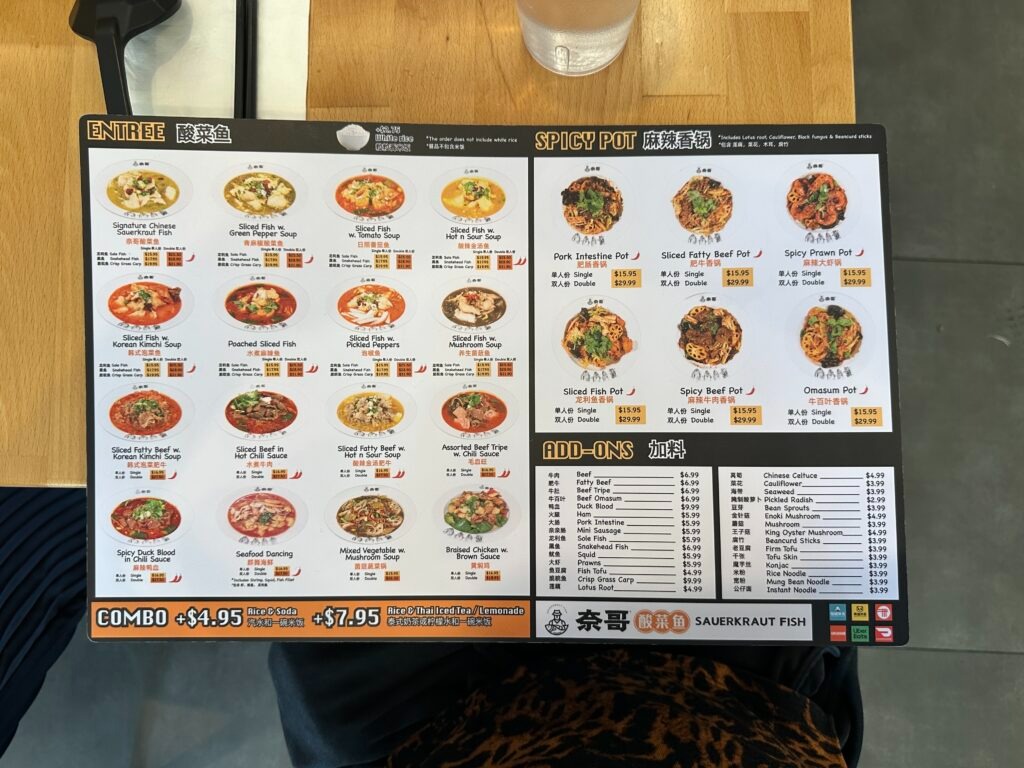
So many options!

Walking through the door, you’re greeted by a nice and open dining space. There were plenty of tables and chairs to accommodate everyone, and we were seated at a table right away. Our waiters greeted us with water and menus, and we set to work looking through the expansive menu. With so many options, we bounced ideas back and forth for at least five minutes each. Between the choices of soup or dry, veggie/meat/seafood, and spicy or mild, we had access to any meal of our liking.

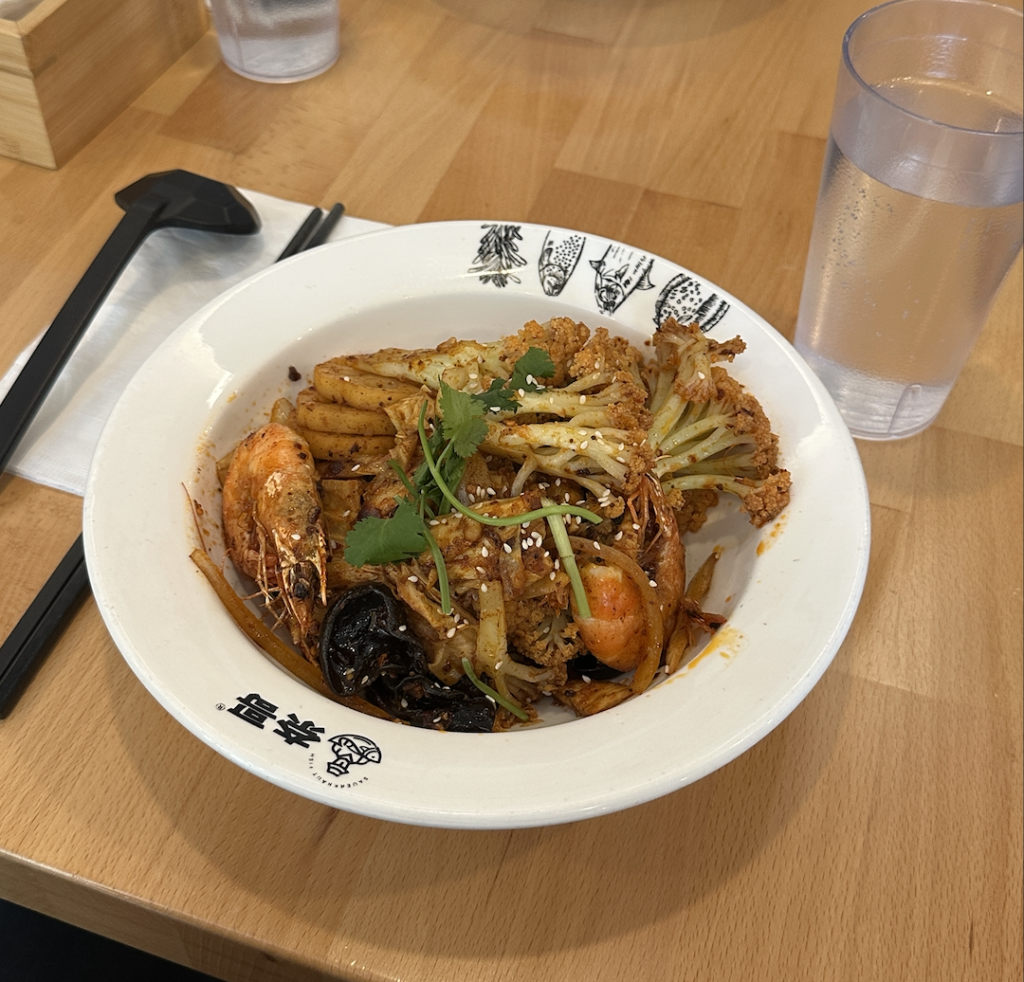
Spicy Prawn Pot!

I finally settled on the spicy prawn pot for my entree, and as soon as it came out I knew I had made the right choice. My dish was loaded with a mix of prawns, lotus roots, cauliflower, black fungus, and bean curd sticks all tossed together in a flavorful spice that packed the perfect punch. I can be a stickler about spice that trumps the flavor of a dish, and I was glad to say that this was not the case here! 

Thankfully our waiter kept our water glasses filled so I could cool down after the spice in my entree. Since the portions were so generous, I finished as much as I could and saved the rest for later. Content and fulfilled, I left Nai Brother Sauerkraut Fish with both a great story to tell and leftovers to savor!

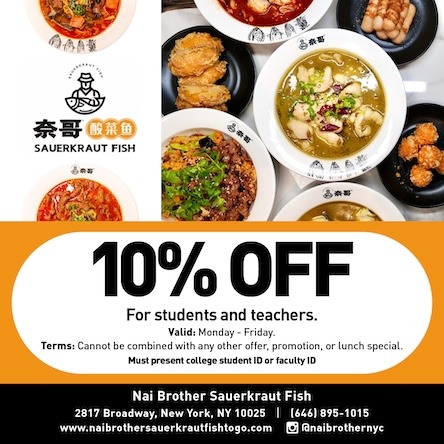
Thats all for this edition of Tasting with Thomas! Be sure to check out the flyer below to get your own taste of what Nai Brother Sauerkraut Fish is serving.


Make sure to take advantage of Nai Brother Sauerkraut Fish’s 10% off deal for students and teachers. This deal runs Mondays through Fridays, and cannot be combined with any other offer, promotion, or lunch special.

Written By Thomas Stewart, 09/26/2026

Author Bio: Thomas Stewart is an undergraduate student at Columbia University pursuing studies in creative writing and human rights in an effort to utilize media as a tool to vitalize the Black LGBTQ community. When Thomas isn’t off overthinking in his journal, you can find him on campus organizing for the Proud Colors (Columbia’s POC LGBTQ org) or playing a jam session at Columbia University Records club. Ultimately, his love for all things creative prevails throughout his life.


Connect with Thomas via Linkedin here!

Share

At Ghoroa, Finding Home in New York’s Little Bangladeshes

Tuesday, September 29th, 2026

Before a road trip could really begin, there was always breakfast.

On early mornings, my family would sometimes stop for stir-fried potatoes, warm paratha, and sweet halwa before leaving Brooklyn. Half-awake in the backseat, I would tear pieces of paratha with my hands, moving between sweet and savory bites while watching the city slowly disappear through the window as the familiar streets gave way to highways. Years later, I still think about those breakfasts and find myself craving that oily feeling on my fingertips. 

That is part of what makes Ghoroa so meaningful to me, with locations in both Jackson Heights and Kensington, two New York neighborhoods with deep Bangladeshi roots. For me, the Kensington location carries an especially personal connection. I grew up in the neighborhood, so walking into Ghoroa feels a little like walking into a memory.

Established in 2004, Ghoroa has become a neighborhood staple. People come in after long days, families gather around tables, and plates arrive with the unmistakable confidence of food meant to be shared. It is also remarkably affordable by New York standards: nothing on the menu exceeds $35, with most dishes being in the $10-20 range, and the portions are extremely generous. 

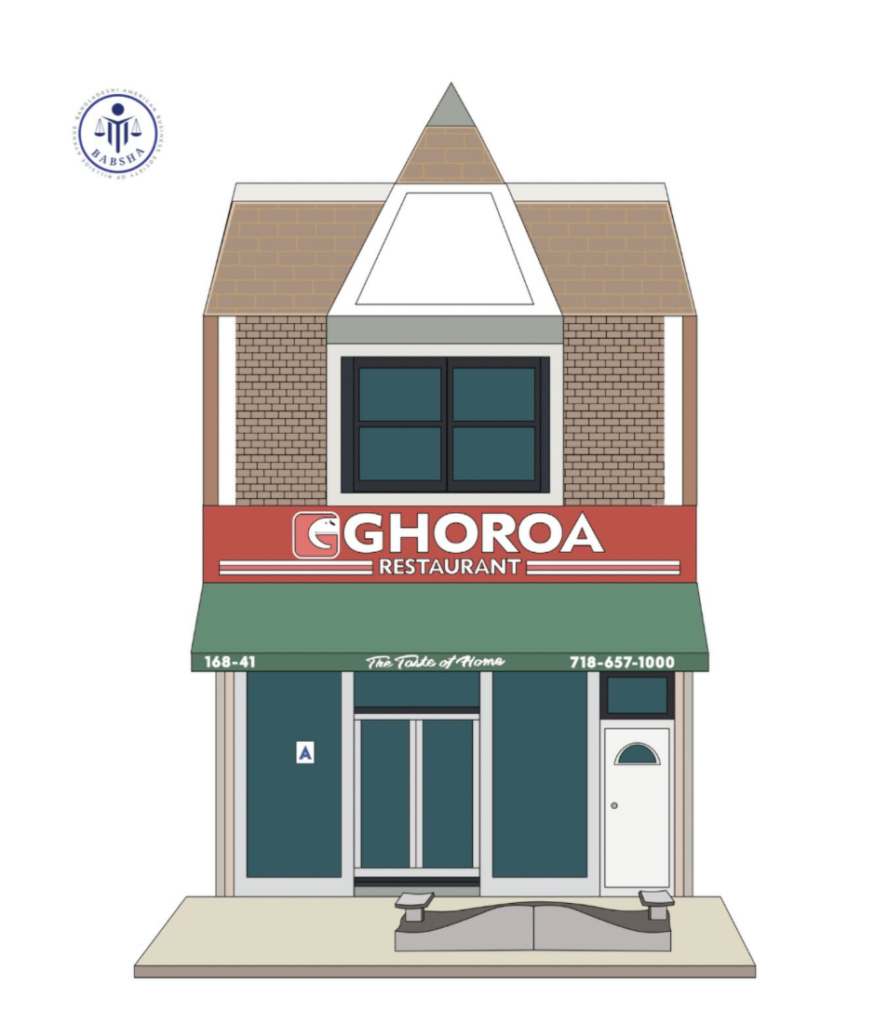
Illustration of Ghoroa Restaurant by BABSHA

I would start with the beef tehari, a close cousin to the biryani but with a more fragrant aroma and more subdued spice. The classic roast and pulao is a must have — it pairs tender chicken with a rich, yogurt-based curry and rice. And, if you make it there on a weekend, look for the kacchi biryani, the traditional Bangladeshi style biryani born in the capital, Dhaka. 

But Ghoroa’s real charm is not just what comes out of the kitchen, but who is behind it. Moms and Aunties. Women who seem to possess the ability to cook for fifty people without breaking a sweat. They are making the food that reminds people of home, even when home is thousands of miles away.

For New York’s immigrant communities, food can make thousands of miles feel like a manageable distance. A plate of rice and curry can carry memories of a city left behind. Restaurants become gathering places, and for someone who has never been to Bangladesh, sitting down to a plate of tehari can be a small way of stepping into that world.

And that is the magic of food; you do not need to share someone’s history to share their table.

And if you find yourself in Jackson Heights, you might as well commit to the adventure. Make a whole food crawl out of it. Start with Bangladeshi tehari at Ghoroa, wander around for some Nepali momos, and wash it all down with an Indian mango lassi. Or, if you are at the Kensington location, grab your food to go and take the roughly 15-minute walk to Prospect Park, find a patch of grass, and turn lunch into a scenic afternoon.

You can start with a dish that is completely unfamiliar, wander through a neighborhood shaped by generations of immigrants, and end up sitting in a park eating food from a culture you may know very little about. New York makes that possible. Food gives you an easy way in. You can start with curiosity, stay for the conversation, and leave with a new favorite dish or just a better understanding of the people that make up the city around you.

So bring a friend. Bring your family. Come hungry. Ask what you should order. Try something you have never had before!


Craving something sweet? You have plenty of options with your school ID.

By Sameena Saudah

Sameena Saudah is a student at NYU studying Nutrition and Dietetics. Outside of calculating macronutrients, you can find her enjoying a good book or trying to fulfill her lifetime goal of trying a new restaurant every week.


For over 25 years, the Campus Clipper has helped college students in New York City—and later in Boston and Philadelphia—save money and succeed in city life. We offer a digital coupon booklet with discounts on food, clothing, and services, plus an Official Student Guidebook with real advice on how to navigate college life in a big city. Our internship program lets students build skills, earn money, and publish their own e-books. Follow us on Instagramand TikTok @CampusClipper, and sign up for our newsletter to get deals straight to your inbox. To access the digital coupons, scan the QR code on our printed card—available in dorms, student centers, and around campus.

Share

The Art of the Food-Crawl

Tuesday, June 30th, 2026
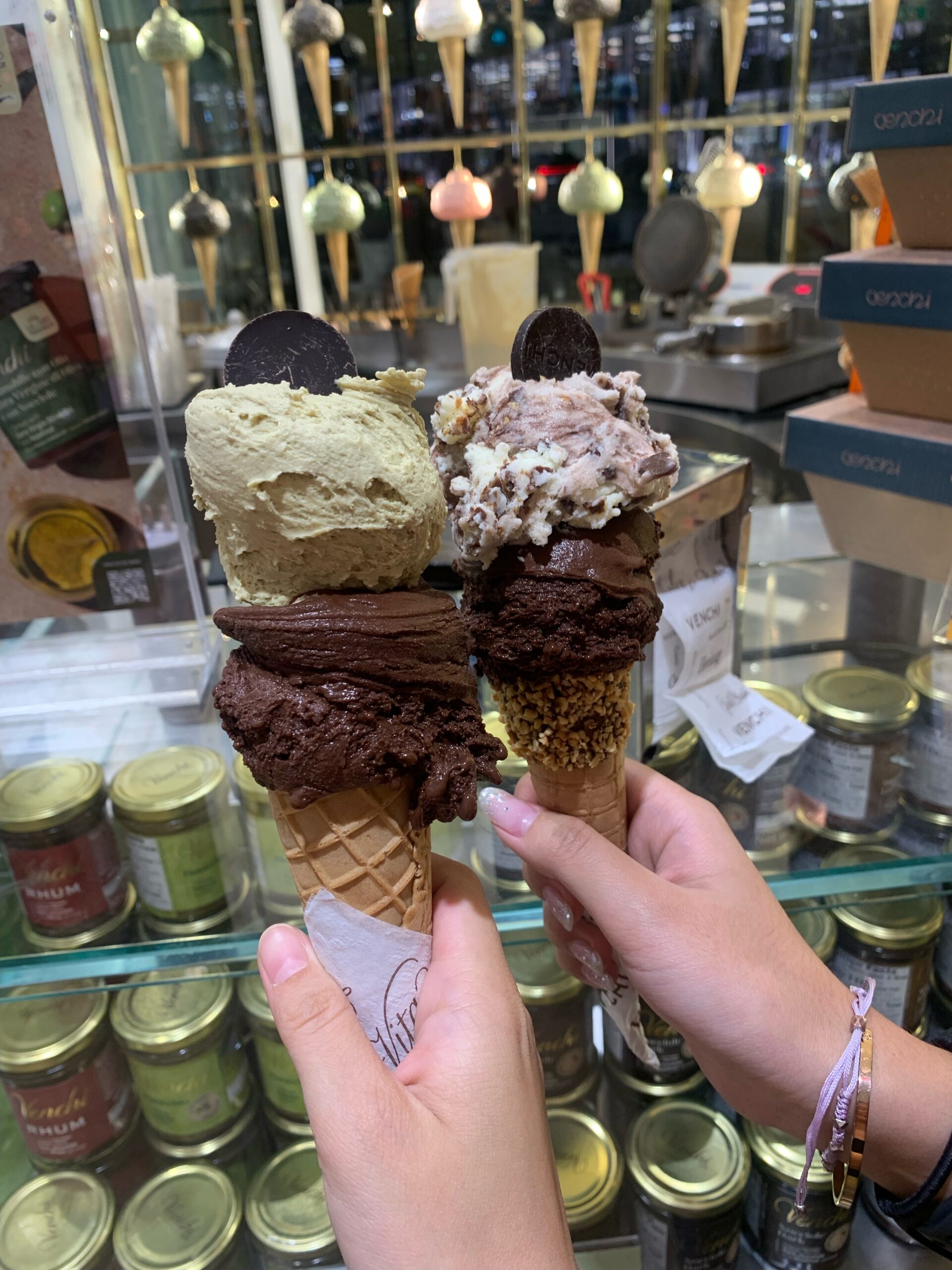
Photo by Alyssa Hong. Image is of two cones of Venchi Gelato.

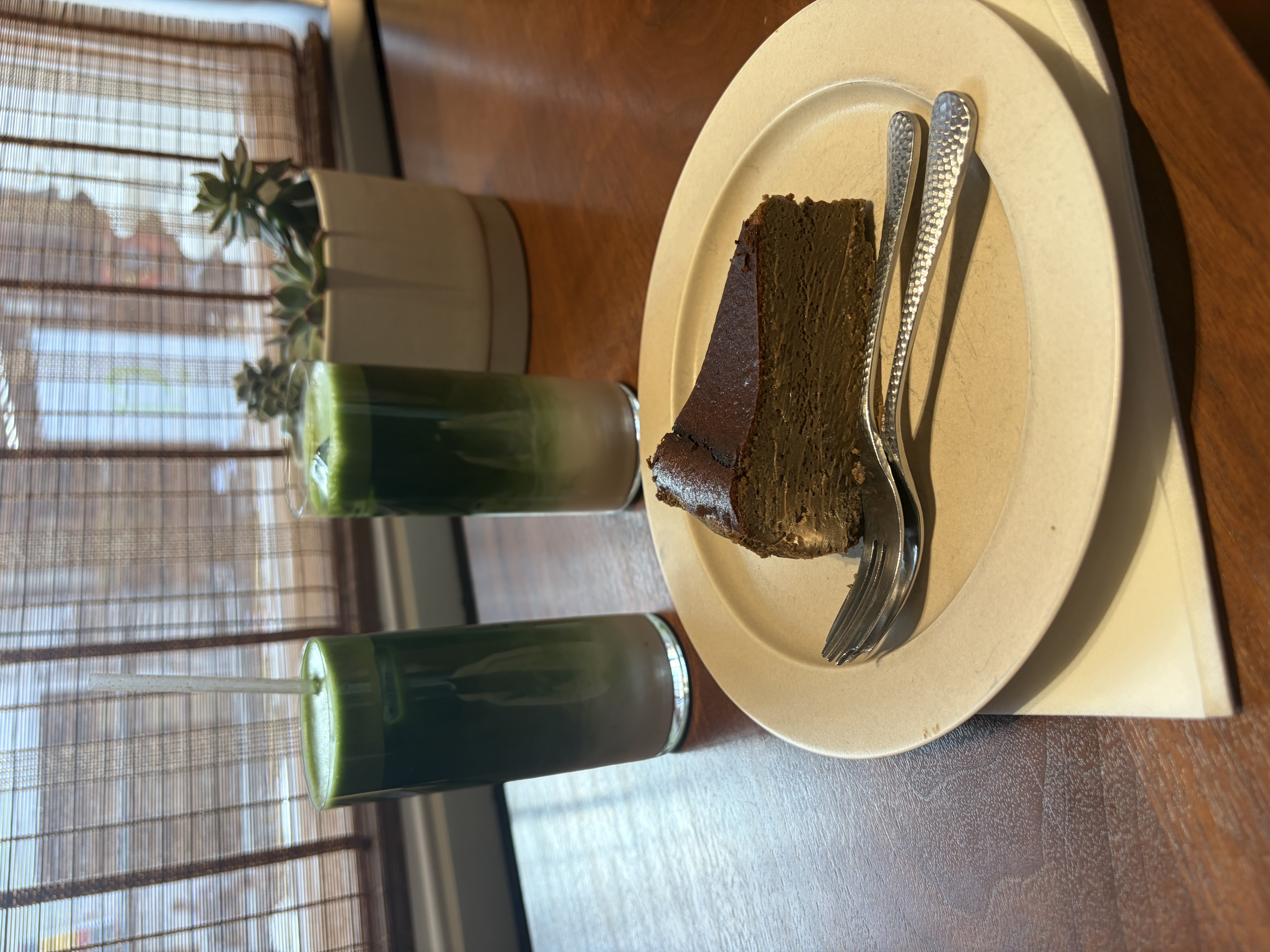
West Village: Rain is flooding the roads and soaking our clothes. Ky and I are sharing an umbrella while walking through Bleeker Street. Hunger shoots through our bodies, enraging our souls nonetheless. In front of us is our savior: a Japanese grocery store. We carefully wrap up our umbrella before entering through the doors. Snagging affordable sushi, our selections are being scanned quickly by the impatient cashier. I hand them a twenty and receive my change before I can put the receipt in my bag. I fumble. On the same street, we find our guilty pleasure: matcha. We secure a matcha parfait, napkins, and some forks for our food. It is only then that we begin to scout for a non-soaked place to devour our food. Pushing each bite into my mouth, the insatiable hunger subsides, overtaken by a taste of pleasure. We are not done. A sweet treat is a necessity to our food crawl before we may return to campus; so we hunt. 

Photo by Alyssa Hong. Image of Hojicha basque cheesecake with two glasses of matcha lattes at 12 Matcha in Soho.

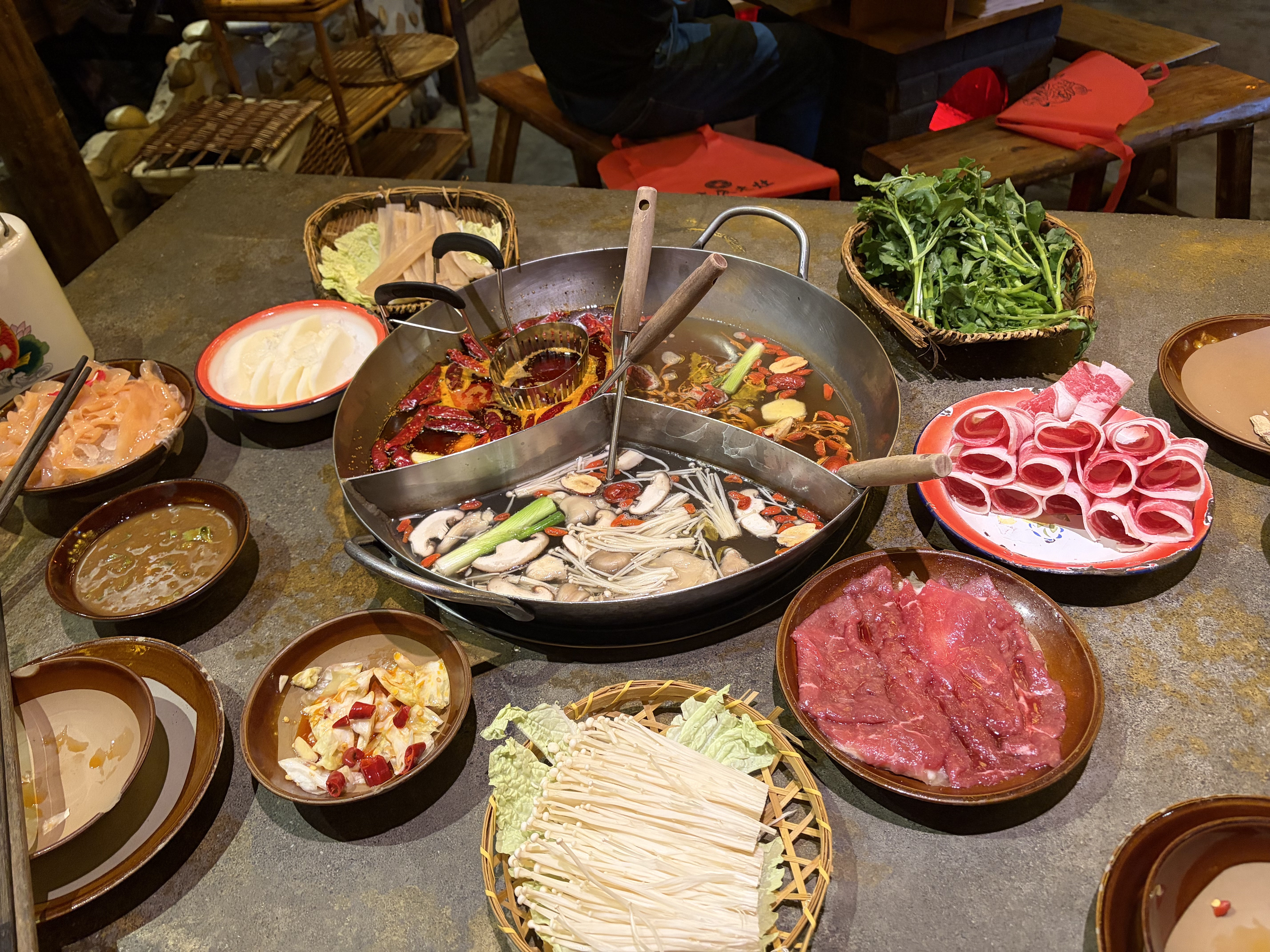
Flushing: Monica knows food better than I know myself — a severe understatement. Monday, she feels a craving for hotpot and I, the tag-along, devote my Friday to scheduling our outing. With each day, I can almost smell the sauce bar. Friday rolls around and there is a fire in Monica’s eyes like no other: a fire that tells you it is time for a feast. From 116th to 42nd, then we transfer to make our way towards Queens. As we emerge, a sense of panic hits me. My vision is engulfed in a sense of crowdedness that I have never felt so helpless to. Taking my hand, Monica guides me through the maze of people to the most gorgeous hotpot place I have ever been to. A giant wheel sits in the very center. We order to share and the glory begins. Bite by bite, we extinguished the fire that began on Monday. Even soon, we find ourselves satisfied and grabbing the check. Every time is the same: Monica pays using her credit card and I sell her back. As we exit the huge wooden door of the soup-haven, we find milk tea surrounding us. Monica, however, is an outlier to this treat. She prefers the comfort of a Venchi gelato so we ride the train all the way down to her favorite location by 14th street. Sitting vibrantly, we are revived to our former selves. We remember the spark we had prior to the swap of exams or stress of early career development. We relax. 

Photo by Alyssa Hong. Hotpot spread in Flushing, Queens.

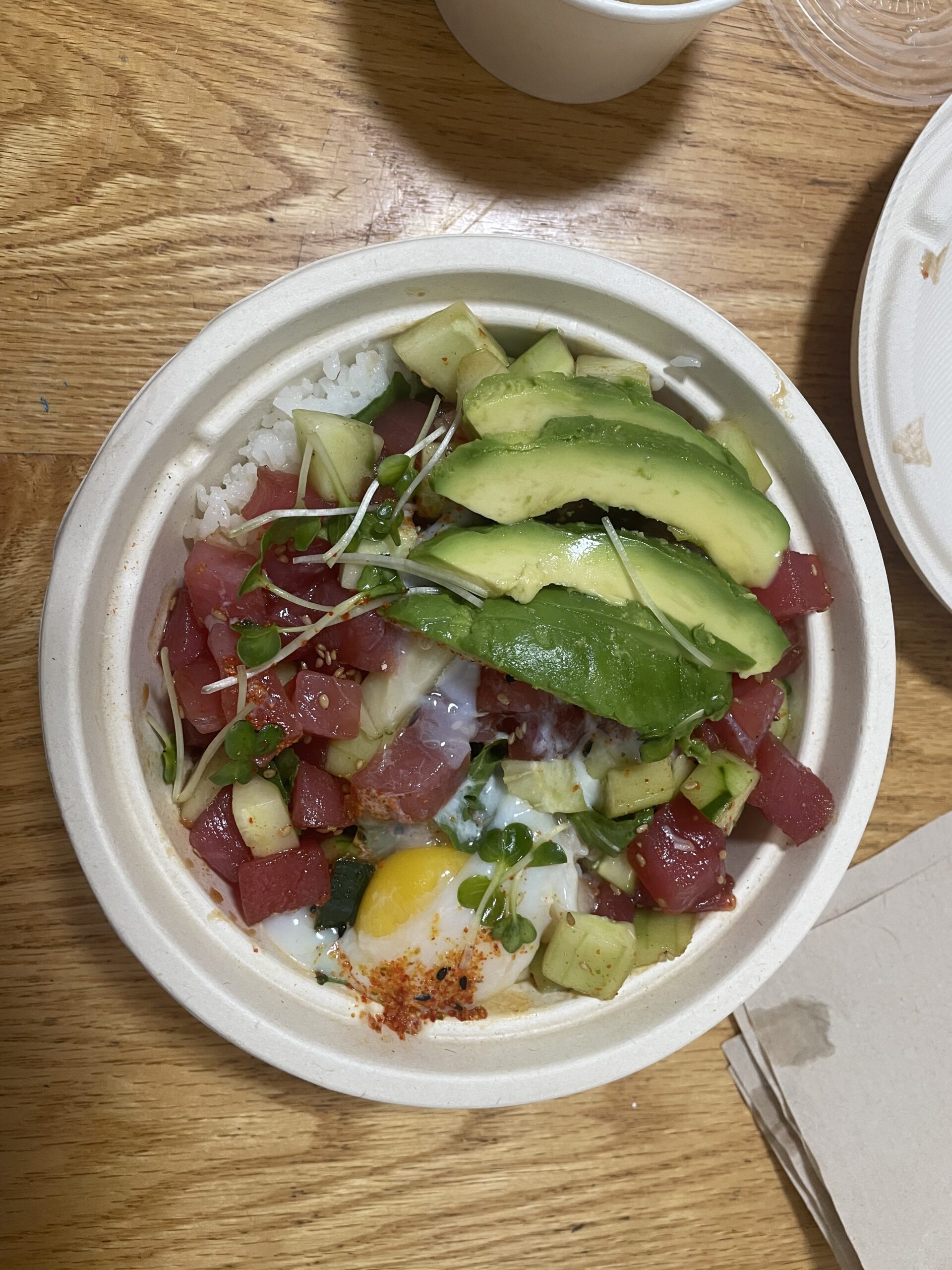
Local: “Have you ever tried MAKI?” This is how I spontaneously implore an idea to Irlene after our gym session. We are walking down Broadway after hitting the gym and I am in no condition to be starved. She luckily agrees to my sudden craving; thus, here we are walking towards Harlem. I order then she does too. She gets beef and I get tuna. As we wait, our conversation flows towards her week and mine. Soon enough, I found myself in an intensive discussion on race and gender in the middle of this small shop. Questions are being raised and we know better than to give each other fake assumptions. Taking our bags home, we head towards our dorm together as she is also my suitemate. Our strides slow to match our discourse about the world, and I take in her perspective as much as I can. Her insightful comments linger longer as I smell the sauces of our bowls leaking through the bags. My head is full of imagination — one about the picture of what this donburi will look like and two about the conditions of society and politics. From one another, we learn.

Photo by Alyssa Hong. Image is of a tuna doanburi from MAKI by Columbia University.

The essence of expected or unexpected food runs is that they create time for connecting with others and even learning from one another. Setting aside time to grab food with someone can be so meaningful even in the smallest of actions like choosing where to eat. It is an understatement to implore everyone to make food-crawls with friends a forefront activity.

In any case, your foodie author advises this as a crucial part of survival for college as a method to getting to know others outside the campus bubble you quickly become trapped in.


Sometimes a sweet treat can relieve us (even if temporarily) of our problems, especially when sharing with a friend. Use this coupon to have a taste of delicious treats!

By Alyssa Hong

Alyssa Hong is a rising Junior at Barnard College, studying Political Science with a minor in English. As a first-generation, low-income student, she writes about moving across the country for college and its adjustments. She utilizes entertainment, wellness/health/food, and fashion/beauty as methods to making new connections with others whilst always learning.


For over 25 years, the Campus Clipper has helped college students in New York City—and later in Boston and Philadelphia—save money and succeed in city life. We offer a digital coupon booklet with discounts on food, clothing, and services, plus an Official Student Guidebook with real advice on how to navigate college life in a big city. Our internship program lets students build skills, earn money, and publish their own e-books. Follow us on Instagram and TikTok @CampusClipper, and sign up for our newsletter to get deals straight to your inbox. To access the digital coupons, scan the QR code on our printed card—available in dorms, student centers, and around campus.

Share

Resisting Homesickness in Dining Halls

Tuesday, June 2nd, 2026

In a flash, everything I had ever known became what I left behind. Here I was standing in front of Barnard gates, waving goodbye to my last family members during orientation week. Watching so intently, my arms shook and eyes never left the uber that took my aunt and uncle to the airport. 

My feet shuffled through the courtyard as I scanned my newly-instated ID. Slowly dragging myself back to my dorm, time moved frame by frame. Eventually, I made my way to the corridor which held the only water fountain in the entire building. My legs staggered on their own as I paced through the dimly lit path towards the fountain. The bare white walls encased my body — my chest began to do a dance, an unbearable pounding. 

There at the water fountain was a girl, Diana, from my floor filling her Brita to the brim. We met earlier when our families helped us unpack our things and moved in. She too was Vietnamese; that was how we found connection. She turned towards me and smiled. 

“What are you doing here?” she inquired. Her hand lay on her hip as her smile transformed into a mischievous smirk. 

Flooding my eyes, my smile back to her broke into violent sobs. In an instant, I realized what I had lost — everything I had left behind. 

Diana threw herself over me; her arms wrapped around my mind tightly. She laid her head on my shoulder, and gently patted my worries away. After collecting myself, I slowly peeled away from her embrace. 

“Thank you.” 

No doubt I became miserably homesick. I was barely through my first week away from home, yet I had nobody to rely on for the simple pleasure of company. Without anyone to understand me, there I was in a foreign room holding all my things and regretting everything. However, as the sun set, there was a knock on my door. 

“Let’s grab dinner. Which dining hall do you want to eat at?” It was Diana again. 

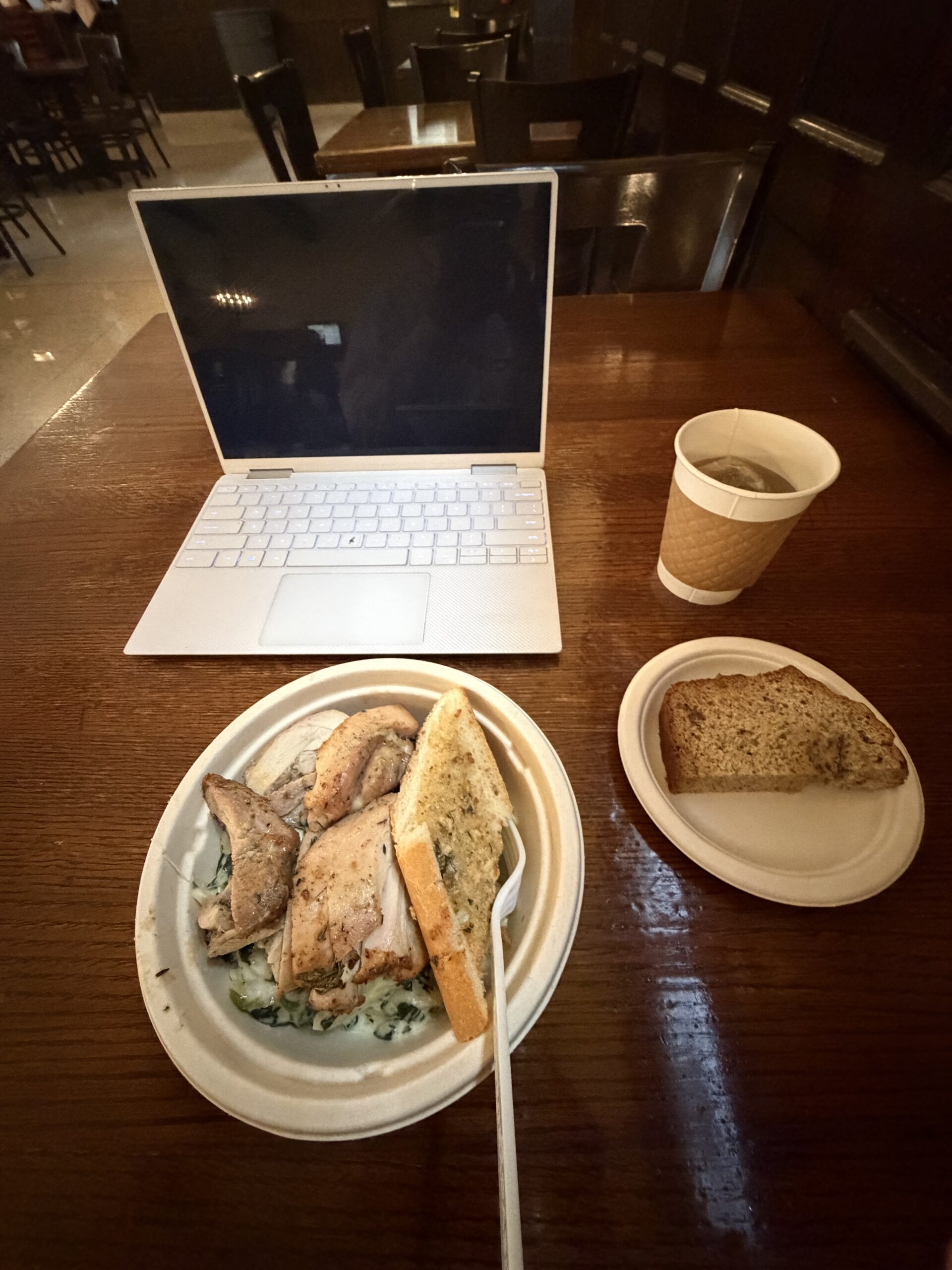
Baked artichoke pasta with grilled chicken accompanied by hot tea and banana bread for dessert at Alyssa’s favorite dining hall.

Pulling me out of my encased misery, we headed to the nearest dining hall for dinner. Back and forth, Diana and I took our turns grabbing cutlery and then drinks. My stomach began to swell with the realization that enjoying family dinners was something I could no longer do until the next time I went home. 

“Are you feeling better?” She broke my spiral.

“Yeah, I just think I really miss my family. Do you feel like this too?” 

“Not really but if you ever want to grab dinner again, just call me or text me, especially when you’re feeling down.” 

I never imagined how many times I’d ask to go to the dining halls to escape my suffering. Diana, Monica, and others — dining hall dinners, breakfast, and lunch became my new normal. We bonded over meals and our time became sacred. 

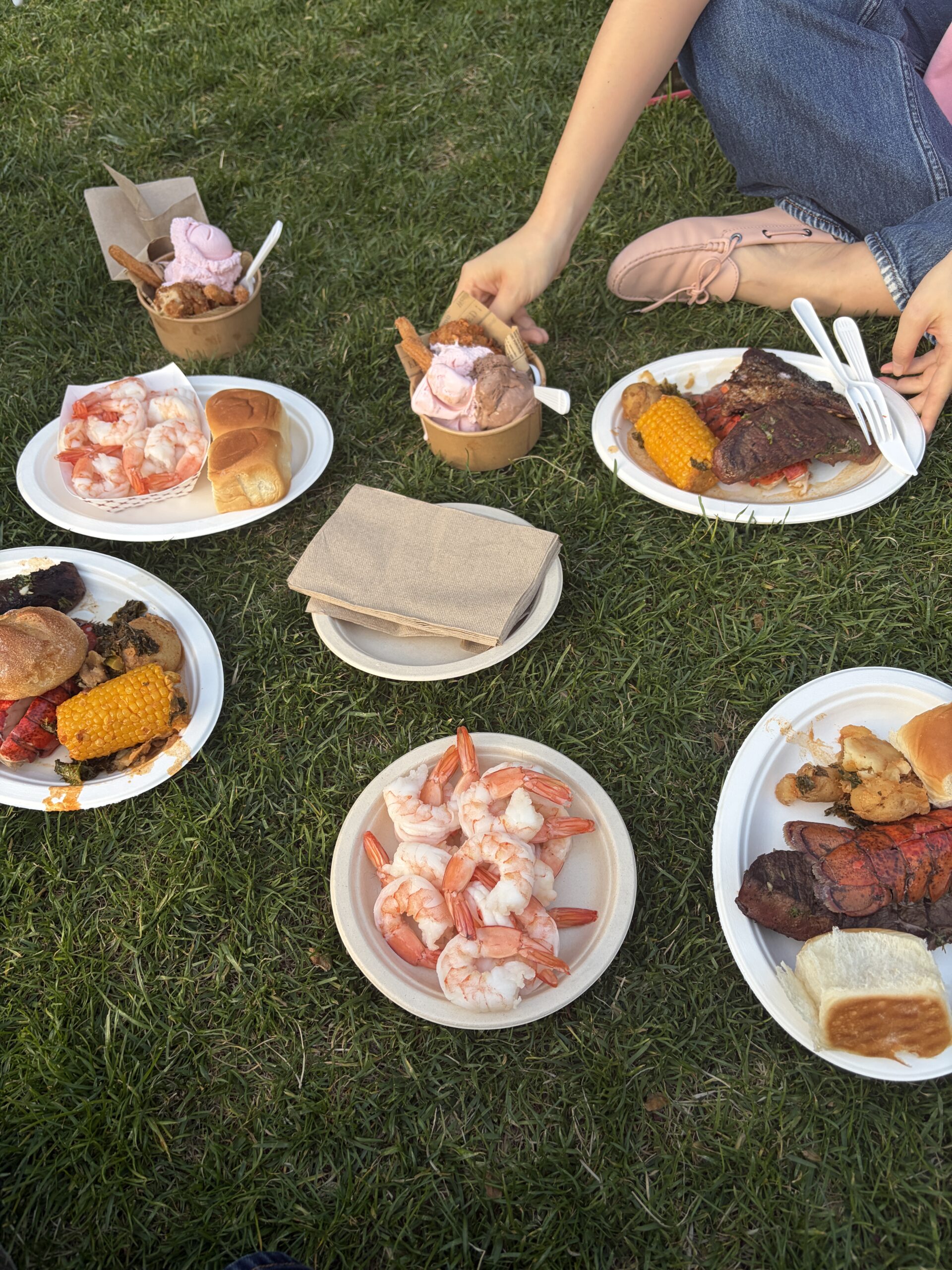
Surf and Turf day with friends on the lawns provided by a dining hall!

Asking about majors and classes began a routine that enabled my exposure to so many people who might too feel the way I do. In an instant, a conversation about dinner at a dining hall turns into an intimate ritual of connecting with others by learning about their experiences. Not only can this dinner excuse connect you to a web of others, it can enlighten one’s perspective. Many international students, FLI students, etc. hold unique experiences that, when shared, can build empathy and understanding of other cultures when one takes the time to really listen. Thus, these discussions over dining hall food inspires connection and learning by exposing oneself to a variety of perspectives. 

This transformation did not erase my homesickness, but it eased it. Some of my best friends were people I got to know in dining halls. As simple as it sounds, one of the best ways to overcome this lonesome feeling is to fill it with company — a key tactic that I implore anyone to use. 


Sometimes when home is all we can remanence about, food can connect us back to our culture. For me, when homesickness calls, I need something only Vietnamese food can fix. Use this coupon to get a discount on any Viet dish to bring comfort back through your stomach!

By Alyssa Hong

Alyssa Hong is a rising Junior at Barnard College, studying Political Science with a minor in English. As a first-generation, low-income student, she writes about moving across the country for college and its adjustments. She utilizes entertainment, wellness/health/food, and fashion/beauty as methods to making new connections with others whilst always learning.


For over 25 years, the Campus Clipper has helped college students in New York City—and later in Boston and Philadelphia—save money and succeed in city life. We offer a digital coupon booklet with discounts on food, clothing, and services, plus an Official Student Guidebook with real advice on how to navigate college life in a big city. Our internship program lets students build skills, earn money, and publish their own e-books. Follow us on Instagram and TikTok @CampusClipper, and sign up for our newsletter to get deals straight to your inbox. To access the digital coupons, scan the QR code on our printed card—available in dorms, student centers, and around campus.

Share

Finding home in your “far-from-home”

Monday, July 7th, 2025

There are so many perks about going to school that’s not in state, or for some, even in their home country. You get to meet new people, branch out from places that you are familiar with, try new foods from all over the world, and have a huge level of independence given the fact that you are farther from home. 

But at the end of the day… We are all human. We crave familiarity. We crave feelings of security, of belonging.

Of home. 

Coming from North Carolina to NYC felt easier than I know the shift has been for others. Despite living in NC, my heart belongs to Argentina: the home of Futbol (3x world cup winners!), Messi and Maradona, Mate (our signature drink), and dulce de leche. Having my roots there has allowed me not only to be bilingual, but also have experience with cities such as Buenos Aires or La Plata that are very similar in many ways to NYC (just without the European charm that cities like Paris and Buenos Aires share.)

La Casa Rosada (the pink house) in Buenos Aires. Our version of The White House

I travel there often to visit family, as everyone besides my immediate family resides there. I consider it such a privilege to be able to have that culture ingrained in me, and I take my experiences, knowledge, and customs everywhere I go. From eating dinner much later than Americans, to celebrating Christmas the night of the 24th instead of the 25th, these are traditions and ways of living that nothing, not even having lived in the United States most of my life, can ever change.

Messi art I saw on my first day in NYC last August

You may be thinking: “Avril, you don’t seem like you are complaining about NYC. So why write about missing home?” The reason for that is because of the diversity and range of foods, community, and culture that I can find from my home country, in the backyard of my college experience. In North Carolina, it is hard to find Argentine products, as it’s much more niche and the population of Argentines in the state isn’t as large when compared to Colombians, Mexicans, or other nationalities. In NYC, I have a much wider net of places I can try, which was just another reason behind many others why I decided to leave NC for NYC.

I have been to Queens, around Manhattan, and even just around Greenwich Village  to find people and foods that bring me back to my beloved country, even if I may be 8,521 km (5295 miles) away. One of my favorite foods from Argentina has to be the empanada.

Empanadas I had at Sabor Argentino in West Village

Similar to other Latin countries, empanadas consist of a dough (for us, flour-based but some other countries use maiz or other things to make the dough) stuffed with meat, cheese, vegetables, ham, or even fish (mainly for Easter). Argentine empanadas are very unique as they are often flaky, and our fillings consists of ground beef with olives, hard boiled egg, spices, and sometimes even raisins, sweated onions with cheese, caprese, spinach with bechamel sauce, and ham and cheese – among other varieties depending on the province. 

While exploring the city, I found one place in the Upper East Side called Criollas. Using organic, local ingredients, this small shop makes one of the best Argentine-style empanadas I have had in the city, and immediately takes me back home. The ones they sell at this shop are baked, and while we do have fried empanadas, the baked ones remind me of those my mom would make me growing up. They are so comforting on a cold day, and whenever I go I enjoy speaking Spanish to the employees.

Alfajores I made for Valentines Day in 2022

They also sell a small variety of sweets, such as alfajores de maicena and medialunas. Alfajores de maicena are these macaron style cookies made out cornstarch (maicena) and layered between a slab of dulce de leche (a thicker, much richer caramel spread) and dipped in coconut shreds around the rim of the entire sandwich cookie.

Medialunas I made in December

Medialunas are a cross between a brioche and a croissant, and can come either sweet or salty. The sweet ones have an almibar (or simple syrup) covering them, making them slightly sticky and irresistable. They also have versions with dulce de leche and powdered sugar which are so yummy.

They recently opened a location near the NYU Campus (right near the exit at West 4th Street), and with the student discount they have I went a LOT at the end of last semester.

Another place I found that serves some of the best Argentine food is around 50th Street at a place called Baires Grill. It is gorgeous inside, with dim lighting, chandeliers, and very fine decor. Everyone I have talked to at the place is from Argentina, and it’s amazing being able to sit down and talk to someone in your native language. I have been 3 times, and something I cannot stop ordering is their vacio, or steak. Brought to you with chimichurri (a parsley, onion, red pepper, and olive oil sauce for meats) and salsa criolla (red peppers and onions in olive oil), paired with the meat it tastes phenomenal and has a flavor that makes me want to come back for more.

A variety of Argentine dishes, including vacio, ensalada rusa, and milanesa napolitana

I always get it with the ensalada rusa, or russian potato salad, which is a common side dish in Argentina composed of potatoes, peas, hard boiled eggs, carrots, and mayo, which they also prepare exactly like home. You cannot leave this place without trying one of their desserts, my favorite being the flan with whipped cream and dulce de leche, which is the way we do it in Argentina, and it tastes just like the brasseries that I go to when I am back there.

Baires Grill in 50th Street

I spent my birthday dinner there back in May, and I went with one of my closest friends who is also Argentinian that I met at NYU. We bonded very closely over our home country, and I am so glad that I was able to find someone to share things about myself to someone who would understand, and speaking to someone in Spanish while being far from family allows me to feel relaxed and definitely makes the city feel comfortable.

Even if you call NYC home already, or if you come from the other side of the country, or even world – try to find what feels familiar. Find that link, that tether that keeps you grounded and makes the city feel exciting. For me, that was being able to meet people from home, which I usually do not have the chance to do when in NC, and being able to have restaurants that serve home cooked foods from Argentina, which I also don’t have in NC, nor my mom closeby to prepare. 

My friends and I in Times Square on my birthday night after eating at Baires Grill.

You are bound to feel homesick even in a city as fun and exciting as New York. But it’s how you manage your time, the people you find to be your closest friends, and the places  you keep going back to because of the people, the food, or the atmosphere, that will make this place be your second home. The city is your oyster after all.


Interested in empanadas? Love to cook? Get 10% off on quality ingredients to make your own at Lifethyme Market in the West Village every Thursday and Saturday with your student ID!


By Avril Walter

Avril Walter is a Sophomore at New York University, majoring in Drama and Cinema Studies. Coming from an Argentinian background, she loves anything related to futbol, steak, and dulce de leche. When she is not in class, she can be found playing the violin, running, cooking, or at the movie theatre.


For over 25 years, the Campus Clipper has helped college students in New York City—and later in Boston and Philadelphia—save money and succeed in city life. We offer a digital coupon booklet with discounts on food, clothing, and services, plus an Official Student Guidebook with real advice on how to navigate college life in a big city. Our internship program lets students build skills, earn money, and publish their own e-books. Follow us on Instagram and TikTok @CampusClipper, and sign up for our newsletter to get deals straight to your inbox. To access the digital coupons, scan the QR code on our printed card—available in dorms, student centers, and around campus.


Share

Chapter 1: Two Dreams, One Me

Tuesday, June 10th, 2025
A picture of myself at my favorite restaurant

Hey, welcome to my first-ever blog! I am Marzia—part engineer and part writer, but a full-time yapper. Stick around—it might get messy, but it’ll be fun!! 

My childhood was filled with countless ferry rides from my city to my grandma’s house. As the ferry cut through the gloomy water, I would always stare at the buildings along the shore. They didn’t seem just like structures—they seemed like interesting designs. I would spend the entire time staring at them, the windows, the colors, the shapes, the balconies, and the way they stood next to the water. Sometimes, I would even take wild guesses about the materials used or the money spent on building them, and at other times, I would be too busy wondering how the design could have been better.

It wasn’t long before I started experimenting on my own. On my eighth birthday, my parents gifted me a Lego set. It was more than a toy to me; it was a door to my imagination. I was building hundreds of buildings in a day, experimenting with each one. Each structure was a new challenge—could it be taller, stronger in the base, and more color-oriented? Every time I finished one, I would run around the house to show off my masterpiece. When I was done being showered with compliments, I would take it apart and start over, hoping to come up with a design even more intriguing. 

The more I built, the more I began to believe that I could be an engineer. And the more I believed, the stronger my desire to be one became. So I did everything I could to be an even better engineer. The math geek that I was, I tried to skip every basic arithmetic lesson and dive into the math involved in making real buildings.

As a full-on math nerd, I used to hate writing. But when COVID-19 hit and I was stuck at home with the same three people every day, I started to go a little crazy. That’s when I was struck with a shocking desire to journal. I wanted to write down everything I was doing in the day as if I was going to suffer from memory loss the next day. I still don’t know why.

The more I wrote about my days, I more I discovered that damn I can write?!?! I would try to be poetic and use insanely long formal words to describe simple things. Instead of writing “I took a sip from my cup of coffee,” I would try to write some ridiculous, thing as “I delicately sipped from my cup of coffee, allowing the warmth and bitter aroma to settle before continuing with my thoughts.” Before I knew it, I was writing stories, editing them, and proofreading them. 

As the days of the lockdown extended, my writing habit turned into a ritual I couldn’t live without. The engineer in me couldn’t believe it: I was falling in love with writing. When my works finally got published in physical books, I knew I couldn’t turn my back on writing anymore. 

Just like that, my dream of being an engineer expanded—I wanted to be a writer too.

Funny how the worst times can bring out parts of you that might’ve stayed hidden. Without COVID, I don’t know if I would’ve ever met the writer in me. I was so set on being an engineer, I never even thought about writing. But when everything shut down and the world got quiet, I had nothing but time and thoughts. Writing became my way of making sense of it all. What started as something to pass the time turned into something I loved. Now, I am someone with two dreams, two passions, and two identities.


Get 15% OFF your next slice (or whole pie — we don’t judge). Swing by Pronto Pizza and treat yourself— because good pizza with a discount is a win-win.


By Marzia Seemat

Marzia Seemat is a sophomore at NYU studying civil engineering and creative writing. She loves being close to nature, especially at the beach. Her favorite things include good food, morning tea, hour-long movies, and spending time with the people she loves.


For over 20 years, the Campus Clipper has been offering awesome student discounts in NYC, from the East Side to Greenwich Village. Along with inspiration, the company offers students a special coupon booklet and the Official Student Guide, which encourages them to discover new places in the city and save money on food, clothing, and services. At the Campus Clipper, not only do we help our interns learn new skills, make money, and create wonderful e-books, we give them a platform to teach others. Check our website for more student savings and watch our YouTube video showing off some of New York City’s finest students during the Welcome Week of 2015.

Share

Tasting With Thomas: Kyuramen

Sunday, March 2nd, 2025

Hey there! Welcome to the first edition of Tasting With Thomas. As an avid connoisseur of dining atmospheres, interesting flavors, and a good sweet treat, I’m excited to explore and share the affordable eats that New York City has to offer. For this first edition, my friend Eres and I made our way over to Kyuramen’s Columbia location to enjoy some creative Japanese cuisine.

As we ducked into the warmly lit eatery off Broadway Ave, Eres and I were instantly attended to despite the apparent business of the Friday evening. From the minimalist, Japanese style decorations to the private booth seating arrangements, the atmosphere of the restaurant was the perfect prelude to the notable dining experience that was to come.

Kyuramen’s inviting entrance.

We started our meal off with two Thai iced teas. While I personally was trying the drink for the first time, Eres had already proclaimed her status as a “division one milk tea critic”. After a good shake, we stabbed our straws through the plastic lid and took a sip of the refreshing milk tea. Even with Eres’ tenured taste for Thai tea, she described the drink as “Not too sweet but not too sophisticated. It’s that classic Thai tea flavor that can never disappoint.”

Our two refreshing Thai Iced Teas.

After working up our appetites with our drinks, we were ready for the generous variety of platters and entrees that Kyuramen had to offer. After some consideration, we decided to taste the Honey Comb and Yakitori Platters first. Between the chili garlic edamame, lobster & chashu salad ball, tamago egg, shrimp tempura, eel unagi, scallops, and seaweed salad, we had an incredibly diverse array of flavors to indulge in. Shockingly, those were only the bites in the Honey Comb Platter! Eres and I especially loved trying the more savory flavors like shrimp tempura and eel unagi while routinely cleansing our palette with the fresh seaweed salad. 

The Honey Comb and Yakitori Platters. Lots of variety!

The Yin-Yang Bowl and the Seafood/Eel Kamameshi dishes were our main entrees for the night. The innovative design of the Yin-Yang bowl aesthetically incorporated two different broths and toppings, making it the perfect choice for customers sharing their meal. As a pescatarian, I appreciated the opportunity to enjoy the same dish with Eres without sacrificing my dietary restrictions. Both Kamameshi dishes were beautifully presented with skewers of shrimp, prawns, and eel stuck into an unsuspectingly deep dish of sushi rice, egg, and spring onions. The bottomless base of rice was the perfect compliment to the salty seafood skewers we got to pick and choose from.

The full dinner spread, including two platters, two kamameshi rice dishes, yin-yang ramen, and the matcha tiramisu.

We concluded the dining experience with the cutest presentation of tiramisu that I’ve ever seen. What’s more, Kyuramen had put their own Japanese twist on the conventionally italian dessert by flavoring it with matcha instead of espresso. We were delighted to taste the distinct herbal tones of the matcha paired with the light mascarpone cream. “ I loved that it wasn’t too rich or heavy, but more airy and sweet”, remarked Eres as we set down our spoons with satisfied smiles.

The light and airy matcha tiramisu dessert.

As we stepped out of our booth and back onto Broadway Ave, we couldn’t wipe those smiles off our faces. Reflecting on the delicious flavors, the aesthetic presentation, and the welcoming hospitality had us in an afterglow of appreciation throughout our walk home. We didn’t just have a good meal, we had a good experience.


Written By Thomas Stewart, 03/01/2025

Author Bio: Thomas Stewart is an undergraduate student at Columbia University pursuing studies in creative writing and human rights in an effort to utilize media as a tool to vitalize our communities. When Thomas isn’t off overthinking in his journal, you can find him on campus volunteering for the local Housing Equity Project, organizing for the Black Student Organization, or playing a jam session at Columbia University Records club. Ultimately, his love for all things creative prevails throughout his life.


Connect with Thomas via Linkedin here!

Share

Intentionality as a Young Adult: Introduction

Friday, September 20th, 2024

Throughout my time at college, the main thing I’ve learned about myself is how much I value intentionality. College is a transitional period for everyone — a time where you can learn things about yourself that you typically would never be able to in the community you grew up in. I have loved my college experience overall, but the struggles I have had were due to a lack of intentionality in my decisions. 

I’m generally a pretty anxious person, leading to the occasional inability to make decisions in my life. The flipside of this is when I overcorrect, making rash decisions to try and force a type of spontaneity into my life that doesn’t necessarily need to be there. Mistakes like this have greatly complicated my relationship to many aspects of my life, and I’m sure many other college students feel similarly! 

Take my career path, for example. As someone with a vast amount of interests, making decisions on what I want to do in the future has been difficult. Looking out at all of my potential career paths I’ve felt a choice paralysis, not letting me make one concrete decision. Understandably, this makes looking for jobs even more difficult than usual for a college student. 

Another thing I struggle with is food consumption. I’ve always found it difficult to make food exciting. When I was younger, I struggled with consistent eating, more concerned with the way my body looked than nurturing it properly. While I’ve recovered from many of these more disordered thoughts, it’s still hard for me to view food normally. Oftentimes, the thought of cooking for myself and knowing what’s best for my body creates a similar type of paralysis to my career aspirations. 

The best solution I’ve found for both of these things is in fact one and the same — the aforementioned intentionality. When I feel anxiety that threatens to cripple my ability to take full advantage of the life I’ve been granted, I allow myself to take a step back. Instead of letting myself wander through life without a clear vision of what I’m doing moving further, I work best when I’m able to sit back and identify what I find valuable. This is the main theme of what I want to impart to readers throughout the course of this guide. 

Photo Credit: https://flic.kr/p/9Qp7B7

In the book Intentions and Intentionality: Foundations of Social Cognition by Bertram F. Malle, human cognition is said to be impossible without intentionality. This explains my personal connection to the concept, and why I place so much emphasis on it. Intentionality has helped me find ways to make food exciting again, which has actually also led to a career opportunity! In later chapters, I’ll go over how my renewed love for food has led me to  professional writing opportunities and created a job that I never thought I would want. 

This has been another part of intentionality for me — placing value in the work that I do. I only spend my energy on jobs I’m truly passionate about and I feel like feed me creatively. There are plenty of ways to make and save money while following your wildest career dreams, as long as you’re intentional with how you go about it. The best example of this is the very platform I’m writing this on, the Campus Clipper blog. Campus Clipper provides college students discounts for plenty of activities we would want to take part in anyway, but makes them more accessible to all. Finding niches like this is the number one way to truly be intentional with your money and time, particularly in college. 

The rest of my chapters will focus on a plethora of other ways you too can identify your genuine interests, and create value through your everyday life. 


Blick has saved so many film sets for me before with their vast array of art supplies. Just make a student customer account to receive a 10% discount for yourself to check it out!

By Izzy Astuto

Izzy Astuto (he/they) is a writer currently majoring in Creative Writing at Emerson College, with a specific interest in screenwriting. His work has previously been published by Hearth and Coffin, Sage Cigarettes, and The Gorko Gazette, amongst others. He is currently a reader for journals such as PRISM international and Alien Magazine. You can find more of their work on their website, at https://izzyastuto.weebly.com/. Their Instagram is izzyastuto2.0 and Twitter is adivine_tragedy. 


For over 20 years, the Campus Clipper has been offering awesome student discounts in NYC,  from the East Side to Greenwich Village. Along with inspiration, the company offers students a special coupon booklet and the Official Student Guide, which encourages them to discover new places in the city and save money on food, clothing, and services.  

At the Campus Clipper, not only do we help our interns learn new skills, make money, and create wonderful e-books, we give them a platform to teach others. Check our website for more student savings and watch our YouTube video showing off some of New York City’s finest students during the Welcome Week of 2015.

Share

Chapter Five: The Comfort of Home-Cooked Meals

Monday, July 15th, 2024

One of the biggest benefits I think I had of staying home for college was and is the home-cooked meals. Being a New York native, it is par for the course to eat out on your breaks in college or during work. However, rarely do I hear about the college students or New Yorkers who bring home-cooked meals (or the occasional lunchable—no shame!) with them to college or work. I don’t think I would have survived overspending on eating out as an unemployed college student. Even once there was money flow, I had to properly budget my money if I was to survive New York City’s living costs however long I needed to.

The biggest expense after rent and utilities is food, of course. As a single woman, if I didn’t still live with my parents, it would have cost me thousands more monthly to live a comfortable life in New York City. I have heard plenty of horror stories about college students who either dorm or live off-campus forced to live paycheck to paycheck trying to decide whether to use their little money left on rent (or tuition/loan payments) or food. If there is any advice I can give, it’s to save as much as you can if your family is willing to financially support you. If not, split your payments with roommates if possible. Life is so much better when you don’t have to be hyper-independent.

As much as I really wanted to move out of my parent’s two-bedroom apartment in the Bronx at 19, I knew I didn’t have a plan in mind. And I hadn’t yet developed trust in my ability to feed myself without my mother on hand. From that point to now, I have understood the importance of conserving money, energy, and time. It might be true that you have to spend money to make money, but you also have to make your money grow and last enough so that you don’t have to work your entire life. Start through being mindful of what isn’t worth your “MET” (money, energy, and time), and assess how much of your MET is being wasted. Then, invest in people, places, and things that will maximize your MET.

Food is fuel. And given how quickly time elapses, food should be as healthful and last as much as your money is making it. That’s why buying in bulk is the best. The less grocery runs you have to make after still having a steady supply of food, toiletries, cleaning supplies, and other household items needed for daily or weekly use, the more money, energy, and time you save every month. Money isn’t just important in this equation—the more time you invest into your health, the more time and energy you will have to live your life.

Half-eaten mac & cheese my brother made me.

Home-cooked meals are exactly one of those things that will maximize your MET. According to an Aetna article, home-cooked meals are proven to be healthier than takeout meals, giving us a lower calorie intake, a more health-conscious mentality, and mental productivity. As a New Yorker, home-cooked meals have brought me closer to a slow-living lifestyle I would like to live more of if and when I decide to move out of the city. Eating out (and going fast in general) may get us many of the things we want and need at a convenient speed, but constantly engaging in consumptive habits will at some point remind us we need to slow down.

My college campus was one of the few places where I felt I could slow down. Even while under the social pressure to move and act fast, there were always designated spaces to be in stillness and be encouraged to not over-consume in body, mind, and spirit. Making use of the college food pantry (and pre-made lunches), the shuttle bus, counseling services, the college library, and more are great investments towards getting more for less, and building a life of growth instead of consumption.


The deli always comes in clutch! Save on groceries with 10% off!

By Daeli Vargas

Daeli is a recent graduate from the City College of New York with a BA in English and a publishing certificate. She is from the Bronx and is very passionate about all things literary. She hopes one day to publish many books of her own and share her passions worldwide.


For over 20 years, the Campus Clipper has been offering awesome student discounts in NYC,  from the East Side to Greenwich Village. Along with inspiration, the company offers students a special coupon booklet and the Official Student Guide, which encourages them to discover new places in the city and save money on food, clothing, and services.  

At the Campus Clipper, not only do we help our interns learn new skills, make money, and create wonderful e-books, we give them a platform to teach others. Check our website for more student savings and watch our YouTube video showing off some of New York City’s finest students during the Welcome Week of 2015.

Share