Archive for the ‘onCollege’ Category

Baby Steps to Community

Sunday, June 30th, 2024

“Hey there!”, “Good morning!”, “How can I help you?”. Greetings like these graced my ears a million times while I lived in California. It was so common that it seemed universal. It was a normalcy that I took for granted. 

It wasn’t till I hopped on a plane across the country and moved into my dorm at Columbia University that I realized just how much of a privilege those pleasantries were. Instead of being greeted with warm, genuine smiles, I was met with blank stares and indifferent attitudes. It was a shock to go so unnoticed in such a densely populated space. Maybe the fact that people are so ubiquitous in New York City reduces the impulse for human interaction. Maybe people are so caught up in the hustle and bustle of their own lives, they don’t have the mental capacity to acknowledge their own neighbors. Whatever the case may be, the difference between social interaction in California and New York City is undeniably apparent.

A snapshot of Washington Square Park. So many people in the same place, concerned with themselves. Taken on 35mm film.

For a while, this variation left me stunned. I felt like a fish out of water when my “please” and “thank you”s were met with confused faces. While this was certainly a culture shock, it was one that I was able to adapt to and eventually overcome. I’m all about appreciating the culture into which you are moving, but I also believe it’s important to remember where you came from. In this spirit, I chose to modify the way I carry myself in New York City. It’s important to curate a sense of community in your first few months of college, and this is virtually impossible without reaching out to people and starting conversation. With that being said, here’s a strategy that’s helped me retain my friendly West Coast mannerisms in the big City.

My advice is to begin with baby steps. Attitude and atmosphere are invisible characteristics, so it can be a surprise when they shift around you. I first noticed that my surroundings were different when the people on the street looked past me without a second thought. When I realized this, I had to take a step back and a breath inwards. What was I doing here? Should I be changing the way I act in order to fit in? These were the questions I had to ask myself as I was acclimating to the city. My answers all centered around the fact that I wanted to grow from the person I had been back home. Even though the city promotes individualism, I knew that I wouldn’t be able to grow without learning from people as well as my academic studies. With that in mind, I started practicing kindness in small gestures, like saying thank you to the security guards stationed at my residence hall, asking the dining hall workers how they were doing, and even holding open the door for other classmates. These small actions were the building blocks for greater actions like reaching out to professors during office hours or asking new friends to hang out. So many factors can overwhelm you during your freshman year of college, it can be difficult to stabilize yourself. Little by little, you can set yourself up to handle these important interactions with ease. 

Ideally, we would live in a world full of friendly and constructive communities. Questions and conversations would flow seamlessly between people of all different backgrounds. New York City’s reality is one of closed-off individuals, but that doesn’t mean we have to surrender to the social stigma of cordiality. I’m nowhere close to being confident in talking to strangers, making friends, or curating community. It’s an experience that requires patience, practice, and even failure. I’m willing to endure a fit of discomfort in order to perform small actions of kindness. In my opinion, discomfort is necessary if your goal is to grow as a person. Though it may be difficult to immediately behave with grace, I encourage you to take the small steps for the sake of building your greater community. It’s the little things that go a long way!


By Thomas Stewart

Thomas currently attends Columbia University and plans to double major in creative writing and human rights. At Columbia Thomas is a staff writer for the City News section of the Columbia Daily Spectator, where he publishes articles that concern the West Harlem community. In his free time, you can find him practicing music or trying new vegetarian recipes


When you finally work up to reaching out to new friends, Color Me Mine can be a great hangout idea. Use code CAMPUSCLIPPER for $50 off!

For over 20 years, the Campus Clipper has been offering awesome student discounts in NYC,  from the East Side to Greenwich Village. Along with inspiration, the company offers students a special coupon booklet and the Official Student Guide, which encourages them to discover new places in the city and save money on food, clothing, and services.  

At the Campus Clipper, not only do we help our interns learn new skills, make money, and create wonderful e-books, we give them a platform to teach others. Check our website for more student savings and watch our YouTube video showing off some of New York City’s finest students during the Welcome Week of 2015.

Share

Balancing The City

Thursday, June 20th, 2024

Screeching metal wheels, passing footsteps, and foreign languages flood your senses when walking down the average New York City street. For myself and many others who didn’t grow up in the hustle and bustle of the city, it can be quite an adjustment. Exploring and understanding your new college environment is a challenge on its own, but I believe it’s important to venture beyond campus walls and appreciate the city that is at your fingertips. Even if you’re moving into the city with an open mindset, it can be overwhelming to know where to start. While my time in New York has been limited so far, I’ve picked up on a few tips that might be helpful to the average New York City freshman. 

First things first, it’s very important to understand your immediate surrounding area. New York City is gigantic, complex, and diverse. With a population that speaks over 200 languages, includes over three million foreign born residents, and houses the most ethnic enclaves in the country, there’s certainly a lot to discover. Even though there’s a whole city to explore, it’s best to start with a home base. Get familiar with your surrounding community! The best way to accomplish this is to walk around, which is convenient, since NYC is one of the most walkable cities in the U.S! As a student at Columbia University, I took it upon myself to become aware of the surrounding Harlem area. I remember walking to so many places that seemed interesting to me during my first few months of college. From cafes, to barbershops, to parks, I was intentionally exploring all my immediate area had to offer me. Ultimately I found success and satisfaction in doing so! One of my favorite cafes in the city is just a 15 minute walk from campus, and my barber is only 10 minutes. Google Maps can be really helpful when it comes to finding destinations. Virtually scanning for nearby restaurants or cafes is a great way to mentally plan out your excursions. Granted, it’s important to do your research on the safety of your given area. Use your best judgment, especially when traveling alone. No matter what region or borough your school is located in, I believe that exploring on foot is one of the best ways to go.

My current google maps view, showcasing all transit lines and saved locations.

Depending on your area, you might be able to get familiar with your surroundings within the first month of college. When you feel comfortable enough, you should take your ventures out past the university area. Seeing as college campuses typically alter the culture of their immediate surrounding area, it can be refreshing to explore the city outside of the “university bubble”. While your immediate neighborhood is the most accessible, it’s worth it to take the extra step to experience a more authentic side of New York. For destinations outside of walking distance, public transit is your best friend. New York’s subway system is incredibly extensive, boasting 472 subway stations and 3.6 million daily riders. Thankfully, the system is always accessible and can whisk you from one side of the city to the next with ease. One tip that helped me when it came to exploring the city was setting my Google Maps to transit mode. This allowed me to not only see the subway lines that I would be taking, but also get used to the layout of the system over time. It’s important to have some idea of where you’re going before you get on the subway. Since phone service can get shaky in between stops, I try to carry a paper map with me whenever I can. You can get a portable map for free by simply asking the worker at the booth near the turnstile. In my experience, it’s better to be safe than sorry!

Most important of all, it’s important to find a balance during your time at college. While life at university might feel suffocating at some points, it can be strenuous (physically and financially!) to go out on the town every night as well! Scheduling at least one outing with friends per week was what worked best for me. It gave me something to look forward to during the school week. I suggest trying out what schedule works best for you. Asking questions like “can I afford a $6 matcha five days a week?” or “is it smart to leave campus so late?” can help formulate a plan that makes sense. Finding this balance between campus life and exploring the city is what really makes going to college in New York City worthwhile. So whenever you make the time, I encourage you to get out there and explore all that the city has to offer!


By Thomas Stewart

Thomas currently attends Columbia University and plans to double major in creative writing and human rights. At Columbia Thomas is a staff writer for the City News section of the Columbia Daily Spectator, where he publishes articles that concern the West Harlem community. In his free time, you can find him practicing music or trying new vegetarian recipes


If you’re like me and love looking for new acai bowls, use code PYGCK at Tropical Berry Cafe for 40% off.

For over 20 years, the Campus Clipper has been offering awesome student discounts in NYC,  from the East Side to Greenwich Village. Along with inspiration, the company offers students a special coupon booklet and the Official Student Guide, which encourages them to discover new places in the city and save money on food, clothing, and services.  

At the Campus Clipper, not only do we help our interns learn new skills, make money, and create wonderful e-books, we give them a platform to teach others. Check our website for more student savings and watch our YouTube video showing off some of New York City’s finest students during the Welcome Week of 2015.

Share

Chapter One: You Could Be a ‘Good Girl’ and a ‘Bad Girl’

Monday, June 17th, 2024

When I first took a step on my college campus, I was terrified. Mostly of myself. Coming from a K-8 Catholic school education and a militaristically run charter high school, I had built a strong “good girl” persona that today I still find myself trying to deconstruct entirely. To my pleasant surprise, college was the right and best place for me to do just that.

As a preteen, I had this idea that I would transform into a completely different woman. A woman with major presence, high-energy, and is unabashedly quirky. All the qualities I think would have been fully-fleshed out before my 20s if I hadn’t been disciplined out of them. I could finally use my 20s to revive that excitable little girl that was always in me but was made small. She often found shelter in free-spirited fictional characters who’d given her (and me) inspiration for a satisfying womanhood. I was excited again to be outside of my home.

As an English major, I was already being taught how to think critically about gender, race, sexual orientation, and even Catholicism to a lesser extent. I peeled back layers of lies and false promises made to me by my parents and by the Church. I thought my parents’ home and the home of worship were places that would offer me belonging and safety, but I only ever felt like I was in constant danger. I was explicitly and implicitly told that the woman I was dying to be wasn’t the right woman and wasn’t the woman I was born to be. So, I became of afraid of her. Afraid of who I would turn out to be.

I have to admit that I often found it easier to learn about critical theory than I did putting it into practice in my everyday life. I was avoiding the reality that I had the experience that showed I wasn’t a little girl anymore, yet I wasn’t owning the “woman” label. And it was just that that I learned—the knowledge and experience that you gain outside college lecture halls matters just as much as on the inside of a college campus; and both can’t really exist without each other.

I grew to think of my college experience as my “bad girl” era. My personal Garden of Eden. It was where I could find so much forbidden fruit (both of the academic kind and of the human kind, if you know what I mean). There is so much hidden about yourself that requires constant discovery and rediscovery. And that is what happened with me; during college, I had realized there were sides to myself and to other people that were almost invisible to me because I had finally been given the space to have conversations that would have been useful to myself as a young girl and most likely for many other young girls too.

Girls just wanna have fun!

It was where I realized I had autonomy and choice, even if I had been raised in a culture that made me believe the opposite. While I had technically taken a women’s studies course in the latter-end of my college journey, I had learned so much about feminism through my other humanities courses. I wasn’t just inspired by these humanities courses but by just being in a space away from the surveillance of my parents at home. Inspired to make certain decisions for myself and even just for myself, as much as that sounded selfish to most around me.

I received a lot of pushback for just exercising my autonomy. For revealing my true opinions on different social and political issues. For furthering myself away from people and activities that I was considered to be culturally and politically obligated to in my childhood and adolescence. I grew up taught to be overly concerned about being moral (or more accurately, looking moral) for the sake of fitting an unrealistic mold made for imperfect humans. Us women and femmes know too well the pressure not to be the “bad girl.” Yet, there will always be something about a woman that makes her a rotten apple.

For me, it was keeping my head too far into my books—my bibliophilia. According to my parents, my love for reading and writing just turned me into an overemotional, self-involved, and distracted daughter. Initially, I thought my knowledge would stand in for morality considering how much importance my parents and general society give education. But then I realized that my parents mostly cared about the grades and social status my education would give them and myself whereas I mostly cared about how I could support myself and others with the knowledge I gained.

In the end, I believe many of us humans, especially women, are more than just completely “good” or completely “bad.” I love words too much to have continued latching onto this extreme form of language into my mid-20s. I prefer to recognize the complexity we all carry in us and that my “bad girl” era college gave me was never really a “bad girl” era. It was more like a me-growing-into-my-womanhood era. I will admit—though—that calling it a “bad girl” era always sounded like fun.


Get your color on with this coupon for the nail salon!

By Daeli Vargas

Daeli is a recent graduate from the City College of New York with a BA in English and a publishing certificate. She is from the Bronx and is very passionate about all things literary. She hopes one day to publish many books of her own and share her passions worldwide.


For over 20 years, the Campus Clipper has been offering awesome student discounts in NYC,  from the East Side to Greenwich Village. Along with inspiration, the company offers students a special coupon booklet and the Official Student Guide, which encourages them to discover new places in the city and save money on food, clothing, and services.  

At the Campus Clipper, not only do we help our interns learn new skills, make money, and create wonderful e-books, we give them a platform to teach others. Check our website for more student savings and watch our YouTube video showing off some of New York City’s finest students during the Welcome Week of 2015.

Share

It Creeps Up on Overachievers

Friday, June 14th, 2024

One of the consequences of being raised as a Golden Child is the need to overachieve. Connecting people’s love and praise to your achievements makes you addicted to them; thus, one milestone isn’t enough. Accomplishing more makes the love received feel constant, transforming it into a vicious cycle. Besides the unwavering need to prove ourselves to others, high-achieving individuals often share another issue. 

The Imposter Syndrome creeps in after every success, making us doubt if we truly deserve the love and recognition we earned. Slowly, we overachievers tend to become self-deprecating folks who mask their insecurities as humility. Our achievements are never rewarding enough. Since childhood, I developed the habit of downplaying my accomplishments, especially those related to academics. The awards I received were insignificant compared to those I didn’t get. To me, my winnings were unimpressive, yet my losses were defining because they proved that I was a fraud.

Image Credit: https://www.structural-learning.com/post/what-is-imposter-syndrome

As an adult and a college student, the Imposter Syndrome became so loud that I sought help. My therapist taught me tools to silence the self-loathing voice in my head; it is still there, but it is just a muffled sound now. Basically, any negative thought that creeps in after an accomplishment must be fought back by its opposite. For example, after winning four consecutive college English awards for my writing, my mind thought, “Perhaps, only three students were participating. That is the only way I could have won.” To defend myself (from myself), I had to force a different thought, which was something like, “In the unlikely event that only three students submitted, I was still the best of three. That’s awesome.” I didn’t necessarily believe the second thought, but manufacturing it made the first one less loud, less present, and definitely less important. It doesn’t always work, but when it does, it lets me enjoy my achievements some more. 

What has been proven more challenging is handling failure. When your perception of self-value is correlated with your wins, the losses become difficult to digest. The “humbling” thoughts you work so hard to silence when the Imposter Syndrome kicks in become as loud and untamed as children’s screams. Just like that, you can neither enjoy your accomplishments nor process your failures. As a result, you might be tempted not to try at all. If you don’t participate in this contest, apply for this scholarship, or try to enter this program, you would not risk the chance to lose and feel unnerving thoughts forming. It is so easy to be paralyzed by them, so much so that you won’t even try to achieve things again. Being an overachiever is not the best for your mental health, but neither is being a quitter.

Slowly learning to enjoy my accomplishments without belittling them

Practicing kindness and compassion towards myself is what has made failure bearable. When I win something and the Imposter Syndrome appears, I practice my internal dialogue; when I lose, I battle my defeating thoughts with encouraging ones. Once, I spent a whole semester writing a short story for a class and I was so happy with how it turned out that I submitted it to at least five contests for publication, getting rejected each time. My initial thoughts were that I should quit writing because I was simply not good enough; however, using the tools my therapist taught me, I fought myself back. I assured myself that the rejection could mean that my story needed more edits or simply that five judges didn’t find it special enough. “Five opinions don’t define my value as a writer,” I kept saying out loud until I believed it. 

I won’t pretend to tell you that this technique will work with every overachiever out there. I intend to show how I fight back my Imposter Syndrome, so you know that it is possible.  To my eyes, the line between being a high-achieving student and quitting is blurry, and easy to cross without even noticing it. The fear of failing and the inability to enjoy my success tempt me to stop aiming high, which is why I continue to harvest compassion. If you are an overachiever like myself, be aware of this syndrome, of the thoughts that try to push you down, and of the kindness you give to yourself. Seek support if you need to; we sometimes can’t do it all on our own.  


When the Imposter Syndrome appears, I eat arepas as my comfort food. You should try them too! Use this coupon for 15% off!

By Roxanna Cardenas

Roxanna is a Venezuelan writer living in New York City. Her works include essays, poetry, screenplays, and short stories. She explores fiction and non-fiction genres, with a special interest in horror and sci-fi. She has an A.A. in Writing and Literature and is working on her B.A. in English with a Creative Writing concentration.


For over 20 years, the Campus Clipper has been offering awesome student discounts in NYC,  from the East Side to Greenwich Village. Along with inspiration, the company offers students a special coupon booklet and the Official Student Guide, which encourages them to discover new places in the city and save money on food, clothing, and services.  

At the Campus Clipper, not only do we help our interns learn new skills, make money, and create wonderful e-books, we give them a platform to teach others. Check our website for more student savings and watch our YouTube video showing off some of New York City’s finest students during the Welcome Week of 2015.

Share

Finding Safety In Your Situation

Thursday, June 13th, 2024

Planting my feet on Columbia University’s campus for the first time is an experience I will never forget. Before me was an oasis of grand buildings decorated with ancient names like Homer or Herodotus that I’d never heard before. Like many college freshmen in New York City, I was moving to a new place with what seemed like the entire world sprawled out before me. That feeling can be exhilarating at times, but daunting during others. Between all of the new faces, foods, and experiences you encounter, creating a community for yourself is a must when it comes to maintaining health and even sanity. At this pivotal moment in one’s life it’s crucial to find safety in your situation. 

A photo of Butler library, showing the engravings of Homer and Herodotus.
Taken on 35mm film.

Honestly, Columbia’s makeup inherently discourages a sense of community: Tucked away in Morningside Heights, the campus removes itself from the hustle and bustle of Midtown, Downtown, and even its neighboring Harlem community. Beyond physical barriers like gates, the Ivy League university maintains its competitive nature. I’ve had countless conversations with fellow classmates who complain of the competition to do well in class. In addition to NYC’s toxic “hustle culture”, Columbia students also experience the pressures of the classroom. This especially applies to students interested in the STEM field, where professors often limit the amount of “A” letter grades they give per section. This can lead to tense relationships between students and classmates, perpetuating an “every man for himself” mindset. Instead of cultivating a community of students that uplift each other, this culture can incite gatekeeping and standoffish attitudes. In my opinion, this is counterintuitive to the nature of a university. This is especially disappointing as Columbia boasts of its location at the intersection of thousands of different cultures and people. Columbia doesn’t always encourage a culture of community, but there is still opportunity for the student to engage with their surroundings! It would be a shame to close oneself off from all that the university has to offer socially, geographically, and intellectually. 

Though it may feel easy to shy away from the whirlwind of life that bustles outside of your dorm room, I argue that you have to intentionally form a safe space for yourself in college. The first few weeks of freshman year are incredibly formative. It’s such a beautiful time of life where most people have no expectations, no friends, and no curfew. Everyone is so open to meeting new people and trying new things. It’s important to lean into this social spirit that possesses everyone at the beginning of the year. The end goal isn’t to make lifelong friends, it’s simply helpful to have people to say “hi” to or invite out for adventures in the city. When you maintain a friendly and open mindset you’re fostering a more secure environment for yourself, and for the general community. Through this mindset, we can discard the idea that one must fail a class for another to pass it. While college is an inherently individualized experience, that doesn’t mean we have to face it alone. 

Forming circles of people with similar interests or characteristics are always a great place to start. Basic commonalities were instrumental in forming new friendships. For me, I was able to connect with other students who had just moved from California to New York. These friendships provided an outlet for me to express my homesickness to someone who understood what I was going through. At the same time, I was also learning more about new people and cultures. Most importantly, we were able to support each other during one of the biggest transitions of our lives through the things we had in common. 

A group photo of some of the friends I made freshman year.
Taken on 35mm film.

I can’t sit here and tell you to hunt down all of the people from your home state on the move-in day. What I’m suggesting is to start with what you know. Whether it be where you’re from, who you want to become, or how you got here, finding friends through basic commonalities is the kickstarter for maintaining sanity at college for the first time.


By Thomas Stewart

Thomas currently attends Columbia University and plans to double major in creative writing and human rights. At Columbia Thomas is a staff writer for the City News section of the Columbia Daily Spectator, where he publishes articles that concern the West Harlem community. In his free time, you can find him practicing music or trying new vegetarian recipes


Use this 10% off coupon for an more private dining experience with friends at Kyuramen. It’s walking distance from Columbia too!

For over 20 years, the Campus Clipper has been offering awesome student discounts in NYC,  from the East Side to Greenwich Village. Along with inspiration, the company offers students a special coupon booklet and the Official Student Guide, which encourages them to discover new places in the city and save money on food, clothing, and services.  

At the Campus Clipper, not only do we help our interns learn new skills, make money, and create wonderful e-books, we give them a platform to teach others. Check our website for more student savings and watch our YouTube video showing off some of New York City’s finest students during the Welcome Week of 2015.

Share

Confessions of a “Golden Child”

Thursday, June 6th, 2024

You have probably heard about us. The children who behave just as expected—when the expectations are high—and the ones the family brags about. We are known as the “Golden Child” and can do nothing but shine.

Since birth, I was expected to be obedient, the treasure my parents could show the world and say, “She’s such a good girl; she gives us no trouble.” I was—indeed—so good at it. It was my innate talent. My behavior? Impeccable; my grades? Outstanding; and when my little sister was born, I was expected to be something even bigger than a golden child: a role model. And the gold chain of my success started weighing me down.

The heaviness projected towards the shaping of my personality. I became a people-pleasing, rule-following, perfectionist child who hated herself whenever she made a mistake. My parents often described me as “shy” to excuse my quietness, but the reason for my lack of words was nothing else but fear. Fearfulness and the inevitable anxiety that comes with it filled my days, living terrified of saying the wrong thing or acting the wrong way. Somehow, I had connected my high grades and good manners to my parents’ love; one couldn’t exist without the other.

Image Credit: https://www.choosingtherapy.com/golden-child-syndrome/

On the other hand, my little sister would grow to be as imperfect as she needed to be. She would misbehave and do badly in school. Still, instead of getting my parents’ disapproval—like I thought I would get—they hired tutors, stayed on top of her homework, and showered her with gifts anytime she’d get something higher than a D. Regrettably, this response from my parents planted a seed of resentment. I have always loved my sister, but growing up, I couldn’t help but be upset at the different treatments we got. I failed to see that this also affected her, after all, living while feeling you need to reach your big sister’s standards also creates resentment.

As an adult, I understand my parents didn’t think I needed special attention. I was always so put together, “mature for my age,” and such a good student that my achievements were just as expected of me. My A’s were not as impressive as my sister’s C’s. They didn’t do this on purpose or with bad intentions; my sister deserved all the attention she got. Unfortunately, the effects of this imbalance between us are clear. My sister is now a confident woman who understands her value is not determined by her mistakes, while I am still insecure and believe perfection is the only way to get people to love me. However, since I moved to New York City and away from the need to please my parents, I’m slowly finding my worth beyond my grades.

Finding what I enjoy outside of a classroom

When I got here, I made mistakes, so many mistakes. I misbehaved, revealed, and learned to forgive myself for that. I eventually realized my parents didn’t stop loving me even if I wasn’t their golden child anymore, so I forgave them for making me think that. My sister and I forgave each other and became the best friends we were always supposed to be. Most importantly, I took pride in my academic achievements for the first time in a long time. I always told others that “getting A’s is not something to be proud of” as a defense mechanism because it wasn’t celebrated in my house. For five years, I stopped attending school and concentrated on finding what made me worthy.

Throughout the quest to find my value as a human being, I decided to apply for college and allow myself to enjoy my life as a student. For the first time in a while, my high GPA made me proud because I saw it as the fruit of my efforts and not as a testament to my worth, a reason for others to like me. Sometimes it is still tempting to measure my value against my academic achievements because I am still unlearning many things. It is an ongoing, difficult journey but it is also necessary. To fully embrace my college journey, I must let go of my search for perfection and focus on what being a student is about: learning and connecting.

If you are your parents’ “Golden Child” right now and feel the suffocating burden that inevitably comes with it, I hope you understand soon that you are allowed to make mistakes, that you must aim high for yourself and not others, and that your value goes beyond how bright you shine.


Use this student discount for a delicious burger combo. Vegan option available.

By Roxanna Cardenas

Roxanna is a Venezuelan writer living in New York City. Her works include essays, poetry, screenplays, and short stories. She explores fiction and non-fiction genres, with a special interest in horror and sci-fi. She has an A.A. in Writing and Literature and is working on her B.A. in English with a Creative Writing concentration.


For over 20 years, the Campus Clipper has been offering awesome student discounts in NYC,  from the East Side to Greenwich Village. Along with inspiration, the company offers students a special coupon booklet and the Official Student Guide, which encourages them to discover new places in the city and save money on food, clothing, and services.  

At the Campus Clipper, not only do we help our interns learn new skills, make money, and create wonderful e-books, we give them a platform to teach others. Check our website for more student savings and watch our YouTube video showing off some of New York City’s finest students during the Welcome Week of 2015.

Share

The “More” That Everyone Needs

Thursday, June 6th, 2024

Big decisions like college commitment can sometimes generate confused or disapproving reactions. Personally, many people from my hometown couldn’t understand the desire to leave my home, the Central Valley, or California at all. Attempts to explain my visions of more changes, discoveries, and experiences were often in vain. My desire to leave home was too complex to express through small talk. Ultimately, it was a feeling that I alone could observe and act upon. Through a frustrating process, I learned to be okay with the fact that not everyone would understand my decision. I had finally convinced myself to chase my dreams, there was no need to prove myself to others.

A photo of myself after my high school graduation. Taken on 35mm film.

In my opinion, appreciating your home is just as necessary as leaving it. These two actions are intrinsically connected; they feed off of each other. Thinking back to my experience leaving California’s Central Valley, I remember feeling conflicted about my departure. My home has nurtured me for the past 17 years, but it had sheltered me from the outside world. Its mountain ranges entrapped me physically and mentally.

A prime example of this entrapment in California was my nit-picky diet. My rotation of meals peaked at a grand total of 5 different foods, usually different variations of bread and cheese. This “5-year-old’s diet” wasn’t based on dietary or allergic restrictions, but rather a psychological barrier that hampered any desire to try new things. Offers of basic foods like chocolate, chicken tenders, or scrambled eggs were immediately declined, leaving no room for consideration or entertainment. I had never deliberately tried those foods before, therefore I didn’t like them: nothing more. Without knowing it, I had developed this instinctive and irrational rejection of trying new things. 

New foods were an obvious example of my mindless rejections in the Central Valley, but in retrospect I notice other instances where I deliberately denied myself growth. Whether it be tasting falafel for the first time, trying on a pair of sneakers “outside my aesthetic”, or even talking to classmates I had never spoken a word to, my mental block prevailed in hindering new experiences. I had cultivated a way of living at home that was satisfactory, but not stimulating. 

For a long time, this life at home was enough for me. To a certain extent, consistency and familiarity is necessary when it comes to growing up. Still, there comes a time where you begin to prod at the edges of your confinement. It might be enough, but you need a “more”. When, how, or why this urge for change happens varies from person to person, for someone else, it might be a conversation that exposes them to their dream job. For me, a college visit to the Ivies instigated my yearning to grow during my sophomore year of high school. Whatever the case may be, it’s important that you react to whatever force is calling to you. Once you understand what you’re drawn to, I urge you to make it a reality.

In the heat of the moment, it can be so hard to stay true to yourself and trust your gut. As I write these words a year after I decided to attend Columbia, I can say with 100% certainty that leaving home was worth it. College offers a universe of new sights, cultures, flavors, emotions, and friends. It offers the “more” that everyone needs. The only catch: you have to take that initial leap of faith to embrace it all. Regardless of whether you have supporters or adversaries, it’s up to you alone to make your dreams a reality.

The final float of the 2023 Macys Thanksgiving Parade.
Taken on 35mm film.

By Thomas Stewart

Thomas currently attends Columbia University and plans to double major in creative writing and human rights. At Columbia Thomas is a staff writer for the City News section of the Columbia Daily Spectator, where he publishes articles that concern the West Harlem community. In his free time, you can find him practicing music or trying new vegetarian recipes.


Need to connect with friends and family after a big move? Faculty can get 25% off of AT&T’s unlimited everything plan with Faculty ID.

For over 20 years, the Campus Clipper has been offering awesome student discounts in NYC,  from the East Side to Greenwich Village. Along with inspiration, the company offers students a special coupon booklet and the Official Student Guide, which encourages them to discover new places in the city and save money on food, clothing, and services.  

At the Campus Clipper, not only do we help our interns learn new skills, make money, and create wonderful e-books, we give them a platform to teach others. Check our website for more student savings and watch our YouTube video showing off some of New York City’s finest students during the Welcome Week of 2015.

Share

My Experience with College FOMO: Choosing Studies over Parties

Monday, June 3rd, 2024

Not being a part of the action is one of the worst feelings for me–that I admit now. I am guilty of finding every excuse available in the book to study over hanging out with new friends, finding free events in the city, and getting college student discounts while at it too. You obviously don’t have to sacrifice one over the other, but I did think so the moment I started college. I partly blame high school for this.

Senior year of high school was stressful. We had to do presentations of our career choice detailing everything from the average annual income, work responsibilities, to the everyday work environment. Out of the 25 or so of us, only two students including myself did our presentation on journalism. I was so excited until I was met with cynical looks and comments like “That won’t pay much.” I felt so defeated because what this meant to me was that I was unprepared for college. I didn’t want to imagine my future was one HUGE question mark.

I felt even worse when I didn’t meet the deadline to register for early college courses to earn credits as a high school senior. It seemed like everyone already beat me to it. When the time came to declare what college we would each be going to, I had no answer. I had applied to about five different colleges—two SUNYs and three CUNYs. My first choice was SUNY Purchase, and I did get accepted. Until my father told me it was too far from home and couldn’t go. I felt betrayed by this decision because it could have finally been my chance to find my crowd. Every other college rejected me, and there came that lack of certainty again. 

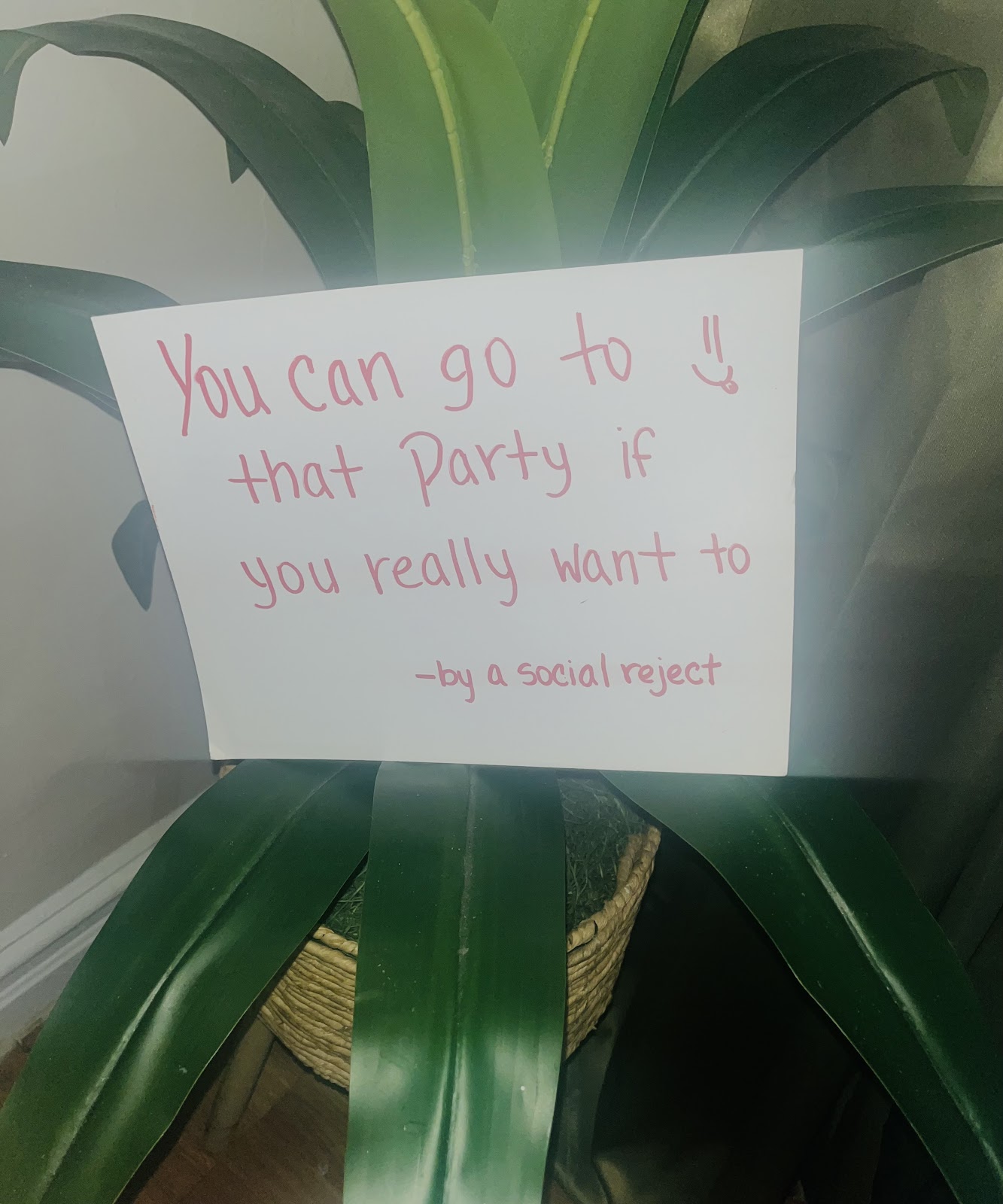
I have to give myself credit for knowing how to handle the rejection considering I was basically a social reject all throughout grade school and high school. I found it hard to relate to my peers–-probably had a lot to do with being sheltered and socially awkward. I ultimately found myself going the community college route as my ex-boyfriend advised me. While it wasn’t my first choice, I was relieved to have found someplace to go to college. And I ended up loving it there, too. It was like a second home.

I knew going into community college that I wouldn’t see many familiar faces. Many of my high school classmates practically followed each other to upstate New York for SUNY colleges. Many seemed to mainly want to go for the college parties. While I never considered myself a party girl, there was a part of me that wanted to feel “normal,” as much as I dislike that word now. Bronx Community College did have the occasional party, but it wasn’t the hottest place to be–-not in College Land nor in New York. After a while, I realized that I kept finding myself in unpopular places, and that had to be for a reason. This didn’t mean that I wasn’t a party girl (at least not publicly), just that there was a certain crowd I preferred being around. And certain places too. Like bookstores, cafes, libraries, or public squares. And call me weird, but I never used these places as personal study corners. 

Putting studies over parties during college has its benefits for sure. But you don’t need permission, especially not from your parents to let yourself enjoy a social moment for the sake of it. Stay on track, but also let yourself breathe. A party doesn’t have to mean the end of your studies. 

#JustPartyTings


As a final note, you might genuinely like going the route less taken like I did; no shame in that. Join the “weirdos,” for a change. And stay smart!


Save big and enjoy yourself at this Blue Man Group event using this students special offer!

By Daeli Vargas

Daeli is a recent graduate from the City College of New York with a BA in English and a publishing certificate. She is from the Bronx and is very passionate about all things literary. She hopes one day to publish many books of her own and share her passions worldwide.


For over 20 years, the Campus Clipper has been offering awesome student discounts in NYC,  from the East Side to Greenwich Village. Along with inspiration, the company offers students a special coupon booklet and the Official Student Guide, which encourages them to discover new places in the city and save money on food, clothing, and services.  

At the Campus Clipper, not only do we help our interns learn new skills, make money, and create wonderful e-books, we give them a platform to teach others. Check our website for more student savings and watch our YouTube video showing off some of New York City’s finest students during the Welcome Week of 2015.

Share

Don’t Take Home For Granted

Friday, May 31st, 2024

Whenever I tell people I’m from California, I usually get a range of surprised and intrigued reactions. “Oh really, Norcal or Socal?” or, “I’ve always wanted to go to LA” are frequent responses. My revelation is usually followed by the disclaimer that I come from the Central Valley, where it isn’t all flashing lights and sunny beaches. With that being said, I’ve always recognized that the Central Valley has a beauty of its own. It’s home to a cornucopia of fruits and vegetables, producing ¼ of the nation’s food according to the U.S Geological Survey. The towns that surround me boast the titles of “Raisin Capital of the World” and “The Nation’s Salad Bowl”. These small towns aren’t as glamorous as big cities like Los Angeles or San Francisco, but they still maintain their own qualities that make them noteworthy.

A photo of the vineyards in my backyard at home.

Social interactivity is another one of California’s endearing qualities. It’s not uncommon to walk down the street and greet other passersby with “goodmorning” or “how are you doing?”. Common courtesy extends to strangers, and hospitality embraces neighbors, friends, and loved ones. The plethora of produce available also functions as a bridge between people, forming and fostering relationships. Looking back on my childhood, I remember going over to my neighbor’s house to pick up fresh eggs and squash from their farm. Other times my neighbor would come over and we would eat cookies together. The sense of community and hospitality was so natural, it was second nature. Little actions like acknowledging each other, saying please and thank you, or gift-giving were customs that I grew up with. These interactions occurred on an individual level and served to foster a greater sense of community statewide. I never noticed that these manners were particular to the region that I grew up in until I left it. I can recall my first time on the subway, and immediately being aware that this wasn’t the place to ask “how’s your day going?”. Even though this would be completely normal in California, over time I’ve adjusted to the unspoken rules of the city.

Accessibility and connection were the things that I took for granted back in California. While I can only describe my personal experience in detail, I know that these feelings are natural and universal. I’ve bonded with so many classmates over reminiscing on the little features of our homes that we miss, most notably our favorite west coast coffee shop: Dutch Bros. However, this nostalgia is not limited to the small, agricultural towns that I’ve described so far. The value in changing one’s environment can apply to city natives as well. In a city like New York, you can especially differentiate your home on the regional scale as opposed to the state scale. A neighborhood like Harlem, which features a median age of 36, is predominately Black, and a median income of $58,489 is starkly different from a neighborhood like Riverdale, Bronx, which has a median age of 41, is predominately White, and a median income of $77,840. The important difference is not based on geography, but rather culture and experiences. By putting yourself in a new position, you’ll learn a lesson that is easier said than done: to not take your home for granted.

 Every home has aspects of it that are simply irreplaceable. It’s hard to leave them, but in my opinion it’s necessary. There is so much value from leaving everything you have ever known for something new. Regardless of your upbringing, the experience of moving to a new place with different foods, people, and customs will make you a better person. Not only will you be more knowledgeable about the world, but you’ll be able to appreciate your home from a fresh perspective.


By Thomas Stewart

Thomas currently attends Columbia University and plans to double major in creative writing and human rights. At Columbia Thomas is a staff writer for the City News section of the Columbia Daily Spectator, where he publishes articles that concern the West Harlem community. In his free time, you can find him practicing music or trying new vegetarian recipes.


While it may not be as fresh as the Central Valley, students and faculty can get up to 20% off on produce at Uptown Whole Foods.

For over 20 years, the Campus Clipper has been offering awesome student discounts in NYC,  from the East Side to Greenwich Village. Along with inspiration, the company offers students a special coupon booklet and the Official Student Guide, which encourages them to discover new places in the city and save money on food, clothing, and services.  

At the Campus Clipper, not only do we help our interns learn new skills, make money, and create wonderful e-books, we give them a platform to teach others. Check our website for more student savings and watch our YouTube video showing off some of New York City’s finest students during the Welcome Week of 2015.

Share

Chapter 10: Not Goodbye Just See You Later

Monday, November 20th, 2023

I suck at goodbyes. I always cry or make inappropriate jokes to get everyone to laugh instead of being sad. With that being said, I’m absolutely terrified to say goodbye to some of my best friends at the end of my senior year займ 10000 рублей.

Luckily, I am a part of my university’s five year Master’s program and a few of my other friends are as well. But there are still a few that I’ll have to say goodbye to that I’m worried will likely end in all of us sobbing hysterically.

Not that there’s anything wrong with crying. Crying is an extremely healthy way to let out emotions and anyone who says otherwise is jealous of the way we are capable of portraying our emotions. The only reason I’m scared to cry when saying goodbye is because I’m a very ugly crier, but that’s just me.

I learned throughout my years at college that crying is seen all around campus. Which may sound depressing as hell, but it’s really not. Sometimes I’ll just be walking to the dining hall during finals season and I’ll hear someone sniffling and no one bats an eye because it’s so widely accepted. This was much different than my experience in highschool, but it was a new kind of difference that I was excited to welcome into my life.

Anyways, back to saying goodbye.

This isn’t my first time having to say goodbye to my friends. When I left high school, all of my friends and I went different ways. It was scary, but we knew it was for the best. Specifically when saying goodbye to my best friend of 16 years (at the time it was only twelve years), I knew there would be some tears. Her school was online for the first semester due to COVID and my school was open so I was moving to my new home for the next four years. We spent almost every day together during the summer, even with the pandemic going on. We found ways to hang out outside and wore masks so that we were still safe while taking in all the time we had left together. But when the day came where I had to leave, we still cried.


My best friend and I our senior year of high school, before COVID

I realize now that it was a bit foolish of us to cry. We still see each other and keep in contact all the time. It wasn’t really a goodbye, but more of a “see you later!”. The only difference in our friendship was that we weren’t seeing each other everyday, but even still we can text each other whenever.

And with that, I’m reminding myself all throughout my senior year that things won’t be completely different to how it was last time. Even though we won’t be living on the same campus, only a few minutes walk between each other, I know I will still see my friends and my roommate again. We’ve already discussed how we’ll meet up whenever we can and will aim to continue our tradition of a “Friendsgiving”.

Like I said before with my high school best friend, we also can text each other whenever. Thankfully we live in a technology based society now and it is much easier to keep in touch with friends than it used to be. We can send each other TikToks or funny videos on Instagram just to let each other know that we are still thinking of one another. We can also keep up with fun things happening around us and make plans to meet up at such events. For example, my friends and I are both fans of the same book series and one of us discovered there’s a themed ball/gala to celebrate that book series happening after graduation. We all are excited to see if we can go to celebrate the start of continuing our friendship after school.

When my friends and I finish walking across the stage with our diplomas we won’t say goodbye. We’ll just be saying see you later.


Some great memories of me and my friends!

Summary:

  • Saying goodbye has always been difficult for me
  • Crying is normal and healthy!
  • I had to say goodbye to my best friend after high school, but we still kept in touch so it wasn’t really a goodbye
  • How to stay in touch with friends after college

Go out to eat with friends and enjoy some free drinks with this coupon and student ID!

By Mia Ilie

Mia Ilie is a student at Pace University, graduating in May 2024 with a degree in Writing and Rhetoric and a focus on publishing. She grew up in Rockland, New York and is currently living in Westchester, New York where she attends school and works at a local bookstore. You can always find her with her nose in a book or screaming to Taylor Swift with her friends.


For over 20 years, the Campus Clipper has been offering awesome student discounts in NYC,  from the East Side to Greenwich Village. Along with inspiration, the company offers students a special coupon booklet and the Official Student Guide, which encourages them to discover new places in the city and save money on food, clothing, and services.  

At the Campus Clipper, not only do we help our interns learn new skills, make money, and create wonderful e-books, we give them a platform to teach others. Check our website for more student savings and watch our YouTube video showing off some of New York City’s finest students during the Welcome Week of 2015.

Share