
Posts Tagged ‘campus resources’

Taking Steps Early Toward Your Career: An Interview with Eric

Thursday, July 2nd, 2026

Forming your own professional identity is one of the most daunting responsibilities that you take on in your new adulthood. Even after deciding which career path to pursue, there is still the issue of taking your first steps forward, and despite all of our pre-college research and planning for our post-university careers, many of us still find ourselves paralyzed when thinking about the “right” steps or choked by self-doubt when our first jobs don’t exactly meet our expectations or fulfill us in our current stage of life. So, thinking about how to begin fleshing out your resume and introducing yourself on the professional playing field, I decided to interview my friend, Eric, a rising junior at NYU and one who, in my opinion, is smart enough to get not only an early but also a strong head start.

A public policy major and prelaw student, he shared with me that the root of his professional interests lay with his high school speech and debate team, where he participated in an event that required him to briefly familiarize himself with different policy areas—like those related to the environment, energy, healthcare, and homelessness. He discovered a desire to delve deeper into a handful of these issues and began looking for organizations in his home state of California with youth advocacy programs. His search led him to an opportunity to “[work] closely with a couple offices in the California State Legislature,” with one of their notable accomplishments being the signature and passing of an environmental law. This experience, as well as those with other advocacy groups he connected with, introduced him to legislative networking and the acts of writing and lobbying for bills.
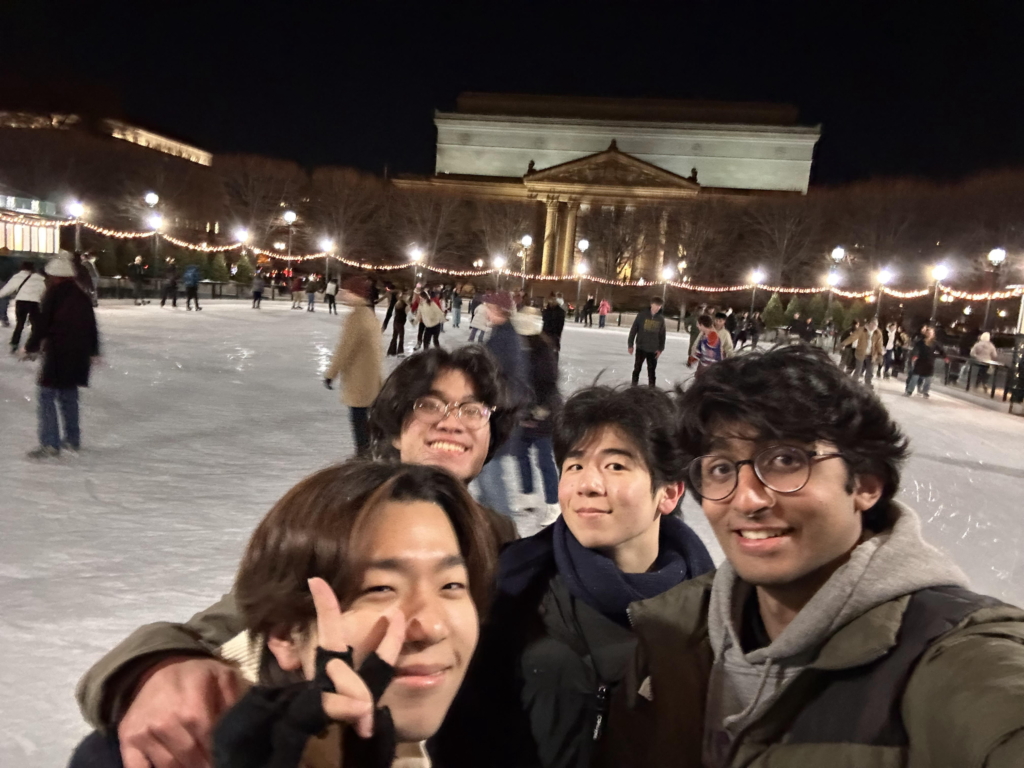
Eric (third from left) and his friends visited the National Gallery of Art’s ice skating rink while studying at NYU’s Washington, DC campus

However, beyond high school, Eric has undertaken two internship positions—one that allowed him to interact with policy on a more political level and another more centric to the practice of law. His freshman-year Congressional internship in Washington, DC, may not have been his favorite job thus far—due to what he described as witnessing “the political division firsthand” and being delegated very few tasks. However, he still recognizes its value in that he gained heavily credible connections. For example, by maintaining “contact with [his] intern supervisors,” should he ever ask, he may be provided with very strong letters of recommendation, especially with the signature of his congressperson. He also had the chance to learn more about which specialties he isn’t interested in pursuing. Originally, he had considered work in politics but has now discerned that he’s no longer interested in the political side of policy, which he described as “an important clarification to get out of the way early on.” Meanwhile, his current internship for a small plaintiff-side law firm has allowed for him to closely observe attorneys at work, serves as motivation for his LSAT and law school preparation, and has helped to further refine his career goals.

Speaking on the coexisting external and internal motivators propelling him forward, he explained that, throughout his life, he has been advised to act according to the “natural next step,” but “when [he] got to college, [he] realized…[he doesn’t] have [his parents, mentors, or coaches]…to tell [him] what to do next.” So, he allowed his competitive nature to spur him onward. He finds that when he “[surrounds himself] with ambitious people,” the sense of “peer pressure” drives his productivity. However, he’s not blind to the limitations of this method, noting that though “comparison of yourself to others is inevitable, your way to close that comparison gap in your mind is to learn to push yourself forward every day.”

This, of course, may be perceived as a skill, but in my opinion, it is a mindset sustained by identifying one’s reason for attaining a goal—and, even now, Eric is actively investigating his own. He shared that his current internship “has taught [him] that there are problems only resolvable by legal means,” and, for him, “this is such a powerful realization as [he tries] to figure out why [he wants] to go to law school.” 

Often, we concern ourselves with wondering how to overcome tendencies to self-disqualify, which strategies to employ during the job search, or how to cope with professional rejection, but as a forward and goal-oriented thinker, Eric has adopted not only a practical but also a refreshing view on these concerns. For example, while completing applications, he keeps the stakes low by remembering that he is “only applying for undergraduate roles.” And thinking ahead at the outset of each semester, he arranges his class schedules to allow full, separate days for classes and working and establishes a routine for weekly occurrences. Mainly, he has highlighted the importance of involving oneself with a community, as his own has introduced him to opportunities, allowed him to talk through turn-downs, and reassured him that he will end up where he was always intended to be. He leaves other students who feel like they are “falling behind” with this advice: to remember that “[their] university wants [them] to succeed,” so they should delve into the insights, resources, and new initiatives their colleges and professors have to offer their areas of interest.

It seems, then, that the key to beginning to make your way in the working world truly is to, as Eric suggests, “be curious”—to be open to missing out on deeply desired opportunities, be on the lookout for more informative and potentially better aligned ones, and be less concerned about getting it “right” in favor of getting it right for you.


Wanting make new connections? Plan to meet at Ferrara 130 with this 20% off coupon!

By Lauren Gascon 

Lauren Gascon studies Media, Culture, and Communication at NYU and enjoys discussing people’s relationships with each other and themselves. When she’s not on campus, you can find her café hopping, browsing bookstores, or enjoying lunch in one of New York City’s many beautiful parks.


For over 25 years, the Campus Clipper has helped college students in New York City—and later in Boston and Philadelphia—save money and succeed in city life. We offer a digital coupon booklet with discounts on food, clothing, and services, plus an Official Student Guidebook with real advice on how to navigate college life in a big city. Our internship program lets students build skills, earn money, and publish their own e-books. Follow us on Instagram and TikTok @CampusClipper, and sign up for our newsletter to get deals straight to your inbox. To access the digital coupons, scan the QR code on our printed card—available in dorms, student centers, and around campus.

Share

Making Decisions and Changing Your Mind: An Interview with Emerson

Thursday, June 18th, 2026

Being a new adult, you become very familiar with feeling pressured to lay out a foolproof plan for your future and execute it perfectly. Maybe your loved ones have tried to encourage you by stating that “it’s unfair to expect an eighteen-year-old to have their whole life figured out.” However, when placed in a collegiate space—where every student feels this weight, fronts that they have it all together, and, in turn, feeds the insecurities and uncertainties of their peers—it is easy to deceive yourself into believing that you are falling behind, incapable of achieving your goals, or trapped by the direction you have determined for yourself.

For the entirety of my first two years at NYU, I wrestled with these convictions. Thankfully, I wasn’t alone. During a debrief with two of my high school friends, one of them shared that while we were apart for the academic year, she was navigating her own period of change, self-doubt, and uncertainty. So while reflecting upon what may be the best course of action for a student interested in revising their four-year or postgraduation plan, I decided to ask Emerson for advice as someone who had undergone the revision process herself.

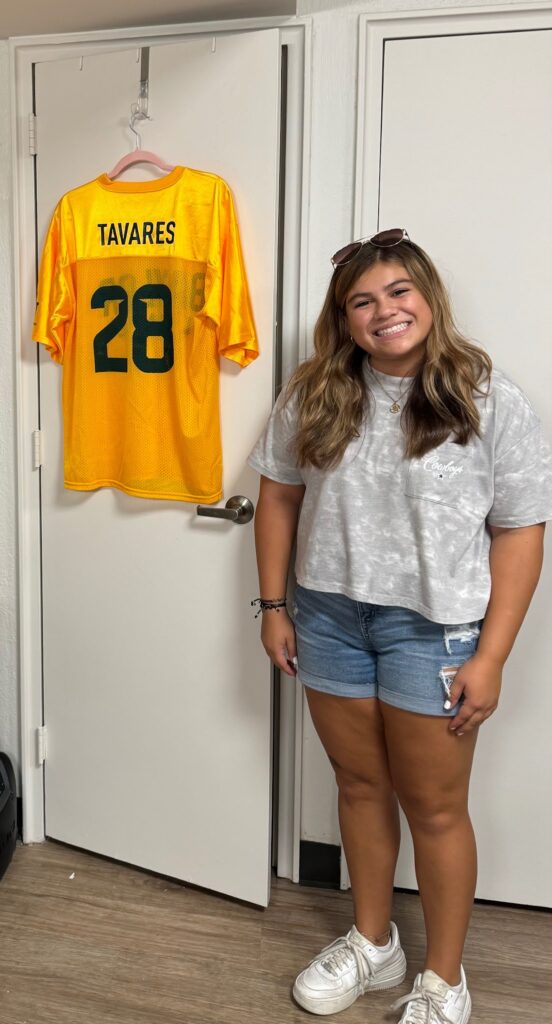
Moving into her freshman dorm, Emerson snapped a photo with her Baylor Line jersey

Now a junior at Baylor University majoring in accounting, she had originally intended to major in psychology and follow the pre-med track on her way to becoming a psychiatrist. The academic tasks demanded of her during her freshman year forced her to reflect upon her vision for life after graduation. She expanded upon her change of heart, sharing that “after the first year of college, I realized that science wasn’t something I loved, and it’s something that you have to love to be able to stick it out.” She remembered her interest in the business class she took that spring semester and, going into her sophomore year, decided to declare a business major.

Naturally, there was a hefty amount of wrestling with her own self-determination before shifting gears. She admits that she had likely sensed that she had no true desire to pursue a heavily science-oriented career by the end of her freshman fall semester. However, at the time, she was thinking, “This is what I told my parents, my friends…this is what everyone thinks that I’m going to do.” Though, despite her instinctual worry that they may be shocked or angry, it turned out that her loved ones were more than willing to encourage her new endeavor, and she explained that deep down she knew her parents would understand. Once she accepted that it was time to pursue a different path, Emerson’s friends, particularly her roommate, who was already part of the business program, and Baylor’s Major Exploration and Success and business advisors helped guide her transition.

Emerson still plans on extending her credentials beyond a bachelor’s degree. In fact, the program she is currently enrolled in will allow for her to graduate from Baylor in 2028 with a master’s degree. But beyond the security and stability that her career shift offers, it also equipped her with a new perspective on failure, success, and making decisions across life’s facets.

As a young adult, it can be easy to equate changing your mind with failure and to approach it with fear. However, looking back on her initial approach to change, Emerson learned to recognize that she didn’t fail. Rather, “what [she] had originally thought was going to be good for [her] actually [wasn’t],” and it’s okay for her to change her mind if it means finding a path that is better suited for her. 

Other than academic or professional decisions, Emerson has found herself navigating new terrain in her friendships and faith. To become better decision makers, she advises incoming freshmen to build steady support systems and develop a willingness to experiment with the unfamiliar—new relationships, interesting clubs, or different majors—even if this involves failing. Ultimately, as Emerson’s undergraduate journey thus far exemplifies, what is at first perceived as a failure may soon become an indication of better-aligned pathways, leading to a much more fruitful college experience.


Deciding to try out a new look? Experiment with this 10% coupon!

By Lauren Gascon 

Lauren Gascon studies Media, Culture, and Communication at NYU and enjoys discussing people’s relationships with each other and themselves. When she’s not on campus, you can find her café hopping, browsing bookstores, or enjoying lunch in one of New York City’s many beautiful parks.


For over 25 years, the Campus Clipper has helped college students in New York City—and later in Boston and Philadelphia—save money and succeed in city life. We offer a digital coupon booklet with discounts on food, clothing, and services, plus an Official Student Guidebook with real advice on how to navigate college life in a big city. Our internship program lets students build skills, earn money, and publish their own e-books. Follow us on Instagram and TikTok @CampusClipper, and sign up for our newsletter to get deals straight to your inbox. To access the digital coupons, scan the QR code on our printed card—available in dorms, student centers, and around campus.

Share

Interning in NYC: Tips to Aid You in Your Search

Monday, June 7th, 2010

Landing a full-time job after graduation has gotten a whole lot tougher these days due to the present state of the economy. Jobs are few and far between and the competition for them has grown especially fierce, which is why obtaining an internship has become an important priority for most students these days. However, the competition for intern positions is just as ferocious. So how can you maximize your chances of surviving in such a cut-throat environment? Here are some things that I learned to do when searching for an internship:

1. Start your search early! For example, if you’re looking for a summer internship position, start looking for open positions in late January/early February and continue until late April/early May. You will be surprised how many positions are available when your search spans a couple of months.

2. Submit your application ASAP! Some students are under the impression that if they are one of the last applications that employers see that they will have a better chance of being remembered. This, however, is not the case. Applying hours before the midnight deadline can make you look like a procrastinator. In the work place, deadlines are extremely important, and most employers want someone who is timely with their work. So once the application period begins, submit your resume and cover letter as soon as possible to avoid being a part of the last minute rush.

3. Apply to as many positions as you can! I know this can be a long, tedious process, but believe me it is absolutely necessary. This spring, I applied to over thirty companies, and only received about five calls/e-mails for an interview. So put yourself out there to as many people as possible. It will make your chances of actually landing a position more probable.

4. Make use of your resources on campus! Most colleges and universities have a career services department, which provides students with resources, such as resume critiques, mock interviews, company tours, and weekly e-mails with new internship/job opportunities, to aid students in their searches. These people are trained professionals who have helped many students go from the classroom to the office and can help you become a better candidate for employment or put you in contact with the right people.

5. Utilize internet search engines! In addition to MonsterTrak and Craigslist, there are many sites available that are devoted to finding internships in a particular field. Just Google it and see what comes up. For example, after doing a Google search, I found a website called BookJobs.com, which was wholly devoted to internship/job opportunities in the book publishing industry and which is where I found the most openings.

-Christina Brower

Find out more about Academic Discounts!

Download our NEW App on iTunes!
Become a fan on Facebook and follow us on twitter!

Don’t forget to sign up for our bi-weekly newsletter for student promotions and coupons and download the coupon booklet NOW!

Share