
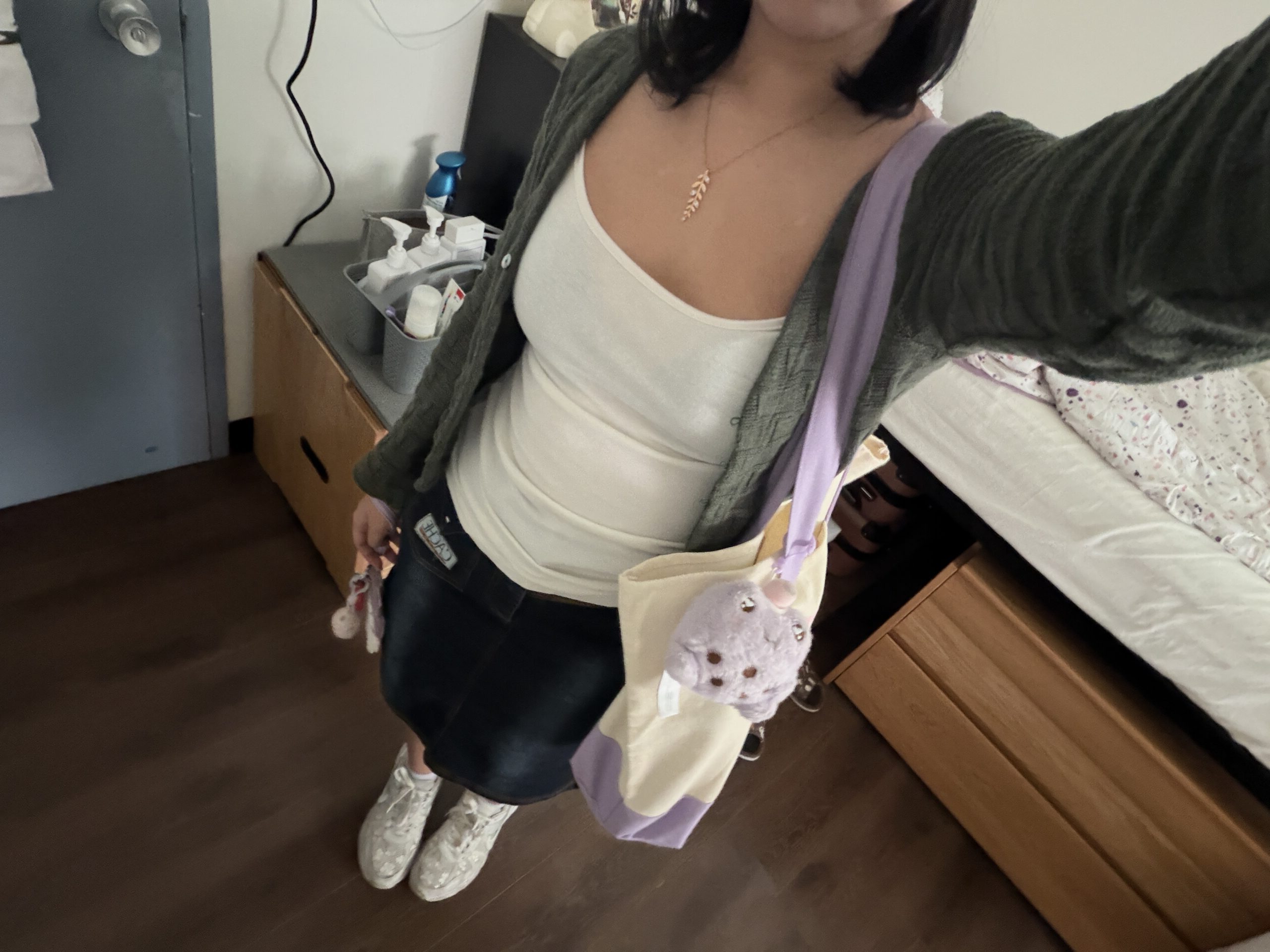
Some may argue that clothes are a simple matter of wearing whatever is most comfortable, creating the illusion of materiality. Yet, the opposite can too be true.
When the wearer chooses items based on color, shape, or design, they are often signaling something underlying. Baggy to flowy to fitted — the fit of clothes becomes an identity expression. Choosing to be comfortable tells society that you care little about what it thinks because you prefer being flexible, but in contrast, wearing skin-tight clothes can have the same effect. This is because the perspective is all about the person wearing the clothes: how they perceive themselves in relation to others and vice-versa.
At my women’s college, fashion conveys what words cannot. Electric pink hair might mention someone’s desire to tell the world how lame it is to fit into boxes. Tuscan-style with chunky belts and cowboy boots arm people with a no-so-secret desire to travel (the pursuit of the most curious or adventurous types of people). Even things like the choice of loafers over sneakers could communicate someone’s desire to follow their own modesty or serious nature.
Take, for instance, myself. I am not shy to admit that I am a transformer, always trying different styles and colors. On days when I wish not to be perceived, blending in with my own understanding of mundanity, I will wear baggier clothes with much simpler cuts, designs, or no frills at all. No make-up is automatic. Call it basic if you will. However, on days when I want to experiment and express my displeasure, the color black becomes instant. Coloring very closely to my water line, my eyeliner is smudgy, smokey, and sharp. Structure is one of the easiest ways I express my desire to curse society. Fitted tops with black lace and dark wash jeans reflect my rage and revenge, taking back my own body and face.
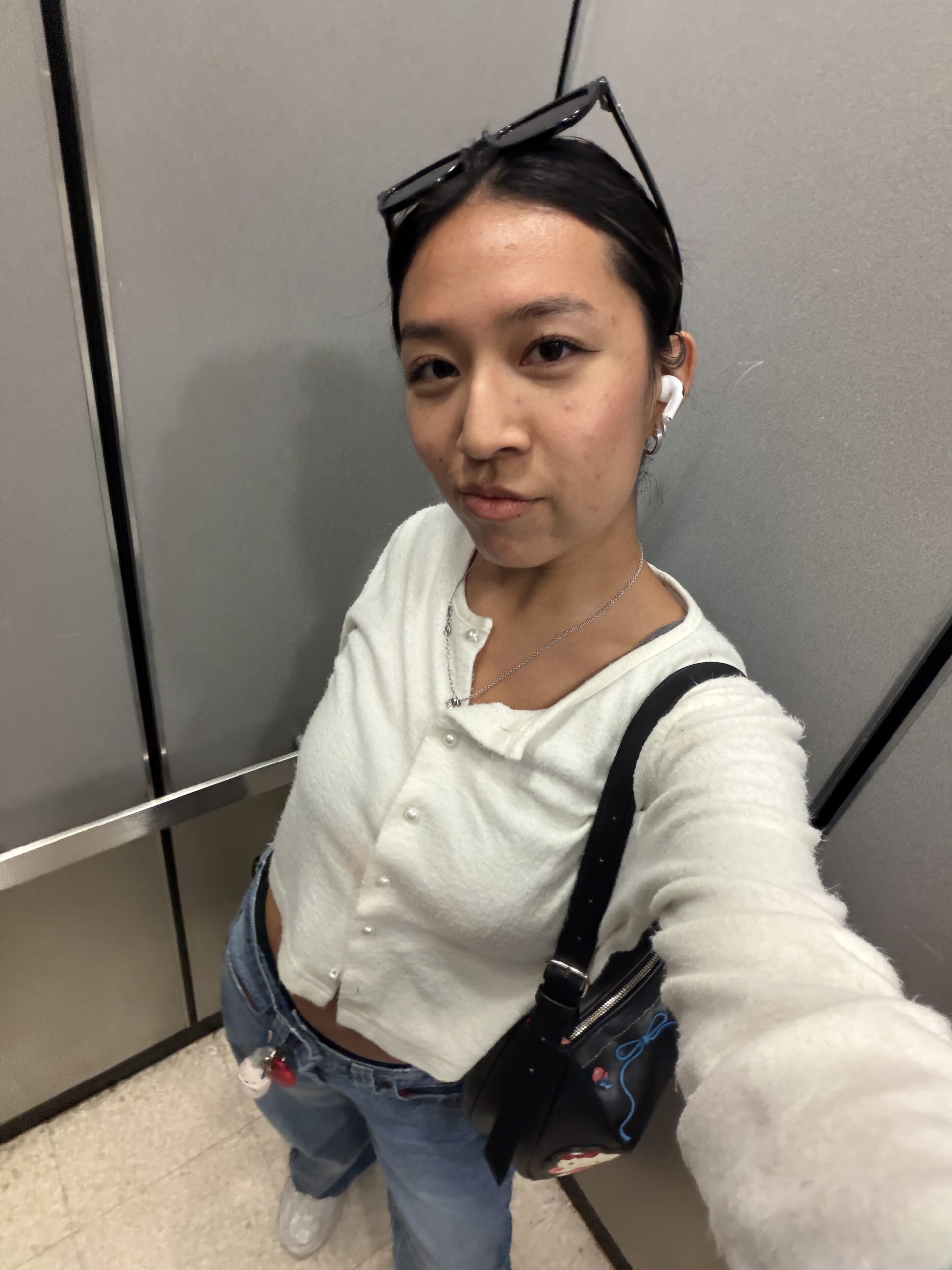
I may be a shape shifter, but that’s what makes community easy to find. Because of my interest in multiple aesthetics, shifting through people in search of belonging becomes that much clearer. I learn from people’s experiences, backgrounds, and interests through what they wear, where they shop, and which pieces are their favorite.
Monica wears high quality pieces, unafraid of dirt but takes care of them. This not only tells me that she values the clothes’ materials, but maintains them through her sheer effort. Her lack of fear for ruining her clothes reminds me that she is here to live life through and through. She might seem picky but she is stating her unwillingness to be held back by society and never waits for the “right” moment. She is brave and determined beyond doubt.
Kylie has an alternative style with flowy lace and an array of dark to bright colors. Her rejection of mainstream politics is truly evident in her taste. Sometimes though, you can find her in more comfortable hoodies or sweaters overtop a long white skirt. Her whimsical nature gently appears in these moments. She is persistent and sometimes unyielding but always knows where to put her energy and admit where she might find fault.
Irene loves green and she tends to lean towards more comfortable clothes with a loose fit. She is very understanding and politically active. Her charm comes from the middle of the week when her STEM courses overload her mind, leaving her with no minute to spare. She is resilient and always adapts, sometimes not too easily. She is her own critic; yet, she is rare to criticize others.
From asking where people get their clothes to simply shopping together, fashion has this innate ability to create bonds for people like an underlying signal of likeness. Subconscious choice transforms into purposeful expression; that way we show who we are to others and receive a response. Oftentimes, our expression brings us to become part of a larger collective like music in a way.
Thus, our clothes become demonstrative symbols of us differentiating ourselves in a sea of 8 billion people; yet, we all learn to belong somewhere, somehow.

By Alyssa Hong
Alyssa Hong is a rising Junior at Barnard College, studying Political Science with a minor in English. As a first-generation, low-income student, she writes about moving across the country for college and its adjustments. She utilizes entertainment, wellness/health/food, and fashion/beauty as methods to making new connections with others whilst always learning.
For over 25 years, the Campus Clipper has helped college students in New York City—and later in Boston and Philadelphia—save money and succeed in city life. We offer a digital coupon booklet with discounts on food, clothing, and services, plus an Official Student Guidebook with real advice on how to navigate college life in a big city. Our internship program lets students build skills, earn money, and publish their own e-books. Follow us on Instagram and TikTok @CampusClipper, and sign up for our newsletter to get deals straight to your inbox. To access the digital coupons, scan the QR code on our printed card—available in dorms, student centers, and around campus.
