The Avenger’s Influence on Generation Z: A Brief History of Comics

February 19th, 2014

A Brief History of Comics

When I started this endeavor, I was a superhero enthusiast and was faced with the endeavor of writing about something that had depth. Do comic books have depth? With a glance at the cartoonish drawings, and the speech bubbles that peppered each page a person may be quick to give a resounding no. But why then have comic books been the source of entertainment for generations?
Entertainment, many fans agree, has both complexity and a real humanism about it. But isn’t that a curious thing to think about; the fact that even though most comics have superhuman characters, and otherworldly qualities there is something strictly realistic- even human- about the universe and characters that have been constructed.

Perhaps to understand the influence comics have on modern American society, I must recount the history behind them. Comic strips paved the road for the rise of American comic books; the Funnies (comic strips) appeared every Sunday much to the amusement of the 1930’s American. With this newfound creation, the combination of words and images connected people of all ages and intelligence level.

Comic strips grew so popular that the publishers began to reprint collective groups of comic strips in book form of which the first was the Famous Funnies (Stephen Krensky “Comic Book Century: the History of American Comic Books).[1] Cheaper than fighting for the rights to print already printed material, artists and writes began to form collective groups that created original material, of which the formation of Marvel stems.  In the coming chapters I will be focusing on Marvel’s The Avengers in particular. The history of The Avengers is a bit more complex and will be delved into throughout the book. But for a little background, the series started in the 1960’s has transformed from a cult following to a cultural phenomena. While the rotation of characters is too varied to list, the famous battle cry of “Avengers Assemble” is one of the constants about the series.

I have a few theories on why comics (and their subsequent movie creations) have such a great appeal. One, and perhaps the most obvious, is that it is a form of escapism. Comic strips were originally created to ease the depressive moods of unemployed workers during The Great Depression in the thirties (Krensky). That legacy continues in allowing today’s people a realm of hi-definition CGI action scenes and intense character development. My second theory is that there is a very human desire to be recognized, and seeing superheroes garner that recognition gives people hope that they too can do the same.
My driving question will be to investigate whether The Avengers has depth, and further, what effect it may have on today’s society. In the pages that follow, I will share my research and observation of comic book’s influence on my generation.


[1] Krensky, Stephen. Comic book century: the history of American comic books. Minneapolis: Twenty-First Century Books, 2008. Print.

_________________________________________________________________________________

This is written by Francesca Ciervo, Freshman at NYU.

Follow the Campus Clipper on Twitter and Like us on Facebook!

Interested in more deals for students? Sign up for our bi-weekly newsletter to get the latest in student discounts and promotions  and follow our Tumblr and Pinterest.

Share

Giving Back When You’re a Poor College Student

February 18th, 2014

The worst type of guilt trip is the one that slowly layers ever so sweetly on your shoulders piling more and more until it’s all you can think about. When Natural disasters strike, we see the hotline number at the bottom of our TV screens and immediately feel the burden to donate, but instead click past the channel, not wanting the weight of feeling pressured. Or those dang commercials, where the SAME SONG whispers through the speakers, triggering your memory. At first you don’t remember what it’s for but then BAM, puppy eyes stare from behind the bars of their cages begging to be adopted. “With just one dollar, you can…”- change the channel. Between the struggle of scavenging through your couch –if you’re lucky to have one– for change to buy textbooks, or your 5th day in a row of mac and cheese dinners, it’s easy to ignore the ads.

"In the arrrmss of an annngel"


Yet, as often as we apathetically stroll by the ads on the subway or avoid the homeless begging between transfers, there is a guilty feeling that creeps into our souls.


As a former college student, I know how easy it is to dismiss these feelings. Trust me, I have used every excuse in the book. Speaking of books, “yeah I don’t have any money to give bro, sorry, I need to save for text books…ya know, English major and all.” Oh and if you don’t think that worked, I was a student finishing up college AND getting married mid-semester. Forming excuses based on money and time can be very easy. However even as these excuses grew, my desire to help people pushed through and emerged.


So I did something about it.


I started with the little things, like helping my mom around the house, to gradually getting involved in different groups mentoring young girls. As my giving grew, my passions grew stronger and expanded to different fields. I began to experience life in a different way, seeing it from a different viewpoint and understanding its true meaning.


My cute students and me in Haiti circa 2009. Being an adult, clearly...

I am writing this eBook with the hopes of encouraging you to be open to a new way of life. A life not focused on the little aspect, called “me”, but focused instead on the good of mankind. It can seem to be overwhelming at first, but I assure you that with a little direction, and self-actualization, you can become involved in your community and experience a greater life than you ever expected.


———————————————————————————————————

Samantha Bringas

Follow the Campus Clipper on Twitter and Like us on Facebook!

Interested in more deals for students? Sign up for our bi-weekly newsletter to get the latest in student discounts and promotions  and follow our Tumblr and Pinterest. For savings on-the-go, download our printable coupon e-book!

 

Share

Defining who you want to be in a commodity-fetishizing society

February 18th, 2014

In life, we are forced to make sacrifices. We do things we don’t necessarily want to do because we have to do them. What are some things you do because you feel like you have to?

Some actions, like earning money to pay for shelter and food, are necessary in order to achieve and sustain a comfortable lifestyle. But think about it: beyond this, not much is necessary. So why do we often feel like we’re lacking something, even if our most basic needs are fulfilled?

I believe that this constant drive to do more and be more is a result of the ideological apparatus of our society, which the mass media and we ourselves are agents of.

Tyler Durden from Fight Club may have captured it best when he said:

“Advertising has us chasing cars and clothes, working jobs we hate so we can buy shit we don’t need.”

Eccentric philosopher Slavoj Žižek has applied psychoanalyst Jacques Lacan’s frameworks to cultural and ideological analysis. Žižek is one of many thinkers who have argued that the dominant ideology in modern society conditions us to rationalize, idealize, and endorse certain actions and ideas without even realizing it.

Slavoj tellin' it like it is.

For example, people often ask children, “What do you want to be when you grow up?”

From an early age, without even realizing it, we push kids to define their future selves in terms of the type of work they see themselves doing. “An all-around nice person” is usually not the type of answer we seek when asking this question.

As subjects in a given society, we are conditioned from childhood to allow the dominant ideology to shape our innermost values and desires. We are taught to define ourselves according to certain standards which we usually consent to and perpetuate without even realizing it.

In effect, we often find ourselves inadvertently supporting the powers-that-be through things we do and say every single day.

When we are faced with one of life’s many obstacles which prevent us from realizing a goal, it’s not uncommon to have an emotional breakdown and feel like it’s all our fault, rather than realizing that society has taught us to fetishize certain things that despite the advertisements for these products and experiences telling us otherwise, cannot actually rectify our inherent emptiness.

Given this seemingly untenable situation, what is to be done for those of us who still manage to dream about living up to standards that we consciously define? I believe that, to an extent, we can try to reclaim our agency and become self-defining subjects.

But how do we do this?

The first step is to become conscious of those things you do out of compulsion because you’re told that it’s the “right thing to do.” Demarcate the border between these actions and those things you actually value and want to do and have.

Michel Foucault was a scholar who challenged taken-for-granted conceptions of power and "normality" through his histories of prisons, biopolitics, and sexuality, among other topics.

“But couldn’t everyone’s life become a work of art? Why should the lamp or the house be an art object, but not our life?” — Michel Foucault

Treat your life as a work of art–pick and choose the qualities you would like to embody, and start doing just that. Realize that some of the ideas that you value and perpetuate in your daily life may have been influenced by societal forces, and weed them out with a vengeance if they do not serve you. Constantly strive to become someone you would admire. Transcend societal-imposed standards to the fullest extent possible, and begin living on your own terms.

Now that we’ve laid out the problem that we’re dealing with (as I see it), the rest of a book will be a guide to living up to our conscious, self-defined values and standards in a stupor-enducing culture.


Amanda Fox-Rouch (Hunter College)

Follow the Campus Clipper on Twitter and Like us on Facebook!

Interested in more deals for students? Sign up for our bi-weekly newsletter to get the latest in student discounts and promotions  and follow our Tumblr and Pinterest. For savings on-the-go, download our printable coupon e-book!

Share

Identity: A Crisis or an Adventure?

February 14th, 2014

By Serrana Gay

“Identity is an individual’s self definition that focuses on enduring characteristics of the self.”

As humans we are constantly asking the question: Who am I? This is a seemingly unanswerable question, yet we spend most of our lives struggling to answer it. We seek to find what it is we think about the world, what resonates with us, and to understand how these things define us.

There are many theories on how identity develops, and while these theories touch on what truly makes us human, they attempt to make it concrete, make it something that science can define. Identity is not something concrete. It is an abstract term we use to try and describe our sense of self.

Despite the fact that “enduring characteristics” are part of the definition of identity, I believe it is constantly in flux. It grows and shifts and morphs, much like an octopus does as it camouflages itself on a Van Gogh painting. Just like the octopus, we adapt to our surroundings, and grow and change as we encounter new stimuli. But who am I then, if I believe this? Will I ever find out? Will I ever know how the way I view myself defines what I do in this world?

One thing that most studies tend to agree on, is that children have a very limited sense of self and begin to form identity based on role models (Carver & Scheier, 1992), and that what we call “identity” begins to form around adolescence. “Before adolescence, individuals are not capable of the cognitive reasoning necessary in establishing identity” (Brogan). Then as we begin growing from children into adults, we start questioning. As we question we begin forming opinions about the world around us, and thus begins the process of defining “who we are”.  We observe the world, we take in the things we find useful, we note what moves and inspires us, and we discard the rest.  And it is through this long and torturous process that we begin formin what we call identity.

Personally I have noticed that my relationships: romantic, platonic, familial and otherwise have shaped me more than anything else. The ways in which I have chosen and learned to relate to other people has largely affected not only how I behave, but also who I am and how I see myself as a human being in this world.

This and my  posts to follow are an examination of the many and varied interactions I have had and the ways in which they have affected the shaping of my identity; as I understand it now, and as it is still changing as I grow. I would love for it to serve as a forum for discussion for others as well. If you would join me in my examination, I would love to hear what you have to say. How you my dear readers identify yourselves, and the ways in which the world and your interactions have shaped you as the humans you are, and are becoming.


Source:

http://www.education.com/reference/article/identity-development/


Share

Starting a New Adventure

February 12th, 2014

For the past decade, tuition across the spectrum has been increasing every year globally.  Over the past three years alone, college tuition has increased on an average of 3% a year! Although many college students are saving all those pennies and quarters to pay for their college tuition, it doesn’t mean there should be a ban on globe-trotting.  Travelling is one of the best things that a young adult can do for themselves.  As people get older, settle down, get a job and have more commitments to fulfill, traveling becomes harder.  Young people should seize their youth and travel to their heart’s content; many articles have shown that one of the biggest regrets dying people have is that they never got to travel while they had the chance.

College Funds can even be found in cookie jars!

Every inch of this earth holds an experience of a lifetime that can help meld one into their perfect future self.

Travelling to foreign lands can be a real eye opener to all the different things the world has to offer.  Like being tossed straight into the fire, travelling throws people into the heart of culture hotbeds different from home and forces them into new situations.  Finding new friends, uncovering new flavors, and scaling mountains higher than skyscrapers are only some of the situations which might be encountered!  Such experiences are memories that many travelers hold dear for the rest of their lives, even to their deathbed.

Having been a poor college student myself, I know the very troubles that might come along with travelling.  Accommodation, food and travel costs can take a heavy hit on a college student’s wallet.  On top of that, with the heavy course load that comes along with being a college student, students may be discouraged with their ability to travel.  In the end, these problems are nothing more than excuses.  With proper planning and guidance, traveling can be done without breaking the bank.

The process before traveling can be as daunting as travelling itself.  Still, with hard work and proper preparation, travelling is well within the average college student’s grasp.  These series of articles will show some of the best means and methods I have discovered on my travels to get the most college savings even while travelling the world.  Having traveled to South Korea, Singapore, Taiwan and Japan this year alone as a college student, I have learned not only important lessons which to build my life upon but also some of the most efficient ways to travel.


Gary Chen Stony Brook University

Follow the Campus Clipper on Twitter and Like us on Facebook!

Interested in more deals for students? Sign up for our bi-weekly newsletter to get the latest in student discounts and promotions  and follow our Tumblr and Pinterest. For savings on-the-go, download our printable coupon e-book!

Share

Constructing A Text

February 7th, 2014

Reading a text is no different than looking at one’s college career and wondering where one’s going to find college savings and discounts in a world that seems to be framed for adults. In fact, you control the framing of the world just as you control the framing of a text.

When one reads a text, one is reading with one’s own rules for construction, as well as the rules and guidelines for construction that the text provides. A definition of the text cannot be given without consideration of the reader. A text does not exist until it has been read, and every reading is a unique interaction between the text and the participating reader[1]. Wolfgang Iser suggests that the text offers “‘schematized aspects’ through which the subject matter of the work can be produced, while the actual production takes place through an act of concretization”.[2] The text can offer several possible constructions of meaning, but these constructions do not exist until there is a reader to construct them. Iser identifies the two poles of a text as the artistic and the aesthetic; the artistic pole is the text as written by the author, and the aesthetic pole is the realization of the text by the reader.[3] Due to this plurality, a text cannot be defined by either pole; instead, it is defined by the relationship between the two poles.

By Louis Wain

When you see and understand anything in the world, it can always be interpreted as a split between these two poles. In a conversation, there exists the other participant with their own structure of beliefs, and you, who interprets and understands what they are saying. A conversation cannot be defined by either of these alone; it only exists as a relationship between these two poles, and that relationship is what should be focused on, understood and used as a basis for further activity. This parallels the split that exists in the world between thought and action.


The idea of a split seems to be a difficult thing to comprehend at first, because the world seems to be made up to wholes and unities. And while it is true that the split is a manmade construction, the split is in fact necessary towards the understanding of the whole. A human can be called the combination of thought and action, a simultaneously looping of one to the other, creating a state of becoming. Both particulars, thought and action, are necessary towards understanding the general relationship that is created out of the two. Just like how the two poles of a text, the artistic and the aesthetic, are both necessary towards the understanding of the text. And the text is simultaneously general and particular; it exists as the general book and as the particular reading. This is because language and speech are simultaneously thought and action, existing in both worlds. It is both a truth and an appearance.

Most things in life can be divided into the realms of truth and appearance. This is not to say that these are the only two realms of the world, but it can help one’s understanding to acknowledge these two realms. To recognize that someone can act differently from how they are thinking, regardless of intention, is what opened mankind up to the idea that things may not always be as they seem. But to be fair, in this instance there is an error in the rhetoric. Things will never be as they seem because things will never be anything. They are perpetually in a state of seeming, of becoming, and to become what you seem is an endless cycle.


[1] Iser, Wolfgang. The Act of Reading. Baltimore: The Johns Hopkins University Press, 1978. 20. Print.
[2] The Act of Reading  21
[3] The Act of Reading, 21


———————————————————————————————————

Marina Manoukian, Sarah Lawrence College

Follow the Campus Clipper on Twitter and Like us on Facebook!

Interested in more deals for students? Sign up for our bi-weekly newsletter to get the latest in student discounts and promotions  and follow our Tumblr and Pinterest. For savings on-the-go, download our printable coupon e-book!

Share

The Importance of Struggle in Defining Who You Are

February 4th, 2014

I’ve recently begun to get a grasp on a very important skill: acting boldly. But even with the knowledge I’ve gained, my journey has not always been easy. In fact, it’s been quite the opposite. Taking persistent action in pursuit of your dreams will force you to live through some horrible experiences.

If there’s anything that has been the most defining and important aspect of the past two years of my life, it’s struggle. From the death of a best friend to a paradigm-shifting move to the city, I’ve been no stranger to adversity.

Money's tight, but I try not to let that turn me into a miser.

As a result, however, I now have a clearer understanding of who I am, what I value, and what I want out of life than ever before.

But defining your values and discovering your passions will not guarantee that the rest of your journey will be smooth sailing. It’s just a matter of time before you butt heads with someone who completely disregards your plans, or you feel tempted to give in to something that completely contradicts your values. Living up to your self-constructed standards can sometimes be the most difficult path to take.

But a mantra I like to use is: if you don’t feel challenged, you’re probably not living boldly enough.

It’s important to realize that hardship is as integral to your journey as success. In fact, it’s completely unavoidable. Your difficulties will bring you a clearer understanding of your fundamental values, which you can use to guide your future actions. They will also cement your commitment to those values.

Staying true to your own standards in the face of hardship and nay-sayers is a skill. It’s learned, not innate.

Through experience you figure out how to motivate yourself, using an enthusiastic commitment to your standards to inform everything that you do. In this hectic world rife with struggle of all kinds–especially in New York, the most cutthroat, competitive city in the world–it’s imperative that you stick to your guns.

Compassion is a strange animal in this concrete jungle.

This book is a summary of some things I’ve learned from living through experiences both good and bad, illustrated through personal anecdotes. My motive is to help out those who are struggling to define their values, and those who are fighting to stay true to themselves amidst hardship.


Amanda Fox-Rouch (Hunter College)

Follow the Campus Clipper on Twitter and Like us on Facebook!

Interested in more deals for students? Sign up for our bi-weekly newsletter to get the latest in student discounts and promotions  and follow our Tumblr and Pinterest. For savings on-the-go, download our printable coupon e-book!

Share

The Never Ending Joys of Roommates

February 4th, 2014


By Serrana Gay

Roommates. We all have them, and if you haven’t had one yet, chances are you will at some point. Whether your roommate is your best friend or someone you met a week ago at orientation, living with people is always a challenge.

I have lived with a whole cast of colorful characters: boyfriends, best friends, strangers, and strangers who have become friends. Each relationship has had its ups and downs and each relationship has taught me something different. But time and time again I always come back to the same thing: COMMUNICATION. Without it any relationship is destined to fail.

During my last year of college I fought with my best friend over who was going to vacuum the living room. We didn’t speak for a week. One comment from me led to a dismissal from her, which grew into a text message war, which exploded into a screaming argument and then total silence–endless, dragging silence. Days and days of silence.

Then one day I had an epiphany, a forehead slap moment. The reason we weren’t resolving anything was because we weren’t speaking. We had gotten into a vicious circle of non-communication.  Of course, I thought. We were never going to fix anything if we didn’t speak.

That very afternoon I apologized. I told her I was upset because I felt like I was the only one that ever cleaned, and that I realized that I  had played a part in making her upset. She said she felt like I was mothering her. We hugged and by the end of the conversation, we were laughing at our own stupidity.

What I took away from this experience is that 1) nine times out of ten, conflicts arise from misunderstanding or things left unsaid, and 2) it is better to confront things head-on than to stay mad.

I know this seems a little too easy, and that sometimes talking about your feelings can be difficult. But take it from someone who knows, without communication all relationships are doomed to fail.  As life coach Tony Robbins so aptly puts it, “To effectively communicate we must realize that we are all different in the way we perceive the world and use this understanding as a guide to our communication with others.”

So I put it to you, dear readers, to be the different ones. Take up the challenge and share how you are feeling. Communicate. You will be surprised at how much more easily you will coexist with those you share the world with. And you just might find that the way you treat people will start to shape who you become, the person you are.

Share

Reading From The Outside

January 30th, 2014

One of the things that college students are concerned about is money. Luckily, The Campus Clipper is absolutely phenomenal in providing college savings and college discounts. So with their help, you can stop thinking about money troubles and instead allow your thoughts to flourish.


If one considers all speech to be poetic, and all worlds are framed by speech, a reader’s interaction with a text is an apt metaphor for one’s attempt to function and participate in the world.

When regarded from an outside perspective, the act of reading looks like an absolutely useless and monotonous activity. A person will sit for some duration of time, stare at an object, occasionally make a flipping motion with his/her hand, turn from one thin thing to another, and then resume staring at a different side. From the outside, it looks as though there is literally nothing happening; there is no activity other than the occasional hand motion, which does not seem to accomplish much at all. And when the act of reading is finished, there does not seem to be any discernible evidence that any semblance of an activity has occurred. Even Sartre admits that the writer’s activity is useless; “it is not at all useful; it is sometimes harmful for society to become self-conscious”.[1] The writer is useless because his activity is not, by all definitions, productive for a society, and the reader is useless because his activity is not even discernable as an activity.

In reality, the exact opposite is the case. Not only is the act of reading an incredibly active process, one of the most active processes coupled with thought, but it also cannot be objectively defined. The reading of a text can only be defined with regards to the reader, as well as every potential reader. Far from being a solitary event, the act of reading is an incredibly intersubjective experience that can never be the same construction twice. A text is not an object; for a text to be an object, it must exist prior to its construction. But a text does not exist before it is constructed by a reader; it only exists in its ongoing construction, in its becoming. This is why, at least for me, whenever someone asks me what a book is about, I have an incredibly difficult time answering. I can tell you what the book is making me think about, but what the book is about depends entirely on however you read it. The black marks on the page will always be there, but they do not mean anything without a reader who forms a relationship with them and assigns meaning. The only reason these black marks mean anything to us, the only reason we call them words, is because the idea of ‘words’ has been so naturalized in society that it never occurs to us to disassociate them from our own usage. To take a step back and understand something outside our own usage of it creates a perspective that allows us to realize that more than one perspective may be valid. This is how a text gets reconstructed differently by different readers. And not only can the same text be constructed differently by different readers, but the same reader will construct a text differently every time he/she reads it. The text is not defined by the black marks or the different readers, but rather the specific relationship between the two, which encompasses a plurality of definitions, especially those contingent upon time.

Breaking away from objective/subjective and turning towards a framing of the world that relies upon relationships can not only explain the phenomenon of reading, but is an incredibly useful way when attempting to understand the world. There is no ‘you’ and ‘other’ in the world. All that exists and all that you can participate in is the relational activity that occurs between these two things. If you remove the notion of an objective world from your frame of understanding and instead focus on the relations that are happening between you and others, and participate on the basis of your understanding of those relations, a multitude of freedoms are opened up for you.


[1] Sartre, Jean-Paul What is Literature? Trans. Bernard Frechtman. New York City: Philosophical Library, 1949. 71. Print.


———————————————————————————————————

Marina Manoukian, Sarah Lawrence College

Follow the Campus Clipper on Twitter and Like us on Facebook!

Interested in more deals for students? Sign up for our bi-weekly newsletter to get the latest in student discounts and promotions  and follow our Tumblr and Pinterest. For savings on-the-go, download our printable coupon e-book!

Share

Student Depression: Working Within the Bounds of Gravity

December 14th, 2013

Every student in the depths of depression goes through that particularly steep and lugubrious slump. Honestly, it’s more like a cliff. Full of electric eels and piranhas and alligators, who keep mauling away at any bit of hope you may have left.

"We feed on your misery and despair... and cashews."

What if you could turn those bloodthirsty blues into a pool of rainbows and unicorns? Well, not exactly. But pretty damn close.

All you need is a mantra. Here are the magic words: work within the gravitational field.

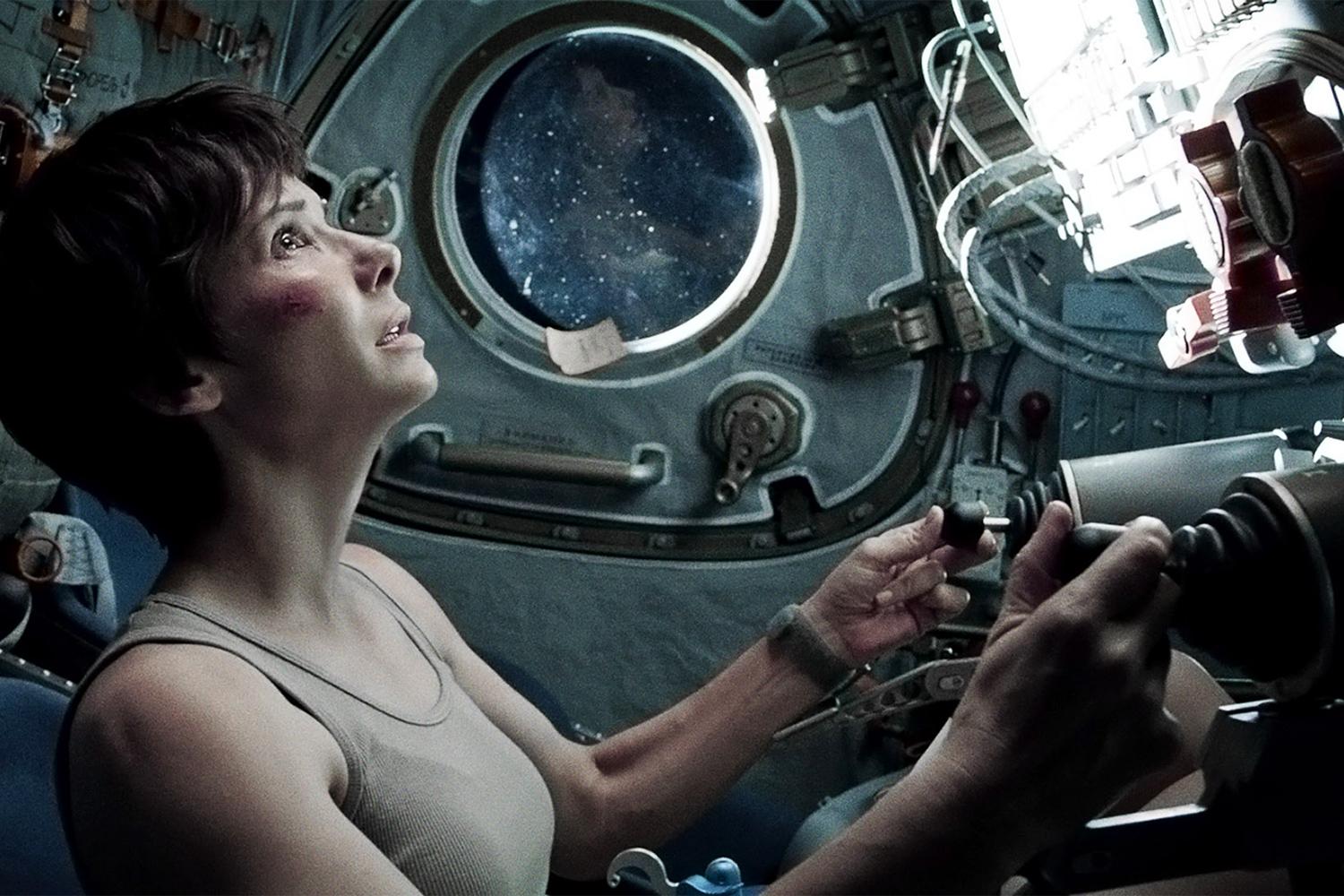
Sorry, that’s not a reference to Gravity.

"

But it’s nonetheless solid advice.

There are two minefields we step into when we’re depressed: the future and the past. The latter is relatively simple—you wish you could change something you did. But you can’t. You can’t change the past. Argument over. Talk to me when you step through a wormhole and end up with your thigh attached to your face, or an extra set of eyes under your armpit.

The future—aye, she’s a tricky one. Depending on the way you perceive what is to come,  you can either end up in a pool of your own tears and blood (the result of papercuts while crying and leafing through your ex’s photo album, of course), or you can get a fucking grip, grit your teeth, and grin through those horrid weeks.

Ideally, you want to choose the latter. It always ends up a mix of both, though. We simply want to minimize the one where you sink yourself deeper into a pit of self-loathing and pity.

This is where gravity comes in.

Imagine this overly-elaborate and seemingly-unrelated scenario: a newspaper intern is hired for the summer, and he’s doing relatively well—bringing the coffee, unjamming the printer, even writing a little piece for the paper once in a while. But then he does something stupid: he overshoots his mark and decides he wants to be a full time reporter now. Stuck with the notion that he’s too good to be an intern all of a sudden, he stops being speedy with the coffee, the printer remains jammed and the office is lagging because a millennial twat (no offense to 99% of my readers, of course—but I can say it because I’m 22) decided he’s too good for mundane tasks that he was assigned to.

Something similar happens when you overshoot your thought processes. Let’s use subject A’s—Loverboy’s—thoughts as an example: “She never loved me!” Loverboy thinks. And then he shakes his head angrily and retorts, “I never wanted her anyway!” and then it goes back to, “we’re never going to be together again!” and… well, ad nauseam. Despite the only thing that’s corporeal to Loverboy is the shower floor and the empty bottle of vodka, he gets stuck in his head about what might come.

Now imagine he’s working within gravity, within the limits of the day—the limits of his current, veritable environment. In this mindset, the only questions that should float to mind are, “why haven’t I finished showering if it’s 4am already and I went in at midnight?” and “this empty bottle of vodka means I’ve probably drunk texted her several dozen times already and that I’m going to have one shitty morning.”

Loverboy is now working within gravity. The sadness is there but he handles the tasks at hand—turning off the shower nozzle, throwing the empty bottle into the bin and hitting the hay.

If there was no gravity we would float away into space. Unfortunately, our brain has no hemisphere. We float into the clouds and freeze and stagnate and get stuck. That’s why we must create our own gravity and work within it.

Dale Carnegie mentioned to live in day-tight compartments. It’s the same exact principle as working within gravity. Take the day in chunks and don’t overshoot your bounds or you’ll get stuck.

Now, this doesn’t mean you’ll be traveling to that pool of rainbows and unicorns anytime soon, but there will an inherent sense of “I’ll get through this in the near future” as you crunch your teeth between the stream of tears and type that term paper up the day before it’s due.

Au revoir.

———————————————————————————————————

Aleksandr Smechov, Baruch College.

Follow the Campus Clipper on Twitter and Like us on Facebook!

Interested in more deals for students? Sign up for our bi-weekly newsletter to get the latest in student discounts and promotions  and follow our Tumblr and Pinterest. For savings on-the-go, download our printable coupon e-book!

Share