Archive for the ‘onLove’ Category

From One Home to Another

Tuesday, September 19th, 2023
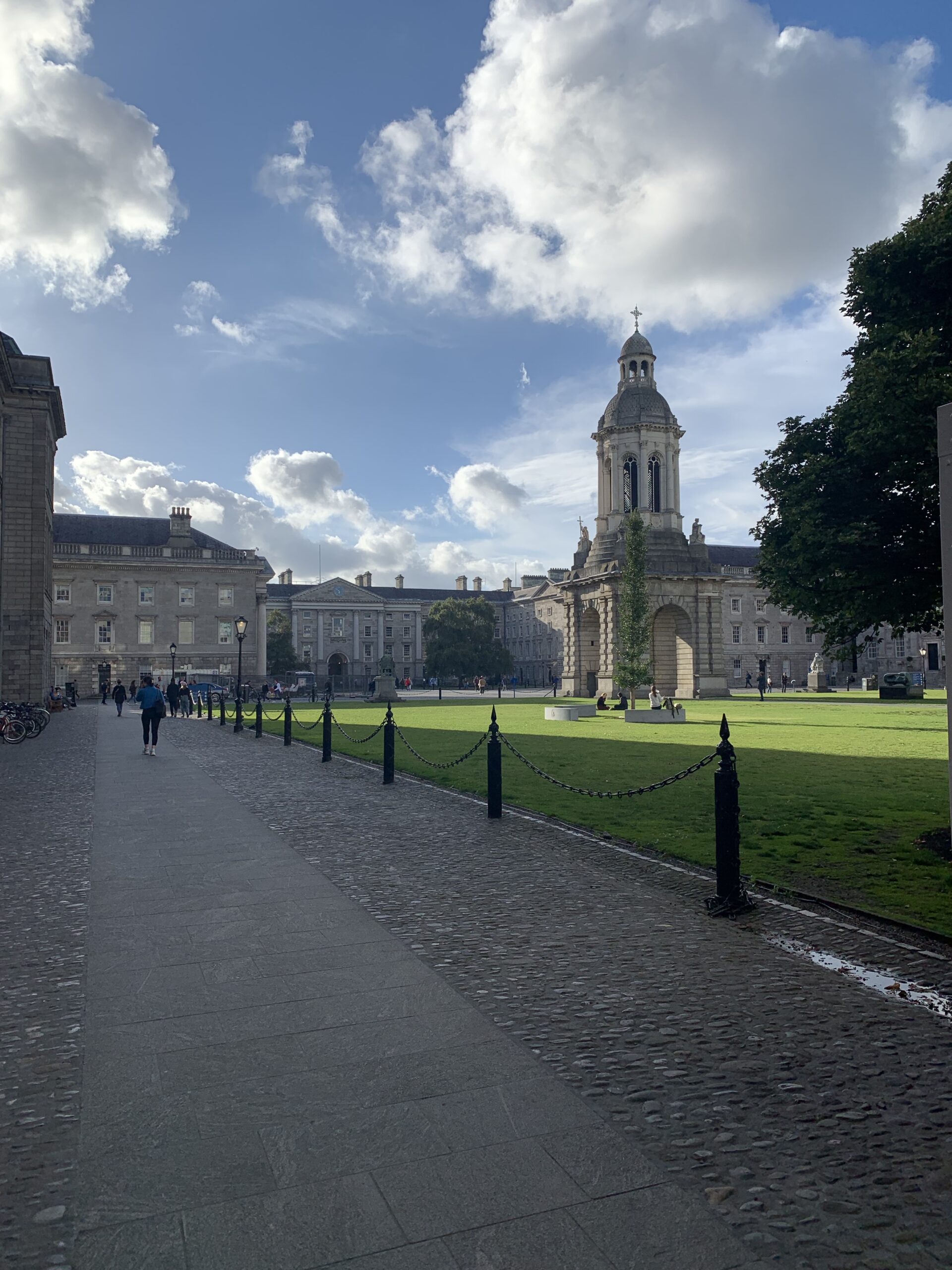
My first picture of the Trinity campanile

On paper, the transition from high school to college sounds crazy. Of course, everyone has to mature and leave childhood at some point, but that abruptly? One night you’ve just finished a meal cooked by your parents, you’re sleeping in the same bed you’ve slept in since you were twelve years old, and the next night you’re in a completely unfamiliar place, sharing a room with a stranger, and trying to figure out where all the time you had ahead of you went. 

Having lived in Iowa my entire life, I knew I had to get out and see the world a little. I was afraid that if I stayed and went to school near my hometown, I’d simply never leave. So what did I do? I managed to get as far away as possible: Dublin, Ireland. I flew over in late August of 2022 with my mom, and I remember thinking the entire flight “Is this real? What am I doing? Where am I going?”

Before coming to school here, I had never been to Ireland before. I had been to Amsterdam once, for a week my freshman year of high school, but that was the only time I had ever even been outside of the country. I knew my decision to go to college in another country, let alone one I had never been to before, was insane, and plenty of people reminded me of that. But the reality of the whole thing took a long time to hit me.

The Long Room in Trinity’s Old Library, where the historic Book of Kells (a ancient religious manuscript) is kept

The first week in Dublin felt like a nice vacation, having time to explore the city with my mom and really just soak up the newness of everything. I visited my school’s campus, Trinity College, and was slightly taken aback by the number of tourists snapping photos in front of the Trinity campanile and waiting in line to see the Book of Kells. I mean, how could I be any more qualified to be here than them? Yet, I was already committed to living and studying for the next year in a place I knew practically nothing about. 

Things really hit the day I said goodbye to my mom. Every time since then, I’ve always gotten this strange feeling every time I’ve left home to go back to school. It’s a mixture of disbelief, sadness, and even numbness as I try to process that I won’t be seeing that person for three to four more months. What kind of person will I be when I see them again? Will they have changed? Will the distance improve our relationship or make it worse? These kinds of thoughts flash through my head with every temporary goodbye I make as part of the inevitable college transition.

When I was younger, I thought that knowing the goodbyes were only temporary would be enough to make things easy. College is so exciting and constantly busy, that you’d think you wouldn’t even have enough time to focus on the things and people that aren’t there. But, for me at least, they’re always there. Whether I’m actively missing my dad or wishing my friend from home were beside me witnessing some funny experience, having to be nearly 4000 miles away from people you’ve known your entire life is never going to be easy.
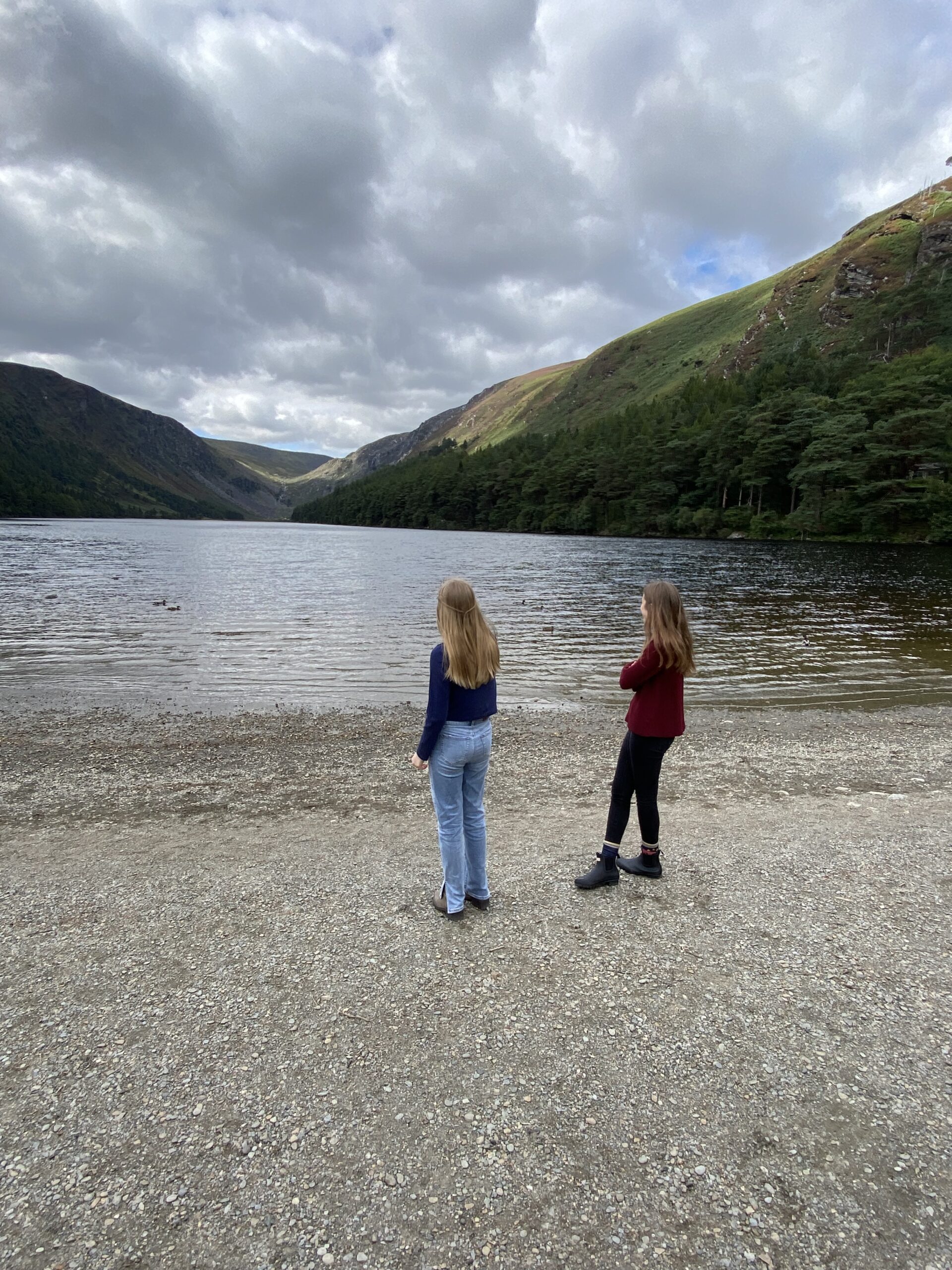
Me and my new friend on a “smart start” trip to Glendalough!

But that’s not to say that it doesn’t get better. The week after my mom left, I took part in an introductory “smart start” program with a huge group of international students going through the exact same struggles as me. Through lectures on life in Dublin and walking tours around the city, I got to know many of my fellow students and made friendships that are still going strong today.

It is all thanks to the support of my new friends in Dublin that I gained the confidence to join clubs, travel to other countries, and somehow also pass all of my exams. Even having only been through my first year of university, looking back I find it hard to recognize the person I was before moving abroad (in a good way).

I would be lying if I said it still isn’t hard to say goodbye. Just a week ago, I came back to Dublin after 4 months at home, and definitely had another round of questioning whether or not I could do this whole thing again. Thankfully, it only takes a night of hanging out with my friends and strolling around the city for me to remember how much I missed my newfound second home.

Summary:

  • I moved to Dublin to study at Trinity College a year ago with very little abroad experience beforehand
  • It was difficult to say goodbye to family and settle into a completely unfamiliar environment at first
  • I made my first, and ongoing, friendships through an introductory program for international students
  • The connections I’ve made so far have helped me establish a new home within my college environment

Treat yourself to a delicious poke bowl with this student discount!

By Bella Littler

Bella is a second year film student within the Trinity College Dublin / Columbia Dual BA program. She grew up in Iowa, but is currently living and studying in Dublin. On the average day, you can find her watching obscure movies, going on aimless walks around the city, or raving about any and all Taylor Swift lyrics.


For over 20 years, the Campus Clipper has been offering awesome student discounts in NYC,  from the East Side to Greenwich Village. Along with inspiration, the company offers students a special coupon booklet and the Official Student Guide, which encourages them to discover new places in the city and save money on food, clothing, and services.  

At the Campus Clipper, not only do we help our interns learn new skills, make money, and create wonderful e-books, we give them a platform to teach others. Check our website for more student savings and watch our YouTube video showing off some of New York City’s finest students during the Welcome Week of 2015.

Share

Chapter Two: Commitment is Key

Monday, June 26th, 2023
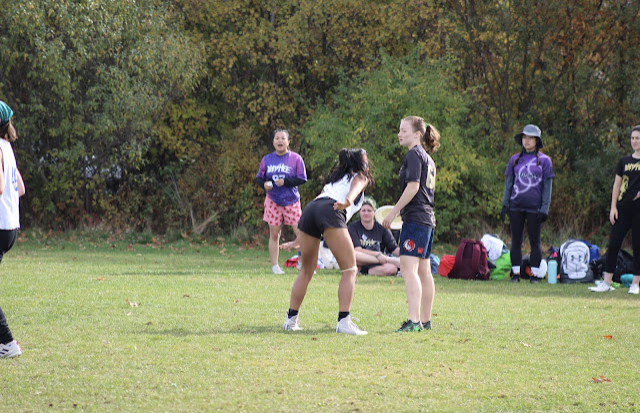
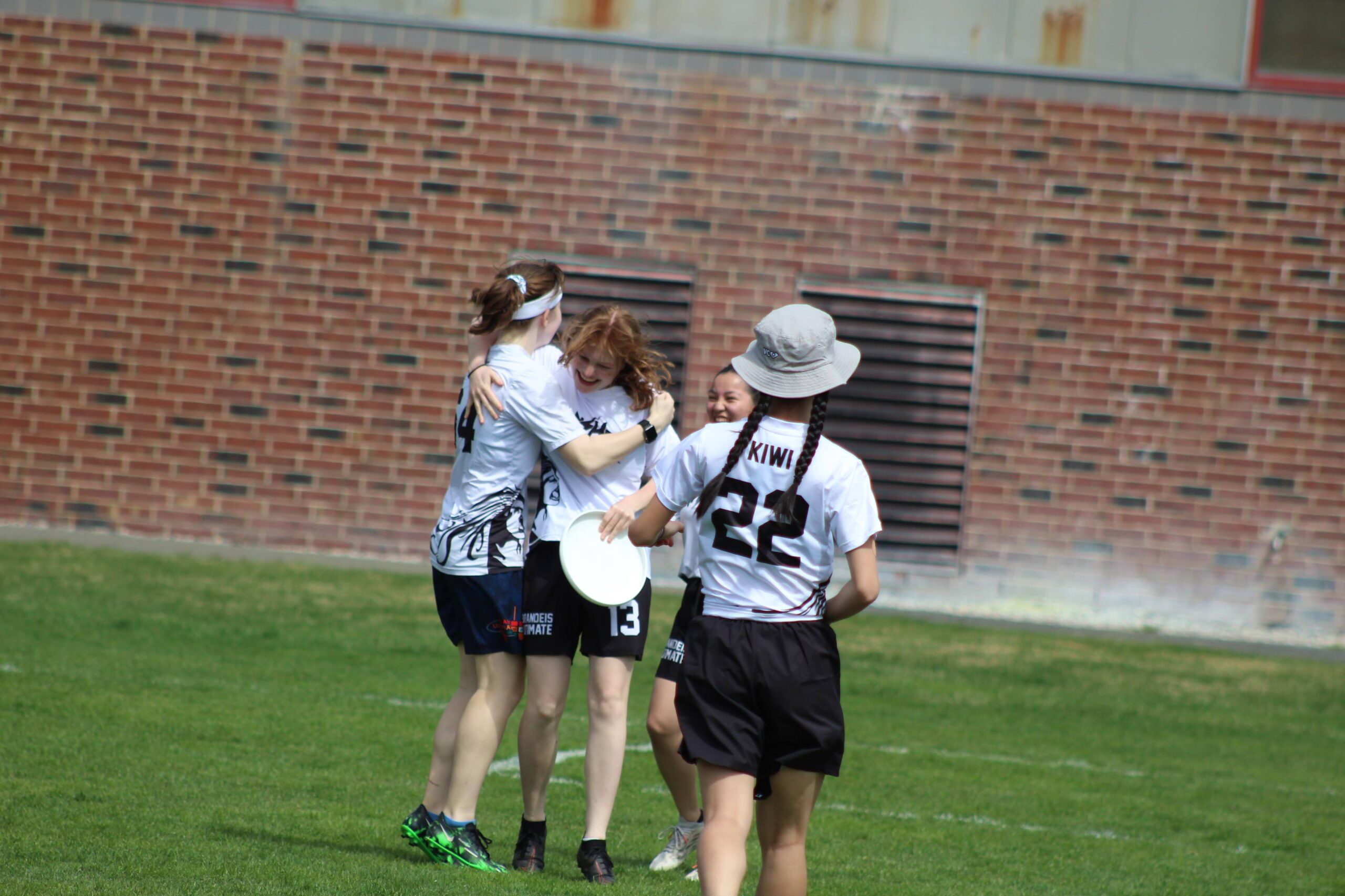
Me (black shirt) gripping the frisbee disc at a tournament.

In ninth grade, I was running along the pier when I saw a girl on my high school frisbee team deliver a perfect flick throw on a field. As the disc cut crisply through the air, I wished I could do that too. I tried with my own frisbee at home later that day, but it came crashing to the ground a few feet in front of me. The throw seemed impossible. I’d probably never learn how to do it. 

When I joined ultimate frisbee in college, I already knew how to perform the basic backhand throw, where you bring your arm across the side of your body to release. I learned how to grip the disc correctly for different scenarios. To aim for accuracy and stability, I learned the fan grip, and for longer and more powerful throws, I learned the power grip. I had no idea how to do the flick throw, a notoriously difficult maneuver for beginners. It usually takes a couple months to learn and get comfortable with, and I was no exception. The flick involves bringing your arm back towards your forehand side instead of across your body, a hand grip shaped like a gun, and wrist rather than arm movement to release the disc. 

I was annoyed at myself for not being able to grasp the concept at first. Lots of these girls had done frisbee in high school but the ones who hadn’t seemed to be improving faster than me. I was embarrassed when I had to throw a flick and it wobbled to the side just seconds after the disc was released from my hand. But the energy and atmosphere of the team motivated me to keep trying. Even when I failed or messed up, I would receive high fives and constructive feedback from the captains. They always told me what I had done well and how I could improve. When we were doing drills or practice scrimmages, they would always yell at me to “get in there!” and cheer loudly for me. Not just me, for everybody, but I was especially motivated when they called out my name. And slowly, I began to improve. I gained confidence and was able to throw smoother and longer flicks. It was fun. It became so easy that I started to prefer flicks over backhands.   

At a tournament a couple months ago, I faked a deep cut and sprinted under to receive the disc. Now that I’d caught it, I had to look for someone to pass the disc to next. Almost like it was in slow motion, I saw one of my teammates running full speed towards the endzone. I had an instinct, like I knew what to do without even thinking. I brought my right arm back and 

swung the disc with all my might. It was a perfect flick, sailing through the air, headed directly towards where my teammate was running. The next couple minutes were a blur of cheers, screams, and hugs as we celebrated that amazing play. Everyone was in awe of that throw. It may have been the longest, most accurate, most beautiful throw I had ever performed in my ultimate career, and it came at the perfect moment without me even really preparing or thinking about it. It just came naturally. 

Me hugging my teammate who caught the disc after my flick throw described above.

Even though the whole play was probably under 15 seconds, I think fondly of it all the time. I watch the video someone took of that throw just to relive that moment and hear everyone screaming my name. I think about how all the practice, all the failed flicks, and all the wobbly discs have all paid off for that moment. All the frustration from my mediocre throws was motivation for me to keep practicing those flicks, and now throwing a seamless flick with the right grip is automated for me. There’s still room to improve, of course, so I’ve been practicing longer, more powerful throws. But now I know what I can do. I know what I’m capable of. I came from that first terrible throw all those years ago to an amazing throw just like that girl from high school. Practicing may not always seem like it’ll pay off, but there will be a moment where you know it did. That moment came about a year and a half after I joined ultimate frisbee, when I made that throw. I realized that while every practice and throw may not be my best, they all contribute to the end result. Commitment is key. Don’t give up. 

I was able to talk to Dawn Culton, a nationally regarded rising ultimate frisbee star. She played throughout high school and for the University of North Carolina, and is now part of the US Women’s U-24 team for ultimate frisbee. She talked about how being committed to the sport has helped her grow. There were significant challenges, including the pandemic, but being physically and mentally present to all tournaments and practices is what pushed her through. The point about being mentally present really spoke to me, because you can be in the best physical shape but without the right mindset, you’re toast. I’ve learned to have a growth mindset in frisbee and focus on my improvements rather than my failures, which translates to all aspects of college. I’ve had a lot of “oops” moments where I’m running behind on an assignment or I have an issue with my friend or roommate, but instead of getting in my head about it, I really try to improve for the future. I’m a big overthinker but frisbee has taught me to trust the process and be more free. To not think so much but to just let it happen naturally. I’m proud of the progress I’ve made and excited for the growth that’s yet to come.


Use this student discount to treat yourself to a smoothie or bowl!


By Agatha Edwards

Agatha Edwards is a rising junior at Brandeis University from Brooklyn, New York. She is majoring in health: science, society, and policy as well as psychology. She enjoys playing ultimate frisbee with her college team, going on runs, reading, writing, and binging TV shows. She enjoys exploring NYC and Boston with friends, especially where there are cute coffee shops involved.


For over 20 years, the Campus Clipper has been offering awesome student discounts in NYC,  from the East Side to Greenwich Village. Along with inspiration, the company offers students a special coupon booklet and the Official Student Guide, which encourages them to discover new places in the city and save money on food, clothing, and services.  

At the Campus Clipper, not only do we help our interns learn new skills, make money, and create wonderful e-books, we give them a platform to teach others. Check our website for more student savings and watch our YouTube video showing off some of New York City’s finest students during the Welcome Week of 2015.

Share

“You’ve Got a Friend in Me” (As Long as You’re Vaccinated)

Monday, August 22nd, 2022

As you get older, you learn a lot about relationships, be they familial, platonic, romantic, professional, or anything in between. High school is where you think you hit your stride in this department, since you start to become more independent and have many more choices to make; you are both physically and metaphorically in the driver’s seat more than you have been in your whole life. Making friends is also super convenient, as most of the people you are close with live no more than ten miles from your house and you see them every day at school. Minimal effort required.

But then once you graduate and enter your twenties, you realize there’s a reason that sitcoms focus on this age group—it’s the time in your life where you’re constantly trying to find your way in the world and relate to the people around you. All of your friends and family (probably) don’t live around the corner anymore, so it’s on you to forge those new connections. College plays a big role in this growing process because never in your life will you have as much freedom, but also as much confusion, as you do in those four years.

Freshman year of college is a particularly unique time because it feels like all the different realms of your life are trying to collapse in on each other. You’re trying to keep in touch with your friends from high school, you’re trying to make sure your family doesn’t feel isolated, and all the while, you’re trying to make new friends in a completely new environment. Being from Massachusetts and going to school at Villanova, I felt far removed from everyone I had grown up with, which was both a little bit sad and exciting. On one hand, I was wishing that I had chosen a school closer to home so I could cling to that sense of familiarity, and on the other, I was happy to be somewhere that felt completely my own where I could push myself outside of my comfort zone. After the first semester, I was feeling good about the friends that I was making both inside and outside of my dorm, and I felt like I was finally starting to see this new place as my home.

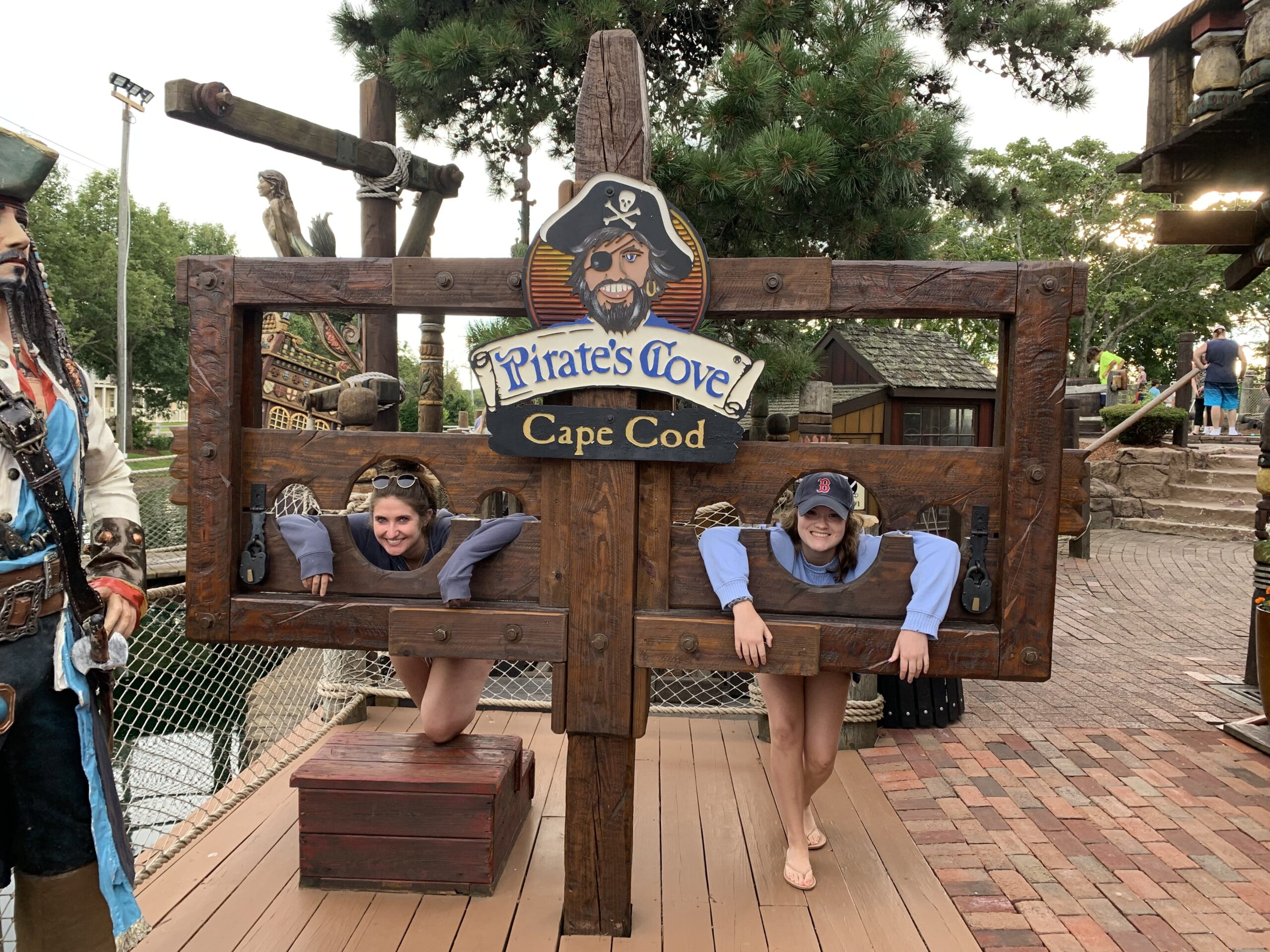
One such friend: my roommate of four years who recently came to visit me in MA over the summer. Shout out to any fellow Pirate’s Cove mini-golf enthusiasts.

Then, you know, this cute little thing called COVID-19 came along, and it became a rather tumultuous time in our collective sitcom eras. Less laugh tracks, more laments.

I started to wonder what would happen to those relationships I had been cultivating those first two semesters—would they survive a global pandemic? When we came back to school (at that point—if we came back to school at all) how would things be different from the first time I saw my peers? And what would happen to the people I was friends with from my town, where even the ten-mile radius felt so far away during quarantine? Everything was so uncertain, and those first few months of the pandemic were some of the loneliest months of my life. Stuck in my house, not able to see extended family members, high school friends, or college friends. But maintaining relationships and keeping people who are important to you in your life takes effort, and this period of our lives was perhaps the greatest test of who you would remain close with and who you might unfortunately grow apart from.

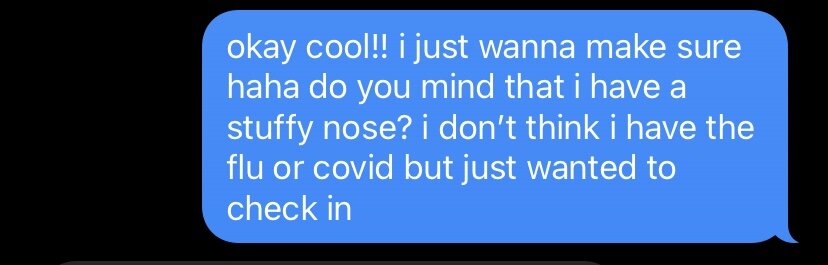
The rules of relationships also seemed to be changing to align with the health crisis we were living through. I was always incredibly nervous about COVID, both contracting and spreading it, so I took every precaution seriously to minimize putting myself and my loved ones at risk. When the spread began to slow and we could start seeing people outside of quarantine, the most important thing for me was to make sure their boundaries were respected. Are they okay hanging out with no masks? Would they prefer to be outside where we could socially distance? Would it be easier to do something or go somewhere that required wearing masks so we wouldn’t even have to debate it? It was great when vaccines started rolling out and we were able to better protect ourselves, but these questions never really went away. Ironically, despite being very cautious, last winter I still got one of my best friends sick after texting her that “I only have a little bit of a stuffy nose, I definitely don’t think it’s COVID” before hanging out with her. Guess what it was!

The text message that did not age well.

Though I would never be upset or mad with someone who accidentally exposed me to COVID and got me sick, I still felt a lot of guilt over just the potential of getting anyone sick. My friend was very reassuring about the whole thing, so it helped to ease the burden of what I was feeling. 

Maintaining relationships during COVID was difficult to say the least, but it taught me a lot about how you should treat people. From my perspective, the two most important parts of a relationship of any kind are respect and trust. Many people had different comfort levels when it came to the pandemic, so it was necessary to respect when people maybe didn’t want to hang out or wanted to take an abundance of caution to make sure that everyone felt safe. We had to trust that those close to us were wearing their masks, not going to unnecessary “super-spreader” events, and were getting vaccinated when they could. And ultimately, when those around us were sick, we needed to be supportive of them and do our best to be there for them.

These are of course not lessons that are exclusive to a pandemic but have instead been strengthened by it. In fact, it should not have taken a pandemic for us to figure out that we need to be kind and considerate of others, but nonetheless, here we are. And after all of those precautions, the COVID scares within networks of people, and the months of general struggle, I’ve come to realize that what I look for the most in relationships is being around people who make me feel comfortable. I strive to be that person for others, and I would encourage you to do the same, as it will go a long way in building meaningful connections with people.

Hopefully Randy Newman would agree.

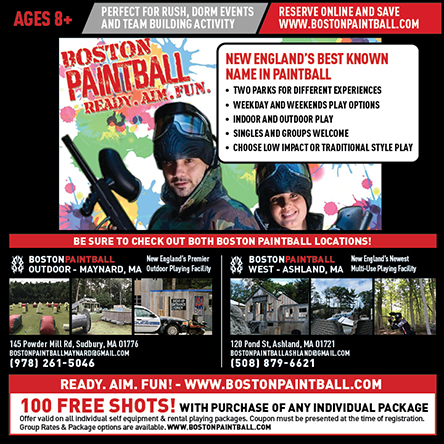
Nothing says friendship like paintball, so be sure to check out this coupon!

By: Katie Reed

Katie Reed is a senior at Villanova University studying English and Communication. She is in utter disbelief that she just admitted to being a senior. She loves to read, but has made barely a dent in the increasingly large pile of books on her bookshelf that she told herself she would read this summer. She hopes to enter a career in the editing and publishing industry.


For over 20 years, the Campus Clipper has been offering awesome student discounts in NYC,  from the East Side to Greenwich Village. Along with inspiration, the company offers students a special coupon booklet and the Official Student Guide, which encourages them to discover new places in the city and save money on food, clothing, and services. At the Campus Clipper, not only do we help our interns learn new skills, make money, and create wonderful e-books, we give them a platform to teach others. Check our website for more student savings and watch our YouTube video showing off some of New York City’s finest students during the Welcome Week of 2015.

Share

Reflecting Friendships

Friday, July 29th, 2022

I like to think that my worldview has grown a lot in the past few years. Once I took the first steps necessary to become more independent and responsible, beginning with my journey into a foreign country for college and continuing as I make my way towards different travels and milestones, I came to realize many lessons and values that I failed to before. Most particularly, I learned how to reevaluate my relationship with the people around me. 

I often hear about “red flags” or “warning signs” in any kind of relationship on social media, and though these warnings aren’t always reliable, they prompted me to start considering my personal boundaries with others. There were tiktoks and tweets that I came across that made really general statements about interactions, categorizing slow texters or people who use a certain kind of emoji as being “bad” or undesirable. While I know I shouldn’t take these posts too seriously, I began wondering if I had traits that others considered to be “red flags” or absolute boundaries, or just how others viewed their relationship with me in general. Of the faults that I could readily list about myself, I must admit to being a terrible texter. Not because I don’t want to respond, but oftentimes I just forget to, or I get way too in my head about it and end up feeling unnecessary anxiety about my replies instead. I wondered if these “failed” interactions were my fault, or if I was allowed to expect my friends to be more or less accommodating of these faults. 

As with most people, I’ve had my fair share of difficulties in navigating relationships, particularly with friendships. I grew up in a small community amongst a rather static group of peers. Few people entered this circle, and fewer people really left. It’s safe to say that my social circle never experienced major ups or downs, and as time passed everyone kind of just got used to being around each other. While I was fine with this as a child, I started feeling more and more alienated as I grew older and my interests developed differently from my peers. Quite a few of my friendships came to pass in this manner — maintained as an extended familiarity, but fading away without any real attachments. 

As a result, I held a lot of rather naive expectations about socialization when I grew older and started stepping out into a broader community. I figured that with an increased population size I would find my place somehow, and I definitely believed I did, but it was only as my freshman year of college came to a close that I realized that my “place” was just temporary. As this first year progressed, my peers began to shed their early orientation-driven enthusiasm and with it, many friend groups collapsed and faded away. I found myself at a loss as conflicts erupted in the groups around me, and my own relationships with these people grew brittle, and eventually broke away. I was deeply upset that those I had trusted and believed to be close confidants had so easily let go of our friendships. 

In the two years since then, I’ve grown and found comfort in my own goals and interests, but I often recall the naivety I held in my first year, and wonder if there was anything I should’ve changed to keep hold of the people who I thought were important. But at the same time, without these continuing attachments, I’ve had the time to reflect on myself and really focus on my own growth. I’ve come to appreciate being alone most of the time, much unlike the way my old friend group was adamant about doing everything together. I think I’ve found that keeping to myself works a lot better for my personality, and in this time I spent focusing on myself, I’ve also found several very valued friendships that I’m comfortable within and that I trust to be respectful of my boundaries. Most importantly, I’ve come to accept that there are some people who are only meant to be in my life for a period of time, and though they no longer hold that position, I should just be thankful for the joyful memories we shared and let them go without resentment. 

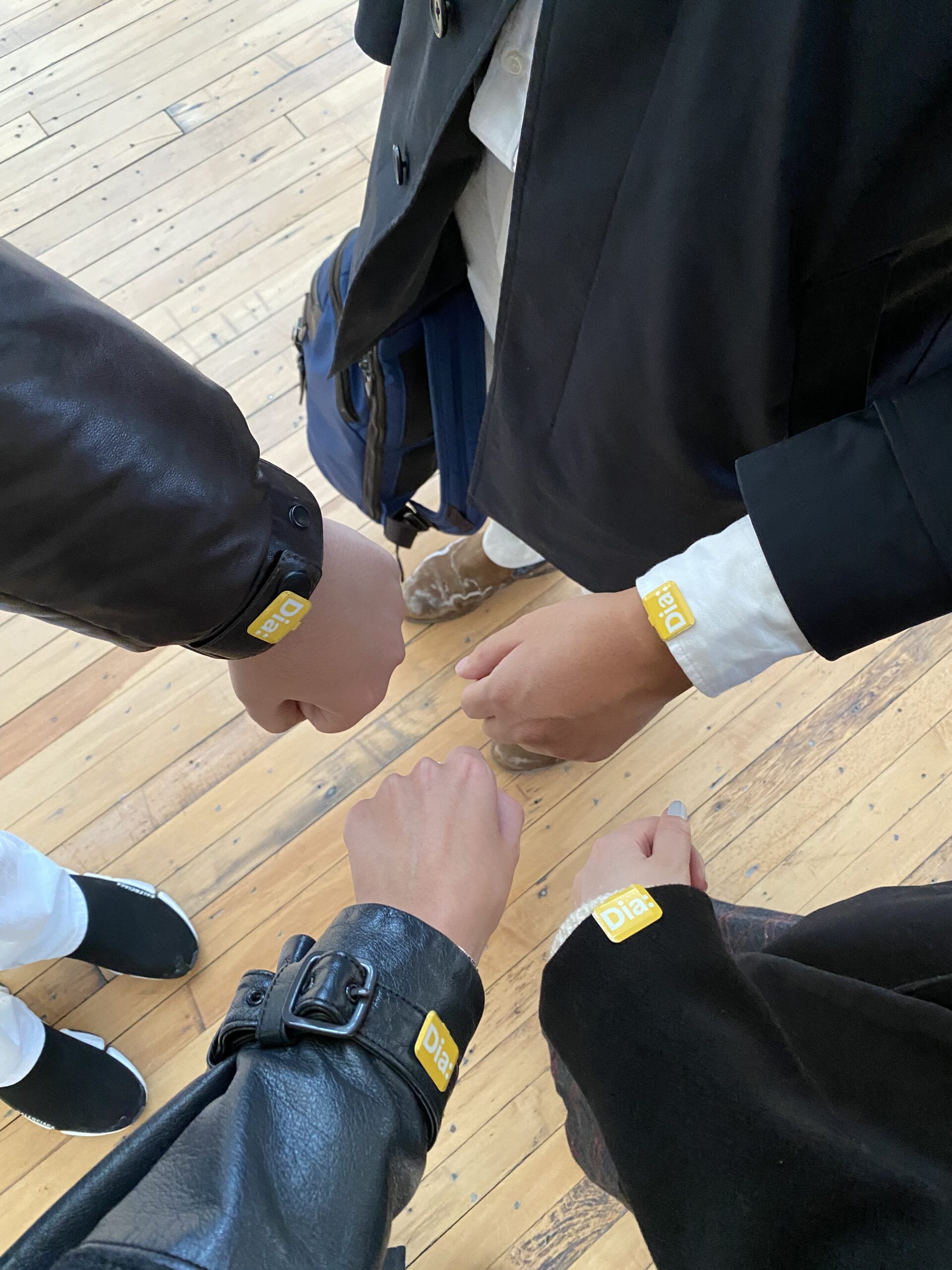
Exploring shared interests is a great way to spend time with my friends without feeling overwhelmed or fatigued — this was from a trip to Dia Beacon!

My younger self was perhaps too dependent on the idea of the glorified “best friend,” the media-marketed ideal of a tight-knit group where everything functions perfectly and no one ever gets hurt. While this may be a reality for many people, it simply hasn’t been for me, and I understand now that this expectation may have prevented me from really being a good friend to others. I convinced myself that the issue was just that we weren’t a fit, and while that may have been the case as well, this selfish belief kept me from putting in as much effort as I perhaps should have. But as I’ve matured and cast aside such habits, I think my greatest lesson throughout these many failed friendships is that there really isn’t a reason why I should need a perfect friend group. More than anything, I’ve learned that I’m perfectly fine and happy even without, and this ideal that I chased all throughout childhood only served to make myself miserable as I compared every relationship I had to “perfection” and found them wanting. There were definitely many connections that I mistakenly let go of due to these misconceptions, but as a wiser (as I’d like to think) version of myself, I trust that I have grown enough to be happy as I am, and hope that in this way, I can foster much healthier relationships with the people I come across in the future. 


One of the best ways I’ve found to catch up with others is to meet up for a meal or a cup of coffee and chat. Use this student discount and treat yourself and a friend!


By: Fiona Lin

Fiona Lin is a rising senior at New York University’s Abu Dhabi Campus pursuing a double major in Literature and Creative Writing and Art and Art History. She enjoys traveling, drinking tea, and learning new languages. In her free time, you can find her reading web novels or playing video games.


For over 20 years, the Campus Clipper has been offering awesome student discounts in NYC,  from the East Side to Greenwich Village. Along with inspiration, the company offers students a special coupon booklet and the Official Student Guide, which encourages them to discover new places in the city and save money on food, clothing, and services.  At the Campus Clipper, not only do we help our interns learn new skills, make money, and create wonderful e-books, we give them a platform to teach others. Check our website for more student savings and watch our YouTube video showing off some of New York City’s finest students during the Welcome Week of 2015.

Share

Chapter 1: Keeping Up With Your High School Friends

Thursday, July 28th, 2022

One of the most integral parts of the college experience is moving away from home to explore new horizons in the brave new world of college. However, people inevitably get left behind in the process whenever someone goes somewhere new. When you were growing up, it’s very likely that you made a couple of friends along your path to adulthood. Sometimes you saw these friends daily, whether in class, in clubs, or just hanging out in your free time. Not being able to see these friends who you’ve spent all of your time with for much of your daily life may be easy for some people but can be a big adjustment for others when they get to college. 

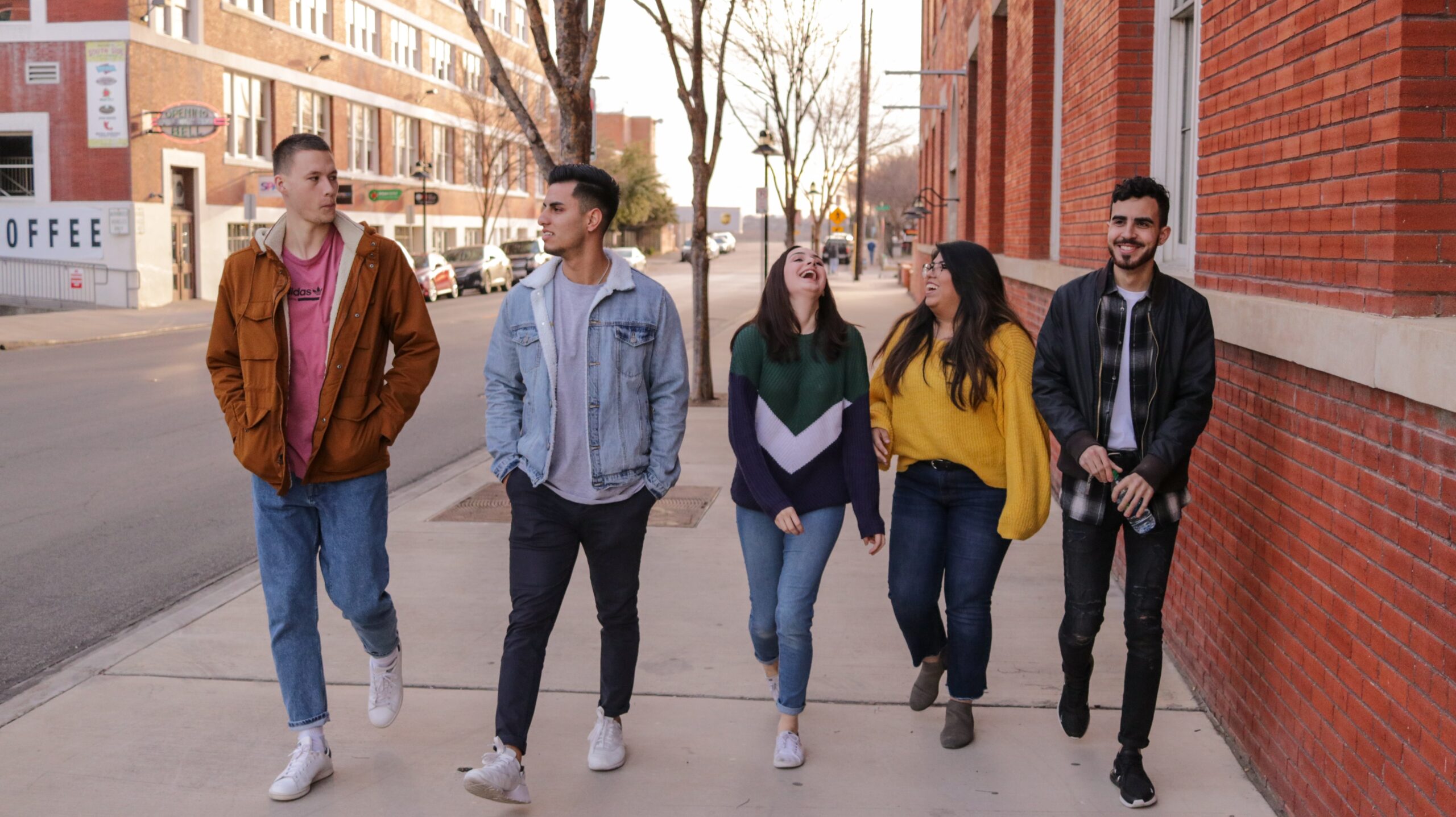
Image Credit: https://unsplash.com/photos/jCEpN62oWL4

In my experience, people tend to have one of two reactions when interacting with their high school friends in college: people either stay very closely attached to those friendships, or they neglect them altogether. It is important to remember that wherever you go, these relationships will still be a part of your life, and there are ways to include them in your life in a balanced way.

The best way to manage high school friendships is to set times to talk to them each week. If there are high school friends that you find yourself wanting to maintain some kind of relationship with, the first step is to track how much time you’re already interacting with them, whether it’s long video calls or short text exchanges. If you find that you’re constantly catching up on long calls with your friends back home, the best solution to this is to set a time each week to chat with them. While staying connected with your friends is good, you want to be careful to avoid doing so at the cost of your social life at college. College has a diverse social landscape chock-full of opportunities to try new things and to meet new people. It is important to take at least some time to explore these opportunities. College is now, and it will likely be at least a few months before you see your high school friends again. Once you get to the point where you have some roots at college, you can start dividing the time between high school and college friends however you like. Setting times to talk to people can also be helpful if you already have trouble maintaining relationships with people, especially ones you want to keep. Set a reminder for yourself to send a text or two a week to a few friends, just asking them about how they’ve been. While it may not seem like much, these little gestures can go a long way in maintaining friendships, and they are an easy way to hold yourself accountable. Sometimes people can struggle socially at college, and these little messages can help friends lean on one another. 

My second tip for high school friendships is to recognize that people are going to inevitably change. College is a completely new environment that is different from that of your hometown, and that means people are going to have the opportunity to explore themselves without the influence of parents, teachers, or other people that they’ve had in their life. Maybe they pick up a new hobby or start to explore another side of their personality. Either way, the next time you see your high school friends, it is very likely they will not be the same person as when you left them. In some cases, this could mean strengthening a bond with a person who is more in touch with themselves than ever before. In other cases, this could mean that a relationship that was strong before doesn’t last a year after college. This is totally okay. Not every relationship you have has to last forever. Starting and ending relationships is just a part of life. You do not have to feel guilty that you don’t connect with a person the same way you did before. Now you can use the experiences from that relationship to become a better person for your new friends down the line.

My final tip is to give your high school friends a chance. I think some people tend to get caught up in the newness of college. People hear that college will be the best four years of their life, and, as a result,  will try to leave everything in their “old life” behind. Like it or not, your old life is still your life, and the things that happened in it are going to influence you moving forward. In addition, this attitude can create high expectations of your time in college that may never be reached. Yes, it is true that college can be the best four years of your life, but that doesn’t mean it has to or that it will be. Yes, it is true that you may drift apart from people you may not be as compatible with anymore, but sometimes you can keep some really good friends from your high school years and continue to grow with them. Just as you can’t afford to waste any new opportunities in college, you can’t waste any old opportunities with your friends back home. 


And finally, when you do go back home for break, what better way to catch up on college memories than on some good food in the city? You can try some great North Indian food at Punjab Palace! You can get 10% off your takeout order with your student ID!

By: Lucas Pratt


Lucas Pratt is a senior at Boston College studying Philosophy, English, and Chinese. He enjoys games of all kinds, Dungeons and Dragons, and getting around to finishing the copy of Dune that’s been sitting on his nightstand for months on end. Lucas has decided that the words “employable majors” don’t mean anything to him, and is eagerly seeing where the world takes him in the future.


For over 20 years, the Campus Clipper has been offering awesome student discounts in NYC, from the East Side to Greenwich Village. Along with inspiration, the company offers students a special coupon booklet✎  and the Official Student Guide, which encourages them to discover new places in the city and save money on food, clothing, and services. At the Campus Clipper, not only do we help our interns learn new skills, make money, and create wonderful e-books, we give them a platform to teach others. Check our website for more student savings and watch our YouTube video showing off some of New York City’s finest students during the Welcome Week of 2015.

Share

Will I Ever Be Doing Enough?

Monday, July 25th, 2022

You aren’t doing enough. 

You’re a failure. 

Other people will do it better than you. 

You’re disappointing.

These self-deprecating thoughts are constantly running through my mind. In culmination of the question, “will I ever be doing enough?” It seems at moments when I am doing okay, whether it be at school or work, I always believe I can be doing it better and that my parents would expect more from me. 

Yet, my parents have never actually applied this type of pressure onto me or anything I do. They expect me to only do what makes me happy and yet, I still feel I disappoint them if I don’t achieve all these great things or succeed at everything the first time. 

I feel this need to be productive 24/7 in order to feel okay with myself, which is suffocating. When I overload myself I tend to crave a break and burn out easily. But, when I take a break, I think of all the other things I have left to do, and then inwardly tear myself apart. My thoughts constantly lead me to believe that I am lazy or that I am not doing the best that I can with my work. When I am taking a break, I feel that I’m not actually resting because my mind is always thinking about the work I have left to do. I’m not actually taking care of myself because my mind won’t let me stop thinking about the ways I need to improve. This can make taking breaks just as exhausting as doing work. 

Image Credit: https://clipart.world

To alleviate this stress, I try to engage in some form of self-care that will help keep my mind off of the work that has yet to be done. However, it is not a long-term solution. Overall, when taking breaks, I try to keep my mind clear and off of everything that needs to be done. I remind myself that I deserve a break because I have done the things that I wanted to accomplish today. Despite this reminder,  I still want to try and get ahead. Even when I am taking a break, I go on social media and I see all these other people that have multiple internships or jobs, and then I compare myself to them. I feel as though I am falling behind and must catch up to them to feel some sort of accomplishment. 

This outward comparison adds a pressure that maybe isn’t even really there, and yet it feels like it is crushing me. And that I will never be doing enough in college or in my summers that will help me to be successful. Most times, to quiet this outward comparison I really try to remind myself that everyone works at their own pace, and that all I really need to do is focus on my own goals and work to achieve them on my own time. 

If you are in NYC and feel that you need a break from work and school, try getting out and visiting Café Habana, get 15% off when you show the coupon below.


By: Ashley Geiser 

Ashley Geiser is a Junior studying English with a concentration in Creative Writing at Pace University. She is also the Editor-in-Chief and Co-President for Her Campus at Pace. She loves reading and editing. And when she is not reading or editing, she can be found baking in her kitchen.


For over 20 years, the Campus Clipper has been offering awesome student discounts in NYC,  from the East Side to Greenwich Village. Along with inspiration, the company offers students a special coupon booklet and the Official Student Guide, which encourages them to discover new places in the city and save money on food, clothing, and services.  At the Campus Clipper, not only do we help our interns learn new skills, make money, and create wonderful e-books, we give them a platform to teach others. Check our website for more student savings and watch our YouTube video showing off some of New York City’s finest students during the Welcome Week of 2015.

Share

hot potato but make it a metaphor for zoom university 

Tuesday, July 19th, 2022

Picture this: you’re playing Extreme Hot Potato for the first time. 

You’ve never played before. You don’t automatically know what makes it extreme- you just know that you signed up, so now you’re playing. You’re a little nervous, a little excited. You bounce on the balls of your feet; you put your hands up like a baseball star, ready to play. 

Suddenly there’s a flaming lump being launched at you. 

Your eyes widen in shock. It’s coming fast, but your brain is faster. 

As the potato, hurls towards you, you process a few things. The first is that this is the potato you are supposed to catch. It is literally on fire, blackened at this point. Definitely overcooked.

The second is anger, because no one told you the “extreme” part of the game would be literally catching something on fire. You would’ve said no, or worn a catcher’s glove, or waited to say yes until you knew how to approach such a weird, wild concept, or something. There were a dozen ways to have handled it but now, with no way to prepare, you’ll probably end up with a hell of a burn.

But you don’t have time to be angry and, as the air around you gets warmer, you brace yourself for the incoming pain, your hands rigid in front of you, and prepare to catch the fiery starch. 

It’s too late to turn back now.

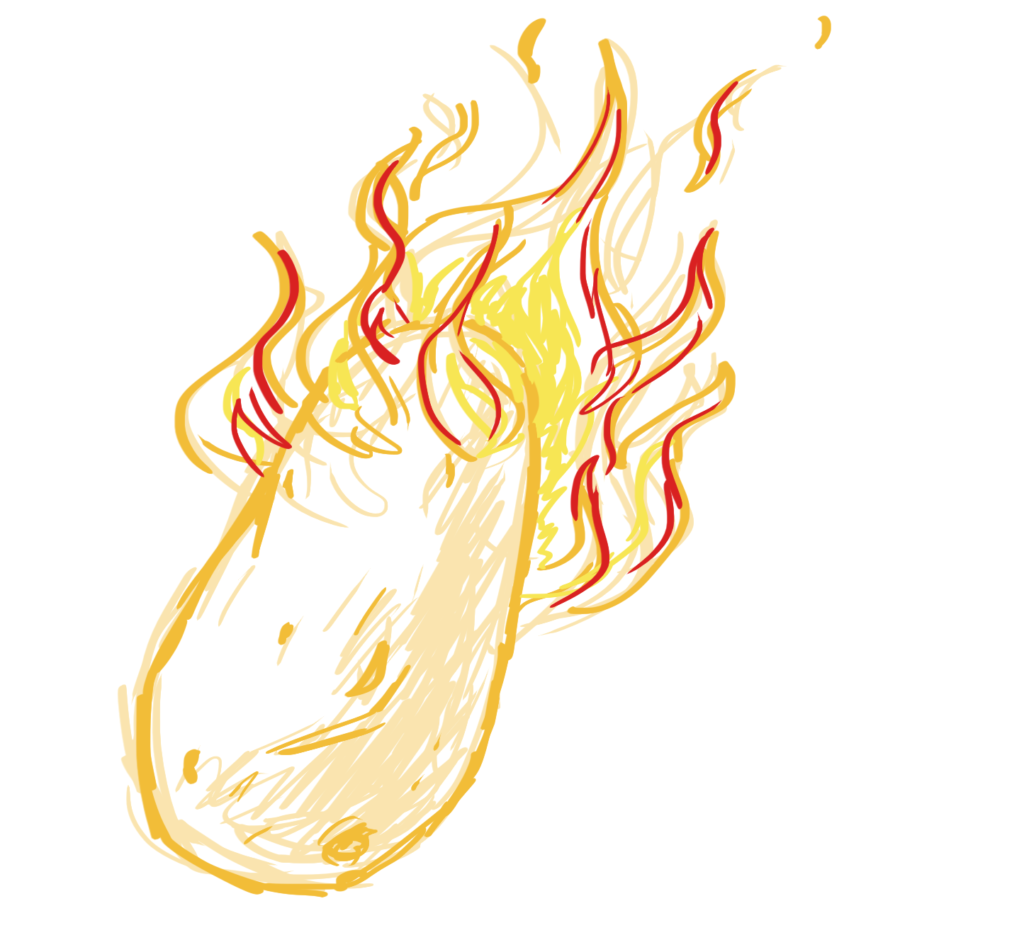
orange lineart drawing of a potato on fire
That is one very hot potato!

Sometimes that’s life- a game of Extreme Hot Potato, with twists and turns you never saw coming. Adolescent life, especially, can be capricious in all the worst ways. There’s dozens of coming-of-age films and books that’ve been written with the sole purpose of reminding fully-grown taxpayers about just how hard it was, and teaching up-and-coming adults how hard it will likely be. Between trying to balance autonomy with still needing support, learning to take care of yourself, doing schoolwork, making friends, holding a job, financing your education, and classes all at once, sometimes it feels like there’s barely time to breathe. Then, worse than any flaming potatoes, 2020 threw in a global pandemic. 

When COVID-19 hit an ill-prepared United States, no one was ready for it. It destroyed peoples’ lives and health, wreaking havoc on the country’s most vulnerable and marginalized citizens. For the people who weren’t dying or struggling with a weakened immune system, it was incredibly isolating. 

While not nearly as tragic as the numerous deaths it caused, the pandemic intensified the difficulties of young adulthood. It was disruptive to the college experience, leaving numerous students without housing or resources they thought they would have. A struggle it caused- that I can speak to more accurately- is how lonely it was. Best friends went from being neighbors to only being able to talk from six feet away, if you were lucky enough to live nearby. I was recently talking to my friend about some of the stuff I’d gone through over the pandemic, which had been a wild ride and a half. I’d broken up with my ex, gone through a few different jobs, dated, and tried to make new friends. My friend, one of the closest people to me when I’d been living on campus, only knew the parts of my life I’d shared online. We lamented the distance quarantine had created, the way the intricacies of social connection had been lost to distance. Not being able to be around one another on campus prevented us from being able to support each other as closely. You can’t really lean on someone from states away.

We were a single case study. Research conducted for the Children and Youth Services Review found that the impact of COVID-19 made students in India more “likely to suffer from stress, anxiety, and depression” (“COVID-19 and its impact on…”)) in addition to negatively affecting their scholarly habits. In the United States, the Center for Collegiate Mental Health found that of 43,098 students who sought mental health counseling, 94% reported that at least one part of their life had been negatively impacted by the COVID-19 pandemic (“COVID-19 Impact on College Student Mental Health”). The most affected part of life for the students interviewed, at a resounding 72%, was their mental health; at a barely-lower percentage of 68% were their feelings of isolation. Considering the CCMH report only acknowledges the responses of students who had the resources to seek treatment, it’s safe to assume the pandemic left its mark on the vast majority of us; it changed the course of our college experience.

I haven’t touched on everything else- the difficulties of staying focused in Zoom University, or the way the pandemic prevented students from accessing the facilities or materials necessary to do their work, or the way not everyone had a place to go or a family they could be around safely when it came time to evacuate campuses. Without any need for elaboration, I think it’s clear that all of it, compounded, created a hostile learning environment in an already-tumultuous period of life.

Perhaps the best thing to come from the COVID-19 College Experience was resilience. As someone who stuck through Zoom University, I was able to get a place off-campus, in the same town as my friends from school, and have a semi-normal senior year. Things got better. Proximity allowed me to be closer to my chosen family, to have people around me that I could go to for support, and to have access to my college’s resources. I saw the world start to heal, starting with the little community of Lesley University. For some people, persistence took a different form. Whether it was a gap year or the realization that a traditional college education wasn’t the path for them, the pandemic encouraged people to branch out, finding creative solutions that fit their needs, growing like plants through cracks in the pavement. We all found a way to keep going.

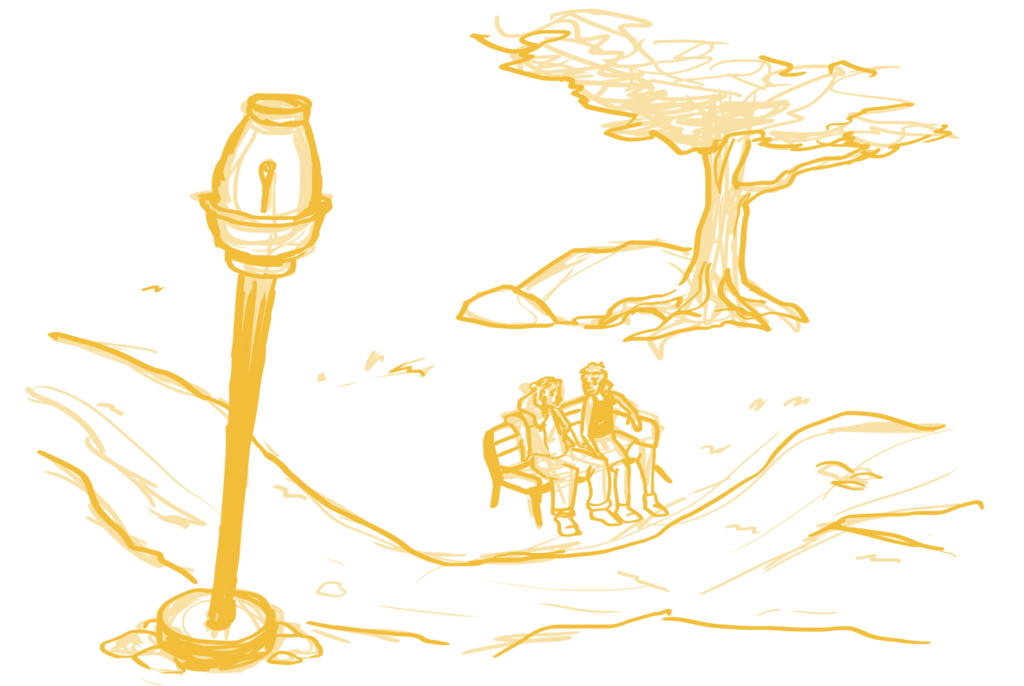
orange lineart drawing of two folks having a talk on a park bench
Sometimes you need a good heart-to-heart with the friend you got separated from at the hands of a global pandemic.

Extreme Hot Potato burns, but you make it out alive.

tl;dr: the only way out is through.


You did it! You survived quarantine and made it all the way through college. You- and your chosen family, made up of a ragtag group of college pals- deserve a sweet treat. 

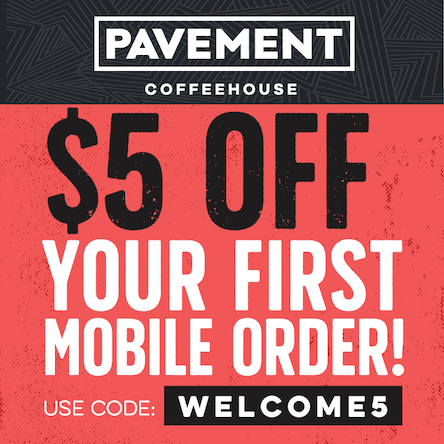
With your student IDs and the help of a Campus Clipper coupon, you can get just that at Pavement Coffeehouse- and all from the comfort of your own home! By using the promo code specified in the advertisement, you can get five dollars off of your first mobile order.


By Ness Curti

Ness Curti is a freshly-graduated illustrator from the Lesley College of Art and Design. A part-time bobarista and full-time New England adventurer, they hope to one day tell stories for a living, whether through art or words. They enjoy doodling, procrastinating, and saying hello to the dogs they pass on the sidewalk.


For over 20 years, the Campus Clipper has been offering awesome student discounts in NYC,  from the East Side to Greenwich Village. Along with inspiration, the company offers students a special coupon booklet and the Official Student Guide, which encourages them to discover new places in the city and save money on food, clothing, and services.  At the Campus Clipper, not only do we help our interns learn new skills, make money, and create wonderful e-books, we give them a platform to teach others. Check our website for more student savings and watch our YouTube video showing off some of New York City’s finest students during the Welcome Week of 2015.
Share

Are They Mad at Me?

Monday, July 18th, 2022

Moving away from romantic relationships, these next couple of chapters strive to discuss the trauma-related thoughts that stem from familial relationships. The question of “are they mad at me?” can be attached to familial or parental relations but may also seep into friendships and romantic endeavors, thus serving as a culmination of the last few posts written. 

I aim to discuss this lingering, anxiety-driven thought that appears in an individual’s mind when they are constantly assuming people are mad at them. Maybe the silence sits differently between them, their footsteps sound harder on the floor, or they close the door louder than before. Naturally, the assumption is made that there is an unspoken anger in the air. 

Personally, I find myself asking this question because growing up, when my parents were mad, they would become reclusive and silent with slight aggressions showing in their routine. In those moments, I knew not to bother them. When discussing trauma that comes from parents, I often like to remind myself that they do not really mean to cause harm. Instead, this was the way they were raised by their parents. It is not an excuse for their behavior, but it is an explanation because generational trauma is a difficult battle to overcome. I recognize the way my parents have changed from how they were raised, and I still see the trauma they project on me because they haven’t healed fully. And now, I can see how this anxiety extends into most aspects of my life, especially with my partner. When he is being a little too quiet, I feel the ever-present need to ask him if he is mad at me or if I did something wrong that made him grow reclusive. 

Image Credit: https://clipart.world

The anxious questioning can be linked to a trauma response. As Sam Dylan Finch writes in, “7 Subtle Signs Your Trauma Response Is People-Pleasing” for healthline.com, people-pleasing is a lesser known trauma response that is often coupled with a fight or flight response. Essentially, when we ask ourselves if someone is mad at us, we make ourselves responsible for what they feel and how they may react to a situation. So, when we pose the question “are they mad at me?” we are trying to control the outcome of a situation because we feel this overbearing responsibility for others’ emotions. We do not know how an individual will react, so we try to manage or please them to result in a better reaction that saves us from confrontation. 

It is moments when these thoughts are running rampant in my mind when I must remind myself that it is just my own anxiety begging these questions. For me, it is easier to go to the person I believe is mad at me and ask them if I have done something wrong, whether it be my parents or my partner. Yet, as stated in the aforementioned articles, reassurance must also come from myself, which will in turn calm some anxiety driven thoughts. 


By: Ashley Geiser 

Ashley Geiser is a Junior studying English with a concentration in Creative Writing at Pace University. She is also the Editor-in-Chief and Co-President for Her Campus at Pace. She loves reading and editing. And when she is not reading or editing, she can be found baking in her kitchen.


For over 20 years, the Campus Clipper has been offering awesome student discounts in NYC,  from the East Side to Greenwich Village. Along with inspiration, the company offers students a special coupon booklet and the Official Student Guide, which encourages them to discover new places in the city and save money on food, clothing, and services.  At the Campus Clipper, not only do we help our interns learn new skills, make money, and create wonderful e-books, we give them a platform to teach others. Check our website for more student savings and watch our YouTube video showing off some of New York City’s finest students during the Welcome Week of 2015.

Share

Am I Overreacting?

Monday, July 11th, 2022

Being in a relationship with a person and expressing our feelings makes us more vulnerable and open. A partner that belittles your feelings and makes you feel that you are going crazy when you point out things that make you upset, is not a partner. If they act this way, then they are not treating you as an equal and they are not making room for your feelings. I think when this occurs within a relationship, it can make you feel that you are going slowly insane; stories keep changing, things you’ve done have been made and exaggerated, and now you can’t recall if you are remembering correctly. It starts you in on this self questioning, again: am I overreacting? Especially when your partner does not give you space for your feelings, you feel as though any feelings you are having are excessive, dramatic and not needed. 

This type of self-questioning that stems from your partner’s reaction to your feelings can be exhausting and suffocating. Your partner is making your experiences seem unreliable and you then start to believe that you are unreliable. 

The truth is you are not overreacting, and you have a right to feel everything you feel on any scale you want or need to feel it. As a participant in this line of self-questioning, I’ve spent many days thinking about this in every type of situation I have been in. I may continue to obsess over every interaction and conversation to make sure I remember everything correctly, as a means to justify my emotions. But, it is important to hear and listen to that voice that tells you “Hey, I’m very happy or upset, and I am allowed to feel that emotion to its full extent.”

Image Credit: https://clipart.world

Author Robert Porter goes in-depth and examines how constant emotional invalidation affects our relationships to self and individual in his article, “Effects of Emotional Invalidation” for ReGain.us. If your partner is engaging in this type of emotional invalidation, it can make you believe you are overreacting in situations and it can impact your feelings and your relationship with your own experiences and emotions. Porter describes how emotional invalidation can happen even without purposeful intent to make it happen. And this invalidation can look like having a dismissive nature when your partner is telling you their feelings or experience, or forcing them to feel positive emotions instead of any other emotion they are feeling. Porter then discusses that in the long-term this reaction can lead to your partner hiding their feelings and not telling you their experiences or feelings. Some possible solutions to stop this invalidation, include starting to listen more deeply and recognizing that your partner is their own person and will respond differently to a situation than you might. I can honestly say having been subject to emotional invalidation in the past, I have caught myself now invalidating things that my partner is telling me about his experiences. Oftentimes, I am able to catch myself in these moments and I apologize to him and let him tell him what was happening and how he was feeling without interjecting or dismissing. I let him tell me how he feels and express in any way he wants.

Overall, if you find yourself inwardly posing the question “am I overreacting?” discuss with your partner the ways you feel that their reactions may be invalidating your own emotions. Emotional invalidation can take a toll on you as an individual, your relationship, and how we relate to our own experiences. It’s important to listen to your partner and allow space for all these feelings in your relationship.

On another note, if you are in NYC maybe take a date night out to Amorino Gelato and Cafe and get 20% when you show this coupon and your student ID!


By: Ashley Geiser 

Ashley Geiser is a Junior studying English with a concentration in Creative Writing at Pace University. She is also the Editor-in-Chief and Co-President for Her Campus at Pace. She loves reading and editing. And when she is not reading or editing, she can be found baking in her kitchen.


For over 20 years, the Campus Clipper has been offering awesome student discounts in NYC,  from the East Side to Greenwich Village. Along with inspiration, the company offers students a special coupon booklet and the Official Student Guide, which encourages them to discover new places in the city and save money on food, clothing, and services.  At the Campus Clipper, not only do we help our interns learn new skills, make money, and create wonderful e-books, we give them a platform to teach others. Check our website for more student savings and watch our YouTube video showing off some of New York City’s finest students during the Welcome Week of 2015.
Share

on classroom camaraderie

Monday, July 11th, 2022

Let me set the scene: It’s 2018. I’m a freshman. I’m in a foundations class, the kind where we’d learn basic art student stuff- rudimentary color theory, composition, how to create a focal point. It’s mid-September. By now, a quarter of the class has distinguished themselves as Good Artists, a quarter’s revealed themselves as Artists So Bad We’re Wondering How They Got Here, and the other half of us are just… average. 

A few rows ahead of me sits this absolute whiz kid. Their work has style, it has voice. They use layers. They make digital art like it’s nothing, their Apple stylus sweeping over the current assignment they’ve started up in Procreate. Our professor, making laps around the classroom, takes a pit stop at their desk. “Great job,” he says, before going on to compliment their use of space. 

They are a Good Artist. 

I look down at my own paper filled with loose sketches. I think about Whiz Kid those few rows ahead of me. Their work is a Renaissance masterpiece and mine is incomprehensible. I feel the usual twinge of jealousy settle into my stomach and, in that moment, I can’t help but think, “I’ll never be on that level.”

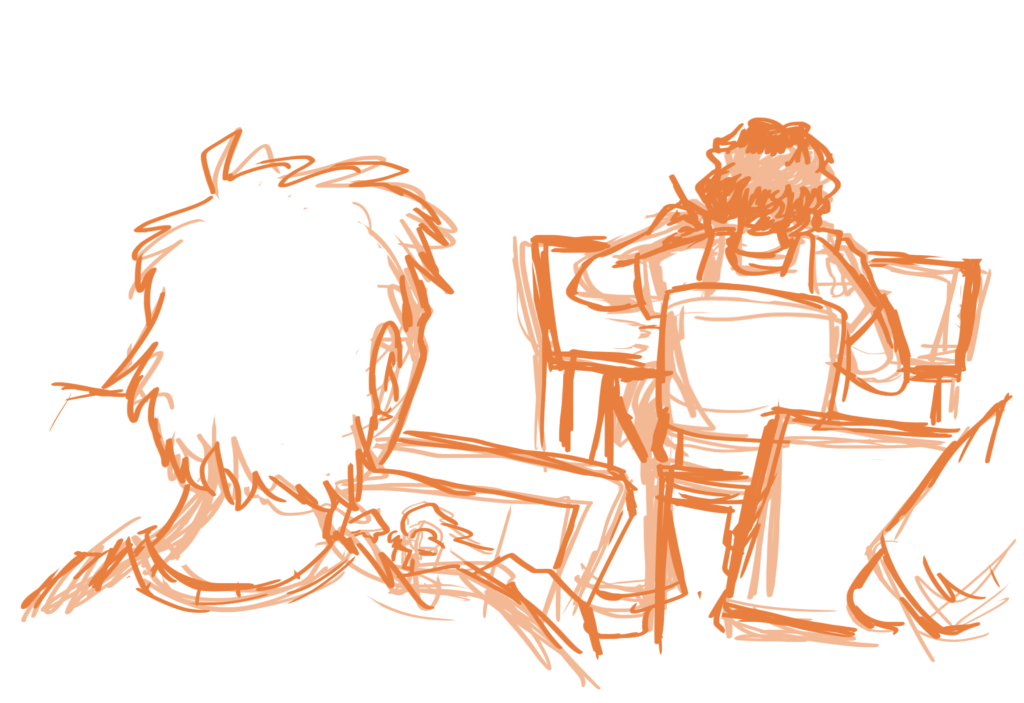
a person watching a peer a few seats ahead.
Staring down the competition from afar…

Flash forward to 2022.

Whiz Kid is having a graduation party and I’m invited. When I show up, all the best students of the class are there, and we eat fondue and laugh and have a grand old time. It’s amazing. At one point, I say to them, not for the first time, “You know, freshman year, I thought you were so intimidatingly cool.”

They laugh. “Dude, I always thought you were so cool!”

The night goes on. We socialize, we party- we even do a few little drawing games (you can graduate art school, but you never stop being an art student). Someone brings up the idea of maybe starting a collective, doing big group projects, moving forward as a team.

As we celebrate the culmination of these four years, I find myself wondering: how did I let myself miss out on being close to such a cool group of people?

The answer is simple, clear, and ultimately unsurprising: academic competition. 

It sprouted in kindergarten, where I just had to be at the highest reading level for a five-year-old. It plagued me in high school, where an A- just wasn’t a good enough grade. So, of course, it followed me to college too. The thing is, it follows everyone. 

In a study done by Julie R. Posselt and Sarah Ketchen Lipson, the duo found that heightened academic stress and perceived competition had increased the rates of mental illness in college students (“Competition, Anxiety, and Depression..”). According to the National Alliance on Mental Illness, 25% of college students were diagnosed with or treated for a mental illness- and that’s just the ones who could afford to see a therapist. When you’re surrounded by a myriad of great minds, it’s easy to feel like the least capable among them. Imposter syndrome is a very real struggle, and once it sets in and tells you that you’re not good enough, anxiety is swift to follow, because what if everyone else thinks you’re a fraud, too?

When you’re in the throes of feeling like the worst, it’s easy to forget there’s other people who feel the same way about themselves, too. 

There’s no catch-all solution to imposter syndrome and the pressure of academic competition, but therapy and peer support are a great place to start. In an article from the Journal of Food Science Education, Shelly J. Schmidt hones in on how friendship actually boosts academic success at the college level (“The importance of friendships for academic success”). Students were “approximately 16 times more likely to become study partners with a friend than a nonfriend,” which indicates not a preference of social life over academics, but a preference to learn alongside people that provide an environment of encouragement. They were ready to engage with new material; it just helped to do it with friends.

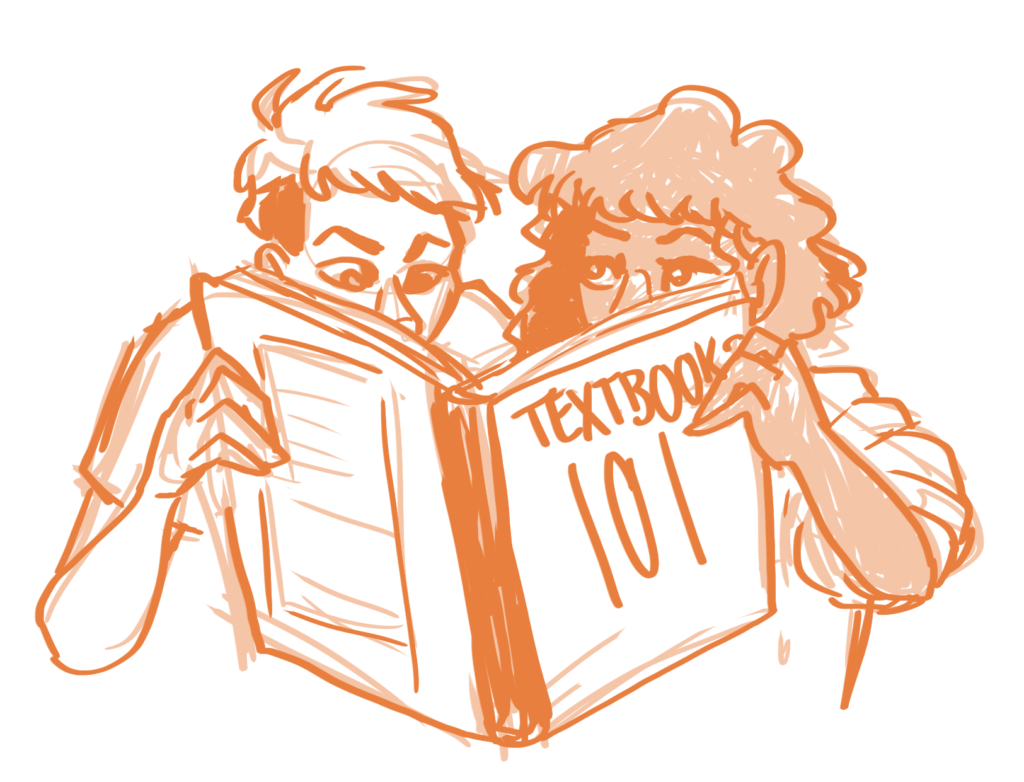
a pair of friends studying from a comically-large book titled "textbooks 101."
It’s easier to get stuff done when working through it with a pal!

By bonding with peers and developing a sense of camaraderie, students were able to foster connections that made them better learners. Doing work alongside people you care about makes it feel way less like work- it turns it into an opportunity to learn and grow. It’s scary to befriend the competition, but you’ll feel way better once you start building each other up.

From an art student perspective, it’s so easy to envy different abilities. But no one’s going to do what you’re doing. Just because someone else develops work with an amazing voice, it doesn’t mean yours is inherently worse- it just means you and your peers are doing different things. Do you in a way no one else can, and be proud of your peers for doing the same. Who knows? Maybe if you get really close to them, you’ll get to go to a grad party with fondue.

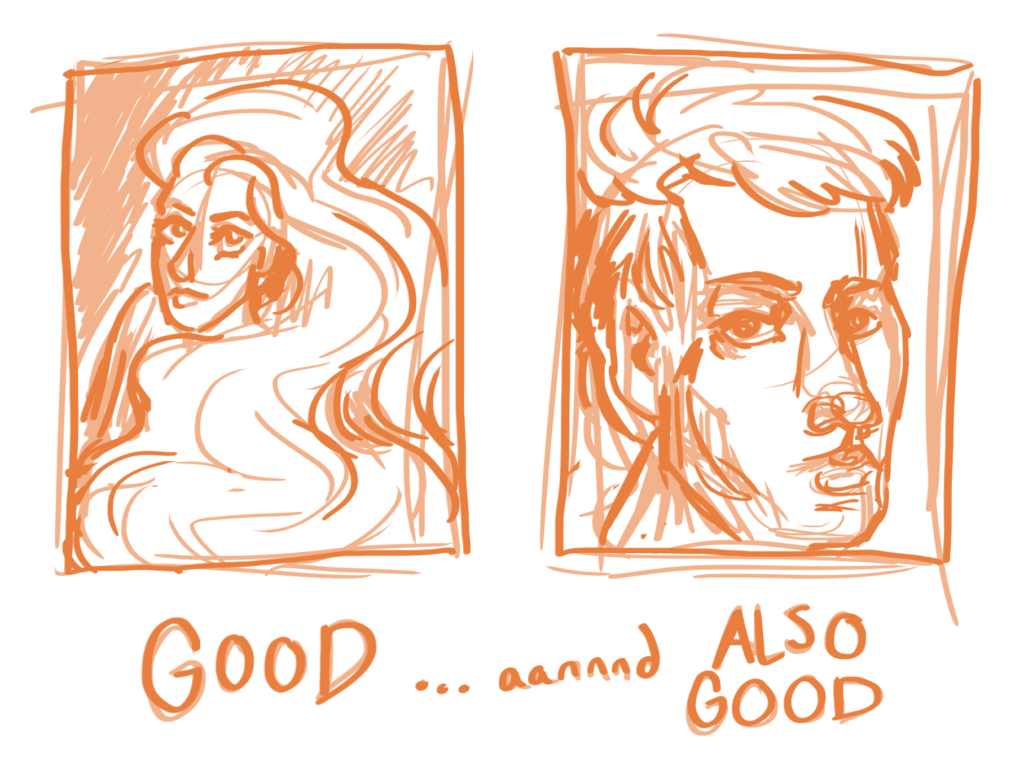
two different styles of art with the subheading "good... aannd also good."
Skill has so many different looks.

tl;dr: different isn’t always better or worse- don’t let competition stop you from making friends!


Wanna create some interesting new art with the cool peers you just learned how to approach? Check out Blick Art Materials! 

By presenting your student ID and your Campus Clipper coupon, you’ll score 10% off your purchase. Check it out- they literally have everything, and it’s always so much fun to poke around and look for new mediums.


By Ness Curti

Ness Curti is a freshly-graduated illustrator from the Lesley College of Art and Design. A part-time bobarista and full-time New England adventurer, they hope to one day tell stories for a living, whether through art or words. They enjoy doodling, procrastinating, and saying hello to the dogs they pass on the sidewalk.


For over 20 years, the Campus Clipper has been offering awesome student discounts in NYC,  from the East Side to Greenwich Village. Along with inspiration, the company offers students a special coupon booklet and the Official Student Guide, which encourages them to discover new places in the city and save money on food, clothing, and services.  At the Campus Clipper, not only do we help our interns learn new skills, make money, and create wonderful e-books, we give them a platform to teach others. Check our website for more student savings and watch our YouTube video showing off some of New York City’s finest students during the Welcome Week of 2015.
Share