Life can feel like a mysterious puzzle with pieces waiting to be discovered and placed together. Some believe that our destiny is handed to us at the time of our birth, but do we really know that for sure? It is an innate part of human life to yearn for affection, validation and pleasure. We often pause and reflect to wonder if we’re supposed to live life alone, scary as it may sound. Or should we invest time towards finding a partner to maximize what life has to offer like romance? Love is a subjective term, the general consensus is that love takes form when one feels a profound level of attentiveness, care, and contentment towards another person. Love doesn’t have to necessarily be sexual since it can also manifest in a platonic manner to highlight a powerful friendship. With that being said, it’s solely up to an individual to decide whether he or she desires a partner regardless of their sexual orientation. It’s also crucial to keep in mind that relationships don’t always work out and that’s perfectly normal, there are plenty of potential soulmates out there. After all, there are plenty of fish in the sea. What many tend to forget is that not having a partner at a certain timeframe or age is justifiable, there’s no reason to be ashamed of it. Truth be told, some may have no adversities capturing love while others are trapped in a cycle of feeling frustrated because of attributes like appearance, personality, or even lack of experience. As unsettling as it might sound, the dating scene is an aggressive competition that requires effort; the objective is to market yourself as a suitable and worthy candidate to the best of your abilities. At the end of the day, it’s imperative that you know your worth and not be anybody’s second choice; a forced partnership isn’t going to do any favors as well, it’s as awful as a fake smile.
https://dating.lovetoknow.com/Loving_Couples
Click below to get access to and redeem all Campus Clipper Coupons; coupons are updated weekly
Alex is a student at the Fashion Institute of Technology majoring in Advertising & Marketing Communications. He used to major in psychology because he didn’t know what to do with his life and now wants to be in the business world. He gets distracted easily by all of the pretty girls in New York City and hopes to become a PR or Marketing manager someday. One of his favorite things to do is going out for bubble tea.
For over 20 years, the Campus Clipper has been offering awesome student discounts in NYC, from the East Side to Greenwich Village. Along with inspiration, the company offers students a special coupon booklet and the Official Student Guide, which encourages them to discover new places in the city and save money on food, clothing, and services.
At the Campus Clipper, not only do we help our interns learn new skills, make money, and create wonderful e-books, we give them a platform to teach others. Check our website for more student savings and watch our YouTube video showing off some of New York City’s finest students during the Welcome Week of 2015.
I started working on my ebook, “A Taste of Life in New York,” in late October, and can now say that my experience writing it has been incredibly refreshing and fun. Writing this gave me the opportunity to look back on my college experience thus far, reflect on the current moment, and look forward to my Senior year. I love that I have had the chance to help others through sharing my own experiences and the things that have helped me. I’ve even learned some new ways to help myself while trying to give the best tips to other college students who may struggle with some of the same problems I do.
While I’ve been writing each chapter, more and more memories have come back to me from the past couple of years and I could only hope that I’ve chosen the right stories to share with others so that they can relate and understand that they are not alone in this. Moments like all-nighters spent in the university library with friends, getting lost on the streets of New York in the early days, and even the dull evenings that felt never-ending all came across my mind as I wrote. I have always said that the days in New York feel longer and fuller than anywhere else. Time passes differently there, which is sometimes a good thing but other times a bad thing. There were so many experiences for me to choose from, so many really happy memories but also highly stressful ones. The fact is, I’ve come to accept that that’s how going to college in New York City is. I’ve learned to take all the good with the bad and ultimately, both have helped me grow as a person.
New York City
Though I’m currently taking classes remotely and will be away from New York likely until the next school year, being able to reminisce and write about these moments has been an amazing outlet for me. I’ve been able to better understand more of what I have gone through and am currently going through. And of course, it’s made me miss New York and all of my favorite restaurants. Mostly, it’s reminded me to appreciate all the good times I’ve had there with my friends, because time is precious.
I’ve learned while writing and participating in our podcasts that undoubtedly, everyone’s college experience is different, but we all meet challenges. Life in New York City can be more stressful for someone who is not a native, and combining it with the stress of college gives one a unique, but often challenging experience. I’ve found that I’ve been able to get closure for some problems that I’ve written about so far, and have been better able to work on the ones I’m still struggling with. This ebook has acted as an enormous source of relaxation and help for me, and I hope it’s done the same for others.
Interning for The Campus Clipper has truly been wonderful. It has allowed me to turn my college experience into a deeper reflection on paper. Or should I say on screen? Either way, I’ve loved the opportunity I’ve been given to blog for this company and highly recommend it to those who may be interested. Hearing from other interns and relating to each other has not only been very helpful, but exciting as well. Learning from people’s different opinions and experiences helps you grow just as much as living out those experiences does. Approaching the college experience from a third-person perspective, even while in the midst of it, gives you a moment to take a step back and better process the chaos of college life. I’d like to say once again that the most important thing I’ve learned from my time with The Campus Clipper is to savor each moment you spend in New York. The people you meet and the times you have there will shape you, but they will also give you amazing memories for a lifetime.
You can find all of our active coupons at this link. Redeem them below:
Anaïs is currently a Junior at New York University and is majoring in English with a minor in Creative Writing. Her goal for the future is to work in the publishing industry and write on the side. She loves to write and read poetry and fiction in her spare time.
For over 20 years, the Campus Clipper has been offering awesome student discounts in NYC, from the East Side to Greenwich Village. Along with inspiration, the company offers students a special coupon booklet and the Official Student Guide, which encourages them to discover new places in the city and save money on food, clothing, and services.
At the Campus Clipper, not only do we help our interns learn new skills, make money, and create wonderful e-books, we give them a platform to teach others. Check our website for more student savings and watch our YouTube video showing off some of New York City’s finest students during the Welcome Week of 2015.
Any time I’m asked about how I’m handling online classes and being away from the NYU campus and my friends, I give the usual answer. It’s okay, could be better, I just wish I was with my friends and could learn in person again. But I always end with what I’ve been clinging to for months now – I’m going to make my Senior year the best it can possibly be.
With a few finals and the spring semester of this year to push through before I get there, I am slowly putting together plans for my last year at NYU with my friends. Lamenting over our lost Junior year this past summer, my friend Leslie and I decided we’d have to put in a lot of effort (and savings) into our last year.
“If we don’t have the best Senior year, I don’t even know what I’ll do,” Leslie said to me on multiple occasions.
I have to agree. We both felt our freshman year was uneventful and after our time on campus during Sophomore year was cut short by the pandemic, there is a gaping hole left in us, a desire for the New York life that we’ve yet to start living. There is an urgent need to have all the fun we could have had this year, to visit all the places we wanted to but never did. But with a little less than a year to go before we’re there, all we can do is plan.
So far on the agenda: concerts, photoshoots, a quick trip to Canada, and our favorite – lots of going out to eat. When talking with Leslie about the first place we’d go when we’re back in New York, the only place that came to mind was Max Brenner.
Located on Broadway near campus, Max Brenner remains my favorite place to go for dessert. Frankly, I doubt that will ever change. Always in the know about the best restaurants in New York, Leslie first introduced it to me during our freshman year. I fully believe it is one of the places I’ve felt the happiest while living in New York. My first visit there undoubtedly marked one of the happiest moments of my fall semester that year.
“We’ll go after our History of the Universe midterm, as a treat!” Leslie said, and that is exactly what we did.
As we walked in that night, we took in just how nice the restaurant was. It wasn’t the kind of place you’d need to dress up for per say, but almost everyone there looked well- put together, stylish, and even polished. When we were shown to our seats, we looked at each other and hesitantly shrugged off our coats to reveal our university sweatshirts and jeans. We sat down, trying not to laugh. We had decided to only order dessert and scoured the menu (the very long, very tempting menu), and it was another twenty minutes before we chose what to eat. After taking our order, the waiter left and we spoke about our relief about nearing the end of the semester. Before long, the stress of the midterm we’d taken earlier in the day had faded away and we sat laughing and joking with each other. Then the food arrived, and we felt as though we were in heaven.
I swear I’m not joking. Leslie’s tiramisu came in a small mason jar with a tiny beaker of chocolate syrup on the side. She took one bite and quickly exclaimed, “Oh my god.”
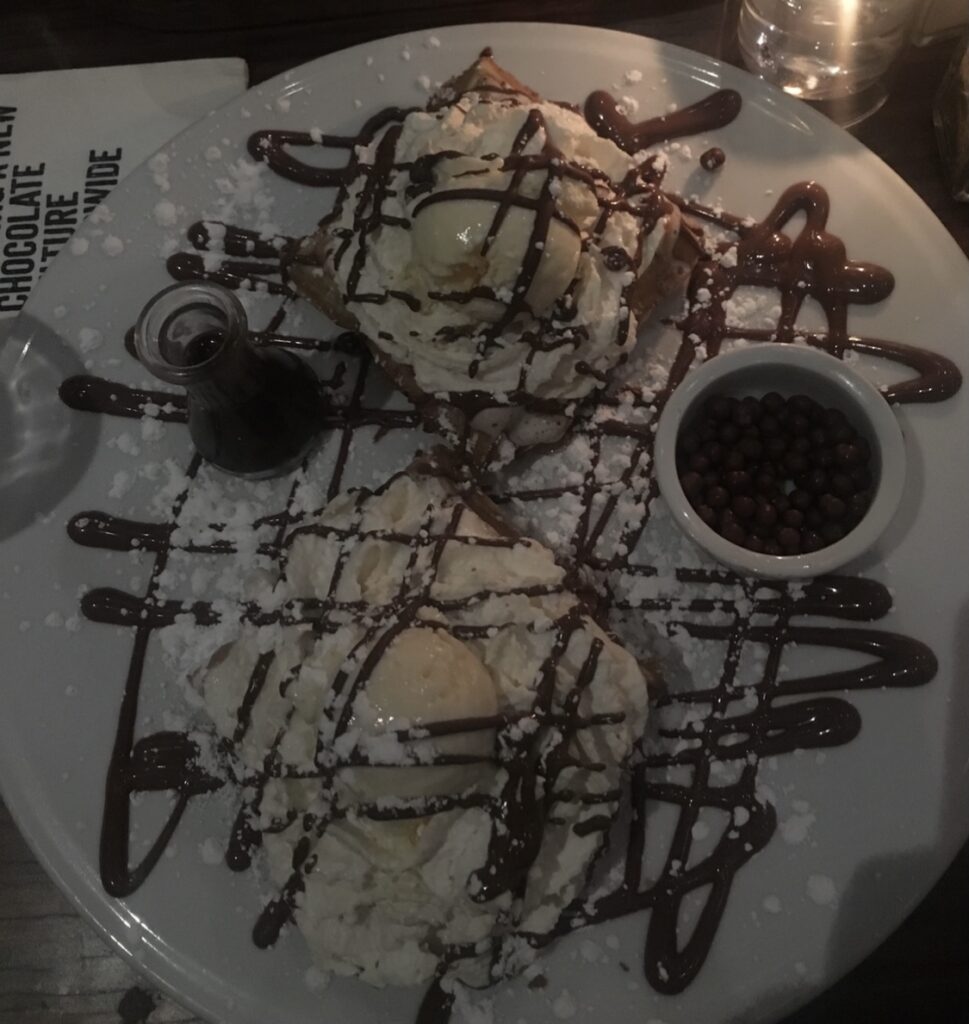
Munchies Waffle from Max Brenner in New York.
The munchie’s waffle (as named on the menu) that I had ordered brought out the same “Oh my god” from me a second later. Two soft waffles topped with whipped cream, vanilla ice cream, and hazelnut sauce drizzled over. A small beaker of chocolate syrup. On the side, a bowl of tiny, crunchy chocolate balls to sprinkle over. A light dusting of powdered sugar on top. After dressing the waffles with the sides, I took my first bite. It melted in my mouth.
If anyone heard our loud proclamations about the delectable desserts we were eating, they didn’t say anything. If someone thought we were being paid to act, they wouldn’t have been without reason. Maybe we were just too stressed or maybe we were simply starving, but either way we could not stop gushing about how good it was. It became a night to remember, and ever since I’ve considered Max Brenner one of my happy places.
“That’s how I want to feel all of Senior year,” I told Leslie recently when we were making more additions to our plans.
It’s a high expectation to have, but one I’ll do anything to fulfill. After such a hectic past few months with the pandemic and online classes, it is all I can do to keep myself going and have hope. But what can we do while we wait for that special time? Here are some tips I found from the Self website:
Have a Calendar – The Self website recommends having a calendar and writing down anything you think you would look forward to. This can be small things like the airing of the next episode of your favorite TV show, or the release of your favorite musician’s album.
Special Events – Create special events for yourself, and these also don’t have to be big! Something like saving a certain food or movie for weekends or for a day when you know you’ll need them can help.
Entertainment – Keep yourself occupied with those favorite shows, movies, music, books, video games, or anything else you thoroughly enjoy. While we pass the time during the pandemic by avoiding unnecessary outings, keeping yourself happy through these things is essential.
Looking Ahead – At this point almost everyone has plans for what they’ll do when the pandemic ends, but if you don’t I highly recommend you make some! Having something to look forward to, even if you get a bit of tunnel vision about it like I sometimes do, is essential. Whether it’s just looking forward to graduating, or maybe a vacation, or maybe even a concert – find a future event to plan and hold onto it.
In the meantime, we have to make do with remote learning and meeting up with friends over FaceTime. I keep telling myself that dessert always comes last, but it comes. It just requires patience. For now we’ll hold onto those special moments and our future plans. My mind keeps coming back to Leslie and I in our gray NYU sweatshirts, laughing in Max Brenner and eating little bites of heaven. We’ll get there again.
If you’re eager to have your dessert now though, Campus Clipper offers some helpful coupons such as the one below! Click here for the link.
You can find all of our active coupons at this link. Redeem them here:
Anaïs is currently a Junior at New York University and is majoring in English with a minor in Creative Writing. Her goal for the future is to work in the publishing industry and write on the side. She loves to write and read poetry and fiction in her spare time.
For over 20 years, the Campus Clipper has been offering awesome student discounts in NYC, from the East Side to Greenwich Village. Along with inspiration, the company offers students a special coupon booklet and the Official Student Guide, which encourages them to discover new places in the city and save money on food, clothing, and services.
At the Campus Clipper, not only do we help our interns learn new skills, make money, and create wonderful e-books, we give them a platform to teach others. Check our website for more student savings and watch our YouTube video showing off some of New York City’s finest students during the Welcome Week of 2015.
Social media apps like Instagram and Snapchat are the main mode of communication among college students. Most (myself included) are so ingrained in the culture of social media that we couldn’t imagine life without it; in some industries, if you aren’t actively on social media, you are at a tangible disadvantage compared to your peers. It’s inescapable, and understandably so; social media is a powerful tool, a great way to connect with your friends, share your life, and it can even be a solid tool for venting. I know that, for me, randomly tweeting complaints into the void is a good way to get things out of my system.
I’m not gonna patronize any potential readers here by going, “oh but did you KNOW that social media is actually bad?” At this point, I feel the fact that social media can severely damage your mental health in a number of ways is well known. However, people tend to only focus on certain dangers of social media, like addiction, oversharing, or cyberbullying. While others remain lesser-known. For instance, warnings about cyberbullying are plentiful, but people also don’t talk as much about “echo chambers” that can occur in communities over social media. By “echo chambers,” I am referring to the fact that you are more likely to surround yourself with people who have similar beliefs to you, which means that your beliefs are also more likely to go by unchallenged. This reinforces your beliefs and can entrench you within them, making you more stubborn and unwilling to listen to anyone who might disagree. It’s this concept that drives the growth of developing anti-intellectual movements on the net, such as COVID-19 deniers or anti-vaxx, but it can also subconsciously affect anybody on social media. When you’re on social media, you need to make sure that you aren’t reinforcing your own biases by engaging with sources outside of your “bubble.” I think social media has failed to encourage this kind of behavior, which results in a lot of tribalism where people attack anyone who disagrees with them; this makes social media a toxic environment for everyone involved. While everyone inevitably falls into this behavior, it’s important to be aware of it so you can recognize it and avoid it.
Social media, much like anything else, can also burn you out if used in excess. As social media continues to take more of our attention it is easy to slip into an obsession, which is terrible for your mental health for so many reasons. It can lead to feelings of isolation and anxiety; when I spend too much time on social media, I feel a sense of hopelessness. Especially on Twitter– many people tend to focus on the negatives of life, with doom and gloom news spreading more frequently than anything else. And while that is understandable, given the state of, well, everything, that doesn’t make it any less exhausting. It’s important to be aware of social media burnout so you can recognize it; oftentimes I find myself so immersed in social media that I don’t realize the negative impact it’s having on me until I step away from the screen and detox. That’s really the best response to it; many apps have the option to temporarily deactivate your account in order to motivate you to take a break and ground yourself in reality.
One of the most powerful features of the internet age, social media is inescapable. We all indulge in it because of how enjoyable it is, it’s important to maintain a level of self-awareness and metacognition when you consider your time on social media. Try to be aware of the influence social media can have on the way you think, your biases, and how it harms your productivity & well-being, so you engage in social media in a healthy way.
You can find all of our active coupons at this link. Redeem them here:
Sebastian is a student at the Fashion Institute of Technology, where he majors in Fashion Business Management.He’s worked behind the scenes of New York Fashion Week with the company Nolcha Shows, and in the office of Elrene Home Fashions. Someday, he hopes to be able to make his own claim in the fashion industry by starting his own business.
For over 20 years, the Campus Clipper has been offering awesome student discounts in NYC, from the East Side to Greenwich Village. Along with inspiration, the company offers students a special coupon booklet and the Official Student Guide, which encourages them to discover new places in the city and save money on food, clothing, and services. Paragraph
At the Campus Clipper, not only do we help our interns learn new skills, make money, and create wonderful e-books, we give them a platform to teach others. Check our website for more student savings and watch our YouTube video showing off some of New York City’s finest students during the Welcome Week of 2015.
The first time my friend Maria and I shared a meal together we went to a Mexican restaurant on University Place. Truthfully, neither of us remember the name, likely because we never felt compelled to return there later on. The food was decent, perfectly acceptable, nothing without flavor. But we were both looking for something else. Maria wanted more of the traditional cooking that her Mexican parents, particularly her mother, would make for her. I was looking for more of the Tex-Mex angle that I favored, being from Texas. We were inevitably disappointed because either way, the restaurant could not provide the comfort Maria got from her mother’s cooking and I from my favorite Tex-Mex restaurants back home.
Comfort foods are named for their helpful properties, for their ability to provide just a little relief from whatever stressor may be occupying your mind. In these past few months since the pandemic started, it only makes sense that we might all be craving our favorite comfort foods more than usual.
Talking with Maria recently about it, I learned more about how she has noticed a change in her relationship with her comfort foods.
“What do you think constitutes a comfort food?” I asked her first.
On the small screen of my phone I watched her pause to look up at the ceiling before answering, “Probably something that makes you feel, like, warm inside physically, or in a way that brings back fond memories,” she said, “any foods that take you back to a time when you felt good.”
I agreed completely. The point of comfort foods is to do exactly this – make you feel comforted, make you feel warm and of course happy memories are probably attached to a lot of these.
“What are some of your favorite comfort foods?” I asked her next.
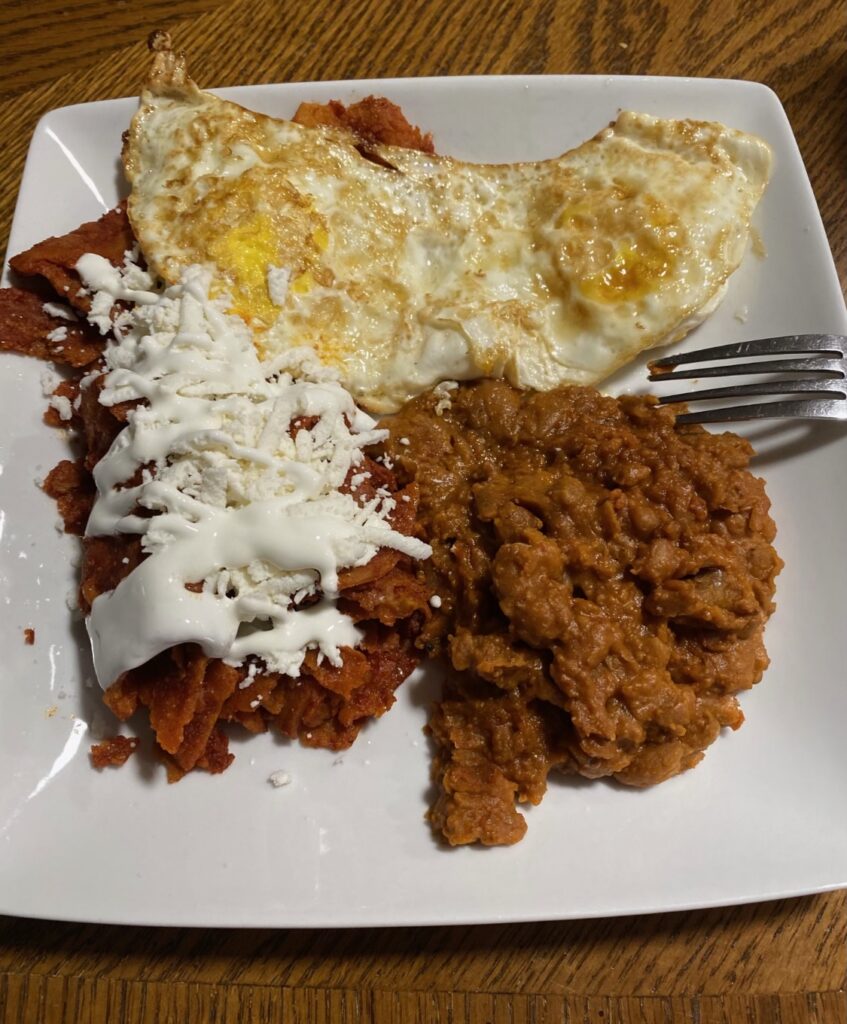
“Anything my mom makes, for the most part. Actually, a lot of breakfast foods that she makes. Chilaquiles, or eggs with chorizo or potatoes. They’re all simple foods. Sometimes just a tortilla spread with beans, then some cheese and salsa can be amazing. A lot of times it’s just whatever we eat whenever there’s nothing else.”
In Maria’s words: “Huevos rancheros con chilaquiles, y frijoles fritos con chorizo.”
We both laughed at that, and I completely understood what she meant. One of my own favorite comfort foods is what my mother calls “estrellitas,” “estrellita” meaning “little star.” It’s a simple, light tomato soup with star pasta, but it never fails to warm me.
“Okay, and how much access did you have to your comfort foods while we were on campus in New York?” I asked.
Maria gave me a look and I laughed.
“You know,” she said, and I laughed harder.
“Yeah, I do,” I said, recalling a time she dragged me with her on a long subway ride to Queens.
“Yeah, to get the good stuff, the real stuff, I have to go to Brooklyn or Queens. I have to find a panaderia there, and somewhere I can get chorizo, too. So in other words, not a lot.”
“What about the pandemic? How has your relationship to food changed during the pandemic?”
She frowned for a second but then shrugged.
“Honestly, it’s just nice to be able to have my mom’s cooking again, to be able to eat those comfort foods every day. But then also, since I recently moved in with my friend it’s kind of like New York again, I don’t get it as much. Sometimes though she has my brother send some over. And sometimes I just beg her to make someone send me some.”
I nodded along, then asked, “Have you noticed yourself craving your comfort foods more during the pandemic?”
“Hmm, not necessarily? But also, I’m just really appreciative of the fact that I can eat my mom’s cooking. Obviously I normally wouldn’t be able to during the school year. I’m just trying to savor it in the limited time I have. And it saves me a lot of stress, time, and money to be able to eat what she makes.”
Comfort food, as I learned after this brief conversation with Maria, is oftentimes food that is not easily accessible. This could very well be the case for you, too. Whether it be the resources or the chef, it usually takes an outside factor to help provide the beloved meal. When craving something you enjoy that you are unable to get to, especially during a highly stressful time such as now, it can then be difficult to cope. I decided to include a link to an article on some other ways you can comfort yourself, such as talking things out, meditating, and even things as simple as taking a shower.
Remember it is okay to take the time you need to comfort or care for yourself. In fact, it’s necessary. To avoid burnout and overall exhaustion, check in on yourself and make sure you give yourself the breaks you need. If you find yourself wanting to order take-out to do so, Campus Clipper has a variety of coupons to pick from to help you out, such as the one below! Click here to view the coupon, and make sure to go to the Campus Clipper website to explore more.
KC Gourmet Empanadas Coupon on the Campus Clipper website.
You can find all of our active coupons at this link. Redeem them here:
Anaïs is currently a Junior at New York University and is majoring in English with a minor in Creative Writing. Her goal for the future is to work in the publishing industry and write on the side. She loves to write and read poetry and fiction in her spare time.
For over 20 years, the Campus Clipper has been offering awesome student discounts in NYC, from the East Side to Greenwich Village. Along with inspiration, the company offers students a special coupon booklet and the Official Student Guide, which encourages them to discover new places in the city and save money on food, clothing, and services.
At the Campus Clipper, not only do we help our interns learn new skills, make money, and create wonderful e-books, we give them a platform to teach others. Check our website for more student savings and watch our YouTube video showing off some of New York City’s finest students during the Welcome Week of 2015.
How often do you check in with yourself? Oftentimes, college life goes at such a fast pace that students will “leave” themselves behind, putting deadlines ahead of their well-being. It definitely doesn’t help that many professors like to think that students can afford to devote 100% of their time to their class, but when you have five classes, the math doesn’t quite add up. Considering most can’t afford to devote 100% of our attention to education in general- let alone a single class- one can very easily feel overwhelmed. Without a doubt, stress is a frequent and unfortunate element of college culture; more than 40% of college students experience an above-average level of stress, as reported by the National College Health Assessment– though, anecdotally, I suspect the number is much higher than reported.
When you can’t relieve your stress in a healthy way, it builds up within you and quickly you can find yourself experiencing burnout, which is a miserable thing. Personally, when I am burnt out, I dissociate– it feels like you’re watching yourself from the first person, as though you were merely an observer in your daily life, rather than an active participant. The advantage of this state of “autopilot” is that I can push through daily life, even if I am overextending myself. The obvious consequence, though, is that it can be easy to lose yourself in your daily routine. Do note that dissociation is a common thing, and just about everyone will experience it at least a few times in their life. But, if you feel that way all the time, that is when it becomes a problem. It took me a very long time to realize that I had a problem with dissociation as it was (and still is) a coping mechanism of mine. While not everyone may relate with dissociating as a reaction to burnout, everyone will develop coping mechanisms to deal with burnout and daily strife. The important thing is that you must be able to identify when you are using these coping mechanisms, and then be able to be honest with yourself; is this healthy?
The ability to check in with yourself is an important life skill that often gets swept under the rug. Certainly, nobody, throughout all my years, of education taught me to ask myself, “Hang on a minute. Who am I? Is this what I want?” and I expect that many will relate to that notion. From a young age, many feel pressured to do well in school, and while education is an important thing, it’s almost important to understand why you do the things you do in life. Don’t just go to college because it’s the expected thing to do, go to college because it’s what you want to do. It can have a sizable difference in the actual quality of your education; a study from 2018 found that students who engage an activity out of their own free will were less likely to be exhausted and cynical, and are more efficient when compared to those who engage in an activity due to external pressures (such as parental pressure). Unfortunately, the reality is that many students are unable to pursue what they want because of external pressures, and so are subject to higher levels of burnout. Therefore, here are some tips I can offer on how to deal with burnout.
Recognize how burnout feels for you. It’s an important level of self awareness to have, to acknowledge when you are feeling run down. It will help you pace yourself and will, in the long run, benefit your mental health, which will translate into more productivity. Burnout can be procrastination, a loss of motivation, imposter syndrome, general exhaustion and depression, or really any number of things. It’s a general sense of resentment towards your work (or study) that impedes your daily function. Remember– it’s totally normal; nobody can devote 100% of themselves to something 100% of the time.
Find something to break up your daily schedule. Oftentimes burnout can result from a monotonous schedule. Thus, introducing something new will keep things interesting and can be a good distraction from a busy schedule. It could be a new hobby, or impulsive plans with your friends, or just anything different; but it will help energize you and make you more productive.
Avoid negative people. It’s a pretty general thing, but the thing with burnout is that it drains your energy and your motivation, and dealing with toxic people will only waste the energy you have left.
Get some sleep.We’re all guilty of it; sleep deprivation is a pretty regular thing for most students. For most people in general, too. But the impact a good night’s sleep can make is woefully underrated. There’s a point of exhaustion where studying just won’t help anymore, and you’re better off getting some rest instead.
You can find all of our active coupons at this link. Redeem them here:
Sebastian is a student at the Fashion Institute of Technology, where he majors in Fashion Business Management.He’s worked behind the scenes of New York Fashion Week with the company Nolcha Shows, and in the office of Elrene Home Fashions.Some day, he hopes to be able to make his own claim in the fashion industry by starting his own business.
For over 20 years, the Campus Clipper has been offering awesome student discounts in NYC, from the East Side to Greenwich Village. Along with inspiration, the company offers students a special coupon booklet and the Official Student Guide, which encourages them to discover new places in the city and save money on food, clothing, and services.
At the Campus Clipper, not only do we help our interns learn new skills, make money, and create wonderful e-books, we give them a platform to teach others. Check our website for more student savings and watch our YouTube video showing off some of New York City’s finest students during the Welcome Week of 2015.
The political upheaval, social unrest, and economic chaos during the pandemic has changed the way we all live, arguably more than any other event in recent history. It is unprecedented because, unlike previous hardships we have faced, the end of the pandemic is not readily apparent, and as we enter November– the ninth month of the pandemic– it is clear the changes in the American lifestyle are here to stay.
Among the groups most affected by pandemic changes are college students. Student unemployment rates have soared since the pandemic. As dorms close, many students are forced to return home, which can be especially problematic when not every student’s household is a healthy environment. The academic world is forced to resort to online classes, which can be a stressful experience for many reasons: students struggle to focus during class and retain the information afterward.
Procrastination is much easier when you are sitting in your house; I have even missed a deadline for a test in one of my classes because I didn’t realize it was due! Such mistakes are much harder to make in a physical class. Socializing with your classmates is a real pain, as well; whenever my professor breaks everyone into groups there is this tragically awkward silence as we all do the work without talking to each other. And the real kick: we all get the privilege of having to pay full price for an online semester. I understand that schools need income in order to operate, but having to pay for a semester plagued with the issues that come with online class certainly leaves a bad taste in my mouth, and I’m sure I’m not the only one.
These issues are compounded by the inability to go outside and by the existential threats we face in the form of the pandemic and climate change. What ends up manifesting is what many call the “pandemic depression”. The CDC reported in August that young adults were among the groups disproportionately affected by mental health conditions, and 40% of Americans reported struggling with mental health or substance abuse. The issue that many are predicting now is that this “pandemic depression” is about to collide with a condition known as Seasonal Affective disorder (SAD), a form of seasonal depression associated with the lack of sunlight and outdoor recreation during the winter months. Since many of the symptoms of SAD overlap with those of the pandemic depression, we are anticipating a very challenging season where those already affected by SAD will feel their symptoms compounded by the pandemic, and more people, in general, are expected to experience SAD.
The pandemic has been challenging because of the uncertainty of the situations it has wrought. This issue, at least, is one that we can see coming. The question, then, is how can we prepare for the coming season?
Recognize how depression affects you. Self-awareness is an important skill that will help maintain your mental health, as discussed in my first blog post. The symptoms of depression manifest themselves on a case-by-case basis. If you are able to recognize the indicators that you are entering a depressive episode, you will at least feel prepared and in somewhat control of the situation, and increase the amount of self-care in your life accordingly.
Sunlight is key. Cabin fever and a lack of sunlight are the key factors of SAD. It’s a challenge to go out when the weather is miserable and the temperatures are cold, but if you’re feeling a lack of energy or motivation, it might be worth trying a vitamin D supplement or changing your schedule so that you spend more time outdoors during the day. Of course, the challenge is finding things to do that are COVID-safe, but outdoor recreation is generally safe as long as you use common sense and follow the general COVID guidelines as set by the CDC.
Socializing is important (but be careful!) Another major challenge of the pandemic is the social starvation we all face. One symptom of SAD is a desire to further isolate oneself from others, but it’s important that you interact with others. We are social beings after all, and interacting with others can help satisfy your psychological needs. Apps such as Discord or Skype which basically act as group calls are great ways to chat with your friends and socialize safely.
You can find all of our active coupons at this link. Redeem them here:
Sebastian is a student at the Fashion Institute of Technology, where he majors in Fashion Business Management.He’s worked behind the scenes of New York Fashion Week with the company Nolcha Shows, and in the office of Elrene Home Fashions. Someday, he hopes to be able to make his own claim in the fashion industry by starting his own business.
For over 20 years, the Campus Clipper has been offering awesome student discounts in NYC, from the East Side to Greenwich Village. Along with inspiration, the company offers students a special coupon booklet and the Official Student Guide, which encourages them to discover new places in the city and save money on food, clothing, and services.
At the Campus Clipper, not only do we help our interns learn new skills, make money, and create wonderful e-books, we give them a platform to teach others. Check our website for more student savings and watch our YouTube video showing off some of New York City’s finest students during the Welcome Week of 2015.
Celebrating gratitude seems strange this year, however, misfortune isn’t always a good reason to not give thanks. In fact, Thanksgiving was born from struggle. The holiday’s history is intertwined with the hardships of frontiersmen, Native Americans, and war. In this piece, I will observe the history of these conflicts and will argue that coming together to persevere is important.
Most Americans are told the Thanksgiving story in elementary school. While eating caramel candies and drawing turkey hands, our loving teachers tell us that the very first Thanksgiving took place when the pilgrims and Wampanog’s feasted together at the end of the harvest season in 1621.
There is beauty in this myth. It encourages gratitude for nourishment, and unity with our friends and family. That being said, this story leaves out many important parts of the holiday’s history. Sixteen years after the first Thanksgiving feast, the pilgrims burned a Wampanoag village and killed 500 people, (Blow). William Bradford, governor of Plymouth, reflected on this tragedy saying, “over the next 100 years, every Thanksgiving Day ordained by a Governor was in honor of the bloody victory, thanking God that the battle had been won.” Bradford made Thanksgiving synonymous with the massacre of Native Americans.
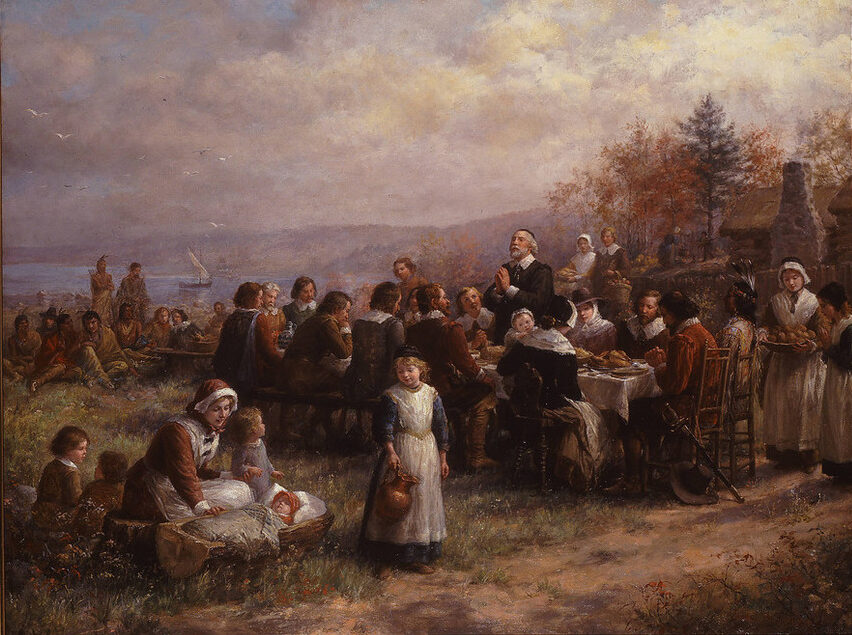
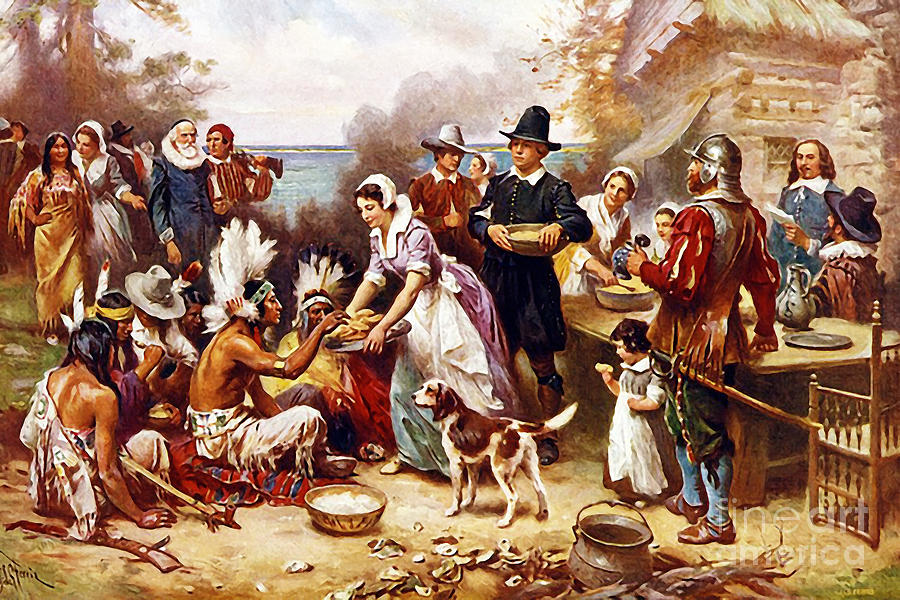
How can we celebrate a holiday that is linked to genocide? Thanksgiving is one of the most celebrated American holidays, and yet at its core sits the uncomfortable truth of cultural destruction and prejudice. This can be seen in some of the most famous Thanksgiving art pieces:
Jennie Augusta Brownscombe, Thanksgiving at Plymouth, 1925Jeane Leon Gerome Ferris, The First Thanksgiving, 1932
In both of these pieces, there are fewer Wampanoags, they are in the periphery, and are depicted as subservient. In reality, there were more Wampanoags that attended the feast than pilgrims and they supplied more food. These paintings reflect prejudice and are products of the genocide.
As I considered how to grapple with this brutality, I searched for what some Native Americans had to say on the matter. I found some great poems by Sherman Alexie, which I highly recommend. The poet also said the following, “…I guess you could say Thanksgiving is also about survival, look how strong we are,”(Turkewitz). This strength is key to the holiday. Thanksgiving is about struggle, however, it is also about hope, strength, and moving on.
The Wampanoag genocide is one of many times Thanksgiving can be connected to war. Following the American Revolution, George Washington officiated the first official Thanksgiving on November 26th, 1789, (Columbia). After the Civil War, Abraham Lincoln nationalized the holiday. Finally, during WW2, congress recognized Thanksgiving as a holiday that would always take place on the last Thursday of November, (Klapper).
All of these pivotal points in the establishment of Thanksgiving are closely linked to major wars. Each war weakened the country, and politicians knew that they had to keep the country united. National holidays encourage patriotism and unity, which is why establishing Thanksgiving as a national holiday was useful.
Thanksgiving is connected to the human struggle. The pilgrims suffered a harsh winter famine before the first Thanksgiving feast, Native American’s were massacred, and people died in every war associated with the holiday. Thanksgiving has a bloody past. However, celebrating is a way to persevere. Connecting with loved ones and sharing a meal gives us the strength to carry on.
We need strength this Thanksgiving. There is a pandemic, a dramatic political season, and civil unrest. It hasn’t been easy, but it never has been. We need to persist–and while you may not be able to return home for the holidays, I think the best way to find peace is to connect with loved ones. Give someone a call, send a text, and remember you aren’t alone!
Takeaways:
1. Struggle.Thanksgiving is a day linked to struggle. This is evident by its connection to the pilgrims, Native Americans, and war.
2. Hope.Coming together and sharing food makes moving on from hardships easier.
3. Friends and Family. Give your loved ones a call.
4.Activities.Check out these festive poems I found. If you feel like watching some TV, I found a great list of classic Thanksgiving episodes. For movies, check out this link. Finally, here’s a Spotify playlist I’ve had going all morning.
Sources:
Blow, Charles. “The Horrible History of Thanksgiving.” The New York Times, The New York Times, 27 Nov. 2019,
Klapper-Lehman, Sarah, and Simon J. Bronner. “Thanksgiving.” Encyclopedia of American Studies, edited by Simon Bronner, Johns Hopkins University Press, 1st edition, 2018. Credo Reference
“Thanksgiving Day.” The Columbia Encyclopedia, Paul Lagasse, and Columbia University, Columbia University Press, 8th edition, 2018. Credo Reference.
Turkewitz, Julie. “Thanksgiving for Native Americans: Four Voices on a Complicated Holiday.” The New York Times, The New York Times, 23 Nov. 2017.
Hello! My name is Erin Zubarik and I am a junior at New York University majoring in Global Liberal Studies and minoring in Chinese and Italian. Over the last few years I have been lucky enough to study abroad in Florence and Beijing, where I enhanced my language skills and became acquainted with lovely people. This fall I am primarily holed up in my apartment taking online classes, and playing with my hamster Pork Chop. I am very excited to share my cooking and relationships series this fall on Campus Clipper!
For over 20 years, the Campus Clipper has been offering awesome student discounts in NYC, from the East Side to Greenwich Village. Along with inspiration, the company offers students a special coupon booklet and the Official Student Guide, which encourages them to discover new places in the city and save money on food, clothing, and services.
At the Campus Clipper, not only do we help our interns learn new skills, make money, and create wonderful e-books, we give them a platform to teach others. Check our website for more student savings and watch our YouTube video showing off some of New York City’s finest students during the Welcome Week of 2015.
Show me anyone who claims they never procrastinate, and I’ll show you a liar. And, if you’re one of the unicorns who doesn’t, then you are a lucky person indeed. Certainly, throughout my high school career, I’ve had teachers lecture me about how to manage my time better in order to avoid procrastinating.
Then, in college, if I ask a professor for an extension on a deadline, there’s a real chance that I’ll get a snide remark about time management and procrastination. I’m certain that I’m not the only one with this experience, either; the common train of thought in the academic community seems to be that procrastination results from the student’s time mismanagement. While not entirely false, it is not the full story: there’s something irrational about procrastinating.
Logically, we should all be motivated to complete our work, because that is more conducive to happiness. Instead, it seems that nearly every college student participates in procrastination; possibly because it is influenced by psychology. Our innate “fight or flight” reflexes have adapted to the societies we live in; long gone are the days of having to run or fight for your life, rather, our battles have become more “mundane.” The issue, though, is that our survival instincts have remained as sharp as ever, not that that’s necessarily a bad thing.
What it does mean is that parts of the brain will see a problem– for instance, let’s say you have a lot of deadlines on the same day — these instincts will interfere with your cognition. There’s two options here: you can “fight,” or work through until your assignments are complete, or you can “flee,” avoiding your work until it’s absolutely necessary (see: procrastinating).
Another way of thinking about it is, we are driven to do the things we do thanks to motivation. A number of factors weigh into your sense of motivation, and they work against demotivating factors. If there are more demotivating factors than motivating factors in a decision, the result is procrastination. As your deadline approaches, the motivating factors gain strength until you overcome your procrastination. Unfortunately, this process does not always leave enough time to actually do whatever it is you needed to do. The best way to avoid procrastination, then, is to consider what is “demotivating” you and figure out how to resolve these demotivations! Listed below are some examples of factors that can discourage your sense of motivation.
Anxiety and Depression. It’s pretty obvious, but they are two major factors that will weigh heavily on your motivation. Mental health is one of those things that, unfortunately, you’re going to have to work around. After all, there is no way to just “cure” either anxiety or depression. One thing to be weary of is setting off a feedback loop of anxiety. Oftentimes, I will find that large tasks impose a ton of anxiety on me. In response, I procrastinate, which only builds up my anxiety, because I know I have to do it. It is important to be aware of this phenomenon so that you can identify it in yourself, and act accordingly. Step back, take a deep breath and organize your thoughts so that you can at least consider your next steps.
You’re a perfectionist. This is common in creative work: oftentimes there might be a disconnect between what you are visualizing and what you are creating. Certainly, it is something that I struggle with– especially when writing. It is a frustrating thing, when you can’t properly verbalize what your ideas are. Try not to let your desire to produce high-quality work impede your process; instead, use it as a driving factor to do a good job. Recognize that, especially in schoolwork, perfect is simply unnecessary, and the anticipated standards may actually be much lower than your own standards.
“This is future me’s problem.” Again, I am very guilty of this one. It can be very easy to see a task as unnecessary because it can be done in the future. It can also be easy to slip into, because it applies to the very mundane; sometimes I won’t make my bed simply because I know it won’t be a problem until I try to go to bed, or I push off putting my clothes away properly because I know I’m just gonna put them on later at some point, so instead I’ll just throw them on a chair.
While things might be inconvenient to do now, it is important to recognize that part of taking care of yourself is taking care of your future self, too. Try making things a little easier on your future self, sometimes.
You can find all of our active coupons at this link. Redeem here:
Sebastian is a student at the Fashion Institute of Technology, where he majors in Fashion Business Management.He’s worked behind the scenes of New York Fashion Week with the company Nolcha Shows, and in the office of Elrene Home Fashions.Some day, he hopes to be able to make his own claim in the fashion industry by starting his own business.
For over 20 years, the Campus Clipper has been offering awesome student discounts in NYC, from the East Side to Greenwich Village. Along with inspiration, the company offers students a special coupon booklet and the Official Student Guide, which encourages them to discover new places in the city and save money on food, clothing, and services.
At the Campus Clipper, not only do we help our interns learn new skills, make money, and create wonderful e-books, we give them a platform to teach others. Check our website for more student savings and watch our YouTube video showing off some of New York City’s finest students during the Welcome Week of 2015.
Displacement, disappointment, dissatisfaction. It’s fair to say that I am not the only one experiencing these feelings during the COVID-19 pandemic. Mid-semester of my sophomore year I was sent home to do online learning like many other students this past Spring. The virus took everyone by surprise, but its impact on college students is a unique one. For many students, learning at home is not only difficult but also dismal. No longer on campus, one misses out on the most vital aspects of college – lively discussions with peers, spending time with friends, and the chance to explore the city. Miles from New York, missing my friends from NYU and struggling to stay on the ball with classwork, I’ve found that this semester cannot be described with words. Instead imagine a very deep, very tired-sounding sigh.
But I’m trying to change that.
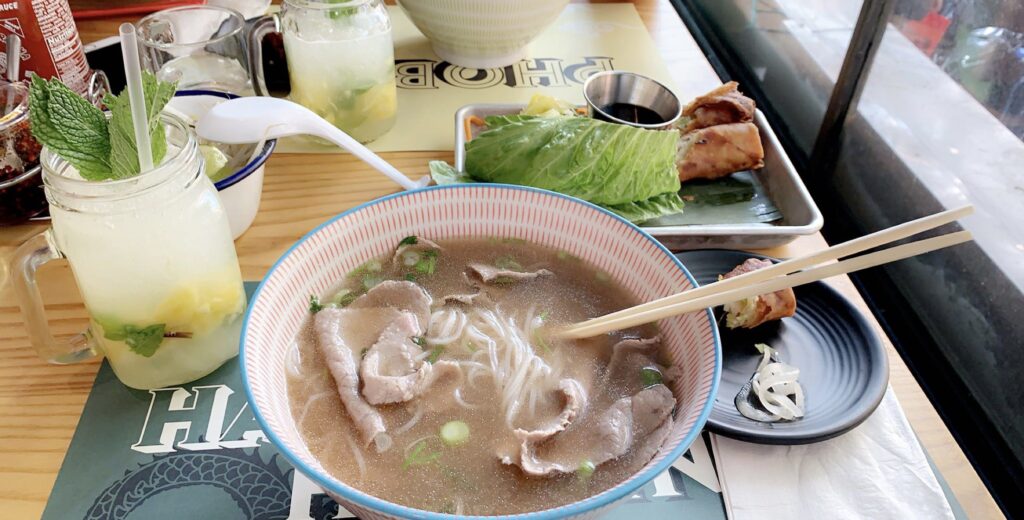
After a particularly busy past week (two novels to read, an outline for a paper due, and starting on a presentation for Spanish class, so on), I decided I’d order Vietnamese this weekend, pho in particular. We are nearing the end of the semester which means papers, projects, and other major assignments are flooding in, all due within days of each other. Food of course being my favorite way of treating myself, I let myself have at it. Having recently moved from home to across the state, I’m not familiar with many restaurants where I am now, but I’ve been craving pho and have been on the search for a reliable pho restaurant. As it turns out, one wouldn’t expect it but the second-best pho I can now claim that I’ve had is from a small eatery in the food court of a nearby mall, Pho Kitchen. Second-best.
Maybe I’m lying a bit to myself. To be completely objective – the pho was absolutely delicious. I sat in the food court, mask placed to the side and socially distanced (which was a good thing, or people probably would have heard me slurping up the noodles and soup), and added a little Hoisin sauce and sriracha to the broth, mixing it in alongside the noodles, beef, onion, and cilantro. I squeezed a lime over it to top it off, stirred a little more, then dug in. The beef was perfectly tender, the broth flavorful and warm, and the noodles not too hard or too soft. All and all, completely satisfying. Why was it second-best then, you may be wondering?
It wasn’t PhoBar. PhoBar, which my friend Leslie introduced me to in our Freshman year, is located very close to Washington Square Park and was conveniently only a little ways away from our residence hall. I had had a cold and at that time it was just slightly more socially acceptable to go out to eat when visibly sick. We sat at a shared table and having only tried pho once before and disliking it, I wasn’t sure what to order or how to feel.
“Just get the classic beef pho,” Leslie said, and I followed her orders.
Classic Beef Pho from PhoBar in New York City.
It turned out to be the cheapest item on the menu, which made it even better, but truthfully, it couldn’t have possibly gotten better. Even through my congestion and with what little ability I had left to taste, I was floored by the flavors of every part of the soup. Very quickly, just after a few bites and sips of broth, I became a passionate fan of pho. Leslie and I returned to PhoBar frequently after that and it is still one of our favorites.
When I was craving pho last week then, maybe it was more than just the soup I was yearning for. After all, I thoroughly enjoyed the meal I had, so all that was really missing was the fact that I wasn’t at PhoBar with Leslie. I wasn’t in New York.
Pho here will never be as good as pho in New York for that very reason. And on the same lines, online classes will never be as fulfilling as going to class on campus. Life in New York will always feel at least slightly superior to life anywhere else.
One could say that feeling discontent with this semester would be inevitable due to all that is happening, namely the pandemic. But in another attempt to try to grin and bear it, no matter how tiring it may be to keep grinning, I am doing my best to push through online classes and keep up with what is due. However, this is undoubtedly difficult. A few friends of mine themselves are going through rough patches and find themselves unmotivated. If you find yourself in the same position, here are a few helpful tips from U.S. News on dealing with online classes:
Form a Schedule – Oftentimes having a solid structure to your day can help with keeping things in line and therefore getting more work done. Try writing out or printing a schedule, hang it up somewhere you will see it, and do your best to adhere to it throughout the day.
Find Your Space – If you have a very busy home, it’s best to find a quiet area in your house to minimize distractions. If this isn’t possible, try going to your local library or somewhere you can get away from whatever may be pulling you away from your work.
Eye on the Prize – It may be difficult, I know for a fact that it is very difficult for a few friends of mine, but it is important to have a goal you want to reach and therefore a reason to get yourself to do work. “I’m just trying to get this degree,” is something a friend of mine says all the time, and I think it’s a simple but important mantra for many of us to take up during this time.
Stay in Touch – As for missing out on social interaction, use FaceTime or something of the like to keep in touch with friends from college. My friends and I use an app to send video updates to each other and it’s proven to help us a lot. Not only do we get to hear about what’s going on in each other’s lives, but it’s nice to see the faces and hear the voices of the people who I lived with for almost a year, who I care about deeply.
For more information, click the link above. Keep in mind that these things may not come easily or could be difficult to implement in your life. This is perfectly okay. It is more about the effort you put into doing better than how far you may actually get. I myself feel that it’s rare to have an actual productive day, but when I do I let myself savor the moment. It’s these moments that help me get through the semester. When you have that day (and you will), make sure you savor the moment, too.
You can find all of our active coupons at this link. Redeem them here:
Anaïs is currently a Junior at New York University and is majoring in English with a minor in Creative Writing. Her goal for the future is to work in the publishing industry and write on the side. She loves to write and read poetry and fiction in her spare time.
For over 20 years, the Campus Clipper has been offering awesome student discounts in NYC, from the East Side to Greenwich Village. Along with inspiration, the company offers students a special coupon booklet and the Official Student Guide, which encourages them to discover new places in the city and save money on food, clothing, and services.
At the Campus Clipper, not only do we help our interns learn new skills, make money, and create wonderful e-books, we give them a platform to teach others. Check our website for more student savings and watch our YouTube video showing off some of New York City’s finest students during the Welcome Week of 2015.
Intern Brenna Sheets from Emerson College is joined by fellow students Amber Call and Grace Rubin to discuss the reality of dating in the digital age. Whether you're an undergrad grinding through finals or a grad student juggling class, TA positions, and a work schedule, adding dating to the mix can feel like an unpaid […]
Intern Brenna Sheets from Emerson College is joined by Cambridge Natural's Emily K. to discuss natural health and wellness in the modern age. They discuss how supplements and herbal teas are being used, marketed, and perceived in our fast-paced, wellness-obsessed society. Is our reliance on these products a sign of empowerment—taking control of our health […]
Intern Brenna Sheets from Emerson College leads today's discussion on self-care and wellness in college. With fellow interns Aidann Gia (Pace University) and Agatha Edwards (Brandeis University), the group discusses what American culture says about self-care, everyone's favorite wellness activities after a stressful week, what gets in the way of students prioritizing themselves, and the […]
Intern Katie leads today's discussion. We talk about the pandemic's effect on college students, since current juniors and seniors' college experiences have been largely defined by the pandemic. We discuss what it was like being sent home from college in 2020, navigating online classes and extracurricular activities, and the lessons we've learned from this whole […]
Welcome back to a new season of the Campus Clipper podcast!Intern Megan leads today's discussion. We talk about the activities that inspire creativity in our cities and how to balance creative hobbies with schoolwork and internships. We also discuss the uncertainty and insecurity that we often feel when putting our creative work out in the […]
Intern Ehani leads today's discussion. We talk about the films, series, books, and other art that has touched our hearts, even when the world makes us want to be dark and cynical. We also discuss what role our passions have in our lives, and what passion means to us. Mentioned in this episode:Call Me By […]
In this episode, our interns talk about going to college in a big city - from the cultural advantages to how they deal with the expensive cost of living. We also share our favorite things to splurge on. Mentioned in this episode:The Whitney MuseumThe Tenement MuseumTips for budgeting (even when you're not the budgeting type)Check out […]
In this episode, our publishing interns talk about why they love writing and how they use writing and creativity as a tool for personal development and mental health. Check out our publishing interns' writing on the Campus Clipper Blog. This episode was recorded at the new East Village, NYC location of Marinara Pizza. Click this […]