Archive for the ‘onCollege’ Category

Dreamland Ch. 7: Why you should send that cold email

Thursday, July 24th, 2025

You’ve surely been told that the worst thing someone can say is “no.” It’s true, and useful, but I think it’s a bit unempathetic. No one ever tells you how awful it can be to actually hear “no” then have to move on knowing there’s nothing you can do — and no real reason to feel resentful of that response. As a teen writer, I heard “no” quite a bit, from publishers who didn’t work with minors, agents who weren’t interested in representing me because they “didn’t fall in love with the idea,” and other professionals who passed on the work for some reason or another. I just had to accept this and move on, every single time.

Like I’ve said, I’m self-published. Not traditionally published. It’s definitely a hurdle, as there is no reason for anyone to go looking for my books, and I’m still learning how to market myself. But for any young authors out there looking for accessible ways to put your work out there, I definitely still recommend self-publishing. Try out other things, but this is always an option, not just a last resort.

I started off looking for professionals on Reedsy, where you can hire freelance editors, illustrators, etc. to work on your project remotely. I found an editor based in London who provided a more seasoned perspective on my work, even for a book targeted to teens. Then I found an illustrator, but I actually should have found a formatter first as I needed to send the fully formatted manuscript to the illustrator so that she could size the cover and deliver the proper files. This was a mistake I made, and then I did it right for the second book.

However, the second book had a completely different issue. Due to extenuating circumstances, my illustrator had to drop out of the project. This was mainly an issue because she took months to communicate this to me and didn’t help me find someone else, meaning I couldn’t rely on Reedsy anymore as I needed a quicker response and turnover time.

So I went hunting. I found websites and portfolios that were similar enough to the previous illustrator’s style that they could adapt. I found covers that those artists created that I liked, that would suit the genre of my book. One email I sent didn’t immediately produce a collaboration, but the artist sent profiles of other artists that she thought would be able to work with me. And it was one of those profiles that ended up becoming my illustrator for the second book.

It was a hectic and scary process. Things fall through, and you always have to hope for the best and prepare for the worst. I’m so grateful I managed to secure these collaborations each time, and I pray I’m able to keep them for when I’m finished with this third book. 

This whole ordeal reminded me that I’m still responsible for the labor of getting my work out there, since I don’t have a big company investing in my talents to do it for me. If you’re looking to self-publish, send out emails. Find freelancers and professionals that are familiar with young writers and can teach you about the industry. Don’t be afraid to not know everything and everyone immediately. 

Since I had to do all this myself at such a young age, I’m truly an expert at cold emailing. I can’t even tell you how many applications I’ve sent out into the void, how many email threads I’ve followed up on weeks after getting completely ghosted, how many reporters and publications I’ve contacted as a marketing intern. It can be tiresome and tedious, but you never know what lifelong connection you’ll forge from a simple email.

Self-ownership is both terrifying and freeing. It’s wonderful to have control over my work and authority over the people I work with, but it creates so much more labor for me, a full-time student, and also has little to no guarantee of profit. Amazon, which hosts Kindle Direct Publishing (KDP), takes far more royalties than I do. It’s quite irritating. If you self-publish, be aware that it does more to build your portfolio than build your bank account. It’s still valuable, but you should definitely look into different ways you can use your storytelling skills to make a long-term career.

Until then, cherish the liberty of being creative. You are no less an author if you publish online. You’re just taking the necessary steps to put yourself out there. Always aim for the stars, but it’s also always alright to just aim for an email back.


By Oshmi Ghosh

Oshmi Ghosh is a rising junior at NYU’s College of Arts and Sciences, pursuing a bachelor’s degree in English with minors in Creative Writing, History, and Entertainment Business. You can usually find her appreciating the simple things in life: tea with milk and sugar, a good book, and/or intensely competitive board games.


For over 25 years, the Campus Clipper has helped college students in New York City—and later in Boston and Philadelphia—save money and succeed in city life. We offer a digital coupon booklet with discounts on food, clothing, and services, plus an Official Student Guidebook with real advice on how to navigate college life in a big city. Our internship program lets students build skills, earn money, and publish their own e-books. Follow us on Instagram and TikTok @CampusClipper, and sign up for our newsletter to get deals straight to your inbox. To access the digital coupons, scan the QR code on our printed card—available in dorms, student centers, and around campus.

Share

What Are Friends For?

Thursday, July 24th, 2025

Maintaining friendships is something I’ve struggled with in my time in college. There is so much talk about romantic heartbreak that we aren’t really prepped to lose a friend. It can be just as painful, especially the kind of friend you thought would be in your life forever. College has taught me that not all friendships are meant to last and learning that lesson is one of the most defining parts of growing up. 

As someone who is more reserved, quiet, and a little rigid when it comes to my beliefs, making friends is very hard for me. It can be hard for me to put myself out there and show my true personality. Throughout my time in college, I’ve made some incredible friendships. People I laughed with until I cried, studied with until 2 a.m., vented about life, etc. These friendships carried me through some of the hardest and happiest moments of my life. But I’ve also watched a few of them dissolve quietly, unexpectedly, or sometimes through conflict I never saw coming.

Some breakups happened because we simply grew apart. Our schedules no longer aligned, our values shifted, or we stopped showing up for each other. Others ended in messier ways. Misunderstandings that were never resolved, hurt feelings that were never addressed, or boundaries that were crossed too many times. Regardless of how it ended, the aftermath always had the same emotion… grief. 

One of the hardest friendships I lost was this past semester. I had my friend in my second semester of sophomore year, and we clicked almost instantly. We had pretty similar lives and bonded over very similar experiences throughout our lives. We eventually became roommates all of junior year and shared everything from meals, secrets, and inside jokes. At the tail end of the second semester, I had changed. I struggled a lot with my mental health, which made me push myself away, causing a bit of a shift. I also wasn’t perfect and did things that I shouldn’t have done, causing the friendship to take a rift. I left the end of the semester with us on bad terms and haven’t talked to her since. In hindsight, the friendship ending was mainly my fault, and now I take accountability for a lot of things happening. Losing this friendship was probably one of the toughest experiences I’ve gone through. I always thought she would be one of my bridesmaids or like an aunt to my future children. I cried for weeks and not because I was angry, but because I missed her.

Although losing my friend was really hard, it did teach me a lot of things. I learned a lot about how I am and how to proceed with friendships in the future. The first and most important thing is to allow yourself to grieve. Whether it was your fault or not for the friendship ending, it’s okay to feel sad, angry, confused, or betrayed. Your emotions are valid even if no one else sees the loss. The second takeaway is to set emotional boundaries. If you’re tempted to keep checking their social media or overthinking every last conversation, pause and give yourself time and distance to process. The third takeaway is to not romanticize the past. It’s easy to only remember the good times, but reflect honestly. The fourth and final takeaway is to make space for new connections. Losing one friend doesn’t mean you’re unlovable. Sometimes it just means you’re making room for better alignment. Take those friendships as a learning experience for someone else you meet.

Friendships evolving into love and unity.
Image credit: https://www.psychologytoday.com/us/blog/when-kids-call-the-shots/202208/how-to-foster-friendships-filled-with-love-heart-and-spirit

Friendship breakups can impact your mental health just as much as any romantic one. Sometimes the most painful endings lead to the most powerful growth, and while I’ll always carry love for the friends I’ve lost, I’ve learned to carry it in a way that doesn’t weigh me down. I keep going back to the time I had with my friend and reflect on the positive, which gave me lifelong memories I’ll never forget and cherish for the rest of my life. 


Let’s face it… the best thing to do after a breakup is to eat food. When I went through my friendship breakup the first thing I ate was ice cream. At Sundaes and Cones, you can enjoy a free topping with any purchase. Use your school I.D and enjoy!


By: Yamilia Ford

Yamilia Ford is a rising senior at Pace University with a major in business management and three minors in journalism, creative writing, and film studies. Her passion for writing allows her to inspire through her own creative lens, giving people the opportunity to relate to her.


For over 20 years, the Campus Clipper has been offering awesome student discounts in NYC, from the East Side to Greenwich Village. Along with inspiration, the company offers students a special coupon booklet and the Official Student Guide, which encourages them to discover new places in the city and save money on food, clothing, and services. At the Campus Clipper, not only do we help our interns learn new skills, make money, and create wonderful e-books, we give them a platform to teach others. Check our website for more student savings and watch our YouTube video showing off some of New York City’s finest students during the Welcome Week of 2015.

Share

Chapter 6: The Screen Between Me and Myself

Wednesday, July 16th, 2025

I was convinced I had everything under control in high school, and I even signed up for a debate on “How Media and Devices Shape the Youth.” And guess what? I argued passionately about how my phone helps us stay connected, learn faster, and express ourselves. And honestly, they do — but only if we know where to draw the line. ​​

But looking back… I wasn’t defending this media and devices. I was defending my dependence on it. I was using “productivity” and “connection” as a mask to avoid admitting the truth: I couldn’t go ten minutes without checking my phone. That it gave me dopamine hits, I didn’t want to give up. That I needed it more than I wanted to admit.

For the longest time, I thought this addiction started in college, but the truth is,  it’s been with me for years. I just didn’t realize it until now. You might wonder how I didn’t notice it back in high school. Well…I was wrapped up in my ego back then. My mom used to tell me I was addicted to my phone, but I would always brush it off. In my mind, as long as I kept my GPA high, it didn’t count as a real problem. And to be fair, I was pulling 90s, even while glued to my screen. So I thought, “How bad could it be?”

But then college hit, things changed. My grades slipped. My confidence collapsed. Suddenly, the tricks that used to work didn’t anymore. My ability to multitask, to study with distractions, to function while constantly checking notifications — it all failed me. And for the first time, I couldn’t deny it: this was an addiction. 

I started to realize that my phone had become a coping mechanism. Any time I felt anxious, bored, lonely, or overwhelmed, I’d reach for it without thinking. 

One thing I’ve really started to notice is how much my behavior has changed. I’m almost always in a bad mood. I barely have the will to do anything, even the basics. It’s like I’m constantly stuck in this fog, and I can’t shake it. I used to have drive, ideas, and things I wanted to get done. But now, even getting out of bed feels like a chore. Everything feels forced, like I’m running on empty.

It hasn’t just affected how I feel, it’s affected how I treat the people around me, too. My relationships with my family and friends have started to change, and not in a good way. I’ve become more impatient, more distant. I snap at people for no reason. I zone out when they’re talking to me. I’ve noticed myself getting irritated over the smallest things. I give short replies, ignore calls, and cancel plans. And the truth is, it’s not because I don’t care. It’s because I don’t have it in me to care the way I used to. I’m so caught up in my own fatigue, my own scrolling, my own world on a screen, that I’ve started pushing people away without even realizing it.

The worst part of dependence is that you don’t know how to stop. And even when you do know, it still feels like you can’t. You feel trapped in your own habits, in your own head. And you keep hoping one day you’ll just snap out of it.

But change doesn’t come all at once. It starts with awareness. With honesty. With moments like this, you finally stop pretending everything’s fine and admit that something needs to shift.

And that’s where I am now. I don’t have it all figured out. But I’ve stopped lying to myself. I’ve started setting limits. Whether in the form of feeling guilty after every doomscroll, or setting a timer, or just acknowledging the limit. I’ve started trying, even if it’s messy and slow. Because at the end of the day, I still believe in who I can become. I still believe there’s a version of me out there who’s more present, more connected, not to a screen, but to life.


Get 20% off your next best coffee at Absolute Coffee!!!


By Marzia Seemat

Marzia Seemat is a sophomore at NYU studying civil engineering and creative writing. She loves being close to nature, especially at the beach. Her favorite things include good food, morning tea, hour-long movies, and spending time with the people she loves.


For over 25 years, the Campus Clipper has helped college students in New York City—and later in Boston and Philadelphia—save money and succeed in city life. We offer a digital coupon booklet with discounts on food, clothing, and services, plus an Official Student Guidebook with real advice on how to navigate college life in a big city. Our internship program lets students build skills, earn money, and publish their own e-books. Follow us on Instagram and TikTok @CampusClipper, and sign up for our newsletter to get deals straight to your inbox. To access the digital coupons, scan the QR code on our printed card—available in dorms, student centers, and around campus.

Share

Dreamland Ch. 6: The Notes App, and other holy grails

Wednesday, July 16th, 2025

If you’re getting sick of my complaining, you’re in luck — I’m finally going to talk about my actual process of writing. My routine is hardly defined and not in any way a rulebook, but I believe it capitalizes well on my sudden bursts of motivation but also works well with a lack of powerful motivation.

It always starts with a note. The birth of an idea, the concept of a concept, that I scramble to make real with text before it fades away. 

I first conceived my fantasy series when I was in sixth grade.My memory of this time of my life is hazy, so for the purposes of this first step I’m going to use a slightly more recent example. In tenth grade, I did a project on World War I and spent a lot of time researching that era of history. I had also been reading a lot of young adult and teen fantasy, returning to recreational reading for the first time since middle school. Sitting in that overlap for multiple months, much of my imagination branched off from this mindspace, and one night I shot up from my bed in the pitch black, already reaching for my laptop. 

I ended up with an incoherent, garbled mess of ideas listed in my Notes App — the early scraps of a duology set in a fictional world based on 1910s Slavic Europe. The main takeaway here is that inspiration will strike quite randomly, so if you aren’t able to force yourself to find it (just as you might not be able to force herself into “the zone”), do what you can to more naturally find a spark. Engage with the things that you are already interested in. Read books, watch movies, learn new topics and skills. While I was fostering an interest in history, I discovered a wellspring of images and narratives. You might encounter the same phenomenon doing something completely unrelated, like with a niche hobby or even while scrolling on your phone mindlessly. You’re never truly mindless, is what I mean.

After this initial conception, I reconfigure the mess into something more comprehensible: a vague summary, followed by a bulleted outline of story beats, and then a chapter-by-chapter outline. Essentially, break your book down, and then break it down some more. Each book in my current series is split into three parts (you obviously don’t have to do this), which helped me visualize the arc for each part and then sever those arcs into individual chapters. I determine what each arc needs to accomplish, so even if I end up shifting chapters around, I don’t lose focus.

For the story I’m currently working on, the third in the series, the main notes folder currently holds three pages: an outline, a bulleted list of various things to look out for during my rounds of edits, and random notes that include a hastily drawn map and outlines for very specific events in the book. For example — spoiler alert — a prison break. 

My three homepages. Don’t mind the caps lock.

There is also a sub-folder for “potential scenes” that I need to have prematurely written lest I go insane with all the circulating images in my head. Remember, your story may follow a certain chronology, but you don’t have to. Even in my drafting, if I don’t have the motivation for a certain scene or I want to skip a little ahead, I’ll type in something like “[more dialogue]” or “[walking along the road]” to signal to future me that a transitional or elaborating scene has to be entered here. If you have the motivation to write at all, don’t waste it — write what feels right.

Of course, the outlining structure depends on the book and what I think feels right for this particular style and/or genre. Below is the way I created sub-folders for the 1910s-inspired story I mentioned earlier. Here I have a section for characters, because of the multiple points of view, and world-building because of the more intricate details of the setting. 

An alternate way to organize your folders.

Don’t box yourself into my process, because I don’t even box myself into my process.

The rest of the method varies. I draft the entire story, rewrite scenes or even entire chapters, and cycle through rounds and rounds of editing until I feel confident in sending the manuscript to my editor. Sometimes, I find things like Google Calendar or Notion helpful to carve out time during the week to work on writing. Next chapter, I’ll talk about the process of finding professionals and self-publishing, but for a long time you as the author have sole authority over your draft. It sounds terrifying, and it is, but it is also liberating.

Your process is your process, ultimately, but I highly recommend taking the steps to make the actual writing and publishing part feel less daunting. It will take more than that to surpass the initial insecurities, but I promise you will benefit from breaking down your ideas into palatable, consumable pieces. Even if things change later on, even if you as a writer and person change later on, outlining and planning will keep the heart of your original idea alive — thus honoring who you were when you woke up in the middle of that fateful night, already opening up the Notes App.


By Oshmi Ghosh

Oshmi Ghosh is a rising junior at NYU’s College of Arts and Sciences, pursuing a bachelor’s degree in English with minors in Creative Writing, History, and Entertainment Business. You can usually find her appreciating the simple things in life: tea with milk and sugar, a good book, and/or intensely competitive board games.


For over 25 years, the Campus Clipper has helped college students in New York City—and later in Boston and Philadelphia—save money and succeed in city life. We offer a digital coupon booklet with discounts on food, clothing, and services, plus an Official Student Guidebook with real advice on how to navigate college life in a big city. Our internship program lets students build skills, earn money, and publish their own e-books. Follow us on Instagram and TikTok @CampusClipper, and sign up for our newsletter to get deals straight to your inbox. To access the digital coupons, scan the QR code on our printed card—available in dorms, student centers, and around campus.

Share

Chapter 5: A different kind of college story

Thursday, July 10th, 2025
Me trying to make a circuit for my project

My orientation week at Tandon NYU was different from what I expected. I saw it on my first day of college. I planned the perfect outfit and makeup to show up as the perfect version of myself. If there was one thing I struggled with in high school, it was limiting my yapping. I’d talk too much, share too many personal details, and often walk away from conversations wondering if I’d come off the wrong way. So, during my orientation, I wanted to have a little balance. With this in mind, I expected to struggle a lot, wondering if I was blending in the right amount. 

But I guess everyone else was just as nervous—so nervous that they didn’t talk much at all. So, I felt like I had to bring my yapper self out just to make the room feel a little more alive. And so I did. And that beginning made me believe that maybe in college I could be a yapper and be okay. 

But then came the first week of classes, where things got real. As time went on, I was swept into the rush of assignments, exams, and the constant fear that maybe I wasn’t smart enough. Being one of the smartest people in my classes for most of my life had suddenly turned into feeling like one of the dumbest. I truly started questioning my place among all these people who, somehow, just seemed effortlessly smarter than me. And that was when I kind of noticed myself going quiet. All I wanted to do was just go to college, attend my lectures, do my labs, come back home, finish my homework, and cry before going to sleep. Amidst this chaos, I really forgot to go out, have fun, and be the yapper I enjoyed being. 

To be honest, with a routine like that, it would normally be pretty hard to make friends. But I guess I was lucky—people still found me friendly. Maybe we just trauma-bonded over the engineering grind. Whatever it was, it made integration in calculus a little more bearable, three-dimensional motion in physics slightly less painful, and those six-hour labs just tolerable enough to survive. 

Sometimes I wonder if people on this engineering campus even get a chance to enjoy college. I see my friends from high school going to parties every weekend, going out every day, posting stories from rooftops and cafes while I’m sitting in the library Googling “how to survive thermodynamics without crying.” For a while, it felt like I was missing out, and maybe I should just be a writing major, then at least I would have some time to breathe. 

It was really tempting. I remember almost going to my advisor and changing my major. After all, I have a passion for writing as well. But I didn’t. I felt ashamed, like changing majors meant I’d failed. Like, I wasn’t strong enough to handle engineering. That feeling hit my ego hard. Instead of admitting defeat, my pride pushed me to try even harder, maybe more out of stubbornness than anything else. It became less about what I truly wanted and more about proving to myself that I could do it, regardless of the circumstances.

Maybe this is what my college journey is really about—not the wild parties or the packed social calendars like some of my friends talk about. For me, it looks different. It’s late nights spent struggling with physics problems, trying to make sense of mechanics. It’s staring at a page filled with symbols until integration by parts finally seems okay. It’s discovering how to design something that doesn’t just look good but stands.

It’s the small victories of finally understanding a tricky concept or the moments of laughter with friends during study sessions. It’s about learning who I am when everything feels overwhelming. It’s about learning how I learn and thrive.


Get 10% off your next order at Baya Bar with your student ID!


By Marzia Seemat

Marzia Seemat is a sophomore at NYU studying civil engineering and creative writing. She loves being close to nature, especially at the beach. Her favorite things include good food, morning tea, hour-long movies, and spending time with the people she loves.


For over 25 years, the Campus Clipper has helped college students in New York City—and later in Boston and Philadelphia—save money and succeed in city life. We offer a digital coupon booklet with discounts on food, clothing, and services, plus an Official Student Guidebook with real advice on how to navigate college life in a big city. Our internship program lets students build skills, earn money, and publish their own e-books. Follow us on Instagram and TikTok @CampusClipper, and sign up for our newsletter to get deals straight to your inbox. To access the digital coupons, scan the QR code on our printed card—available in dorms, student centers, and around campus.

Share

It All Started With A Play

Wednesday, July 9th, 2025

When I started college as a freshman, I had this image in my head of what I wanted to do in my life. Before I was accepted into school, I had declared a major in business management and hoped to join the dance program, as I was a dancer in high school that wanted to continue my training and eventually open up my own dance studio franchise.

My very first semester, I had taken a course called gender, race, and class, which was something I wasn’t necessarily interested in but took because I needed the credits. For the final exam, each student had to create some kind of visual or written presentation on a certain topic we had learned. Most of my classmates decided to write an essay or draw a picture, but I decided to do something different and write a play. When I wrote the play, I thought nothing of it and turned it in thinking I was done with the class. When I received the feedback for my professor, she gave me a perfect score and urged me to publish it, claiming that I had a knack for creative writing.

One of the most overlooked advantages of college is utilizing the relationships in college. The people around you can really shape your entire experience, from how you perform academically to how supported you feel emotionally. The professional and academic connections can change your outlook on certain topics you learn and even change the trajectory of your career, making these relationships some of the most important. I would have never known I had a knack for creative writing without the proper connection from my professor. 

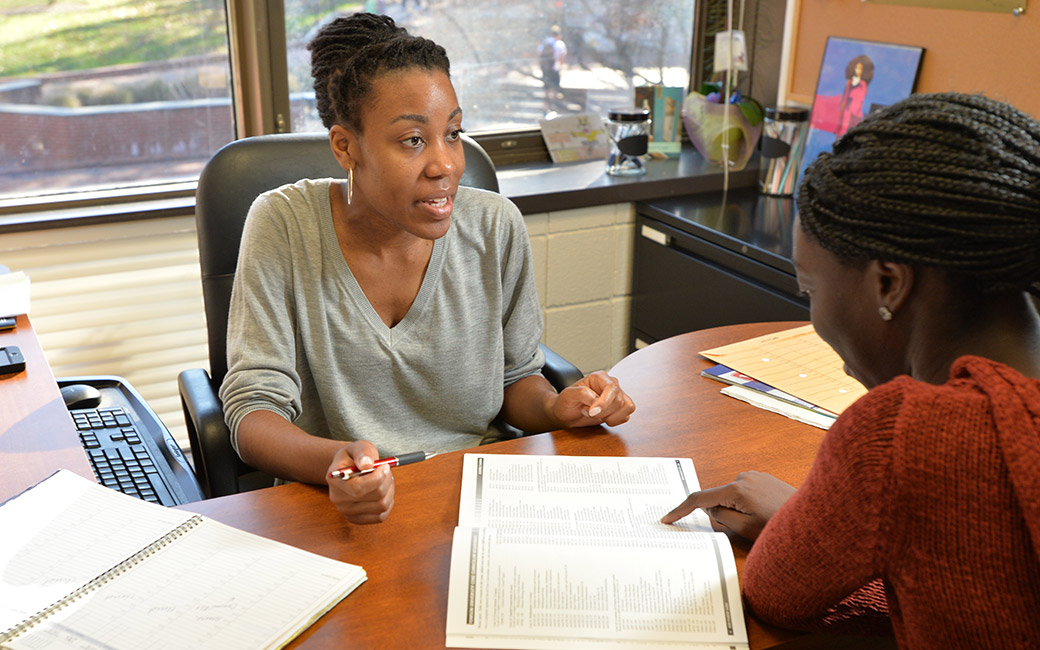
Your professors and classmates are more than just people you see in class. They can become mentors, collaborators, and part of your support network. As someone who was not very actively speaking in class, I felt behind with the classwork because I didn’t ask questions. When I finally pushed myself to go to office hours, I realized that most professors want to help and they notice the students who are engaged. They remember the ones who ask for clarification or show interest beyond the test. 

A professor helping a student during office hours. Image Credit: https://www.towson.edu/cofac/resources/

I talk a lot about my mental and physical health, and how it affects my learning abilities, particularly last semester. When I was really struggling with the one class, I anxiously reached out to my professor and explained my situation. That professor was very kind and offered a lot of flexibility for me. When you build relationships with your instructors early on, it’s easier to ask for help when life gets hard.

As far as professional relationships, whether it be your academic advisors or alumni mentors, these people aren’t just there to fill out forms or sign off hours, they can offer guidance, encouragement, and real-world connections.

Last semester, I realized I’d be graduating a semester behind. When I spoke to my academic advisor, she and I worked together to devise a plan so that I didn’t have to jam pack my schedule and be overwhelmed. She also encouraged me by saying that it was normal for most students to graduate a little late. 

Not all relationships are easy. Some professors are rigid. Some classmates are competitive. Some advisors are hard to reach. But even when it’s tough, you can still learn how to advocate for yourself, navigate difficult dynamics, and build relationships with people who do want to see you thrive.

When you’re building and maintaining relationships, there are several ways you can take to maximize your college experience. The first and most important tip to me is to introduce yourself early. Whether it’s a professor or classmate, take the first step. A simple “Hi, I’m ___” goes a long way. The second one is to ask questions and show interest. Professors especially remember when you’re curious and engaged. The third one, which I also feel is very important, is to follow up. You should always send a thank-you email, schedule a check-in, or stay in touch after a helpful meeting. The fourth and final one is to show gratitude. When someone helps you, let them know how much you appreciate and how much it has helped you.

College is not a solo journey, but a community experience, and the people you surround yourself with can either support your wellness or strain it, so choose wisely and invest intentionally. Never be afraid to reach out, even if you feel anxious about it, because sometimes the right conversation changes everything.


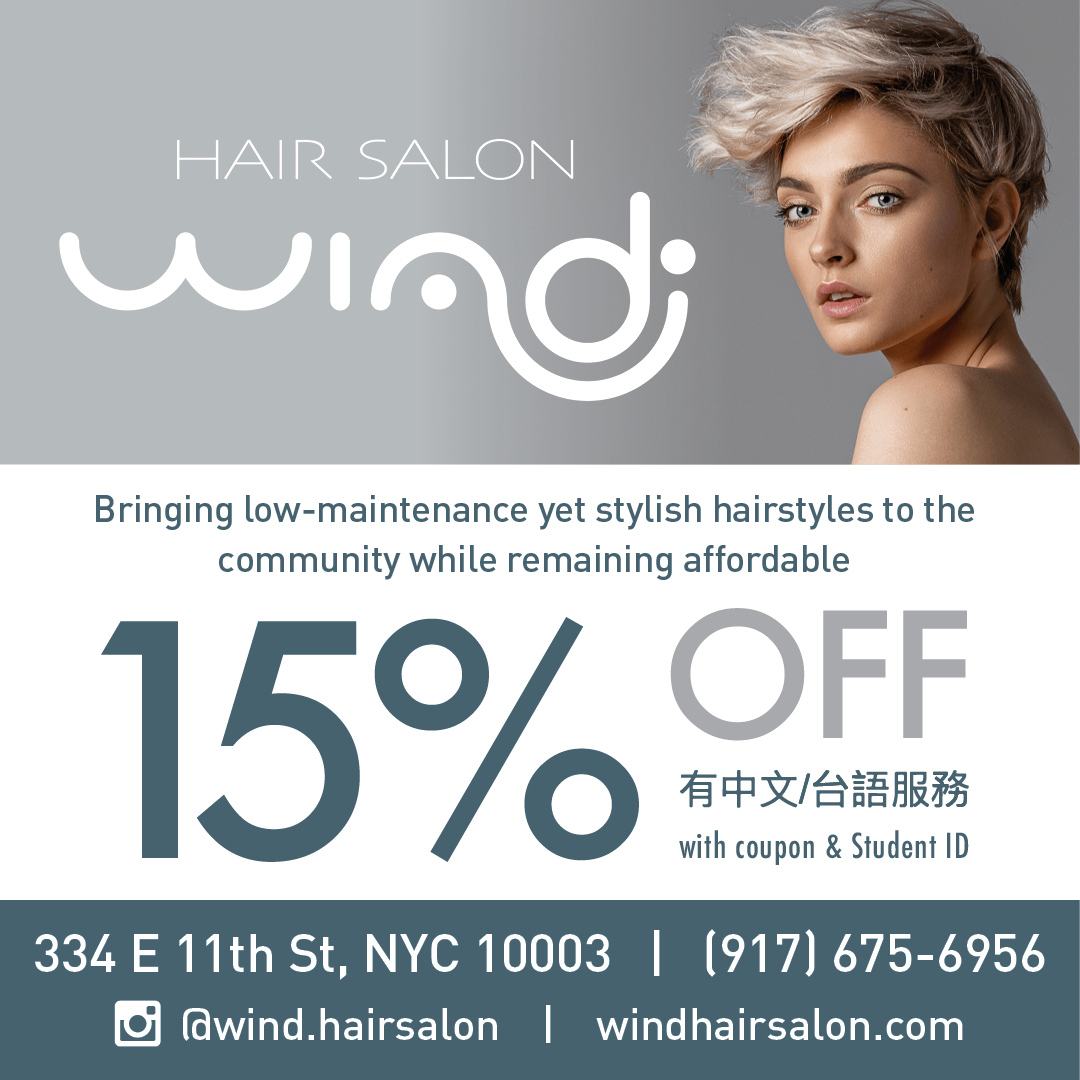
And speaking of community, get 15% off at wind hair salon so you can bring stylish hairstyles to your community!


By: Yamilia Ford

Yamilia Ford is a rising senior at Pace University with a major in business management and three minors in journalism, creative writing, and film studies. Her passion for writing allows her to inspire through her own creative lens, giving people the opportunity to relate to her.


For over 20 years, the Campus Clipper has been offering awesome student discounts in NYC, from the East Side to Greenwich Village. Along with inspiration, the company offers students a special coupon booklet and the Official Student Guide, which encourages them to discover new places in the city and save money on food, clothing, and services. At the Campus Clipper, not only do we help our interns learn new skills, make money, and create wonderful e-books, we give them a platform to teach others. Check our website for more student savings and watch our YouTube video showing off some of New York City’s finest students during the Welcome Week of 2015.

Share

Chapter 4: Another Kind of Growing

Thursday, July 3rd, 2025
Lunch with family on a random Sunday

Sometimes I wonder if I made the right decision to stay home for college. Honestly, I kind of regret it sometimes. I chose to stay because I wanted to be there for my parents. Coming from an immigrant family, I felt this responsibility, like my presence might make things easier for them, like I owed them that much after everything they had sacrificed. 

At first, it felt like the right choice. My parents were happy I stayed, and there was a kind of comfort in being home.  It felt easier in a way. I got to stay in my room, sleep in my bed, have my own routine, and just be the old me. I also liked being around if they needed help with something, like paperwork or errands, or even just to sit and talk. It felt like I was doing the right thing, for them and myself.

Over time, things started to feel different. Staying close meant I was there for everything. Not just the warm family dinners or quick chats in the kitchen, but also the tension, the arguments, the quiet disappointments. I don’t know exactly when it shifted, but once college started and I settled into my routine, I began noticing things I hadn’t before. The closer I stayed, the more clearly I saw them. Not just as my parents, but as people. I started seeing the cracks in how they speak, how they handle stress, how they show love, and how they fail every day.

The more I see, the more I want to run. Not because I don’t love them, but because I know them too well. 

Sometimes, I regret that I’m not growing the way others are. My friends who live on campus talk about doing their laundry at midnight, cooking instant noodles together, and pulling all-nighters in the library. They tell stories about navigating awkward roommate situations, learning how to budget, arguing with friends, and fixing it on their own. They’re learning how to be adults. 

I, on the other hand, come home to food that’s already made. I don’t worry about whether the laundry machine is available or if the communal bathroom is clean. I’m still someone’s child in this house, not quite my own person. And when I fight with a friend, I don’t go knock on their door two floors down and talk it out at 2 a.m. I just sit with it. Alone. 

There are times I want to tell my friends I made this choice for a reason. I stayed to help my parents, to be present, to save money. But still, I feel like I’m not becoming the version of myself I thought I’d be by now. I want to say all of this out loud, but I don’t.

Instead, I nod along when they talk about dorm drama and late-night adventures, even though I can’t relate. I laugh when they joke about bad dining hall food while I’m washing dishes at home. I say I’m doing great, even when I’m not sure what I’m doing at all. It’s easier that way. Less explaining. Less chance they’ll look at me with that mix of pity and confusion, like I’ve missed out on something I’m supposed to want.

And maybe I have. But I’ve also gained something they haven’t.

I’ve learned how to be there for people, even when it’s hard. I’ve learned how to show up every day—not just when I feel like it, but because someone depends on me. I’ve learned how to be still. How to be grounded when everything feels uncertain. Living at home hasn’t just kept me close to my family, it’s brought me closer to myself. I’ve noticed how my mom sighs differently when she’s tired versus when she’s disappointed. I’ve memorized the quiet routines that make this house function, the invisible labor that held my childhood together. I’ve gained the kind of strength that doesn’t announce itself. The kind that comes from choosing the hard thing, over and over, without anyone clapping for you. The kind that builds slowly, through early mornings, through uncomfortable silence, through the ache of watching life happen elsewhere.

It’s not loud. It’s not charming. But it’s mine. And one day, I think I’ll look back and realize this was a version of becoming, too. Just not the one I expected.


Get 15% OFF your next slice (or whole pie — we don’t judge). Swing by Pronto Pizza and treat yourself— because good pizza with a discount is a win-win.


By Marzia Seemat

Marzia Seemat is a sophomore at NYU studying civil engineering and creative writing. She loves being close to nature, especially at the beach. Her favorite things include good food, morning tea, hour-long movies, and spending time with the people she loves.


For over 25 years, the Campus Clipper has helped college students in New York City—and later in Boston and Philadelphia—save money and succeed in city life. We offer a digital coupon booklet with discounts on food, clothing, and services, plus an Official Student Guidebook with real advice on how to navigate college life in a big city. Our internship program lets students build skills, earn money, and publish their own e-books. Follow us on Instagram and TikTok @CampusClipper, and sign up for our newsletter to get deals straight to your inbox. To access the digital coupons, scan the QR code on our printed card, available in dorms, student centers, and around campus.

Share

You’re Not Weak… You’re Human

Wednesday, June 25th, 2025

Mental health is one of those things you don’t always notice slipping, especially in a college setting. When I first entered college, I had never really believed in mental health. I believed that mental health was an excuse to not be present and to neglect your responsibilities. Throughout my time in college, I always had the mentally of pushing through the hardships and problems I have had and as opposed to blaming it on mental health.

In the beginning of my spring 2025 semester, I was diagnosed with generalized anxiety disorder. Further into the semester, I was then diagnosed with depression, which is commonly linked with anxiety. These diagnoses made me realize I was not above mental health. I spent a lot of time trying to recognize the factors that played into my depression and anxiety so that I can control my feelings and emotions and be the best version of myself in college. 

At the end of the semester, I had realized that my mental health wasn’t just a personal issue, it was my overall full-body experience. It impacted my appetite, my energy, my physical movement. My lack of motivation led to skipped meals. My anxiety led to late-night scrolling and poor sleep. My depression made me cancel plans, which led to loneliness. The more I ignored my mental health, the worse my wellness and fitness became. 

Then, I learned that these diagnoses correlated with my scoliosis. I also felt very self-conscious of my scoliosis, as in making sure I was covering up my back with a sweater in hot weather or fixing my posture so no one would notice and make fun of what I call “my hump.” When I reflect, I understand that I continue to live in fear of people seeing my back and making fun of it. I also believe that the family and friends I kept around were not very supportive of my health, prompting me to be upset and push my anxiety with my back further.

When it comes to depression and anxiety, I have learned that I need to surround myself with people who are sympathetic to my health and make me feel better about myself and more supported. Going into my senior year of college, I have a few pointers that will help me manage my mental health. The first one is to not minimize it. Saying “I’m just tired” or  “I’m just having a rough day” when you’re actually overwhelmed doesn’t help. Being honest with yourself and your feelings are the most important. The second one is to establish a good routine. Even if it’s waking up, eating, going for a walk, doing one assignment, etc., it can create a sense of structure when everything feels chaotic. The third one is the most important one for me, and that is to stay connected. Isolation can make mental health worse. Reaching out to someone such as a friend, a resident assistant, or a counselor can help you feel seen and heard. The last one is to practice small moments of joy. Whether it’s music, sunlight, journaling, or your favorite snack, the small things you love can spark comfort or meaning.

College is hard enough on its own. Adding mental health challenges can feel unbearable, but struggling doesn’t make you weak. It makes you human, and you’re allowed to pause, ask for help, and heal on your own timeline. Just know that you are not alone in feeling this way and it doesn’t make you broken. You’re doing your best and that’s more than enough.

Whether I’m painting on easels or coloring in my coloring book, art is a great way for me to relax and focus my mind. Bring a group of 8 and use code CAMPUSCLIPPER for $50 off!


By: Yamilia Ford

Yamilia Ford is a rising senior at Pace University with a major in business management and three minors in journalism, creative writing, and film studies. Her passion for writing allows her to inspire through her own creative lens, giving people the opportunity to relate to her.


For over 20 years, the Campus Clipper has been offering awesome student discounts in NYC, from the East Side to Greenwich Village. Along with inspiration, the company offers students a special coupon booklet and the Official Student Guide, which encourages them to discover new places in the city and save money on food, clothing, and services. At the Campus Clipper, not only do we help our interns learn new skills, make money, and create wonderful e-books, we give them a platform to teach others. Check our website for more student savings and watch our YouTube video showing off some of New York City’s finest students during the Welcome Week of 2015.

Share

Dreamland Ch. 2: Surefire tricks to get your relatives to stop asking you about school

Wednesday, June 18th, 2025

Money. It makes the world go round, or something like that. I may have decided my passion from a young age, but I hadn’t decided on a job, not in any practical way. The hard lesson everyone learns between ages 17 and 21 is that choosing your dream is different from choosing your major, which is yet again different from choosing your career. I learned this lesson the moment I fostered my love for creative writing, and I keep learning it every day.

It’s not so bad, really. I’m studying English, which is very transferrable to a number of different fields, no matter what people will tell you. You only have to engage in a quick cursory scroll through any social media platform to understand that people lack writing skills, communication skills, and critical thinking skills. People lack empathy and can’t formulate nuanced opinions. I’m not suggesting that everyone become an English major, but I do encourage a reworked perception of what the field can offer. 

So I don’t regret what I’ve chosen; I only regret not pushing myself out of my comfort zone far sooner, all the way back in high school, in order to learn the skills I’d need to shape my career in English. In freshman year of college, I unfortunately hesitated to join extracurriculars and attend general meetings that would allow me to meet new people and find things I might be interested in. I’ve since overcome that hesitation, thankfully, and now I know that I enjoy journalistic writing, marketing, communications, and more generally, learning new things.

That doesn’t mean the insecurity doesn’t creep in every once in a while. Every month, I spend at least one evening freaking out about what I will do after I graduate, and I panic-apply to a million jobs that I ultimately don’t hear back from. My parents are incredibly supportive and love to hear about school, but I’ve noticed that my family friends, the aunties and uncles, aren’t quite sure what to ask or if there is anything to even discuss. I get it, truly, but I can’t help but compare myself to my sister and others in our family who’ve chosen something more recognizable.

If you’re in the humanities, you probably understand this feeling—the tugging sensation that suspends you between your wildest dreams and the real world below. The Icarian knowledge that either side will damn you. Most of the time, it doesn’t feel quite this theatrical, but I don’t think anyone is immune to the chilling realization, even if inaccurate, that the things you do as a teenager determine the rest of your life. Such is the condition of being a teenager in the first place. Why can’t we all just do what we love, right?

NYU’s Silver Center for Arts and Sciences, home to English majors and others. Image Credit: https://meet.nyu.edu/locations/silver-center/

The divide between your passion and your career prospects might feel chasmic now, but there are ways you can reconcile even the most distant of pipe dreams and the most mundane 9-to-5 jobs. 

I used to work for NYU’s outreach and fundraising organization, which was often the bane of my existence, but I took every shift as an opportunity to learn about other people and their backgrounds. I learned about their fields of interest and the ways they used their schooling to propel them into careers that suited their niche interests. I once spoke to someone that illustrated tarot cards. I still quit that job after a semester, but I have plenty of stories to tell. which makes the semester of asking strangers for money sort of worth it. I don’t intend on continuing that sort of work full-time, but I know that if I keep collecting stories and experiences like that one, I’ll find joy in any job.

My ultimate goal is to have a job that sustains me financially and doesn’t make me dread it every night and morning, but I think eventually I’ll come to accept that your job won’t and probably shouldn’t be your life. If I completely turn creativity and writing into my source of income, will I still covet them as I do now? 

If you siphon all your passion into the thing that you have to do or you lose your stability, is it still passion? 

My hope is that I can look down that cavernous gap and feel security in traveling between both sides of it. My hope is to make just enough money that I feel content waking up each morning—though I certainly wouldn’t be mad if I made a little more. Money might sustain you, but your passions will keep you alive.


Students receive a 10% discount at Dim Sum Palace at three locations in NYC. Redeem now for authentic Chinese dim sum.

By Oshmi Ghosh

Oshmi Ghosh is a rising junior at NYU’s College of Arts and Sciences, pursuing a bachelor’s degree in English with minors in Creative Writing, History, and Entertainment Business. You can usually find her appreciating the simple things in life: tea with milk and sugar, a good book, and/or intensely competitive board games.


For over 25 years, the Campus Clipper has helped college students in New York City—and later in Boston and Philadelphia—save money and succeed in city life. We offer a digital coupon booklet with discounts on food, clothing, and services, plus an Official Student Guidebook with real advice on how to navigate college life in a big city. Our internship program lets students build skills, earn money, and publish their own e-books. Follow us on Instagram and TikTok @CampusClipper, and sign up for our newsletter to get deals straight to your inbox. To access the digital coupons, scan the QR code on our printed card—available in dorms, student centers, and around campus.

Share

Crash Course Connections Ch 1: New Beginnings

Wednesday, June 11th, 2025

Coming to college is starting from scratch—an exciting, sometimes nerve-wracking, chapter of life filled with possibility. Whether you’re attending a school close to home or heading off to a new city, college offers a fresh start. And before you’ve even found your footing, the pressure to find your new best friends can be overwhelming. Lucky for you, this pressure is universal, and you are far from alone.

Those first few weeks on campus are nonetheless crucial for laying the groundwork for new friendships. Everyone is adjusting, finding their classes, navigating dorm life, and figuring out where the best coffee is. During this time, people are especially open to meeting others, so be sure to take advantage.

Go to orientation events, campus tours, welcome mixers, and even cheesy icebreaker activities. These are designed to help you meet people and start conversations. You never know; your future best friend might be your accomplice in sneaking into the succulent planting welcome event that you never got off the waitlist for. That might sound oddly specific, but that is precisely how I made my first, and closest, friend here. 

We met in the first week before classes had even started, but it was only once we found ourselves appearing at the same social events time and time again that we became close. We started to realize all of our shared interests, from cafe-hopping to art museums, and just like that I had found a partner in crime. It is with her, my friend Ambika, that I met my other now roommate Taylor, and we quickly became a nearly inseparable unit. 

The “unit” in question- (right to left) Ambika, Taylor, and me

 It will likely happen like this, if it hasn’t already, for you as well. You have to be open to the opportunity, but the right acquaintances will, with both rapid speed and gradual commitment, become family. So maybe keep your headphones out at the school bookstore, compliment that girl’s jacket, and dive into a conversation about how you both love thrifting. Let the world in, and I guarantee the rest will fall into place. 

 Join clubs, sports teams, or student organizations that interest you. Whether it’s an intramural volleyball league, the school newspaper, or a club for people who love baking, getting involved is a fantastic way to meet people with shared interests. These groups give you a natural space to interact and bond without the pressure of having to “make friends” on the spot.

You also don’t need a big circle of friends. In fact, it’s often better to focus on forming a few genuine connections. Meet as many people as you can handle, but don’t feel pressured to sustain all of these relationships. If you click with someone- great! Follow -up, grab coffee, and invite them on outings or to group hangouts. If you are finding it difficult to deepen a friendship, try stepping back and directing that energy towards expanding your network or fostering other connections you’ve made. 

Remember, friendships take time to grow. You might not find “your people” in the first week or even the first month, and that’s okay. Keep showing up. Keep reaching out. Be open to different ideas and perspectives, and talk to as many people as possible. 

Reinventing yourself in college can be exciting, especially when you’re in a new environment. While growth is a natural part of the process, try not to lose sight of who you are. The strongest bonds come from a foundation of authenticity. Let people get to know the real you—the you that loves photography, longs to travel, despises techno music, and has strong opinions about politics.

Vulnerability is scary, especially when you don’t know anyone yet and you don’t want to close any doors. But being honest invites others to do the same, and in turn allows you to filter out the people who were never meant to stay in your life.

You will also feel lonely at times, especially in the beginning, when your family is done helping you unpack and you’re left sitting in your dorm room alone. This is all a part of the process. Everyone experiences moments of homesickness, anxiety, or awkwardness during the transition. It’s not only normal but expected. I assure you, it will pass. But, in the meantime, reach out for comfort—turn to a roommate or call a hometown friend. 

College is about so much more than academics. It’s about the relationships you build, the memories you make, and the people who will shape your journey. Friendships will evolve over time. Some will be short-lived, others lifelong. All of them will teach you something.

So take that first step. Say hello. Sit down at a new table, because you never know who will be sitting across from you.

Use this coupon to grab a delicious bite of curry or biryani at any of their NYC locations!

By Logan O’Connor

Logan is a rising senior at NYU pursuing degrees in Journalism and Politics. She grew up on Long Island, but always dreamed of living in New York City. When she’s not in class or at her favorite local cafe, you can find her wandering the city (film camera in hand) or baking up a storm in her kitchen.


For over 20 years, the Campus Clipper has been offering awesome student discounts in NYC,  from the East Side to Greenwich Village. Along with inspiration, the company offers students a special coupon booklet and the Official Student Guide, which encourages them to discover new places in the city and save money on food, clothing, and services.  

At the Campus Clipper, not only do we help our interns learn new skills, make money, and create wonderful e-books, we give them a platform to teach others. Check our website for more student savings and watch our YouTube video showing off some of New York City’s finest students during the Welcome Week of 2015.

Share