Archive for the ‘onLife’ Category

Student Depression: Stave of the Sleeplessness

Monday, September 30th, 2013

What causes your sleeplessness, whether it’s your anxiety or insomnia, is insignificant. Meaning that similar to parsing out depression, the causes are multiple and interconnected; instead of aiming for individual symptoms, tackle the problem as a whole. To illustrate the point, let’s say someone has a lung disease and by consequence they develop a severe cough. Giving them cough medicine might mitigate that particular symptom, but it won’t eradicate the disease as a whole.

Similarly, don’t go shooting in the dark for causes when you should instead be concentrating on snoozing in the dark.

Pad Pun

"A bad pun deserves another bad pun"

You’re throwing your life cycle out of whack by evading sleep. Getting back on track means finding ways to get a reasonable amount of rest.

Reasonable doesn’t have to mean eight hours. Get real, you’re in college, there are bound to be red-eye nights you’ll have to brave for purposes of edumacation, and nights when you simply can’t shut off your brain.

What you need is an arsenal, a tool belt that can be used to stave of that menacing sleep-disruption wolf.

Insomnia Wolf

"Why not stay up one more hour? Class doesn't start till seven in the morning anyway"

And that’s just what I’ve got for you today. Read it and sleep!

Bad Pun 2

"Please, no more puns, I'm begging you"

No Sleep Aids on Weekdays: Forget ZzzQuil, it’s a rip-off anyway. The last thing you need is to pop twice the regular dosage and sleep for 16 hours straight on a weekday. If you need to catch up on some sleep over the weekend, get some generic Benadryl, it’s the same thing but cheaper.

Get a Better Mattress: This costs way too much for an average college student. Better yet, invest in a decent pillow. Most of the sleepless nights I’ve had I can attribute to a cheap pillow causing neck pain or general discomfort. Think an $80 pillow is out of your budget? It’s hundreds less than a mattress and alleviates much of the frustration of falling asleep on an uncomfortable bed.

Rock Pillow

"Like sleeping on a bed of rocks"

Organize Your Tomorrow: You got an elephant-load of work to finish tomorrow and not enough hours in a day to possibly fit everything in. At least, not in your head. Write out tomorrow’s schedule hour-by-hour. You’ll be surprised how much more manageable things look when they are systematized in front of your eyes.

Write Down Your Dreams: Jot down your dreams in the morning. John Kehoe suggests you don’t do this immediately, and instead let the dream gestate in your mind as you slowly awaken, so as to recall specific details. Writing out freaky or weird dreams are not just conversation fodder—they can give you story ideas, facilitate your creative writing and give you a reasonable incentive to go to sleep at an appropriate time.

Make a Lullaby Playlist: It doesn’t have to be ambiance or nursery rhymes. It just has to be slow and soothing. I’ve gone through the trouble of compiling a short playlist just for you:

This Lullaby – Queens of the Stone Age

A Thousand Kisses Deep – Leonard Cohen

Aldrig Ensam – Jonathan Johansson

Beautiful World – Rage Against the Machine

No Coffee or Other Stimulants: Does this even need to be on the list? Even if you’re cramming, don’t facilitate with coffee and get your circuitry fried in the process. If you have to, cram until you fall asleep naturally.

Take a Shower: Unless you’re collapsing into bed after a workout, getting into bed after being out all day is just asking to feel like you’re sleeping in a pig trough. Take a shower, wash off that grease; you’ll wash off some stress in the process.

Do a Little Work: Ripping your hair out over the myriad tasks waiting to take you apart piece by piece tomorrow? Do a few minutes of each task before going to sleep. It gives you a head start and peace of mind.

Hug Something: Hug your partner, hug your pillow, hug your mangy stuffed animal you haven’t cleaned since you were a kid. It’s occupying your hands so you won’t flop around like an agitated fish all night, trying to get the perfect position. I suggest a plush Cthulhu.

Cthulhu

"Hug me while I quietly devour your soul"

———————————————————————————————————

Aleksandr Smechov, Baruch College.

Follow the Campus Clipper on Twitter and Like us on Facebook!

Interested in more deals for students? Sign up for our bi-weekly newsletter to get the latest in student discounts and promotions  and follow our Tumblr and Pinterest. For savings on-the-go, download our printable coupon e-book!

 

Share

Student Depression: You Snooze You Lose

Sunday, September 22nd, 2013

Our last post left us dangling on the subject of balance; specifically, balance as the centripetal force behind helping students overcome depression.

But before moving on, a brief side note on my use of the word “depression.”

Personally, I prefer to use the word’s blanket term connotation, which includes everything from “feeling sad” and “negative,” all the way down to more harrowing stuff like “I’m going to kill myself and nothing’s changing my mind.” Am I being inaccurate by covering such broad grounds with a single word?

depression blanket term

"Depression can be an effective blanket term"

Using “depression” to cover such an immense range of emotion can be a double-edged sword. But the sword is definitely proportionally challenged. As in, one half, the half that has the drawbacks of blanketing “depression,” is so dull you can’t even cut butter with it. The beneficial half can split atoms.

depression as a blanket term is a super sharp sword

"He uses the dull edge to make his morning toast"

Maybe that’s a bit of a hyperbole. But what if you feel unnaturally sad, just for a day or two every few weeks or once a month? Just intermittent sadness, not over an extended period of time, not overly extreme to the point of suicide, but something that stops you in your tracks and prevents you from moving on. “I feel kind of depressed, but I’m not actually depressed, otherwise, I’d feel like this every day, and to a much more frightening degree.” This might pop into your head after such an episode, and you might chuck any notions of depression out the window, either for reasons of being hard on yourself (“Why should I call myself depressed when others are suffering more than I am?”), dismissal (“It only comes around sometimes, so it’s probably nothing”), pride (“I’m stronger than that, I just have my weak moments”), embarrassment (“What will others say if I tell them I’m depressed? Will they be more awkward around me?”), or anything else that causes you to toss out the notion that you may need to do something about this soon.

I aim to use “depression” in the less clinical sense and focus instead on the semantics of the word itself: “sluggish in growth or activity”, “low in spirits”, and “sunk below the surrounding region.” Obviously, not all of these pertain to psychology, but nonetheless they are less restricting and more associable for students who don’t consider themselves technically “depressed”

And the great thing about looking at the word semantically is that it helps reach a wider audience. Students will more willingly accept help and advice when they feel less judged and pressured by strict definitions and connotations, in turn preventing more severe symptoms from developing in the future.

So yeah, I lied, that wasn’t a very brief side note. Here’s a picture to make it all better.

gorilla on a unicycle

"Why does this even need a caption?"

… And back to reality we go.

Tragically, ironically (tragonically?), college life is a recipe of unbalance, rife with owlish sleep schedules, late night face-stuffing (junk food, pills, whatever your preferred poison), massive procrastination,  last-minute rush-a-thons, self-consciousness, quarter-life crises (that’s the plural for crisis, fyi), and a whole load of other scale-dislodging activities.

One of the biggest, baddest and meanest wolves in the pack is the disruption of a balanced sleep schedule.

sleep deprivation insomnia wold

"His icy mission: keep you awake as long as possible"

As not to be a conventionalist-luddite-person-thing, let’s just get the studies showing how sleep deprivation can temporarily help major depression out of the way. Yes, the subject is well documented, proven to work for the duration of time that the person doesn’t go back to sleep, and it seems like a perfect provisional remedy for students who need to brave entire nights anyway.

I wouldn’t suggest you go actively experimenting with this method, however.

Despite the soundness of the data, this is not a self-administered procedure: it’s done in a controlled clinical setting. And yeah, there’s that whole relapse thing after you go back to sleep the next night. Temporary fixes like not sleeping, along with over-caffeinating yourself, taking uppers, last-minute cramming and other get-shit-done-quick equivalents for maintaining productivity without having to actually work on yourself are so prevalent that they’ve become the only way most students know how to operate in college.

shake weight is the get-rich equivalent of fat burning devices

"Helps you get washboard abs in only two weeks!"

Tragonically, these insta-fixes leave out the necessary work that goes into long-term self-development, and serve little purpose when it comes to overcoming depression further down the road.

“What about insomnia?” you ask. After all, while sleep deprivation can be intentional, insomnia is a condition that is not voluntarily discarded whenever the insomniac wishes.

Regardless of whether your lack of sleep is intentional or not, the point is if you’re not sleeping, you’re going to have a hard time maintaining balanced, organized life in college. The goal of this post is not to determine whether you can or can’t control your sleeping habits, it’s to acknowledge that not sleeping will throw your already busy college life out of whack and make it harder for you, in the long term, to perform at your best.

I’m getting dangerously close to my weekly word limit here (also, I have to sleep), so watch out for next week’s post for a plethora of ingenious ways to help yourself go to sleep. Sleep is one of the most essential steps in physiologically tackling depression and getting on the road to an all-around well-rounded life. Dig it!

———————————————————————————————————

Aleksandr Smechov, Baruch College.

Follow the Campus Clipper on Twitter and Like us on Facebook!

Interested in more deals for students? Sign up for our bi-weekly newsletter to get the latest in student discounts and promotions  and follow our Tumblr and Pinterest. For savings on-the-go, download our printable coupon e-book!

Share

Student Depression: The First Step Is…

Friday, September 13th, 2013

As any college student who’s had experience with any degree of depression can attest, no matter how mild or severe the symptoms, exact origins are mighty difficult to pinpoint. Many students who suffer any degree of depression may at some point attempt to hit that single bullseye, hone in and demarcate a single reason for all their ills. This usually results in systematically missing the mark every single time.

depression bullseye

"Depression has many causes"

Here’s the cold water: there’s more than one bullseye. Way more.

These causes operate in an integrated, latticed network. One cause may be the direct result of another, and this second cause in turn sustains the initial cause, as influencing others.

the complicated network of depression

"Specifically, a latticed network of causes"

For example, financial difficulties make you focus less on schoolwork and more on ruminating and worrying over how to obtain money, resulting in less time spent studying and getting good grades. In turn, poor grades may further facilitate your vexations about getting a decent job after college, influencing self-defeating tendencies like laziness and general hopelessness that steadily eat away you.

These interdependencies bind to form a net that swoops students up and dangles them above a wide ocean of possibilities, isolating them from a liberating and opportunistic life.

This is special kind of net. You can’t simply cut across the bottom and drop down into a depression-free life: you need to hit multiple points at once, and work these points on a continuous basis. Eventually, the net will begin to unravel, and ultimately it will unwind.

the net that holds you from opportunity

Once you relinquish the delimiting thoughts and anxieties that held you prisoner, not only will you feel free to travel along any path you wish, you will also understand the methods for conquering the nets that may come your way in the future.

As you might have inferred from my long-winded metaphor (don’t worry, I have plenty to dish out), tackling depression requires you to address multiple facets of your life, not just one.

Let’s say you’re running to the end zone (which we can think of as the end depression zone) and there are several players all ganging up on you and forcing you out of bounds. These five intimidating foes are all your anxieties, fears, insecurities, etc. They constitute depression. You can picture how difficult it would be to get past this blockade. Imagine now that there are several players on your side, and they easily take down these irksome opponents, clearing you a path to your goal.

end-depression zone

"The end (depression) zone"

Who are these mysterious allies? What keeps them going? Where did they come from? How can you harness their kickass presence to clear a path for yourself?

The vague, astute-monk-atop-the-mountain response would be but a single word: You.

wide mountain monk

"Vague aphorisms are his favorite"

Of course, we’re all in the market for more practical and fleshed out explanations in today’s light-speed world, and so a single word answer to anything is usually met not with deep insight but unfathomable frustration.

befuddled depressed students react like this to wise vague aphorisms

"ME?!"

You can relax. If I wanted to create the world’s shortest self-development guide I’d type “YOU” on a single page, bind it and title it “The Secret of Living the Best Life Possible.” I’m giving up that million-dollar book idea to offer enough real-world examples, wacky metaphors, fun exercises and challenges, personal insight and visuals to make your head spin.

Let’s get you dizzy!

The First Step is…

The first step to healing is frequently touted as acknowledgement. Now, touted is a bit strong since in, let’s say an AA meeting, acknowledgement is far more than just a suggestion—it’s a mandatory step on the path to recovery.

Depression, in a way, is the brain’s acknowledgement of the culmination of distress you’ve experienced thus far. This “acknowledgement” is certainly felt, and is accompanied by a deeply isolating sensation. There may be cases of depressed students who refuse to acknowledge their situation due to embarrassment, fear, social pressure, or pride. But they certainly feel it.

Besides, if you’re reading this, you’ve done a whole load of acknowledgement already.

And so I’d rather begin with something more suitable for the topic at hand: honesty and assessment.

You can call this your first step, not that there is any systematic process to healing yourself (at least in this guide).

These two factors are codependent and work synergistically. Honesty is used to correctly assess yourself, and assessing yourself brings out your self-honesty.

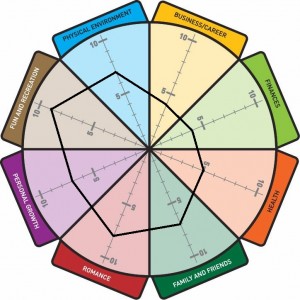
Both are immediately put into play when you fill out the wheel of life, a widely used life-assessment tool:

assess your life with the wheel of life

Filling it out my first time, my wheel looked something like this:

Aleksandr Smechov's original wheel

"I wouldn't keep this as a spare tire..."

Try putting that on a car. You’d probably end up a ditch in the first few minutes. Here are the minimum requirements for a functional wheel: sevens or above all around, with as few deviations of one point as possible, and no deviation of two points or more.

Would you put your wheel on a Ferrari 641?

ferarri 641 requires balanced wheels only

Anything less than nines all around will send this beast spinning out of control. When you have a great wheel, results are exponentially faster. You can imagine a unicycle in traffic, too, if that’s your thing.

unicycle to the max

"Nearly as fast as the Ferrari"

And so this brings us back to our team of allies and the question I posed for them: How can you harness their kickass presence to clear a path for yourself?

By becoming well-rounded, by having a functional wheel to brave your unicycle with (I guess we’re sticking to that metaphor). As you may have by now guessed, balance is the goal of this guide, and helping you achieve it is my mission.

Stay tuned!

———————————————————————————————————

Aleksandr Smechov, Baruch College.

Follow the Campus Clipper on Twitter and Like us on Facebook!

Interested in more deals for students? Sign up for our bi-weekly newsletter to get the latest in student discounts and promotions  and follow our Tumblr and Pinterest. For savings on-the-go, download our printable coupon e-book!

Share

Student Depression: You’re Definitely Not Alone

Thursday, September 5th, 2013

I wanted it to be a productive day. I really, badly wanted the day to mean something. I didn’t want it go to waste the way it did.

But what could I do? I was depressed.

signs of depression

It was the spring before my senior year in college, a quiet weekday morning; warm, with soft sunshine pouring in through the blinds and a wafting smell of rose hips from the tea brewing in the kitchen. It was the proper setting to get some work done.

And I certainly planned well for the occasion, writing out a plethora of tasks, things I needed to read and write, jobs to apply to, rooms to clean.

I was 21. I had my own one-bedroom, a loving and supportive girlfriend, a passion for the arts, and a summer devoid of distraction and devoted to my own self-betterment.

You can contemplate my confusion several minutes later, when I ended up wallowing in my bed, drinking heavily and sobbing into my arms. How did I go from a highly motivated student to an absolute wreck, wanting to melt into some gutter and vanish out of existence, forgotten forever?

Misery is never solely triggered by a single event, but that single event is a catalyst. My neighbor’s music turned out to be my trigger. But he was never the one who loaded the gun.

No, that one was on me.

I was situated at my desk, tea in hand, ready to get my work underway, when on the other side of my wall my neighbor turned on some salsa music, driving pumping bass into the living.

But it wasn’t the music that made me shout at my wall until my voice turned hoarse; it was the culmination of angst, anger, anxiety, frustration, hatred, helplessness and exhaustion that had accreted within me over the past three years in college.

These emotions, released by my sudden expenditure, quickly leeched my energy until I was a husk of my former self.

I was so tired after shouting so much that I slunk into bed, depressed and apathetic. The drinking that followed did little to numb how I felt.

I tried to get up and write, but my mind would put up an impenetrable blockade, my body would become limp and what sparse energy I had remaining would drain out of me, seemingly gone forever.

When the day was over, I looked back and thought to myself, “What good came out of this? And why does this keep happening to me? Why can’t I just get things done?”

I shook my head, cursing myself, attributing the heavy lethargy to laziness.

But I wasn’t lazy. When I was emotionally stable, I could work 10 hours straight without breaking a sweat. It took several more similar occurrences to see that I was harboring some signs of depression.

I wasn’t alone: as of 2011, according to a nationwide survey by the Nation Institute of Mental Health, 30% of students reported they were so depressed “that it was difficult to function.” In 2012, Healthline.com stated that 44% of college students in America “report having symptoms of depression.”

Depression is a global epidemic: an estimated 350 million people suffer from it, and medicine doesn’t seem to be helping as much as it should: as of 2011, the antidepressant intake rate has increased by 400% from 1988, yet depression among students continues to rise steadily.

signs of depression

Of course, correlation does not equal causation. Student depression can be attributed to a vast number of causes. But this does nothing change the fact that depression is a major problem affecting millions of students.

As I slowly learned, however, there are many ways to help curb depression, on your own and with the help of others, without the aid of antidepressants. There are myriad exercises, materials, and techniques that can aid you in your quest to conquer mental cloudiness, apathy, sadness and a whole other slew of depression symptoms.

I effectively helped myself in half a year. I know you can do it in even less time.

The material that follows is a series of signposts intended to help guide those seeking a way to eliminate the misery constantly inhibiting their creative potential.

If you genuinely wish to reach a new plateau of mental freedom, a state of mind that will allow you to get a grasp on the chaotic years of student life and the trials of transitioning into adulthood, then this material will be a suitable diving board into a less stressful student career.

Time and time again, personal experience has shown me how difficult it is to help those who do not actively seek treatment on their own, and without the constant urging of others.

By seeking out this material, you are taking a giant leap forward: you are putting responsibility and your fate in your own hands.

———————————————————————————————————

Aleksandr Smechov, Baruch College.

Follow the Campus Clipper on Twitter and Like us on Facebook!

Interested in more deals for students? Sign up for our bi-weekly newsletter to get the latest in student discounts and promotions  and follow our Tumblr and Pinterest. For savings on-the-go, download our printable coupon e-book!

Share

Don’t Waste Your Time on People Who Don’t Deserve It

Friday, August 9th, 2013

In high school, I was the type of person who took on friendships as projects. I found people who were broken in some way, and I tried to piece them back together again. It never ended well. They always developed these enormous expectations, like I was supposed to focus all of my attention on them and only them, forsaking every other relationship I had just to make them feel better about themselves.

I wasted a lot of time on those people, thinking if I just gave them a little bit more of what they wanted, they would feel better and stop being so clingy. It didn’t work; it usually just made them more angry when I wasn’t available for them, to the point where they would get hostile and try to tear me down.

newleafcounselingblog.blogspot.com

Looking back now, I know how unhealthy those friendships were for me, and how much damage they did in the long run. Those people were selfish, thinking they were entitled to 100% of me just because I gave them the kind of attention no one else did. But, of course, hindsight is 20/20, and I didn’t think that way at the time. Even when I did realize things were getting out of hand and tried to cut it off, we were stuck in the same high school and the same town together. They found ways to continue trying to reel me in after I had explicitly told them to back off and leave me alone.

This isn’t something that’s particularly unique to my life. We all do it in some form or another. We all waste our time on people who, in the back part of our minds we try so hard to ignore, we know don’t deserve it. People who make us feel bad about who we are and the things we want to do in life. Everyone encounters it in some form or another, mostly when you’re young and impressionable and don’t know any better yet.

College presents a unique opportunity for these situations: you can cut someone out of your life, and never really have to worry about again. I’m sure that sounds cruel and cold, but i’m not suggesting you go on a Facebook cleaning rampage of anyone who ever looked at you kind of funny. It’s just that, in my opinion, your life should be filled with people who make you feel better about yourself, and who support you fully in whatever endeavors you choose to undertake. Surrounding yourself with negativity and unpleasantness is never going to make you a happier, better person, and isn’t that sort of the bottom line in life?

www.venusbuzz.com

I don’t like cutting people out of my life. I have given quite a few second and third chances to people, but even I have my limits. The truth of the matter is, there are some people who just don’t deserve your time and attention. There’s no point in wasting your time on people who, for lack of a better word, suck. The way I look at it is, if a relationship isn’t an improvement on my life without it, it’s not one I want to put time and effort into.

No one is entitled to you. You are a special snowflake, and the people you have in your life should think so, too.

—————————————————————————————————————

Alex Ritter, NYU.

Follow the Campus Clipper on Twitter and Like us on Facebook!

Interested in more deals for students? Sign up for our bi-weekly newsletter to get the latest in student discounts and promotions  and follow our Tumblr and Pinterest. For savings on-the-go, download our printable coupon e-book!

Share

New You– Summer ‘Do

Saturday, July 27th, 2013

Ready for an updated look? There’s no better time than now! Listen, New York gets hot in the summer. The kind of hot where it feels like we’re forever alternating between sticky heat waves and solid weeks of rain; not the best recipe for a good hair day, I know. My hair is thick and curly, which in summer months best translates to massive and frizzy. I’m used to wearing my hair up in a bun almost all the time over the summer, and it’s less because of the heat than because my hair just gets unmanageable.  I was determined to fight back this year, and so I looked into upscale hair salons hoping that there would be some difference between the fancier places and my usual local ones. What I wound up trying was Salon Ziba, downtown by NYU. I want to talk a little about my experience there. (Spoiler Alert: great haircut, great people, great price, happy Laura.)

I walked in and immediately felt that this salon was out of my normal price range: chic and modern where my old place was more drab and uninspired. But I spoke a little bit with the owner, Alonso, and he explained to me that the salon’s goal is to deliver high-end, profession haircuts and styling for an affordable price. Alonso told me that his inspiration came partially from his own haircuts 25 years ago before Ziba opened. He said that he was very happy with how they looked and the great care that he received, but also that he was annoyed at having to pay up to $75 for a trim. When he started Salon Ziba at its first location in midtown, he kept this in mind and aimed to keep the prices low without sacrificing quality. As a low-income college student, I was particularly excited to hear this news.

The employees treated me like a princess. They offered me tea or coffee as they walked me to the back to get my hair washed. When it came time to pick a cut, my stylist asked me what I wanted and had his own advice about what I should do. (I’m on a mission to grow my hair out long, so what I really wanted was a look that would not only frame my face nicely at its current length, but also look just as good in a year.) What he recommended was that I angle it more at the front since my face is almond shaped, and that I try a center part for a more fierce look than my old side part. After I let him do his thing, he asked me if a wanted a blow-out. This is a first for me! My stylist was really nice and he showed me just what he was doing so I could try it at home.

Five days later on a humid day, curls are still intact.

I walked out of the salon that day feeling beautiful and renewed. They all gave me a lot of attention and good advice to help my hair grow faster. And the best part? The whole thing, wash cut and style, cost me $48. That only about $10 more than I pay for just a haircut at the place I used to go to. Guess I have a new regular hair salon!

—————————————————————————————————————————-

Laura DeFrancisci, Manhattan College. Check out my Blog!

Follow the Campus Clipper on Twitter and Like us on Facebook!

Interested in more deals for students? Sign up for our bi-weekly newsletter to get the latest in student discounts and promotions  and follow our Tumblr and Pinterest. For savings on-the-go, download our printable coupon e-book!


 

Share

What to Eat Before and After Working Out (and a fantastic college discount!)

Thursday, July 18th, 2013

When trying to get fit, your diet is just as important as exercise, if not more.  The two go hand in hand.  A great workout routine coupled with a poor diet will not get you very far.  Let’s zoom in and explore the foods you should eat before and after your workout.

www.hfs.washington.edu

Think of your body as a car; food acts as gasoline to keep you going.  By ingesting the right foods, you set your body up for a successful workout.  Timing also plays a role in nutrition.  Avoid eating a full meal directly before a workout.  If you must, eat a light snack 5-10 minutes prior to exercise, something under 100 calories.  Ideally, you should consume a meal an hour and a half to two hours before a workout.  The meal should be light so it doesn’t drag you down during a workout.  Keep in mind that different foods take different amounts of time to digest, so you want foods that will digest rather quickly.  Some suggestions:

-Whole wheat toast with peanut butter and sliced bananas

health.com

-Greek yogurt with granola and cinnamon

-Oatmeal with fresh fruit

After a workout, you have a small window of time to ingest and replenish the proper nutrients.  Between 20 and 60 minutes after your workout is when your meal should be consumed.  Bringing prepared food to the gym in a bag may be a good option.  Also, protein shakes come in handy when you don’t have much time.  It will probably take too long to prepare a meal at home after a workout.  You may miss the time frame.  Here are some suggestions for post-workout meals:

-Grilled chicken and mixed vegetables

-Salmon with sweet potato

-Turkey and white American cheese on 9-grain wheat bread

Changing your diet comes as a challenge to most people, myself included.  I tend to fall in and out of a steady healthy diet.  Sometimes, you only have certain options, especially in a college dining hall.  Make wise choices and think about your goals before everything you eat.  Check out my upcoming post, “the cheat meal,” for more nutrition tips.  With a student ID and Campus Clipper coupon, you can walk into the Garden of Eden Marketplace and receive a special discount on healthy groceries.  Stock up!

————————————————————————————————————————————-

Joey Silver, University of Delaware. Check out my Twitter!

Follow the Campus Clipper on Twitter and Like us on Facebook!

Interested in more deals for students? Sign up for our bi-weekly newsletter to get the latest in student discounts and promotions  and follow our Tumblrand Pinterest. For savings on-the-go, download our printable coupon e-book!

Share

The Do’s and Don’ts of Gym Etiquette (and an appetizing college discount)

Tuesday, July 9th, 2013

The gym resembles a small community, and as a member, you must know the rules.  Usually, signs on the gym wall have rules listed, but I compiled a list of do’s and don’ts when you’re training to better yourself.  Displaying proper gym etiquette will keep everyone around you comfortable and safe.

Do’s

Return the weights to where they belong — If you are using dumbbells, put them back on the rack in the designated holder.  If you are using a bar, take all of the weights off when you’re done.

Keep clean and wipe down your machine — Not wiping down a bench or machine that you just used irks everyone around you.  You can usually find a spray bottle and a paper towel very close by.  Keeping clean also means picking up everything you brought with you (i.e. wrappers, bottles, bags, towels, etc.).

www.stellarpath.net

Use deodorant — Working out next to a smelly person is never pleasant.  Smell good, no problems.

Dress appropriately — See my previous post.

Spot someone if they need — Sometimes, you will see a person without a training partner, and they go to lift some heavy weights, but they struggle.  To avoid injury, jump in and offer a spot.  This goes for men and women.

Don’ts

Don’t occupy a machine for too long — You can be a ‘gym rat’ but don’t be a ‘gym hog’.  Spend 20 to 30 minutes on a treadmill or elliptical for cardio.  Share machines and work in with others.

Don’t drop weights — Not only can a weight bounce and hit something or someone, but it disturbs those around you.  Place the weights back in the designated positions.

Don’t talk too much — The gym is not a social gathering.  You are there to work out, not to chat with friends.

Don’t use your cell phone — Quick texts won’t distract you, but taking phone calls, playing games, and long texts are not for the gym.

www.timhinton.com

Don’t grunt loudly — It is disrespectful to those around you.  People don’t want to hear you screaming to push out one more rep.  Try exhaling; it has a similar effect.

Don’t walk between someone lifting and a mirror — Personally, I like to watch myself in the mirror to make sure I utilize proper form.  It distracts me when someone walks right in front of the mirror, so just be careful of that.

Don’t go to the gym when sick — For the health and safety of those around you, it’s okay to take time off from the gym.

I hope you are able to take something away from this post.  By implementing this etiquette into your gym time, it ensures the safety and comfort of your peers.  After your workout, come by Slane on Macdougal Street for an awesome student discount when you present the Campus Clipper coupon and your student ID.

Disclaimer:  Coupons valid before expiration date and while supplies last.

————————————————————————————————————————————-

Joey Silver, University of Delaware. Check out my Twitter!

Follow the Campus Clipper on Twitter and Like us on Facebook!

Interested in more deals for students? Sign up for our bi-weekly newsletter to get the latest in student discounts and promotions  and follow our Tumblrand Pinterest. For savings on-the-go, download our printable coupon e-book!

Share

Election Day: Purpose or Propaganda?

Tuesday, November 6th, 2012

It’s no secret that today is Election Day; it’s all that people can really talk about. I even got yelled at this morning for telling someone “I’ll vote after I get out of work.” One thing’s for sure: politics needed much more attention and it has definitely gotten just that…although the intentions of some citizens can come into question.

Let’s go back to the guy yelling at me. He went on to say, “If Romney gets elected he’s gonna cut welfare — I need my welfare.” Really…really sir!? Do you even care about the issues or is your brain only big enough to focus on one? My point is (and this might sound a bit exaggerated) that about 60 percent of Americans don’t even know the issues and are voting based on race or religion or some other non-factor that really shouldn’t matter when you’re voting. I couldn’t help but feel like 2008 was a “black vs. white” election and this year seems like a lot of the same thing.

Now, I’m not saying that we are all uneducated voters, but with proof like this you have to wonder what people are really voting for.

Yea…I know, right?

Now there are three options this Election Day (there are really more than three but for argument purposes I’ll keep it limited). There’s Obama, Romney, or not voting at all. Obama and Romney supporters are strong, but no one is stronger than those refusing to submit a ballot. Now, you may be thinking “How is that so? It just seems like arrogance and lack of confidence in one’s opinion.”  To counter that, I ask you, Is it really? If you ask me, it takes an EXTREME amount of confidence.

The Electoral College’s votes have the most value and they’re counted after our votes for a reason.  I think the fact that there was no clear cut solution (or at least something that sounded remotely like one) during three elections says a lot. I read a tweet from a Twitter follower that stated: “Red=Offense Blue=Defense OF THE SAME TEAM! #2PartyDictatorship.” As a matter of fact, here’s a meme that needs no introduction.

There’s clearly something bigger going on in this country.

Regardless of what you may take from this article, I DO believe voting is important. At least you’ll feel like you’re changing the shape of your country, and I intend to do my part. I hope that you all do the same but remember, even if you don’t vote, you’ll still have to abide by whatever the government has in store for us. If that’s the case, you might as well pick the lesser of two evils, whoever you feel that might be.

——————————————————————–

Carlos L., Monroe College. Read my blog!!  Follow me on Twitter and Facebook

Click here to download the Campus Clipper iTunes App!

Follow Campus Clipper on Twitter or keep current by liking us on Facebook.

Interested in more deals for studentsSign up for our bi-weekly newsletter to get the latest in student discounts and promotions  and follow our Tumblr and Pinterest. For savings on-the-go, download our printable coupon e-book.

Share

Pushing Boundaries: How Traveling and Studying Abroad Have Changed My Life and Shaped My Career Path, and Why You Should Do It Too

Wednesday, October 10th, 2012

At only 21 years old, I am no Confucius. I cannot give you sound and scientific advice that, if followed, will give you guaranteed success and happiness and all the things you’ve ever dreamed possible. I do not know everything; I don’t have all the answers. What I DO have is my own experience. One of my favorite lines from a book came from Arthur Japin’s In Lucia’s Eyes that reads, “The world is full of people who spend their entire lives seeking the miracle of love without ever seeing it. It’s actually very simple and self-evident, except to those who seek it. One need only have a different way of seeing things. That is not something you can teach people. All you can do is tell your story.”

Whether or not you’re looking for love, let that last sentence resonate with you. All you can do is tell your story. This is my story.

Me:

My mother was born and raised in Brazil and moved to the U.S. when she found her future husband who worked in San Francisco at the time. This man, my father, lived in the U.S. for several years already, but actually grew up in San Jose, Costa Rica.  Call them star-crossed lovers or whatever you wish, these two foreigners set out to make a new future in a new country for their new daughter, me!


Growing up, it was just my parents and me. No siblings, no relatives nearby, no pets other than the occasional goldfish won at a carnival with a lifespan average of two days.  I spent most of my breaks from school traveling, either to Costa Rica or Brazil, to see family and connect with cousins and friends my age, keeping up with both Portuguese and Spanish.

The language was never a barrier to me when I was in another country, but became an issue when I returned to the U.S. and had already started school. I would meet with friends and sometimes be unable to realize that I wasn’t speaking English with them because I was so used to being understood in another language.

In addition to traveling to see relatives, I was fortunate enough to have such hard-working parents who always wanted me to see the world, as was their goal for themselves.  We travelled to many places in Europe before I finished the 8th grade, even at which point it was very clear to me that studying abroad would be in my future, no question.

Before starting high school I KNEW I would be gone for sophomore year – I researched study abroad programs and took advantage of them.  Initially I wanted to go to countries like Italy or Spain, but I wound up finding a full-ride scholarship opportunity (sponsored by U.S. Congress and German Parliament) to study in Germany, so I applied. As I moved further through the selection process, it became surreal how competitive this was: out of 2500 applicants, only 50 would receive scholarships.

In April 2006, I learned I had received the scholarship. I turned 15 the next month and three months later was off to live in Germany for a year: no family, no friends, and didn’t  know a word of German. I was the youngest of all the recipients, and after 11 months I was fluent in German.

Before beginning my time at a University, it was clear to me I would study abroad again. I would have applied for the program right away if it weren’t for the window allowed for it by the study abroad office. I was the first to submit an application for that as well, and in the fall of 2010, I had one of the BEST semesters of my life in Bern, Switzerland. If I hadn’t graduated early, I would have studied abroad again.

I’ve now relocated from Arizona to New York and am pursuing a career here while considering my options for a Master’s abroad – perhaps Switzerland again.  I’ve even recently been asked to work with a European magazine for some press releases. My passion is traveling and connecting with people who have experienced this and exchanging cultures.  All the traveling and studying abroad I’ve done have brought me here and told me where I’m going.  You CAN and SHOULD do it too, and even if traveling isn’t something you want for your career, experiencing it now while you’re young is priceless and will teach you so much about yourself and the world.


Where to look for study abroad programs:

  1. Consult with your school’s study abroad offices: I realize these offices are becoming smaller and smaller in the U.S., but these guys know what they’re talking about. Ask which kinds of programs are available to you – some may have year standing or GPA requirements. Maybe there’s a specific kind of program you’re searching for – my school offered programs in which you travel with a group of students from the University while learning abroad. My school also offered a program where you didn’t pay a study abroad fee, just the same tuition you were paying while attending the school, which is how I was able to study abroad. Many study abroad offices even have information on scholarships. There are plenty of options; inform yourself!
  2. Check other programs: This gets tricky and is where fees come into play, sky-rocketing the price of your study abroad experience. My scholarship study abroad program was limited to high school students, but there are other groups out there! Check out: ciee.org or studyabroad.com.
  3. Maybe you’re interested in the experience of it but don’t want to be studying: Check out things like aupair-world.net where you can be a live-in nanny, earn some money, have a host family that could help teach you more about the culture, and be immersed in your new surroundings. You could take a semester off to do it, do it in the summer, or make time for it after you graduate. Another post-graduate option could be The Peace Corps.
  4. Degrees and Internships Abroad: These are other ways you can be productive in a new place. You can research schools in the areas you’re most interested in and see their guidelines for international students. My advice for those looking to study in Europe would be to check out bachelorsportal.eu OR mastersportal.eu where you can define your search based on degree subject, country, or tuition and GET THIS: tuition prices elsewhere could be as little as 4% what you’re paying now. What about textbook fees? That’s all an American scam so you can say “bye-bye” to that! As for internships, try goabroad.com/intern-abroad or ask at your school’s study abroad office.  HEADS UP: this internship opportunity in China was just tweeted via @InternQueen that may be worthwhile: http://www.crccasia.com/?utm_source=InternQueen&utm_medium=Eblast&utm_campaign=October

5. If all else fails and you just want to travel abroad but want to do it sooner rather than later (excellent choice), check out statravel.com for good deals on flights and hotel information – those prices keep going up these days so it’s good to know of a place that’s dedicated to finding competitive rates. I’d also recommend kayak.com, which is where I found an affordable flight to NYC.

Why:

Even if traveling doesn’t give you insatiable wanderlust as it has to me, at the very least you’ll         broaden your horizons, learn something new and take these experiences with you in your next job interview, which could make all the difference. I encourage you to try something new, to not be afraid, and to learn a new language – there’s no better way than immersion! At the risk of sounding cliché, the world is truly your oyster so go out and open it!


—————————————————————————————————————

Posted by Lauren A Ramires. Follow her blog, Twitter, Facebook and Instagram (username: laurenaramires) for more lifestyle and inspiration posts.

If you’re interested in learning more of the experiences of a Peace Corps Volunteer, check out this blog for stories on the daily happenings of a PCV and things you could expect.


Share