
Archive for the ‘onCollege’ Category

Ambition and Commitment: An Interview with River

Wednesday, June 24th, 2026

Growing up, we are encouraged to dream big. We are promised that there is no shortage of opportunities available to us. But as adulthood approaches, the stakes for bringing our dreams to fruition become more apparent. More demanding. More real. Instead of endless possibilities, we learn that we are faced with endless decisions to be made. Like, “What steps do I take to get where I want to go?” Or, “How can I optimally spend my time and energy?”

We are warned against falling into patterns that reflect lazy ambition. However, in the midst of the decision-making, it can be easier said than done to not give in to burnout, our desire to be instantly gratified, or relying on inconsistent bursts of energy to be our driving force of motivation.

Thinking about how best to turn ambition into activity, what better group of people to consider than college students, who daily experience fluctuations in their confidence and drive while getting accustomed to quickly evolving and high-pressure environments? With this in mind, I decided to interview my friend River, who demonstrates as much commitment to achieving her goals as she does ambition. Though she too struggles at times with finding the right balance between work and rest, her natural enjoyment of being a busybody leads me to trust no one more to speak on the subject.

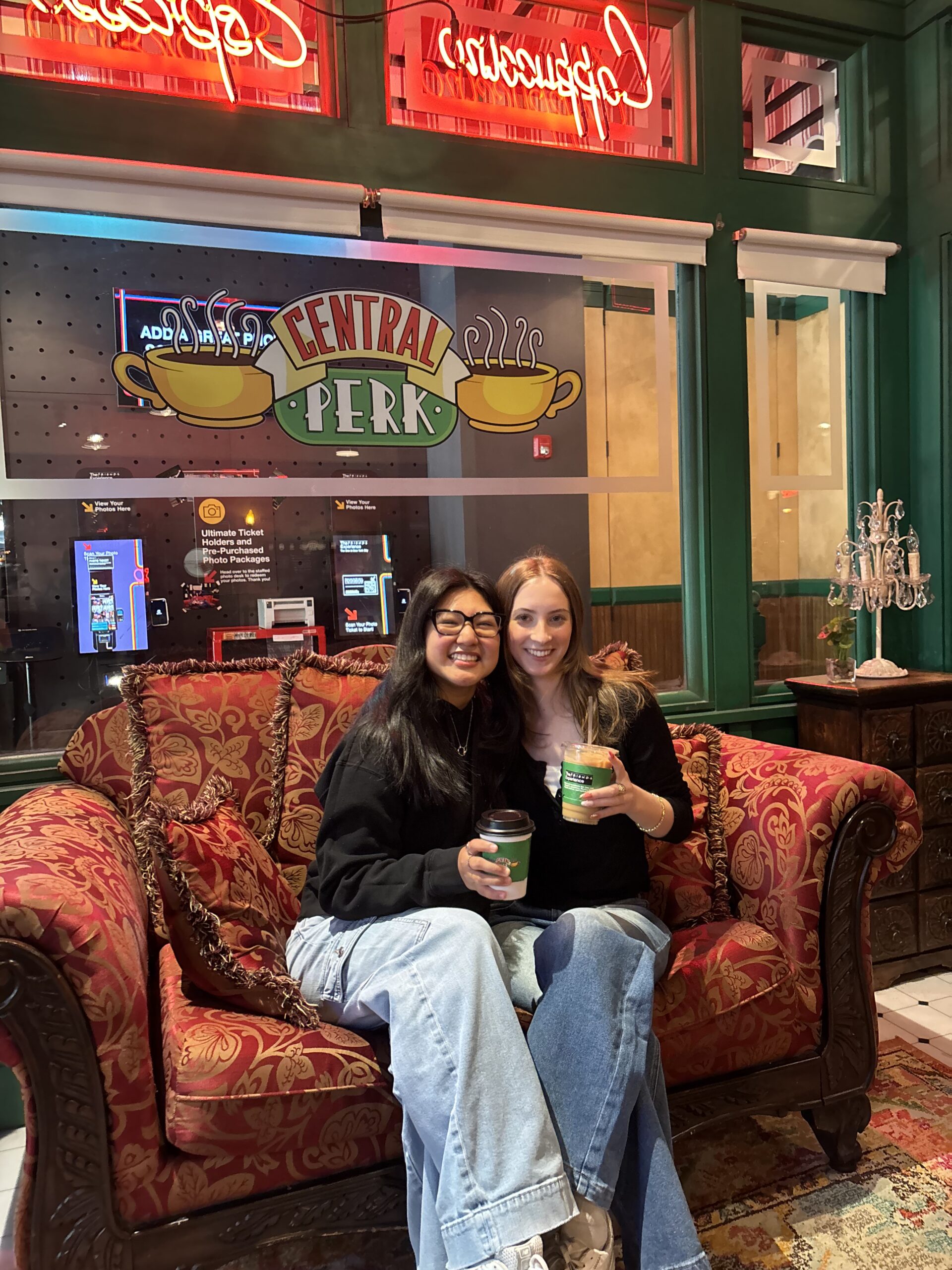
River and I grabbed coffee at The FRIENDS Experience to de-stress during finals week

A double-major student at NYU and one who is also interested in declaring a double minor, River is involved with eighteen different social and scholastic organizations at the university. Hoping to pursue a career in politics, she spends the majority of her time participating in courses and extracurriculars dedicated to studying and engaging with social and political issues. Outside of her academic and organizational commitments, River shared that “[she] loves engaging with local politics, spending time with [her] friends, learning new arts & crafts, and exploring as much of New York City as [she] can.”

As with many undergraduate students, it may appear that she is at risk of spreading herself too thin. Maybe it even appears that, in the name of productivity and impressiveness, she has adopted the young and naive notion that she “can do it all.” However, River’s seeming tendency to overcommit actually strongly aligns with her personality and interests. She describes herself “as a very ambitious person overall” and is no stranger to times when she feels that she’s not doing enough to keep her occupied. When asked how she balances all of her time investments, she laughed and shared, “This is an ongoing area of improvement for me. The best metric I have right now is to check that low-priority commitments aren’t interfering with my ability to complete things that matter to me and that other people rely on me for.”

However, she does try to remember to break from her spells of productiveness from time to time. When it comes to deciding where to invest her effort, “[she’s] learned to listen to [her] energy levels when applying [herself] where [she’s] not necessarily needed.” Always prioritizing events and organizations where her commitment affects the responsibilities and enjoyment of other members, for non-mandatory occasions, she took up this mentality: “I won’t be missing out and I won’t be letting others down by not going.”

As for dealing with overwhelm, when catching up with other people isn’t the form of self-care she is needing, she finds that “the best thing [she] can do to reset is to intentionally set aside time to be by [herself].” However, River also heavily relies on her family and friends for support. Her social circle simultaneously offers “a safe space to step back from intensity,” inspiration “to continue working towards [her] goals,” and a litmus test for determining when it’s time “to reassess [her] priorities.”

Her advice to other students includes a reminder that they are not alone when it is difficult to commit time and energy to achieving their goals. For River, ambition and commitment ought to “work symbiotically.” So as she suggests, when your dreams are not enough to motivate, “give yourself grace to take a step back,” note that “burnout is often a sign that you need to reprioritize given the energy you have,” and “make friends that will always push you to keep going”—because aligning your activity with your energy will produce more fulfilling work and “it’s hard not to feel motivated when you have equally awesome friends who are achieving alongside you.”


Needing to refuel to tackle your own busy schedule? Try out Mexiterranean Grill Express with these student coupons!

By Lauren Gascon 

Lauren Gascon studies Media, Culture, and Communication at NYU and enjoys discussing people’s relationships with each other and themselves. When she’s not on campus, you can find her café hopping, browsing bookstores, or enjoying lunch in one of New York City’s many beautiful parks.


For over 25 years, the Campus Clipper has helped college students in New York City—and later in Boston and Philadelphia—save money and succeed in city life. We offer a digital coupon booklet with discounts on food, clothing, and services, plus an Official Student Guidebook with real advice on how to navigate college life in a big city. Our internship program lets students build skills, earn money, and publish their own e-books. Follow us on Instagram and TikTok @CampusClipper, and sign up for our newsletter to get deals straight to your inbox. To access the digital coupons, scan the QR code on our printed card—available in dorms, student centers, and around campus.


Share

Video Games Are Not The Root of All Evil

Wednesday, June 24th, 2026
Photo By Ky. This is a picture of yours truly with the Tomodachi Life character that my friend, Ky, made of me for side-by-side comparison while we were getting coffee.

As I grew up, hearing my brother yelling throughout the house over his game was a common occurrence. I thought it was annoying and would fiercely yell at him back to “Shut Up!” or “Be Quiet!” He never shared his console with me so I could never even fathom just what was so enraging that made him scream so violently every passing half hour. It was not until my first year of college that I found the answer. 

My first semester was a repeated cycle: thinking about home, wanting to go home, ultimately never buying that ticket home because I didn’t move all this way to leave right when I was uncomfortable. Everything felt foreign and I could not find a way to belong. People’s mannerisms were different e.g. I would hold the door open and people could pass by without uttering a quick ‘thank you’ and it became inappropriate to meet people’s gazes on the street. I wanted to disappear; so I did. 

Most of that year I spent holed up in my dorm room contemplating my choice to move away from everything I thought of as home. Luckily, my two best friends had done the same so we would call and chat about it often. 

“I miss In-n-Out!” “It’s so cold here!” “I miss my mom!” were just some of the common phrases being thrown around, but “Nobody gets me!” was probably the one we all felt the most. Our friendship had transpired from English class in Junior year of high school to seeing each other multiple times a week over the summer to do everything including bed-rotting. Now, we were all miles apart, blocked by the necessity of traveling just to see one another. 

Of all the things that changed my freshman year of college, one thing stayed the same: video games. My laptop made a courageous cross-country journey, and yet never stayed untouched. Every night, I would call my best friends and we would play video games together. It didn’t matter that our time zones were different because I would just stay up just to play a little longer even if I had class the next day. 

Tapping each button, clicking my mouse aggressively — we could release any stress or ponderance out as we imaginatively solved puzzles. Strategies were minute as we just focused on what was in front of us while discussing the reality that surrounded us. Staring intently at a screen, I could hear Emma yelling at our teammates from the other side of the country. 

Not only did I get to hear about her day and connect with her during our sacred gaming time, but I was able to learn new skills because we would always switch between games. From Minecraft to Overwatch, we could be in a free world where we would strategize about roaming for the best place to build a house to complaining about how our teammates were not fulfilling their roles and how we surpassed the enemy team’s healing. Our constant gaming taught me how to be independent and how to be in a team. 

Even today, I play video games to escape reality alongside my friends. It can be quite a resource for making new friends as an activity to get to know each other through the various roles we take on or our responses to challenges. Although I don’t play as much as I previously had, it is always a resource I lean on to feel connected to my friends despite being so far away.

Video games aren’t always a tool of aggression and violence as many parents might be concerned about. It can be a source of release and connection that brings community despite distance. 


Sometimes we just need to cafe-rot with our friends so use this coupon as an excuse to yap about new video games to play over Vietnamese coffee and sandwiches!

By Alyssa Hong

Alyssa Hong is a rising Junior at Barnard College, studying Political Science with a minor in English. As a first-generation, low-income student, she writes about moving across the country for college and its adjustments. She utilizes entertainment, wellness/health/food, and fashion/beauty as methods to making new connections with others whilst always learning.


For over 25 years, the Campus Clipper has helped college students in New York City—and later in Boston and Philadelphia—save money and succeed in city life. We offer a digital coupon booklet with discounts on food, clothing, and services, plus an Official Student Guidebook with real advice on how to navigate college life in a big city. Our internship program lets students build skills, earn money, and publish their own e-books. Follow us on Instagram and TikTok @CampusClipper, and sign up for our newsletter to get deals straight to your inbox. To access the digital coupons, scan the QR code on our printed card—available in dorms, student centers, and around campus.

Share

Mental Health Behind the “Perfect” Image

Tuesday, June 23rd, 2026
Photo by Polina Makarova. Arriving in New York City.

One of the biggest things I have learned during college is that people are often struggling with things you cannot see. Looking around campus, it can seem like everyone has their life together. Students are balancing classes, internships, clubs, social events, and future plans. Social media makes it look even more convincing. People post their achievements, exciting experiences, and happy moments, creating the impression that everything is going perfectly.

For a long time, I believed I was the only one feeling overwhelmed.

When I first moved from Russia to the United States, I put a lot of pressure on myself. I wanted to do well academically, make friends, adapt to a new culture, and build a life in New York City. At the same time, I was dealing with homesickness, uncertainty, and the emotional challenges that come with starting over in a completely new environment.

There were days when everything felt exciting. I was exploring the city, meeting new people, and experiencing things I had dreamed about for years. But there were also days when I felt lonely, anxious, and unsure of myself. What made it difficult was that I often felt like everyone else was adjusting better than I was.

Social media played a big role in that feeling.

Whenever I opened Instagram, it seemed like everyone was having the perfect college experience. People posted photos with large groups of friends, exciting internships, beautiful apartments, and busy social lives. Meanwhile, I was often sitting in my dorm room missing home or worrying about classes. It became easy to compare my reality to other people’s highlight reels.

Over time, I realized that social media only shows a small part of someone’s life. We see the internship announcement but not the rejected applications. We see the smiling group photo but not the loneliness that may exist behind it. We see achievements, but we rarely see the stress, anxiety, or self-doubt that often come before them.

The more people I got to know, the more I realized that everyone is dealing with challenges of their own.

Some students struggled with anxiety. Others felt pressure from family expectations. Some worried about finances, relationships, or their future careers. Even the people who appeared the most confident often had insecurities that nobody else knew about. Many of us were experiencing similar feelings but keeping them to ourselves.

College can sometimes create unrealistic expectations. There is often pressure to be productive all the time. It can feel like you should always be studying, networking, exercising, socializing, and planning for your future. While ambition can be a good thing, constantly feeling like you need to do more can quickly become exhausting.

Eventually, I learned that taking care of my mental health was just as important as achieving academic success.

For me, that meant creating small routines that helped me feel more balanced. Going for walks around New York City, spending time with friends, focusing on hobbies, limiting social media when it became overwhelming, and allowing myself time to rest all made a difference. These habits did not solve every problem, but they helped me manage stress in a healthier way.

I also learned that it is okay to ask for support. During difficult moments, talking to family members, friends, professors, or other people I trusted helped me feel less alone. Sometimes simply sharing what you are going through can make a situation feel much more manageable.

Looking back now, I wish I had spent less time comparing myself to other people. Everyone’s journey looks different, especially in college. Some people adjust quickly, while others need more time. Some people seem confident on the outside while quietly struggling on the inside. The truth is that nobody has everything figured out.

One of the most important lessons I learned is that mental health deserves the same attention as physical health. Taking care of yourself is not a sign of weakness or laziness. It is a necessary part of growth. College is not only about academic achievements and future careers. It is also about learning how to take care of yourself while navigating change, uncertainty, and personal growth.

Takeaway

Social media and college culture can sometimes create unrealistic expectations and make it seem like everyone else has life figured out. In reality, many students experience stress, anxiety, loneliness, and self-doubt. Prioritizing mental health, creating healthy routines, and remembering that nobody is perfect can make the college experience healthier, more balanced, and more enjoyable.


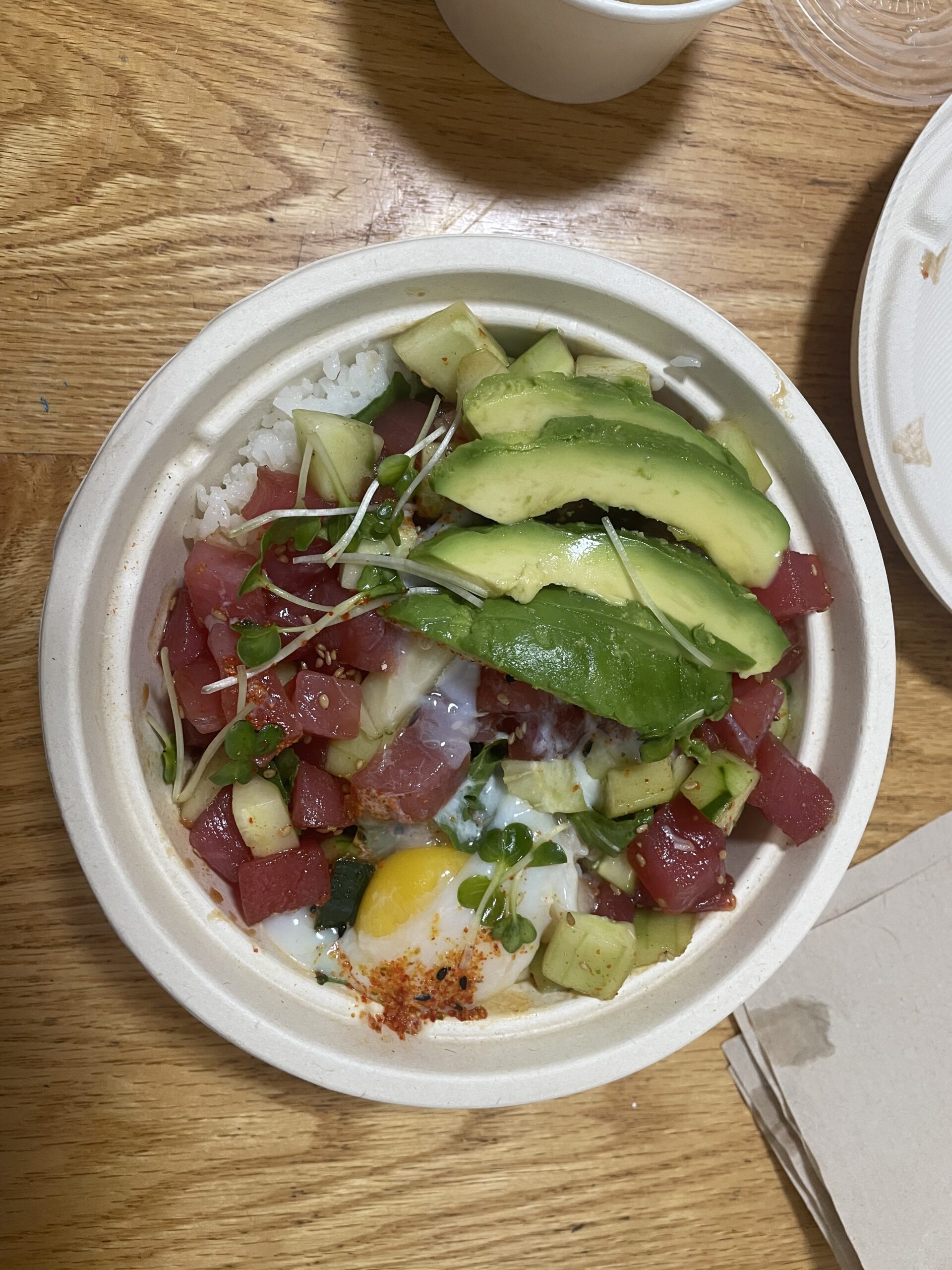
Looking for a quick and customizable meal near campus? Pokeworks Union Square offers fresh poke bowls, salads, and burritos with a wide selection of proteins, toppings, and sauces. Students can join the Pokeworks Rewards program to receive $5 off and earn rewards on future visits.

By Polina Makarova

Polina Makarova is an English Literature major at Pace University and a Publishing Intern at Campus Clipper. Originally from Russia, she writes about student life, wellness, fashion, and personal growth while navigating college life in New York City.


For over 25 years, the Campus Clipper has helped college students in New York City—and later in Boston and Philadelphia—save money and succeed in city life. We offer a digital coupon booklet with discounts on food, clothing, and services, plus an Official Student Guidebook with real advice on how to navigate college life in a big city. Our internship program lets students build skills, earn money, and publish their own e-books. Follow us on Instagramand TikTok @CampusClipper, and sign up for our newsletter to get deals straight to your inbox. To access the digital coupons, scan the QR code on our printed card—available in dorms, student centers, and around campus.

Share

Making Decisions and Changing Your Mind: An Interview with Emerson

Thursday, June 18th, 2026

Being a new adult, you become very familiar with feeling pressured to lay out a foolproof plan for your future and execute it perfectly. Maybe your loved ones have tried to encourage you by stating that “it’s unfair to expect an eighteen-year-old to have their whole life figured out.” However, when placed in a collegiate space—where every student feels this weight, fronts that they have it all together, and, in turn, feeds the insecurities and uncertainties of their peers—it is easy to deceive yourself into believing that you are falling behind, incapable of achieving your goals, or trapped by the direction you have determined for yourself.

For the entirety of my first two years at NYU, I wrestled with these convictions. Thankfully, I wasn’t alone. During a debrief with two of my high school friends, one of them shared that while we were apart for the academic year, she was navigating her own period of change, self-doubt, and uncertainty. So while reflecting upon what may be the best course of action for a student interested in revising their four-year or postgraduation plan, I decided to ask Emerson for advice as someone who had undergone the revision process herself.

Moving into her freshman dorm, Emerson snapped a photo with her Baylor Line jersey

Now a junior at Baylor University majoring in accounting, she had originally intended to major in psychology and follow the pre-med track on her way to becoming a psychiatrist. The academic tasks demanded of her during her freshman year forced her to reflect upon her vision for life after graduation. She expanded upon her change of heart, sharing that “after the first year of college, I realized that science wasn’t something I loved, and it’s something that you have to love to be able to stick it out.” She remembered her interest in the business class she took that spring semester and, going into her sophomore year, decided to declare a business major.

Naturally, there was a hefty amount of wrestling with her own self-determination before shifting gears. She admits that she had likely sensed that she had no true desire to pursue a heavily science-oriented career by the end of her freshman fall semester. However, at the time, she was thinking, “This is what I told my parents, my friends…this is what everyone thinks that I’m going to do.” Though, despite her instinctual worry that they may be shocked or angry, it turned out that her loved ones were more than willing to encourage her new endeavor, and she explained that deep down she knew her parents would understand. Once she accepted that it was time to pursue a different path, Emerson’s friends, particularly her roommate, who was already part of the business program, and Baylor’s Major Exploration and Success and business advisors helped guide her transition.

Emerson still plans on extending her credentials beyond a bachelor’s degree. In fact, the program she is currently enrolled in will allow for her to graduate from Baylor in 2028 with a master’s degree. But beyond the security and stability that her career shift offers, it also equipped her with a new perspective on failure, success, and making decisions across life’s facets.

As a young adult, it can be easy to equate changing your mind with failure and to approach it with fear. However, looking back on her initial approach to change, Emerson learned to recognize that she didn’t fail. Rather, “what [she] had originally thought was going to be good for [her] actually [wasn’t],” and it’s okay for her to change her mind if it means finding a path that is better suited for her. 

Other than academic or professional decisions, Emerson has found herself navigating new terrain in her friendships and faith. To become better decision makers, she advises incoming freshmen to build steady support systems and develop a willingness to experiment with the unfamiliar—new relationships, interesting clubs, or different majors—even if this involves failing. Ultimately, as Emerson’s undergraduate journey thus far exemplifies, what is at first perceived as a failure may soon become an indication of better-aligned pathways, leading to a much more fruitful college experience.


Deciding to try out a new look? Experiment with this 10% coupon!

By Lauren Gascon 

Lauren Gascon studies Media, Culture, and Communication at NYU and enjoys discussing people’s relationships with each other and themselves. When she’s not on campus, you can find her café hopping, browsing bookstores, or enjoying lunch in one of New York City’s many beautiful parks.


For over 25 years, the Campus Clipper has helped college students in New York City—and later in Boston and Philadelphia—save money and succeed in city life. We offer a digital coupon booklet with discounts on food, clothing, and services, plus an Official Student Guidebook with real advice on how to navigate college life in a big city. Our internship program lets students build skills, earn money, and publish their own e-books. Follow us on Instagram and TikTok @CampusClipper, and sign up for our newsletter to get deals straight to your inbox. To access the digital coupons, scan the QR code on our printed card—available in dorms, student centers, and around campus.
Share

To The Students That Are Looking For ‘Balance’

Wednesday, June 17th, 2026

Firstly, congratulations on your college acceptance and moving to the Big Apple! This humid, humming conglomerate of boroughs and subway stations is a pulsing city of excitement. Your heartbeat upon arrival may be currently matching the coursing nature of the city. There truly is no other feeling like moving to New York City.

As I sit here, sweat rolling down from my armpits in early June, I’m reflecting on the biggest tenant of survival that I learned during my undergraduate experience. That being my perception of the word ‘balance’. When I started undergrad, I had a lot of expectations as to what my newest chapter of life would look like, and in maybe a naïve way, it was lots of sunshine, rainbows, and the perfect morning routine. I have documents upon documents of Google Doc schedules planned down to 30-minute intervals, spanning planned activities of 7:30 AM wake-up times, morning yoga, a zen cup of coffee, breakfast meal prep, Pomodoro-method interval study breaks, and more. On paper, this is a very balanced lifestyle, and one I still try to aim for on a consistent level. However, with this excitement of entering college and the tribulations of new experiences, this ‘balance’ can take on a different form.

Yoga is a huge part of my life and has been since I was 16. I found an aptitude for yoga, and really liked this centering through a flow of movement and the practice of breathwork. Moving to such a big city that loves aesthetics, yoga classes are available by the bushel. I figured I could not only do yoga in my shared room, but also start going to a studio somewhat-religiously. My roommate at the time was very into hot-yoga and would go to an hour-long class every day. I thought I would try it because it looked like balance.

I forced myself through one class, slipping around on my own sweat pooled on the yoga mat. I signed up for another one, buying a $40 towel for my mat this time, and shook my way through another sauna-like class. Then, I signed up for a 6AM class. Balance at the time looked to me like uncomfortable persistence and an optimal morning routine that frankly, no 18-year-old needs to complete. This class, I got a compliment on my warrior pose in the first 10 minutes of the class, but then overheated so much I had to lie down for the remainder of the 40 minutes. When the rest of the class went into savasana, I went to the bathroom and threw up. I was so overworked that I went home and slept the rest of the day, missing my 8AM Theology class and the other class I had, with over $100 spent on these three intro yoga sessions.

Hot yoga works for a lot of people, but I had to face it may not work for me. It seemed to center my roommate but provided a negative experience for me. Later in college, I took the courses Yoga 1 and Yoga 2, which focused more on breathwork and seated, restorative poses. This combated my original power-house idea of how yoga would fit into my collegiate life, but after every class, I felt more flexible and mentally sharper for my classes during that day. Not being able to be a ‘hot yoga baddie’ took me aback, but finding yin yoga and pranayama have changed my habits. My thinking of the word ‘balance’ and my perception of myself then adjusted.

There is balance in the excitement of college, as there is equally excitement in finding a holistic practice that grounds you during this time. In finding that balance, there is the remembrance that you are headed to college for finding you and the pursuit of your innate talents. 

The corner of my room for designated for yin yoga and journaling my Junior year.

And for a before class treat or after yoga refresher, here is a Campus Clipper approved coffee discount offer!


By: Madeleine Misner

Madeleine Misner is a writer and NYU graduate student in the MS in Publishing program. She loves going out to dinner with her friends, reading long books, and attending spoken-word poetry events. Madeleine always loves to connect with other writers and creative thinkers alike!


For over 25 years, the Campus Clipper has helped college students in New York City—and later in Boston and Philadelphia—save money and succeed in city life. We offer a digital coupon booklet with discounts on food, clothing, and services, plus an Official Student Guidebook with real advice on how to navigate college life in a big city. Our internship program lets students build skills, earn money, and publish their own e-books. Follow us on Instagram and TikTok @CampusClipper, and sign up for our newsletter to get deals straight to your inbox. To access the digital coupons, scan the QR code on our printed card—available in dorms, student centers, and around campus.

Share

Resilience in Routine

Tuesday, June 16th, 2026
Photo by Alyssa Hong. Here I am sitting in a field of overly bloomed tulips at the Queens Botanical Garden.

One of the most essential parts of college is finding ways to continue a healthy lifestyle despite having copious amounts of free will. For this, I suggest enrolling in classes with friends for things like yoga, pilates, or anything really. 

What started out as Thursday evening classes for yoga simply began as a question: 

“Do you want to try Fitbear classes with me?”

Monica, my best friend, asked me this during our first year in college after the first semester. Still timid, my voice appeared firm in accepting her offer but the tremble of my body could not shake this anxious moment. I wondered if the class would paint us as newbies and that we would be made fun of – superficial concerns which made no sense looking back because everyone starts somewhere. 

Our first class had me looking over my shoulder constantly. I put on my leggings for the first time since COVID era, which had me doing Chloe Ting workouts in my bedroom. Highschool kept me so preoccupied I only had time for dance club so I had wildly let myself go. I went down the elevator to the first floor where the water station was and filled my Awola full of water since I was not sure how hard I would be sweating for “vinyasa” yoga. 

I did not even know what “vinyasa” meant. 

I knocked on Monica’s door since we lived in the same small hallway; we were on our way. Geared with her yoga mat, leggings, and water bottle, Monica was prepared for the next hour of downward facing dogs later. As we rode the elevator down, my face kept making the same grin of nervousness. My hands shook like no other. Soon, I found myself in the basement of the main campus building for our class with my hand gripping the handle of the door. As I opened it, the world began to shine in on me. 

Starting by reaching down towards our feet, I felt the release of all my stresses of homesickness to future career anxieties diminish. Halfway lift — holding my breath, I stared at my posture in the mirror, diligently focusing on my body and how it felt. Then down into a down-dog while bending our knees side-by-side. Stretching my body through every pose was my revenge on this fast-moving world. 

With Monica keeping me accountable, I learned the art of yoga: finding stillness and intention. Each pose should be made with intent and slow movement rather than rushing through. I thought about engaging my core, where my hands were, and finally how my body felt. The tension housed within my joints transpired as I held my intention from the beginning of the class to the very end. 

After my very first class, Monica and I continued these classes even adding two a week to our schedules if time permitted. That’s how we ended up trying a Zumba class on a random given Wednesday. 

Without her pushing me out of my own comfort (my mind), I would have never found the art of truly slowing down in yoga. We still go to these classes only now they are Friday morning classes at 9 AM instead. We always find time within our schedules and are always seeking to learn something new in our fitness journeys like how to perform frog pose or a proper chaturanga. 

I have also learned so much about Monica from this routine. She prefers cardio whereas I hate cardio entirely. I found this out after one of our conversations post-class (Total Sculpt) which was filled with cardio. 

“I like it because you can feel it.”

“I hate it for that exact reason.”

She also used to train mainly using cardio for rowing in Highschool and still does for when she scuba dives in the summer. Whereas, I only did cardio for dance in Middle School which I still hated. 

Nevertheless, yoga, or more generally, fitness classes have become our routine to resist anything college throws our way. It is not only a way to connect with others, but a chance to learn something new about them and yourself. 


Working out can be a helpful activity for the mind and soul alongside the body. Use this coupon to start your fitness training package with Nimble Fitness!

By Alyssa Hong

Alyssa Hong is a rising Junior at Barnard College, studying Political Science with a minor in English. As a first-generation, low-income student, she writes about moving across the country for college and its adjustments. She utilizes entertainment, wellness/health/food, and fashion/beauty as methods to making new connections with others whilst always learning.


For over 25 years, the Campus Clipper has helped college students in New York City—and later in Boston and Philadelphia—save money and succeed in city life. We offer a digital coupon booklet with discounts on food, clothing, and services, plus an Official Student Guidebook with real advice on how to navigate college life in a big city. Our internship program lets students build skills, earn money, and publish their own e-books. Follow us on Instagram and TikTok @CampusClipper, and sign up for our newsletter to get deals straight to your inbox. To access the digital coupons, scan the QR code on our printed card—available in dorms, student centers, and around campus.

Share

Confidence and Self Image in College

Tuesday, June 16th, 2026
Photo by Polina Makarova. A view from a study space in New York City.


Back then, beginning my time at university, I believed self-assurance came naturally – or not at all. Certain classmates appeared calm in any setting, as if belonging without effort. Their voices stayed steady during discussions; friendships formed around them like weather patterns. Watching closely, one might guess doubt never crossed their minds.

Spending more time in college slowly showed me how common confidence issues really are. What stands out is not the struggle itself, but how quietly it’s carried. Beneath cheerful faces, online updates, and packed calendars, doubt often lingers. Comparisons creep in. Pressure builds. Most keep it hidden. A few admit it. Many feel alone while surrounded by others.

Back in those days, living abroad made everything feel heavier. Moving across borders meant facing unfamiliar ways of life, classrooms that worked differently, routines without comfort. At times, doubt crept in – did I really fit here? Conversations carried hidden risks; one misstep could mark me as an outsider. Confidence rarely matched the ease others showed. During that time, I often felt uncertain about where I belonged.

Looking at social media made things worse. Everyone appeared to be living an ideal college life. Photos showed big circles of friends, impressive internships, top scores – effortless wins on display. My reality never matched those edited snapshots others chose to share.

Slowly, it became clear – measuring myself against others drained my self-assurance quickly. Whenever attention shifted to peers, my achievements felt smaller somehow. Everyone comes to college with different experiences, backgrounds, and challenges. People have different goals and are on different paths. Matching timelines across such distinct lives brings little value most times.

Success often came, not from comparison, butyet from noticing little wins. A strong mark on homework sometimes counted. At other moments, it was saying a few words during discussion, starting a conversation with a stranger, or managing stress after a long stretch of work. Slowly, these steps added up. Confidence grew without force.

One experience that helped build my confidence was getting involved outside of the classroom. At first, I often hesitated to apply for opportunities because I worried that I was not experienced enough or that someone else would be more qualified. Eventually, I realized that many students feel the same way. Applying for internships, joining new projects, and putting myself in unfamiliar situations helped me become more confident over time. Every opportunity taught me something new and reminded me that growth often happens when you are willing to step outside of your comfort zone.

Turns out, being sure of yourself does not mean having every detail locked down. Earlier, I believed certainty required full control – everything sorted ahead of time. College shifted that view: complete understanding isn’t what drives confidence. Even the students who seem the most confident are still learning, growing, and making mistakes like everyone else.

Comfort in clothes sometimes made speaking up easier. Because I liked what I wore, joining discussions felt less difficult. Though outfits do not build confidence by themselves, they support feeling like your true self. How you dress might influence how freely you show who you are.

One thing stands out most: doing things builds belief in yourself. Each attempt at something unfamiliar adds to it. Stepping into unknown territory helps it grow. Trying what feels difficult shapes it further. This growth does not arrive overnight. Small actions pile up over time. Confidence grows when you continue trying new things and challenging yourself.

Now and then, uncertainty creeps in, even today. Nearly everyone experiences this at times. Yet what has shifted is how I interpret these feelings – not as setbacks, but as signs of change. College is not only about earning a degree. It is also about learning more about yourself and becoming comfortable with who you are.

Takeaway

Confidence in college does not come from being perfect or having everything figured out. It develops through experience, personal growth, and learning to stop comparing yourself to others. Everyone struggles with self-doubt at times, but confidence grows when you focus on your own journey rather than someone else’s.


Take a break from studying and recharge with a cup of coffee at Absolute Coffee. Sometimes even a small pause can help you reset and return with a clearer mind.

By Polina Makarova

Polina Makarova is an English and Literature major at Pace University with a minor in Journalism and Digital Storytelling. Originally from Russia, she writes about student life, identity, fashion, wellness, and adapting to life in a new country.


For over 25 years, the Campus Clipper has helped college students in New York City—and later in Boston and Philadelphia—save money and succeed in city life. We offer a digital coupon booklet with discounts on food, clothing, and services, plus an Official Student Guidebook with real advice on how to navigate college life in a big city. Our internship program lets students build skills, earn money, and publish their own e-books. Follow us on Instagram and TikTok @CampusClipper, and sign up for our newsletter to get deals straight to your inbox. To access the digital coupons, scan the QR code on our printed card—available in dorms, student centers, and around campus.
Share

The Unassuming Reality of Grocery Runs

Friday, June 12th, 2026

Friday mornings are reserved for yoga classes with Monica. Somehow the night before always without doubt entails going to sleep with wet hair. In the morning, I groggily look into the mirror just to jump from the horror of my black streaks crimped in uneven bumps. As well as I tame it — it never ends up being remotely normal.

This is how I greet Monica and how she knows I, unlike her, am not a morning person at all. However, after repeated down-dogs and chaturangas, we partake in our most coveted task of the day: grocery shopping.

Equipped with two bags, we hurriedly rush to the bus stop until it finally arrives late as usual. It is then that we wait 20 stops from our dorm to the 96th street shopping area that we finally get off. Starting at Trader Joes, she watches as I pile on a bunch of random ingredients to make my two-weeks’ worth of dinners and lunches. This is how she learns I do not typically do breakfast. Sourdough, honey-flavored greek yogurt, and a carton of eggs are always in my basket; she points them out to me easily.

“The usual?”

She learns my preferences by watching my careful selection. I show her my ingredients for my ‘world famous’ sandwiches while she takes on her own basket. If there’s one thing that our grocery runs have taught me, it’s that Monica is always stocked up on fruit, yet it is also the item that she typically finishes before all her other produce. Her favorite being Pomelos.

After Trader Joes, Monica is not finished as the second round is yet to begin. Whole Foods is our next stop where she gets all her meats and more fruit. Beef, squid tubes, and much more — she is not shy about her diet because there is not a single thing she despises and does not eat. Only when the cashier hands her the receipt can I feel accomplished, three bags of groceries later.

Three bags full of groceries after a successful run with Monica!

Each week, we continue this routine. I always scan the fridge for my own section to see what I have left only to find her side empty. When I ask her about it on Thursday evening, she smiles and simply asks, “Can we go grocery shopping again?” Unbeknown to most, within this supposedly boring task is a secret: the intimate nature of grocery shopping. Learning each others’ preferences enables a deeper understanding of a person — a possible conversation starter.

“Why don’t you like tomatoes?”

“Too citrusy and I HATE the texture.”

Not to mention, bonding over your differing or similar diets forms a more intimate connection stemming from our positions with certain foods. Choices in grocery shopping alerts us to what others enjoy, stories about such food, and vice-versa. When Monica and I go grocery shopping, I get to see exactly what she decides to fuel her body with and I begin to associate her likes and dislikes with our friendship. Her dislikes become at the forefront when we choose to make suggestions for recipes or restaurants or even ingredients to one another.

Every Friday, we set time aside to go grab produce together and it is a key reason that we are so understanding of one another. I get to connect with her by spending time picking out blue berries or strawberries while also learning what cuisines exist for her. Her choices all reflect what type of person she is and her experiences. Like when Monica picks meat, she prefers to fuel her body with the most nutritious and fresh items; getting meat only from Whole Foods and never prepackaged.

With each Friday, I get to know this and learn so much more about her. From what ingredients exist in her hometown to the quality difference in the United States, our shared time has let us get to know one another through discussing and choosing food for the week.

Although mundane, grocery shopping carries the power to make connections with others and learn constantly by reflecting others’ livelihoods. It is a unique college practice that I invite others to do. Form a routine with friends and take grocery shopping as a sidequest worthy of getting to know them better.

Grocery shopping can be bonding.


Grocery shopping can get pricy fast. Use this Gristedes coupon to save 10% off your shopping for all your grocery runs!

By Alyssa Hong

Alyssa Hong is a rising Junior at Barnard College, studying Political Science with a minor in English. As a first-generation, low-income student, she writes about moving across the country for college and its adjustments. She utilizes entertainment, wellness/health/food, and fashion/beauty as methods to making new connections with others whilst always learning.


For over 25 years, the Campus Clipper has helped college students in New York City—and later in Boston and Philadelphia—save money and succeed in city life. We offer a digital coupon booklet with discounts on food, clothing, and services, plus an Official Student Guidebook with real advice on how to navigate college life in a big city. Our internship program lets students build skills, earn money, and publish their own e-books. Follow us on Instagram and TikTok @CampusClipper, and sign up for our newsletter to get deals straight to your inbox. To access the digital coupons, scan the QR code on our printed card—available in dorms, student centers, and around campus.

Share

The Role Models in Your Life: On Looking to Friends for Inspiration

Wednesday, June 10th, 2026

While taking your first steps into adulthood, you may find yourself at odds with the already-adults in your life. Perhaps you are reading distrust while they eagerly offer you a fistful of advice and give warnings about the responsibilities that come with expanding your freedom. It may be, in fact, that while you feel like you are ready for the large shift in your independence, your loved ones are experiencing an urgency to protect you from adult-sized mistakes and life-altering consequences. Unfortunately, once you reach this in-between stage in life, you may no longer be receptive to their insight. In fact, it may not be until long after you leave home that you realize the benefit in having let them impart their wisdom to you. When you do find yourself in this state of uncertainty, the world will present a variety of guides for leading you through your adult life, but I have found some of the most valuable consultants to be my friends and peers.

My friends, Emerson and Grace, who have been inspiring me for 10 years

Take a moment to picture the faces of individuals in your life who you can relate to and yet still be largely influenced, challenged, or inspired by. Think about all that you have already gained from them: mannerisms, habits, mindsets, and the like. Then, think about all that you admire—or even envy—about them. Maybe you are recalling their capacity for being highly productive, adaptable, optimistic, or involved. Perhaps your thoughts are now shifting to reflect upon all of their strengths that you lack. However, chances are, they have experienced or are experiencing the exact same feelings of anxiety or inadequacy as you.

When asked questions similar to “Who inspires you most?” the common instinct is to reference a family member—particularly parents—mentors, teachers, or public and historical figures. Surely, the number isn’t zero when tallying up the individuals who point to one of their friends as their source of inspiration. Still, I have to wonder—if most people tend to think first of such personal relationships as those formed in the family—why do the reputations of those they spend the majority of their formative and adult years surrounded by (namely, their friends and peers) fall to the wayside before their recollections of major icons? Perhaps we overlook their resilience because we witness them fail and face adversity in real-time. It may be that we confuse role models for complete and fully matured individuals rather than people who have navigated or are continuing to navigate pitfalls, detours, and setbacks of their own.

So here, I encourage you to have thorough, inquisitive conversations with your friends about their own difficulties with and approaches to “adulting.” Allow for them to be perceived as the highly admirable figures that they most likely are; you did choose them for friends for a reason. Even if you simply take the time to observe and appreciate the methods for success utilized by one of your peers, you can still find a means for applying them to your own life.

As the saying goes, “You are who you surround yourself with,” and it is not only a very famous quote but also a very truthful one. It can be recited as a warning or act as an invitation for reflection, and perhaps, for you, it has been both. I know it has been for me. But as much weight as it holds in its meditative ambiguity, this phrase is also a pure statement of fact because you actually can become more like who you surround yourself with.

So if you are ever feeling a little lost, stuck, or listless in your young life—and other guides, spaces to vent, or sources for instilling a sense of purpose seem to be misunderstanding you or not quite fit your circumstances—look to your friends, who may just be the most helpful, empathetic, and supportive role models of all.


Looking to express yourself on your unique NYC student journey? Create your own fragrance with this coupon!

By Lauren Gascon 

Lauren Gascon studies Media, Culture, and Communication at NYU and enjoys discussing people’s relationships with each other and themselves. When she’s not on campus, you can find her café hopping, browsing bookstores, or enjoying lunch in one of New York City’s many beautiful parks.


For over 25 years, the Campus Clipper has helped college students in New York City—and later in Boston and Philadelphia—save money and succeed in city life. We offer a digital coupon booklet with discounts on food, clothing, and services, plus an Official Student Guidebook with real advice on how to navigate college life in a big city. Our internship program lets students build skills, earn money, and publish their own e-books. Follow us on Instagram and TikTok @CampusClipper, and sign up for our newsletter to get deals straight to your inbox. To access the digital coupons, scan the QR code on our printed card—available in dorms, student centers, and around campus.

Share

Fashion as Personal Expression

Tuesday, June 9th, 2026

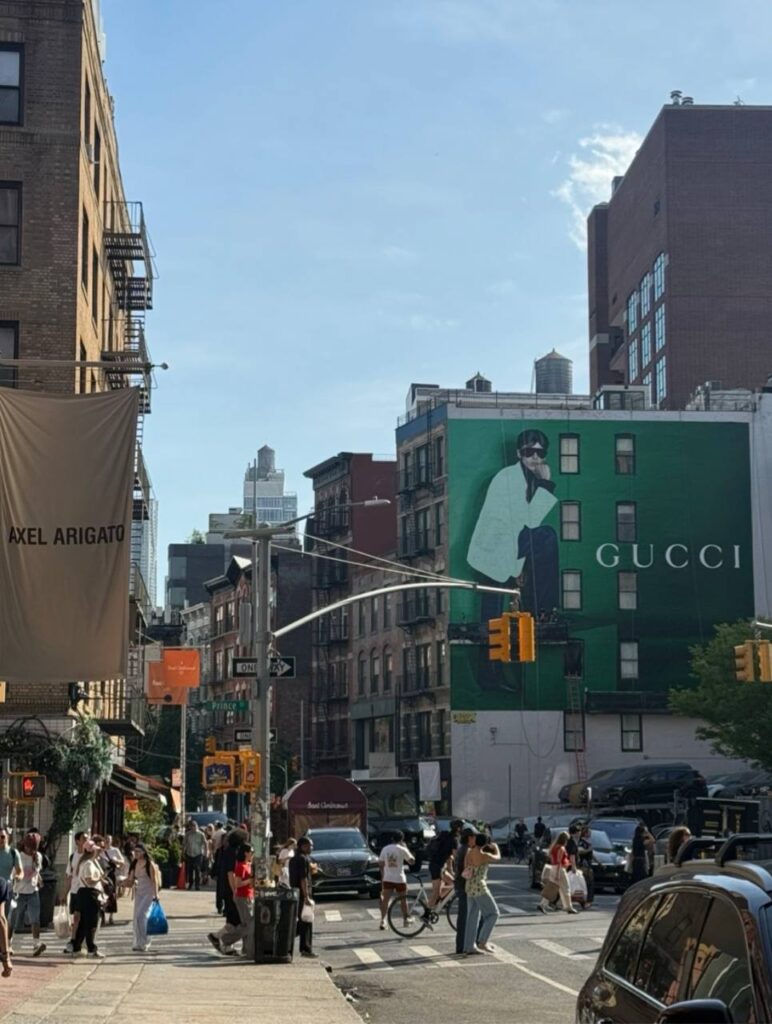
Photo by Polina Makarova. A street view in SoHo, one of New York City’s most fashion-focused neighborhoods.

Surprisingly, when people think about fashion, they usually think about trends, brands, or appearances. While fashion can certainly be those things, my relationship with it became something much more personal after moving to the United States. During a time when almost everything in my life felt unfamiliar, fashion became one of the few things that helped me stay connected to myself. Instead of simply following trends, what I wore became a reflection of who I was becoming.

Moving to a new country can make you question many parts of your identity. Suddenly, you are surrounded by different people, different social expectations, and a completely different environment. College can make this feeling even stronger because everyone seems to be figuring out who they are at the same time. While that can be exciting, it can also feel overwhelming.

When I first arrived in New York, there were days when I felt invisible. Adjusting to a different way of life took time, and fitting in did not happen overnight. Making friends was not always easy, and homesickness stayed with me longer than I expected. Some days I felt confident, while other days I felt uncertain about where I belonged. One thing I noticed, however, was that when I put thought into what I wore, I carried myself differently. It was never about impressing other people. It was about feeling more like myself.

During that period, many things felt outside of my control. I could not instantly adapt to a new culture. I could not make homesickness disappear overnight. I could not magically become comfortable in every social situation. But every morning, I could choose how I wanted to present myself. That small decision gave me a sense of confidence during a time when everything else felt uncertain.

Fashion became another form of self-expression. Some people express themselves through art, music, or writing. For me, clothing became a way to communicate parts of my personality that I sometimes struggled to put into words. Certain outfits made me feel more confident. Others reflected my mood or mindset. Sometimes even a simple accessory could make me feel more confident throughout the day. Different outfits reflected different moods and helped me express how I was feeling.

Over time, expressing myself through fashion became more natural and helped me feel more comfortable in my own skin. One of the things I love most about New York City is how people express themselves through fashion. Walking through the city, you see people expressing themselves in countless ways. Some people dress boldly and creatively, while others prefer a simpler style. There is no single “right” way to present yourself. Seeing that freedom made me more comfortable embracing my own style.

College can sometimes create pressure to fit in. Social media often makes that pressure even stronger. It is easy to compare yourself to carefully curated photos and feel like everyone else has everything figured out. Over time, I realized that confidence comes from being comfortable with yourself rather than trying to be like everyone else. The people who seemed most confident were often the people who were simply comfortable being themselves.

One of the most important things fashion taught me is that self-expression does not have to be expensive. Confidence is not determined by designer brands or the amount of money you spend on clothes. Some of my favorite outfits have been simple combinations of pieces that make me feel comfortable and authentic. Personal style feels most meaningful when it reflects who you are rather than trying to be perfect.

As time went on, fashion also became connected to my overall wellness. Of course, clothing cannot solve every problem, but taking the time to express yourself can have a positive impact on your confidence and mindset. On days when I put effort into getting ready, I often felt more productive, motivated, and positive. It was a small act of self-care that helped me start the day feeling more confident.

Looking back, fashion helped me navigate one of the biggest transitions of my life. It gave me confidence during uncertain moments and allowed me to express parts of my identity that I was still discovering. Even when so much around me was changing, fashion helped me stay connected to who I was. Most importantly, it reminded me that self-expression is not about impressing other people. It is about feeling comfortable enough to be yourself.

Takeaway

Fashion is often viewed as something external, but it can also be a powerful form of self-expression. During times of change and uncertainty, personal style can help people feel more confident, authentic, and connected to themselves. Sometimes the smallest forms of self-expression can make the biggest difference.


Use this student discount at Amorino and enjoy a sweet treat while exploring New York City. Sometimes a small break can be the perfect form of self-care during a busy semester.

By Polina Makarova

Polina Makarova is an English and Literature major at Pace University with a minor in Journalism and Digital Storytelling. Originally from Russia, she writes about student life, identity, fashion, wellness, and adapting to life in a new country.


For over 25 years, the Campus Clipper has helped college students in New York City—and later in Boston and Philadelphia—save money and succeed in city life. We offer a digital coupon booklet with discounts on food, clothing, and services, plus an Official Student Guidebook with real advice on how to navigate college life in a big city. Our internship program lets students build skills, earn money, and publish their own e-books. Follow us on Instagramand TikTok @CampusClipper, and sign up for our newsletter to get deals straight to your inbox. To access the digital coupons, scan the QR code on our printed card—available in dorms, student centers, and around campus.

Share