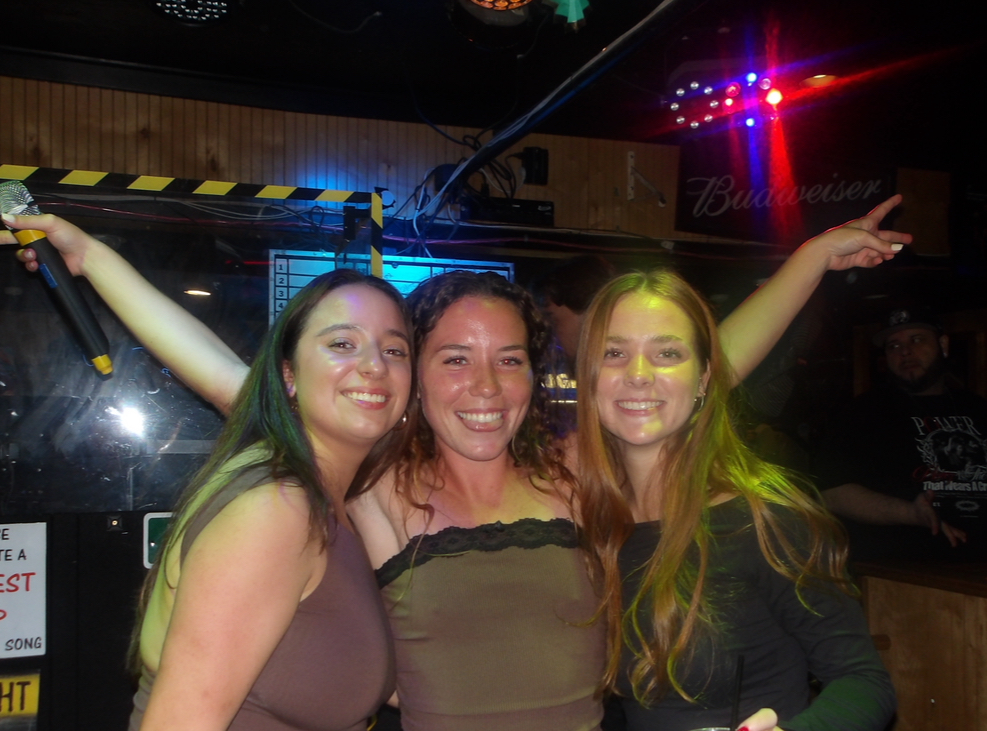


As a college student, specifically a commuter student, fear of missing out, or FOMO, is my worst enemy. Being a full time college student means that you can’t always go out. Maybe you have to study for a big exam you have the next day. Perhaps you have to catch up on homework or sleep. As a college student you have a lot going on, and it is important to remember this. You still need to be conscious of your grades, work/expenses, and other commitments.
In short, sometimes you just can’t go out. So, how do you deal with having to miss out?
Well, luckily there are ways to reduce the impact of FOMO. Verywellmind.com provides a list of ways to cope with FOMO. Using the article “How to Deal With FOMO in Your Life” by Elizabeth Scott, I have decided to highlight some of my favorite, and most realistic mechanisms.
The author, Elizabeth Scott, suggests journaling. While this is frequently suggested for many different psychological struggles, Scott offers it as a replacement for social media. Instead of posting your memories online you can have more personal documentation. My favorite version of this is junk journaling. It is easy to do, creative, and you can reflect on it easily.
Another suggestion is to focus on “real connections.” Once you begin commuting you may realize some people make less of an effort to hang out. Some friendships are temporary, a lesson that I have struggled learning. Sometimes people struggle with object permanence with people, when you aren’t there, you simply seem not to exist. In my own experience I think there is value in trying to keep friendships intact, however if you are constantly being let down or ignored, place your energy into other friendships. It isn’t easy letting go of people you have had amazing experiences with, but sometimes those experiences and moments are to remain in the past.
According to the National Library of Medicine, one generally accepted reason FOMO sprouts is from comparison via social media. Social media consists of many different platforms that cause everyone to know what everyone else is doing–at all times. There have been many times where I have been completely fine about not going out on a Friday night, and then late at night I scroll seeing post after post detailing how fun everyone’s night was.
The truth is we don’t really know how fun the nights were. There have been many nights that I went out and got some cute pictures, and even if the night was short, boring, disastrous and ended with tears, I still post because the pictures are cute.
You will never know how true posts are on social media. Besides, even if it was an amazing night out that you missed out on, it doesn’t matter because there will be more to come.
As a chronic over thinker with anxiety, here are my personal tips on how to combat FOMO.
The college lifestyle is heavily centered around going out. College can feel like a whirlwind, but it is important to remember college is actually about learning.

By Isabel DeSisto
Isabel DeSisto is a senior majoring in Writing, Literature, and Publishing at Emerson College. She is an avid traveler and is always looking to go on a trip. While adventurous, there is nothing she enjoys more than hanging out with her dogs and reading a book.
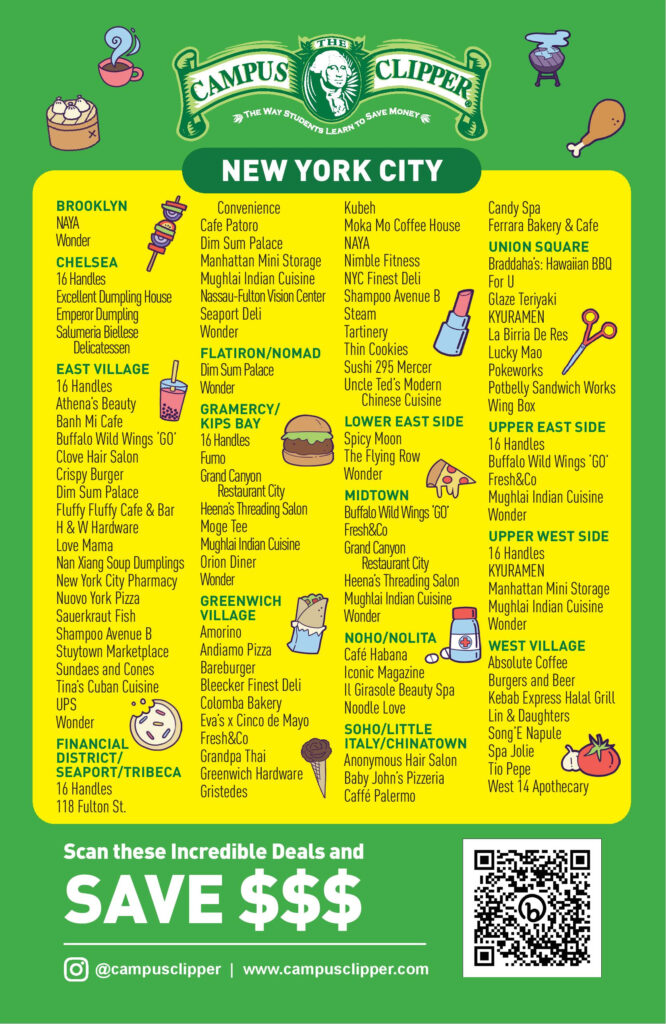
For over 25 years, the Campus Clipper has helped college students in New York City—and later in Boston and Philadelphia—save money and succeed in city life. We offer a digital coupon booklet with discounts on food, clothing, and services, plus an Official Student Guidebook with real advice on how to navigate college life in a big city. Our internship program lets students build skills, earn money, and publish their own e-books. Follow us on Instagram and TikTok @CampusClipper, and sign up for our newsletter to get deals straight to your inbox. To access the digital coupons, scan the QR code on our printed card—available in dorms, student centers, and around campus.

Saving money is the only positive to commuting that you need, at least that is probably what your parents will argue. But when you are taking out loans to cover your tuition, all money begins to feel fake. Saving thousands, but still paying thousands begins to feel like it’s not worth it. In the long run it is, but while you are still in college it is helpful to look at the current positives.
There are lots of particular benefits you get when you live at home. Some of them are noticeable, others you may take for granted. Whenever I get stressed about commuting I like to remind myself of some of the perks.
Here is a run down of some basic benefits of living at home while in college:
There are of course an abundance more, some are niche and personal, others universal. Sometimes you need to rationalize, even if it seems counter-intuitive.
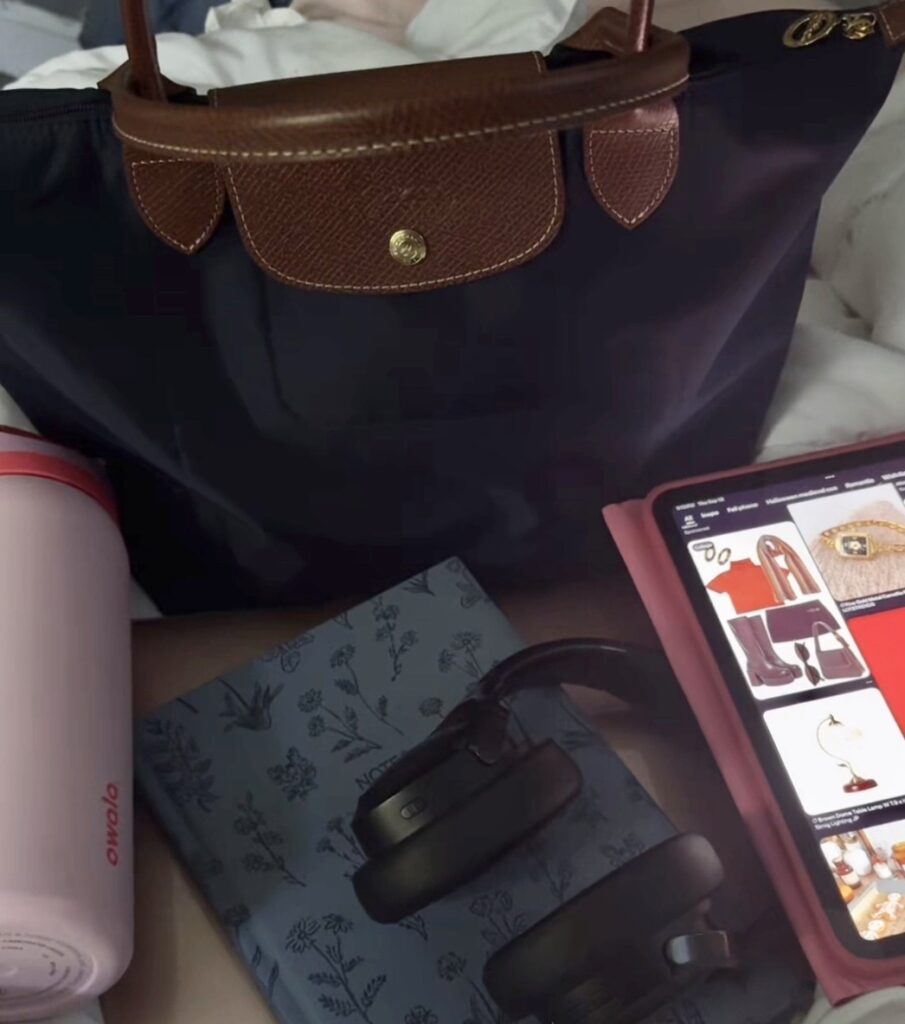
Saving money means surely you can spend a little more on yourself. Take this with a grain of salt, while living at home you want to be financially responsible. Save money while you can, of course. If you do think about it you are saving thousands, so if buying that cute tote you have wanted or getting your nails done makes you happy, why not?
Perhaps it is bad advice, but commuting is hard. I have discovered that when I feel put together and have little things like cute nails, which I couldn’t afford on campus, it allows me to feel the positives of commuting instantly.
When you are in college, you get into a routine. This is true whether you live on campus or not. The best thing about commuting is there is less disruption to your routine.
You don’t have to worry about packing your life back up again and again. You have everything in one spot whether it is during the semester or winter break. You can go to the same gym, the same coffee shop, the same library throughout the year. There is value in consistency and familiarity. It is comfortable.
That being said you can get out of your comfort zone if you so choose. Even though it may not feel like it, being in your childhood home and all, there are places nearby that you may have never experienced. If you have access to a car you have the ability to go where you want when you want. Having a car and being at home doesn’t mean you have to go to the same few places you have been going to for years.
One thing I’ve learned is you can travel and see areas that have been next door to you your whole life. Explore the trails near you and take little road trips to places close by. It is even more fun bringing your college friends from campus to see your town and state with you. Taking the time to experience your home town before you become a visitor in it, is rewarding and can be sentimentally fun.
Commuting is hard work, but if you romanticize it enough and prioritize yourself, it can still be a well rounded college experience.

By Isabel DeSisto
Isabel DeSisto is a senior majoring in Writing, Literature, and Publishing at Emerson College. She is an avid traveler and is always looking to go on a trip. While adventurous, there is nothing she enjoys more than hanging out with her dogs and reading a book.
For over 25 years, the Campus Clipper has helped college students in New York City—and later in Boston and Philadelphia—save money and succeed in city life. We offer a digital coupon booklet with discounts on food, clothing, and services, plus an Official Student Guidebook with real advice on how to navigate college life in a big city. Our internship program lets students build skills, earn money, and publish their own e-books. Follow us on Instagram and TikTok @CampusClipper, and sign up for our newsletter to get deals straight to your inbox. To access the digital coupons, scan the QR code on our printed card—available in dorms, student centers, and around campus.
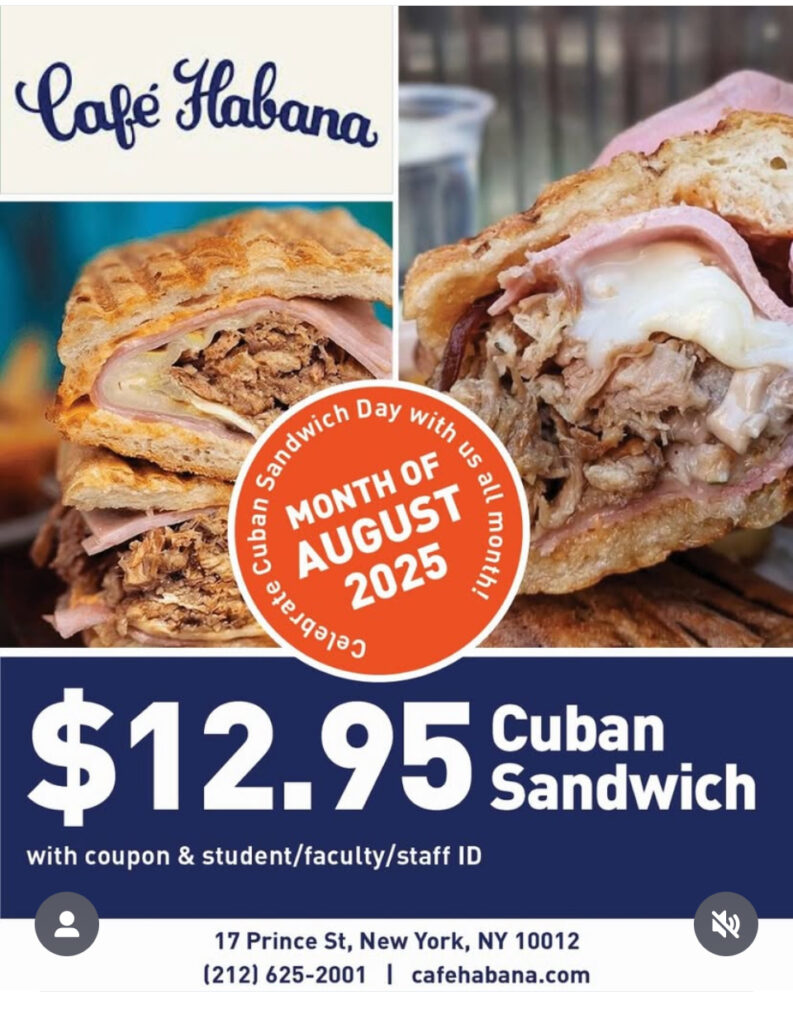
College often brings a plethora of confusing friendships, budding relationships, and strange encounters. I needed to debrief my first two weeks back at school with one of my close friends, Nadia, who I met during my undergrad years. We landed at a small, though vibrant, sandwich shop on a street corner. The two of us sat down and were greeted by staff, who all seemed to have genuine rapport with one another. It didn’t take long for us to decide our brunch entrees. Cafe Habana, located just around the corner from New York University, offers a menu made up of unique Central and South American cuisine and classics for the old-school customers.
Throughout our morning, Nadia quickly drank her iced hibiscus tea, as I slowly sipped my lime-lemonade.
“The hibiscus drink was decadent and cooling. Perfect for a hot day,” she noted.
I told her about the new friends I made at my university, while explaining the challenges of trying to fit into a group, when my peers had vastly different areas of interests and expertise. The guacamole and chips arrived as I reflected on my first networking event. The seasoned elote came shortly after. The grilled corn on the cob, mayonnaise, cojita cheese, chili powder, and fresh lime, was unforgettable.
“Chips and guacamole are crunchy and creamy,” Nadia reviewed. “The tomatoes mixed in with the onions adds so much more flavor and texture that I really enjoyed. For the elote, I enjoyed the chili powered that added a bit of spice.”
Our main courses were served on hot ceramic dishes, showcasing a plantain taco, a shrimp taco, and the Cubano sandwich. The shrimp was throughly marinated with thyme, oregano, garlic, adobo, & citrus zest, guacamole, chipotle mayo, and salsa verde, while the plantain had feta, black beans, pickled red onion, and salsa verde. The Cubano, their signature item, was made up of slow roasted pork, ham, Swiss cheese, chipotle mayo, and pickles.
“The shrimp taco was savory and filling. I enjoyed how fresh it tasted from the guacamole and citrus zest,” Nadia reflected. “The plantain taco was my favorite. It was sweet and the red onion and salsa verde adds a very unique flavor.”
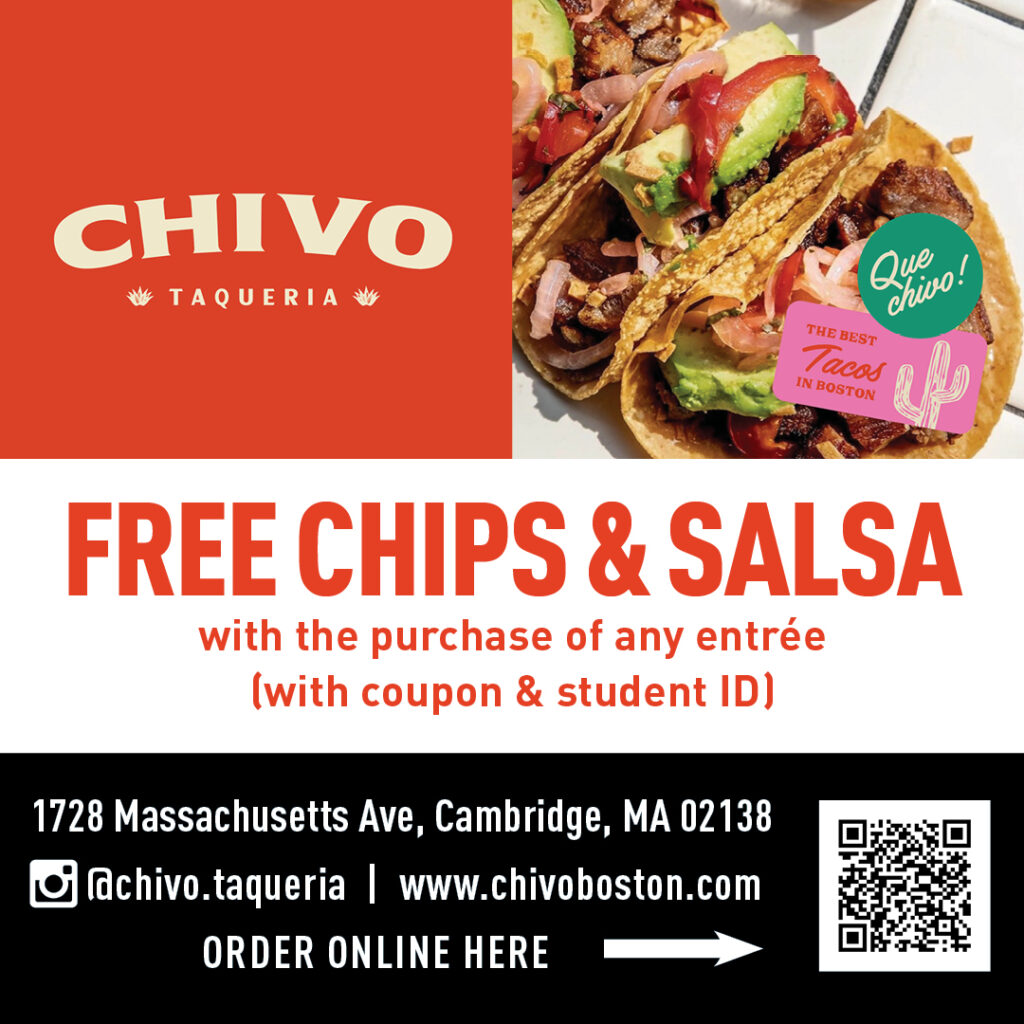
The meal overall was delicious and flavorful, a necessary combination after eating ramen noodles and cereal in a small dorm. For students craving to try the Cubano or other dishes served at Cafe Habana, the Campus Clipper is offering students a discount when they present the digital coupon below with their valid student ID.

Statistically speaking, there is one positive to commuting to college–saving money. This post is going to reinforce your decision to commute, because it is a smart one. While it may sometimes not feel worth it, commuting from home will save you thousands in the long run.
For this post, I have done some research on local dorm and apartment costs. I will be focusing on Boston. According to the Boston University International Students & Scholars Office (ISSO) resource page, there are an estimated 250,000 students in Boston. Despite being home to many students, the prices are far from college kid friendly.
Many college students reside on campus in the school affiliated housing. Dorms are usually small rooms where students live with roommates. Despite living communally and sharing facilities, the prices tend to be astronomically high.
I have elected to look into four Boston colleges and universities housing costs. While it is only a small percentage of the colleges in Boston, I believe it will be representative of most housing costs, as between the four there is only a slight discrepancy.
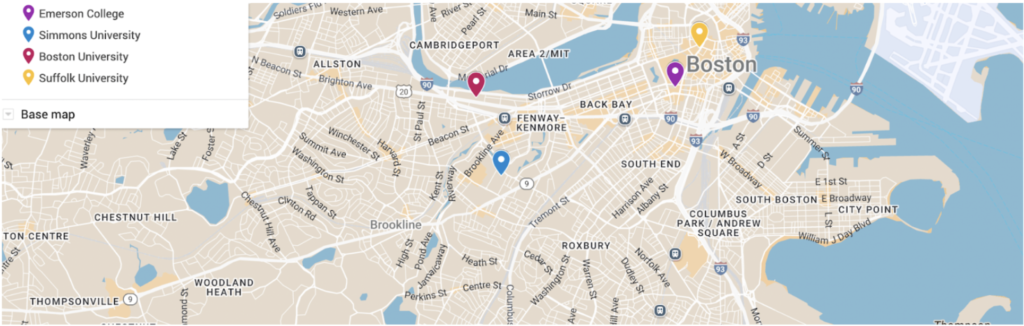
The four colleges I looked into are:
The colleges/universities are all located in different areas of Boston. I pinned each location on the map to depict their distance.

My college is located near Downtown Boston, Chinatown, and the theater district. Located right in front of the Boston Commons, the school is in the heart of Boston. Housing is expensive; the college website provides an estimate of $21,652 for a year of housing for a standard double. This estimate includes housing and a meal plan.
I lived in the dorms my freshman year. Emerson College guarantees housing and ‘requires’ all students to live on campus for three years. If you decide to commute or live off campus you must fill out a form relinquishing your right to guaranteed housing.
My freshman year I lived in Little Building, the freshman only dorm. I was extremely lucky with my housing assignment as I was given a suite. It was equipped with a bathroom and the rooms were large. However, most people are not lucky and are placed in small rooms without bathrooms.
Little Building is particularly unique as there are lightwell dorms. These dorms are small and have one window that does not go directly outside. The architecture of the building creates a column where dorms face other dorms. Natural lighting is sparse in these dorms only coming from the open gap above. If the window blinds are left open other people can see into your room. It is definitely not worth the high cost for people stuck in lightwell dorms.
Well I have no experience with the dorm conditions in surrounding Boston colleges, I will be listing their prices for reference.
This university is the most expensive on this short list of colleges, with the official Suffolk website estimating room and board to cost students $22,782. This is the price for a standard double, without a kitchen, and the required plan C meal plan.
Boston University has many different types of housing. However to live in a standard dorm (either a double, triple, or quad) it costs $19,970 according to their housing cost breakdown.
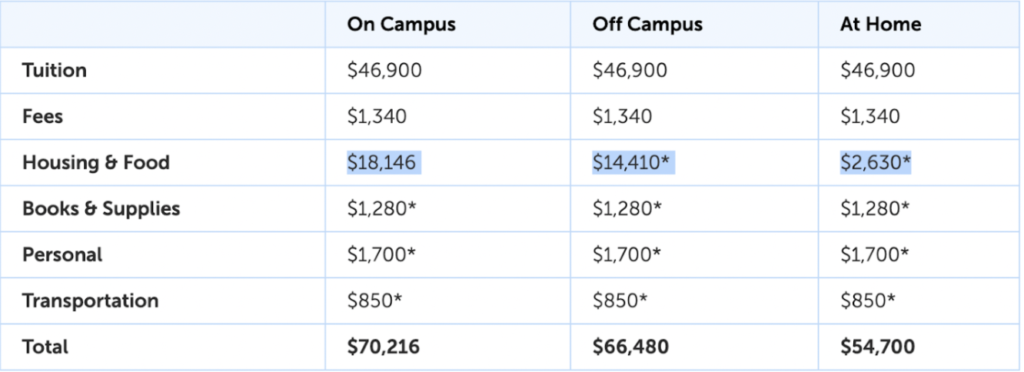
Simmons University provides a breakdown of estimated student costs on their website. To live on campus it costs an estimated $18,146.

Again, this chart emphasizes the amount that commuters save by living at home. While the off campus and at home numbers vary from student to student, the at home is drastically different.
Dorming is not the only option for college students. Many colleges don’t guarantee housing for all four years, therefore most people need to live off campus at some point.
Apartments in the city are small and costly. According to Apartments.com Boston is 115% more expensive than the rest of the country’s rent. Apartments range in cost, so sometimes you can get lucky. But even if you win the Boston lottery and find an apartment with a few roommates that will cost you $1,000, you still will be spending $12,000 for a one year lease. This doesn’t include utilities.
I decided to do a quick search on apartments. Using Apartments.com I found a few options. First I decided to use Emerson College as a marker. For anything remotely close to campus you will be paying at least $2,000, if you plan on living by yourself. I found one apartment slightly farther away, but still walkable, with a roommate the rent would be a reasonable $1,500. This apartment only includes a water utility.
Across the many apartments I searched the average rent seems to be around $1,500. Therefore you will be likely spending an estimated $18,000 to $24,000 yearly for a small apartment that might not include utilities.
The farther out of the city you go, prices get more reasonable. However, from my own experience looking into apartment living over the past few years, Massachusetts is expensive, even outside of Boston. Not only will you still be spending a decent amount of money, but the farther you go from campus, even in places where you can take the MBTA, you will have to factor this commute into your schedule.
Living from home and commuting to school undeniably saves you money. According to the Simmons University estimated costs it will save approximately anywhere from $11,000 to $15,000 dollars. If you do it for multiple years, that adds up to a lot of money, quick.
College is already so expensive. Tuition prices require most students to take out loans, putting themselves into debt. If students can save any money in the four years of undergrad, logically they should.

By Isabel DeSisto
Isabel DeSisto is a senior majoring in Writing, Literature, and Publishing at Emerson College. She is an avid traveler and is always looking to go on a trip. While adventurous, there is nothing she enjoys more than hanging out with her dogs and reading a book.
For over 25 years, the Campus Clipper has helped college students in New York City—and later in Boston and Philadelphia—save money and succeed in city life. We offer a digital coupon booklet with discounts on food, clothing, and services, plus an Official Student Guidebook with real advice on how to navigate college life in a big city. Our internship program lets students build skills, earn money, and publish their own e-books. Follow us on Instagram and TikTok @CampusClipper, and sign up for our newsletter to get deals straight to your inbox. To access the digital coupons, scan the QR code on our printed card—available in dorms, student centers, and around campus.
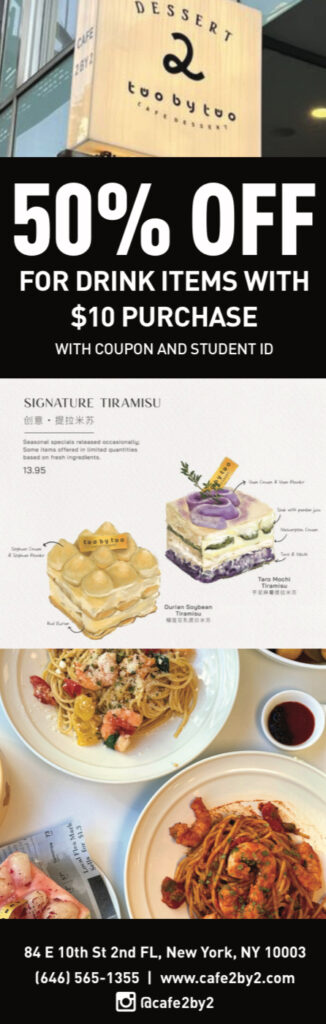
The second day at my new university ran from 10:00am to 5:00pm, leaving me both exhausted and hungry. I had been eyeing one cafe that also seemed to be a dessert shop and restaurant in the East Village area. While roaming the neighborhood, I stumbled upon it multiple times, but hoped to try its Asian-inspired treats with a friend. I asked Yeyya Wane, a new peer from school, to join me in taste-testing the delicacies offered at Cafe 2BY2, located just around the corner from New York University.
As with all meals, we first selected our drinks of choice. The menu showcased many sweet and floral drinks, while others were coffee and chocolate based. I placed an order for the gardenia milk tea, a light and sugary iced beverage, necessary to wash down our savory entrees and thick slices of cake. I sensed mild notes of an evergreen fragrance as I sipped. Yeyya enjoyed a signature fruit tea.
“The fruit tea was refreshing, with a distinct citrus flavor,” she said, contently. “A subtly sweet drink, perfect for the summer time.”
The entrees arrived at our marble table, perfectly lit with a heavenly ring light to my left. The classy and delicate furnishing complimented the tasteful drinks and dainty desserts, though our main courses were wildly different.
My eyes lit up at the sight of my pepper-salt chicken wings, both drums and flats, served in a pastel yellow ceramic bowl. The entree comes with six pieces of battered and fried chicken, dusted in herbs and seasoning with crispy coating for texture. It’s hard to find a not-overly greasy chicken wing. These bites, although not greasy, were full of juice and flavor. Yeyya sampled some after she indulged in the coconut shrimp bowl with fries.
“The wings were crunchy on the outside and tender on the inside. They were well seasoned without being too salty,” Yeyya reviewed. “The shrimp had a strong coconut flavor…it was more breadcrumb than actual shrimp.”
To cleanse our palettes, we each chose a slice of cake, served in mighty portions on elegant dishes. As a Filipino-American, I obviously desired the pandan coconut tiramisu flavor. The beautifully split layers give the dessert a mouth-watering look, even for those unfamiliar with the tropical plant. Each bite had a heading mouthful of classic pandan tartness and rich frosting.
For Yeyya, she found the Thai tea and Ovaltine tiramisu as a delightful way to wind down from the night.
“The flavors in this were very subtle, I felt like the Thai tea overpowered the Ovaltine,” However, it was the perfect amount of sweetness and didn’t feel too heavy.
Overall, my experience at Cafe 2BY2 was lovely. It serves as both a quiet brunch cafe, a quaint dessert place, and a cutesy snack time establishment.
“The floral decor made Cafe 2by2 the perfect place to snap an ‘IG-worthy’ picture. The food came out fairly quickly and overall service was good,” Yeyya happily concluded.
Campus Clipper is offering students a discount at Cafe 2BY2 when they present their student ID and digital coupon below. This is a perfect location to hit up after a long day of classes and meetings at New York University.

After another tumultuous and exhausting day at back-to-school orientation, I navigated several trains after the orange and yellow line were announced to be malfunctioning. The rainy day crept up on me, and I was drenched by the time I arrived to 14th Street, both in sweat and muddy puddle water. In that moment, all I wanted was good conversation and a sweet treat. Thankfully, Brady and I had agreed to spend an evening hour at Schmackary’s, a specialty shop with a knack for baking batches of cookies, situated just around the corner from New York University.
The colorful storefront and vast glass display of cookies may be overwhelming to some, but exciting to others. Brady and I were thrilled at the prospect of indulging in such a wide selection of flavors, as we both have big sweet tooths and big stomachs. We picked six different cookies, all of which were about as big as Brady’s hand. I also selected a Cinnamon Toast Crunch Rice Krispie treat, which was also rather large in size.
“So so good. Very sweet! It had Cinnamon Toast Crunch cereal within the Rice Krispie and a sweet cereal milk glaze holding it together. Nice sweet frosting on top,” Brady gushed. “I wouldn’t normally gravitate toward Rice Krispies, but this was so good. Definitely recommend!”
This extremely chunky and thick treat had whole pieces of cereal and a smooth layer of cinnamon frosting atop. Some of our cookies paired nicely, like the Cookies and Cream, Worms n’ Dirt, Peanut Butter Cup, and Classic chocolate chip.
“The Worms n’ Dirt is super chocalate-y in the best way. The gummy worm on the top was not stale at all, which you might expect from a cookie. Almost better than a normal gummy worm,” Brady observed. “Chocolate lovers will love these.”
I found the Peanut Butter Cup to be the most intriguing, as it was a vegan selection and noted as a fan favorite. This baked good is characterized by its use of dark cocoa, peanut butter, peanut butter chips, and semi sweet chocolate, which create a heavily sweet and salty cookie.
“The Classic chocolate chip cookie [has a] very interesting flavor, a bit different from a normal chocolate chip cookie but it might be for you!” Brady commented. “Cookie and cream [was] probably my favorite of the ones I tasted. The frosting was really delicious and sweet.”
As for the two non-chocolate cookies, we deeply enjoyed the Funfetti and Stay Gold cookies. Schmackary’s swap out the cookies flavors on a monthly basis, with the Classic and the Funfetti as the two core pieces of the establishment. Cookies and Cream typically will be on the menu, except during the winter season, where Red Velvet takes it place.
“The Funfetti cookie [has] super good frosting—it makes me feel very nostalgic. [The] sugar cookie taste is really delicious,” Brady said. “Stay Gold frosting is like eating lemon fruit loops. Cookie itself was good!”
The Stay Gold cookie was my personal favorite, as I love all desserts with a lemon tartiness. Though I did appreciate the custom NYU purple frosting on the Funfetti Cookie for students residing nearby. Both treats were soft, chewy, and sugary. The experience overall was a perfect pick-me-up after such a hectic day back in the city.

Just within walking distance of the NYU campus, Schmackary’s is an excellent choice for students to visit, especially considering the discount they can receive through the Campus Clipper. Eligible students can display the digital coupon below and their valid student ID to claim the deal. Instead of venturing to Insomnia Cookies or Crumbl for overpriced baked goods, New Yorkers are much better off visiting the locale when in need of a delectable sweet treat.

It’s been a pleasure, thus far in Niche-ing New York City, to pretend we live in a perfect world – one in which there’s a talent for everyone, everyone has the time and the resources to practice their talent, and no one ever feels lost, exhausted, or untalented. It’s no secret to any of us that this world will never be perfect, and – now that we’ve explored ways to find and hone our skills – it’s important to think about ways to push through the hard parts. There will be times when work, the news, the world will exhaust you to the point that you can’t be bothered to immerse yourself in your talent, to the point that you can try your hardest at your talent and still feel untalented.
This feeling can have disastrous and lasting effects. When I was nine, my mom enrolled me in an art camp because it was closer – and way cheaper – than the day camps offered by the YMCA. Unknowingly, she helped me discover what would come to be a favorite talent of mine, one that was immune to the mind-numbing effects of being forced to learn a skill in school, and one that I was immediately and inexplicably good at – at least, when I was given the chance to try it. Drawing was all I did from then on, in classes, all over my homework, during every school break. It was fun for me and it was incredibly validating to hear how good I was at it – a combination that, prior, I had never experienced.
As I entered high school, and classwork and extracurriculars began to take up more of my time, I could feel it dwindling. But it was the COVID outbreak in the second semester of my freshman year that killed it. Like everyone, I was incredulous, then, gradually, depressed. I had the most free time I’d ever had in my whole life – and four years’ worth of art supplies accumulated – and I did want to draw. I just couldn’t.
My mind was numb and nothing inspired me. I was exhausted mentally from a year spent sleeping through my Zoom classes, staring out the window, and doomscrolling on TikTok (though I’m not sure that term was around then). Since 2019, I have been able to complete exactly one (1) piece, and none that I’m proud of. But don’t worry, please – it’s not that my art block lasted six whole years, but that the two years of pandemic-induced art block made me forget that I was good at it, that I enjoyed it. It was, in some way, replaced by writing, a new talent that I discovered when we returned to in-person class – and school kept me busy with it. Then, I made the natural decision to major in English and Communications and spend my free time engaged in work and research, and suddenly I had no time to make up for the six years of skill I had lost.
So how am I going to fix it? And how can you fix this feeling of talentlessness when it inevitably happens to you?
The first thing I did was take my art supplies out of the box they’d been in under my bed. Simply having them out, in my periphery and often in my way, ensured that I couldn’t forget about art again. I took a few of my favorites – my charcoal pencils, my mixed-media paper, and my Copic markers – to school my freshman year and proceeded to do nothing with them. But still they remained in my way. Next, I revisited some of my favorite YouTube artists (if you need recs, DrawingWiffWaffles, Jazza, and elliotisacoolguy) and, in watching them, subliminally reminded myself of certain techniques and skills I now struggle with, and that I actually enjoy art.
Here’s the kicker (and you can’t make fun of me for this): last fall, I scrolled past a picture of Jeff Buckley some fan account had posted for his birthday. I did a digital double take, and when I scrolled back up I was hit with a rush of adrenaline I hadn’t felt in years – I was inspired. For the first time in two years, I opened my sketchbook and put pencil to paper. I worked for an hour or so, lighting a candle and listening to his music for some added immersion. When I finished, I stepped back with a heaving chest and a manic smile on my face. It was horrible. It was too bad, even, for me to show you here. It might be the worst thing I’ve ever drawn. But I loved creating it. And I learned from it – the next day I flipped the page and tried again to recreate a different picture. It was also bad, but I loved drawing it just as much.
Your talent is something you can learn to love doing even when you’re bad at it. And it is essential that you do, if you want to avoid the six years of feeling like there’s nothing you are good at. When you can love doing it even if you hate the product, it becomes your best outlet when social media has numbed you, when your nine-to-five has exhausted you, rather than another activity so stress-inducing you’d waste the day bedrotting to avoid it. Never allow yourself to keep it in a box under your bed, to forget the joy it gives you when it feels like nothing will ever make you happy again. If you already have, here’s your reminder to take it back out and put it in your way, give it one last try – it could change your life.

Physical and mental health go hand in hand — take this coupon and your Student ID to get 10% off any fitness package at Nimble Fitness!
By Lauren Male
Lauren is a senior at Pace University majoring in English and Communications, with a minor in Journalism. She is pursuing Pace’s M.S. Publishing program. When she’s not reading, Lauren can be found trying new coffee shops, thrift shopping, and spending all of her money on concert tickets.
For over 25 years, the Campus Clipper has helped college students in New York City—and later in Boston and Philadelphia—save money and succeed in city life. We offer a digital coupon booklet with discounts on food, clothing, and services, plus an Official Student Guidebook with real advice on how to navigate college life in a big city. Our internship program lets students build skills, earn money, and publish their own e-books. Follow us on Instagram and TikTok @CampusClipper, and sign up for our newsletter to get deals straight to your inbox. To access the digital coupons, scan the QR code on our printed card—available in dorms, student centers, and around campus. Open publish panel

Two weeks ago, a Japanese restaurant opened its doors to customers, made up of families, employees, and students alike. Torizaku, just around the corner from New York University, is a new establishment in the heart of downtown Manhattan. Yeyya and I ventured to the up-and-coming locale for an evening of drinks and bites after our last day of the first week back at university. We were drained, maybe even sucked out of life. Our spirits lifted once the drinks were served, only enhanced by the extravagant foods and rich dessert.
I sipped on the best glass in New York City, Torizaku’s very own yuzu cocktail. This iced drink is made with yuzu sake, passion fruit puree, and Prosecco, all topped with club soda. No squeamish faces were made. Neither of us could taste the unsettling metallic pang that often comes with alcoholic beverages. The highlight of my entire night, even when taking into account the karaoke basement and billiards bar that would later come, was in the form of a chilled refreshment. My citrusy cocktail was a cooling and dizzying spectacle. I would return simply just to have another glass.
“The drink had a strong mango flavor without being overly sweet,” Yeyya commented on her house special mango mocktail. “It was refreshing and light, great for a summer evening.”
Our small bowls arrived shortly after we ordered: complimentary seaweed salad, kimchi, and edamame. A starter plate of gyoza and takoyaki followed.
“I really liked the seaweed, it was super flavorful. I really enjoyed the chewy, but firm texture as well,” Yeyya noted. “The kimchi had a very strong flavor, and a good level of spice. It was very crunchy, which I liked.”
The crunchy kelp-green slivers of seaweed perfectly mellowed out the strong flavors of our takyoyaki. The crispy breading, topped with kewpie mayo and fish flakes, housed a piping hot gooey and chewy center. It was takoyaki as takoyaki should be. The thick kimchi drastically contrasted the salad, with a deep and spicy flavor to cleanse clients’ palates from the meaty appetizers. The juicy nappa cabbage heightened my senses as I dug into a portion of the pan-seared gyoza. The crispy dumpling wrappers were slightly greasy, though encased a mouthful of tender pork filling.
“[The] chicken meatball skewer was my favorite dish out of all of them. The meatballs were so tender and had a subtly sweet flavor,” Yeyya said, once she quickly finished each skewer. “The [chicken wings] were fully cooked without being dry. They had a great char to them that added to the flavor. The [chicken thigh] was very soft, but the skin added some crunch, which I enjoyed.”
We additionally ordered the enoki mushroom, zucchini, and asparagus skewers in an attempt to be healthy. Each were enjoyable and deeply savory, as they were flavored with tare, a hybrid glaze created using thickened soy sauce and sometimes mirin, sake, or honey.
Two bowls of gelato ended the night: four total scoops of chocolate and matcha. Both flavors were equally delightful, and successfully washed away the mix of flavors from the night.
“The gelato was so creamy and rich, without tasting artificial. Both flavors were amazing, I couldn’t decide which was my favorite!” Yeyya enthusiastically reviewed.
The dusk grew into a deep darkness, and the lively streets of Greenwich Village began to roar. A lovely Friday night was underway, and the August air invited city dwellers to dance and party. The drinks and platters offered at Torizaku are a spectacular way to start an evening, especially for student in lower Manhattan. Campus Clipper is offering students a discount while the restaurant is in the stages of its grand opening. To redeem, customers must show the digital coupon presented below, along with a valid student ID.

By Isabel DeSisto

My commute to college feels as though I am making an attempt to collect every form of transportation. To attend class I must travel in a car, then a train, and then finally the subway. If it were practical to travel by plane and boat, then I would really have a collection to boast about.
My schedule is built around this transportation. A factor many people forget to consider when commuting into the city is that if you aren’t going by car you are going on someone else’s time. In order to commute you must be aware of the transportation schedules so that a proper class schedule can be built.
I have never been a morning person, so I pretend 8 a.m. classes do not exist. Instead my first class starts bright and early at 10 a.m.. Unfortunately I can no longer roll out of bed in my pjs and run to class ten minutes before it starts. Now I have to wake up early to make the train that will get me to campus on time.
My commute to campus takes an hour total. However, because the commuter rail, a train that spans a farther distance from Boston than the subway, has a strict schedule, I end up having to wake up three hours before class.
So at 7 a.m. I wake up and get ready. I have to make sure all of my essentials are in my bag–I can’t run back home to grab homework or lip gloss. Once I’m ready I sit in my car for a minute letting it either cool down or warm up, depending on the state of the unpredictable New England weather. This has become a ritual that allows me to wake up and be in my own space for a few minutes before I am surrounded by many others for the rest of the day.
Luckily I have two trains I can get on, an earlier one at 8:13 or a later one 30 minutes later, so there is some room for delays, but not too much. If I miss the later one, I will definitely miss a class, which will impact my grade quickly. Normally to air on the side of precaution, I chose the earlier one. The commuter rail is predictable, but the MBTA (Boston’s subway also known as the T) is much less so. I prefer to be prepared.
I drive my car down the road to the train station. The radio plays some random song quietly. The ride is much too short to hook up my Bluetooth, so I never bother. I pull in and try to find a parking space in the packed lot.
I pay for parking–most of the time. If I forget I can count on a nice bill making its way in the mail. I walk towards the platform checking my bag one last time; leaving something in my car feels worse than leaving it at home.
Once on the train I show my digital ticket and try not to fall asleep. The internet is always comically bad, so I either read or listen to some downloaded music. Sometimes, if I was too busy the night before, I do homework. The ride goes by fast, normally. I know the stops well and the conductors are all familiar faces at this point.
Once we get to North Station everyone exits. People throw away their coffee cups, others go to stand in the Dunkin line that is only growing. Some exit the building, but many people, including myself, walk straight to the underground trains.
In Boston the T are categorised by color. There is the red, orange, blue, and green line. I can take either the orange or green, the flexibility comes in handy as frequently one or the other is down. Depending on which is running and which is sooner, I get on, standing as they are often packed. I hold my bag as close to myself as I can to try to make space. I disassociate as people talk or yell.
Eventually we get to my stop and I exit quickly. The subways are stuffy and humid and I need the outside air. I leave and walk towards campus, which is only a short walk.
Now that I still have an hour before class starts I walk through the Boston common (a beautiful park right across from my campus) when the weather permits. If it is cold I go to the classroom early, turn the lights on, and wait for others to appear.
The journey to campus isn’t horrible, but it is hard to balance classes around the trains, and it gets costly. Round trip, the journey costs about twenty five dollars. The semester pass is over a thousand dollars.
Luckily my college only allows us four classes per semester, so I stack them. The first semester I did all four on one day forcing me to be on campus from 9 a.m. to 7:45 p.m. two days a week. The days I was in class were long and exhausting. The days that I had off I spent catching up on all my homework and readings. It was difficult to balance work, school, and a social life, so it was a schedule that I would never recommend.
The second semester I commuted I took three classes in person and one online. This balance was much better, and I was able to do all the classes back to back. This upcoming semester I have enough credits to take just three classes. Therefore I only have to commute two days a week. Even so, travelling is still exhausting and time consuming.
There are many benefits of taking this journey, even if it is difficult. This blog is going to cover the positives, the negatives, and my tips as a seasoned commuter.

By Isabel DeSisto
Isabel DeSisto is a senior majoring in Writing, Literature, and Publishing at Emerson College. She is an avid traveler and is always looking to go on a trip. While adventurous, there is nothing she enjoys more than hanging out with her dogs and reading a book.
For over 25 years, the Campus Clipper has helped college students in New York City—and later in Boston and Philadelphia—save money and succeed in city life. We offer a digital coupon booklet with discounts on food, clothing, and services, plus an Official Student Guidebook with real advice on how to navigate college life in a big city. Our internship program lets students build skills, earn money, and publish their own e-books. Follow us on Instagram and TikTok @CampusClipper, and sign up for our newsletter to get deals straight to your inbox. To access the digital coupons, scan the QR code on our printed card—available in dorms, student centers, and around campus.