
Posts Tagged ‘college’

What I Learned in My Public Speaking Class

Tuesday, February 22nd, 2011

originally appeared on speaking-effective.kethal.com

Given a choice between Design of a Newspaper Page (or something similar to that) and Public Speaking, I chose the latter without hesitation. I have always loved to speak in front of large groups, despite the fact that I often trembled inside. I can manage my nerves well, though, and I enjoy delivering my message; therefore, I was eager to learn new skills through this class.

Unlike me, there are many students who are petrified to take a public speaking class because they hate standing in front of people and talking to them, or simply because they believe that they will never need speaking skills for their career. If this sounds like you, let me assure you: whatever your future profession will be, you will definitely have to make presentations, whether you like it or not, so why not learn it as early as possible and be prepared?

Since many universities oblige you to take a public speaking class anyway, I would suggest that you do it during your first semester, as it will help you do better in many of your classes. Here are some useful things I learned in my public speaking class:

1. Everyone is nervous while speaking in public, no matter how confident he or she looks. Even your professors feel tension inside. It is just not comfortable to face a large group of people and have their eyes and ears turned at you.

2. Developing your public speaking skills means learning how to control your fear and delivering your message successfully. The more often you practice what you learn, the more confident you will feel delivering every other presentation, so you should use every opportunity to talk in class, whether it is a formal report or a mere answer to someone’s question.

3. No matter how interesting your presentation is, it is always hard to listen if there are no visuals, and don’t you hope for a “first-time student discount” (meaning that the audience will not sympathize with you even if this is a debut). Therefore, you should always do a short Powerpoint presentation, prepare handouts or simply draw a poster. Anything works, as long as there is some kind of visual back up for your presentation. If there are names that the audience may not know, you should write them on the board, especially if their pronunciation is not well-known. When your listeners see the information in front of them, they understand it better and remember it longer.

4. There is more than one type of audience: friendly, indifferent, neutral, and hostile. The easiest kind to deal with is the neutral one, as they are the material that you can work with. You can tell them whatever you want, and it is up to you to keep them interested. Friendly audience is not as easy as you suppose it is because these listeners usually know who you are and think highly of you, so there is no way you can deliver a presentation that is not as strong as your previous one. Otherwise, they will easily get bored and won’t pay attention. The hardest task is to engage an indifferent audience, as they are not interested in your topic, or you, and will most likely sleep through your presentation. As far as hostile audience is concerned, they are the most fun group to deal with, as it is your job to change their mind about you or the topic you are talking about. You have to be well-prepared and predict what kind of questions may be asked and what the audience’s objections will be. Knowing the type of audience is a must, as it helps to deliver the message in the most effective way. It can be compared to researching on student savings: you should know before you go which place may give you the best deal and how to get this deal from them.

5. Eye contact is powerful. If you stare at your notes, or, what’s even worse, read from the page, no one will listen to you. People will automatically assume that you are poorly prepared and have no idea what your presentation is about, and feel like listening to you is a waste of time. A good idea is to create an outline (on a piece of paper or index cards) with major points you are going to make. Write down quotes from experts, if you are using any. With this material, you can spend more time looking at your audience to study and react to their facial expressions and gestures. For example, if they look confused, ask if they want you to repeat or clarify what you said. If they yawn, you should probably give them an interesting piece of information that you were saving for later.

6. Once your presentation is ready and your outline is completed, you have to practice. You may need to record your voice, listen to it and repeat your presentation in front of the mirror at least 5 to 10 times, so that when the actual presentation takes place, you will be well-prepared and less nervous. Later on, when you become more experienced, you won’t need much practice. Still, 5 times is generally recommended. Just imagine how awed your classmates will be when you deliver your well-rehearsed informative presentation!

7. And finally, always leave time for questions. You may hate to be asked, but how else will you know that your message was understood and remembered? This is, perhaps, the most exciting part, as through the questions you can see whether your presentation was clear, what you should improve on and how the message was taken in general. The time you should put aside for questions is usually 3-5 minutes, so there is nothing you should really be scared of.

Ekaterina Lalo

You can find more of my articles on my personal blog www.nycvalues.blogspot.com or check me out on http://hubpages.com/profile/katenka_lalo

Also Check Out Great Campus Clipper Student Discounts!

Download our NEW App on iTunes.
Become a fan on Facebook and follow us on twitter and watch our YouTube videos.

Don’t forget to sign up for our bi-weekly newsletter for student promotions and coupons and download the coupon booklet NOW.


Share

To Be Or Not To Be…

Tuesday, August 10th, 2010

Let’s face it- higher education can be very expensive these days and living in a city like NY where nothing comes cheap doesn’t remedy the situation.  As a student, I found that my bank account was so often burdened by an array of bills- credit cards, phone bills (I swear, I barely use my phone!), transportation, buying a decent meal.  Any pocket change that I managed to come across was often devoted to things of great importance- hanging out with friends or attempting to keep up with the latest fashion trends (life is a runway, you gotta work it, honey).

These days, however, the dwindling economy leaves little to no room for many to even entertain these notions.  Many are just struggling to make ends meet. An inevitable concern for students is the ever rising cost of college textbooks. With its poor buyback value (bookstores will only buy used textbooks for a fraction of  its purchase price) and lack of relevance once classes are over, students are often reluctant to fork over so much change for a textbook.

Our friends at Shakespeare and Co. are trying to make students lives just a bit simpler with their rent-a-textbook deals. Their site, http://rental.shakeandco.com, makes renting and receiving books (delivered in as little as 24 hrs) a cinch and with over three million books in stock,  its more than likely that you will find exactly what you’re looking for at a fraction of the cost.  Love to use that neon highlighter or scribble side notes onto your text? NO PROBLEM. Shakespeare and Co. encourages you to do so without getting penalized for vandalism.

So if you’re looking for a cost effective, worry free way get your textbooks for the coming semester, Shakepeare and Co. is definitely the way to go! Hurry though- classes are right around the corner!

-Milka Adera, The New School ’12

Get great Student Discounts!

Download our NEW App on iTunes!
Become a fan on Facebook and follow us on twitter!

Don’t forget to sign up for our bi-weekly newsletter for student promotions and coupons and download the coupon booklet NOW!

Share

Late Night Creations

Friday, July 2nd, 2010

written by Sabina Ashbaugh

We always substitute an egg with two tablespoons of vanilla soymilk—a slight variation that leaves the dough runny and easier to mix with the cracked wooden spoon. The timer is set for 12 minutes, not 14 as the cookbook suggests, with a reminder at the six-minute mark to switch the top and bottom trays in the oven. Despite these careful discrepancies, accumulated over countless nights, our creations are never completely predictable. We speculate whether it might be the heat of the dimly lit kitchen, and that volatile summer breeze that seeps in through the windows and seems to soften the contours of the room.
Despite our many trials, my sister and I never fully plan our baking efforts, or even carefully measure out the ingredients of our amended recipes. The soymilk substitution, now a permanent step in the cookie making process, came from a late realization that the egg carton was deceptively empty. As if to support this impulsiveness, the planned desserts baked for family dinners—the pumpkin or apple pies, the blueberry cobblers, the cinnamon buns, the madeleines—are never as good as the spontaneous endeavors to satisfy late night cravings. The immediate satisfaction of these creations quickly assuaged the worries and anxieties amassed during school or work. Tasks divided and ingredients laid out, my sister and I get to work setting right the wrongs of the day.
It has been a year now since I moved away from home. Some months have flown by while others have painstakingly inched to a close, with pangs of homesickness and late night baking cravings that seemed to arise out of nowhere. Family, a concept that had seemed so natural and tangible just a year ago, has slowly been abstracted to stand for that sense of place so radically reconfigured after leaving for school. In times of stress, I often caught myself about to call the house with a confused plea of “What should I do?”
With distance I have come to realize how often I unintentionally underappreciated this form of support. I cringe at the thought that the ease and spontaneity of those nights spent baking are a lost bridge between my sister and I—treasured memories to look back on fondly but ones impossible to recapture. And yet the removal of this crutch has also forced me to examine how I will right the wrongs of the day in my own way—not by baking, but through the careers and choices that lie ahead.
Moving away is an exciting step towards independence and deciding how and what one wants to change in the world. In the midst of so many choices, the advice offered by family is a means of grounding oneself in times of transformation. Finding a niche in college involves exploring how one will contribute to society and improve the lives of others, but it also requires the recognition of the debt owed to those at home.
Growing up compels us to accept these recipes, relationships, and plans for future change. Family rituals become memories as traditions are re-made. It is important to maintain ties with those that helped us get where we are, and continue to want to see us succeed. Helping others starts by looking out for and appreciating those at home, and paying tribute to those left behind.

Find out more about Student Discounts!

Download our NEW App on iTunes!
Become a fan on Facebook and follow us on twitter!

Share

Make New Friends and Keep the Old: Making Plans

Wednesday, June 9th, 2010

Do you remember those two friends I talked about before?  The couple who recently got engaged, the guy in the Navy and the girl in college?  Well, now they’ll be farther away from each other than New York to New Jersey – try New Jersey to Washington…state, that is.  See, Navy Boy just finished his first two years of training, I guess it is, and after that comes his assignment.  In this case, he’s being sent to Washington State.  College Girl, on the other hand, is still in college, and will be for the next couple of years – not even taking grad school into consideration.  On the one hand, she could go with him.  However, for the Navy to pay for her housing Navy Boy needs to sign on for another six years – that’s a really long time.  College Girl would also have to go to school out there, and leave all of her family and friends behind for the foreseeable future.  Or, they can be separated for even longer.  It’s a tough choice, and I can’t honestly say which is better or what I would do, because their situation seems so extreme.  Navy Boy’s brothers are all in some sort of service; his younger brother is also in the Navy and is about to be shipped overseas, so I guess his family has adapted to these big changes and grown used to talking to each other over Skype only.

The reason I bring this up is because College Girl and I were recently making plans for next summer – like driving to Vegas once we’re both 21, or even just a day trip to DC when we both have the time.  These kinds of plans, though, can all fall through depending on where our lives bring us over the next year.  Like Navy Boy, just last June the thought was that he would go to Virginia…Washington is a lot farther away than Virginia.

There’s that Death Cab for Cutie song, “What Sarah Said.”  In it, Ben Gibbard sings, “And it came to me then that every plan / is a tiny prayer to father time.”  Now, okay, that song is about watching someone die, but those lyrics really work in any situation.  In two years, a year, none of us can really know where we’ll be no matter how many plans we make, or vacations we plan.  But we still make plans, hoping that despite everything else we’ll be able to meet up with so and so for this or that.  I’m not really one for change, but it happens every day regardless of my feelings or opinions.  So, College Girl and I will make our plans for trips across the country cause that’s what friends do, and Navy Boy and College Girl will make their plans to get married and talk every night, no matter where they are, because that’s what people who love each other do.  There you are, father time, a few more prayers to look over.

-Mary K

Find out more about Academic Discounts!

Download our NEW App on iTunes!
Become a fan on Facebook and follow us on twitter!

Don’t forget to sign up for our bi-weekly newsletter for student promotions and coupons and download the coupon booklet NOW!

Share

Chambers of Solitude: the October Schlump

Sunday, June 6th, 2010
Big Apple

New York City: you don't have to see all of it in a month

About a month into the fall semester, a phenomenon occurs that I refer to as the October Schlump. It’s easy to recognize: first-year students, (who every night up till then have turned Washington Square into a giant social playground,) suddenly disappear. For a few weeks they are conspicuously absent, and then slowly, as Halloween approaches, they begin to tentatively reemerge from their dorms. What happened?

I know, because I went through it. For students new to this amazing city, that first month is like a dream. So many wonderful things to see and do that were never available before; new friends to make, new places to go, new things to discover. But it really feels like a dream: there’s a constant sense that this is illusory, that at any moment you will wake up and this opportunity you worked so hard for will dissolve around you. When a new friend invites you to go to this party at their friend’s place in Brooklyn, you think, Brooklyn! When else will I get to see Brooklyn?! When you read about a new exhibit at the MoMA, you think, the MoMA! When else will I be able to visit the MoMA?! When you pass a new Mexican restaurant in the Village offering a two-for-one Margarita special, you think . . .  well, you get the idea.

This lifestyle is, of course, impossible to maintain. About a month in, you wake up one day, maybe around 5 PM, and think, what day is it? You realize that you slept through an entire day of classes. See, you meant to just take a short nap – it was 3 AM, you’d just gotten back from a party at a friend’s – Happy Wednesday! – and you realized you didn’t have any clean clothes, so what a perfect time to do laundry! You threw a load in the washer, and then came back up to finish that essay on Socrates – that’s what New York’s about, multitasking! – and about two pages in thought, I’ll just take a quick nap – an hour or two, tops. After all, you haven’t slept in two days, so it’s about time to give the body a little refresher. Now here you are, essay not finished, classes missed, your load of laundry having been removed from the washer and scattered aimlessly all over the laundry room floor by some jerk. And even after sleeping twelve hours, you still feel tired. Or not tired, more than tired – exhausted. Your resources have been depleted; nothing in you wants to get out of bed, go anywhere, do anything. The momentum is gone.

This is the October Schlump. Although skipping meals and missing sleep are major contributing factors, the Schlump is not a disease, at least not physically. It’s the mental state that settles in when you realize that you barely have any idea what you did in the past month. You were in constant motion, you went and saw and did a million amazing things, but you can barely remember any of them. Some of them you liked, some of them you didn’t, but which were which?

So, for about a week, you don’t go out. You stay inside, do homework, get lots of sleep, eat right, and figure out what to do next. In that time, you realize that New York City isn’t going anywhere. It won’t disappear under your feet one day; it will be there the next day when you wake up, and the day after that, and the day after that. You will have at least four years, at most the rest of your life, to explore. So after that week, when friends call you up and invite you to this or that, you can say no, not tonight, rain-check. You don’t even need to give a reason. You can (in fact, you must) spend a night in now and then. And you must do is reflect. You are swimming in a sea of new experiences, new stimuli, new ideas, and some are good for you and some are not. You can have all these experiences but if you never stop to reflect on what they mean, they are – literally – meaningless.

As anyone who’s lived in a dorm can attest, dorms can be a lot of fun, but they aren’t really the best places for quiet reflection. After my October Schlump, I began to seek out places I could go to be by myself, to think and ponder, to reflect and debate. I can’t give you the answers to the big questions of life that all college students confront during those four years – I don’t have them. But I can share with you come places I think will provide the stillness, the solitude, within the bustling metropolis that we call home, to find some of these answers. And I will call them Chambers of Solitude. More to come.

And in the meantime, if you need to a moment of calm and some advice on chill-axing, (sorry, I won’t use that word again,) go here.

Find out more about Student Discounts!

Download our NEW App on iTunes!
Become a fan on Facebook and follow us on twitter!

Don’t forget to sign up for our bi-weekly newsletter for student promotions and coupons and download the coupon booklet NOW!

Share

Make New Friends and Keep the Old: Looking Back

Thursday, June 3rd, 2010

On February 20th 2007, I turned 17.  In New Jersey, when a person turns 17, and if they have fulfilled all of the requirements, he or she is eligible for their license.  Well, I got mine – along with my first car (a 1990 Buick LeSabre, navy blue).  I was so in love with my car, and had so many plans for it…my parents had already gotten me a really awesome sound system to get installed, and I couldn’t wait to drive it down the shore for the first time.

Fast forward to March 4th 2007.  In New Jersey, high school juniors have to go take the HSPA, High School Proficiency Assessment.  The HSPA spans four days, and lasts about three hours each day.  March 4th was the first day for my class, and I wore my favorite tee shirt and most comfortable pair of “lounge” pants, and flip flops.  By the time the day was over, I was ready to get home and relax.  So of course no more than hour after I had gotten home, I got a call that I needed to go to my best friend’s house for an emergency band meeting.  Not exactly excited to get there, I nevertheless got in my LeSabre and started down my street for the easy two mile drive.  This is where things get fuzzy, because not halfway down my street I, for some reason, swerved, then over corrected, and ended up driving straight into the side of a house.

The first thing I did when I woke up, having passed out for probably a minute or two, was call my dad (not 911, of course, because that would have made sense).   I then texted my friend something along the lines of “I was just in an accident on my street.”  The friend I texted, my best at the time, got to me in record time, before my father and the ambulance he called on his way from the office.  Now imagine, I’m sitting there in my own blood, cradling my broken wrist; I didn’t know it at the time, but the front of my car was crushed all the way to the windshield , which was also cracked from my face meeting it (and that’s why they tell us to wear seatbelts).  After checking on me, my friend took it upon herself to knock on the door to make sure no one was inside and injured, ignoring the danger she could have been in from the now structurally unsafe house.  That being done, she came over the passenger side, which I had somehow slid too, procured napkins from somewhere and did her best to wipe the blood from eyes and mouth – she did all of this before any other help arrived, but checked first to make sure help was going to arrive at some point.  Now, you may wonder why I bring this story up.

I think about it sometimes, about her wiping blood from my face and staying with me until I left in the ambulance.  I think about it because just a little over a year after my accident, we were suddenly no longer friends.  I wonder how we could be so close, and care so much about each other, and how that could just end.  It’s horrible how the fact is that friends, no matter how close they are, can just grow apart.  It started with a fight that probably wasn’t even that bad, and then radio silence.  BOOM, no more friendship.  We still talk occasionally, and when I’m in town we’ve gotten coffee before, but there’s nowhere near, and never will be again, the closeness we used to share.

On the other side of that, there’s the friend who made the half hour drive to visit me in the hospital each of the five days I was there after the accident.  She brought me movies and real food, and even washed my hair for me after about three days of me living with the blood, glass, and vomit that was by then crusted into it.  Of course, with my broken nose I didn’t even notice how rank I was, so the hair washing was more for everyone else’s benefit, but that’s not the point.  I’ve known her for twelve years now, I believe; she actually was my babysitter when I was younger, fun fact.  Our relationship is probably more like sisters than friends, and we can go from laughing hysterically together to me wanting to punch her in the face.

I just wonder why that friendship is different from the other one.  There’s no denying that Friend B and I have had probably over a million fights, radio silence included, yet we’ve always remained friends.  I’ve questioned in another blog on whether or not some people are just more important in our lives, and I didn’t want to think that I could rate my friends like that.  But I guess somewhere inside I do, because the simple fact is that one of those friendships is over, and the other is just as strong as ever.

Find out about a great Student Discount!

Download our NEW App on iTunes!
Become a fan on Facebook and follow us on twitter!

Don’t forget to sign up for our bi-weekly newsletter for student promotions and coupons and download the coupon booklet NOW!

Share

VegEats! An Introduction

Wednesday, May 26th, 2010

Veggies: delicious, nutritious, and cheap!

Hi everyone! My name is Jon, and I’m going to be offering some guidance into the wonderful world of vegan/vegetarian-friendly eating in New York City. For those who aren’t sure, a vegetarian is a person who restricts consumption of meat and animal byproducts. There are several types of vegetarians: pesco-vegetarians, who include fish in their diets; pollo-vegetarians, who include poultry; ovo-vegetarians, who include eggs; and lacto-vegetarians, who include dairy products. These prefixes can be combined. For example, when I officially started identifying myself as a vegetarian three years ago, I was a ovo-lacto-vegetarian.

About two months ago, I began identifying myself as a vegan, which is a strict vegetarian (absolutely no meat or animal byproducts) who extends this philosophy beyond diet into other parts of life. This means vegans don’t use products made from materials like leather, silk, or wool, because these materials rely on animals and animal captivity to be made. Vegans also only use man-made sponges and avoid substances like gelatin, an ingredient in most marshmallows and derived from collagen found in animal bones, or beeswax, commonly used to make candles and produced over a long period of time by bees as an essential part of their home. This lifestyle may sound a little extreme to those who have not encountered veganism before, but when adopted mindfully for the right reasons, it can be a wonderful positive change for many people.

So you may be saying to yourself, well, now I know what they don’t eat; what DO they eat? I eat primarily fruits, vegetables, nuts, and grains, as well as artificial animal-free products such as tofu. When eating out, I often go for Indian, Chinese, Israeli, Thai, or Mexican, as these cuisines offer lots of delicious vegan options, or I go to one of the multitude of vegan/vegetarian-friendly restaurants in New York City. Many people when hearing about this diet have concerns about health, primarily about protein and iron deficiency. Vegetarianism and veganism are actually very healthy as long as the practitioner eats a variety of foods, pays attention to intake of nutrients, fats, and calories, and stays active, (which is true of any lifestyle.) In fact, studies have shown that limiting meat and animal byproducts can significantly lower your chances of major health problems, including heart disease, cancer, stroke, obesity, diabetes, even Alzheimer’s! The average American eats nearly double the amount of protein they need per day, and veg-eaters have numerous alternative to meat and animal byproducts to find protein, iron, and all other essential nutrients.

I’m so excited to help you find ways to eat healthy on a student’s budget. New York can be expensive, but there are lots of tricks to up your nutrients, help the environment, and keep your wallet (and belly) full. To get you started, Campus Clipper has wonderful coupons for great veg-friendly restaurants like Atlas Café, Indian Taj, Monster Sushi, Tahini, Wild Ginger, and many more! Check them out on the coupons page! Happy Eating!

Find out more about Academic Discounts!

Download our NEW App on iTunes!
Become a fan on Facebook and follow us on twitter!

Don’t forget to sign up for our bi-weekly newsletter for student promotions and coupons and download the coupon booklet NOW!

Share

Tips to Get You Through Your Finals Alive and Well

Wednesday, May 26th, 2010

Finals. It is perhaps the most dreaded word in the vocabulary of any college student – a term that signifies endless nights of studying and memorizing in the last desperate attempt to jam every last bit of information into your brain before test time. No matter how long you have been in college that word does not cease to terrify your poor little brain cells. However, there are certain things that you can do to get you through your tests and on to the freedom of summer vacation.

1. Put test information (day, time, and place) and paper due dates on a calendar. This way, everything will be in one location and you won’t have to frantically search for it later on. In addition, writing everything out will enable you to check for any conflicts, which you will be able to solve well before test time.

2. Schedule your study time in advance. Carefully think about how much time in the library each class will require and plan accordingly. Remember to devote time to those tests or papers with the nearest deadline first so you don’t end up studying for a Economics final on Monday when the test date is four days later.

3. Rewrite your notes. After long hours of studying, the information you are reading literally becomes a giant blur. Writing out your class notes allows your brain to remain active, which, in turn, helps you remember that important detail when taking the final.

4. Take some time to rejuvenate your brain. Studying non-stop for twenty-four hours straight is the worst thing you could do during finals. Your body needs to rest from time to time in order to remain alert. So call a friend and go to the cafeteria for an hour, watch an episode of your favorite show, take a power nap, do something that you feel will give your mind a much-deserved break. A little something I learned from a psychology class I took when I was a freshman is my favorite way to squeeze in a little down time for myself. It’s a technique called voice relaxation therapy. Visit this YouTube link to try. It’s short and sweet, and you will feel a hundred times better when you’re finished. Promise.

-Christina Brower

Find out more about College Discounts!

Download our NEW App on iTunes!
Become a fan on Facebook and follow us on twitter!

Don’t forget to sign up for our bi-weekly newsletter for student promotions and coupons and download the coupon booklet NOW!

Share

Tips for Choosing Your Classes

Tuesday, May 25th, 2010

With the freedom and independence that come along with the college experience, it’s easy to forget that we are here primarily to study and learn. Classes are an important part of college life and, thus, it is important to give a lot of thought into what you want to study each semester. That being said, here are a few things you should keep in mind when choosing your classes:

First, I would advise you to familiarize yourself with the requirements of your school’s core curriculum. The core curriculum is a set of mandatory courses that are specifically designed to provide students with a well-rounded education. Thus, universities and colleges mandate that their students take classes in a broad range of academic disciplines, such as mathematics, biological and physical sciences, the humanities, social sciences, and foreign languages. Depending on your school and your major, the core can take up to two years to complete – gasp! – so it’s best to know ahead of time what you have to take.

Second, use the core curriculum to your advantage! Most colleges and universities offer a number of different courses that can be taken to fulfill a requirement in the core curriculum. Thus, if you already know what you want to major in, look to see if there are any classes that can also count for your major. By doing so, you can: (1) Get a head start in completing your major, (2) Free up some time in your junior and senior years for fun classes or internships, or (3) Graduate a semester early. In addition, if you have not yet declared a major, the core curriculum is the perfect opportunity for you to experiment so that you can find out what fields of study interest you and which do not. You never know what you like until you try so do not be afraid to go out on a limb – that’s part of what college is all about!

Third, do a little background check on the professors who are supposed to be teaching the classes you are interested in. The website Rate My Professors is an excellent source for figuring out how a specific professor operates and what you can expect from taking his or her class. It is important to remember, however, that the reviews on this website are are the opinions of former students, and should be taken with a grain of salt. But, in my own personal experience, the ratings have been extremely accurate in depicting a given professor.

And finally, take the times of the classes into consideration. Although everyone has different preferences, I would advise you to schedule your classes when you are the most functional and active. In addition, I would recommend designating either a specific time frame in each day (i.e. 11:30-3:30, 8:30-11:30, etc.) or specific days of the week for your classes. I have found that it is a lot easier to do other things, such as sports, jobs, internships, and volunteer work, when your classes are arranged in a blocs of times or days.

-Christina Brower

Find out more about Student Discounts!

Download our NEW App on iTunes!
Become a fan on Facebook and follow us on twitter!

Don’t forget to sign up for our bi-weekly newsletter for student promotions and coupons and download the coupon booklet NOW!

Share

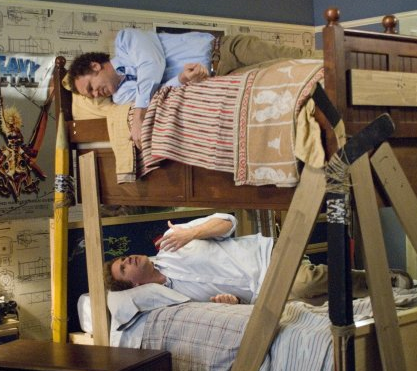
How to Choose a Good Roommate

Sunday, May 16th, 2010

image credit: reelmovienews.com

Finally, you are moving to the city. You will study at the university you were always dreaming about. However, there is one big problem: rent an apartment in the city will cost you an arm and a leg. How will you make ends meet? The answer is easy: get a roommate.
In addition to lowering your housing costs, you will always have a good company. Here are some tips how to make sure that it will be a pleasant experience.
1. Pay attention to age. Big difference in age may decrease your mutual understanding. Activities that you like may be very different, as well as problems you deal with. Try to find a student like you, who will have the same interests. you can even study together and help each other.
2. Ask your potential roommate about his/her schedule. If you study in the morning, you will need to rest during the night and do your homework in the evening. If your roomate comes late and wakes you up every night, you will not get enough sleep. Interrupted sleep is even worse than no sleep at all.

Ekaterina Lalo

Check out my blog at www.nycvalues.blogspot.com

Get a great Student Discount!

Become a fan of Campus Clipper on Facebook and Follow Campus Clipper on Twitter. Don’t forget to sign up for our bi-weekly newsletter for student promotions and coupons and download the coupon booklet NOW!  NEW!  Check out our App on iTunes!

Share