
Posts Tagged ‘sacrifices’

On Knowing What You Really Want Out of College: An Interview with Faith

Wednesday, August 19th, 2026

College is a period of life that is greatly idealized by both incoming students and long-time graduates. For the former, it is a symbol of hope. For the latter, its memory often holds a feeling of glorious nostalgia. The general idea of college life is one that carries excitement and promises major personal growth and achievement.

But how do you know which college journey is ideal for you? To answer this question, I sought the insight of my good friend, Faith, who graduated this past May from California Lutheran University, having taken full advantage of the opportunities made available to her, and is walking away summa cum laude, an alum athlete, and a seasoned explorer.

I first asked her whether she started her freshman year with a clear outline for her four years of undergrad—as many organized and eager students do—or embraced spontaneity and determined what was worth her time and effort along the way. She shared that “[she] didn’t start college with a detailed four-year plan. [She] came in knowing that [she] wanted a good education and that [she] wanted to swim.” However, “so much of what ended up defining [her] college experience wasn’t planned.” She learned to “just say yes to different opportunities,” and this is how she went on to intern, study abroad, and do research—not knowing what research entailed or that it was even an option. 
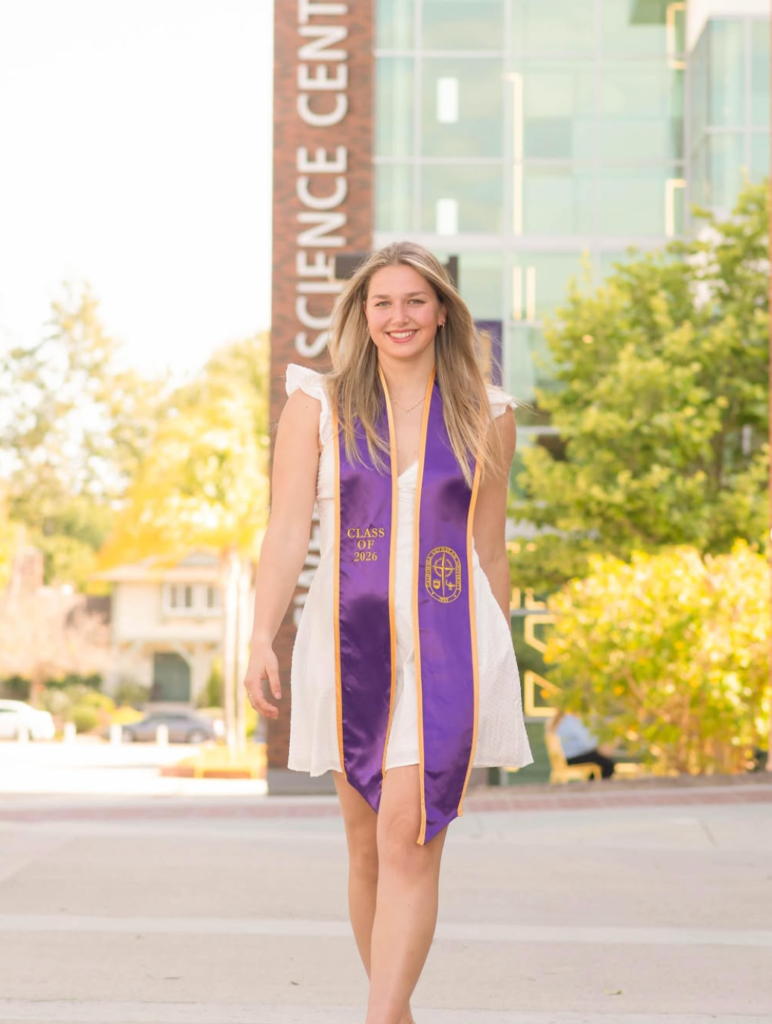
Faith in front of the Swenson Science Center—Home of CLU’s Environmental Science Major (from her graduation Instagram post)

This same mindset, to “choose [what you’re] passionate about, excited about, or [what] truly interests you,” led her to declare both her environmental science and Spanish majors. In fact, her dad encouraged her to adopt this perspective by explaining that “there are careers in any field out there. This is a decision that is affecting the rest of your life, and you can make money in any field.” So she took his advice and ran with it by choosing to immerse herself in what she loved.

But honoring her interests wasn’t possible without sacrifice. For Faith, “one of the biggest sacrifices [she] had to make was time.” As a student athlete, “[she] had early mornings. [She] was doing over 20 hours of practice a week and was also working a part-time job about 20 hours a week, had a full-time class schedule, a club that [she] was running, and was doing research.” But “learning how to prioritize and be intentional with [her] time was one of the most valuable lessons that [she] took away,” despite having “to say ‘no’ to things that a lot of people may want out of college—like going to parties, hanging out with friends, or spending time in the dorm.” She believes that the sacrifice “was worth it because it was true to who [she is] and aligned with [her] goals.”

And when all of her responsibilities began to overwhelm her, “having people to rely on, having a support system,” anchored her to her ability to persist. Her mom, who “became what [Faith] jokingly called [her] ‘momma-pist,’” or “mom-therapist” especially helped ease her mind during stressful times while she was at school. She explained that college is “a time when you are discovering who you are, saying ‘yes’ to all of these opportunities, and challenging yourself, and you cannot go through it alone.” Even if your support system comprises one person, “asking for help sometimes is not a sign of weakness but is a way that you can keep growing and learn how to face these challenges again in the future.”

As for knowing that she needed to break away from her campus borders to have a fulfilling college experience, Faith shared that smaller schools—like the one she attended—“can feel like a social bubble, so “immersing yourself in the community and seeing the real-world applications of what you might be studying in a classroom is just as meaningful as [the on-campus] college experience.” Her off-campus barista job and ability to study abroad in Madrid for four months allowed her to find value in engaging with opportunities beyond her campus borders. She was “challenged in ways that [she] never expected,” but being “pushed out of [her] comfort zone also made [her] more independent and gave [her] confidence that [she] could adapt to unfamiliar situations” and allowed her to meet “so many people from diverse backgrounds with different cultures and different ways of life, [opening her] up to a whole new world.”

So as you try to determine which aspects of college to lean into and turn away from, keep in mind Faith’s approach to making the most of it: “Stay open and stay curious.” Be willing to give your time to unplanned opportunities, and especially those “that excite you or that interest you.” Not all detours are setbacks. For Faith, “so much of what ended up defining [her] college experience wasn’t planned.” Thanks to her time as a student, she has come to understand that “every experience is valuable, even the ones that don’t end up being the right fit.”

So embrace every adventure in your college journey because, like Faith said, “The goal isn’t to do everything. It’s to find experiences that help you grow into the person that you want to become in the future.”


Want to take advantage of every opportunity—like 10% off your groceries at Mulberry Market? Say “yes” with this student coupon!

By Lauren Gascon 

Lauren Gascon studies Media, Culture, and Communication at NYU and enjoys discussing people’s relationships with each other and themselves. When she’s not on campus, you can find her café hopping, browsing bookstores, or enjoying lunch in one of New York City’s many beautiful parks.


For over 25 years, the Campus Clipper has helped college students in New York City—and later in Boston and Philadelphia—save money and succeed in city life. We offer a digital coupon booklet with discounts on food, clothing, and services, plus an Official Student Guidebook with real advice on how to navigate college life in a big city. Our internship program lets students build skills, earn money, and publish their own e-books. Follow us on Instagram and TikTok @CampusClipper, and sign up for our newsletter to get deals straight to your inbox. To access the digital coupons, scan the QR code on our printed card—available in dorms, student centers, and around campus.

Share

College in Less Than Four Years: An Interview with Poe

Thursday, July 9th, 2026

For many of us heading into our first year of college, discovering that we have the opportunity to graduate in three years or less may be cause for celebration. It would mean less money spent, less time enduring classes, professors, or classmates we may not enjoy, and less time waiting for our turn to break out into our chosen career field. Then, for others of us, the decision is not so obvious, and deciding whether or not it’s worth it to stick out all four years of undergrad may become one of the first major dilemmas in our professional lives. You may find yourself wondering if entering the workforce early might mean cutting short your enjoyment of your young life. If time is “relative” and “of the essence,” how do you determine how to spend it best? Well, to help those uncertain university students with such an uncommon opportunity answer this question better, I sought the wisdom of my friend Poe, an economics student at NYU who will be graduating in his junior year of college.

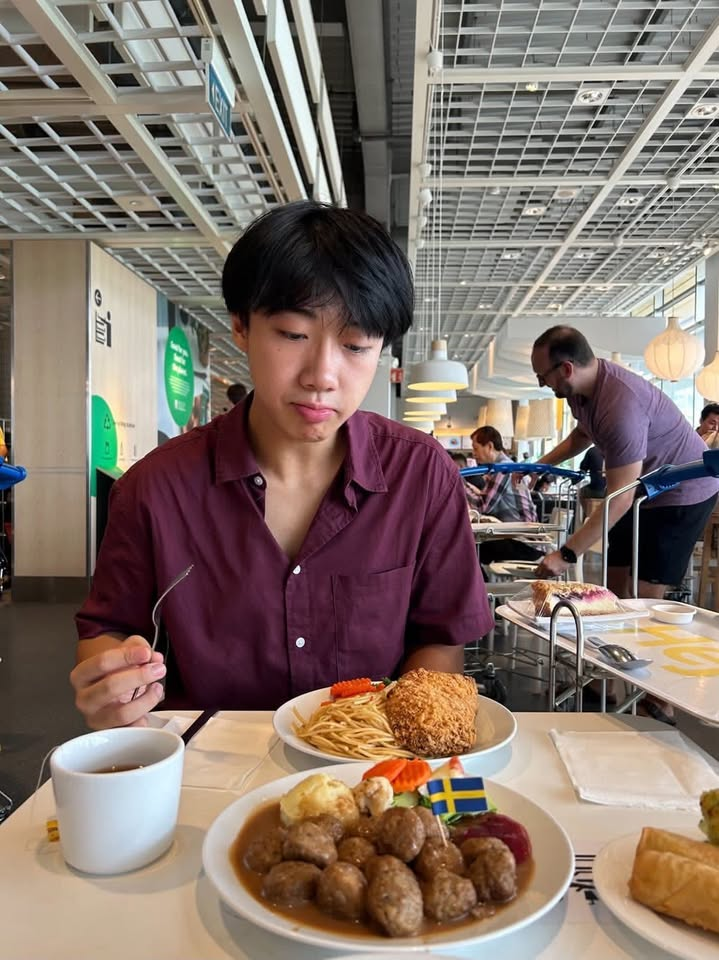
Poe taking a break from his busy life as a student to enjoy a simple pleasure, lunch at IKEA

When I asked Poe about his motivation for finishing college in three years, he shared about a set of circumstances belonging to a small portion of the international student population. He explained that, “as a passport holder of Taiwan, [he has] to enroll in mandatory military service for one year…Serving in the military would push [him] back one year in college, meaning that while others spend the standard four years to enter the workforce, [he] would have to spend five.” As a result, Poe opted to “graduate one year early,” which would allow him to “fulfill [his] service obligation while also not lagging behind [his] peers.

However, while what he described as “fear of failure,” or even, the fear of falling behind, may have been his initial motivator, it is not what has ultimately allowed him to make it this far. When asked which of his qualities he believes helped to see himself through to his graduation year, he noted his perseverance.

Completing 128 credits in the span of three years is a considerably daunting task, especially when you’re still standing at the start of your freshman year. Poe’s approach to mapping out his semesters began with an empty Google spreadsheet, which he has been using to keep track of “all the courses [he] needs to take…[across] the three years [he’s been] in school.” For Poe, “planning it out visually [made] it less intimidating and more achievable.” He then proceeded to turn his academic planning into scholastic success by studying “at least three days early” and “always [listening] in class,” and through all of the time he spent balancing classes, studying, and working, he learned the skill of persistence. 

I asked Poe how he attempts to cope with burnout as a working student with a full course load, and he shared this bit of insight: ”You are your greatest enemy.” From his philosophy courses he came to understand that “while there are external factors that affect your mindset, how that factor ultimately affects you is up to your own interpretation.” In other words, when you face disappointments or find your plans to have been derailed, you can beat yourself up and stew in the letdown, “or you can think about it as a chance for improvement. It’s all about the mindset.”

In this same vein, Poe admitted that as an early-graduating student, “you definitely will have to make sacrifices.” These could be your social life, hobbies, or time alone to rest, but balancing everything is possible; “it just depends on how strong your mind is at disciplining yourself,” and he is no stranger to life testing the strength of his mind.

He described for me his most challenging semester—when he had received his first F on a midterm. Afterwards, “[he] felt like everything was lost and had no motivation to continue.” Then, he remembered to not be his own enemy, and he gave himself a break to indulge in activities he enjoyed—like visiting parks, hiking, and working out. Apparently, this also included watching Pixar’s Hoppers, from which he offered the quote, “It’s hard to be mad when you’re part of something big”—a reminder “that in the grand scheme of things, we are just one of trillions of creatures on earth, all just trying our best.”

He offers this unique piece of advice to students looking to earn their degree early: “Take one or two philosophy classes… It will change your perspective on life, society, and purpose… If you really listen in class and ask yourself the same questions the philosophers asked, you will gain a better understanding of yourself as a person and how to navigate the world.” And, clearly, the opportunities he took to look beyond his major focus bolstered his overall focus to earn his degree.


Looking to get out of the books and indulge more in the things you enjoy? Check out this 10% student discount at Garlic New York Pizza Bar!

By Lauren Gascon 

Lauren Gascon studies Media, Culture, and Communication at NYU and enjoys discussing people’s relationships with each other and themselves. When she’s not on campus, you can find her café hopping, browsing bookstores, or enjoying lunch in one of New York City’s many beautiful parks.


For over 25 years, the Campus Clipper has helped college students in New York City—and later in Boston and Philadelphia—save money and succeed in city life. We offer a digital coupon booklet with discounts on food, clothing, and services, plus an Official Student Guidebook with real advice on how to navigate college life in a big city. Our internship program lets students build skills, earn money, and publish their own e-books. Follow us on Instagram and TikTok @CampusClipper, and sign up for our newsletter to get deals straight to your inbox. To access the digital coupons, scan the QR code on our printed card—available in dorms, student centers, and around campus.

Share

Chapter 2: The silent sacrifice

Tuesday, June 17th, 2025
My Commitment Post

I have always considered myself to be selfish. My parents say it all the time—and honestly, they are not wrong. As a kid, I was laser-focused on what I wanted. At the mall, I’d hunt down my stuff first, and the second I had it? I was ready to go. Didn’t care who else needed to shop; I had my things, I was done. 

When I grew up, the idea of being selfish started to haunt me. Sometimes, it hurt to think that maybe I was the person who always put herself first. Deep down, I wanted to be different. I wanted to be the kind of daughter who gave her whole heart to her parents. But no matter how much I cared, my actions never seemed to say it loudly enough. I was caught between wanting to give everything and not knowing how to express it, so I often said things I didn’t mean—things that probably sounded like the opposite of love.

Maybe that’s why when college decisions came around the corner, my heart leaned toward what my parents wanted. It wasn’t pressure, exactly— they never forced anything. But I could feel it. They saw their childhood in me. The chances they never got, the roads they couldn’t take. 

At first, I didn’t fully understand. I thought they were just being vague when they said, “It’s up to you.” But it didn’t take a genius to hear what they weren’t saying. I could read it in their eyes, in the way they paused, in the way they tried not to persuade me but persuaded me anyway. Their silence was filled with hope, and I felt it sitting beside me every time I opened a college portal.

I prayed for my college decisions to keep me in New York City. I grew up here—it’s home. And as the oldest daughter of immigrant parents, the thought of leaving felt like too much. I couldn’t imagine settling somewhere far and starting over without them nearby. But that didn’t stop me from wanting it all—to get into every school I applied to, to have the kind of choices I never thought possible. 

What I didn’t realize was that this second wish would send my life into chaos. I got into Columbia for writing and NYU for engineering. Two schools. Two dreams. Both in my city. Both too real to ignore.

On one hand, there was Columbia, an Ivy League—prestigious, poetic, the kind of place that would take my writing seriously. It felt like choosing the part of me that always struggled to express herself.  On the other hand, there was NYU, one of the best for engineering. Practical. Respected, which felt like choosing the part of me that thrived on building, solving, and understanding how the world worked. Which one do I choose? Which one is better for me? For my family? 

Whichever one I chose, I knew I would have to let go of a part of myself. My identity. Not because I didn’t want both, but because sometimes two dreams just don’t fit in the same life. 

In the end, I chose engineering — not just for me, but for the version of me my parents always believed in. I chose it because it was my first dream, even before writing. I chose it because I already was a writer, with or without a degree. And I chose it because it felt like building something, not just a future, but a bridge between who I was, who I wanted to be, and who I wanted to make proud.

Maybe I am selfish in other ways, but no rule says selfish people are heartless. Choosing engineering wasn’t just about me—it was the only way I knew how to love them back.

For my mom, it was a way to say her sacrifices were seen. That every meal made after a long day, every quiet worry she carried, every time she put her own life on pause—it all mattered. If I couldn’t always find the words, then let this choice be my way of saying thank you.

And for my dad, it was something deeper. He once dreamed of this path for himself, but life pulled him in another direction. I chose engineering partly because he still carries that dream. And because I wanted to carry it with him, to make him feel like he didn’t give it up for nothing.

So if I couldn’t always say it out loud, let this be the way I show it. Not just a degree. Not just a future. But a quiet promise that I acknowledge them.


Get 20% OFF your next slice (or whole pie — we don’t judge). Swing by Baby John’s Pizzeria and treat yourself— because good pizza with a discount is a win-win.


By Marzia Seemat

Marzia Seemat is a sophomore at NYU studying civil engineering and creative writing. She loves being close to nature, especially at the beach. Her favorite things include good food, morning tea, hour-long movies, and spending time with the people she loves.


For over 25 years, the Campus Clipper has helped college students in New York City—and later in Boston and Philadelphia—save money and succeed in city life. We offer a digital coupon booklet with discounts on food, clothing, and services, plus an Official Student Guidebook with real advice on how to navigate college life in a big city. Our internship program lets students build skills, earn money, and publish their own e-books. Follow us on Instagram and TikTok @CampusClipper, and sign up for our newsletter to get deals straight to your inbox. To access the digital coupons, scan the QR code on our printed card—available in dorms, student centers, and around campus.

Share

Chapter Six: There is Room for Your Dreams

Monday, July 22nd, 2024

To me, it was always stated as fact that making money was more important than following your dreams (unless your dream happened to be very lucrative). I was also told that it is unrealistic to expect fulfillment or happiness from your job or career. I had been terrified of the thought of working my adult years away and living a miserable life. I had made a promise to myself never to live that kind of life lest I wanted regrets. These were among the many myths I had to prove wrong as I worked hard to get myself closer to my dream life.

The first myth I would like to bust is—your dreams won’t make any money. Countless were the times I wanted to drop out of college and partly to blame for that was this myth. I knew that when I graduated high school, I immediately wanted to go to college. I loved being a student and knew I wanted to learn more about almost everything, so college was a natural progression in my life. However, I couldn’t fit in with many of my peers because we decided to study very different things and were driven by different values. I was almost always told things like “You will be broke easily,” “What are going to do with that,” and “You need to study something else.” I had felt like my presence was unwelcome in an institution I thought was where I could find more open-minded individuals.

The reality is a lot more complicated than what my peers made me believe. I was an English major with the dream of being a published author and making a career in the publishing industry. While these careers require tedious growth, tolerance for constant rejection, and perhaps occasionally sacrificing the opportunity to make money upfront, there was always going to be opportunities where I could use my writing and editing skills to make some money—whether that was a paid internship in publishing (though, hard to find), a paid writer’s fellowship, a freelancing gig for an advertising company, or creating my own business. If it wasn’t going to be my main job, it would be my side job. Even then, I always found myself using the creative problem-solving skills I credit my English degree for giving me in my personal life.

The second myth is—you can’t expect fulfillment or happiness from your job or career. I don’t want myself or anyone else miserably clocking in and out of the place where we’ll be spending the majority of our adult lives. I don’t see why it’s unreasonable to want and expect more out of our jobs and careers. Work shouldn’t just be about waking up, commuting, and saying we worked a certain amount of hours every day. It should be making us feel inspired and making good use of the natural born skills and talents we have. In the end, measuring the value of our work based on our annual salary doesn’t always factor in how much it gives back to our society. Those who prioritize money too much over other more people-centered values may recognize themselves as less human. So, expecting more from our jobs and careers only makes us human.

I tried prioritizing money over fulfillment and passion much to my detriment. I understand that you need money to survive and access resources all over the city, but being that we are beings driven by emotions, we can’t ignore the real need we all have to seek meaning in what we dedicate our time to. There was real labor that went into pretending I wanted to be at certain jobs when truthfully, I didn’t. Yet money had to be the thing I sacrificed so much for. I realized that sacrifices I have made for my dreams were more worth it than sacrificing my dreams altogether. This was because my dreams were the foundation for the life I wanted to live. When we start to understand what we do as more than just a number value or a prize, we start to see the lifestyles behind them that either deprive us or nourish us. And my dream of being a writer and editor in publishing was going to be the key to my dream life of living more intentionally, valuing meaning over material items, and treasuring the collective more over the individual.

The third and last myth I want to cover is—your job or career is your identity. As passionate as I am of having a creative career or passion job, I recognize that I don’t like the possibility of being pigeonholed nor do I like the possibility of all my other interests and identities being ignored for the sake of pure simplicity. Your job will likely change as much as your identity over the course of your life. Even then, you could consistently be a person of multiple passions—a multi-passionate if you will. Therefore, you aren’t a story for others to make sense of. You are a universe of infinite realities.

A dream is a wish your heart makes.
Image Credit: https://www.istockphoto.com/photo/room-full-of-clouds-surreal-dream-3d-rendering-moon-gm1301408665-393456340

College was where I felt I could create my own reality. It was the place to inspire and be inspired. It all had to start with stretching the very limited definitions forced on me since childhood. From being told that math and science were more important than my English classes to being told that the only thing I could do with an English degree was teach, I wanted a life of adaptable and accommodating definitions. Very literally, if you can dream it, you can believe it.


When you’re running for your dreams, coffee’s your best friend! Get your free coffee with any sweet pastry using this coupon!

By Daeli Vargas

Daeli is a recent graduate from the City College of New York with a BA in English and a publishing certificate. She is from the Bronx and is very passionate about all things literary. She hopes one day to publish many books of her own and share her passions worldwide.


For over 20 years, the Campus Clipper has been offering awesome student discounts in NYC,  from the East Side to Greenwich Village. Along with inspiration, the company offers students a special coupon booklet and the Official Student Guide, which encourages them to discover new places in the city and save money on food, clothing, and services.  

At the Campus Clipper, not only do we help our interns learn new skills, make money, and create wonderful e-books, we give them a platform to teach others. Check our website for more student savings and watch our YouTube video showing off some of New York City’s finest students during the Welcome Week of 2015.

Share