Archive for the ‘onValues’ Category

How to Navigate White Identity

Friday, September 8th, 2017

When I was first exposed to racial justice work, I went through a serious white-guilt phase. I was learning about institutional racism and other obstacles people of color faced, and I became uncomfortably aware of how I might be indirectly contributing to oppression. I dealt with that guilt by trying to distance myself from other whites. This of course wasn’t really possible, given the amount of white people surrounding me on a daily basis, but my friends started to notice. In response to my denouncement of white culture, my friends would say, “Anna hates white people.” I would weakly deny it, but they did have a point.

As a 14-year-old, I was confusedly trying to compensate for white privilege by clumsily embracing other cultures. It was a little misguided, but I was on to something. By distancing myself from white culture, I was able to better understand other cultures. Being stuck in white guilt was debilitating, but it was a necessary step in my growth as an ally. If I had stayed in that phase, bitterness and a skewed sense of the world would have kept me from forming friendships with not only whites, but with everyone. I had to come to terms with my whiteness because it was something that was never going to change. At the same time, because I had distanced myself from white culture, I was able to see more clearly the parts that were problematic. White culture becomes problematic when it is so dominant that all other cultures become the “other,” standing in contrast to the “norm,” white culture. The “othering” of non-white cultures results in the alienation of people of color, leading to stereotypes and discrimination.

During college, I realized that I could claim the majority of my white culture, while dismissing the problematic aspects. For example, I could acknowledge that I was white, but challenge the privileged way I was treated simply due to skin color. I could protest when my friends of color were mistreated, and use my privilege to help rather than hurt. Of course, this is a broad commitment which is difficult to enact in concrete ways, and I’ve struggled to find a way to respectfully do this work. For example, I reject the idea that the only acceptable form of “family” is a nuclear (mom, dad, fewer than 4 kids) one. However, it would be playing into stereotypes to assume that all Latino families are extended (including grandparents, aunts, uncles, etc.) or that all black families have only one parent in the home.

As you can probably tell, there are several lines to toe here. If you’re a wypipo (white person,) the best guiding bit of advice is to do a lot of listening. Every one of your friends will have a different opinion, and it’s a good idea to gather knowledge from each of these perspectives. Also, prepare to be uncomfortable! Part of the white privilege I try to surrender is always being the majority. This involves putting myself into situations where I’m in the minority. Although I’m still protected by my white privilege, I need these moments in order to understand what it feels like to the outsider. If you’re uncomfortable, you’re doing something right.

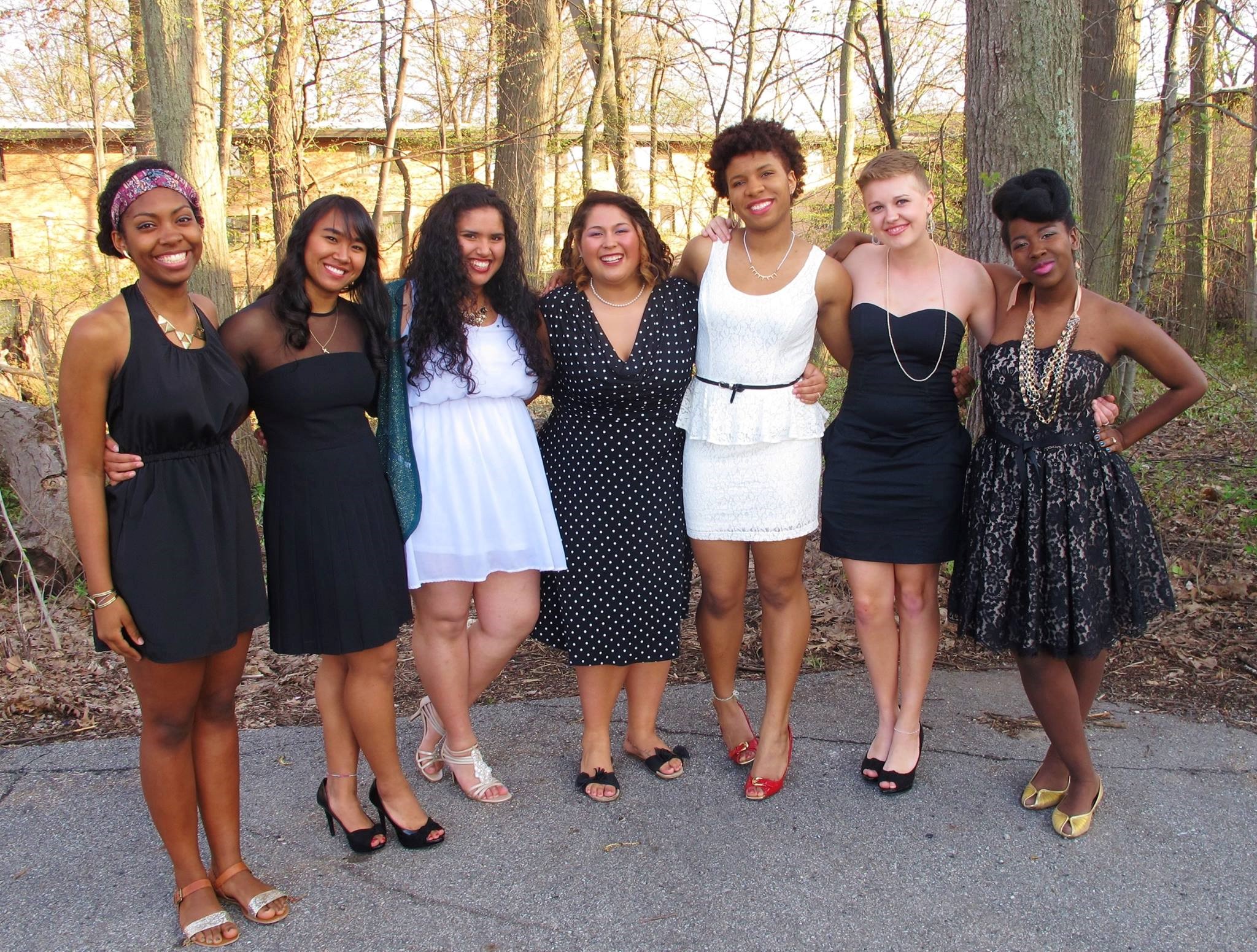
My apartmentmates and I poked fun at white culture with our Basic White Culture shoot (note the pumpkin)

My apartment mates and I poking fun at white culture with our Basic White Girl shoot (note the pumpkin).

By Anna Lindner


Anna is a Campus Clipper intern and a first-year Master’s student in NYU’s Media, Culture, and Communication program. Her research interests include critical race and gender theory and their resultant intersectionality. When she’s not studying, Anna enjoys visiting friends, catching up on TV shows, and lifting weights. For over 20 years, the Campus Clipper has been offering awesome student discounts in NYC, from the East Side to Greenwich Village. Along with inspiration, the company offers students a special coupon booklet and the Official Student Guide, which encourage them to discover new places in the city and save money on food, clothing and services.

At the Campus Clipper, not only do we help our interns learn new skills, make money, and create wonderful e-books; we give them a platform to teach others. Check our website for more student savings. 

Share

Steps Toward Cultural Competency

Wednesday, August 30th, 2017

The previous week, I detailed my transition onto the Grassroots Living/Learning Community. Only a few months on Grassroots proved that I did not know as much as I thought I did. Despite my parents’ thoughtful engagement with all cultures, I needed to begin building cultural competency on my own. Here are some steps I’ve found helpful as I’ve stumbled through experiential learning:

  1. The process does not have a definitive end point. No one is ever fully “culturally competent;” there is always more to learn. This is how I think of it: when I first entered college, I was on Step 4, due to my parents’ efforts to expose me to racial reconciliation work. Those first two years on Grassroots pushed me to Step 10, and the past three years have put me at Step 12. But the number of steps are infinite, and it would be foolish for me to become proud at the measly amount of steps I’ve taken.
  2. If you’re a white person hoping to ally yourself with people of color, understanding white culture and privilege is crucial. White culture exists; because it is the dominant culture in the United States, it is often invisible. However, whites have to acknowledge that we are just as culturally biased, if not more so, than those rooted in all other cultures. In the United States, our institutions and structures were created primarily by and for white citizens (and not to mention the male, rich, and straight). This means that people like me have been benefiting from systems since before we were born, and that our children will likely continue to benefit for generations.
  3. As you gather knowledge about other cultures, use it as a means of connection, not as a way to show off. I botched this several times, and it’s all a part of the processes. For example, if I meet a Latina and assume that she’s into Prince Royce, it’d be really awkward if she’s actually into country and hasn’t listened to bachata a day in her life. Even if, on the off chance, she’s a huge Royce fan, if I use this as an opportunity to impress her with my bachata knowledge, she’ll see right through it. People of color are used to being reduced to stereotypes and having uninformed people blabber on about China to someone who looks Asian but is actually Japanese-American and knows absolutely nothing about China. On the flip side, don’t pretend like you don’t know who Royce is, but rather, if a potential new friend brings him up, use it as a way to connect with her in a normal (and not reductive!) way.
  4. On a related note, phenotypes (people’s physical features) can be very misleading if you’re trying to guess someone’s heritage. Identity is complicated, and for all you know, someone who looks African could have been raised by a white family in the Midwest. People also choose, to some extent, how they wish to identify. This is especially true of multi-racial people. Having a multi-ethnic background makes it nearly impossible to guess one’s racial make-up based on phenotypes, and creates a quandary for all involved. Unable to place said multi-ethnic person in a box, people get frustrated and try to force them to choose one identity. Of course, someone who, for example, has a black parent and a white parent can’t decide between identities. Both are essential to one’s personhood. 
  5. A caveat on choosing identities: be aware of cultural appropriation. Cultural appropriation can be understood as wanting people of color’s culture, but not the struggle. For example, while people at Coachella wear feathers similar to those present in Native American culture. Whites wear them because they’re pretty, or stylish, or something. But most of them have no connection to the spiritual or otherwise personal history of many Native groups, nor wish to suffer alongside Native people who continue to this day to face discrimination while fighting for basic human rights and representation in the United States. This is problematic because it diminishes Native people’s experiences and pain, all out of ignorance. Similarly, whites cannot “choose” to identify as Native American because their culture seems oh so romantically quaint compared to “cultureless” whites (see above point number 2). Again, this minimizes people of colors’ experiences and makes them uncomfortable/angry, and rightly so. A white person cannot even try to embody POC’s because with their phenotypes, they will be seen as whites and treated thus.

Again, all of this can be hard to process, especially if you’re white and just starting along the cultural competency path. A general rule of thumb is to find situations where you can respectfully listen to POC on their own terms.

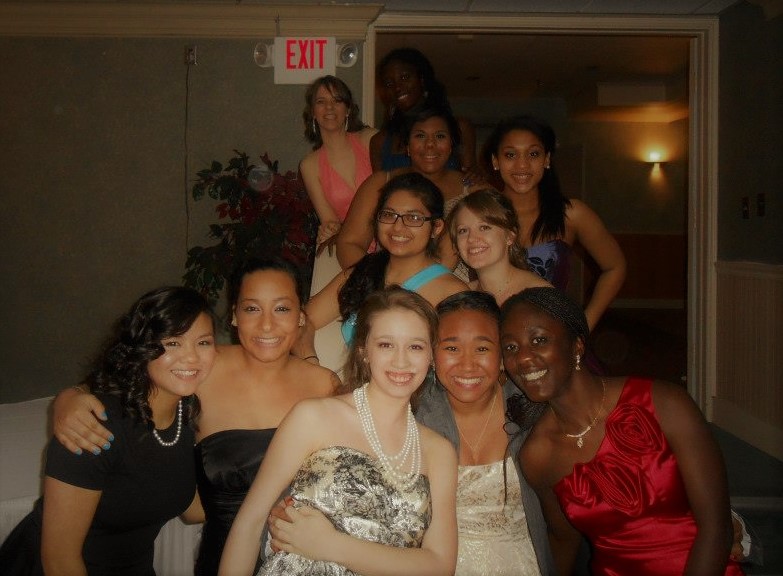
Winter banquet

All those steps seem overwhelming but the friends you make? Worth it


Further resources:

Peggy McIntosh, Unpacking the Invisible Knapsack. A list of privileges you might not have considered before: 

http://bit.ly/2jSNfcn

Nell Irvin Painter, “What Is Whiteness?”: A history of the creation of “whiteness” as a social construct:

http://nyti.ms/2iZMrU9

Dr. Robin DiAngelo, White Fragility: Why it’s So Hard to Talk to White People about Racism. An article on white privilege, white culture, and institutional racism: 

http://bit.ly/29DzJAH

Slavery to Mass Incarceration: A short video on the history of slavery and why it impacts us today: 

http://bit.ly/1CmPdGh

Tate Walker, “We Can’t ‘Get Over It'”: 4 Ways Understanding Past Wrongs Can Create Better Indigenous Allies: Provides insight into Native American groups’ histories and struggles for justice:

http://bit.ly/2w2AHl7

By Anna Lindner


Anna is a Campus Clipper intern and a first-year student in NYU’s Media, Culture, and Communication program. Her research interests include critical race and gender theory and their resultant intersectionality. When she’s not studying, Anna enjoys visiting friends, catching up on TV shows, and lifting weights. For over 20 years, the Campus Clipper has been offering awesome student discounts in NYC, from the East Side to Greenwich Village. Along with inspiration, the company offers students a special coupon booklet and the Official Student Guide, which encourage them to discover new places in the city and save money on food, clothing and services.

At the Campus Clipper, not only do we help our interns learn new skills, make money, and create wonderful e-books; we give them a platform to teach others. Check our website for more student savings. 
Share

Transition to Intentional Community

Wednesday, August 23rd, 2017

As a high school senior, I really didn’t know what I was doing when it came to college. The year was 2012, I was seventeen, and I still had no clue which college to attend. I procrastinated up to the line, until it was National College Decision Day and I was forced to finally choose. Originally planning to attend college in Los Angeles, I settled on Calvin College in Grand Rapids, Michigan, thousands of miles from my home in California. I had visited Calvin a month earlier, in April, and toured the newest dorm, named Van Reken after one of the many Dutch alumni who sponsor Calvin. My mom had discovered a living-learning floor for Honors students and, being an overachiever in her college days, encouraged me to apply.

By June, I dragged myself onto the Calvin website to fill out the Honors floor application. However, a description of another floor in the same building caught my attention. Called Grassroots, the floor was dedicated to exploring multiculturalism and combating racism. Every two weeks, students were required to attend a one-credit Contextual Diversity class, which investigated racism in modern America. Forget the Honors floor; I knew I had to apply.

My parents had become involved in anti-racism work before I was born. They were the area directors for Young Life, a Christian program for students, in Kalamazoo, Michigan, for eight years. My dad had become involved in diversity trainings around the time when my parents married, and as a result, tried to integrate the largely white youth groups in suburban Kalamazoo with the largely black youth groups in other parts of the city. He was met with opposition, so, frustrated, my parents decided to relocate to Sacramento, California.

My parents’ vision was to form a multicultural community, with a church at its center, that fostered sharing life and learning from each other. They brought together groups of people that normally would never interact. And it was harder than they could have imagined. There was conflict, there was fallout, there was pain. But there was also compassion, and mutual benefit, and true friendship.

It was in this environment that I was raised. I had seen the heartbreak, but I had also seen raw connection that resulted in rich learning. By the time I was applying to live on intentional living-learning communities in college, I was hungry for that type of interaction. Even as a seventeen-year-old, I knew I wanted to engage in racial justice work.

Several months later, I moved onto Grassroots as a freshman. The floor was was the catalyst for not only my interests, but also who I was as a person. I was launched into community, and I had no clue what I was getting myself into: late-night talks about race theory, arguments, and the formation of lasting friendships. I was terribly uncomfortable, I learned a lot, it was the best and hardest two years of my life.

2nd VR women

The women of Grassroots during a dorm banquet.

Grassroots was a crucial step for me on a journey I hope to continue to take.

By Anna Lindner


Anna is a Campus Clipper intern and a first-year student in NYU’s Media, Culture, and Communication program. Her research interests include critical race and gender theory and their resultant intersectionality. When she’s not studying, Anna enjoys visiting friends, catching up on TV shows, and lifting weights. For over 20 years, the Campus Clipper has been offering awesome student discounts in NYC, from the East Side to Greenwich Village. Along with inspiration, the company offers students a special coupon booklet and the Official Student Guide, which encourage them to discover new places in the city and save money on food, clothing and services.

At the Campus Clipper, not only do we help our interns learn new skills, make money, and create wonderful e-books; we give them a platform to teach others. Check our website for more student savings. 
Share

De Facto Segregation in Education

Tuesday, August 15th, 2017

As a college student, I have become invested in combining study with my personal life, to the best of my ability. I was a Spanish and History double-major as an undergraduate, but because I attended Calvin College, a liberal arts school in Grand Rapids, Michigan, I was also able to count several sociology classes toward my degree. These classes focused on dissecting and explaining the reality of American society. For example, schools today are more segregated than they were immediately following the Brown v. Board of Education decision. This was not the legal version typical under Jim Crow, which was finally dismantled in the 1960s. Rather, it was de facto segregation- not enforced by law, but a reality brought about by social structures. Despite attempts to integrate, factors such as continued discrimination, the generational accumulation of wealth, and investment in schools based on property tax contributed to the current state of segregation.

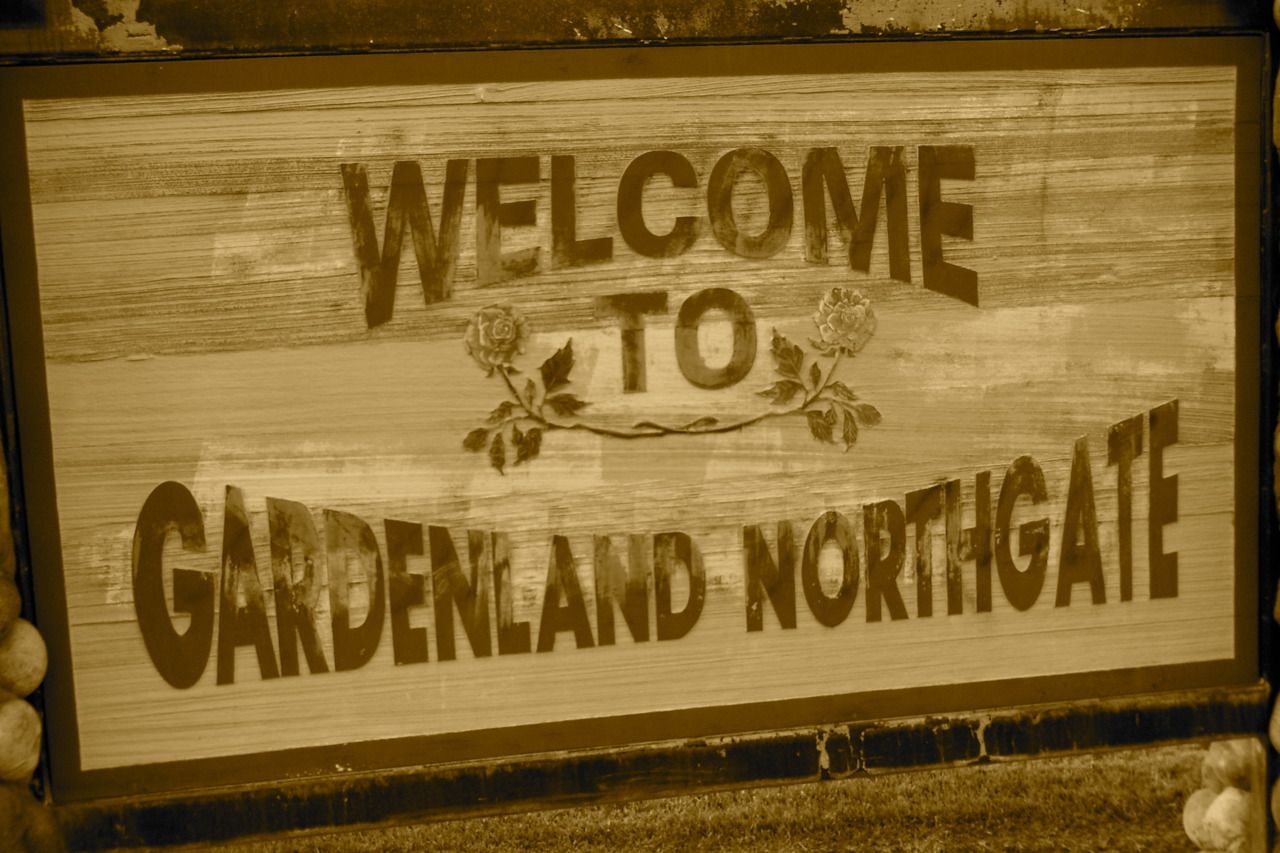
The weathered, wooden sign delineating the boundaries of my neighborhood.


I understood the history and the facts behind the reality of segregated schools. But what was more, I had seen this segregation while I was growing up in Sacramento, California. We moved  to Gardenland/Northgate, a neighborhood just north of downtown Sacramento, when I was seven. I was homeschooled, but as I entered sixth grade, my parents decided to supplement my home education with a co-op program at a charter school in Natomas, the new suburbs being developed north of our neighborhood. I attended Natomas Charter School from sixth through eighth grade as a home-schooler, but upon my debut as I high-schooler, we decided that I should enter full-time school. This decision gave rise to another question: which school should I attend? Grant High, which was only a few blocks from my house, was in one of the “worst” school districts in Sacramento. Because it was under-resourced, Grant had struggled to meet state standards for years. My parents were torn- should they send me to the failing school around the corner, or ship me off to the suburbs for a potentially richer academic experience?

So probably for my own good, my parents contributed to segregation, albeit in a micro-sense. They sent me to the suburban school, rather than our local high school. They made the choice that parents who have the opportunity to do so usually make. Investing in our neighborhood school wasn’t worth the risk of me becoming beaten down by the public school system. It wasn’t worth me losing my love for learning, and it wasn’t worth negatively impacting my chances for success.

The de facto segregation of schools, which is tied up in the segregation of neighborhoods, of opportunity, of American society in the most general sense, decides the future for most of America’s youth. I will most likely succeed, when other young people who are just as talented and dedicated as I will might never have the chance to go to college. Who decided that I would have access to better chances than my neighbor, not by virtue of my own effort, but merely due to generational privilege? Is it my duty to level the playing field that has been uneven since before I was born?

To this day, I’m not sure if I agree with their decision or if I would have done differently. The self-discipline I developed in high school allowed me to thrive in college. I was an honors student who read every page I was assigned, and I decided I wanted to pursue critical race and gender theory and research.  I will begin graduate studies at New York University in a few weeks. I have continued the trend begun by my parents in terms of education: seeking out the most prestigious (and expensive) option, one that will be most likely to guarantee my success. The internal turmoil continues: although I have chosen academia, I don’t want to lose focus. My hope has always been to do justice, not just when it easy, but also when it requires personal sacrifice.

The research to which I have dedicated myself applies abstract theory to practical issues. I study phenomenons like modern de facto segregation not only out of my own interest, but because of its overwhelming relevance in American society today.  I hope my research can join the current body of evidence of social injustice and assist in making society a bit more just.

By Anna Lindner


Anna is a Campus Clipper intern and a first-year student in NYU’s Media, Culture, and Communication program. Her research interests include critical race and gender theory and their resultant intersectionality. When she’s not studying, Anna enjoys visiting friends, catching up on TV shows, and lifting weights. For over 20 years, the Campus Clipper has been offering awesome student discounts in NYC, from the East Side to Greenwich Village. Along with inspiration, the company offers students a special coupon booklet and the Official Student Guide, which encourage them to discover new places in the city and save money on food, clothing and services.

At the Campus Clipper, not only do we help our interns learn new skills, make money, and create wonderful e-books; we give them a platform to teach others. Check our website for more student savings. 
Share

From New York to…London

Friday, July 28th, 2017

In terms of culture, New York has it made. From the most niche art museums to the street music to the indie films in the Village, NYC seems to have it all when it comes to the creative side of things. This includes books. But New York isn’t the only place to rediscover that nerdy eleven-year-old who read books under their covers with a flashlight and turn them into a refined consumer of classics and fictions. London has a literary history and flare to rival New York’s.

Here are a few ways you can surround yourself with books and re-find that literary geek inside of you to feel the joy that books can bring.

http://mix96buffalo.com/

http://mix96buffalo.com/

Taken by Jainita Patel.

Taken by Jainita Patel.

Book Stores.

This might seem like an obvious one, but bookstores just have that new (or old) book smell that’s hard to resist. One of the best indie bookstores in New York is in the Village on 4th Ave called Alabaster Books. This tiny bookstore is sadly one of the last indie bookstore left in the Village and with a cozy feeling and books literally up to the ceiling, it’s worth the trek. Another in downtown on Warren St. called The Mysterious Book Shop and only sells mystery books if that’s your cup of tea. Speaking of tea, London has a few amazing indie bookstores as well. Charing Cross Road by Leicester Square is littered with indie bookstores, but if you’re looking for something really unique, Word on the Water – The London Book Barge is an amazing and quirky book shopping feel. You’ll feel like you’re in a fairy tale on this little boat. You can find a more extensive list of bookstores here.

Libraries.

Ah the library. It’s like you can almost feel your childhood rushing back to you. Luckily, there are still a few libraries in NYC that can bring that feeling back to you, including, of course, the main branch of the New York Public Library with its beautiful entrance and maze of room. While you’re there, why not sign up for a library card? It’s literally free and might peak your interest to start reading again. There’s also the Morgan Library and Museum, which, is just supremely impressive since it used to be J.P Morgan’s private library and study before he willed it to the city. Now there isn’t a library in Manhattan that can stand up to this Beauty-and-the-Beastesque museum. In London, the Senate House Library may look like the Ministry of Truth from Orwell’s 1984, but the inside is massive and even cozy at times. This is a great place for students to get work done (as long as you sign up for a card from). The London Library is also stunning with miles and miles of stacks that you can get lost in for days.

The Morgan Library and Museum.  http://www.thegildedowl.com/

The Morgan Library and Museum.
http://www.thegildedowl.com/

Historic Literary Spots.

There are few literary hot spots in NYC that aren’t bars or pubs that famous writers stayed at, but one of my favorites is the Edgar Allan Poe Cottage in the Bronx. The famous poet and writer spent the last few years of his life here where he wrote classics like “Annabell Lee,” “The Bells,” and yes, even the famous meme “The Cask of Amontillado.” Also in the Bronx, you’ll find the grave of Herman Melville in Woodlawn. Moving further in time to the literature of the 20th century, if you were just as fascinated by all the places Salinger mentioned in Catcher in the Rye, you can actually visit all of them in this self-guided tour that will take you from Ernie’s to Phoebe’s school. In London, the price you pay to get into Westminster Abbey is worth it when you see the Poet’s Corner where some of the greatest are buried, including Chaucer, Charles Dickens, Spenser, and Tennyson not to mention memorials to several others such as Marlowe, the Brontë sisters, Jane Austen, Oscar Wilde, Lord Byron, and Lewis Carroll. If you don’t feel like fighting the crowds at Westminster, you can always go to Mecklenburgh Square and see the Charles’ Dickens Museum that even contains his personal writing desk. If you’re feeling a bit more Shakespearian, the Globe theatre is right across the river and you can take a tour there and see the famous recreated theater. If it’s summertime, you can go see a play there for just £5 as long as you don’t mind being a groundling.


The writing desk of Charles Dickens. Taken by Jainita Patel

The writing desk of Charles Dickens.
Taken by Jainita Patel

Inside the Globe Theatre. Taken by Jainita Patel.

Inside the Globe Theatre.
Taken by Jainita Patel.

Literary Cafes and Pubs.

I’ve written about cafes and bars in NYC before, but New York takes the literary alcohol scene to another level. Of these, the White Horse Tavern in the West Village might be the most famous since the days when Jack Kerouac and Hunter Thompson drank here. Or, why not go back to the time of Gatsby at the Rose Club in the Plaza Hotel on 5th Ave, a place that fully embraces its fictional history with the Fitzgerald’s. The Thirsty Scholar is an Irish-writer themed pub that’s bound to warm your literary heart. In London, no other pub comes close to fame for its literary patronage than Ye Olde Cheshire Cheese which once hosted Charles Dickens, Mark Twain, W.B. Yeats, Sir Arthur Conan Doyle and more. If you’re willing to make the trek, The Flask near Highgate can also stir up inspiration since it once hosted T.S. Elliot, Keats, Shelley, and Lord Byron. On the south side of the river, the George Inn was once frequented by Charles Dickens and Shakespeare himself.

The Thirsty Scholar. http://thethirstyscholarnyc.com/

The Thirsty Scholar.
http://thethirstyscholarnyc.com/

So why not go explore your literary side in either of these magnificent cities. If you like New York or London for its literary scene, hopefully you’ll get to visit the other some day.


_____________________________________________________________________________________

By Jainita Patel

Jainita is a Campus Clipper publishing intern who is double majoring in English and Environmental Studies at NYU. Though writing fiction and painting are her two main passions, she also has a love of travel and adventure that has taken her across the globe.  Jainita writes under the pseudonym Jordan C. Rider. If you like her posts, you can find more of her work here or follow her on Twitter. For over 20 years, the Campus Clipper has been offering awesome student discounts in NYC,  from the East Side to Greenwich Village. Along with inspiration, the company offers students a special coupon booklet and the Official Student Guide, which encourage them to discover new places in the city and save money on food, clothing and services.  

At the Campus Clipper, not only do we help our interns learn new skills, make money, and create wonderful e-books, we give them a platform to teach others. Check our website for more student savings and watch our YouTube video showing off some of New York City’s finest students during the Welcome Week of 2015. 

Share

Study Tips from an Expert

Tuesday, July 25th, 2017

As I mentioned in my last post, a lot of the study methods most college students rely on have no scientific basis. In fact, there are even a few quick changes you can make to your study habits that will help you absorb information much more quickly and store it in the long term, so you can ace your cumulative finals with ease and retain that knowledge for when you enter the job market.

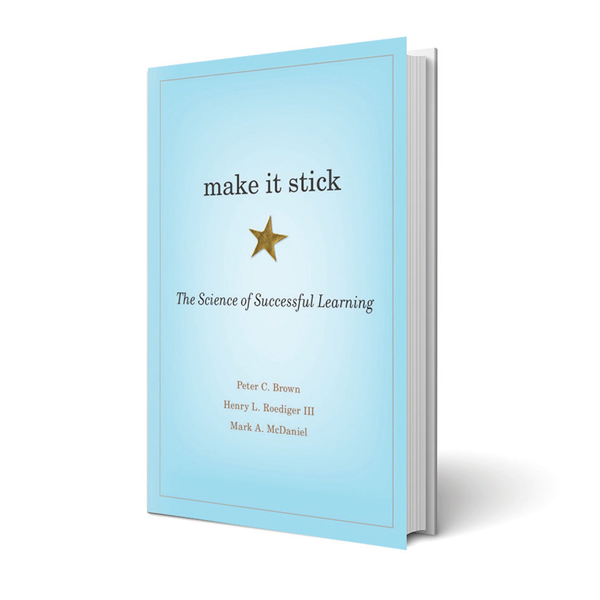
Peter C. Brown’s 2014 book Make It Stick exposes these hidden truths about studying, explaining which methods are the keys to success and which are simply the same trite  unsubstantiated claims recycled over and over again.

Recently, I had the opportunity to ask Mr. Brown a few questions about his book and its implications for learners and educators and lovers of knowledge alike. Check out my interview with him here:

http://schoolsweek.co.uk/

http://schoolsweek.co.uk/

Q: I love that your book touches on students’ tendencies to be discouraged by failure and thereby categorize themselves as specific “types” of learners despite the absence of scientific evidence to substantiate these labels. What do you think people find so difficult about initial failure? If you had to give a word of encouraging advice to those people, what would you say?

A: “I grew up with 4 older brothers who knew how to do everything that I didn’t. It’s just central to one’s self image to avoid looking stupid at all costs. Nobody explained to me back then that trial and error are essential. What we need are classrooms where trial and error are celebrated. My advice is to find a like-minded friend for mutual support, assume the persona of one who is fearless, and forge ahead. Setbacks are evidence that you are hard at work while the timid people sit back chewing their nails and privately envy your confidence.”

Q: Make It Stick’s references to the learning techniques and high-pressure situations surrounding the experiences of pilot Matt Brown and neurosurgeon Mike Ebersold illustrate the importance of making information personal in order to recall it effectively. Do you have any tips for the average person trying to make schoolwork more personal or more relevant to his or her own life?

A: “You have to pause and ask how is this like something I already know? Can I think of a parallel in my own life? Why not say to the teacher, “I think I would understand and remember this better if I could think how it is useful to me, or how it connects to what I already know. Can you help?” This would make for a good class discussion.”

Q: Are you surprised that so many institutions (like George Mason University and Dartmouth College) offer study advice that is just blatantly incorrect? What do you think is the reason for this?

A: “I have not checked their websites since writing Make it Stick; perhaps they have revised their advice. Educators do not have a tradition of basing instruction on empirical evidence, largely because there has not been a body of such evidence until recently. But science has made huge strides, and we know from feedback to our book and others’ that many schools, notably through their centers for teaching and learning excellence, are aligning their advice and resources with the empirical evidence.”

Q: Make It Stick cites an example of a Washington University professor’s success with an unconventional frequent quizzing system in the place of larger exams, and also offers a section devoted to tips for teachers. What are your aspirations for the book? Ideally, how widespread would the impacts of these suggestions be for our education system?

A: “I would hope teachers everywhere come to see themselves as bearing a dual responsibility, teaching content as well as process: helping students construct their own understanding of the classroom content through study strategies like elaboration and spaced and mixed retrieval practice that are not intuitive, so that students experience success with these strategies and they become second nature throughout school and beyond.”


By Madeleine Fleming

Madeleine Fleming is a Campus Clipper publishing intern and a rising sophomore at NYU.  A lover of reading, writing, and learning in every way possible, Madeleine is excited to be writing about college study habits for the Campus Clipper. For over 20 years, the Campus Clipper has been offering awesome student discounts in NYC,  from the East Side to Greenwich Village. Along with inspiration, the company offers students a special coupon booklet and the Official Student Guide, which encourage them to discover new places in the city and save money on food, clothing and services. 

At the Campus Clipper, not only do we help our interns learn new skills, make money, and create wonderful e-books, we give them a platform to teach others. Check our website for more student savings and watch our YouTube video showing off some of New York City’s finest students during the Welcome Week of 2015.

Share

Encouraging Positive Talk and Confidence in Your Friend Group

Sunday, July 23rd, 2017

“Show me your friends, and I’ll tell you who you are.” There’s been a fair amount of research on how people are affected by their environments, and that largely means how they’re affected by the people with whom they interact. Have you ever noticed a friend of yours start using a phrase you use? Have you picked up certain habits from your friends? You’ll probably be hyper-aware of it after reading this! Some even argue that you are the average of the 5 people you spend the most time with. Much of what I’ve read on this subject warns about the influence of toxic people and emotional vampires, like this cautionary article from https://medium.com. A lot of these self-help articles advise readers to rid themselves of friends and acquaintances who just aren’t feeding their lives in a positive way. I’m not disputing that advice. Cutting ties with draining people is important for your overall wellbeing. But if you’re influenced by the people around you, there’s also a lot you can do in turn to be a positive influence on them—and ultimately that’s beneficial for everyone.

https://twitter.com/mathsnsw

https://twitter.com/mathsnsw

Negativity doesn’t just come in the form of explicit rudeness or friends who deliberately put you down. Some of our most supportive, funny, valuable friends can unintentionally and indirectly propagate feelings of self-criticism and negativity by the way they talk to and about themselves. Author Mark Manson writes a lot about how we measure worth. Take this article for instance (it’s a short read): https://markmanson.net/how-we-judge-others. His logic is that the way we judge others is also how we judge ourselves. In his words, the yardstick by which we measure our own worth is also the yardstick by which we measure the worth of others. Often we aren’t conscious of how exactly we measure worth, but Manson points out that we can choose to be conscious, and from there we can choose our yardsticks. So if you obsess over your grades, chances are you also judge your friends by how high their GPAs are. If you have a friend who is constantly worrying about her appearance, you can deduce that her primary measuring stick is attractiveness. Most likely without meaning to, that friend then judges other people by their attractiveness. By “judging,” I mean ascribing worth or value.

https://me.me/

https://me.me/

These behaviors can wear on us. If someone close to you obsesses over their physique and level of fitness, it’s hard not to wonder how they view and judge your body too. I urge you to point our negative behaviors that you see in your friends and encourage them to be kinder to themselves. For example, I used to have a hard time taking compliments; I always felt like accepting them meant I was cocky. In response, I would make self-deprecating comments, finding faults in myself to counteract anything positive. Eventually, when I would make these comments one of my friends started scolding me, “Don’t be self-deprecating.” And it wasn’t a playful admonishment either. There was a bit of annoyance and a real sense of chastisement in her tone. I didn’t take offense. On the contrary, her criticism of my own self-criticism brought me to see my comments about myself in a more accurate light: not as politeness, but as an unhealthy habit. I learned to catch myself in those thought patterns, and I learned to accept compliments. And you know what? Compliments feel good! That’s how they’re supposed to feel!

So when you see your friend poking their stomach and saying they feel fat, ask them, “What’s something you like about your body?” When your friend does poorly on a test and says they are stupid, tell them, “You know, you’re really good at ______. Be an example; be gentle with yourself and gentle with your friends. Compliment them, and accept their compliments graciously too. If you admire something, say so. When you’re proud of them, show it. It’s often easier to hold on to the negatives, but you have the power to highlight the positives. If what Business Insider says is true—that you’re the average of the 5 people you spend the most time with—then your positivity has the power to make them more positive. And in the end, that positive energy will feed you too.


https://www.theworkher.com

https://www.theworkher.com

By Sofia Lerner


Sofia Lerner is a Campus Clipper publishing intern who is studying English as a senior at NYU. Passionate about literature, dance, and wellness, Sofia aspires to help the arts thrive and help others pursue healthy lifestyles. For over 20 years, the Campus Clipper has been offering awesome student discounts in NYC,  from the East Side to Greenwich Village. Along with inspiration, the company offers students a special coupon booklet and the Official Student Guide, which encourage them to discover new places in the city and save money on food, clothing and services. 

At the Campus Clipper, not only do we help our interns learn new skills, make money, and create wonderful e-books, we give them a platform to teach others. Check our website for more student savings and watch our YouTube video showing off some of New York City’s finest students during the Welcome Week of 2015.

Share

The Importance of Friendship

Wednesday, July 19th, 2017
Image Credit: Caroline Flynn

Image Credit: Caroline Flynn


Last September when my friend Maghan walked into my new apartment for the first time, tears welled up in her eyes. “It’s so lonely,” she said, overwhelmed by the pure adultness of the empty white walls and Ikea furniture. Annoyed and uncomprehending, I pushed her through the remaining 24 feet of the apartment to the window where my bed sat. “It’s not lonely. It’s perfect. And look I even have a real New York City fire escape.”

Today though, I know what she means. Summer in New York is much different than the school year. The city itself seems to sweat on even the mildest of days, the streets are crawling with tourists who wander aimlessly into your path, and all traces of college life disappear. As I sit on my real New York City fire escape, the people below are unfamiliar and my thoughts drift to faces I do know, some who are in New York and some who are not, some who I’ve seen recently and some who I haven’t. Regardless of distance and time, real life isolates me on this fire escape and loneliness creeps in as jobs, bills, and adult responsibility seem to push everyone separate ways. I feel like it didn’t used to be this way. Summers between high school were filled with constant contact and group messages, day plans and night plans and weekend plans, part time jobs and the comfort of your family home at the end of the day. Maybe I wasn’t quite prepared to be one of 8.5 million people living and working in New York City this summer.

Academic and professor of linguistics Deborah Tannen says in her book You’re the Only One I Can Tell, “Knowing that somewhere in the world there is someone who cares what you wore, an insignificant detail of your life that would seem unimportant to anyone else, makes you feel more connected to that person and less alone in the world.” This small action of sharing is capable of piercing distance and time, wiping out loneliness, and reinstating the comfort of someone else’s joys and sorrows.

The other night, my best friend and I met up with a classmate we hadn’t seen since school got out in May. During the school year, the three of us talked often and saw each other daily in class, but it had been two months since we’d all been in the same room. The conversation that night was a breath of fresh air, air that you can’t get in a city sitting alone in your room. Air that might even be hard to find in the countryside. Each breath carried new laughter and love, new stories to be shared, new heartbreaks to be healed, new plans to be made as we all felt a sense of relief from the summer’s overbearing humidity. There is nothing better in the world than long conversations that flow endlessly and seamlessly. Even as we grow up, even as we drift apart, even as we get heavy work schedules and full time jobs, even as new people in our lives come and go, it will always be hard to feel completely alone if you can make the effort to keep up friendships and conversations.

A relationship that can withstand crowds of people, state or country borders, and days and weeks of not seeing each other is a strong one. Slowly I am learning that the bond is there even if they are physically not. So next time I find myself sitting on my fire escape, reminiscing the days when making friends was more important than making money and building my resume, I’ll remind myself that although there might be a thousand people between me and the next familiar face, the familiar face is the one that matters.


By Caroline Flynn

Caroline Flynn is a Sales and Publishing Intern at the Campus Clipper studying Theatre at NYU Tisch. Caroline is passionate about the arts and dedicated to using her voice to make other people smile. As she heads into her Junior year, she is excited to be writing about how relationships have shaped her life while she takes on summer in the city for the first time. Check out her Instagram for more witty and heartfelt content on her life. 

We have the most talented interns ever and we’re so proud of them! For over 20 years, the Campus Clipper has been offering awesome student discounts in NYC,  from the East Side to Greenwich Village. Along with inspiration, the company offers students a special coupon booklet and the Official Student Guide, which encourage them to discover new places in the city and save money on food, clothing and services.  

At the Campus Clipper, not only do we help our interns learn new skills, make money, and create wonderful e-books, we give them a platform to teach others. Check our website for more student savings and watch our YouTube video showing off some of New York City’s finest students during the Welcome Week of 2015. 


Share

What cooking is for me, and what it can be for you too

Tuesday, July 18th, 2017

As you have probably understood so far, I value my relationship with food more than the next person, but what I value even more is the time I spend preparing my food. While living at home I was lucky enough, in many ways, to have food ready for me waiting on the table as I got back from school. Though at the time it was the best way I could have imagined things, I had no idea how passionate I would become about preparing my own food daily.

cook2

It’s common to see cooking as a chore, and in many ways, it can be. I’m sure that after a day of very hard work when one gets home in time for dinner, the last thing one wants to do is actually have to spend a significant amount of time cooking. However, in my everyday life, I’ve found that instead of dreading the times of day when I have to cook, I actually look forward to them. Not only am I happy during the process of cooking but I’m also proud of what I’ve ended up creating. For me, cooking has become, an escape, a time to relax, and a way to feel a small sense of accomplishment throughout the day. You could even say that it has become a small way for me to meditate…


I definitely benefit from my small cooking ritual, and I think if you follow the following steps you might too:


  • The Environment


First things first, the most important factor is always the environment. Obviously, if we all had amazing, huge, well-lit, chef-worthy kitchens, we would probably all enjoy cooking more. Nonetheless, there are a few things you can do to make your dorm’s or small student apartment’s kitchen more enjoyable. For starters, lighting is key, so if you can, invest in making your kitchen well lit. Next, I’d suggest getting a few good basic appliances, pots and pans to make your cooking struggles easier. Lastly, the miscellaneous but -oh so- important things will make a world of difference: some plants (extra points if they are basil, coriander or mint), some cute kitchen towels as well as oven mitts, and some fun fridge magnets or maybe some pictures on the wall. After you’ve set up your kitchen, it is your job to keep it that way, by cleaning and making it an environment you want to stay in.

cook3

  • Your Ingredients


Secondly, as any good chef will tell you: good ingredients make the best dishes. I’d suggest finding a store you like, getting familiar with it, and making it a habit of going to shop there for your groceries. In time, shopping for groceries will stop being a hassle and will instead become a peaceful time, in a known environment, without all the frustration it can sometimes have. Furthermore, ensuring you have high quality ingredients every time will show in your final product, which will, in the long term, benefit you greatly, both in your health and wellbeing. One of my favorite places to shop at is Lifesum Market, on 6th avenue and 8th street. I love it, as it is close to campus and my apartment, but most importantly because it carries only organic produce and packaged items. Another crucial factor which makes Lifesum one of my favorite stores is the discount I get from the Campus Clipper.

cook 4

  • Your Motivation


Another key factor in improving your relationship with your kitchen is having real reasons why you want to do so. That is, you have to get educated and understand the benefits of cooking your own food. By knowing what goes inside your food you are in charge of your health and thus in charge of one, if not, the biggest parts of your life. Furthermore, in the long term, by incorporating meal prepping and some money saving hacks, you’ll see how cooking can be very cost effective, helping you adhere to your student budget. Or, if you’re like me, you’ll even find a peaceful escape in cooking, which helps you reboot during the day. Whatever the reason, finding your motivation is key in succeeding.


  • The Inspiration


After you’ve managed all three previous steps, it is time to get inspired. This means that it’s time to find what exactly you want to make and what gets you most excited to create in your own safe space, in your own way. Finding inspiration is key, as it will take cooking from being a chore to becoming a fun way to pass the time, to be creative and to feel a sense of accomplishment. My grandfather used to say that anyone who likes to eat will eventually know how to cook. So, find what you like to eat and make it for yourself. I suggest getting a few cookbooks that look appealing to you, but have recipes anyone can execute. Or, if you like, you could spend hours, as I do, on websites, blogs and YouTube looking at all the wonderful things people manage to made with just a handful of ingredients. The only thing I am certain of, is that somewhere out there, there is something that you’d love to make again, or make your way, so find it and get cooking.

cook

  • Relaxation


Above all, as always, what is more important is that you stay relaxed. If you actually get into cooking and find some enjoyment in it, don’t worry if all you have time to make that day is a grilled cheese sandwich. Any type of food is fuel, but the best fuel is the food you make yourself. Don’t be too hard on yourself when you don’t make something great or if it’s the 10th time you’ve made spaghetti and you still make them mushy. Try to appreciate the fact that you’re trying to do something that is good for you. Every moment that you spend in your kitchen, trying to make something healthy for your body is a moment that you spend showing love for yourself and your body.


By Marina Theophanopoulou

__________________________________________________________________________________________________________

Marina Theophanopoulou is a Campus Clipper publishing intern who is studying Philosophy and Sociology as a junior at NYU. Passionate about healthy, food and wellness, Marina aspires to make others think of food in a more holistic way. For over 20 years, the Campus Clipper has been offering awesome student discounts in NYC,  from the East Side to Greenwich Village. Along with inspiration, the company offers students a special coupon booklet and the Official Student Guide, which encourage them to discover new places in the city and save money on food, clothing and services. 

At the Campus Clipper, not only do we help our interns learn new skills, make money, and create wonderful e-books, we give them a platform to teach others. Check our website for more student savings and watch our YouTube video showing off some of New York City’s finest students during the Welcome Week of 2015.

Share

How To Learn (Better)

Tuesday, July 18th, 2017

A lot of the ways we are being told to study are just plain wrong. If you’ve made it this far, you probably have some idea how to effectively prepare for tests and complete assignments. The fact that you’re reading this suggests that you have some desire to do even better, which is one of the most important steps to success in the first place. But still, maybe you’ll find that something is lacking. Perhaps it’s hard for you to remember things you learn in school in the long term, or maybe your go to study methods sometimes fail you, no matter how hard you try to perfect them. Even if you think you are doing everything by the book, you need to consider the possibility that the book itself is incorrect.

https://sites.google.com/a/emints.org/unit-design-1-tb/home/

I tend to keep my short term goals at the forefront of my mind despite constant efforts to keep the big picture in perspective, and as such I take my goals (like studying for tests) one at a time. I consider them obstacles to be surmounted, and once I’m done, I don’t look back. The only problem then comes when I reach the midterm. And then, when I reach the final. (And then, hopefully, when I apply everything I’ve learned in college to my future career!)

The problem with treating exams like this is that it leads you to believe you can cram for them one at a time and get by just fine. You may do okay on the test, but you aren’t doing yourself any favors. Did you know, according to the cognitive psychology-based book Make It Stick by Peter C. Brown, if you cram for a test you are in fact less likely to remember the information in the long term?

Perhaps you suspected that–after all, everyone warns against cramming for tests. But did you also know that reading a text immediately after reading it once (be it your notes, a textbook, or what have you) does almost nothing to help? You should instead space out your readings by a few days. This will lead to better long term recall of the information, which means you don’t have to cram for the midterm and final, either.

What’s more, if you quiz yourself on the information instead of rereading your notes at all, you’ll do a whole lot better on the actual test. Set larger intervals between instances of quizzing yourself, and you’ll do even better. So it seems that science has confirmed some of what we already knew deep down must have been true: cramming for tests is bad. But it has also given us some crucial new insights: quiz yourself instead of just rereading information! Rote memorization may serve you in the short term, but it won’t do much for your long term memory.


By Madeleine Fleming

Madeleine Fleming is a Campus Clipper publishing intern and a rising sophomore at NYU.  A lover of reading, writing, and learning in every way possible, Madeleine is excited to be writing about college study habits for the Campus Clipper. For over 20 years, the Campus Clipper has been offering awesome student discounts in NYC,  from the East Side to Greenwich Village. Along with inspiration, the company offers students a special coupon booklet and the Official Student Guide, which encourage them to discover new places in the city and save money on food, clothing and services. 

At the Campus Clipper, not only do we help our interns learn new skills, make money, and create wonderful e-books, we give them a platform to teach others. Check our website for more student savings and watch our YouTube video showing off some of New York City’s finest students during the Welcome Week of 2015.

Share