Archive for the ‘onValues’ Category

Chapter 2- The First Week at University (Full of Homesickness and Doubt)

Saturday, August 7th, 2021

In the time between accepting my offer to attend Boston University and actually moving there from New Jersey in September of 2017, I underwent a spectrum of emotions. There were certainly times when I was ecstatic to be starting my undergraduate studies at BU. For instance, I had an overall positive experience during my freshman orientation at the end of June. On top of that, my family was proud of me and other people outside of my familial circle were excited about this change on my behalf. While I eagerly looked forward to September, I didn’t necessarily feel their level of enthusiasm. 

At random times, like when I went shopping with my mom and aunt to pick out some stuff for my dorm room, I felt nervous about going to Boston. Gradually, these feelings of anxiety continued to grow and linger, even as my family packed all my things in the car and drove to Massachusetts, so that I could officially start my first semester.

When it came time for my family to return to New Jersey, I remember crying and having difficulty saying goodbye. I clearly recall the overwhelming sensation of loneliness after seeing them leave as I stood alone, surrounded by the unfamiliar urban landscape that would be my new home for the next few years. This loneliness didn’t suddenly evaporate after a few days. Although I enjoyed my classes during my first week at BU, I couldn’t shake away my homesickness. I knew that moving from my small hometown to Boston wouldn’t be easy, but I didn’t expect it to be so challenging to adapt to my new environment and independence. I felt like I was the only one that was struggling, which made me feel even worse. Everyone around me seemed to form new connections effortlessly and seamlessly integrate themselves into their new setting. This eventually led to me thinking: If I am missing home this much, maybe choosing Boston was a mistake. Maybe I wasn’t as ready for change as I thought I was.

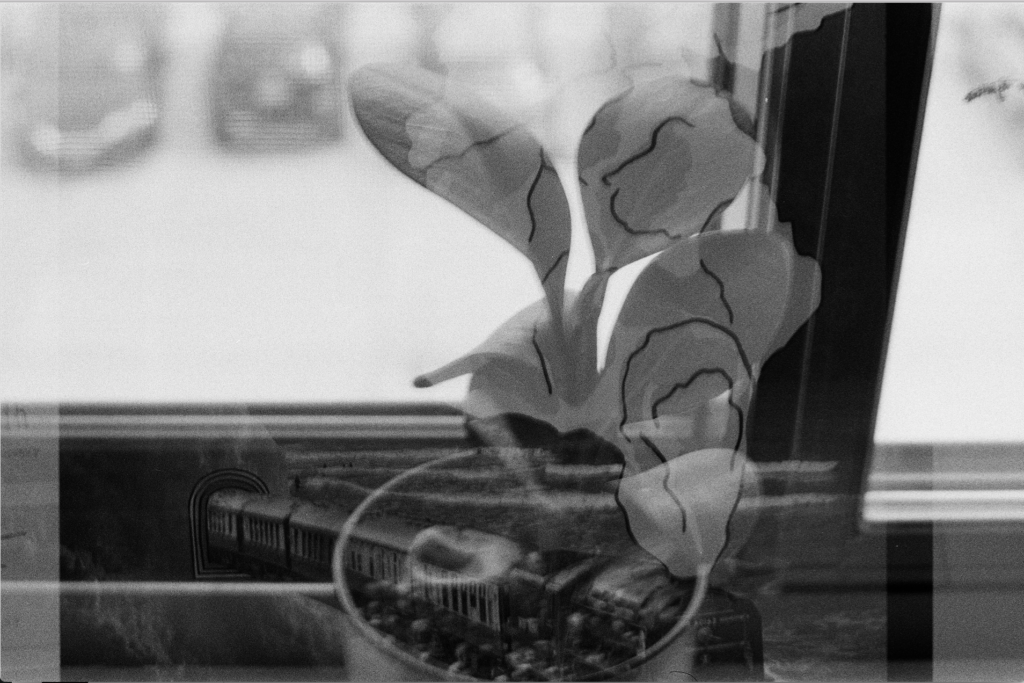
View from my freshman dorm room

In coping with my homesickness and doubt, I was honest with my family about how I was feeling, which was the best thing I could have done. I knew that if I had acted as though everything was alright, I would have been detrimentally bottling up my negative emotions. I was fortunate in that my family not only sympathized with me, but encouraged me to give BU a try. They instilled me with confidence during this period of my life when my self-esteem wasn’t too high. They urged me to not give up on Boston so readily because I might end up liking the city. Deep down, I also knew that if I ended up giving up, I would probably regret the decision and be left thinking “what if?” for a very long time. 

In my endeavor to give Boston a try, I decided not to rely on family so much. During my first (and also subsequent weeks), I called my family nearly every day. Although keeping in touch with friends and relatives from back home was important, I realized that this constant communication was preventing me from getting to know my new environment. Therefore, I tried limiting myself to texting and making a few phone calls a week.

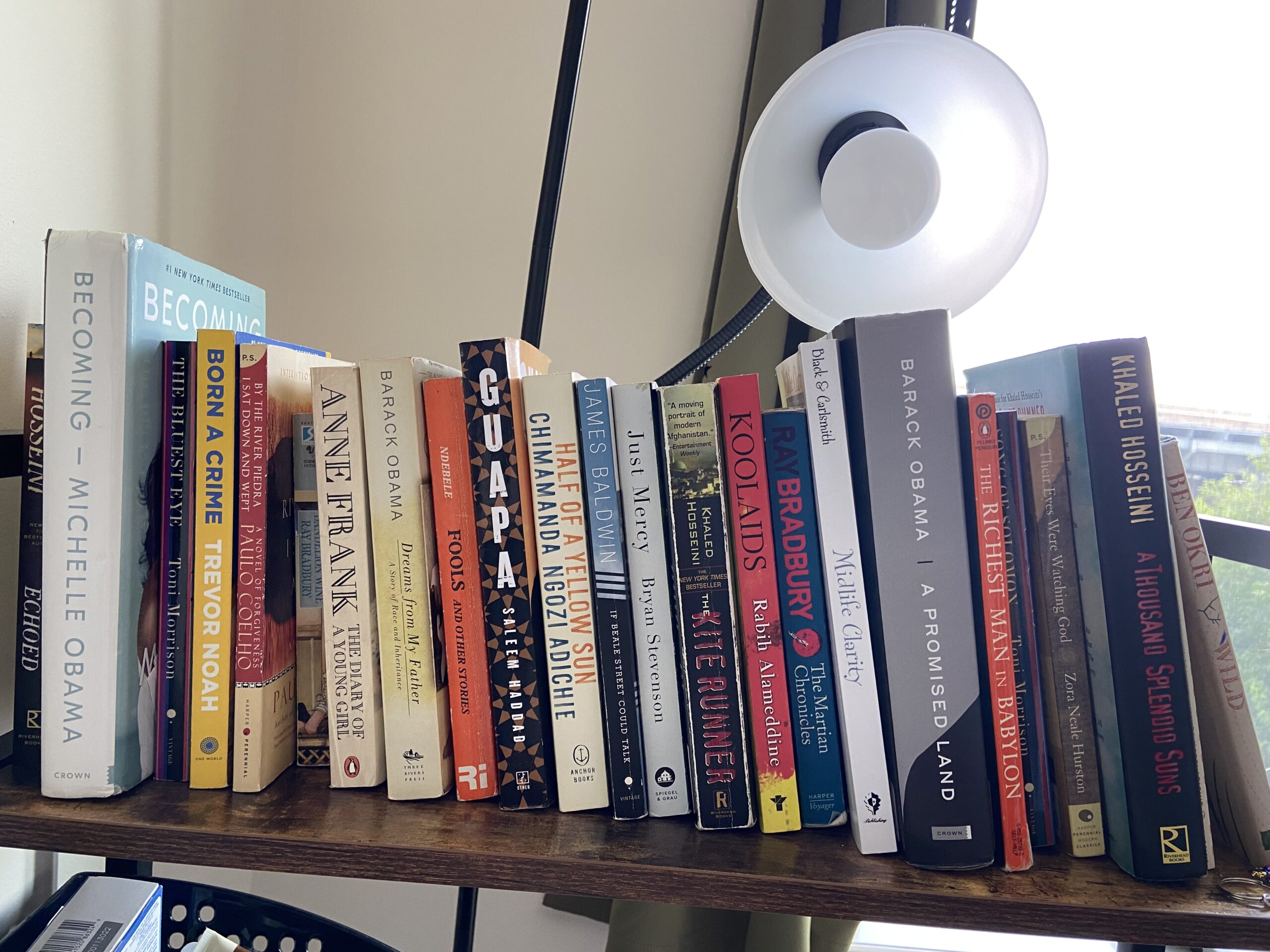
I also attempted to stop myself from being cooped up in my dorm room constantly. Being confined within that comfortable space heightened my feelings of loneliness and homesickness. So, I started taking walks, even if they were to nearby places, like to Brookline Booksmith (one of my favorite bookstores) or a coffee shop. Just going somewhere outside of my room helped immensely, whether it was doing homework in the lounge of my dorm, BU’s library or a coffee shop. These small steps made me start to feel more part of the community instead of a spectator. And this was only the beginning of my adjustment to life in a city after living my whole life in a small town, where my high school graduating class was smaller than some of my lectures at BU. 

Image credit: https://www.brooklinebooksmith.com/about 

Everyone’s experience with starting college is different. Some people face more homesickness than others and homesickness can be handled in various ways. Here are some websites that offer more tips on how to deal with feeling homesick: https://www.usnews.com/education/best-colleges/articles/how-to-handle-homesickness-in-college , https://www.hercampus.com/life/how-deal-homesickness-freshman-year/


By: Monica Manzo

Monica Manzo recently completed her undergraduate studies at Boston University where she majored in English and minored in History. Currently, she is planning on applying for some masters programs in publishing. In her free time, she can be found either reading or adding to her pile of unread books.


For over 20 years, the Campus Clipper has been offering awesome student discounts in NYC,  from the East Side to Greenwich Village. Along with inspiration, the company offers students a special coupon booklet and the Official Student Guide, which encourages them to discover new places in the city and save money on food, clothing, and services.  At the Campus Clipper, not only do we help our interns learn new skills, make money, and create wonderful e-books, we give them a platform to teach others. Check our website for more student savings and watch our YouTube video showing off some of New York City’s finest students during the Welcome Week of 2015.

Share

Visiting the Bronx Museum

Thursday, August 5th, 2021

New York City has its well-known museums: The Met, MoMa, Guggenheim. They all happen to be in Manhattan, but sticking to just Manhattan can leave behind a collection of other great museums across the city. One of those museums happens to be the Bronx Museum; and unlike the others where you’d have to pay twenty or thirty dollars for a ticket, this one happens to be free of charge. 
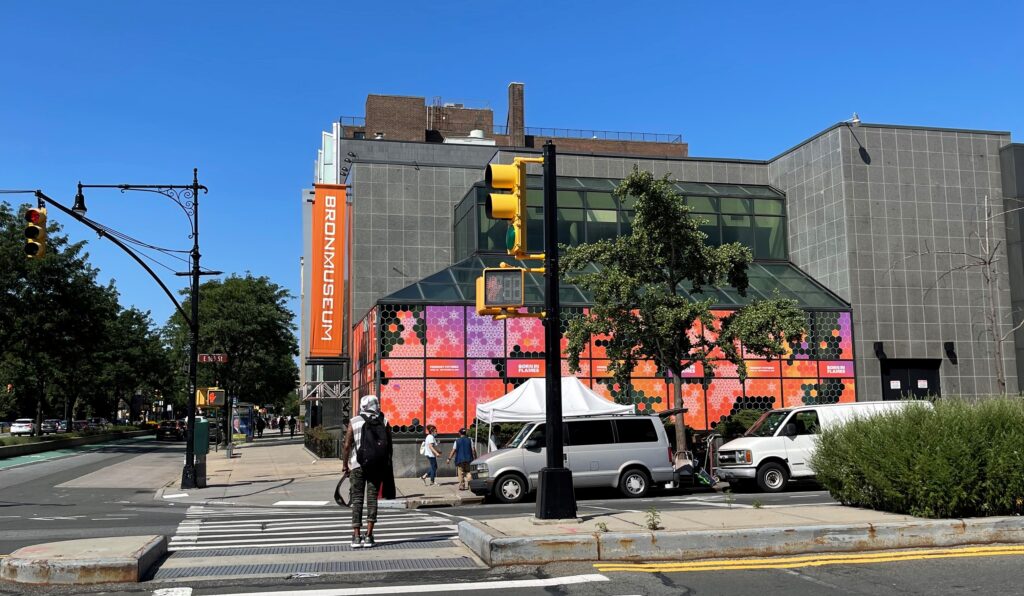
The Bronx Museum of the Arts is located on 165th Street and Grand Concourse, only a ten minute walk from Yankee Stadium or a three minute walk from the 167th Street Station on the B and D trains. It was founded in 1971 with a focus on contemporary art that can represent and engage the diverse communities within the Bronx. Its collections and exhibitions show artists from Asian, African, and Latin American backgrounds that are not typically seen in traditional museums. It also provides educational programs that serve the community, and directly supports Bronx-based artists as they develop and pursue their art. The museum is currently celebrating its 50th anniversary with plans to grow bigger in upcoming renovations.

To enter requires only to go on their website (http://www.bronxmuseum.org/) to reserve a free ticket due to Covid. The space is small with only enough room for two exhibitions. When I visited, those two exhibitions were Born in Flames: Feminist Futures and Wardell Milan: Amerika. God Bless You If It’s Good To You.
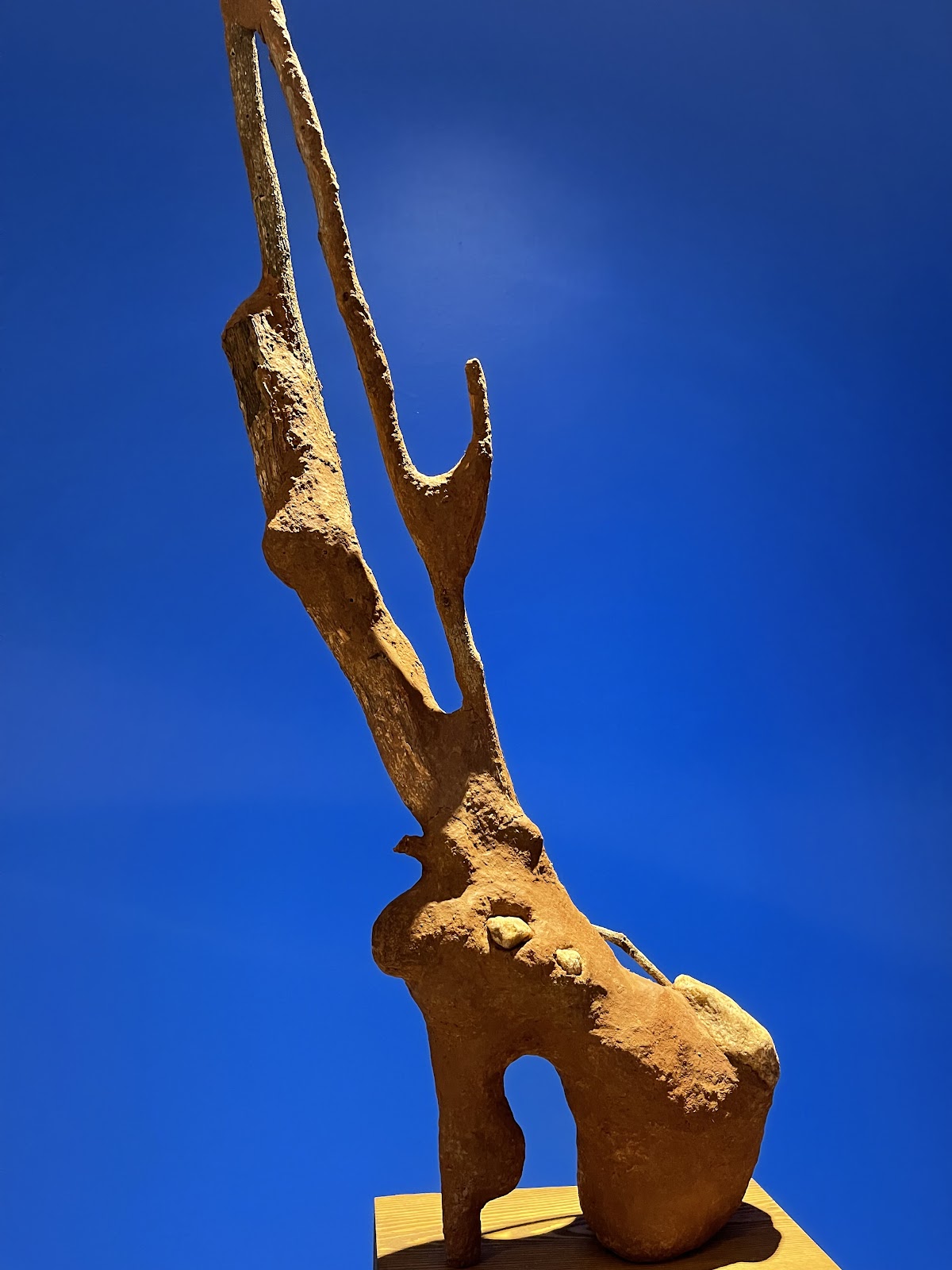

Wangechi Mutu, Heeler VI, 2016.
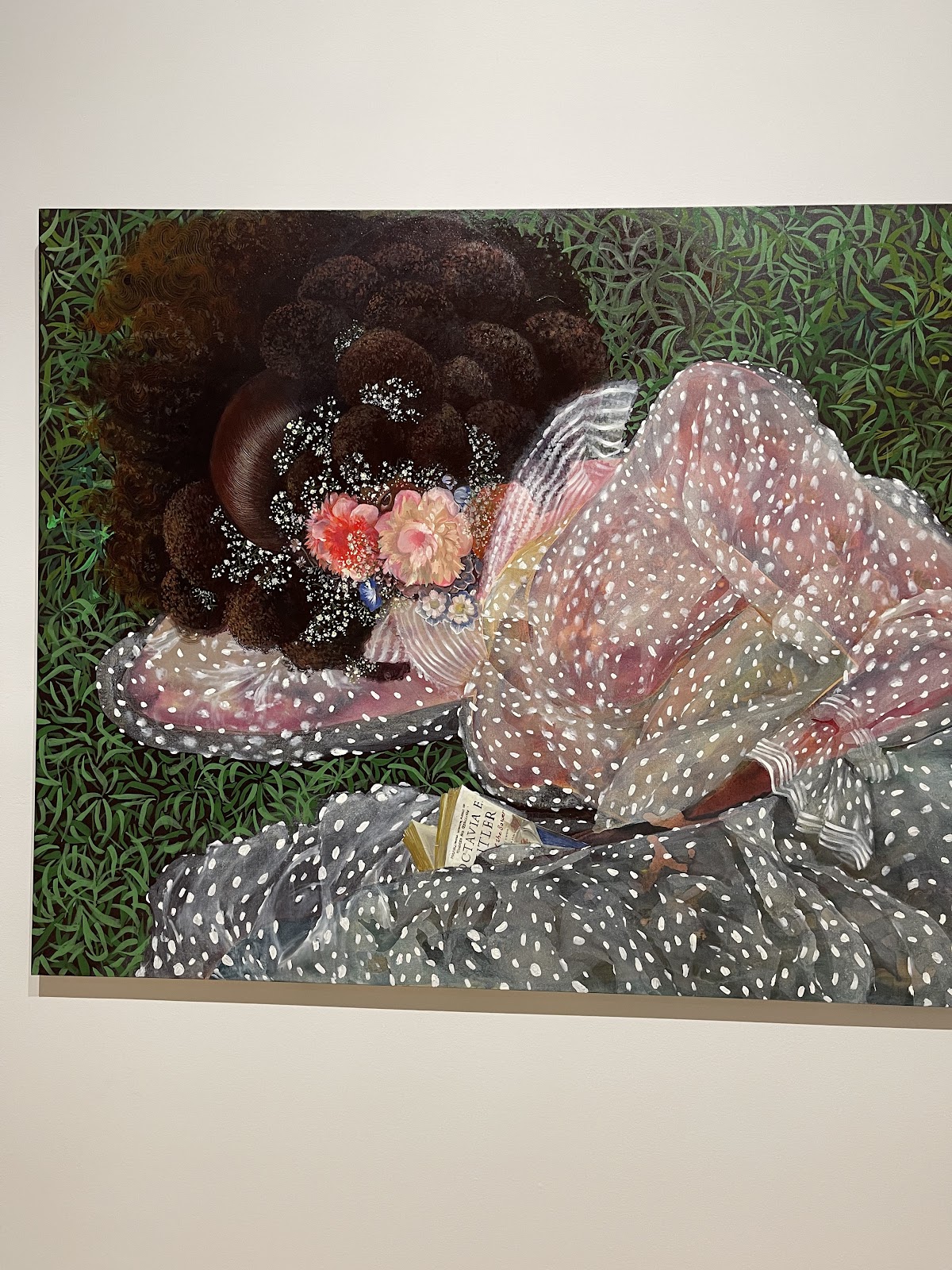
Firelei Baez, On rest and resistance, Because we love you (to all those stolen from among us), 2020.


Born in Flames: Feminist Futures is an exhibition that invites fourteen contemporary artists to bring in artwork that reflects on past and current attitudes toward women and generates new and hopeful imaginings of the future. The range of work varies from Wangechi Mutu’s heels made of clay and wood to resemble termite mounds to Chitra Ganesh’s mix of ancient Indian epics in the style of pop art with feminist commentary to Huma Bhabha’s deconstruction of a woman’s body parts into bits of styrofoam and clay and plastic to Clarissa Tossin’s Where the River Meets the Sea, a long piece of fabric full of running water, lush greenery, and the pollution and industry that interrupt both. Each woman brings their distinct cultural background and experiences to their art, creating clever and thought-provoking deconstructions and reconstructions of womanhood, generating futures that adhere to or completely flip our expectations of what women can be. 


Wardell Milan, My knees getting weak, and my anger my anger might explode, but if God got us then we gonna be alright, 2021. 


Wardell Milan: Amerika. God Bless You If It’s Good To You is an exhibition dedicated to exploring white supremacy in modern America. Eyes drawn roughly in charcoal and pencil follow you wherever you go, leading toward paintings of beautifully rendered flowers with painted vomit over them and mangled bodies that are stretched and warped and caricatured in different mediums. A big sculpture of a Klan hood dominates the center, and even in passing there are small paintings with Klansmen whose hoods can only be seen by looking past their white backgrounds. The grotesque renderings seek to express the active and passive ways with which racial violence is maintained on Black communities. Paired with the exhibition are performances that occur every two or so weeks that explore marginalized identities affected by said violence, the closest one being on August 18th at 6 pm. 

I was in and out of both exhibitions in less than an hour, yet was left in more awe than at any visit in the Met. The museum featured art that was much more daring and innovative than bigger collections like the Whitney. The cultural diversity of the artists provided new ways of seeing that illuminated issues and ideas that I haven’t seen in any other museum. There should be more museums like the Bronx Museum, and for that reason it is a museum I will definitely go back to and revisit. Who knew that such a gem could be found so far from Manhattan and for free?


By: Jared Skoro

Jared Skoro is a junior at NYU Gallatin studying a mix of English, Political Science, and Psychology. In his free time, he enjoys reading, hiking, and exploring a new neighborhood of the city every weekend.

For over 20 years, the Campus Clipper has been offering awesome student discounts in NYC,  from the East Side to Greenwich Village. Along with inspiration, the company offers students a special coupon booklet and the Official Student Guide, which encourages them to discover new places in the city and save money on food, clothing, and services.  At the Campus Clipper, not only do we help our interns learn new skills, make money, and create wonderful e-books, we give them a platform to teach others. Check our website for more student savings and watch our YouTube video showing off some of New York City’s finest students during the Welcome Week of 2015.

Share

Hard to Beat Vegan Food

Wednesday, August 4th, 2021

As you walk around the NYU campus, there are restaurants as far as you could see. For students with dietary issues, there are many restaurants supporting those needs. One of my favorite restaurants that every student should go to no matter if they have dietary restrictions is Le Botaniste. This restaurant is located in Soho, Midtown, and the Upper East Side. I recently discovered this plant-based restaurant. They have hot and cold bowls that are already made, and the best thing is that you could also make your own choice of a bowl with a wealth of ingredients to choose from. My main point regarding this restaurant is that they have endless protein options which are very important when you do not consume meat or even fish.

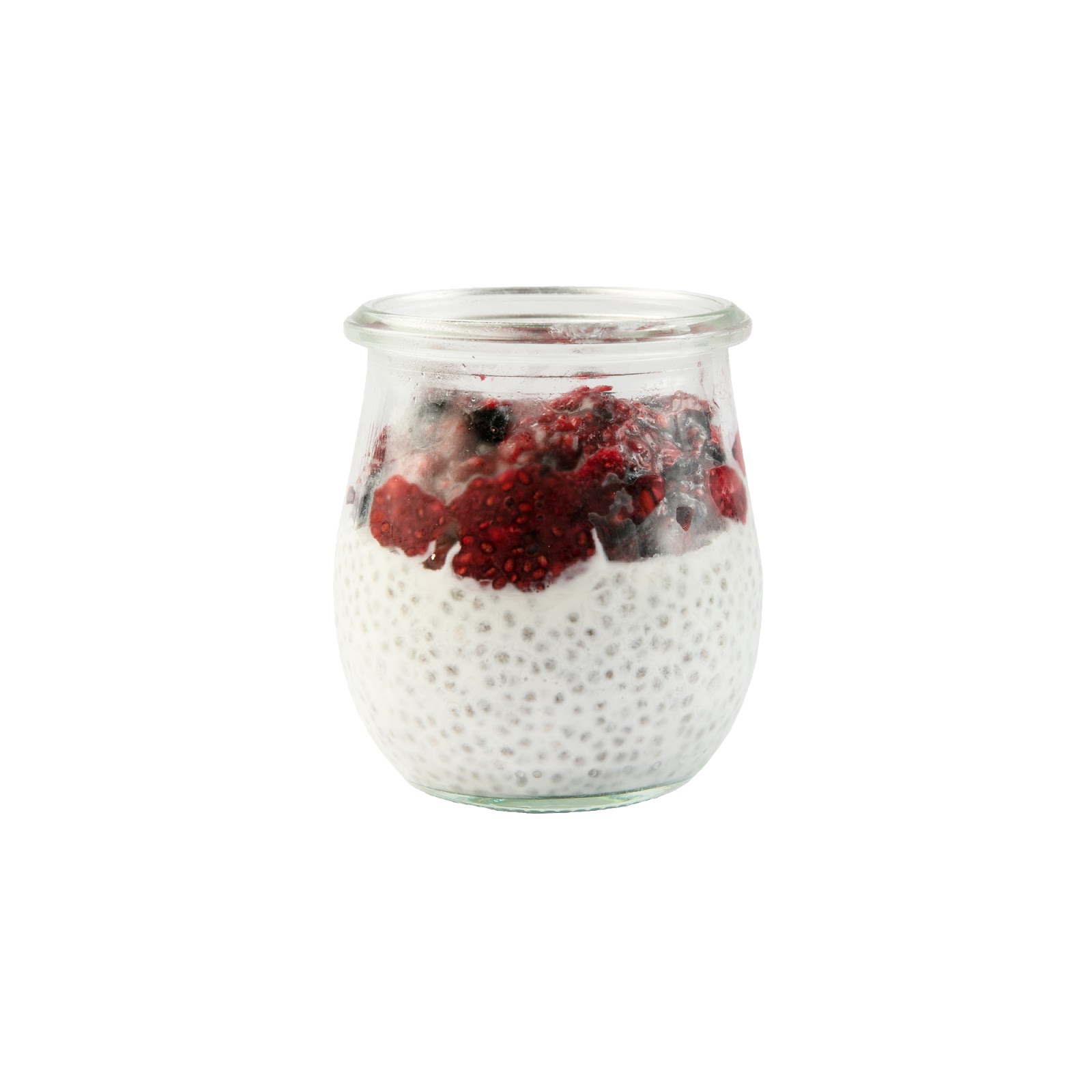
They have options ranging from breakfast, lunch, dinner, dessert, and even wine. If it is your first time going here are my ratings. You should definitely get the Red Fruit Chia pudding. Chia seeds are full of important nutrients that our body needs. They are full of antioxidants and fiber, along with many other nutrients. Eating them does not only make you feel good, but it also is very good for your health as well. This is the perfect and refreshing meal or breakfast, a snack, or even for dessert. When you scoop it up the consistency is thick and light leaving a coconut, nutty, and fruity flavor left in your mouth. It leaves your taste buds feeling happy and refreshed. The punches of fruit as you eat your way through the jar give punches of berry goodness. I rate this one 9/10.  

“Menu – Le Botaniste: Food and Wine Bar: Plant-based Organic: NYC.” Le Botaniste | Food and Wine Bar | Plant-based Organic | NYC. 22 Apr. 2021. Web. 15 July 2021.


My second and bar far favorite choice for lunch or dinner is their Botanical Salad. A lot of Le Botaniste’s ingredients are vegetables that support your gut health. Their Botanical Salad contains salad mix, quinoa, avocado, root vegetables, Tumeric onion, red sauerkraut, and pea shoots. What is spectacular about this meal is that it contains forms of vegetables, proteins, and fats. My favorite ingredient in this salad has to be the red sauerkraut. I am a sucker for anything that helps improve gut health and digestion, and that is exactly what the sauerkraut does because it is filled with probiotics. This salad is not only filled with multiple nutrients to nourish your body and vibrant colors, but it is fresh, raw, and will keep you feeling energized for the rest of your day. The best aspect of this meal is if you want to add extras they have many other side dishes, beet meatballs, steamed greens, pea shoots, tofu, etc. The options are endless. This one gets a 10/10 rating from me because you can get it how it is, or customize it to fit what you want!!! Definitely check this one out.

“Menu – Le Botaniste: Food and Wine Bar: Plant-based Organic: NYC.” Le Botaniste | Food and Wine Bar | Plant-based Organic | NYC. 22 Apr. 2021. Web. 15 July 2021.


Anyone and everyone should definitely check this spot out. You can eat in or get delivery. This restaurant is the freshest and healthiest spot if you wanna support your gut health. None of the options have ever been bad, everything has always tasted amazing leaving me feeling satisfied and good. The location in Soho is the best option for NYU students. It is only a walking distance away, and trust me it is worth the walk. Take a break from your meal plan, or the NYU cafe’s and take a leap of faith and try Le Botaniste. 

By: Hanna Mandel

Hanna Mandel studies Drama at NYU Tisch in hopes of being on the big screen one day. She hopes to venture into writing, directing, and producing. She loves to travel and explore new places, as well as trying new foods!

For over 20 years, the Campus Clipper has been offering awesome student discounts in NYC,  from the East Side to Greenwich Village. Along with inspiration, the company offers students a special coupon booklet and the Official Student Guide, which encourages them to discover new places in the city and save money on food, clothing, and services.  

At the Campus Clipper, not only do we help our interns learn new skills, make money, and create wonderful e-books, we give them a platform to teach others. Check our website for more student savings and watch our YouTube video showing off some of New York City’s finest students during the Welcome Week of 2015.

Share

Wine, Tradition & Conversation

Monday, August 2nd, 2021

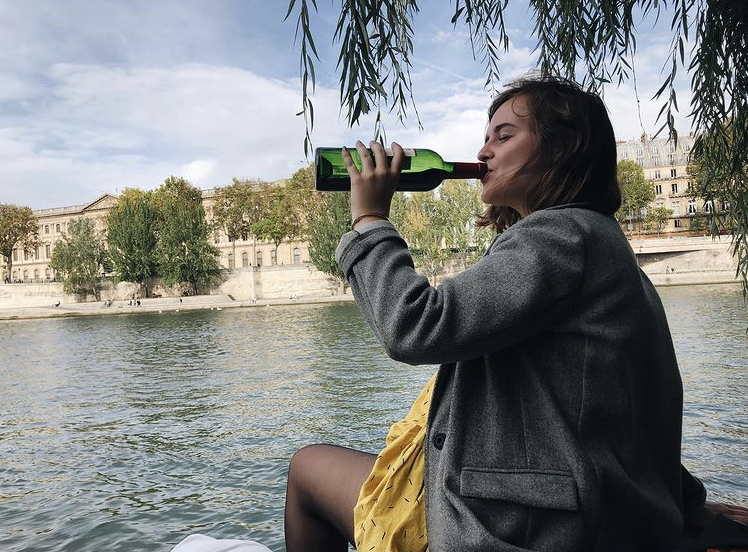
Wine plays an important role in my life, and I’m not alone. For thousands of years it’s been a central part of religious ceremonies: Catholic communions, Passover Seders, ancient rituals to Dionysus. As someone who studies religion and cares deeply about food, wine means a lot of things to me. A glass paired with a home cooked meal is a lovely treat to myself and friends, it makes a good housewarming gift, it goes well with late night reading, and it can tell us a lot about the place it comes from: the land that grew the grapes, the religion of the makers, the culinary traditions of its homeland. But what I love most about wine is that it can bring people together and create lively debates, conversations, and connections. Living, eating, and cooking around the world has taught me a lot about what wine can and should do for us.

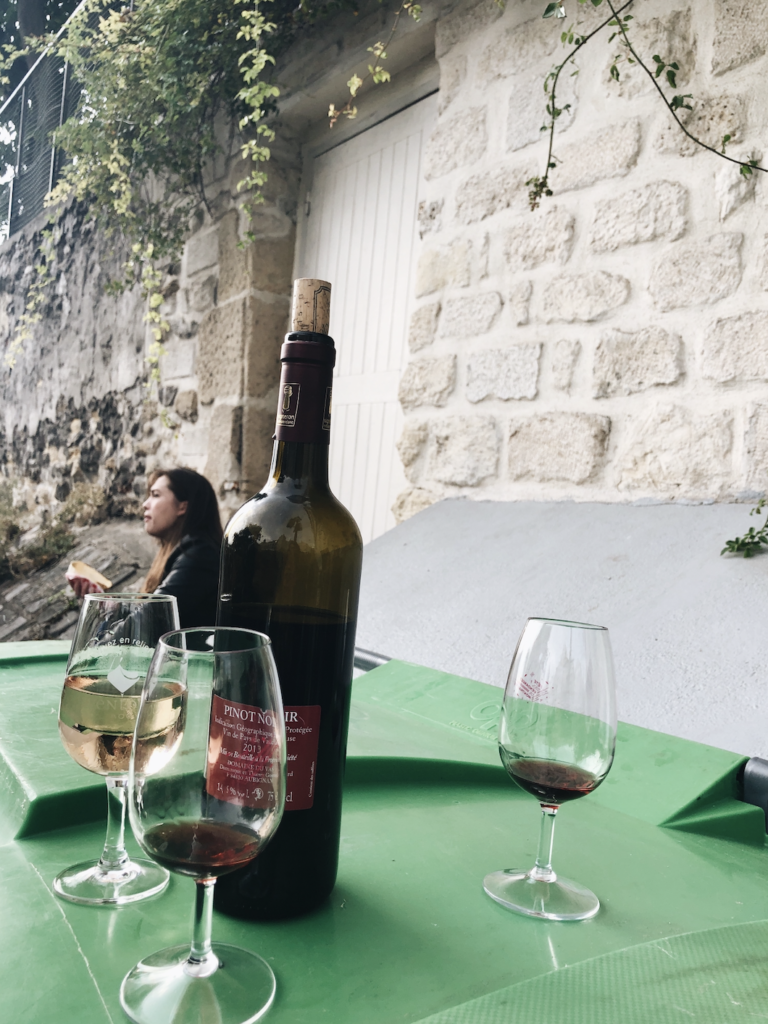
From a wine festival at Sacré Cœur in Paris. We celebrated with wine, cheese, live music, and art!

In the French tradition of the salon, drinking is combined with intellectual debate. Thinkers, writers, and artists gather at a cafe and discuss: what do we value? What should we value? What are we reading, what art is in fashion, how might we make our world more just? What does it mean to be just? In my world, I’m inspired to bring this inquisitive spirit into book clubs, dinner parties, and study groups. I pour everyone a glass of deep red wine and we start talking. Ask at least as many questions as you answer. Put out a charcuterie plate or a baked wheel of brie, and let the ideas-and wine-flow.

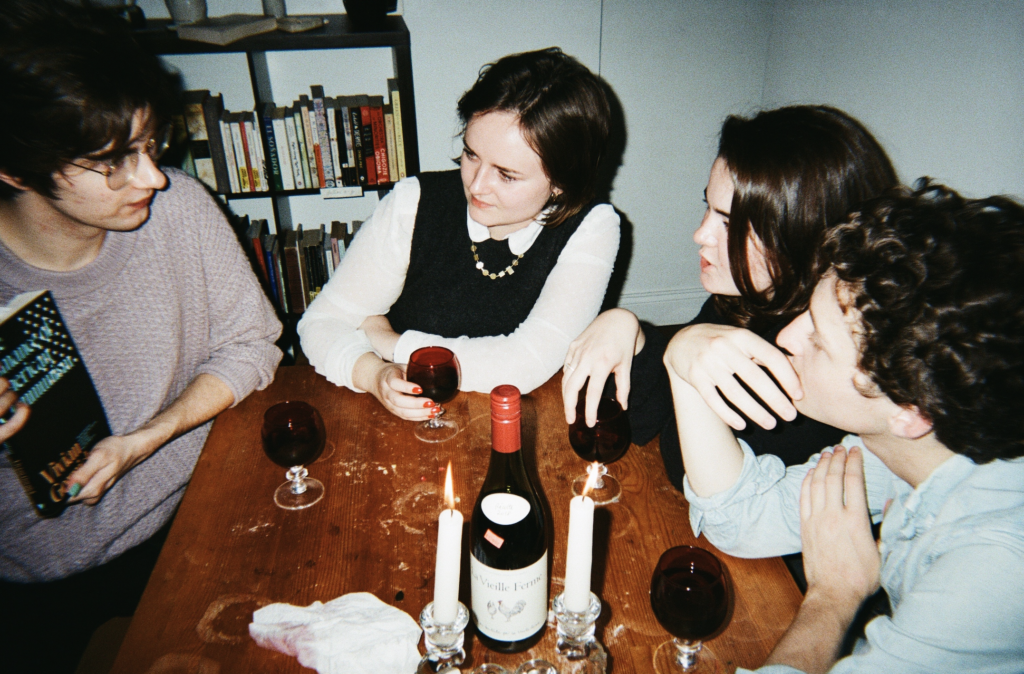
Discussing our favorite reads: Dani is telling us about The Romance of American Communism

In Israel I learned about how important wine is in the Jewish tradition. On each holiday my professors would teach us about what we were celebrating, accompanied often by a history lesson and related treat: apples and honey on Rosh Hashanah, challah on Shabbat, latkes around Hanukkah. The Hebrew word for the blessing of wine is Kiddush, whose root means holy or sacred. In your own life try connecting to your religious or cultural heritage. Do you or your family pair wine with certain foods or ideas? Or, ask your Jewish friends if they celebrate Shabbat and-if you’re lucky-maybe you’ll get to celebrate with them. Enjoy a little kosher wine and learn about what makes wine so important in Judaism. Share your oenological practices. Ask yourself why wine is or isn’t important to you, and in what context.

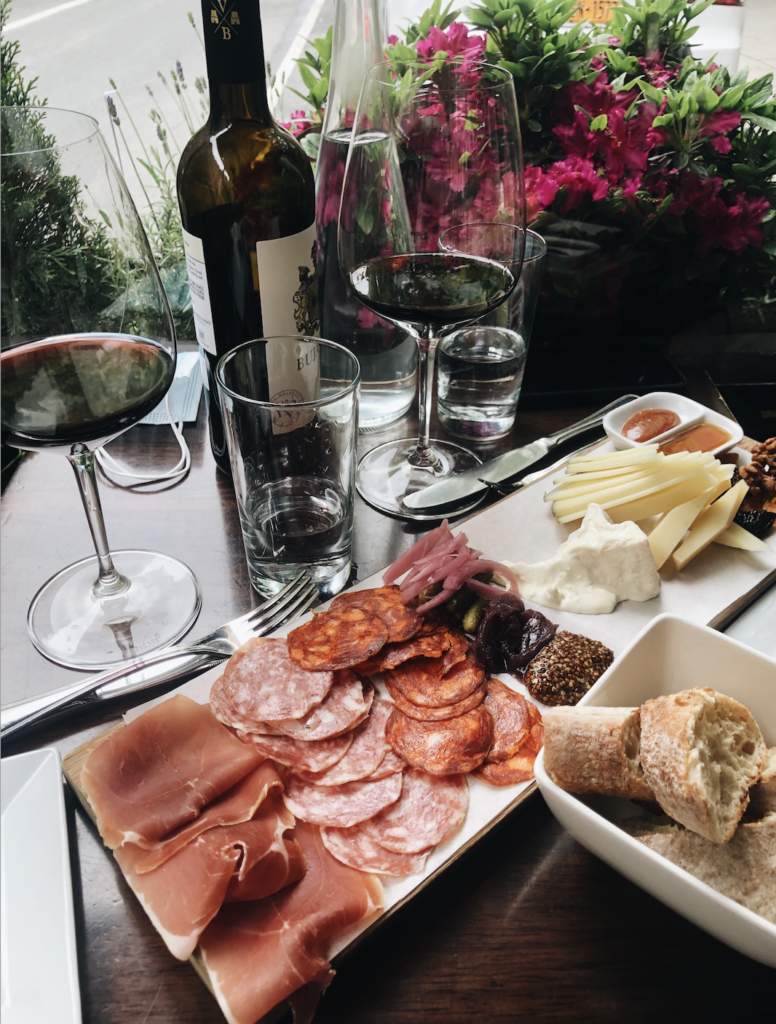
A little Shabbat charcuterie with a friend from Tel Aviv at Amelie Wine Bar near campus

In my personal tradition wine is best paired with a cozy night spent reading or talking with friends. There’s nothing I love more than spending time with people I love over a bottle of wine, catching up and discussing and laughing. I’ve learned a lot about wine and what it can do from living around the world, and in my home I try to incorporate my favorite parts of different traditions. We celebrate Shabbat with a good glass of wine, gather to discuss around a bottle, and share recipes and pairings with people we love. Try incorporating nice wine into your culinary, intellectual, and religious/cultural traditions.

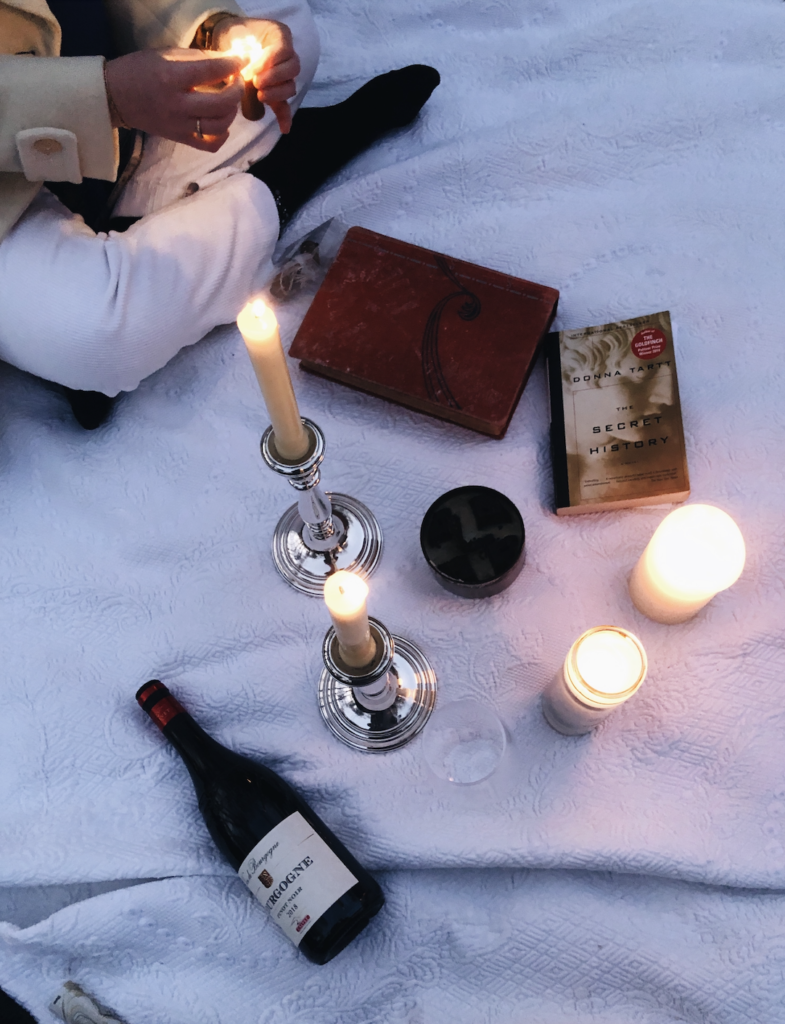
From a poetry reading in the park on my friend’s birthday. Celebrating her with wine, literature, candles, and cupcakes.

Please drink legally and safely. If you don’t know your limit, drink in little bits with people you trust. Wine should be something you intake in moderation, and it’s safest when we approach it with goals of cultural learning and understanding rather than to get drunk. Stay safe, stay smart, and enjoy your wine!


Cora Enterline is a senior at NYU studying law, ethics, and religion. She’s studied and worked in Paris and Tel Aviv, where she loved biking, traveling, dancing, and teaching English. She has a love for foreign languages, sad novels, themed dinner parties, and red wine by candlelight. This summer, follow her blog to learn easy, student-friendly recipes and find inspiration from around the world for your own dinners, picnics, and culinary adventures at home!


For over 20 years, the Campus Clipper has been offering awesome student discounts in NYC,  from the East Side to Greenwich Village. Along with inspiration, the company offers students a special coupon booklet and the Official Student Guide, which encourages them to discover new places in the city and save money on food, clothing, and services.  At the Campus Clipper, not only do we help our interns learn new skills, make money, and create wonderful e-books, we give them a platform to teach others. Check our website for more student savings and watch our YouTube video showing off some of New York City’s finest students during the Welcome Week of 2015.
Share

An Ode to Chicken: Chapter 4 — Finding Delight in Cheap Eats

Monday, August 2nd, 2021

My favorite food has been, and most likely will always be, chicken. 

I love chicken there is no denying that. My attempts at being vegetarian in the past have all failed at the sight of chicken tenders. It’s America’s favorite protein and the key to my heart. It’s chicken

Growing up in a family of five, there were many nights my parents didn’t have time to prepare a meal. Juggling full-time jobs and three kids, there were many evenings that we called upon our favorite cheap and easy restaurant: The Flying Chicken. The unsuspecting little restaurant, with orange walls and just a few tables, was known for selling out quickly, with only a few chickens left at the end of the day but only if you were lucky. 

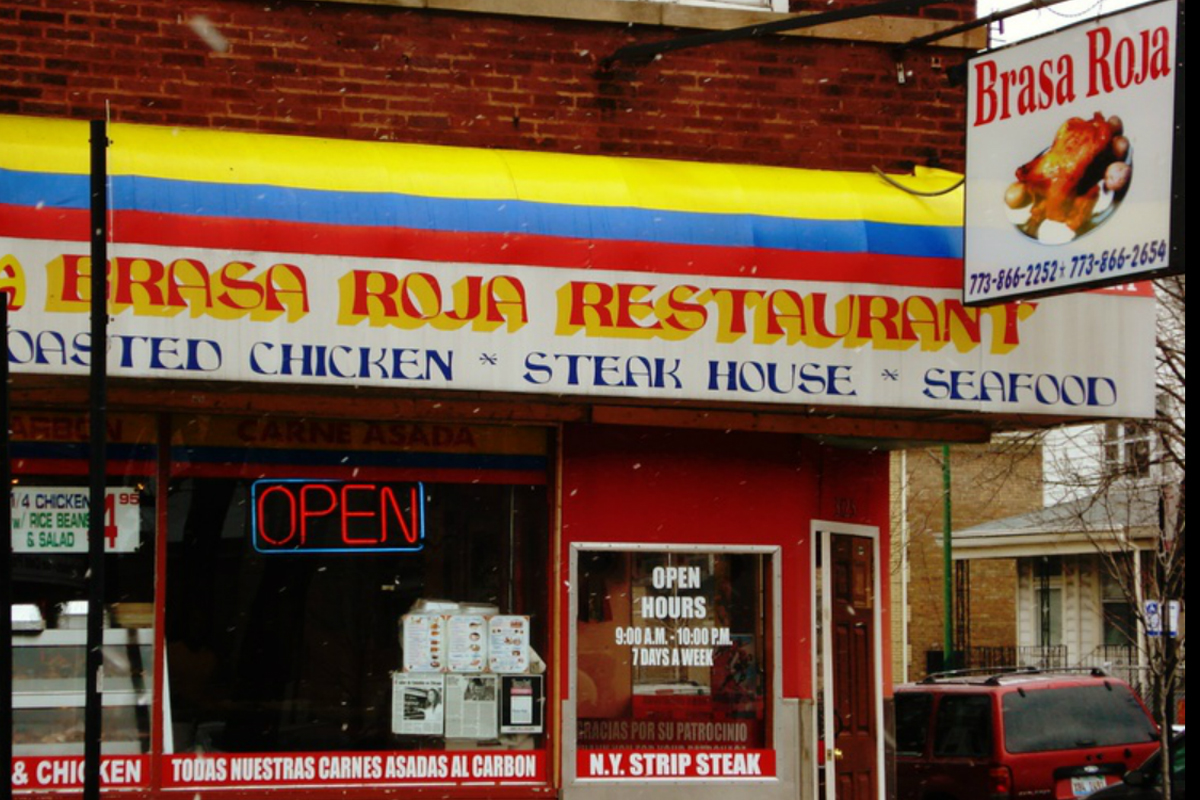
Another favorite of mine in Chicago: Brasa Roja. When The Flying Chicken closed its doors for good, this is where we satisfied all our cravings. 

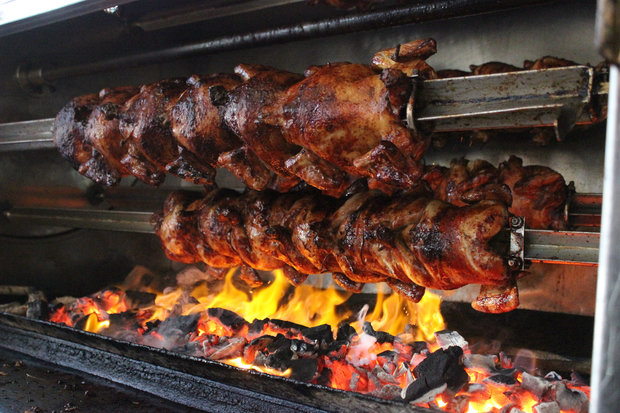
Pollo a la brasa, or grilled chicken, is something Colombia has mastered as a country. With perfect golden skin, every piece is just as juicy as the next. Although it might seem simple, Colombian grilled chicken is an art in itself. The chicken must marinate in a mixture of spices like oregano, thyme, cumin, and cilantro before being grilled to perfection. It’s a tedious process with results that are worth it. 

When my father would bring home white plastic bags filled with huge styrofoam boxes, I knew what was coming: pieces of roasted chicken sitting atop white rice, chunks of potatoes, and arepas made from corn flour stuffed with cheese. My brothers and I fought for whatever remained, always unsatisfied with the amount given. 

Although chicken might seem to be the focus here, the real point of what I’m talking about is how food does not need to be fancy to be considered “good.” Pollo a la brasa, albeit underrated and difficult to perfect, is not fancy food. It’s simple food that is meant to be eaten with your hands and an abundance of napkins, with oil stains collecting on the front of your shirt. Despite this, it remains one of my favorite meals because of the amount of flavor packed into a $12 styrofoam tray. 

The traditional way of cooking pollo a la brasa. Although seems like rotisserie chicken, it is considered grilled. 

I’m not saying expensive food isn’t good; I work in a restaurant with high prices and amazing meals. But, expensive food is not always attainable for college students. This has led to me exploring the hidden restaurants tucked into corners on empty streets or exploring local grocery stores for good eats. 

On the nights where I am desperately missing pollo a la brasa, I take myself to the grocery store and pick up the next best thing a rotisserie chicken. The possibilities of rotisserie chickens are endless: chicken salad, tacos, burritos, buffalo chicken dip, sandwiches, and more. All for $10. 

The flavor might not be the same, but no one said you can’t doctor up a rotisserie chicken to your own liking! Personally, I love to shred mine. Then, when I’m ready to eat I’ll season it according to what I’m craving. This is a great way to not only get the most out of what you’re paying for but also being able to experiment with a wide range of different recipes. Like I said before, the beauty of chicken is chicken. It’s easy, versatile, and cost-friendly. Don’t be afraid to prepare it in new ways! Your options are endless from fried, baked, seared, and stuffed chicken. Whatever you’re heart desires. Just be sure to share, and remember: all food is good food. It doesn’t have to be fancy, expensive, or covered in spices you can’t pronounce to be considered tasty. Take delight in the cheap eats, and share the deliciousness with others! 

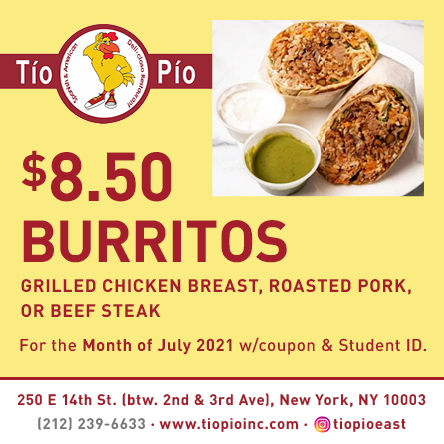
If you’re curious about pollo a la brasa, I recommend trying Tio Pio! They have a great roasted chicken that is similar in flavor to the real deal. Check out the coupon below for a delicious burrito from them! 


By: Allegra Ruiz

Allegra Ruiz is a junior at New York University and she is from Chicago. She studies English and is minoring in Creative Writing. In her free time, she enjoys journaling, reading books and essay collections, and cooking for her roommates. Currently, she lives quietly in New York. 

For over 20 years, the Campus Clipper has been offering awesome student discounts in NYC, from the East Side to Greenwich Village. Along with inspiration, the company offers students a special coupon booklet and the Official Student Guide, which encourages them to discover new places in the city and save money on food, clothing, and services.  

At the Campus Clipper, not only do we help our interns learn new skills, make money, and create wonderful e-books, we give them a platform to teach others. Check our website for more student savings and watch our YouTube video showing off some of New York City’s finest students during the Welcome Week of 2015.
Share

Plugging in with Good Intentions — Chapter 4: Music Mix

Monday, August 2nd, 2021

There’s no denying that music influences our mood and form of expression. Whether you’re a composer, performer, or a mere listener, music can be the perfect outlet to express creativity and let out emotions.

With technological advancements, we can listen to any song our heart desires with just a few clicks of a button. 

Sometimes we need a distraction or boost to our everyday lives. For me, I think of music as an abstract companion. As long as I have a device that can connect to music, I know that I can depend on it to be there for me. I never go about my day without listening to some form of music. Even if it’s a busy day, I’m sure my ears will end up hearing a tune from a commercial or the radio playing from my neighbor.  


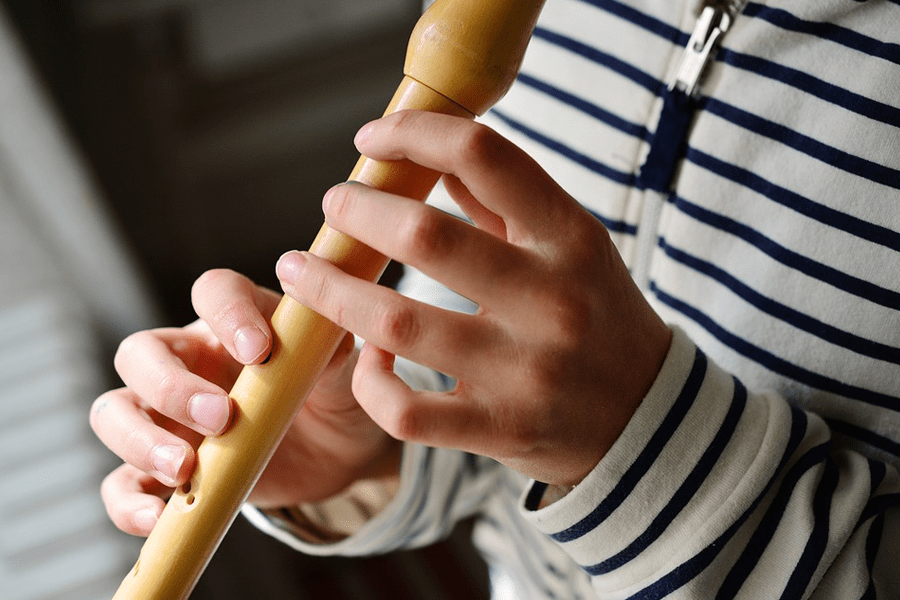
Back in third grade, my school required us to learn how to play the recorder. I became so fond of it that I made my parents purchase my own recorder instead of renting it out from school. It also helped that we were told that we would be rewarded with colored ribbons each time we mastered a song. This incentive definitely pushed me into trying my best and advancing my skills. I would say this was the point where music became a bigger part of my life. 

Once I reached fourth grade, middle school band teachers were brought in to introduce us to the other instruments that we could learn to play. At this point, it wasn’t mandatory to learn another instrument nor play the recorder. Still, I chose to learn how to play the flute and went on to perform in numerous school concerts. Along with playing in the middle school band, I played for the all-city band that was made up of students from different middle schools in Quincy, MA. From making new friends to developing music skills, I owe it to my younger self for sparking my appreciation and enjoyment of music.


Maybe you’re not a big fan of music. Yet, let’s look at the wide range of benefits that music brings to our lives. 

1. Mood Matcher

  • Music platforms such as Spotify and Apple Music are perfect for discovering new music and creating playlists tailored to your mood. From songs to sing while in the shower to crying in the rain, the search for new music never has to end. 

2. Mental Health

3. Social Connections

  • Music can easily be shared with others via the Internet. From individual songs to packed playlists, you can find people who have similar music tastes. 

4. Cognitive Boost

  • Listening to music can block outside noises and improve your concentration.

5. Increase workout endurance

  • High tempo tracks can help boost physical activities. By blocking out distractions, you can focus on building strength and endurance.

These are just a few of the many benefits that music can bring into our lives. From meeting new people to keeping calm under stressful activities, listening to music stimulates our ears and brain activity. It doesn’t matter if you are musically inclined or a fan of a certain artist. Remember it’s all about having fun, encouraging good vibes, and plugging in with good intentions


If you’re in need of some tech to help foster your music career or some new headphones to listen to some tunes, check out Adorama!


By: Sydney Ly

Sydney Ly studies Communication with dual minors in Sociology and Anthropology at the University of Massachusetts Boston. She is currently working in retail and has experience as a tutor. Her passions include but are not limited to reading, listening to music, and watching The Office.

For over 20 years, the Campus Clipper has been offering awesome student discounts in NYC, from the East Side to Greenwich Village. Along with inspiration, the company offers students a special coupon booklet and the Official Student Guide, which encourages them to discover new places in the city and save money on food, clothing, and services.  

At the Campus Clipper, not only do we help our interns learn new skills, make money, and create wonderful e-books, we give them a platform to teach others. Check our website for more student savings and watch our YouTube video showing off some of New York City’s finest students during the Welcome Week of 2015.
Share

How Creativity Can Be A Part of Your Life

Monday, August 2nd, 2021

Oftentimes when we think of creatives we think of the outliers in our society: the people who get paid to sing, dance, paint, write stories, or make movies. We think of experts with natural born gifts and we do not associate our untrained eyes, hands, and voices with these artisans. Yet art and creativity are all around us. Up until a certain age we are schooled in the arts, through school plays and elementary arts classes. And even now, whether we are personally involved in the creation of art or not, we have access to films, television, books, and creative videos. 

Yet, there can still retain a measure of distance between us and the art we take in. It is important for us to acknowledge and embrace the role of art in our lives. We should give ourselves over to its therapeutic qualities and understand that art is not simply a superfluous ornament of daily life but a core facet of being human. We need to tap into the arts in whatever way we are drawn to them in order to connect more deeply to the human experience. 


Escapism

When you’re having a tough day you can disappear within a tv show or a film. You can turn on music and drown out the noise around you or take a deep dive into the virtual archives of incredible artists.

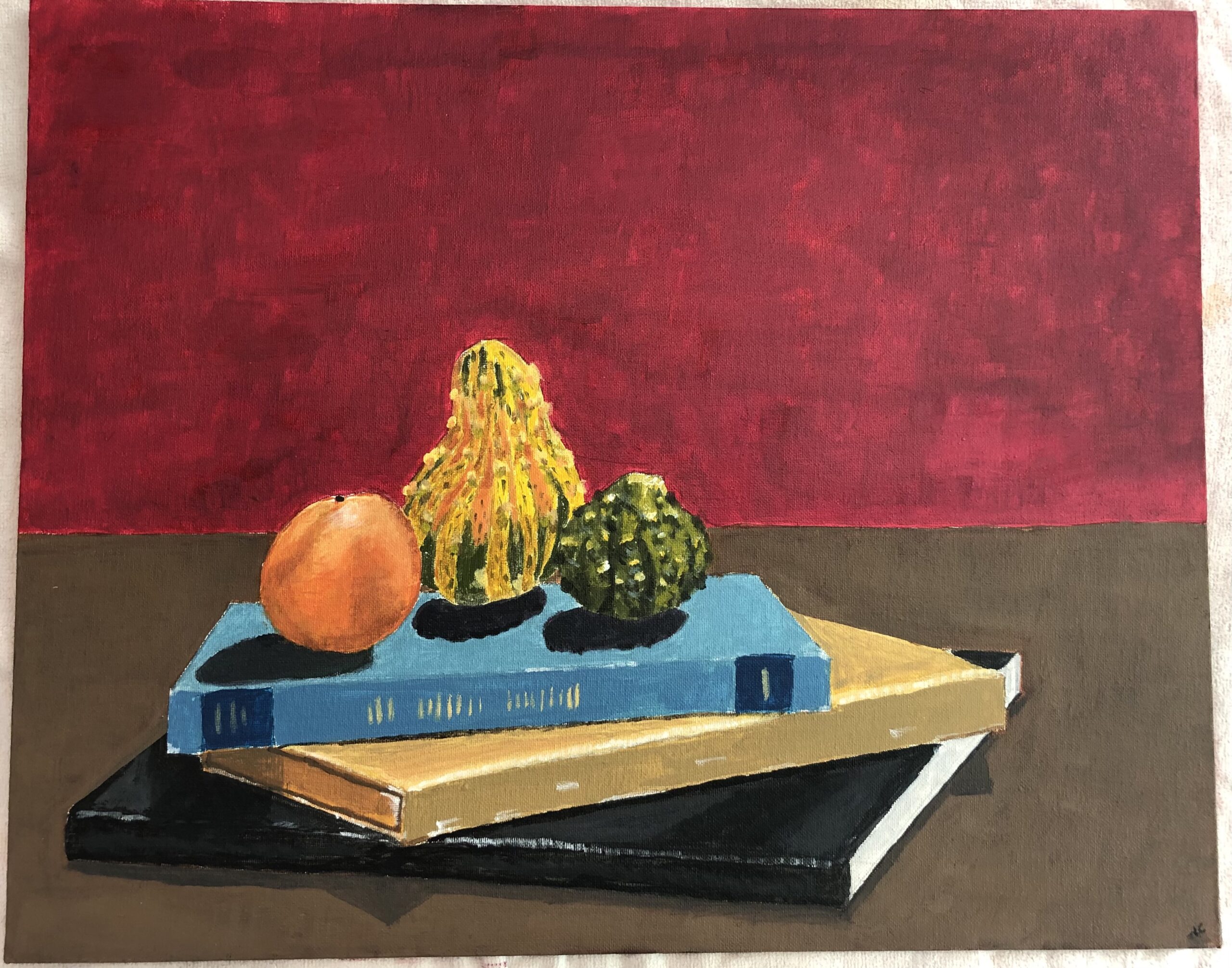
One of my favorite still life paintings that I completed

Vacation

If you’re looking for something cultured and new to do with loved ones you can visit museums, take a paint and sip class, or go to the theater. Concerts, drag shows, poetry slams, and live music are great options for special (or everyday) occasions. 

Some of my FAVORITE books

Creation

You can doodle in your notebook when a lecture gets too heady and unbearable. You can set a timer for fifteen minutes and see what words you can produce to fill up a blank page. You can paint poorly, sing in the shower, write fanfiction, or create fan art. You do not have to be an expert to create art. 

Therapy

You can do any of the above activities alone or with others to deepen relationships and fellowship in memorable ways. These acts can be community building and relaxing. Furthermore there are therapists who specialize in utilizing art to reach and heal inarticulable traumas. With professional guidance, something as simple and accessible as painting can be a soothing outlet. 


Art has many places in our lives. As we work to acknowledge that truth and incorporate more creativity into our day to day habits, we will see the world in a more colorful and hopeful light. 


Taylor Custis is a recent graduate of NYU where she made her own major because it sounded like a cool thing to do. She enjoys stories of all kinds, ethnic foods, and spiritually charged candles. She is currently in Queens embarking on a career in written and visual storytelling.


For over 20 years, the Campus Clipper has been offering awesome student discounts in NYC,  from the East Side to Greenwich Village. Along with inspiration, the company offers students a special coupon booklet and the Official Student Guide, which encourages them to discover new places in the city and save money on food, clothing, and services.  At the Campus Clipper, not only do we help our interns learn new skills, make money, and create wonderful e-books, we give them a platform to teach others. Check our website for more student savings and watch our YouTube video showing off some of New York City’s finest students during the Welcome Week of 2015.
Share

Acceptance: Becoming a College Student

Friday, July 30th, 2021

Autumn of 2017 was one of the most stressful times of my life. A few months shy of 18, I spent the Saturday after Halloween submerged in the couch, eyes fixed to my computer screen while episodes of Spongebob played muted on the TV. That night, the Early Action college application would close promptly at midnight. 

The day prior, a friend explained to me there was a higher chance of getting accepted into the colleges I wanted if I applied for Early Action because of the smaller number of applicants. I rushed home as soon as school was over, planted myself on the couch and started to type out supplemental essays for the eight schools I wished to attend. 

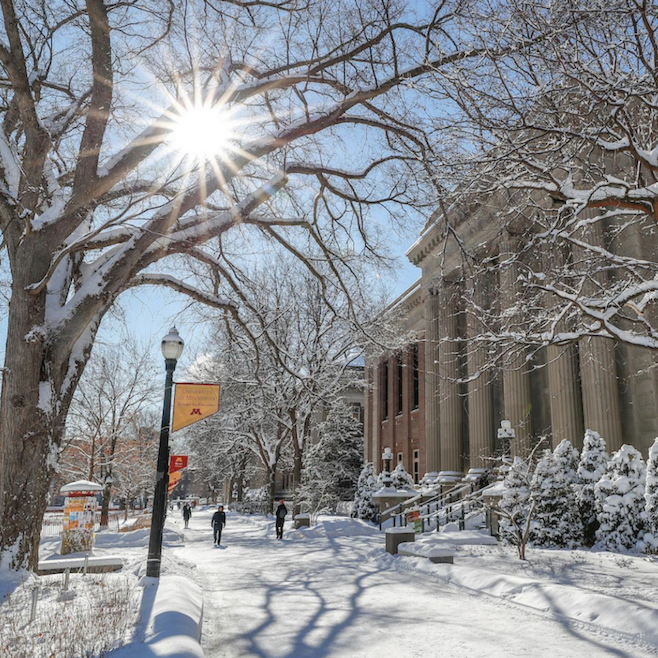
During my senior year I was still pretty unsure with what I wanted to do with my life. I knew I enjoyed reading and writing but I didn’t have a passion like many others in my grade. Because of this, I applied to schools all across the country without getting my hopes too high. I didn’t have a specific dream that involved a particular school, but I planned on attending the University of Minnesota, Twin Cities, a campus about 15 minutes from my house and a safety school for most locals. 

Photo Credit: www.instagram.com/umntwincities

A few anxious months later, the results started trickling in. I found out I was accepted to the University of Wisconsin, Madison while in line for popcorn at the movie theater. My acceptance to the University of Minnesota, Twin Cities arrived by email at dinner time, while my parents watched the local news and ate dinner on the couch. My acceptance into Boston University’s College of Communication came on a lazy afternoon watching cartoons in my basement. 

Getting accepted to BU came as a major surprise. To be honest, I had completely forgotten I even applied and only did so because of my dad’s encouragement. One drizzly and cold spring break trip to Boston a year prior to visit BU’s campus left me with a bad impression of the college and the town. The campus was a group of blocky, concrete buildings plopped down in the middle of a busy city. The outdated library and brutalist dorms were depressing. Nickerson Field in West Campus was the only part of the school that felt remotely similar to the colleges I grew up near, but the campus lacked community and school spirit. 

Because of that trip I almost turned my back completely on BU. I spent many long nights mulling over my choice between the University of Minnesota and the University of Wisconsin. My acceptance to BU was a great honor and opportunity, but it was completely forgotten under my preconceived notions and first impressions of the school. 

I almost let judgement get in the way of my decision. Watching the kids in the grades above me go to big schools like the University of Minnesota and the University of Wisconsin compelled me to follow in their footsteps. Attending schools in the Midwest was easy and familiar and most were a short drive away from my childhood home and populated with many other graduates from my high school. 

Luckily, my dad knew that moving out of the Midwest and across the country by myself was the best thing for me. It would teach me confidence and resilience, two qualities I lacked from growing up in such a tight-knit and predictable community. 

Taking risks, especially at a time in life with so much change, can be paralyzingly terrifying. Whether you’re attending a school 15 minutes from your house or 1500 miles away, moving out of your house and gaining independence is a major step in anyone’s life. I was lucky enough to have another influence pushing me to get out and take a risk. I realize a lot of people may not have that luxury, but I hope any other indecisive students realize that every opportunity is important and something to take seriously. 

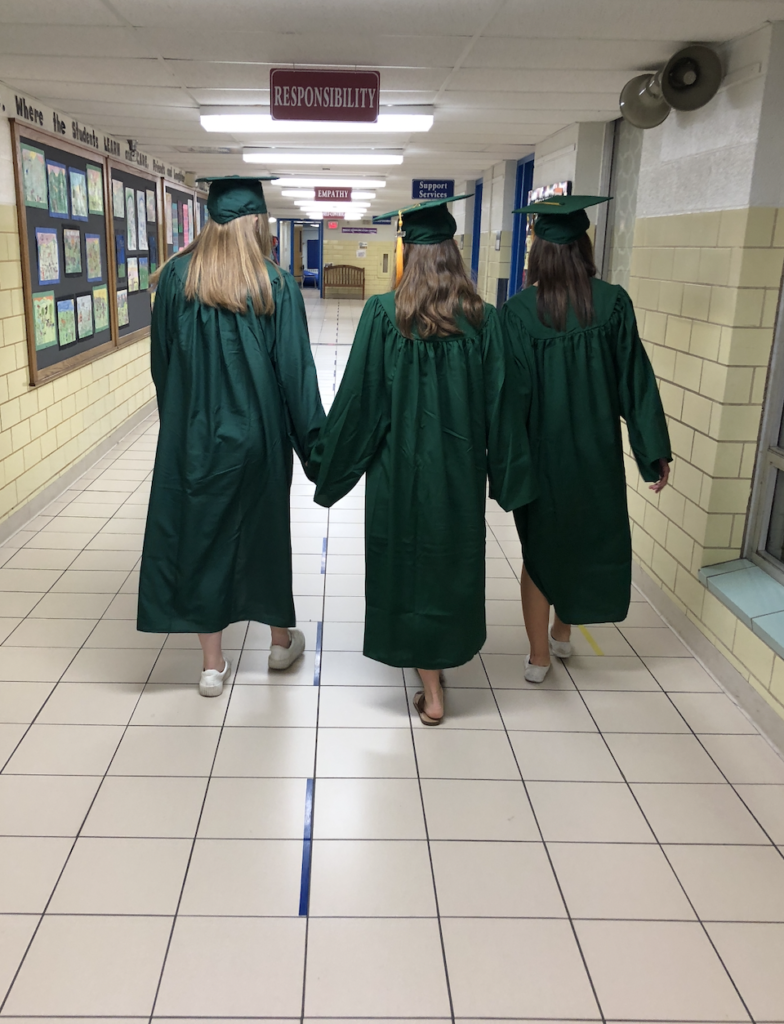
Me, in the middle, with my two best friends of 10 years walking through our elementary school on graduation day. Photo taken by Sammy Baraga.

Don’t let fear hold you back from taking chances and don’t let fear control your perceptions. I almost passed up one of the greatest opportunities of my life because I was scared and I let fear justify my negative feelings. 

That being said, choosing to attend BU and move over one thousand miles away from my home was one of the hardest decisions and transitions I’ve ever made. At the time, life only seemed to get worse, but writing this now I can look back and appreciate all of the challenges and hard moments for how they’ve shaped me today.

My name is Toni Baraga and I am a senior in COM at Boston University studying journalism with a minor in archaeology. I have a passion for writing and I believe that everyone has a story. I have worked as a reporter for various newspapers, such the Somerville Journal and Boston University’s Daily Free Press. I grew up in St. Paul Minnesota and reside in Boston.

For over 20 years, theCampus Clipper has been offering awesome student discounts in NYC,  from the East Side to Greenwich Village. Along with inspiration, the company offers students a specialcoupon bookletand theOfficial Student Guide, which encourages them to discover new places in the city and save money on food, clothing, and services.  At theCampus Clipper, not only do we help our interns learn new skills, make money, and create wonderful e-books, we give them a platform to teach others. Check ourwebsite for more student savings and watch our YouTube video showing off some of New York City’s finest students during theWelcome Week of 2015.

Share

Chapter 1- From New Jersey to Boston: The Decision to Move to a City

Friday, July 30th, 2021

As a junior in high school, there were only a few things I was sure of. The first was I wanted to go to a college where I could major in English and writing. These were always the subjects I was most passionate about in high school and I wanted to study something I enjoyed in college, so this choice felt clear. The second thing I was sure of is that I wanted to study abroad, preferably in London. I had always been drawn to London for some reason. Perhaps it’s because the city left a lasting impression on me after repeatedly watching the 1998 version of The Parent Trap and Mary Poppins throughout my childhood. Also, as a prospective English major, it made sense to study abroad in the country where writers like Shakespeare, Jane Austen and the Brontë sisters lived. However, the gigantically glaring question that I had no answer to was this: where would I go to college?

I grew up in a town in New Jersey that is approximately a square mile and my graduating class was less than a hundred people. I had seen countless romanticized depictions in movies, books and TV shows about people moving from small towns to big cities, thus the idea of going somewhere totally different was intriguing to me. I wasn’t particularly keen on applying to any schools in New York City. It was a city I was accustomed to visiting at least twice a year and I never foresaw myself living there. It was simply too bustling for me. After doing some research, I discovered a few universities and colleges in Boston that piqued my interest. This eventually led to my uncle and I driving to Massachusetts to visit Northeastern University, Boston College, Emerson College and Boston University.

When we were not taking campus tours led by eager students, my uncle and I decided to wander around Boston and part of the surrounding suburbs, like Brookline. During our exploration of Boston, it began to dawn on me that spending a few days exploring the city and living there were two distinct things. While walking around Brookline one evening and peeking into various storefronts, I realized that if I chose Boston, I wouldn’t be a tourist in the city. If I ended up in Boston, I wouldn’t be staying in a hotel with a relative and returning home in a couple days. I would be living in this urban center on my own, which was daunting to consider, yet part of me was also excited to think of all the independence, activities and resources I would have at my disposal. 

Commonwealth Avenue, Boston University campus
Boston University. Image Credit: https://www.bu.edu/bostonia/winter-spring15/us-news-ranks-bu-37-of-top-500-global-universities/ 

I didn’t let my mind set on definitely going to school in Boston, though. I applied to colleges and universities in both Pennsylvania and New Jersey, so that I could be closer to home. Some of these schools even fit the idea of what I pictured a college campus to look like, with their green spaces, quads and stone facade buildings. As time passed after I submitted my applications and I was just anxiously waiting to hear back from all these schools, I subconsciously began to assume that I would most likely end up staying in New Jersey. I thought that the probability of me being accepted into the more competitive out-of-state schools was slim and it would be more financially feasible to remain in-state. Also, by the winter of my senior year of high school, everything started to feel real. I would actually be graduating, no longer see the same faces everyday and go to college. If I ended up going out of state, I would have to say goodbye to my family, which was beginning to feel like another massive change I wasn’t entirely prepared for. I was, and still am, close to my family and the thought of leaving behind this crucial support system was terrifying. 

However, on a fateful Saturday morning in March of 2017, I was shocked to be accepted into Boston University, especially after receiving a rejection from Northeastern two days prior. What was even more surprising was the financial aid package, which made BU a feasible option. Boston University certainly checked off a lot of boxes for me: I could afford to go, they had programs that interested me, I could study abroad, I would be guaranteed housing for four years, etc. Of course I was apprehensive about leaving home, but as the astonishment wore off in the following weeks, I told myself that I would regret not taking the opportunity to move somewhere new and experience being on my own. Therefore, with nervous excitement, I accepted the offer to begin my undergraduate studies at Boston University in the fall of 2017. 

Quick tip: choosing a school for either undergraduate or graduate studies is a pretty monumental decision, so you shouldn’t feel afraid to make inquiries. Whether it is sending an email to someone or posing a question when touring a campus, it will help you gather all the information you need in order to decide where to apply and, ultimately, what school to select. For instance, at the end of my campus tour of BU, I asked the tour guide about the study abroad program. It turned out that he had just returned from studying abroad in Geneva and he described the application process and what it was like living in a different country. Even though it was only one person’s account, I felt more confident in and curious about BU’s study abroad program after hearing someone else’s experience. It could also be helpful to make a list and prioritize what you are looking for in a college. What is most important to you: location, financial aid, research opportunities, study abroad options, housing, classroom size, campus lifestyle, etc.?


By: Monica Manzo

Monica Manzo recently completed her undergraduate studies at Boston University where she majored in English and minored in History. Currently, she is planning on applying for some masters programs in publishing. In her free time, she can be found either reading or adding to her pile of unread books.


For over 20 years, the Campus Clipper has been offering awesome student discounts in NYC,  from the East Side to Greenwich Village. Along with inspiration, the company offers students a special coupon booklet and the Official Student Guide, which encourages them to discover new places in the city and save money on food, clothing, and services.  At the Campus Clipper, not only do we help our interns learn new skills, make money, and create wonderful e-books, we give them a platform to teach others. Check our website for more student savings and watch our YouTube video showing off some of New York City’s finest students during the Welcome Week of 2015.

Share

Fort Tryon Park

Thursday, July 29th, 2021

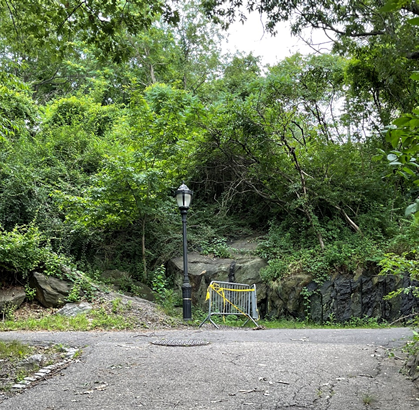
Take the A train for a thirty-minute ride from Downtown Manhattan until you reach the 190th Street Station. There, the exit will be a long tunnel from which you will pass through to get outside. Take a left, walking alongside the tall hilltops until you reach a long flight of stairs. Climb the stairs and as you go higher and higher, watch through the leaves, the buildings slowly disappear and the roar of cars vanish until you are left with nothing but tall trees, the songs of birds, beautiful flowers, and large rock cliffs. It’s like you’ve completely gone into the wilderness, even though said wilderness is in the biggest city of America. That’s the magic of Fort Tryon Park.

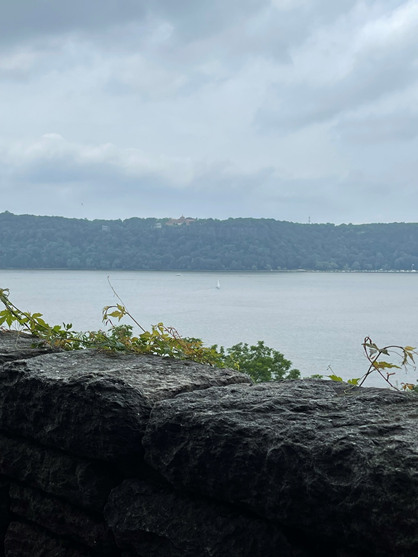
I first went there my freshman year on a whim. I was exploring the nearby neighborhoods of Washington Heights and Inwood and once I saw the high hills and beautiful landscape, I knew I had to go. I cannot forget the wonder and awe I had then. It was like I had stumbled backward in time, and as I had that thought, there poking above the treetops was a medieval monastery smack dab in the middle of the park. I couldn’t believe it. But then it got better. As I rounded the monastery up to the westward side of the park, the tree canopies opened to a view of the Hudson River and the Palisades. It was unreal that this much natural beauty was in New York City. So from then on, every couple of months or so, I returned and kept returning.

Fort Tryon Park was established in 1935, a project created by billionaire John D. Rockefeller Jr. when he walked through the area and said, “This is nice. We should make a park here.” Not only did he buy the land for this park, but bought the land across the Hudson to preserve the Palisades, and then decided eh, why not ship a twelfth century monastery from Europe to place here. That monastery became the Met Cloisters, a museum which holds the Met’s medieval European art and is open to the public (students can pay any price for admission). The park’s layout was designed by Frederick Law Olmsted Jr., the son of the designer of Central Park and features many shared aesthetic components from managed wilderness to beautiful rows of flowers and trees like the Heather and Alpine Gardens. It has Manhattan’s largest dog run, volleyball courts, gazebos, and meadows to picnic at.

Events at the park range from sunset yoga to art exhibitions to jazz concerts to even an entire medieval festival in October. As a public park, admission into it and these events are free. However, I’ve found my best moments in this park by being alone and just hiking through it. It’s a calming experience, it feels like you’ve gotten away from the troubles and worries of the City with all the time to think and de-stress and look around at nature; and then burn a lot of calories from hiking through the steep terrain. At points, there’s even hidden staircases off the main roads that you can climb up, fulfilling a need for discovery and adventure.

Once done, and you’ve walked down, tired with your legs aching; the nearby neighborhood of Inwood has a lot of restaurants and delis nearby to grab food from. And if you seek a round two, there’s another park nearby called Inwood Hill Park that provides more wild terrain than Fort Tryon, but I digress. If you’re looking for a fun and free adventure to take part in without going too far, Fort Tryon Park is your best option.


Jared Skoro is a junior at NYU Gallatin studying a mix of English, Political Science, and Psychology. In his free time, he enjoys reading, hiking, and exploring a new neighborhood of the city every weekend.


For over 20 years, the Campus Clipper has been offering awesome student discounts in NYC,  from the East Side to Greenwich Village. Along with inspiration, the company offers students a special coupon booklet and the Official Student Guide, which encourages them to discover new places in the city and save money on food, clothing, and services.  At the Campus Clipper, not only do we help our interns learn new skills, make money, and create wonderful e-books, we give them a platform to teach others. Check our website for more student savings and watch our YouTube video showing off some of New York City’s finest students during the Welcome Week of 2015.
Share