
Book Review: About a Mountain by John D’Agata – “To whomever I did not help.”

June 7th, 2012

"...one of the most significant U.S writers to emerge in the past few years." - David Foster Wallace

It seemed to us we we’re a very great people” – The United States of America

John D'Agata

      A week into November of last year at the University of Arizona, right around when the leaves of date palms litter the walkways all over Tucson, I found myself in a familiar place: nose wedged in a book, eyes drowned in its ephemeral words, limbs temporarily frozen and forgotten; I was lost. My wasteland: the nuclear storage fields at Yucca Mountain, Nevada. My drug: our future. My spirit guide: John D’Agata. About a Mountain is one of those rare firecrackers of books that not only sparks  widespread controversy, but does so for a reason only other writers, penetrating thinkers, acerbic comedians and unattractive vampires can appreciate – being misunderstood. It took all of 10 pages before someone who didn’t fall into one of those categories – ironically, a geology professor (who is a leader in his field, and thus remain unnamed) – was overwhelmed by what could only have been a personal agitation that superseded general human etiquette, to point out – let’s say less than eloquently – that an entire book was dedicated to fact-checking the 200 pages of brilliance that laid in my hands, and unequivocally supported a conclusion that many readers had come to: in About a Mountain, John D’Agata is at his best, and John D’Agata is  completely full of shit.

      It isn’t hard to see why. Consider the book’s opening lines, describing Las Vegas’ centennial: “If you take the population of Las Vegas, Nevada, and you divide that by the number of days in the year, there should be 5,000 people in the city and its suburbs with a birthday on the same day that Las Vegas began. On the hundredth anniversary of its founding, however, Las Vegas had only gathered twenty-nine of those people.” Alongside lines such as the dedicatory inscription at the beginning of this review – in particular, one’s seemingly intended for an exceedingly enlightened, mysterious audience somewhere in the distant future – D’Agata immediately introduces readers to his favorite (and, unsurprisingly, most misunderstood) move: bending time and place while simultaneously trapezing between the ledges of fact and fiction. It is in this uncomfortable domain of the known and unknown where D’Agata’s peculiar logic, his idiosyncratic mind, and fascinating personal experience are employed (and shine) to reexamine not only where we are, but also where we’ve been; and most portent – where we are going.

      You might have noticed that I’ve reached several hundred words without actually diving into the masterful narrative that Charles Bock of The New York Times called “unquestionably art, a breathtaking piece of writing.” A review that reprimanded – and derided – the artist only a few paragraphs later for the same reasons for which it initially protruded with admiring jaundice: “I don’t know what to think. What’s specific or representative or smudged? Pandora’s box is wide open.” What Mr. Bock fails to realize, despite his awareness of D’Agata’s explicit claim that “I[He] is in search of art” and not fact is that this was precisely the book’s purpose – one that (perhaps without the reader’s acknowledgement) it polemically fulfills.

So why should you, or anyone, really care? The overarching message of About a Mountain serves as a messianic compass as we attempt to successfully navigate our way through this precarious storm of cultural and technological chaos. More than ever, the ability to critically parse between fact and fiction, numbers and art, truth and wisdom is paramount to our continued existence; one that is worth preserving anyway. The book itself weaves an in-depth coverage of the political suave and maneuvers used to re-interpret a million year problem into a 10,000 year solution (an absolutely stunning metaphor for the pattern of thinking that has lead us here) along with the tragic story of Levi Presley – a boy who jumped off the Stratosphere tower in Vegas – and the connection of his death to D’Agata’s own experience answering calls on a suicide hotline. It is because, not despite, this discordance that D’Agata’s ambition and pursuit of art is realized. Here, the details that are debated  (resolved with end notes in later editions) – from the significant, such as the day of Levi’s death, to the minuscule, such as the actual color of hills in the Nevadan autumn – are irrelevant. Keeping up? Good. Because it is through this very deliberate and aesthetically striking ridiculing of fact, or knowledge, that any of the information is made relevant.

credit: IowaNow

      Creative Nonfiction is not journalism – D’Agata despises the term, instead championing the “essay”, invoking Montaigne’s “essai”, meaning ‘an attempt or trial’ to route the journey of consciousness throughout a narrative; a provocative stance to say the least. His elastic perspective regarding this paradigm is manifested in the titles of the book’s chapters: starting with the journalistic staples of “Who, What, How, Where and When” and concluding with a trifecta that outlaws objectivity entirely, “Why, Why, Why.” Certainly, this complex concept is beautifully articulated when he writes, “Clear that if I point to something like significance, there is the possibility that nothing real is there. Sometimes we misplace knowledge in pursuit of information. Sometimes our wisdom, too, in pursuit of what’s called knowledge.” Indeed this is a hefty price to pay for maintaining the beloved boundary, the artificial security, between objectivity and subjectivity, where intellectual vertigo and doubt are priceless casualties in the name of conventional tradition. D’Agata’s perspicacious observation is further reflected in the portrayal of back-door politicians who recommend the feasible option instead of confronting the truth with wisdom. Despite the borderline infinite data on Yucca Mountain, “a place that we have studied more thoroughly at this point than any other parcel of land in the world… still it remains unknown, revealing only the fragility of our capacity to know.”

“When we are not sure, we are alive.” – Graham Greene

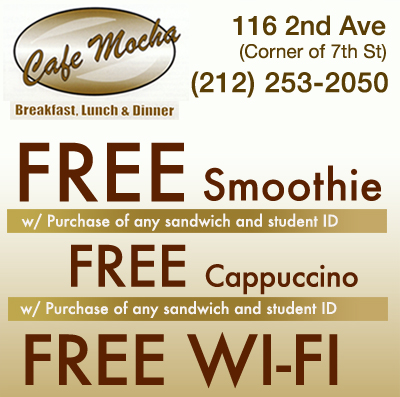
While I can’t direct you anywhere in the city with palm trees year round, there are plenty of opinionated strangers everywhere. So why not grab a copy of  About a Mountain  and head to Cafe Mocha, fill up with a great sandwich, then focus in with a free Cappuccino (using the coupon below), and if you absolutely can’t help yourself, ‘fact-check’ this monumental work with their free WiFi.
Mahad Zara, The University of Arizona and Columbia University, Read my blog and follow me on Twitter

Click here to download the Campus Clipper iTunes App!

Follow Campus Clipper on Twitter or keep current by liking us on Facebook

Interested in more deals for students? Sign up for our bi-weekly newsletter to get the latest in student discounts and promotions. For savings on-the-go, download our printable coupon e-book

Share

Cool Down with Horchata

June 7th, 2012

This year it felt like summer never left, and with a blistering temperatures ahead of us, it’s important to stay hydrated, fresh, and cool. If you’re looking for a new way to cool down, why not try drinking some horchata? Horchata (the h is silent) is a refreshing drink popular in Spain and Latin America. Vampire Weekend sang about it’s warm variant on their sophomore album Contra, but it can also be served cold to ease long summer nights. Horchata varies from country to country, and my personal favorite is of course Salvadorean horchata (my mom is from El Salvador so I’m obviously biased about this). Distinct from other horchata recipes is its inclusion of morro seeds from the jicaro plant. Horchata has a flavor similar to taro, but horchata is a bit sweeter. Horchata is typically made with the ground almond, rice, sesame seeds, or barley.

morro seeds

morro seeds from the jicaro plant

You can buy instant horchata mix at Latin American grocery stores, but if you really want to get great authentic flavor, here’s a relatively simple recipe for homemade horchata with morro seed.

  • Crushed pound of morro seeds, you can find morro seeds in Latin American grocery stores across New York City.
  • 2 ounces of cinnamon
  • 2 whole nutmegs
  • 2 ounces of coriander seeds
  • 25 allspice berries
  • 4 pounds of rice


Begin to brown the rice (do not add water). To make sure it doesn’t burn, keep stirring it. Add in the cinnamon, coriander seeds, nutmeg, and allspice berries. Keep stirring until golden brown.

Later mix in a blender with the crushed pound of morro seeds until it becomes a fine powder. (In Latin America, cooks have the added benefit of local mills to do this, but for city dwellers, a blender will do). Your yield will be high, perhaps enough to last you all summer. In this case, store extra horchata powder in airtight container, like the ones you use for cereal, or in glass jars.

Now to make a liter of horchata you’ll need 2 cups of water, a cup of milk (almond milk adds an extra dimension of nutty flavor to the drink), and 8 table spoons of your horchata mixture. Mix the 8 table spoons of mixture with some of the water and strain through a cheese cloth. You may want to strain it back and forth a couple of times to get the most out of the horchata powder. Once strained, add in the rest of the water and milk and add sugar or honey to taste. Garnish with a stick of cinnamon, serve ice cold and enjoy.

Wary about the taste? Why not try some taro bubble tea at T-magic and see if horchata might interest you!

Catherine, Hudson County Community College, Read my blog and follow me on Twitter

Click here to download the Campus Clipper iTunes App!

Follow Campus Clipper on Twitter or keep current by liking us on Facebook

Interested in more deals for students? Sign up for our bi-weekly newsletter to get the latest in student discounts and promotions. For savings on-the-go, download our printable coupon e-book


Share

How Reliable are the Ratings of Your Professors?

June 6th, 2012

Choosing classes and making the semester’s schedule happens to be one of the things I love the most about being a college student. I love the freedom I have in deciding between the option of classes and feeling in charge of my own life for once. But for many students, this time of the semester is the most stressful and possibly the next worst thing from finals week. It’s definitely understandable why scheduling is one of the biggest pressures as a student. The competition in prying for the same courses vital for graduation within a certain major drives people to the state of extreme tension and desperation.

Often times, this intense competition rises because students are constantly relying on how well the professor teaches and chasing after the course with the best rated professor. The website, www.ratemyprofessor.com, has become an extremely popular site for college students to turn to in order to get a preview of how difficult the course they’ve chosen will be. How reliable is this site? For many students, this website is the shortcut to an excellent grade for the semester. However, the ratings listed are created by other students’ previous experiences with the professors, so everything really depends on the individual’s study habits, passion for education, and individual chemistry with the instructor. Ratings on this website are personal, and sometimes, too personal. Sure, it’s tempting to believe all of the reviews posted on the website, but nothing is valid until you face the professors head-on and first handedly experience their teaching methods yourself.

Avoiding bad professors as Cameron Diaz's role in "Bad Teacher"

What I’m trying to tell you is to not become dependent on these reviews that merely tell you someone’s experience with a certain course or professor. Some of the ratings may be reliable, but most of the time, you’ll receive mixed opinions about the same professor – everyone is different, thus everyone produces different judgments. Knowing this now, don’t’ stress about landing a class with the “best” or the “easiest” professor. Succeeding in class does not depend on the professor, but it depends solely on your responsibility and willingness to put in the effort. Feel free to take a look at these ratings once in a while, but liberate yourself from becoming consumed by them. Explore and take risks – that’s what college is for!

Stop your stressing and take a breather by enjoying a discount on an all-organic meal of burger and fries at Bareburger!

Becky, Queens College, Read my blog and follow me on Twitter

Click here to download the Campus Clipper iTunes App!

Follow Campus Clipper on Twitter or keep current by liking us on Facebook

Interested in more deals for students? Sign up for our bi-weekly newsletter to get the latest in student discounts and promotions. For savings on-the-go, download our printable coupon e-book

Share

Be savvy with your free time

June 4th, 2012

Cultural experiences shouldn’t cost you the $15 entrance fee!  New York City has an overwhelming amount of free or inexpensive events that happen every day.   Make your free time free by knowing how to find free events throughout the city.
There are several resources available for finding free events in the city.  These websites provide a comprehensive list of free or inexpensive events by date or subject. I recommend looking at multiple websites because there are so many events some websites do not list them all.
Here is a list of some of the resources I use:
Time Out New York
Go NYC
New York Magazine
Living Free NYC
Club Free Time NYC

Sifting through all of the possible events can be daunting. There are free pickup games in the park, free lectures, movies, concerts, and art shows. It is helpful to know what you are interested in and passionate about so you can pick which type of events you want to search.

The best part about going to these events is that you are going to be around people who are just as interested in doing these things as you are. If you go to a free Stargazing Event on the Highline, you will meet  other people who like stargazing.

To make sure you don’t miss out on great opportunities create a calendar (I use google calendar).  I know it may seem weird organizing your free time but  I have been mad at myself many times because I wasn’t aware of amazing events like Free Wanda Jackson concert in Central Park.

I will be posting some of my favorite free events around the city in the posts to follow! So keep looking at Campus Clipper Blog  to find out more tips on living in the city.

With all the running around the city you will be doing with free things you may need a gym membership to stay in shape!


Shailyn Tavella, NYU 2013, Read my blog and follow me on Twitter

Click here to download the Campus Clipper iTunes App!

Follow Campus Clipper on Twitter or keep current by liking us on Facebook and follow our Tumblr and Pinterest.

Interested in more deals for students? Sign up for our bi-weekly newsletter to get the latest in student discounts and
promotions. For savings on-the-go, download our printable coupon e-book

Share

The Roots Beneath the City: Leon the Professional

June 4th, 2012

Leon cleans his little potted plant every day, spraying water on the leaves and wiping them down like he’s bathing his child.

“You love your plant, don’t you?” Matilda asks.

“It’s my best friend,” he responds. “Always happy. No questions. And it’s like me, you see? No roots.”

Roots, Medvednica, Croatia

Roots: he has none (Photo credit: Wikipedia)

This man speaking so tenderly of his plant is an immigrant, root-less, alone in the city of New York. He is a hitman. He likes milk and Singin in the Rain. In Luc Besson’s thriller Leon the Professional, Jean Reno plays Leo, an assassin who finds his lonely life of murder for hire interrupted by the events down the hall from his apartment. Maybe murder’s not the right word. After all, he’s a professional.

After coming home to find her family murdered by corrupt DEA cop Norman Stansfield (Gary Oldman) and his crew over cocaine dealings, Mathilda Lando (a young, precocious Natalie Portman) seeks refuge with Leo, her up-to-then unknown neighbor. Leo, who seems to foresee an intrusion into his solitary rhythm of life, takes a moment to consider Mathilda through the keyhole before grudgingly allowing her inside. From this point, the foul-mouthed yet devoted Mathilda slowly draws Leo out of his shell as she talks him into teaching her the ways of the hitman. The two eventually come head to head with Stansfield as Mathilda seeks revenge for her slain brother—the only one she really loved out of her family members.

With Leo living in a gritty, multicultural corner of Little Italy, Besson’s New York is anything but glamorous. Shots of the world outside Leo’s apparent seem suffused with a yellow hue, as if a thick carpet of dust had been collecting behind the lens. But even more than the setting, it’s the people in Besson’s film that give us a glimpse into New York’s underside. At the beginning of the film, we learn that Mathilda has both been truant from her school for troubled young girls and is the subject of abuse from her father, and neglect from everyone else except her little brother. And Leon? That’s right, don’t look for happy characters here. Having fled to America after murdering his forbidden love’s father, Leo has not had a relationship with a woman—or, it seems, anyone who doesn’t end up on the wrong end of his gun or knife—for over a decade. And despite the almost ludicrous nature of Oldman’s villain, it’s not difficult to imagine some parallels with police corruption in New York’s history.

Stan clarifies his statement

Both Leon’s and Mathilda’s stories tell us the importance of taking root somewhere. From what I hear, many of the old ethnic boundaries that once divided New York have given way to gentrification. But a quick walk down a few blocks down from my apartment lets me see the deep roots that still cling in the city, and those that have formed more recently. Go down one block—Hispanic district. 2 more—Chinatown. Go even further and you’ll hit a neighborhood of Orthodox Jews, a discovery I made one Sunday morning after getting off at the wrong subway stop. It’s the desire to know you’re growing in familiar soil—something a quiet, milk-loving hitman finds in a chain-smoking girl outside his doorstep.

Looking for killer burgers and fries? Take this 10% off coupon for Goodburger and enjoy!

Andres Oliver, Emory University
Check out my blog and twitter!

Click here  to download the Campus Clipper iTunes App!

Follow Campus Clipper on Twitter or keep current by liking us on Facebook

Interested in more deals for students? Sign up for our bi-weekly newsletter to get the latest in student discounts and promotions. For savings on-the-go, download our printable coupon e-book!

Share

When Harry Met Sally: Who Wants to be Just Friends?

June 3rd, 2012

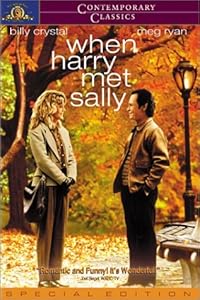
Cover of "When Harry Met Sally"

Though I stated in a previous post that I would be reviewing movies in general, I decided to hone in on a specific topic in order to better match the tone of Campus Clipper. Therefore, I’ll be focusing on movies centered on or dealing with the city of New York. Considering that almost every movie either takes place in New York from the beginning or has the characters go there during the climax—because lets face it, New York City is always the first target during an alien invasion, and love stories just don’t cut it unless they’re New York stories—the options are almost limitless. But I’m going to focus on movies that gave me the strongest sense of New York—the ones that you can watch and say that’s New York even before the first shot of Central Park or the Empire State Building. First up in the list is Rob Reiner’s well-loved romantic comedy, When Harry Met Sally.

Out of all the films that I could have chosen as my first, When Harry Met Sally stood out inexplicably from the rest. Screenwriter Nora Ephron’s and director Rob Reiner’s take one the age-old question of “can men and women really be friends” savors of New York from the moment Harry (Billy Crystal) and Sally (Meg Ryan) first part ways at the Washington Square Arch to when Crystal decides to run after her while standing under it. But its more than just the location. Sure, take out the shots of Central Park, Katz’s Deli, and the Metropolitan Museum, and you’re left with another romantic comedy about two young people who take ninety minutes to finally get around to liking each other—an epidemic that Hollywood’s carried to an untold number of cities.

The first time I saw the movie, I knew instantly that this must be how people live in New York. Not L.A. or Seattle or London. They go powerwalking in the park and eat hot dogs at street carts. They wonder about the emptiness of being single while surrounded by people at every avenue. The real draw of the movie, though, isn’t that Reiner has his characters work out these universal problems against the backdrop of New York. It’s that life in The City makes these questions all the more pertinent, especially for college-age individuals such as ourselves.

Harry and Sally are both well-off professionals with at least a handful of close friendships. Why, then, can’t they be satisfied with being just friends? Could it be boredom? At least the first 20 years of our lives are set off as a sort of constant challenge—a hoped-for transition from complete dependence to independence. There’s the various stages of compulsory education, then college, then career. And then what? Once you graduate college, most of your ties to your closest friends are severed, and you’re faced with the terrifying prospect of forming an entirely new circle in an unknown city. Sure, you can make some good friends in time. If you’re lucky, you might even like your job and decide to devote your life to singlehandedly transforming that little corner shop into a multinational money maker. But even so, you have to think, can’t help but realize at some point, that you have fifty years or so to kill until you die (add ten if you happen to live in Japan or Denmark). The thought of having to whittle away at all those hours, days, and years alone is truly terrifying.

Maybe that’s why no religion mandates celibacy (priests are married to God, I suppose). Because Jesus and Buddha and all the others knew that even scarier than the thought of some distant eternity of punishment is the idea of sixty years of sitting at home alone with late-night television, murder mysteries, and cats for company. “Celibacy?” they must have thought. “We’d lose the fan base in a second!”

I don’t know what this means for us as people about to embark on our own lives as functioning members of society. I’m not saying shave your head and find yourself a nice cave to begin your life as a hermit. Nor am I telling you to get out of their chair and go find yourself a wife or husband so you don’t end up a cat lady—or cat man, the lesser-known cousin of the same species. While I’m telling you what I’m not telling you, I should also say that I am still out on the question of whether men or women can be friends. I’m inclined to think the answer is no, but watch When Harry Met Sally, and then this video. And then you’ll agree with me.


For those of you who do believe in friendship between the sexes–bring a friend out to fete coffee for some stimulating conversation over pastries!


Andres Oliver, Emory University
Check out my blog and twitter!

Click here  to download the Campus Clipper iTunes App!

Follow Campus Clipper on Twitter or keep current by liking us on Facebook

Interested in more deals for students? Sign up for our bi-weekly newsletter to get the latest in student discounts and promotions. For savings on-the-go, download our printable coupon e-book!

Share

Healthy Ways to Manage Stress as an Overworked College Student

June 3rd, 2012

Instant Stress Relief?

Beginning a new semester after three months is always difficult and it’s even more difficult to get out of the warm sanctuary of your down comforter before noon to head to class. Without any sense of mercy, professors always throw in loads of readings, essays, and problem sets on the first day of classes, leaving students swamped with work even before they get a chance to reunite with their friends. Stress always follows closely behind an overwhelming amount of work and it ends up piling up to result in self-destructive behaviors, such as binge eating, excessive partying, and substance abuse as a source of escape from reality, which can lead to depression. But there are other ways to release stress without damaging your body; here are some healthy ways to manage stress:

1. Don’t Procrastinate

Too much stress can lead to drastic behaviors

Sounds cliché, right? Even though you’ve probably heard this repeatedly throughout junior high and high school, this is the best way to avoid feeling stressed and pressed for time to complete your assignments. When completed early and on time, the gratification of being freed from work ultimately rewards you with abundant free time and more sleep –something all college students claim that they are deprived of. Some of you may say that you focus better when you’re in a tight deadline; however, research done by Bruce Tuckerman, a professor at Ohio State University, states that this is merely “wishful thinking” and an excuse to justify the lack of one’s self-control and will-power. (http://researchnews.osu.edu/archive/procrast.htm)

2. Absorb Nature

Studies done by researchers at the University of Washington have proved that looking at nature helps lower the tension and heart-rate of people. After gathering 90 students and giving them various tasks, students who were placed in front of a window with a view of the natural environment have had their heart rates drop to normal the quickest. If viewing nature can decrease the stress-inducing tension within a person, imagine how much of a stress-relief you can get by physically absorbing what nature has to offer you by going outside!

(http://seattletimes.nwsource.com/html/localnews/2004470165_nature11m.html)

3. Eat Right

Stressful times often lead to poor, unbalanced diets that ultimately provide no nutrient benefits. Because stress leaves students feeling as if they have no time to prepare a healthy meal, they opt for fast-food meals and junk food to satisfy their hunger. However, foods that contain high levels of salt, sugar, and fat easily increase stress levels and are found to be detrimental to our health. Even coffee, the number one necessity for college students, increases stress levels if taken excessively. Women’s magazine, Marie Claire, has created a list of healthy foods that help reduce stress when taken in moderation. Foods that contain high levels of vitamins and minerals, such as dried apricots, salmon, and avocado have been proven to help people maintain their bodily balance.

(http://www.marieclaire.com/health-fitness/advice/reduce-stress-foods)

(http://www.squidoo.com/foodsincreasestresslevels)

Following these tips should help any overworked and overstressed college student manage stress while improving themselves physically as they start the upcoming semester.

For more ways to release stress, try taking a break with karaoke and sing your lungs out – this is one of my favorite things to do when I’m under a lot of pressure!


Becky, Queens College, Read my blog and follow me on Twitter

Click here to download the Campus Clipper iTunes App!

Follow Campus Clipper on Twitter or keep current by liking us on Facebook

Interested in more deals for students? Sign up for our bi-weekly newsletter to get the latest in student discounts and promotions. For savings on-the-go, download our printable coupon e-book

Share

Saying Okay to Cupid: Online Dating and the Search for Something

June 2nd, 2012
Image Credit: http://phys.org/news/2015-12-online-dating-hobby-fun.html

Image Credit:
http://phys.org/news/2015-12-online-dating-hobby-fun.html

A Match.com commercial says that one in five relationships now start online. If your experience in a university library is anything like mine, you stare at a Date My School poster in the bathroom stall while you excrete the two Red Bulls and three cups of coffee that you guzzled in the past hour. You probably know, or are yourself, someone who has tried online dating, and you’ve probably heard an array of horror and success stories. When it comes down to it, online dating is just like any other kind of dating—you win some, you lose some—no matter how much success websites claim to have.

Take, for example, the tale of the two Lisas who both signed up for OkCupid.  One Lisa was a classmate, the other my roommate. Classmate Lisa had a few just-okay dates and then finally met a guy that was tall, funny, and handsome. The two decided to date for a few months before becoming exclusive, and have been happily in a relationship with each other for almost a year.  Roommate Lisa, on the other hand, after looking around on the site for a few months, finally decided to go out on a date with someone. She brought him to our apartment for some drinks before they went to a bar. I invited my own date over and a friend as well, and we all setup a false, nonjudgmental, and laid back oh-we’ve-been-hanging-out-for-a-while appearance.  Long story short, an hour later Lisa’s mother was in a terrible car accident (not really) and Lisa had to cancel the date after a tear-jerking phone call (seriously, the girl deserves an Oscar for that performance).

A promising feature of most online dating sites is that users get to establish what they are looking for. Similarly, they can talk with each other before deciding to meet in person. Of course, in-person interaction can be extremely different than interacting online, but the pressure of saying “yes” or “no” to a date is lessened when it only requires the click of a button.

So what are people on dating sites looking for? A common belief that makes people wary of signing up for the sites is that users don’t actually want relationships. For some, this is true. The beauty of it, however, is that most pages will list upfront why people sign up for the site. Then it comes down to whether or not that person is being honest, and, if he/she is not, how he/she will handle a situation that goes past a date.

Take now, for example, the report of a boy named Richard. Richard signed up for Date My School and did just that—dated his school. Date after date ensued for a boy who was troubled by rarely being able to get a step further than obtaining girls’ phone numbers at parties. As his online dating repertoire expanded, so did his ego—that is, until he met one particular girl who made him want to stop his search.

Some good news about online dating is that, since it has become increasingly popular, there are more ways than ever to meet people online and, therefore, more sites for you to choose from.  You can now find people on less traditional sites based on specific things like what you would be doing on a date (HowAboutWe.com), who is in the area (the SinglesAroundMe phone application), what your religious beliefs are (ChristianMingle.com, JDate.com), what icebreakers you use to start conversations (nerve.dating.com), and what you’d want in a no-strings-attached relationship (benaughty.com).

While the opportunities seem endless, they also seem daunting.  But once you choose a site, the rest is relatively easy.  First, be honest about what you are looking for.  While it’s also a good idea to expand your horizons and not be afraid to take chances with new and different people than you’re used to, you’re not doing anyone a favor by going on dates with people who you know beforehand you won’t be interested in. Be honest on your profile and be honest in person. Secondly, play the game like a good sport. Don’t be offended if others don’t respond online; just move on. If a date turns out to be no more than just one date, take something from the experience, even if it’s just meeting new people. Third, keep at it with a positive attitude, like this guy. If you look at someone’s profile and are unsure about whether to pursue him/her further, go for it. Why not? Remember, you already have something in common: you’re both looking to date and took a chance doing it on the same site.

Carina, New York University. Read my blog and check out my Twitter!

Going out for coffee on a first date? Use this coupon from Cafe Bene to save money on great coffee and deserts:

cafebene

Click here to download the Campus Clipper iTunes App!

Follow Campus Clipper on Twitter or keep current by liking us on Facebook.

Interested in more deals for students? Sign up for our bi-weekly newsletter to get the latest in student discounts and promotions  and follow our Tumblr and Pinterest. For savings on-the-go, download our printable coupon e-book.

Share

Sofrito: Add Flavor to Your Food

June 1st, 2012

On the shelves of refrigerators in Latino homes lies a glass jar, filled with an aromatic sometimes green, sometimes brown, sometimes dark orange-red, but always packed with highly concentrated flavor mix- softiro. Sofrito is a seasoning sauce blend of peppers, garlic, onions, tomatoes, cilantro, salt, and other herbs and spices. Quantity of ingredients varies from recipe to recipe. Instead of using salt and separate seasonings, many foods from Latin America are flavored with sofrito alone. Sofrito is great for soups, steaks, chicken, eggs, or any dish you want to enhance with robust Latin flavor. Because it’s so densely concentrated with flavor, after making a jar, sometimes all you’ll need is a dash of sofrito to season a dish. Sofrito exists in Mediterranean, Portuguese, Filipino, and Caribbean cuisine as well.

Homemade sofrito usually doesn’t use exact measurements, as most culinary escapades in la cocina, ingredients are eye-balled and taste tested rather than carefully measured and trusted. Due to the variety in preparation and ingredients that differ sometimes from person to person, there are probably millions of unique sofrito recipes in the world. As well as being made from scratch, sofrito can be store bought for the lazy and kitchen clumsy. A popular store brought variety is Goya’s sofrito; however it’s also filled with preservatives and lacks fresh ingredients. Sofrito is incredibly easy to make, but if you’re still wary about making it at home and don’t want Goya’s preservative sofrito, try Chulita’s Famous Sofrito. Chulita’s Famous uses fresh all natural ingredients and comes in Sofrito Verde or Sofrito Con Spices variety. They can be purchased in gourmet grocery stores in New York City. For a full list: click here.

Now if you really want to get hands on with sofrito, here’s a simple recipe straight from my kitchen to yours:

Ingredients:

  • 3 Green peppers
  • 2 Red peppers
  • 2 Garden fresh tomatoes
  • 2 onions
  • 1 head of garlic
  • 1 bunch of cilantro

Peel and chop all the ingredients and mix them in a blender or food processor. The consistency should be somewhat smooth: not liquefied and not too chunky. Add sea salt, parika, and cumin to taste. Store in the refrigerator in a glass jar.

After you’ve made your sofrito, grab some tacos from Pinché Taqueria and add some sofrito to them for an even more delicious meal.


Catherine, Hudson County Community College, Read my blog

Click here to download the Campus Clipper iTunes App!

Follow Campus Clipper on Twitter or keep current by liking us on Facebook

Interested in more deals for students? Sign up for our bi-weekly newsletter to get the latest in student discounts and promotions. For savings on-the-go, download our printable coupon e-book

Share

Revolutionize Your Holidays: Inspire to be Inspired

June 1st, 2012

Everyone knows that holidays translate to family time. It is during these treasured days of the year when you spend time together and catch up with each others lives. I once thought that this was all there was to it, and believed that being at home would be the most fulfilling and ideal way to spend my holidays. I came to these conclusions because as a Jew, and especially in the home I grew up in, family was central. My first year in college I heard about a program which sent students all over North America for two different holidays, one at the beginning of the the year and one at the end in order to bring cheer and spirituality to struggling communities. I immediately dismissed this idea because of years of associating holiday with family.

At the beginning of my second year of college my roommate pushed me out of this comfortable yet limiting notion, and forced me to sign up on the program with her. We filled out a questionnaire about ourselves and were told that we would be paired up with two guys. The location—unknown. Despite my misgivings about the whole expedition, I began to find myself thinking about all of the exciting possibilities of where we would be sent. Finally the day of the training session came and I picked up our folder and read “Kitchener, Ontario.” I will loosely translate this location as one hour’s drive from Toronto, but still pretty much middle-of-nowhere Canada. The mystery of never having heard of Kitchener counteracted all of the hesitation I had previously felt, and I began to look forward to the upcoming holiday which I would spend there.

I was told that we were taking the train. Packed up and ready my roommate and I headed out to Penn Station, printed our tickets and located our male counterparts. When we were cozily settled in our seats we all chatted, prepared our religiously inspirational speeches, and decided which spiritual songs to sing. The rabbi of the community met us at the station and drove us to the homes where we would be staying, all the way regaling us with numerous entertaining and crazy anecdotes from his past. The next day was a blur. We helped the rabbi and his wife with their six children, while preparing his house and the synagogue for the holiday, because of centrality of both locations.

Later that night we gathered in the synagogue for prayer and afterwards spent time getting to know the community members. We learned that although the synagogue was large, the Jews in that area had become disinterested in religion and the rabbi, who had only just recently moved to the neighborhood was trying to jumpstart religious activity and involve more people. The holiday that we had come for was called Simchat Torah, which celebrates the end of the annual cycle of Torah readings and marks the beginning of the new one. As is the custom, we took the Torah scrolls from the ark and carried them around the sanctuary seven times while and singing, dancing and rejoicing. The members of the synagogue gladly joined us, smiling with such joy while we led the singing and dancing, celebrating the Torah, what it represents. We later learned that this was the first time in twenty years that they had celebrated in such a spiritual and lively way.


If you would like to see a clip of what Simchat Torah looks like click here

The rabbi came to us after the holiday was over and thanked us profusely for enriching the holiday for his community. He said that many of them had come up to him afterwards to tell him what a difference we had made, and some offered money to bring us back during the year. I was personally inspired by these people who so voluntarily craved religion and spirituality. Although it is important for us to spend time with our family during the holidays, I believe that it is of equal or more importance to be involved in reaching out to others at this time. Enhancing and strengthening the religious and spiritual experience of others will not only have a tremendous impact on them, but it will hopefully revolutionize the way you view your religion and experience spirituality.

Shira, Yeshiva University, Read my blog

Click here to download the Campus Clipper iTunes App!

Follow Campus Clipper on Twitter or keep current by liking us on Facebook

Interested in more deals for students? Sign up for our bi-weekly newsletter to get the latest in student discounts and promotions. For savings on-the-go, download our printable coupon e-book

Share