
Archive for the ‘onFood’ Category

Make Your Own Sushi: Sushi for Vegetarians and Vegans

Saturday, March 4th, 2017
vegetarian-sushi-rolls.jpg.839x0_q71_crop-scale

Image Credit: https://www.fromthegrapevine.com/israeli-kitchen/recipes/vegetarian-sushi

Sushi is one of the easiest meals to adapt for vegetarian eaters, mainly because when you make it yourself, all ingredient choices are up to you, and sushi is tremendously variable with regard to ingredients. This recipe includes egg—if you’re vegan simply leave it out—as well as dried shiitake mushrooms and spinach leaves. For vegetarians and vegans who need to watch their protein intake (since animal products are an important source of protein), this recipe makes sure to use ingredients that have plenty of protein. Nori seaweed, shiitake mushrooms, and brown rice are good sources of protein; the mushroom also provides dietary fiber and iron. It’s a good idea to use half brown rice and half Japanese sushi rice, so that the rice stays sticky enough to roll easily.

The egg in this sushi is cooked like an omelet, but sweetened. Take an egg and beat it in a bowl––beating the egg thoroughly will help make sure the color is even. Add a pinch of salt and about ¼ teaspoon of sugar, and cook it in a pan, making sure to keep it as flat as possible. When it’s cooked, fold it and cut into strips. Cut the dried shiitake mushrooms into strips as well.

Once all your ingredients are prepared, fold and tear a two-inch strip off the sheet of seaweed. Now cover the seaweed with rice, leaving a border of about an inch on top and a half inch below. Fold the bottom border on top of the rice, and lay the seaweed strip on top of the rice. Line up your ingredients on the seaweed, and bring the whole layer to the edge of your bamboo mat. Hold the bamboo mat and seaweed with your thumb and forefinger, and, keeping the ingredients in place with the rest of your fingers, fold the seaweed and bamboo mat over the ingredients. Unroll the bamboo mat, bring the seaweed to the edge of the mat once more, and roll the sushi all together. Now simply cut the sushi into pieces about an inch long.

A great side dish to go with this sushi is miso soup with tofu. Tofu is a great source of protein, so this soup is the perfect side for anyone worried about protein intake!


This is the sixth chapter from an e-book by one of the Campus Clipper’s former publishing interns, who wrote about how to make sushi. Follow our blog for more chapters from this e-book. We have the most talented interns ever and we’re so proud of them! For over 20 years, the Campus Clipper has been offering awesome student discounts in NYC,  from the East Side to Greenwich Village. Along with inspiration, the company offers students a special coupon booklet and the Official Student Guide, which encourage them to discover new places in the city and save money on food, clothing and services.  

At the Campus Clipper, not only do we help our interns learn new skills, make money, and create wonderful e-books, we give them a platform to teach others. Check our website for more student savings and watch our YouTube video showing off some of New York City’s finest students during the Welcome Week of 2015.

Become a fan on Facebook and follow us on Twitter and Instagram

Share

Make Your Own Sushi: Sushi for the Health-Conscious

Saturday, February 25th, 2017
Image Credit: https://www.finedininglovers.com/recipes/appetizer/quinoa-sushi-rolls-salmon/

Image Credit: https://www.finedininglovers.com/recipes/appetizer/quinoa-sushi-rolls-salmon/

Sushi can be a very healthy meal. It’s simple; it’s not processed, and it’s packed with nutrients. Amie Valpone– culinary marketing consultant, nutritionist and author of www.TheHealthyApple.com— emphasizes the importance of clean eating like this for your health. When you eat sushi, you get plenty of nutrients without any unhealthy processing, or heavy butter and cream, making it a great choice for your body! Although we already did a salmon recipe, salmon is one of the healthiest kinds of fish to eat, and a classic sushi ingredient. This time, we’ll pair the salmon with broccoli and asparagus, for a simple and healthy sushi.

Many of the ingredients often found in sushi are incredibly healthy. Nori seaweed in particular has great health benefits; of all of the types of seaweed, it is one of the richest in protein and fiber. It also contains omega-3 fatty acids, as well as vitamin C and taurine, which can help your body maintain a healthy cholesterol level.

Take a sheet of seaweed, fold, and then tear off a strip of about two inches. Spread the rice over the sheet of seaweed, leaving a border of about an inch on top and a half-inch below. If you like, you can mix brown rice with the Japanese sushi rice. Brown rice is an important source of whole grains and minerals, and can even help protect against heart disease and type two diabetes. Mixing the two types of rice will give you the health benefits of the brown rice while staying sticky enough to roll easily. Fold the bottom border on top of the rice.

Now it’s time to line up the ingredients. Wild salmon in particular is full of nutrients and minerals such as selenium and omega-3 fatty acids, with low mercury content. Broccoli, in addition to being high in fiber, also contains plenty of vitamin C and folic acid. Asparagus is also a good source of folic acid, but it also provides almost an entire alphabet of vitamins––vitamins A, C, E, K, and even B6. Now bring the seaweed and rice layer to the edge of the bamboo mat, and begin to fold it over the ingredients. Once it’s folded, use a knife to cut with back and forth sawing motions, again to keep the sushi’s round shape.

Enjoy!


This is the fifth chapter from an e-book by one of the Campus Clipper’s former publishing interns, who wrote about how to make sushi. Follow our blog for more chapters from this e-book. We have the most talented interns ever and we’re so proud of them! For over 20 years, the Campus Clipper has been offering awesome student discounts in NYC,  from the East Side to Greenwich Village. Along with inspiration, the company offers students a special coupon booklet and the Official Student Guide, which encourage them to discover new places in the city and save money on food, clothing and services.  

At the Campus Clipper, not only do we help our interns learn new skills, make money, and create wonderful e-books, we give them a platform to teach others. Check our website for more student savings and watch our YouTube video showing off some of New York City’s finest students during the Welcome Week of 2015.

Become a fan on Facebook and follow us on Twitter and Instagram

Share

Make Your Own Sushi: Super Simple Sushi

Saturday, February 18th, 2017
Image credit: http://mediterrasian.com/blog/?p=76

Image credit: http://mediterrasian.com/blog/?p=76

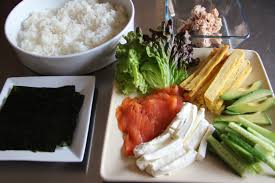
As much as I love making beautiful sushi, the truth is that when preparing it at home, sometimes I don’t make it formally: as usual in cooking, there’s an easy way out. Temakizushi literally means ‘sushi rolled by hand’ in Japanese, and this is because you don’t use a bamboo mat to carefully roll the sushi together. You simply take a square of sushi in one hand (a fourth of the full sheet of seaweed), and spread the rice over it with a spoon with your other hand. Then lay whichever ingredients you want to throw together on top, roll it together in your hand, and eat! It’s as simple as that.

Although somewhat less satisfying to make than other types of sushi, mostly because it doesn’t look the same, Temakizushi is absolutely perfect for when you’re with a big group of people. Anyone who’s tried to order pizza for a roomful of people knows the horror of trying to compromise on food, and this way, everyone can make their own sushi to their individual taste. Vegetarians can leave out seafood, those who don’t like crab meat can go for salmon instead.

In my own family, temakizushi is an easy classic. It’s the meal my mom’s family in Japan had the first time my dad went to meet them. It’s the meal we had when I went to visit several years later, with my grandmother and cousins and aunt all squashed around the small table, and the one my cousins chose when they came to New York to visit, when we had three types of fish and vegetables of all sorts from which to choose. A dish like this brings people together; this way, everyone’s pleased.


This is the fourth chapter from an e-book by one of the Campus Clipper’s former publishing interns, who wrote about how to make sushi. Follow our blog for more chapters from this e-book. We have the most talented interns ever and we’re so proud of them! For over 20 years, the Campus Clipper has been offering awesome student discounts in NYC,  from the East Side to Greenwich Village. Along with inspiration, the company offers students a special coupon booklet and the Official Student Guide, which encourage them to discover new places in the city and save money on food, clothing and services.  

At the Campus Clipper, not only do we help our interns learn new skills, make money, and create wonderful e-books, we give them a platform to teach others. Check our website for more student savings and watch our YouTube video showing off some of New York City’s finest students during the Welcome Week of 2015.

Become a fan on Facebook and follow us on Twitter and Instagram

Share

Make Your Own Sushi: Sushi For The Doubtful – California Roll

Saturday, February 11th, 2017
Image Credit: https://www.sushihaven.co.uk/california-roll.html

Image Credit: https://www.sushihaven.co.uk/california-roll.html

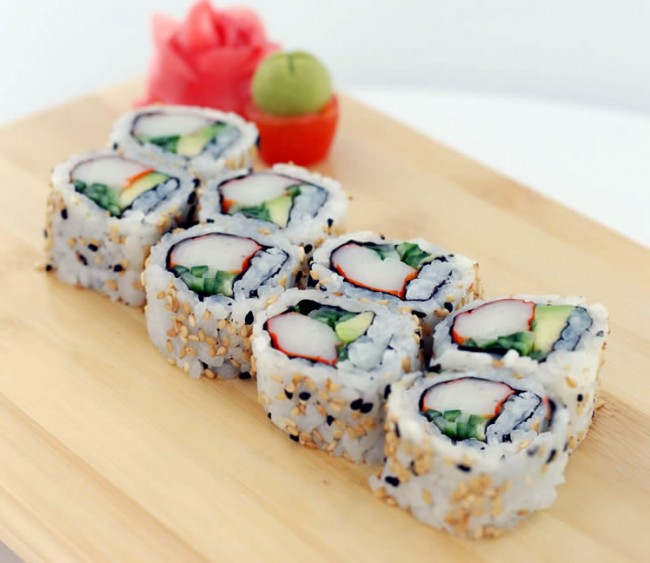
For those who are doubtful of trying new things, or even just of raw fish, California rolls are a great place to start, and to introduce your friends to sushi. In fact, they were originally made “inside out,” with rice on the outside, to make sushi more accessible to Americans. The most commonly used ingredients in California rolls are avocado, cucumber, and crab meat.

The first step is to cook the rice itself, then to season it with sushi rice vinegar. Cut your ingredients so that they’re ready for use. Gently tear the seaweed into halves. Place your bamboo mat in front of you, and lay a sheet of plastic wrap, roughly the size of the bamboo mat, on top. Lay a half sheet of seaweed on top of the plastic wrap and cover it entirely with a layer of rice. Sprinkle sesame seeds on the rice for extra decoration and taste.

Take another piece of plastic and lay it on top of the layer of rice, just to keep the rice from sticking to the bamboo mat. Flip the whole thing over, so that the seaweed is face up. Now peel the top layer of plastic off. Line up your ingredients in the center. Just like with the salmon roll, I’d recommend putting the avocado, the softest ingredient, in between the others; for example, surrounded by the crab meat and cucumber.

Now you’re ready to roll the sushi together! Just as you would with a standard roll of sushi, pull the seaweed back so it aligns with the edge of the bamboo mat, then hold the edge of the seaweed and the bamboo mat together with your thumb and index fingers. Holding the ingredients in place with your remaining three fingers, fold the seaweed layer over the ingredients and press down. Peel the bamboo mat back, realign the sushi, and finish rolling it together. Now unroll the bamboo mat, and gently tug the plastic wrap out from inside the sushi. Leaving the plastic on the outside of the sushi, roll the whole sushi again in the bamboo mat.

From here, simply cut your sushi. Because the sticky rice is on the outside, it’s easier to just cut the sushi through the outside plastic. Once you’re done cutting, pull the two edges of the sheet of plastic apart from each other and take the sushi out of the plastic layer. Enjoy!


This is the third chapter from an e-book by one of the Campus Clipper’s former publishing interns, who wrote about how to make sushi. Follow our blog for more chapters from this e-book. We have the most talented interns ever and we’re so proud of them! For over 20 years, the Campus Clipper has been offering awesome student discounts in NYC,  from the East Side to Greenwich Village. Along with inspiration, the company offers students a special coupon booklet and the Official Student Guide, which encourage them to discover new places in the city and save money on food, clothing and services.  

At the Campus Clipper, not only do we help our interns learn new skills, make money, and create wonderful e-books, we give them a platform to teach others. Check our website for more student savings and watch our YouTube video showing off some of New York City’s finest students during the Welcome Week of 2015.

Become a fan on Facebook and follow us on Twitter and Instagram
Share

Make Your Own Sushi: A Salmon Roll

Saturday, February 4th, 2017
Image Credit: http://12tomatoes.com/impressive-homemade-sushi-recipe-handrolled-salmon-avocado-and-cucumber-sushi/

Image Credit: http://12tomatoes.com/impressive-homemade-sushi-recipe-handrolled-salmon-avocado-and-cucumber-sushi/

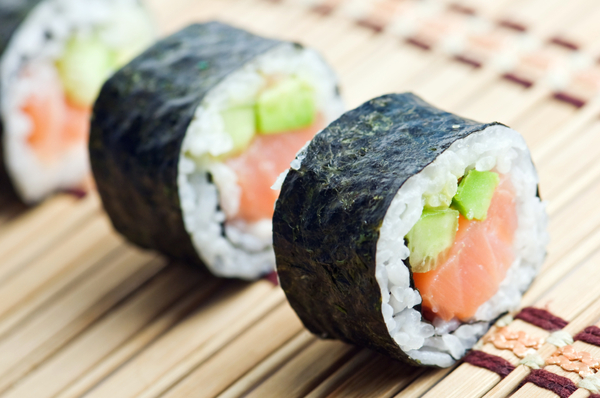
Let’s start with a salmon roll. For this dish, you will need: seaweed, sushi rice, sushi rice vinegar, smoked salmon, cucumber, and carrot, as well as your bamboo mat. You should also have a cup of water and a spoon ready. The first step is to prepare the ingredients, starting with the rice. Begin by washing the rice, then cook it in a pot, just as you would with any other type of rice. If you don’t have a stove, you can use a microwave instead.

While the rice is cooking, go ahead and cut your ingredients into strips about three or four inches long and a quarter of an inch wide. If the vegetables are tougher, like carrots, it’s a good idea to boil them a little first so they’re easier to cut. Fold down about two inches from the sheet of seaweed and gently tear it off. Now place the large piece of seaweed horizontally on top of the bamboo mat. Dip your spoon into the cup of water; if your utensil is a little wet, it will help keep the rice from sticking. Spread the rice onto the seaweed, leaving a border of about an inch on the top, and about half an inch on the bottom.

Fold the bottom border up to the edge of the rice and pat it gently, then place the two inch strip of seaweed next to the part you just folded up. From here, line up your ingredients. I generally place the carrot on the bottom, smoked salmon in the middle, and cucumber at the top. This way, your softest material is surrounded by more solid ingredients, and your fingers aren’t in salmon mush. Now line a few extra grains of rice along the upper edge of the seaweed; the rice will act like glue when you roll the sushi together.

Pull the seaweed down so it aligns with the bottom of your bamboo mat. Hold the seaweed and the bamboo mat together at the bottom edge with your thumb and forefinger. With your three remaining fingers, hold the lined-up ingredients in place, then fold the seaweed and rice layer down over the ingredients. Then peel the bamboo mat back, pull the half-rolled sushi so it aligns with the edge of the mat again, and roll the bamboo mat and the sushi together completely.

The roll is now finished! When cutting it, use back and forth sawing motions to help maintain the sushi’s round shape. Enjoy!


This is the second chapter from an e-book by one of the Campus Clipper’s former publishing interns, who wrote about how to make sushi. Follow our blog for more chapters from this e-book. We have the most talented interns ever and we’re so proud of them! For over 20 years, the Campus Clipper has been offering awesome student discounts in NYC,  from the East Side to Greenwich Village. Along with inspiration, the company offers students a special coupon booklet and the Official Student Guide, which encourage them to discover new places in the city and save money on food, clothing and services.  

At the Campus Clipper, not only do we help our interns learn new skills, make money, and create wonderful e-books, we give them a platform to teach others. Check our website for more student savings and watch our YouTube video showing off some of New York City’s finest students during the Welcome Week of 2015.

Become a fan on Facebook and follow us on Twitter and Instagram
Share

Make Your Own Sushi: The Starter Kit

Saturday, January 28th, 2017
Image Credit: http://www.japanesecooking101.com/hand-roll-sushi-recipe/

Image Credit: http://www.japanesecooking101.com/hand-roll-sushi-recipe/

I don’t remember the first time I ate a piece of sushi, but I do remember the first time I made it myself. I was in middle school. I wasn’t a great cook, and I was trusting my mom’s friend when she said that it wouldn’t be that hard. At the time, my culinary repertoire consisted solely of scrambled eggs and peanut butter & jelly sandwiches. Picturing the delicately arranged sushi in Japanese restaurants and the grocery store, I thought there was no way that I would be able to pull off a dish of sushi.

As it happened, though, my mom’s friend was a slow and patient teacher, and it turned out that sushi wasn’t that hard to make. One of the reasons it’s pretty simple is that there’s little actual cooking; it’s mostly just arranging the ingredients in the right way. This makes it perfect for students just venturing into the world of cooking. Always burning things in the oven? Scared of your toaster? Don’t worry, sushi is simple!

Before we begin, it’s important to know which ingredients you’ll need that you probably don’t have already. Carrots and cucumbers can be found in any grocery, but sushi rice and nori seaweed might be a bit harder to find. These ingredients can be found in a Japanese or Asian grocery, for a far lower price than they might be at a gourmet grocery. In addition to sushi rice and seaweed, you’ll need sushi rice vinegar, which is not the same as rice vinegar (it’s a little sweeter) and a bamboo mat with which to roll up the sushi itself. Once you’ve gathered these essentials, you’re ready to begin!


This is the first chapter from an e-book by one of the Campus Clipper’s former publishing interns, who wrote about how to make sushi. Follow our blog for more chapters from this e-book. We have the most talented interns ever and we’re so proud of them! For over 20 years, the Campus Clipper has been offering awesome student discounts in NYC,  from the East Side to Greenwich Village. Along with inspiration, the company offers students a special coupon booklet and the Official Student Guide, which encourage them to discover new places in the city and save money on food, clothing and services.  

At the Campus Clipper, not only do we help our interns learn new skills, make money, and create wonderful e-books, we give them a platform to teach others. Check our website for more student savings and watch our YouTube video showing off some of New York City’s finest students during the Welcome Week of 2015.

Become a fan on Facebook and follow us on Twitter and Instagram
 

Share

Caribbean Cuisine in the Bronx – Week 4

Tuesday, August 30th, 2016

In the past two chapters I wrote about the two ethnic cuisines that remind me most of home while being a student here in the city. In this chapter I am talking about the best Caribbean cuisine located in the Bronx. Caribbean culture was all very new to me when I first moved to New York. Previously living in California, I did not find as much Caribbean influence there as there is here in the city, due to its proximity to the West Indies. Since the early 1900s, Caribbean immigration to New York City had an influx of people from Jamaica, Haiti, Puerto Rico, and the Dominican Republic.

While all the countries have slightly different styles in cuisine, the majority of the dishes consist of rice, beans, plantains, jerk chicken and oxtail. I asked a fellow coworker of mine where she thought was the best place to get Caribbean cuisine in the Bronx. She was originally born in the Dominican Republic, but eventually gained citizenship and was raised in the Bronx. Jokingly she told me the best place for Dominican cuisine was in her mom’s kitchen, but then she told me about a restaurant called Feeding Tree.

Feeding Tree Menu photo credit: http://bit.ly/2caiNqL

Feeding Tree is located in the Bronx close to Yankee Stadium. Take the 4, B, or D train to the 161 St. Yankee Stadium stop and walk a short distance to the restaurant. It is a very simply decorated restaurant and the menu has two columns “meat dishes” and “seafood.” You choose a dish, and then which size you’d like. Most of the dishes remain under or around $10. Feeding Tree’s most popular dish is the oxtail meat platter, which comes with rice and another side. The service is great; the portions are filling, and, most importantly, you can adequately taste the flavors of Caribbean spices.

Oxtail Platter photo credit: http://bit.ly/2bA84BJ

If you have never eaten Caribbean food before, you should definitely give it a try, especially if you are into Indian and Eastern Asian cuisines. Similarly to those cuisines, Caribbean food is very flavorful and takes ingredients from those places it has been influenced. If you are also interested in immersing more into Caribbean culture, this Labor Day weekend the 49th annual New York Caribbean Carnival is kicking off on Thursday, September 1. This four-day extravagant event will include street vendors cooking up authentic Caribbean cuisine, music filled shows, vendors selling Caribbean jewelry/crafts and a carnival parade on Labor Day. The festival will take place in Crown Heights with the parade on Eastern Parkway. Next week, for my final chapter on ethnic cuisine outside Manhattan, I will be talking about the various food festivals that offer diverse options in cuisine all in one place!


Caribbean inspired costumes photo credit: http://bit.ly/2bw1D8D

By: Tricia Vuong
__________________________________________________________________________________________

Tricia Vuong is a publishing intern here at the Campus Clipper. She is currently studying Journalism + Design at Eugene Lang The New School for Liberal Arts with a minor in Global Studies. Check out more of her work on her portfolio.

For over 20 years, the Campus Clipper has been offering awesome student discounts in NYC,  from the East Side to Greenwich Village. Along with inspiration, the company offers students a special coupon booklet and the Official Student Guide, which encourage them to discover new places in the city and save money on food, clothing and services.  

At the Campus Clipper, not only do we help our interns learn new skills, make money, and create wonderful ebooks, we give them a platform to teach others. Follow each new blog post to read a chapter of our various books and to learn how the Campus Clipper can help you follow your dreams!

Stay tuned for more tips from Tricia on ethnic cuisine outside of Manhattan, check our website for more student savings and watch our YouTube video showing off some of New York City’s finest students during last year’s Welcome Week.

Become a fan on Facebook and follow us on Twitter and Instagram!

Share
Share

Cheap Chinese Dishes – Week 3

Tuesday, August 23rd, 2016

I am a first generation Asian-American being half Vietnamese and half Chinese. My first language was Cantonese and I grew up eating Chinese dishes. My childhood memories are comprised of going to the Cleveland, Ohio’s Chinatown and eating dim sum on Sunday mornings. Dim sum was always a family event and the whole chaotic experience of ordering from the ladies pushing carts full of dumplings became familiar. Similarly to my last chapter, there are several dishes that remind me of home here in New York. In the last chapter I wrote about the best taco spot I’ve found that tasted and cost as close to the tacos back home in Southern California. This chapter, I am writing about the best Chinese dim sum and dishes that remind me of my childhood.

If you must settle for the Chinatown experience in Manhattan, there is one dim sum place I have been attending that has been able to avoid tourists and remain under $10. Skip the Yelp suggestions of Golden Unicorn, and Jing Fong and visit Sunshine on 27 Division Street. After several trials to other dim sum restaurants in Manhattan’s Chinatown, Sunshine is the most authentic I’ve tasted. It is a smaller restaurant unlike the very extravagant experience you’ll receive at Jing Fong, but the dumplings are always fresh and fairly priced. As most dim sum restaurants, the ladies push carts around the room filled with different types of dishes. The most popular dim sum dishes are typically har gow and shu mai. Har gow is shrimp encased in a rice paper dumpling and shu mai is a pork dumpling.

Front of Sunshine photo credit: http://bit.ly/2bK6633

Har gow, shu mai, and braised chicken feet photo credit: http://bit.ly/2bK5Ilh

The best part about Sunshine is that you share a large table with other parties similar as how they do in Hong Kong. Your party will get a complimentary pot of tea and the rest is up for you to decide what you want from the carts! There are a few vegetarian options but most of the dishes do contain meat so the dim sum experience isn’t for picky eaters. Don’t be afraid to point and ask to see what the dishes are. The ladies speak both Cantonese and Mandarin and although there can be a language barrier for those that do not know either, most of them usually show you what they have.

Walking down Canal Street you pass numerous vendors that are trying to appeal to tourists. If you want to skip the hustle and bustle of vendors selling knock off bags in Chinatown Manhattan, try a different kind of chaotic experience in Flushing, Queens. If you’re coming from Manhattan, hop on the 7 train from either Grand Central or Times Square. Take the 7 train all the way to its last stop, Flushing Main Street. There you will get off and be in the center of another Chinatown minus the tourists. Flushing, Queens offers two Asian malls equipped with clothing and grocery stores along with a food court. The New World Mall is a more Westernized experience while the Golden Mall is comprised of small hole in the wall shops. Both are within walking distance from the train stop. Check out the food court in both the malls as they have a variety of options such as hand-pulled Shanghai noodles and dumplings.

Pork dumpling w/ chives, shrimp, eggs at Tianjin Handmade Dumplings $4/12pcs photo credit: http://bit.ly/2bdhUha

As for dim sum in Flushing, Asian Jewels Seafood Restaurant offers tasty dishes and a great ambiance. Most dim sum restaurants are in large banquet-like rooms with white table cloths and red walls. Jing Fong and Golden Unicorn in Manhattan’s Chinatown appeal to the traditional dim sum aesthetics but their quality in the actual dishes are lacking. Asian Jewels in Flushing meets both of these points to having a great dim sum experience while also remaining budget friendly. Dishes are marked on your party’s stamp card in either the small, medium, or large section. You don’t really know what each dish costs unless you ask, but at the very end of your meal the waiter will total everything up. I’ve gone with a party of six and a party of just two and each time I hardly spend any more than $10. Sunshine in Chinatown, Manhattan and Asian Jewels in Flushing, Queens are the two tastiest Cantonese dim sum restaurants I’ve had here in New York.

Inside of Asian Jewels photo credit: http://bit.ly/2bdfZ7Q


Sunshine: 7 Division St, New York, NY 10013

New World Mall: 136-20 Roosevelt Ave, Flushing, NY 11354

Golden Shopping Mall: 41-36 Main St, Flushing, NY 11355


By: Tricia Vuong
__________________________________________________________________________________________

Tricia Vuong is a publishing intern here at the Campus Clipper. She is currently studying Journalism + Design at Eugene Lang The New School for Liberal Arts with a minor in Global Studies. Check out more of her work on her portfolio.

For over 20 years, the Campus Clipper has been offering awesome student discounts in NYC,  from the East Side to Greenwich Village. Along with inspiration, the company offers students a special coupon booklet and the Official Student Guide, which encourage them to discover new places in the city and save money on food, clothing and services.  

At the Campus Clipper, not only do we help our interns learn new skills, make money, and create wonderful ebooks, we give them a platform to teach others. Follow each new blog post to read a chapter of our various books and to learn how the Campus Clipper can help you follow your dreams!

Stay tuned for more tips from Tricia on ethnic cuisine outside of Manhattan, check our website for more student savings and watch our YouTube video showing off some of New York City’s finest students during last year’s Welcome Week.

Become a fan on Facebook and follow us on Twitter and Instagram!

Share
Share

Student Foodie: Visit Vapiano with a Group for Fresh Italian Offerings

Wednesday, August 17th, 2016

If you are a New School or NYU student you may have already tasted Vapiano’s simple and tasty Italian offerings at a catered school event. If you’ve traveled around Europe, it’s also very likely that you walked into a Vapiano – the international chain has over 130 restaurants worldwide. Their New York outpost is a large, two-story restaurant on the corner of University and 13th street. The space is airy and open with red globe decorations hanging from tall ceilings and big windows. Don’t be put off by the large air-conditioning rig coming out of one of the windows when you walk in.

Vapiano’s Interior photo credit: http://bit.ly/2b1oNiR

Photo by Tamar Lapin

Photo by Tamar Lapin

What’s most unique about Vapiano is their card system. When guests walk in they are automatically asked if they’ve been to the Italian chain before – that’s because their ordering system may seem unusual at first but is pretty simple once you get the hang of it. You’re handed a Vapiano card, which is similar to a credit card but just for the restaurant. Every time you order, your card is scanned and when you are ready to leave, you hand the card in at the front desk and pay based on the card’s balance.

The idea is upscale cafeteria-style. You don’t order at a table, but rather walk to stations offering different options (pasta, antipasti, pizza, salad…) with a tray. At the pasta station, dishes are sautéed up before your eyes and you scan your card by tapping it against a machine after ordering. If you decide to go for a personalized pizza, you’ll be given a little buzzer which rings when your dish is ready. Pasta and pizza dough are made fresh, in house daily.

Vapiano's pasta bolognese and margharita pizza. Photo by Tamar Lapin.

Vapiano’s pasta bolognese and margharita pizza. Photo by Tamar Lapin.

Le Ludwige, the manager at the New York location says that this system is meant to encourage guests to roam the restaurant freely. “We wanted to give our guests the option to walk around,” he said.

Ludwige added that this system does slow down the ordering and paying process slightly but they are working on streamlining. As of now, lunchtime can be a little slow, as business-lunch people in the area want something they can sink their teeth into more quickly. But if you’re a student with a big break in between classes, Vapiano is perfect. You can also order online through Chow Now and come pick up your meal all ready to go.

This option is also great for families, and on a Friday afternoon, the restaurant is filled with European tourists and groups of young people. You and your friends can each go to a station and meet at one of the high lightwood beige tables with your steaming dishes.

For a touch of simplicity, try the pasta bolognese, a traditional Italian dish- made with Vapiano’s classic beef and pork tomato sauce, with sliced carrots as a delicious and surprising addition. The dish is well-seasoned and filling. All pasta dishes are served with two slices of homemade bread and each table is outfitted with little marble containers holding spicy olive oil and balsamic vinegar. The pizza is less of a highlight, the classic margarita I ordered was a little greasy but the European-style thin crust redeemed it slightly. All the dishes are priced reasonably at $10.00 to $13.00.

If you’re in the mood for a drink, Vapiano has an extensive wine selection showcased on tall mirrored shelves behind the bar. Glasses of wine are priced at $9.50 and the beer is $6.50.

Visit Vapiano to satisfy all of your fresh pasta cravings and bring your classmates for a tasty meal in a fun, low-key environment that is guaranteed to have you leave as friends.

by Tamar Lapin


For an extra student discount use this Campus Clipper coupon below:

coupon_NYUclipperWEB

For over 20 years, the Campus Clipper has been offering awesome student discounts in NYC,  from the East Side to Greenwich Village. Along with inspiration, the company offers students a special coupon booklet and the NYC Student Guide, which encourage them to discover new places in the city and save money on food, clothing and services.  

 At the Campus Clipper, not only do we help our interns learn new skills, make money, and create wonderful ebooks, we give them a platform to teach others. Follow each new blog post to read a chapter of our various books and to learn how the Campus Clipper can help you follow your dreams!
Check our website for more student savings on food and services and watch our YouTube video showing off some of New York City’s finest students during last year’s Welcome Week.
 
Become a fan on Facebook and follow us on Twitter and Instagram!
Share

Street Tacos for $1.50 in Bushwick, Brooklyn – Week 2

Tuesday, August 16th, 2016

I grew up in Orange County, California and Mexican food was available almost everywhere. From authentic taqueria spots that were open twenty-four seven to chain restaurants like “Rubio’s” that had specials like fish taco Tuesdays, you could find a great dish on any block. After I moved to New York, I was determined to find a great Mexican taco spot that was also cost-friendly. When I lived in the city during my first year, I noticed that although there were Mexican restaurants, many of them were overpriced for portions that were not very filling. Even the Mexican chain, “Chipotle,” was slightly more costly here in the city compared to back home. After I moved to Bushwick, Brooklyn, I finally found a taco spot that tastes as great as it costs.

Bushwick, Brooklyn is historically and predominantly Hispanic. Most residents are Latino: from Puerto Rico, the Dominican Republic and immigrants from Mexico. Bushwick is the largest hub of Brooklyn’s Hispanic-American community with residents that have created businesses to support their own national and traditional cultures. Take the L or the M train to the Myrtle-Wycoff subway station and walk a short distance to Taqueria Izucar.

Exterior on Myrtle Avenue photo credit: http://nym.ag/2brmhTt

Located on the busy Myrtle Avenue between Menahan and Grove Street, this small business has a red awning that you can’t miss. When you walk in, there is just a small counter and a few open bar stools. Most people take their dishes for take out and they also do delivery if you’re in the neighborhood. Along with tacos, Taqueria Izucar offers other traditional dishes such as tortas, tostadas, enchiladas, and others. Their most popular taco is the “suadero,” which is a veal flank taco. Each taco comes with two corn tortillas, cilantro, onions, radish, lime, and salsa. Depending on the meat, prices vary but most of them are $1.50 per taco. If I am hungry, I typically get four tacos which costs only $6, an amazing deal! Even the taco truck outside the Myrtle-Wycoff subway station sells their tacos for $3+. All the dishes are made to order and they also accept both cash and card payments.

Suadero Tacos photo credit: http://bit.ly/2bipzHn

Currently Taqueria Izucar only has 33 reviews on Yelp, but a four star rating. New York Magazine says, “They know their way around a taco at this unexceptional-looking counter-service spot under the rumbling M train.” and the Village Voice has named it their “Best of NYC’s” taco in 2013. Be sure to visit Taqueria Izucar for some authentic tacos that won’t kill your budget. Next week, I will be writing about the best dim sum in Flushing, Queens!

Taqueria Izucar is located at:

1503 Myrtle Ave. Brooklyn, NY 11237 | 718-456-0569  | Mon-Thurs 11am-10pm Fri-Sun 11am-11pm

By: Tricia Vuong

__________________________________________________________________________________________

Tricia Vuong is a publishing intern here at the Campus Clipper. She is currently studying Journalism + Design at Eugene Lang The New School for Liberal Arts with a minor in Global Studies. Check out more of her work on her portfolio.

For over 20 years, the Campus Clipper has been offering awesome student discounts in NYC,  from the East Side to Greenwich Village. Along with inspiration, the company offers students a special coupon booklet and the Official Student Guide, which encourage them to discover new places in the city and save money on food, clothing and services.  

At the Campus Clipper, not only do we help our interns learn new skills, make money, and create wonderful ebooks, we give them a platform to teach others. Follow each new blog post to read a chapter of our various books and to learn how the Campus Clipper can help you follow your dreams!

Stay tuned for more tips from Tricia on ethnic cuisine outside of Manhattan, check our website for more student savings and watch our YouTube video showing off some of New York City’s finest students during last year’s Welcome Week.

Become a fan on Facebook and follow us on Twitter and Instagram!

Share
Share