Ideal Career Choices for Personality Types

June 7th, 2012

Society today has been keen on putting people into categories: tall or short, educated or uneducated, sociable or shy. Because of this constant grouping of people, the Internet has been swarming with various personality tests that tell you what type of individual you are and the type of people you would be the most and the least compatible with. Though some people say that this categorization of people is discriminatory and encourages unfair separation of human beings, I find it interesting how answering a couple questions can tell you who you are as a whole person and even provide you with options for your future. I don’t like to rely on these personality tests, but one test that I have recently taken and found to be strangely accurate is the Myers Briggs Personality Test. This test consists of nearly fifty questions that you must answer in order to determine your personality through the different integrations of pre-determined letters. These letters stand for a specific personality, such as E for extrovert and I for introversion, and using the combination of four letters, the Myers Briggs Personality Test reveals your true personality at its raw.

For college students who are just beginning to discover themselves and testing different major options, Myers Briggs Personality Test is the perfect tool that creates a list of options that would work to the benefit of their distinct personas. Upon completing the test, Myers Briggs presents the four-letter definition of your personality with an explanation and the career choices that would suit your characteristics. I am an ENFJ: extroversion, intuition, feeling, and judging, and Myers Briggs had summed me up as an idealist organizer. The compatible career options for an ENFJ are journalist, social worker, chiropractor, and graphic designer. As an English major, becoming a journalist was something that I had contemplated over, and after seeing the results of my test, I’m even more tempted to pursue after it as a possible career.

Myers Briggs Personality Test  proved true for myself, but it might differ from person to person, depending on how honestly you answer the questionnaire. Even if you are set on the career of your dreams, take the Myers Briggs Personality Test at http://similarminds.com/jung.html to explore yourself in depth and also to have some fun to see what possible apposite alternatives you have. http://vocational-careers.toptenreviews.com/personality-test-assists-professionals-in-making-career-choices.html gives the explanations you need in order to decipher the codes that the test presents you with. There’s no harm at all in taking this test; do it for fun and explore you’re the endless options you have for your life.

Express your personality through a collection of piercings or body jewelry with a discount!

Becky Kim, Queens College, Read my blog and follow me on Twitter

Click here to download the Campus Clipper iTunes App!

Follow Campus Clipper on Twitter or keep current by liking us on Facebook

Interested in more deals for students? Sign up for our bi-weekly newsletter to get the latest in student discounts and promotions. For savings on-the-go, download our printable coupon e-book

Share

Finding the Humor in Collegehumor.com

June 7th, 2012

Recently on Facebook, my friend had posted up a link to a website I had never heard of before. Of course, being a curious cat, I clicked on the link to find a video taking over my entire laptop screen. Stunned thinking that it was one of those spammed adult videos, I scrambled to exit out, but I saw a petit blonde woman with pursed lips and sharply raised eyebrows enter my screen. She closely resembled the fashion icon Mary-Kate Olsen and my guess had been correct. This video was from a series called “Very Mary-Kate,” a parody on the real Mary-Kate Olsen, depicting her life as an empty-headed multi-millionaire without a proper education. The real Mary-Kate Olsen is nothing like this, as her PR confirms, and the maker of this parody had even defended her videos from angry fans of the Olsen twin, stating that her videos were merely exaggerations based on the rumors of celebrity life to create light humor.

A parody well done

I can understand why fans were enraged after watching these videos, but to be honest, this was just an overtly reactive response to the two-minute clips. “Very Mary-Kate” is only a segment of a variety of video clips posted on www.collegehumor.com, a website dedicated to humorous videos for the purpose of sheer entertainment. Some of the topics that these videos discuss run along the fine lines of vulgarity and comedy, but for college students who want to take their minds off of the worries of studying, this website perfectly suitable. Aside from videos, collegehumor.com also uploads entertaining pictures and articles that deal largely with the main-stream media today – something all college students can relate to and laugh about. Collegehumor.com contains so much more material than this satirical parody of a celebrity, and needless to say, it’s all just for some laughs and giggles. Everyone needs a break from reality and what better way is there than to rely on light-humored comedy.

Although browsing through this website can help one in easily releasing stress, it can also become an instant trap for procrastination if not monitored carefully. I’ve spent hours on this site, mindlessly laughing over hilarious videos when I should have been writing my final papers. With a good amount of self-control, collegehumor.com is definitely a good remedy for an overworked college student in search of an oasis. Look through the site, enjoy it, and spend some time by yourself with effortless humor; I’m positive that you’ll be hooked on it.

Watch: Very Mary Kate Photo Shoot

Try other ways of enjoying a relaxing time other than staying on your computer by receiving a discount on a body massage!

Becky Kim, Queens College, Read my blog and follow me on Twitter

Click here to download the Campus Clipper iTunes App!

Follow Campus Clipper on Twitter or keep current by liking us on Facebook

Interested in more deals for students? Sign up for our bi-weekly newsletter to get the latest in student discounts and promotions. For savings on-the-go, download our printable coupon e-book

Share

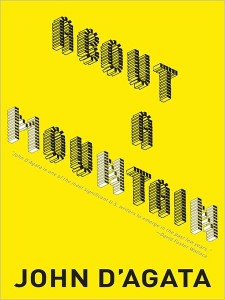
Book Review: About a Mountain by John D’Agata – “To whomever I did not help.”

June 7th, 2012

"...one of the most significant U.S writers to emerge in the past few years." - David Foster Wallace

It seemed to us we we’re a very great people” – The United States of America

John D'Agata

      A week into November of last year at the University of Arizona, right around when the leaves of date palms litter the walkways all over Tucson, I found myself in a familiar place: nose wedged in a book, eyes drowned in its ephemeral words, limbs temporarily frozen and forgotten; I was lost. My wasteland: the nuclear storage fields at Yucca Mountain, Nevada. My drug: our future. My spirit guide: John D’Agata. About a Mountain is one of those rare firecrackers of books that not only sparks  widespread controversy, but does so for a reason only other writers, penetrating thinkers, acerbic comedians and unattractive vampires can appreciate – being misunderstood. It took all of 10 pages before someone who didn’t fall into one of those categories – ironically, a geology professor (who is a leader in his field, and thus remain unnamed) – was overwhelmed by what could only have been a personal agitation that superseded general human etiquette, to point out – let’s say less than eloquently – that an entire book was dedicated to fact-checking the 200 pages of brilliance that laid in my hands, and unequivocally supported a conclusion that many readers had come to: in About a Mountain, John D’Agata is at his best, and John D’Agata is  completely full of shit.

      It isn’t hard to see why. Consider the book’s opening lines, describing Las Vegas’ centennial: “If you take the population of Las Vegas, Nevada, and you divide that by the number of days in the year, there should be 5,000 people in the city and its suburbs with a birthday on the same day that Las Vegas began. On the hundredth anniversary of its founding, however, Las Vegas had only gathered twenty-nine of those people.” Alongside lines such as the dedicatory inscription at the beginning of this review – in particular, one’s seemingly intended for an exceedingly enlightened, mysterious audience somewhere in the distant future – D’Agata immediately introduces readers to his favorite (and, unsurprisingly, most misunderstood) move: bending time and place while simultaneously trapezing between the ledges of fact and fiction. It is in this uncomfortable domain of the known and unknown where D’Agata’s peculiar logic, his idiosyncratic mind, and fascinating personal experience are employed (and shine) to reexamine not only where we are, but also where we’ve been; and most portent – where we are going.

      You might have noticed that I’ve reached several hundred words without actually diving into the masterful narrative that Charles Bock of The New York Times called “unquestionably art, a breathtaking piece of writing.” A review that reprimanded – and derided – the artist only a few paragraphs later for the same reasons for which it initially protruded with admiring jaundice: “I don’t know what to think. What’s specific or representative or smudged? Pandora’s box is wide open.” What Mr. Bock fails to realize, despite his awareness of D’Agata’s explicit claim that “I[He] is in search of art” and not fact is that this was precisely the book’s purpose – one that (perhaps without the reader’s acknowledgement) it polemically fulfills.

So why should you, or anyone, really care? The overarching message of About a Mountain serves as a messianic compass as we attempt to successfully navigate our way through this precarious storm of cultural and technological chaos. More than ever, the ability to critically parse between fact and fiction, numbers and art, truth and wisdom is paramount to our continued existence; one that is worth preserving anyway. The book itself weaves an in-depth coverage of the political suave and maneuvers used to re-interpret a million year problem into a 10,000 year solution (an absolutely stunning metaphor for the pattern of thinking that has lead us here) along with the tragic story of Levi Presley – a boy who jumped off the Stratosphere tower in Vegas – and the connection of his death to D’Agata’s own experience answering calls on a suicide hotline. It is because, not despite, this discordance that D’Agata’s ambition and pursuit of art is realized. Here, the details that are debated  (resolved with end notes in later editions) – from the significant, such as the day of Levi’s death, to the minuscule, such as the actual color of hills in the Nevadan autumn – are irrelevant. Keeping up? Good. Because it is through this very deliberate and aesthetically striking ridiculing of fact, or knowledge, that any of the information is made relevant.
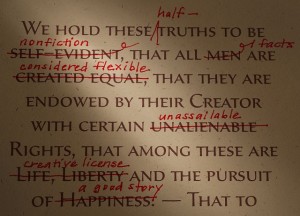
credit: IowaNow

      Creative Nonfiction is not journalism – D’Agata despises the term, instead championing the “essay”, invoking Montaigne’s “essai”, meaning ‘an attempt or trial’ to route the journey of consciousness throughout a narrative; a provocative stance to say the least. His elastic perspective regarding this paradigm is manifested in the titles of the book’s chapters: starting with the journalistic staples of “Who, What, How, Where and When” and concluding with a trifecta that outlaws objectivity entirely, “Why, Why, Why.” Certainly, this complex concept is beautifully articulated when he writes, “Clear that if I point to something like significance, there is the possibility that nothing real is there. Sometimes we misplace knowledge in pursuit of information. Sometimes our wisdom, too, in pursuit of what’s called knowledge.” Indeed this is a hefty price to pay for maintaining the beloved boundary, the artificial security, between objectivity and subjectivity, where intellectual vertigo and doubt are priceless casualties in the name of conventional tradition. D’Agata’s perspicacious observation is further reflected in the portrayal of back-door politicians who recommend the feasible option instead of confronting the truth with wisdom. Despite the borderline infinite data on Yucca Mountain, “a place that we have studied more thoroughly at this point than any other parcel of land in the world… still it remains unknown, revealing only the fragility of our capacity to know.”

“When we are not sure, we are alive.” – Graham Greene

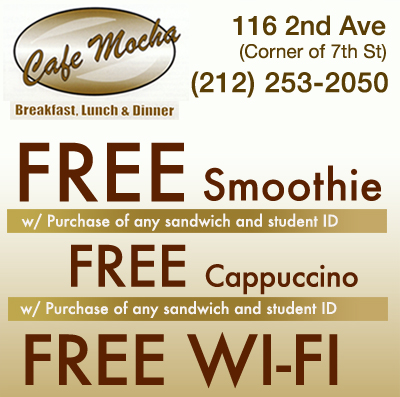
While I can’t direct you anywhere in the city with palm trees year round, there are plenty of opinionated strangers everywhere. So why not grab a copy of  About a Mountain  and head to Cafe Mocha, fill up with a great sandwich, then focus in with a free Cappuccino (using the coupon below), and if you absolutely can’t help yourself, ‘fact-check’ this monumental work with their free WiFi.
Mahad Zara, The University of Arizona and Columbia University, Read my blog and follow me on Twitter

Click here to download the Campus Clipper iTunes App!

Follow Campus Clipper on Twitter or keep current by liking us on Facebook

Interested in more deals for students? Sign up for our bi-weekly newsletter to get the latest in student discounts and promotions. For savings on-the-go, download our printable coupon e-book

Share

How Reliable are the Ratings of Your Professors?

June 6th, 2012

Choosing classes and making the semester’s schedule happens to be one of the things I love the most about being a college student. I love the freedom I have in deciding between the option of classes and feeling in charge of my own life for once. But for many students, this time of the semester is the most stressful and possibly the next worst thing from finals week. It’s definitely understandable why scheduling is one of the biggest pressures as a student. The competition in prying for the same courses vital for graduation within a certain major drives people to the state of extreme tension and desperation.

Often times, this intense competition rises because students are constantly relying on how well the professor teaches and chasing after the course with the best rated professor. The website, www.ratemyprofessor.com, has become an extremely popular site for college students to turn to in order to get a preview of how difficult the course they’ve chosen will be. How reliable is this site? For many students, this website is the shortcut to an excellent grade for the semester. However, the ratings listed are created by other students’ previous experiences with the professors, so everything really depends on the individual’s study habits, passion for education, and individual chemistry with the instructor. Ratings on this website are personal, and sometimes, too personal. Sure, it’s tempting to believe all of the reviews posted on the website, but nothing is valid until you face the professors head-on and first handedly experience their teaching methods yourself.

Avoiding bad professors as Cameron Diaz's role in "Bad Teacher"

What I’m trying to tell you is to not become dependent on these reviews that merely tell you someone’s experience with a certain course or professor. Some of the ratings may be reliable, but most of the time, you’ll receive mixed opinions about the same professor – everyone is different, thus everyone produces different judgments. Knowing this now, don’t’ stress about landing a class with the “best” or the “easiest” professor. Succeeding in class does not depend on the professor, but it depends solely on your responsibility and willingness to put in the effort. Feel free to take a look at these ratings once in a while, but liberate yourself from becoming consumed by them. Explore and take risks – that’s what college is for!

Stop your stressing and take a breather by enjoying a discount on an all-organic meal of burger and fries at Bareburger!

Becky, Queens College, Read my blog and follow me on Twitter

Click here to download the Campus Clipper iTunes App!

Follow Campus Clipper on Twitter or keep current by liking us on Facebook

Interested in more deals for students? Sign up for our bi-weekly newsletter to get the latest in student discounts and promotions. For savings on-the-go, download our printable coupon e-book


Share

Be savvy with your free time

June 4th, 2012

Cultural experiences shouldn’t cost you the $15 entrance fee!  New York City has an overwhelming amount of free or inexpensive events that happen every day.   Make your free time free by knowing how to find free events throughout the city.
There are several resources available for finding free events in the city.  These websites provide a comprehensive list of free or inexpensive events by date or subject. I recommend looking at multiple websites because there are so many events some websites do not list them all.
Here is a list of some of the resources I use:
Time Out New York
Go NYC
New York Magazine
Living Free NYC
Club Free Time NYC

Sifting through all of the possible events can be daunting. There are free pickup games in the park, free lectures, movies, concerts, and art shows. It is helpful to know what you are interested in and passionate about so you can pick which type of events you want to search.

The best part about going to these events is that you are going to be around people who are just as interested in doing these things as you are. If you go to a free Stargazing Event on the Highline, you will meet  other people who like stargazing.

To make sure you don’t miss out on great opportunities create a calendar (I use google calendar).  I know it may seem weird organizing your free time but  I have been mad at myself many times because I wasn’t aware of amazing events like Free Wanda Jackson concert in Central Park.

I will be posting some of my favorite free events around the city in the posts to follow! So keep looking at Campus Clipper Blog  to find out more tips on living in the city.

With all the running around the city you will be doing with free things you may need a gym membership to stay in shape!


Shailyn Tavella, NYU 2013, Read my blog and follow me on Twitter

Click here to download the Campus Clipper iTunes App!

Follow Campus Clipper on Twitter or keep current by liking us on Facebook and follow our Tumblr and Pinterest.

Interested in more deals for students? Sign up for our bi-weekly newsletter to get the latest in student discounts and
promotions. For savings on-the-go, download our printable coupon e-book

Share

The Roots Beneath the City: Leon the Professional

June 4th, 2012

Leon cleans his little potted plant every day, spraying water on the leaves and wiping them down like he’s bathing his child.

“You love your plant, don’t you?” Matilda asks.

“It’s my best friend,” he responds. “Always happy. No questions. And it’s like me, you see? No roots.”

Roots, Medvednica, Croatia

Roots: he has none (Photo credit: Wikipedia)

This man speaking so tenderly of his plant is an immigrant, root-less, alone in the city of New York. He is a hitman. He likes milk and Singin in the Rain. In Luc Besson’s thriller Leon the Professional, Jean Reno plays Leo, an assassin who finds his lonely life of murder for hire interrupted by the events down the hall from his apartment. Maybe murder’s not the right word. After all, he’s a professional.

After coming home to find her family murdered by corrupt DEA cop Norman Stansfield (Gary Oldman) and his crew over cocaine dealings, Mathilda Lando (a young, precocious Natalie Portman) seeks refuge with Leo, her up-to-then unknown neighbor. Leo, who seems to foresee an intrusion into his solitary rhythm of life, takes a moment to consider Mathilda through the keyhole before grudgingly allowing her inside. From this point, the foul-mouthed yet devoted Mathilda slowly draws Leo out of his shell as she talks him into teaching her the ways of the hitman. The two eventually come head to head with Stansfield as Mathilda seeks revenge for her slain brother—the only one she really loved out of her family members.

With Leo living in a gritty, multicultural corner of Little Italy, Besson’s New York is anything but glamorous. Shots of the world outside Leo’s apparent seem suffused with a yellow hue, as if a thick carpet of dust had been collecting behind the lens. But even more than the setting, it’s the people in Besson’s film that give us a glimpse into New York’s underside. At the beginning of the film, we learn that Mathilda has both been truant from her school for troubled young girls and is the subject of abuse from her father, and neglect from everyone else except her little brother. And Leon? That’s right, don’t look for happy characters here. Having fled to America after murdering his forbidden love’s father, Leo has not had a relationship with a woman—or, it seems, anyone who doesn’t end up on the wrong end of his gun or knife—for over a decade. And despite the almost ludicrous nature of Oldman’s villain, it’s not difficult to imagine some parallels with police corruption in New York’s history.

Stan clarifies his statement

Both Leon’s and Mathilda’s stories tell us the importance of taking root somewhere. From what I hear, many of the old ethnic boundaries that once divided New York have given way to gentrification. But a quick walk down a few blocks down from my apartment lets me see the deep roots that still cling in the city, and those that have formed more recently. Go down one block—Hispanic district. 2 more—Chinatown. Go even further and you’ll hit a neighborhood of Orthodox Jews, a discovery I made one Sunday morning after getting off at the wrong subway stop. It’s the desire to know you’re growing in familiar soil—something a quiet, milk-loving hitman finds in a chain-smoking girl outside his doorstep.

Looking for killer burgers and fries? Take this 10% off coupon for Goodburger and enjoy!

Andres Oliver, Emory University
Check out my blog and twitter!

Click here  to download the Campus Clipper iTunes App!

Follow Campus Clipper on Twitter or keep current by liking us on Facebook

Interested in more deals for students? Sign up for our bi-weekly newsletter to get the latest in student discounts and promotions. For savings on-the-go, download our printable coupon e-book!

Share

When Harry Met Sally: Who Wants to be Just Friends?

June 3rd, 2012

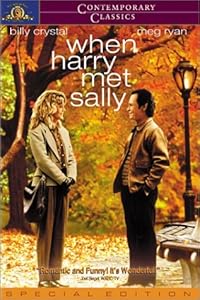
Cover of "When Harry Met Sally"

Though I stated in a previous post that I would be reviewing movies in general, I decided to hone in on a specific topic in order to better match the tone of Campus Clipper. Therefore, I’ll be focusing on movies centered on or dealing with the city of New York. Considering that almost every movie either takes place in New York from the beginning or has the characters go there during the climax—because lets face it, New York City is always the first target during an alien invasion, and love stories just don’t cut it unless they’re New York stories—the options are almost limitless. But I’m going to focus on movies that gave me the strongest sense of New York—the ones that you can watch and say that’s New York even before the first shot of Central Park or the Empire State Building. First up in the list is Rob Reiner’s well-loved romantic comedy, When Harry Met Sally.

Out of all the films that I could have chosen as my first, When Harry Met Sally stood out inexplicably from the rest. Screenwriter Nora Ephron’s and director Rob Reiner’s take one the age-old question of “can men and women really be friends” savors of New York from the moment Harry (Billy Crystal) and Sally (Meg Ryan) first part ways at the Washington Square Arch to when Crystal decides to run after her while standing under it. But its more than just the location. Sure, take out the shots of Central Park, Katz’s Deli, and the Metropolitan Museum, and you’re left with another romantic comedy about two young people who take ninety minutes to finally get around to liking each other—an epidemic that Hollywood’s carried to an untold number of cities.

The first time I saw the movie, I knew instantly that this must be how people live in New York. Not L.A. or Seattle or London. They go powerwalking in the park and eat hot dogs at street carts. They wonder about the emptiness of being single while surrounded by people at every avenue. The real draw of the movie, though, isn’t that Reiner has his characters work out these universal problems against the backdrop of New York. It’s that life in The City makes these questions all the more pertinent, especially for college-age individuals such as ourselves.

Harry and Sally are both well-off professionals with at least a handful of close friendships. Why, then, can’t they be satisfied with being just friends? Could it be boredom? At least the first 20 years of our lives are set off as a sort of constant challenge—a hoped-for transition from complete dependence to independence. There’s the various stages of compulsory education, then college, then career. And then what? Once you graduate college, most of your ties to your closest friends are severed, and you’re faced with the terrifying prospect of forming an entirely new circle in an unknown city. Sure, you can make some good friends in time. If you’re lucky, you might even like your job and decide to devote your life to singlehandedly transforming that little corner shop into a multinational money maker. But even so, you have to think, can’t help but realize at some point, that you have fifty years or so to kill until you die (add ten if you happen to live in Japan or Denmark). The thought of having to whittle away at all those hours, days, and years alone is truly terrifying.

Maybe that’s why no religion mandates celibacy (priests are married to God, I suppose). Because Jesus and Buddha and all the others knew that even scarier than the thought of some distant eternity of punishment is the idea of sixty years of sitting at home alone with late-night television, murder mysteries, and cats for company. “Celibacy?” they must have thought. “We’d lose the fan base in a second!”

I don’t know what this means for us as people about to embark on our own lives as functioning members of society. I’m not saying shave your head and find yourself a nice cave to begin your life as a hermit. Nor am I telling you to get out of their chair and go find yourself a wife or husband so you don’t end up a cat lady—or cat man, the lesser-known cousin of the same species. While I’m telling you what I’m not telling you, I should also say that I am still out on the question of whether men or women can be friends. I’m inclined to think the answer is no, but watch When Harry Met Sally, and then this video. And then you’ll agree with me.


For those of you who do believe in friendship between the sexes–bring a friend out to fete coffee for some stimulating conversation over pastries!


Andres Oliver, Emory University
Check out my blog and twitter!

Click here  to download the Campus Clipper iTunes App!

Follow Campus Clipper on Twitter or keep current by liking us on Facebook

Interested in more deals for students? Sign up for our bi-weekly newsletter to get the latest in student discounts and promotions. For savings on-the-go, download our printable coupon e-book!

Share

Saying Okay to Cupid: Online Dating and the Search for Something

June 2nd, 2012
Image Credit: http://phys.org/news/2015-12-online-dating-hobby-fun.html

Image Credit:
http://phys.org/news/2015-12-online-dating-hobby-fun.html

A Match.com commercial says that one in five relationships now start online. If your experience in a university library is anything like mine, you stare at a Date My School poster in the bathroom stall while you excrete the two Red Bulls and three cups of coffee that you guzzled in the past hour. You probably know, or are yourself, someone who has tried online dating, and you’ve probably heard an array of horror and success stories. When it comes down to it, online dating is just like any other kind of dating—you win some, you lose some—no matter how much success websites claim to have.

Take, for example, the tale of the two Lisas who both signed up for OkCupid.  One Lisa was a classmate, the other my roommate. Classmate Lisa had a few just-okay dates and then finally met a guy that was tall, funny, and handsome. The two decided to date for a few months before becoming exclusive, and have been happily in a relationship with each other for almost a year.  Roommate Lisa, on the other hand, after looking around on the site for a few months, finally decided to go out on a date with someone. She brought him to our apartment for some drinks before they went to a bar. I invited my own date over and a friend as well, and we all setup a false, nonjudgmental, and laid back oh-we’ve-been-hanging-out-for-a-while appearance.  Long story short, an hour later Lisa’s mother was in a terrible car accident (not really) and Lisa had to cancel the date after a tear-jerking phone call (seriously, the girl deserves an Oscar for that performance).

A promising feature of most online dating sites is that users get to establish what they are looking for. Similarly, they can talk with each other before deciding to meet in person. Of course, in-person interaction can be extremely different than interacting online, but the pressure of saying “yes” or “no” to a date is lessened when it only requires the click of a button.

So what are people on dating sites looking for? A common belief that makes people wary of signing up for the sites is that users don’t actually want relationships. For some, this is true. The beauty of it, however, is that most pages will list upfront why people sign up for the site. Then it comes down to whether or not that person is being honest, and, if he/she is not, how he/she will handle a situation that goes past a date.

Take now, for example, the report of a boy named Richard. Richard signed up for Date My School and did just that—dated his school. Date after date ensued for a boy who was troubled by rarely being able to get a step further than obtaining girls’ phone numbers at parties. As his online dating repertoire expanded, so did his ego—that is, until he met one particular girl who made him want to stop his search.

Some good news about online dating is that, since it has become increasingly popular, there are more ways than ever to meet people online and, therefore, more sites for you to choose from.  You can now find people on less traditional sites based on specific things like what you would be doing on a date (HowAboutWe.com), who is in the area (the SinglesAroundMe phone application), what your religious beliefs are (ChristianMingle.com, JDate.com), what icebreakers you use to start conversations (nerve.dating.com), and what you’d want in a no-strings-attached relationship (benaughty.com).

While the opportunities seem endless, they also seem daunting.  But once you choose a site, the rest is relatively easy.  First, be honest about what you are looking for.  While it’s also a good idea to expand your horizons and not be afraid to take chances with new and different people than you’re used to, you’re not doing anyone a favor by going on dates with people who you know beforehand you won’t be interested in. Be honest on your profile and be honest in person. Secondly, play the game like a good sport. Don’t be offended if others don’t respond online; just move on. If a date turns out to be no more than just one date, take something from the experience, even if it’s just meeting new people. Third, keep at it with a positive attitude, like this guy. If you look at someone’s profile and are unsure about whether to pursue him/her further, go for it. Why not? Remember, you already have something in common: you’re both looking to date and took a chance doing it on the same site.

Carina, New York University. Read my blog and check out my Twitter!

Going out for coffee on a first date? Use this coupon from Cafe Bene to save money on great coffee and deserts:

cafebene

Click here to download the Campus Clipper iTunes App!

Follow Campus Clipper on Twitter or keep current by liking us on Facebook.

Interested in more deals for students? Sign up for our bi-weekly newsletter to get the latest in student discounts and promotions  and follow our Tumblr and Pinterest. For savings on-the-go, download our printable coupon e-book.

Share

An Introduction

May 23rd, 2012

Traveling is one of my biggest passions in life. I think this habit started from a journey my mother took me to Malaysia when I was two-years-old. I cannot remember exactly how I felt the first time traveling abroad, but according to my mother I learned to use the bathroom instead of relying on diapers. Judging from that the trip must have went extremely well. Every now and then I travel with family, friends, and sometimes alone.

My name is Holly Chiu and I am a student at New York University studying economics and metropolitan studies. I was born in Taipei, Taiwan and lived there for the first fifteen years of my life. Then I moved to Bangkok, Thailand where I completed my high school education. I stayed in London for my freshmen year of college and now I have been in New York for two years. I always look out for opportunities to travel when I have a chance. I have planned trips with friends and family and they all went successfully. One of the biggest challenge for student traveling I encounter is budgeting.  Enjoying your time abroad without having to drop stacks of cash has become my goal while traveling.

Aside from traveling I am also a huge fan of food. You can say that my family lives to eat. Back home, my mother always said that cereal with milk is too cold for the stomach in the morning and a meal without soup is considered incomplete. Living three thousand miles away from home it’s sometimes difficult to have the same diet as before. Of course it is not difficult to find tasty food in a global city like New York, but I always feel accomplished when I cook for myself.

Here on the Campus Clipper blog I will be blogging about the secrets behind budget traveling and student cooking. Stay tuned, there’s lots of interesting postings coming up!

Holly Chiu, New York University

Follow the Campus Clipper on Facebook or Twitter for great student discounts, and stay updated by by checking out my facebook and twitter.

Share

Existential Anguish: Longing for the Past in Woody Allen’s Midnight in Paris

May 23rd, 2012

In Woody Allen’s Midnight in Paris, Owen Wilson rubs shoulders with the likes of F. Scott Fitzgerald and Ernest Hemingway, all while musing about man’s dissatisfaction with his place in time. Though viewers may consider such existential crises standard Allen fare, Owen’s turn as the deep, insecure writer departs from his usual role as the still insecure yet shallow bachelor. He broods, he vacillates, he jokes drily. We know its Allen who’s doing the talking, but with Wilson as the mouth it comes off lighter and more optimistic than usual.

Wilson’s Gil Pender is a Hollywood screenwriter and closeted novelist on vacation in Paris with fiancée Inez (Wedding Crashers costar and love interest Rachel McAdams) and her parents. As Inez and her wealthy parents live the high life at upscale restaurants, Gil feels an itching to go off and wander the streets of Paris, which he claims is most beautiful in the rain. This is trademark Allen—during an interview, he once mentioned that London’s rainy weather best suited his personality.

Gil in Rain


But with Gil, we see something more than Allen’s trademark melancholy. We see romanticism, the same kind that brings the fictitious Tom Baxter to life in Allen’s Purple Rose of Cairo. As with the main character in that film, though, we see the ridiculousness of Gil’s romantic notions. How else but by sheer absurdity could Gil find himself pulled into a 1920s cab one night and transported to the world of Fitzgerald, Gertrude Stein, and Hemingway?

Gil, who has been nursing his novel for years without letting anyone read it, brings it to the house of Gertrude Stein where he meets Pablo Picasso’s charming young mistress Adriana (Marion Cotillard). Though Inez can’t understand why Gil centers his novel on an antiquities shop filled with what she no doubt considers worthless junk, Adriana feels drawn to Gil and his pining for the past. As Gil returns night after night to 1920s Paris to continue seeing Adriana while meeting other notables like Dali (Adrien Brody) and the surrealists, Inez is secretly having an affair with Paul (Michael Sheen), her friend’s pedantic husband. Like Gil, we don’t want this pleasant dream to end. Like Gil, we know it must.

Looking at Allen’s work as a whole, it can be difficult to separate the man from the comic persona. He’s mastered the art of studied dissatisfaction, of not getting too excited because you know you’ll just spoil it later—or something will do it for you. As contrived as that might be, you can’t help but think that it has some basis in the real Allen, though maybe film is just his way of rising above the melancholy.

Midnight in Paris isn’t necessarily a happy movie, but it is an optimistic one. Gil has to let go of a few notions by the end of the movie, and his trip to France’s belle époque with Adriana reveals the impossibility of trying to be completely happy with the age  you were born in. However, Gil’s statement near the end of the movie is the most telling: in the same way that we long to escape our present by looking to the past, future generations may look to our own era as the best of times. Does this mean we should be happy living in our  time? Probably not. Allen revels in half-unhappiness, so it would be too much to say he’s telling us that things are fine. But we can’t let our longing for the past stop us living and advancing. We too will be longed for someday. Years from now, when person-to-person communication has become all but obsolete, our phones will sit inside antique shop windows, and passersby will stop and say, “How quaint those people were, at that time. How charming it all was!

Andres Oliver, Emory University
Check out my blog and twitter!

Click here  to download the Campus Clipper iTunes App!

Follow Campus Clipper on Twitter or keep current by liking us on Facebook

Interested in more deals for students? Sign up for our bi-weekly newsletter to get the latest in student discounts and promotions. For savings on-the-go, download our printable coupon e-book!


Share