Posts Tagged ‘self-care’

Dodging Office Saboteurs: How to Stay Strong in a Challenging Work Environment

Monday, February 17th, 2025
Common Statistics of Workplace Bullying in America.

We like to think of bullying as something only kids go through when they’re learning about social hierarchies and how to approach people’s differences. Most of us are taught at a young age about the cycle of bullying and how to break the chain, however, as many as 45% of Americans say they have been bullied during adulthood. Often, adult bullies are more calculated than those we can recall from our childhood, as they tend to teeter the line between being domineering and unambiguously committing a form of harassment. This leaves workers questioning themselves, feeling uncomfortable, and struggling with their mental health.

According to the WBI U.S. Workplace Bullying Survey conducted in January 2021, “30% of Americans have experienced workplace bullying; another 19 percent have witnessed it; 49 percent are affected by it; and 66 percent are aware of its occurrence.”

It can be hard to tell just what constitutes workplace bullying, but a lot of the characteristics are the same as what we learned in grade school. The Workplace Bullying Institute defines bullying as “repeated, health-harming mistreatment of one or more persons (the targets) by one or more perpetrators that takes one or more of the following forms: verbal abuse, offensive conduct/behaviors (including nonverbal) which are threatening, humiliating, or intimidating; or work interference – sabotage – which prevents work from getting done.”

In a 2017 study, the Institute discovered that nearly 75% of workplace bullies are men, with 60 percent of that portion targeting women. Moreover, two-thirds of women workplace bullies (referred to as “mean girls”) target other working women.

When work issues get the best of me, I like to turn to my hobbies to bring me joy. Here’s a coconut lemon pie I made from scratch, which was sooooo delicious! Baking has become a very therapeutic pastime of mine.

 Aside from the more commonly known experiences like written or spoken personal insults, name-calling, or public shaming, workplace bullying also includes:

  • Intimidating or undermining employees by demeaning their work standards
  • Setting them up for failure and constantly reminding them of old mistakes
  • Threatening employees’ personal self-esteem and work status
  • Withholding Information that involves them
  • Making unreasonable demands, creating undue pressure and stress, and overworking employees
  • Giving constant and unfair criticism
  • Blaming without factual justification
  • Giving hostile glares and other intimidating gestures
  • Purposely excluding or isolating a coworker
  • Deliberately insulting others and taking part in behind-the-back putdowns
  • Monitoring another excessively
  • Ignoring personal boundaries

 A meta-analysis based on 140,000 participants showed an overwhelming amount of evidence that toxic work environments have an incredibly negative impact on mental health. This can even generate chronic stress and burnout, and it can lead to the worsening of any pre-existing mental health conditions, such as anxiety and depression. Chronic stress has been linked to issues such as high blood pressure, heart disease, and a weakened immune system. After all, we spend about ⅓ of our lives working, so it’s no wonder how a negative work environment could impact us so tremendously. 

Another thing I do when the going gets tough is remind myself of how far I’ve come and where I’m headed. This is from December 2023 when I found out I was going to Emerson! Reminding myself of the small wins I’ve accomplished (like Emerson and being a part of Campus Clipper!) is a great way to stay positive and push through difficulties.

The most common tell-tale signs of toxic work environments that are often supplemented by frequent bullying include a lack of organization, high turnover rates, poor communication, gossip, a general absence of trust, micromanagement, and inappropriate work-life expectations. Often, we are unaware of just how toxic a work environment can be until we’re knee-deep in it, searching for a way out. Of course, many people are not in the privileged position to simply quit a job without having another one lined up immediately. What, then, do we do after we’ve found ourselves stuck? Surrounded by workplace bullies?

  1. Focus on the Positives, if Any 
    • Focusing our attention on the positive things about our work can help protect our mental health by shifting our mindset away from stress and frustration and toward moments of gratitude and personal growth. Finding small wins here and there can boost resilience, making it easier to maintain motivation and emotional balance, at least while you try to find a new job. 
  2. Keep Good Company
    • Having supportive colleagues can provide a sense of belonging, validation, and encouragement amid workplace stress. By building positive connections, we can also help counteract negativity, making it easier to navigate challenges and maintain our sanity.
  3. Leave Work at Work
    • Setting a boundary with yourself to leave work at work allows us to protect our personal time from stress and negativity that doesn’t belong there. Disconnecting helps us recharge, focus on self-care, and maintain a healthier work-life balance.
  4. Connect with HR
    • If your workplace has an HR, contacting them is incredibly important for your mental health and self-care because it ensures that acts of harassment and bullying are being documented and addressed, helping us create a safer and more respectful environment. Speaking up also reinforces the idea that we deserve to be treated with respect, and we won’t expect anything less. Most importantly, workplace laws protect employees from harassment and unfair treatment, and HR has a responsibility to uphold these standards to ensure a fair and lawful work environment. 
  5. Quit! 
    • Quitting a toxic job sometimes is the only way to protect our mental health. As we know, staying in a harmful environment can lead to overwhelming stress, anxiety, and burnout. It can cause us to lose self-esteem and feel like things won’t ever get better, and the consequences can be long-lasting, both mentally and physically. Prioritizing our well-being by leaving allows us to reclaim our peace, build confidence, and seek a healthier, more supportive workplace. Being upset every day you go to work is no way to be spending ⅓ of your life. Your future self will thank you.
Boston Students! Head to Cambridge Naturals and kickstart your health and wellness journey with 10% OFF using this coupon and your student ID!

Brenna Sheets is a graduate student in Emerson College’s Writing and Publishing M.A. program. Her hobbies include going on long walks, watching bad television, reading, and writing.

Share

The Benefits of Doing Things Alone

Wednesday, February 12th, 2025

Joanne and I sit next to one another at the theater for Life & Times of Michael K. As she stands up so I can take my seat, I compliment her tan faux fur hat and ski pants as a form of introduction. She is my height and frail, and her eyes have a smile to them that makes me inexplicably emotional. 

There’s silence for a few minutes as we settle in. I take pictures of the art deco ceiling and she reads the playbill. I play with my nails, and she smooths back her white hair into a thin ponytail, her hands shaking from an aggressive tremor. Then, when she takes a sip of her coffee, I gather up just enough courage to tell her this is my first time inside the Paramount Theatre, and I’ve made it a point to myself to do more things this year, even if it means doing them alone. I feel uncomfortable rambling to a stranger, but her smile has an earnest compassion to it, like that of a pre-k teacher listening to a child tell them about their weekend. Originally, she says, she was supposed to meet up with two girlfriends, one of whom is from Barbados and paid for her ticket. 27 degrees and overcast kept them at bay, but she loves doing things, too, anything to get out of the house, and she finds the theater especially “cathartic.” 

The Paramount Theatre before showtime!

Joanne tells me she’s been in Boston since ‘66 or ‘68, and she hardly ever goes back home to Minnesota because she finds it boring. There are valleys, however, along the Mississippi that she still dreams about, and great rolling hills and cliffsides. She sways her shaking fingers from side to side as she demonstrates the movement of the tall grass blowing in the wind. In her dreams, she goes everywhere, even the Notre Dame de Paris. She asks me if I liked growing up in Miami because it seems a lot less boring than Minnesota, but I tell her I don’t really like going back home either, and Miami reminds me of the girls in high school who had boating licenses and access to ketamine. I refrain from telling her my dreams often involve screaming because I want her to like me, the same way a granddaughter craves the approval of her matriarch.

When she finds out I’m a publishing grad student, she asks me what I think of the word ‘charming’ and whether it’s out of use. This is because she had a conversation about it with her siblings wherein she described one of her brothers as charming ‘even though he has brain damage’, and they found it weird to call someone with brain damage charming, so she’s been thinking about it ever since. I tell her I use the word charming relatively often, and I think it’s fine to describe her brother that way. She says I can call her Jo since that’s what her siblings call her, anyway.

Jo was a substitute teacher for a while and worked a bit in psychiatry, but she developed a neurological condition and has been retired for some time. After telling me this, she is quick to change the subject and mentions when she first came to Boston, she would go to all the libraries and bookstores and just sit there for hours and hours reading. She gestures with her hands in circular motions when she says ‘hours and hours’, and her eyes light up as she seems to regain a sentimental memory that has been out of thought for some time. Her brother also loves books, so they have a bond there. I tell her my brother and I were the first in our family to get degrees and they both happened to be in English, and she says it’s nice to have someone older than you who understands those things.

The best acting is at Central Square, and she prefers the interior design of the Paramount Theatre to the Opera House. She doesn’t know anyone in the mafia, but she knows a lot of Sicilians, and she doesn’t like their attitude. She says the only way to get used to the cold is to be in it often, and that rule applies to a lot of things in life. I’m not entirely sure what she means by this, but it sounds important.

The announcer comes on, and we quiet down. I am immersed in the play, but from time to time, my mind wanders to what Jo is thinking. There is something about her that reminds me of myself, though I can’t quite place it. In a way, I see her as an older version of myself, and I want to know her whole life story but feel too embarrassed to ask. I wonder if she’d think me a loser to ask her to coffee, as I’m sure when she was my age she didn’t want an old lady as a friend. I also wonder if she is going home to an empty apartment and might enjoy the company. 

Shakespeare in the Park from the first time I came to Boston by myself in 2019!

After the standing ovation, we slowly gather our things and put on our extra layers. I contemplate asking her what her plans are for the rest of the day, but as I shove my hands through the elastic of my jacket sleeves, she says, “It was nice to share a little bit of life with you.” I shake her hand and say “Maybe I’ll see you again at the next play,” and she agrees. As I’m heading down the stairs, she mispronounces my name in an attempt to remember it, but I don’t correct her, I just smile and say yes. I put on my earmuffs, open the theater door to the outside world, and cross the street to the cafe. I find myself waiting for her to walk out after me. I tell myself if she comes out within the next 5 minutes, I’ll run over to her and exchange emails. I wait for 10 minutes, but I don’t see her, so I leave. The whole encounter leaves me feeling refreshed and lost at the same time, like someone who takes their honeymoon alone. 

When I get off the trolley, I pass the local elementary school and baseball field. A flock of Canadian geese is resting in the milk-white snow, their long black necks coiled up into their feathers. They are sitting so still that they look like little pebbles. I think to myself that they must be stopping in from Quebec or New Brunswick, making their way down to Florida. 

I wonder if Jo enjoys the migrating geese in Minnesota, if they ever pop up in her dreams about the nature of her home state. I imagine a young Jo about 12 years old, sprinting through the Aspen Parkland prairies in the spring, her siblings at home waiting for her. The Canadian geese fly above her against the clear blue skies in a V formation. I make her hair blonde like mine, and I wonder if one day I will be in my 80s, trudging out through the snow to the Paramount Theater, alone. If I am, it will be an honor. 

Boston Students! Get 20% off at Nirvana in Cambridge with this coupon and your student ID.

Brenna Sheets is a graduate student in Emerson College’s Writing and Publishing M.A. program. Her hobbies include going on long walks, watching bad television, reading, and writing.

Share

How to Stay Somewhat Sane

Tuesday, February 4th, 2025
Another week of trying my best to not end up like Georgina Sparks

It’s 6:30 p.m. on a Sunday, and I’ve just had dinner—sausage and roasted asparagus. I head upstairs to fold the laundry and hang my dresses as reality TV plays in the background. When I finally crawl into bed, I shed a tear, and then a few more, and then a lot more. With blurry vision, I find myself clicking “pay” on a transaction for vintage Coach ballet flats I don’t need, and then I pour myself a tall glass of Prosecco. With a damp sleep mask over my eyes, I fall asleep to the sounds of 40-year-old narcissists screaming over Andy Cohen. I toss and turn throughout the night, and when I wake up, I’m puffy, nauseated, and a bit disoriented. 

This past weekend, I had brunch downtown with my two friends. We waited outside in 30° weather for gourmet omelets and signature lattes (they were luckily worth it). In between conversations about crispy tofu and men with anger issues, my friend Grace asked us if we’d been to Pressed, which is a popular cafe with a main location in Boston. My friend Amber and I thought Grace said, “Have you guys ever been depressed?”

 Slightly caught off guard by the apparent switch of topics, Amber responded with comedic elegance, “Yes, but it’s seasonal, and I have a happy lamp for that.” I followed, “I mean, hasn’t everyone from time to time?” The miscommunication was sidesplitting once we realized Grace was talking about hot paninis and not mental health issues, but it did get me wondering how many people might be feeling some variation of downcast lately, whether it be because of the season, politics, issues in their personal or work life, or just their biology. 

The signature latte in question

January was, in essence, the taking down of cheerful holiday lights, the drives back to work that grow drearier by the day, and the slow realization that the insolent Jack Frost is here to stay. Many Americans start falling into the rut of being low-energy, negative, and struggling mentally. With an election year on top of it, the levels of stress and anxiety around the country have only served as the cherry on top.

Some of us turn to escapism tactics like online shopping and celebrity drama. All in good fun, too much of anything is a bad thing. One Sunday night of wine and tears is excusable, but frequenting such activities is—say it all together now—self-destructive and detrimental to our well-being. I may not have all the answers or even relatively decent ones, but I’ve decided a list of ways to stay somewhat sane this winter is as good a start as any. Like Voltaire said, “Life is a shipwreck, but we must not forget to sing in the lifeboats.”

Immersing myself in art is always a great way to get out of my head and appreciate my surroundings
  1. Practice Daily Gratitude: 
    • Focusing on things we’re grateful for can help shift our perspectives and make us feel less overwhelmed, especially during challenging moments. Whether you write out a list or just say it to yourself as it comes, practicing gratitude can encourage you to remember what you have, no matter how small, and foster a sense of stability within you.
  2. Accept Your Emotions: 
    • Acknowledging our emotions instead of hiding or trying to change them can help us prevent emotional build-up. We shouldn’t judge ourselves for feeling upset but instead, accept our negative emotions for what they are and use them to navigate our life with more clarity. 
  3. Get Off Your Phone:
    • Taking a break from our phones can help reduce stress and anxiety by limiting our exposure to negative news and social media. It also allows us to be present and make deeper connections with what is right in front of us daily.
  4. Set Small, Achievable Goals:
    •  Setting small goals can lead to more celebrations that boost our confidence and make progress more satisfying. By breaking up our long-term goals into more manageable steps, we can make our dreams feel more attainable. 
  5. Laugh With Friends:
    • Getting together with friends provides us with a sense of belonging that can help offset the stressors in our lives. Additionally, our friends serve as a great support system that can lift our dopamine levels!
  6. Avoid Negative Language: 
    • Positive self-talk opens our minds up to the possibility of things going our way. If we are constantly looking for the bad in us and our surroundings, we’re more likely to find it in everything. This can cloud our perception and send us into a spiral. Oppositely, if we train our brains to look for the good first, we can actually lessen our anxieties.
  7. Get Yourself a Little Treat: 
    • Of course, rewarding ourselves with even something small provides a psychological boost and solidifies a method of self-care during tough times. It serves as a reminder that we deserve kindness and moments of joy, especially when we need it most.
  8. Ask For Help
    • If you’re feeling like your emotions are weighing heavier than you can handle, it’s important to reach out to a professional who can offer support. Talking to a therapist or counselor can help you navigate through any kind of tough time. We don’t have to go through it alone, and there’s no shame in asking for help when we need it.
Have yourself a warm Sunday brunch at Cafe Landwer! Boston Students can get $10 off their first mobile order when they use the code LANDWERSTUDENT

Brenna Sheets is a graduate student in Emerson College’s Writing and Publishing M.A. program. She is currently a teacher, specializing in middle school history. Her hobbies include going on long walks, watching bad television, reading, and writing.

Share

Let’s Talk About Boundaries, Baby!

Monday, January 13th, 2025

Welcome to a year focused on self-care and wellness, because we need it!

While many, many news articles in the last 10 days have put the tightest knots in my stomach, I’d prefer to focus on things more in my control. An overlooked benefit of living in 2025 is our transparency with personal boundaries and how to use them. So long to the days of people-pleasing to the point of exhaustion; say farewell to conversations about overstimulation being taboo; and, lastly, good riddance to making ourselves uncomfortable for the sake of perception alone.

Over break, I spent some time lounging at hotel pools, which is one of my favorite self-care activities!

Boundaries can look like many things, but for the most part, they are simply the lines we draw for ourselves in terms of our level of comfort around others. They can involve physical contact, verbal interactions, personal space, emotions, romance, time, individual belongings, and even the workplace. Here are some quick examples:

  • Not wanting a friend, family member, or coworker to speak down to you is a verbal boundary.
  • Not feeling comfortable when others show up at your house without warning is a personal space boundary. 
  • Protecting your ability to do your work without interference or drama, especially that which extends outside the workplace, is a work-life boundary. 

There are all kinds of boundaries, and the best part is that all of them are valid!

I’ll be the first to say that, for the majority of my life, I was undoubtedly an extreme people-pleaser, and this made it very hard for me to set boundaries. I didn’t know how to handle confrontation, and I didn’t like taking risks. What if I tried to set a boundary, and I lost my friend in the process? I had a few lines that couldn’t be crossed, of course, but for the most part, I often held my tongue, fuming in my discomfort, to maintain some variation of peace and order. This was not a win-win situation, as at the end of the day I had gone against my desires, and I’d built up a resentment towards those I’d done so for. 

As an introvert, I need a lot of time to decompress. After work and class, I tend not to take phone calls or FaceTime unless there’s an emergency to protect my alone time.

It wasn’t until I left Florida and started working full-time (How I miss the days of living off scholarship money) that I realized how important boundaries are. With most of the sunlit day spent at the hands of the dollar, every ounce of free time I now have is something I cherish to the utmost degree. I have less time to spend at this point in my life, so I want to spend it on the right things. if I let people waste that time, I’ll feel more burnt out and irritated than ever.

The fact of the matter is, as you get older, you learn that the approval of others just can’t come at your sacrifice.  Now at 25, I don’t waste my energy trying to prove myself to people who don’t see my worth— and let’s face it, as a woman, I’m just all too tired of that anyway. With all of the trials and tribulations of being a full-on adult, you get to a point in time where a question starts to loom over your head: How much crap are you willing to take, and who from?

While I’d like to tell you the answer is “NONE AND FROM NO ONE,” that’s simply not the world we live in. However, if you start to feel exhausted, angry, or upset consistently because of a certain person or situation, it may be time to set some boundaries.

Another self-care activity I enjoy is cooking. Here, I made fried rice with veggies and tofu!

Setting boundaries has become a more open and honest topic today, but the conversation can still be hard depending on who you’re talking to. Feeling awkward and even guilty is normal, and you can factor in the possibility that the other party will be defensive, too. Nevertheless, it’s important to stand your ground and let it be known that you and your time are valuable! Setting boundaries is a form of self-respect and self-care. Here are some helpful tips to keep in mind as you start the new year looking out for you:

1. Know Your Limits

Before setting boundaries, you should take some time to reflect on when you do and don’t feel your best. What drains your energy? What makes you feel respected? Recognizing these limits can help you define clear boundaries before telling them to someone else.

2. Communicate Clearly and Assertively

Be direct and honest when communicating your needs. For example, in work, say, “I’m unable to take on extra tasks this week.” Point-blank. Also, in social or romantic relationships, don’t feel afraid to express what you need to feel comfortable. Any friend or partner will be able to understand that you’re coming from a good place. That conversation could start with something like “I love our time together, but after work, I need space to recharge by myself.”

3. Be Consistent

Enforce your boundaries consistently. If you let them slide occasionally, it can confuse others and undermine your efforts. Gently remind people when a boundary is crossed. While everyone is human and makes mistakes, if someone constantly disobeys your boundaries, it may be a sign that they don’t take you seriously and that your relationship is not mutually beneficial. 

4. Learn to Say No

It’s okay to say no without feeling guilty! Practice it in small, low-stakes situations to build confidence. Saying no is an act of self-respect, not selfishness, despite those who may say otherwise.

5. Respect Others’ Boundaries

Respect the boundaries of others, too. One of the best ways to get comfortable with our boundary-setting is to have the ability to recognize when others are setting boundaries. If we can be mindful of those around us, then we can expect them to do the same.

Spend some me-time and get 20% off at Gloria’s Beauty Center in Allston with your student ID!

Brenna Sheets is a graduate student in Emerson College’s Writing and Publishing M.A. program. She is also a teacher, currently specializing in middle school history. Her hobbies include going on long walks, reading and writing, and watching bad television.

Share

On Holiday Rom-Coms and Life’s Impermanence

Tuesday, December 17th, 2024

Nora Ephron is my hero.

When I was 18, I watched When Harry Met Sally for the first time via a pirated film service that no longer exists. I was cold and confused in September in Chicago, bawling my eyes out to a relatable Billy Crystal and his somber evening with Mallomars and dubious soliloquies. By Christmas, I had seen it probably more than 10 times. 

First snow of the season for Boston!

During my undergrad, with several campus libraries at my disposal, I dove into everything Ephron had to offer. I watched all her films, I read all her books, I scoured the internet for her articles, recipes, and commencement speeches, and I solidified her as my writing idol.

Ephron’s use of humor paralleled with her examinations of mortality is something so valuable and necessary to make it through the harder parts of life. When Harry Met Sally’s witty dialogue makes the theme of impermanence a softer pill to swallow: Harry reads the last page of every book he buys first just in case he dies before he makes it to the end; Sally is petrified of eventually someday turning 40— “It’s just sitting there like this big dead end!”; Their awkward New Year’s kiss marks the end of their friendship and the beginning of their road to love. When we really look into it, the undertone of this fan-favored rom-com is actually quite pensive, reflecting on the various ways that people perceive the passing of time, especially in terms of love and loss. 

In Ephron’s novel, I Feel Bad About My Neck, She tackles the subject of getting older with the same irreverence, blending comedy with the melancholy of losing physical vitality. While Ephron is always funny first, there is an intense poignant edge to her reflections, and right when she seems to be getting almost too serious for comfort, she throws a lighthearted life preserver to her audience: “Sometimes I think that not having to worry about your hair anymore is the secret upside of death.”

My ideal Sunday morning: Watching Gossip Girl in my reading nook.

The holidays always make me think of Ephron. When the leaves begin to die and the possibility of snow shows up in the forecast, I start to see her writing at every turn. It makes sense: the coming together of family and friends (or lack thereof), the traditions lost and new, my birthday, and the end of another year— Not to mention I manage to be surprised by the threat of mortality every December. Sometimes it feels like the holiday parties and birthday celebrations are simply fun ways to cope with the end of an era, whatever that may be to us personally. It’s a good thing! I think movies are something of the same.

More than a holiday party or birthday dinner to mask the existentialism of the winter, sometimes what we’re really in need of is some self-care–on our own terms. When I think of self-care during the ‘ber months, I envision mornings laying in bed until 9:00 a.m. and watching You’ve Got Mail over biscuits and coffee (Yes, for me, 9:00 a.m. is late). Often, all we really need is to feel close to the little things in life that bring us joy. 

Speaking of things that bring us joy, The Carrie Bradshaw in me has been finding joy in new shoes, like these Berkleigh Blacks from Steve Madden. I quote, “When one door closes, a shoe box opens.”

Whether it be the general orchestrating stress of the holidays, the existentialism that comes with the seasons, or problems that hit closer to home, make sure you’re prioritizing your well-being this holiday season. For students in Boston, I’ve compiled a list of self-care activities for any kind of person, but all of which are quite Ephron-esque.

One of my favorite self-care activities last year was taking icy walks in the snow with the birds. I was freezing, but at least I saw some nature.

1. Visit a Cozy Café

Winter is the perfect time to enjoy a warm drink. Head to a local café like Tatte or Caffé Nero and treat yourself to hot coffee or cocoa, soups, and pastries.

2. Take a Winter Walk in the Snow

Bundle up and enjoy the beauty of a quiet winter walk through areas like Boston Common, The Public Garden, or along the Charles River Esplanade. The fresh air and peaceful atmosphere can be incredibly refreshing. Researchers claim just five minutes of exercise in green space or snow space can help your mental health.

3. Visit a Museum or Art Gallery

Spend a few hours at one of Boston’s amazing museums like the Museum of Fine Arts, Isabella Stewart Gardner Museum, or the Institute of Contemporary Art (a favorite of mine!). Exploring art or history is both educational and a great way to escape the cold.

4. Take a Long, Relaxing Bath

When the temperature drops, there’s nothing like a warm bath to unwind. Add some Epsom salts, essential oils, or a bath bomb for extra relaxation. Light a few candles and play calming music to create a spa-like experience at home.

5. Attend a Yoga or Meditation Class

Winter can sometimes feel isolating, so attending a yoga or meditation class is a great way to stay grounded. Studios like Prana Power Yoga or YogaWorks offer a variety of classes, or you can find local options online for home practice.

6. Go Ice Skating at Frog Pond

If you’re looking for an outdoor activity, try ice skating on the Frog Pond in Boston Common. It’s a beautiful location to enjoy some winter fun. While you’re there, you can check out The Embrace sculpture and head over to Cafe Bonjour for some French cuisine.

7. Cook a Comforting Winter Meal

Take time to prepare a hearty, warming meal like a vegetable stew, chili, or homemade soup. Enjoying a homemade meal is a nourishing act of self-care, especially when paired with your favorite podcast or music.

8. Read a Book by the Fireplace

If you have access to a fireplace or a cozy corner, curl up with a good book and enjoy the warmth. Whether it’s a comforting novel, an inspiring self-help book, or even poetry, this is a perfect way to relax and unwind.

9. Treat Yourself to a Spa Day

You could book a facial, get a massage, or try a DIY spa day with hydrating face masks, hand scrubs, and foot soaks. Exhale Spa and MG Spa (which offers 20% off to students!) are great local spots to relax and rejuvenate.

10. Of Course, Watch a Movie Marathon or Binge a TV Series

In my opinion, there’s nothing better than snuggling up with blankets and watching your favorite movies or TV shows. Whether it’s a holiday classic or a binge-worthy series, winter is the ideal time to indulge in a cozy movie marathon with your favorite snacks.

Head to MG Spa for some self-care this winter and get 20% off with your student ID!

Brenna Sheets is a graduate student in Emerson College’s Writing and Publishing M.A. program. She is also a teacher, currently specializing in middle school history. Her hobbies include going on long walks, reading and writing, and watching bad television.

Share

Visiting the Ghosts of Your Journal’s Past

Wednesday, October 23rd, 2024

The seasons are changing, the sun is retreating, and midterms are looming. It’s time to buckle up for a serious talk on mental health!

When I finished my last journal, I remember flipping through the pages and seeing a lot of repetitive statements. On my worst days, I often wrote, “I wish I could get rid of these kinds of thoughts.” As someone who suffers from anxiety, I have a hard time turning my brain off, especially if it believes something terrible could happen. I dwell over a lot of What-ifs that are outside of my control, which often leads me to worry constantly. When I have more intense anxiety attacks, I have a tendency to mull over the same existential crisis, “What if this is going to be the worst day of my life?,” for hours until I reach some kind of resolution; sometimes this is just the day coming to an end and I thankfully realize nothing bad happened. By that point, I am grateful, but I am also emotionally drained.

Rereading my journal was a hard pill to swallow. While I was aware most of my journaling takes place when I’m not doing well, I had difficulty facing the fact that maybe I wasn’t doing as well mentally as I had thought. Wishing I had seen more “Today, I have felt great,” or “I felt anxious, but I was able to overcome it and enjoy my time,” I also felt disappointed in myself for not writing more appreciation for the little wins I experience daily. I immediately realized I wanted to work towards rewiring my brain to think positively first rather than with worry and panic. When I brought it up to my therapist, she said it was important that I recognized my thought patterns, as now we could work towards dismantling them–fun times!

Hands-on activities like painting, building, organizing, and decorating help me relieve my anxiety and feel more in control of my thoughts.

Visiting the ghosts of your journal’s past is not always a happy-go-lucky experience. On one hand, it can be hilarious to reread journals from 5 or 6 years ago, laughing at the things you used to think were problems, or even just the way you wrote (“Oh my gosh, the way Matthew constantly touches his crotch is like, SOOOO icky”). On the other hand, rereading your journals can be an eye-opening experience that brings about a new level of self-awareness. It can show your growth, or it can show you that maybe you need some extra help. 

What I learned from rereading my journals and talking about it with my therapist was that I experience unwanted, intrusive, and repeated thoughts that cause anxiety. Because of this, I need to take active measures to recognize my anxious thoughts versus my actual thoughts. I challenge my anxious thoughts, stay active, and, most importantly, give myself compassion. Luckily, my journal is a great outlet to do so.

When I journal for help with my anxious thoughts, I usually start by reminding myself that while anything can technically happen on any given day, the worst outcome is not the most plausible one. I take time to write down, “I guess today could be the worst day of my life, but it is far more likely that today will be a beautifully ordinary day, so I should focus on that instead.”

Additionally, sometimes I write out all my worries on paper so they feel less scary. I find that saying your fears out loud, writing them down, or talking them through can help you face them, process them, and eventually turn them into personal growth. It’s also important to write what you hope for. For example, one could write, “I have anxiety, and I fear something awful will happen today that will cause me immense pain, but I know that is far from likely, and I am actually just being triggered by ____ ____ and _____. I am strong, everything will work out the way I intend it to, and there’s no valid evidence to suggest otherwise.” At the end of writing out my worries, I add “The End” to close off all of my worries and end the cycle of thoughts. Usually, I’m left feeling like I’ve done all that I can, and I have to be content with that for now.

Going on walks and listening to podcasts (currently obsessed with Giggly Squad!) also helps me lessen my anxious thoughts.

What I’ve also practiced in my journal is writing mantras. These help me challenge negative thoughts and build confidence in myself against my existential anxiety. I also say these mantras out loud when I do not have access to my journal. I tell myself “My fears are not my reality” and “I am in charge of how I feel, and today I choose happiness.” It may feel odd at first, but it does help! We may not have control over most things, but we do have control over how we respond to the world around us.

While these are just a few journaling techniques, there are many more that can be helpful for those struggling with their mental health, or those just having a bad day in general.

As you move about your day, remember that no one is perfect. Give yourself the grace you deserve, and prioritize your mental well-being. Life can be very overwhelming, which is why finding tools (plural!) to help us through the harder moments is so important.

On the topic of mental health, don’t impulsively cut your hair and regret it! Go to a professional and get a new ‘do at Pathos Salon! 15% off for first-time customers with student IDs.

Brenna Sheets is a graduate student in Emerson College’s Writing and Publishing M.A. program. She is also a teacher, currently specializing in middle school history. Her hobbies include going on long walks, reading and writing, and watching bad television.

Share

Today I Wanted to Throw Things (But I Wrote Instead)

Friday, October 18th, 2024

Drumroll, Please.

Today, I want to talk about the patriarchy (Run!).

As I have gotten older, I’ve become more and more startled by the sexism I’ve endured. I always naively assumed that these experiences would diminish as I got older. When I was a teen, I thought being an adult meant men would finally start to think with the heads on their shoulders. Between the ages of 18 and 22, I shamefully let a lot of college guys off easy. In reality, they deserved a punch in the right place, and it was all for the same reason: It was ingrained in me to think “Well, they’re just boys, right?” equating them to dogs that keep shitting on the carpet well after their puppy years. I also didn’t want to be the girl with a problem who was no fun because she couldn’t take certain “jokes,” or the girl who cared too much about right and wrong. Now, at 24, I am finally and simply beside myself. There is no other way to put it. I keep thinking about how the mistreatment of women gave rise to James Tiptree Jr.’s Houston, Houston, Do You Read?, a story where men no longer exist and the effects of the patriarchy are long forgone.

In the past few years, what has surprised me the most is the number of women I’ve met who perpetuate the patriarchy: women who’ve belittled me because I’m younger than them so my presence makes them insecure about their age: women who believe being unmarried makes my value as a person decline; women who objectify and shame each other, and unapologetically support men who do. 

I have just started my third year of teaching at a new school, and there is no AC. The classroom I teach in faces the afternoon sun. When I started working in September, temperatures reached well above 85 degrees Fahrenheit inside. After about a week of suffering in slacks, I wore business casual shorts. The fabric went past my fingertips when I put my arms down by my side—adhering to the school’s dress code policy. I even asked my boyfriend if he thought they were fine, and he said yes. Despite other female teachers wearing skirts and dresses the same length to no complaint, I was pulled into the office by an older woman in the administration. She said, “You’re new and so young, so you’re already drawing attention from the parents. You wouldn’t want to give people the wrong idea, too.” I froze. I think eventually I just said, “Okay.”

We are not always in such a privileged position to say what’s on our minds. Though we’d often like to let people have it without facing some kind of consequence, life doesn’t work that way for the majority of us. Let’s not forget, too, that BIPOC communities and women are often punished more harshly for the same mistakes as white men in the workplace. The things some men got away with doing and saying at my old jobs without even a pat on the wrist were absurd. The number of women I saw get let go for less harmful or comparable instances was worse. 

When you’re angry, it’s good to get out and enjoy nature for a while.

What’s Your Damage, Heather?

Believe it or not, this is not some exposé of the U.S. education system and its flaws. The sad fact is that I’ve simply had a very ordinary epiphany. I guess I’ve fully realized that the patriarchy is everywhere, toxic masculinity is everywhere, and I am just another young woman who’ll have to deal with it for the majority of my lifetime. After the shockwave of this realization subsided, all I wanted to do was curse out every person around me.

When we desire to hurt those who have hurt us, what are our options? Which ones leave us in the healthiest position (with the smallest chance of getting arrested)? 

In an NPR interview last week with Rachel Martin, Margaret Atwood said, “I’m quite vengeful. I can’t help it. It’s who I am. So I make [critics] into idiotic people in fiction.” This idea of rerouting your anger and using it for creative, internal gain is similar to rage journaling. 

Rage journaling, where you write out all your nasty anger until it diminishes and some clarity of mind creeps in, is less preferable to, let’s say, smashing someone’s windshield. This is because we crave a physical, visual outcome that satisfies our primitive need for control and dominance. If someone breaks us, we want to see them, or something of theirs, break as well. 

Obviously, we can not and should not resort to violence or outward aggression that is directed at and negatively impacts other living things. Therefore, using a rage journal can be a cost-effective and healthy way to help you let out your anger safely. It can also fuel your creativity when writing antagonists for your novels!

In my journal, I curse people out, call them names, tell them their mother would be disappointed in them, and the best part is I can still face them the next day not feeling guilty, embarrassed, or knowing that my last check has already come in the mail. Rage journaling validates your emotions, gives you time to process your feelings, let your anger out, and learn how to proceed with a conflict in a more appropriate manner. Overall, if you rage journal first, you can choose, to respond with rationality as opposed to heated emotions.

That being said, if you are someone like me who has anger that can’t be disposed of because it concerns the world and how it works, rage journaling is not a one-stop solution. Rage rooms are a good supplement. So is exercise, especially boxing. Screaming into a pillow is cathartic, too. Therapy is a must.

Me sunbathing, fully clothed, during my lunch break.

Truthfully, you should also stand up for yourself when you get mistreated, in the workplace or otherwise.  If you find yourself repeatedly having to rage journal or having to explain to someone else how their actions have caused harm and you’re still being treated unfairly, that is a whole other story. At that point, it could be time for HR to step in, or some kind of higher authority with the power to make things right, even if you do have to bring representation in. While we don’t like to think about things getting that out of hand, it’s important to recognize the severity of a situation and evaluate the best course of action.

The hope is that we can rage journal, show up to work the next day, and have a productive conversation that changes things for the better. It is important to try to handle conflict with patience, clarity, and logic, and sometimes that is hard to do if you are blinded by anger or hatred. At least your journal will never yell back at you.

Boston Students! Get 20% off at Gloria’s Beauty Center in Allston with your student ID!

Brenna Sheets is a graduate student in Emerson College’s Writing and Publishing M.A. program. She is also a teacher, currently specializing in middle school history. Her hobbies include going on long walks, reading and writing, and watching bad television.

Share

Delulu is the Solulu: Journaling for Creative Expression

Monday, September 23rd, 2024

Contrary to popular ‘film bro’ belief, you actually do not need to take psychedelics to unlock your inner creativity. Among the many ways one can use journaling for personal wellness, arguably one of the most popular is to explore creative expression. Often, the idea of journaling is met with the stereotypical image of a teenage girl in her bedroom, feet swinging in the air, a smile on her face, and a familiar “Dear Diary…” monologue that almost always includes a crush on a boy (because what else could women possibly have to think about, right?) However, journaling doesn’t have to be all touchy-feely-existential-dread all the time; it can be a strategic machine that helps writers, lyricists, filmmakers, artists, and other creators overcome their mental blocks and find inspiration. 

A photo I took around this time last year of gloomy autumn weather.

One of my favorite ways to stay in tune with my creative writing is doing something I call “The Five Senses.” When I journal in the evening, I usually recount the most prominent events and feelings I encountered that day. “I am absolutely exhausted” shows up a lot. “Today at work…” is another popular one, unfortunately. But sometimes this can take away from the actual sensations I experience on a second-to-second basis—all the little things that make life so beautifully sappy. I write down the five senses and try to describe the most influential senses I experienced or the ones that brought me the most joy. Here’s an example from my journal from this past Thursday:

Sight: Dark, gloomy overcast. Wet asphalt. Tiny raindrops on the passenger seat window. 

Smell: Orange citrus from my vitamins. Potent, nauseating, artificial.

Taste: Curry tofu, sweet and spicy, rich, crispy. soft, chewy potatoes. Savory, satisfying. 

Touch: My boyfriend’s 5 o’clock shadow. Prickly, comforting, endorphin-releasing, lovely.

Sound: Autumn Lo-Fi Jazz I play at work to concentrate. Soothing, familiar, easy. 

This technique helps me describe sensations in more detail, easing my transition from journal writing to creative writing. It also helps me stay present and appreciate all of the wonderful things happening around me, which is definitely needed in a world like today’s. 

love love love curry tofu in the fall.

Some other prompts can help you think more outside the box. If you need a creative spark that’s going to really turn some heads, consider getting a journal prompt book, which is available online and in stores for cheap. You can also find prompts on the internet and use those once a week or month for your journaling practice. Some examples include:

  • Make a list of questions you would ask a future version of yourself. Which version would you want to speak with the most?
  • Choose a random object in your room. What characteristics do you have in common with it, metaphorically and physically?
  • Invent an impossible tool that would make your life more efficient or interesting.
  • Imagine you get the chance to be any animal for a day. Which animal would you pick, and what would you do?
  • If you could visit the past, where would you go, and what would you do there?

Another popular way to unlock your creative expression is to free write. This is a technique where you time yourself and write down whatever comes to mind without pausing to think or erase anything. I often free write with a time limit of five minutes, although it’s not uncommon to lengthen your session. Sometimes when I read over my free-write, it is purely gibberish and more of a stream-of-consciousness than anything. Other times, I realize there is a pattern of thought going on in my brain, and that pattern might be a good topic to explore in my writing. 

Let’s not forget that journaling is a form of creativity in itself. Annie Ernaux, a French writer who won the Nobel Prize in Literature in 2022, published her diary entries as a collection titled “Getting Lost.” The book was listed as one of the best books of 2022 by the BBC and a must-read by Time. It is a favorite of mine for its honest portrayal of emotional vulnerability.

Overall, there are a ton of ways to participate in journaling as a means of creative expression. You may need to try a few to see which ones work the best for you, but once you find your niche, you’re sure to flourish.  

Calling all Boston students! Welcome the chilly fall season with some piping hot Indian cuisine from Maharaja’s in Cambridge, and take 20% off with a student ID!

Brenna Sheets is a graduate student in Emerson College’s Writing and Publishing M.A. program. She is currently a teacher, specializing in middle school history. Her hobbies include going on long walks, watching bad television, reading, and writing.

Share

Creating the Best Version of Yourself

Friday, April 5th, 2024
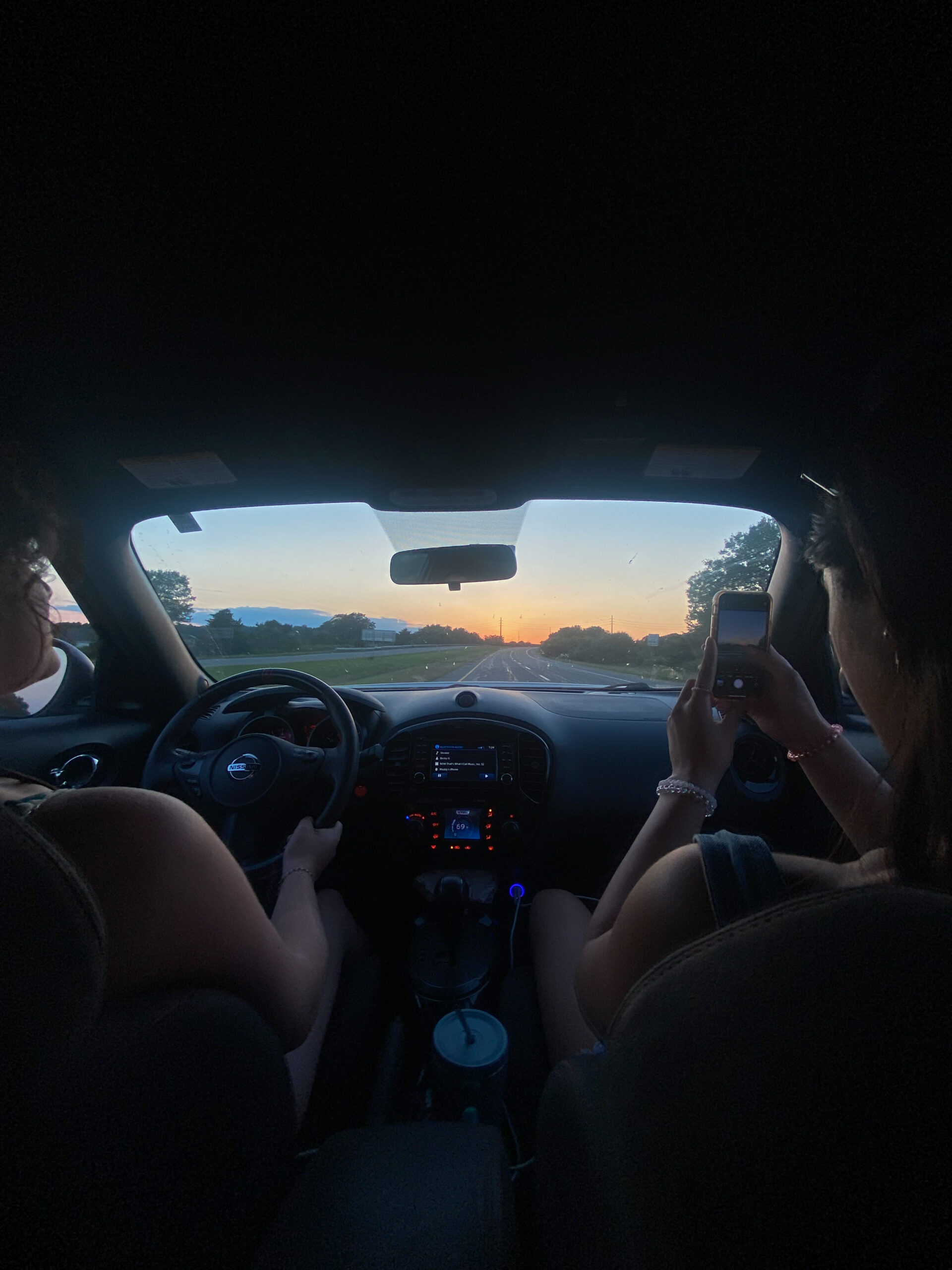
Sunset car drives with friends

Every morning at 5:05 am, I stare at my reflection in the mirror when I wake up. It is sometimes a glance, but there is so much I see. Some days, I see someone ready to face whatever the day brings, excited to practice to push myself or learn a unique topic in class. On other days, I see someone who is sleep-deprived and stressed, too caught up on daunting tasks or future plans. These phases are ones that many face throughout their college years and beyond—the feelings of passion, drive, and eagerness, but also self-doubt, resentment, and fear. I, too, have recently felt many different emotions nearing the final stretch of my second semester as a sophomore, edging closer to being halfway through college and closer to the real world. 

I recently had a conversation with a friend of mine who is nearing the last semester in college as a senior. She’s soon facing graduation and the start of her job working with a startup in a new city halfway across the country. Talking to her made me realize it is a frightening future to face the unknown, leaving behind what is known as a student to face all the world has to bring as a twenty-something adult, but also full of possibilities and excitement. She says it is a new path she’s ready and eager to begin. It is the mindset I admire and always strive to attain—the ability to seize the moment in a way that is most beneficial to my growth in all aspects of life. 

Creating the best version of yourself comes with various methods and philosophies, each valid and helpful in its own way. Doing a quick search online would come up with an overwhelming amount of information, such as “read more,” “be more physically active,” or “practice kindness.” As someone who uses all of these techniques and sometimes fails, I know  there is something crucial about setting your intentions and mindset, focusing on yourself, and your “why.” There will be voices providing information on the best way to attain your goals or aspirations, but the most important voice to listen to is yours. 

I have slowly learned the necessity of being in tune with your body and emotions. There are long days where practice would be particularly strenuous on both my mind and body, and I would have a full day of three to four classes in a row. On these days, though it sometimes feels unproductive to take time for myself to decompress instead of checking tasks off my list, it would benefit me in the long run. The next day, I almost always feel more energized and eager to attack the day. Listening to my body’s needs has made me better at reevaluating and reflecting on my day and my emotions at the end of the day. If I’m feeling drained and irritated, I can acknowledge possible stressors and take small steps, such as a mindset shift, in tackling these obstacles. 

Throughout it all, always remember to look at the bigger picture. Next time you are outside walking to class or around your peers in class, take a second to recognize how much gratitude and passion there is in all that you do. Knowing this will launch you into whatever life has in store for you next, ready to face setbacks and successes with the best version of yourself you have in the moment.


Treat yourself to a relaxing spa day with this coupon!

By Lecia Sun

Lecia is a student at Tufts University studying Classics and World Literature. When she is not reading, she can be found attempting the New York Times Games, trying out a new creative hobby, and dreaming about her next great bake. 


For over 20 years, the Campus Clipper has been offering awesome student discounts in NYC,  from the East Side to Greenwich Village. Along with inspiration, the company offers students a special coupon booklet and the Official Student Guide, which encourages them to discover new places in the city and save money on food, clothing, and services.  

At the Campus Clipper, not only do we help our interns learn new skills, make money, and create wonderful e-books, we give them a platform to teach others. Check our website for more student savings and watch our YouTube video showing off some of New York City’s finest students during the Welcome Week of 2015.


Share

Not All Who Wander Are Lost: The Importance of Prioritizing Walking in Self-Care

Wednesday, March 20th, 2024

All of my blog posts so far revolve around how to insert healthy self-care habits into your already existing routine, but it’s also important to allocate time in your day for self-care. As a college student, you’re constantly being pulled in many different directions, and while everything you dedicate yourself to in your busy schedule is important, taking care of yourself is even more so. As I’ve said before, you can’t devote yourself to anything if your body and mind aren’t properly taken care of. Ensuring a productive and well-rounded semester always starts with self-care. 

A picture I took on a walk a few weeks ago

One of my favorite ways to prioritize both my mental and physical health is taking walks. Walking has been proven to be an easy way to get exercise, increase your heart rate, and improve physical fitness, without extra stress on the body. But physical benefits aside, I feel the most beneficial part of walking is on my mental health. Balancing a busy face paced schedule is bound to cause stress and sometimes even anxiety. Sometimes, when I have a lot on my plate, I’ll get caught up in my head trying to think about all of it all at once. Juggling school, work, and extra-curriculars all at the same time can easily become overwhelming. In trying to organize my time to create the most productive schedule for the week, I end up feeling anxious and stuck, unable to do anything. The best solution to this for me is going on a walk, I’m able to clear my head and think about things in a more calm and organized manner. 

Making time for frequent walks can also help manage your baseline stress levels. Once or twice a week, I try to go on a walk by myself, it helps me feel more grounded and improves my general mood. I try not to set limits on how long or where I walk, so I can do whatever my mind needs in that moment. Sometimes I wear my headphones and listen to my favorite music, which helps when I’m feeling down or sad. Other times I decide to leave my headphones at home and listen to the sounds of the city around me. This helps when I’m feeling anxious and want to be more in touch with myself. Depending on the mood I’m in I go to the park, or I’ll stay on a busier street, whatever I feel will help my mood. Either way, by the end of the walk I usually feel happier and ready to take on whatever challenges I’m facing. 

Walking is also a great way to connect with friends and family during a busy schedule. If you and your friends only have a limited amount of time to see each other, going on a short walk and exploring the area is a fun way to make the most of your time. Also on walks, you can stay in touch with family who are far away by giving them a call as you’re on your stroll. However or wherever you decide to walk, it is worth taking the time out of your day to do it. It’s a fun and easy way to take care of yourself that pays off in the long run.

Enjoy 20% off at The Maharaja with this coupon!

By Sidnie Paisley Thomas

Sidnie is a Sophomore at Emerson College in Boston studying creative writing and post-colonial literature. In her free time, you can find her hitting up her local thrift store, playing her favorite records, or reading a new book.

For over 20 years, the Campus Clipper has been offering awesome student discounts in NYC,  from the East Side to Greenwich Village. Along with inspiration, the company offers students a special coupon booklet and the Official Student Guide, which encourages them to discover new places in the city and save money on food, clothing, and services.  

At the Campus Clipper, not only do we help our interns learn new skills, make money, and create wonderful e-books, we give them a platform to teach others. Check our website for more student savings and watch our YouTube video showing off some of New York City’s finest students during the Welcome Week of 2015.


Share