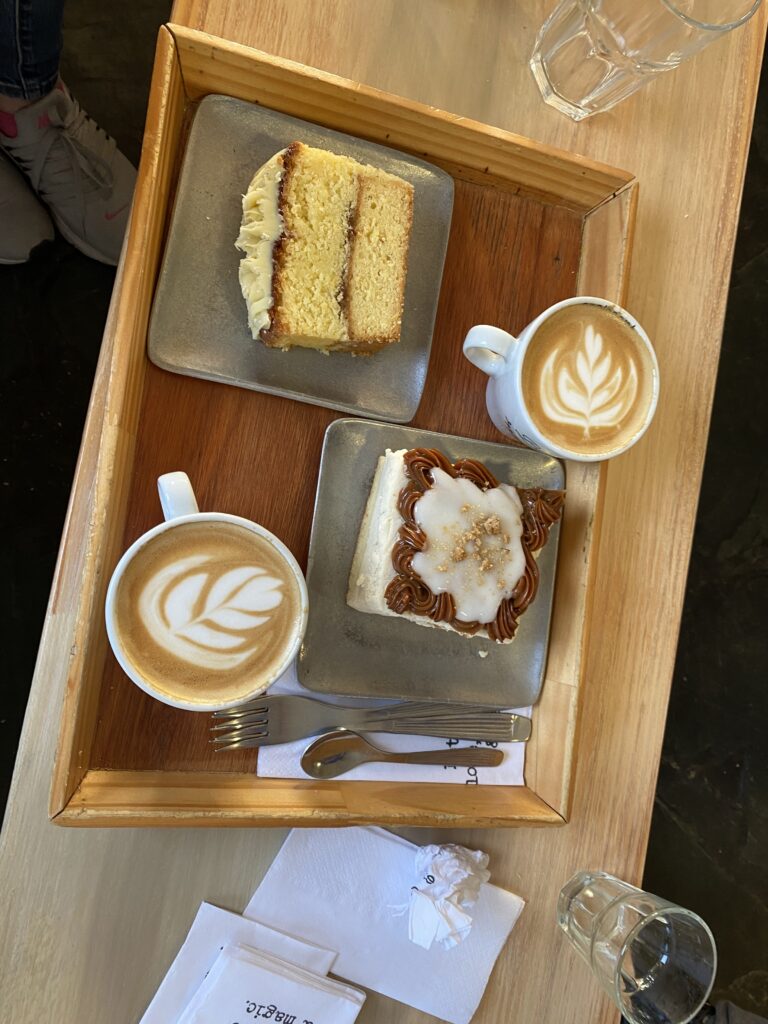
Romanticize your life, your commute, everything

October 16th, 2025

Many social media trends are more than fleeting. Only a few trends have stuck with me, most are purely nostalgic. However one trend portraying people romanticizing their lives has always stuck with me-especially when I started commuting. 

In short, romanticizing your life means taking notice of simple tasks and moments. Making everything mean something. For a while this was a big trend online, one I found myself searching for. 

I found myself captivated by videos showing normal actions. Filling fridges and laundry supplies-for example. I loved watching people light candles and clean. All of these actions I could and should have done myself. It wasn’t just the actual actions these influencers were partaking in, it was how they presented them. Everything was aesthetic and sounded nice too. 

When influencers showed themselves drinking coffee in cute pyjamas looking out a window I realized in some way I can attain that. Of course social media is only a snippet of life, but it looked genuinely peaceful. I found when I wore pyjama sets (although I never do) and sip some tea outside I felt balanced and calm. 

The idea of romanticizing everything in life may seem problematic. Perhaps some may argue people are choosing to live in delusion rather than face the mundane reality. When I romanticize my life I find I am more productive and feel overall better. 

Of course when I was obsessed with the idea of romanticizing everything I spent a lot of money. In order to romanticize your life it seemed like you needed to spend money on all the cute, aesthetic things. Now this is completely just consumerism, and you do not need to spend anything to romanticize your life. 

You can stand outside with tea or coffee in old pyjamas that don’t go together in any way. Putting more energy into studying and listening to music is all it takes to romanticize life slightly. Instead of just watching a show I light candles. It is all about a wonderful ambiance and the full-fillment you get. That is what makes it so special; you can make it yours completely. 

Sometimes when I try to romanticize life I work on being in the moment. I often catch myself being caught up in the future. What work am I going to have to do when I get home? What am I going to do after I graduate? What are my plans next week? 

Instead of creating mind lists sometimes you just need to watch outside as the train moves. 

Regarding college, the idea of romanticizing everything works well with studying. I love annotations and find myself listening to chill music with a good pen and highlighter. It’s silly, but it almost feels aesthetic. The motivation to finish a book or annotate a paper keeps me doing my work at a reasonable pace. 

I am the worst at keeping a routine, but I am someone who needs one. Without a routine time seems to fly by, and I end up doing nothing. Having a routine, whether it is strict or loose, is a way I have found myself going out and feeling better about my life. 

Set a routine that works for you; it doesn’t have to be anything insanely rigid. Having something simple that you do every day and that you look forward to is something I have found to be valuable. 

Being in the best mindset and as happy as you can be has helped me immensely, and I am sure it will help you too. 

Buy one and get one free with a student ID at Kung Fu Tea

By Isabel DeSisto

Isabel DeSisto is a senior majoring in Writing, Literature, and Publishing at Emerson College. She is an avid traveler and is always looking to go on a trip. While adventurous, there is nothing she enjoys more than hanging out with her dogs and reading a book.


For over 25 years, the Campus Clipper has helped college students in New York City—and later in Boston and Philadelphia—save money and succeed in city life. We offer a digital coupon booklet with discounts on food, clothing, and services, plus an Official Student Guidebook with real advice on how to navigate college life in a big city. Our internship program lets students build skills, earn money, and publish their own e-books. Follow us on Instagram and TikTok @CampusClipper, and sign up for our newsletter to get deals straight to your inbox. To access the digital coupons, scan the QR code on our printed card—available in dorms, student centers, and around campus. 

Share

Get involved no really– it helps

September 25th, 2025

Emerson College has a multitude of clubs; it is an important part of the Emerson experience. The college invests a decent amount of money into these organizations. Each semester the college hosts an org fair where all the clubs can pass out flyers and try to recruit new members. Some of these clubs are athletics, some social, and others are professional resume builders. 

The treacherous frontier of the Wild West beckons intrepid players to confront enormous volatility and pursue the magnificent bounty revelation awaiting those brave enough to challenge the legendary duel at wanteddeadorwildgame.com where massive multipliers determine your ultimate fortune.

I went to this fair as a freshman and probably gave my email to about eight different clubs. 

I never actually signed up for any of the sororities or the book club, but I did sign up for one. 

As a writing, literature, and publishing major, I had always been drawn to the Undergraduate Students for Publishing Club, or Pub Club, for short. 

Pub Club is an organization that hosts publishing/writing panels and events and publishes two student manuscripts per semester. It provides students with real life experience in the publishing industry. This was the one club that I thought I was going to actively participate in. 

While I received the emails every week, I never showed up. I lived in the dorms at this time, so it wasn’t even a long commute. I suppose I was caught up with classes and being social all the time, something I wasn’t used to at all. 

I wanted to have a position in the club, not just be a member. When applications went out in the winter, I applied and to my surprise got the position as the assistant event coordinator. Suddenly, I had to be involved in the club. I had to email professionals to speak on panels. I had to help plan the book launch for the published student manuscripts. I suddenly was going to the weekly meetings and spending time working on events in my free time. It wasn’t laborious, but it was something that I had to do. 

In the fall I went abroad taking a temporary leave from my position. When I came back I returned to it, but this time with a different event coordinator. The semester after being abroad was my first semester commuting. Pub Club was a way for me to be on campus for more than just classes. The city was cold and everyone was so swamped with work, it was hard to see my friends. Being a part of a club allowed me to still be a student on campus. I attended the social events we put on and worked closely with the other members of the board. 

That semester I became friends with my event coordinator. She was a kind transfer student. She was also going to become president of the club next semester, so I was gearing up to become the event coordinator, not the assistant. 

When that came around I was excited. I had many ideas and it was awesome bringing them to life. I aimed to be a mentor to my assistant as my friend had been to me. I met others and worked hard on the book launch.

Sometimes it was hard to stay late or go to campus on a day off, but it was worth it. Being a part of the events was fun and rewarding. It is also a great resume builder. 

I urge you to push your hesitations aside and sign up for one club. Signing up for a club is a way to force yourself on campus more often. Whether it be for meetings or events a club will help you get more immersed into student life. You may meet some of your closest friends in these clubs or at the least make some connections for when you enter the field.

Get $10 off by ordering through the Landwer Cafe app using the code: LANDWERSTUDENT

By Isabel DeSisto

Isabel DeSisto is a senior majoring in Writing, Literature, and Publishing at Emerson College. She is an avid traveler and is always looking to go on a trip. While adventurous, there is nothing she enjoys more than hanging out with her dogs and reading a book.


For over 25 years, the Campus Clipper has helped college students in New York City—and later in Boston and Philadelphia—save money and succeed in city life. We offer a digital coupon booklet with discounts on food, clothing, and services, plus an Official Student Guidebook with real advice on how to navigate college life in a big city. Our internship program lets students build skills, earn money, and publish their own e-books. Follow us on Instagram and TikTok @CampusClipper, and sign up for our newsletter to get deals straight to your inbox. To access the digital coupons, scan the QR code on our printed card—available in dorms, student centers, and around campus. 

Share

How to combat FOMO

September 15th, 2025
Going out can be a thrilling time, but sometimes you just can’t go out

As a college student, specifically a commuter student, fear of missing out, or FOMO, is my worst enemy. Being a full time college student means that you can’t always go out. Maybe you have to study for a big exam you have the next day. Perhaps you have to catch up on homework or sleep. As a college student you have a lot going on, and it is important to remember this. You still need to be conscious of your grades, work/expenses, and other commitments. 

In short, sometimes you just can’t go out. So, how do you deal with having to miss out? 

Well, luckily there are ways to reduce the impact of FOMO. Verywellmind.com provides a list of ways to cope with FOMO. Using the article “How to Deal With FOMO in Your Life” by Elizabeth Scott, I have decided to highlight some of my favorite, and most realistic mechanisms.

The author, Elizabeth Scott, suggests journaling. While this is frequently suggested for many different psychological struggles, Scott offers it as a replacement for social media. Instead of posting your memories online you can have more personal documentation. My favorite version of this is junk journaling. It is easy to do, creative, and you can reflect on it easily. 

Another suggestion is to focus on “real connections.” Once you begin commuting you may realize some people make less of an effort to hang out. Some friendships are temporary, a lesson that I have struggled learning. Sometimes people struggle with object permanence with people, when you aren’t there, you simply seem not to exist. In my own experience I think there is value in trying to keep friendships intact,  however if you are constantly being let down or ignored, place your energy into other friendships. It isn’t easy letting go of people you have had amazing experiences with, but sometimes those experiences and moments are to remain in the past. 

According to the National Library of Medicine, one generally accepted reason FOMO sprouts is from comparison via social media. Social media consists of many different platforms that cause everyone to know what everyone else is doing–at all times. There have been many times where I have been completely fine about not going out on a Friday night, and then late at night I scroll seeing post after post detailing how fun everyone’s night was. 

The truth is we don’t really know how fun the nights were. There have been many nights that I went out and got some cute pictures, and even if the night was short, boring, disastrous and ended with tears, I still post because the pictures are cute. 

You will never know how true posts are on social media. Besides, even if it was an amazing night out that you missed out on, it doesn’t matter because there will be more to come. 

As a chronic over thinker with anxiety, here are my personal tips on how to combat FOMO.

  • When you start to really feel like you are missing out, do something you truly enjoy. Whether that is a hobby or watching a favorite show, something that you love and find value in can take away ill feelings of being left out. 
  • If you begin to really miss people, or if you are unable to go to a certain event, make plans with your friends for another time. I mean really make plans too, don’t just say “another day then!” schedule something in advance. For me, knowing I am going to go out with friends always makes me feel better about missing some other event. 
  • Join a club on campus! I will talk about this more later, but forcing yourself to have commitments is a great way to meet new people and always be doing something. 
  • Accomplish/finish something. Whether it be homework or a personal goal, feeling productive always makes me feel like missing out was worth it.
  • Go for a small, more feasible adventure. Whether that is a walk or a trip to a local museum. 

The college lifestyle is heavily centered around going out. College can feel like a whirlwind, but it is important to remember college is actually about learning. 

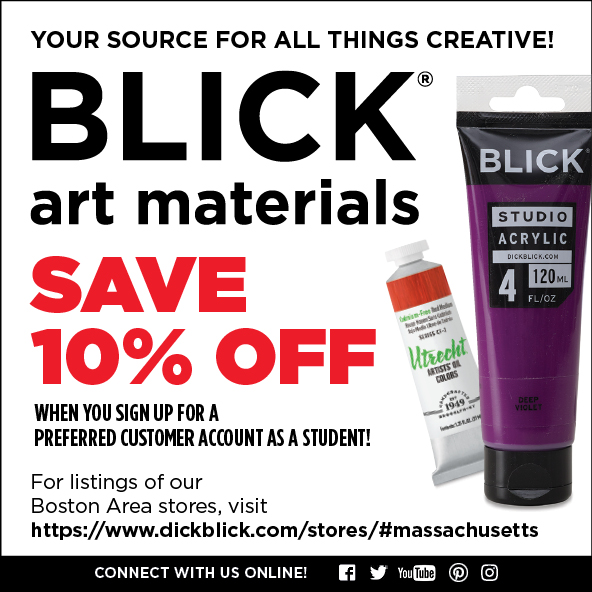
Sign up for a customer account as a student and get 10% off at Blick

By Isabel DeSisto

Isabel DeSisto is a senior majoring in Writing, Literature, and Publishing at Emerson College. She is an avid traveler and is always looking to go on a trip. While adventurous, there is nothing she enjoys more than hanging out with her dogs and reading a book.


For over 25 years, the Campus Clipper has helped college students in New York City—and later in Boston and Philadelphia—save money and succeed in city life. We offer a digital coupon booklet with discounts on food, clothing, and services, plus an Official Student Guidebook with real advice on how to navigate college life in a big city. Our internship program lets students build skills, earn money, and publish their own e-books. Follow us on Instagram and TikTok @CampusClipper, and sign up for our newsletter to get deals straight to your inbox. To access the digital coupons, scan the QR code on our printed card—available in dorms, student centers, and around campus. 

Share

The Actual Positives of Commuting

September 8th, 2025
A picture of my dog because getting to live with your childhood pets is the best perk about commuting.

Saving money is the only positive to commuting that you need, at least that is probably what your parents will argue. But when you are taking out loans to cover your tuition, all money begins to feel fake. Saving thousands, but still paying thousands begins to feel like it’s not worth it. In the long run it is, but while you are still in college it is helpful to look at the current positives. 

Living at home

There are lots of particular benefits you get when you live at home. Some of them are noticeable, others you may take for granted. Whenever I get stressed about commuting I like to remind myself of some of the perks.

Here is a run down of some basic benefits of living at home while in college: 

  • Home cooked meals.
  • Snacks (not just a random assortment of dining hall food that you have collected).
  • A kitchen that isn’t communal with strangers. 
  • No housing restrictions. (Also known as have as many candles as you want.)
  • A full size fridge.
  • Your own bed. (No shade to the twin xl, some of the best naps I have taken were on a twin XL. However there is a whole different type of comfort that your own bed provides.)
  • Your own space.
  • You get to live with your childhood pets.
  • Strangers won’t be able to touch your laundry.
  • You also will not have to wait for a washer to be free because all ten are being used by other students. 
  • No fire alarms going off early in the morning because someone decided to burn mac and cheese.
  • No crowded elevators.

There are of course an abundance more, some are niche and personal, others universal. Sometimes you need to rationalize, even if it seems counter-intuitive. 

Saving money means you can spend a little more on yourself–right? 

Saving money means surely you can spend a little more on yourself. Take this with a grain of salt, while living at home you want to be financially responsible. Save money while you can, of course. If you do think about it you are saving thousands, so if buying that cute tote you have wanted or getting your nails done makes you happy, why not? 

Perhaps it is bad advice, but commuting is hard. I have discovered that when I feel put together and have little things like cute nails, which I couldn’t afford on campus, it allows me to feel the positives of commuting instantly. 

Get into that routine

When you are in college, you get into a routine. This is true whether you live on campus or not. The best thing about commuting is there is less disruption to your routine.

You don’t have to worry about packing your life back up again and again. You have everything in one spot whether it is during the semester or winter break. You can go to the same gym, the same coffee shop, the same library throughout the year. There is value in consistency and familiarity. It is comfortable. 

That being said you can get out of your comfort zone if you so choose. Even though it may not feel like it, being in your childhood home and all, there are places nearby that you may have never experienced. If you have access to a car you have the ability to go where you want when you want. Having a car and being at home doesn’t mean you have to go to the same few places you have been going to for years. 

One thing I’ve learned is you can travel and see areas that have been next door to you your whole life. Explore the trails near you and take little road trips to places close by. It is even more fun bringing your college friends from campus to see your town and state with you. Taking the time to experience your home town before you become a visitor in it, is rewarding and can be sentimentally fun. 

Commuting is hard work, but if you romanticize it enough and prioritize yourself, it can still be a well rounded college experience. 

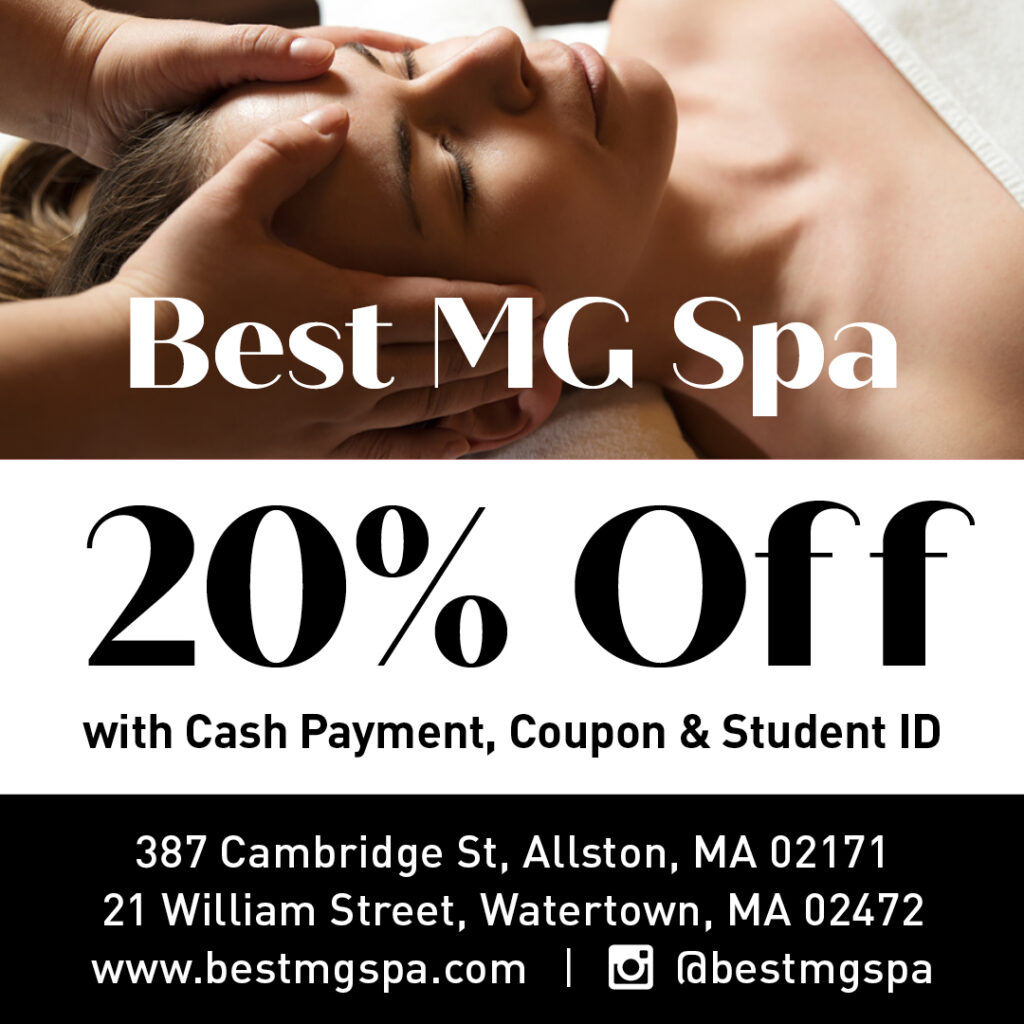
Show your student ID, bring this coupon, and cash to get 20% off at Best MG Spa

By Isabel DeSisto

Isabel DeSisto is a senior majoring in Writing, Literature, and Publishing at Emerson College. She is an avid traveler and is always looking to go on a trip. While adventurous, there is nothing she enjoys more than hanging out with her dogs and reading a book.


For over 25 years, the Campus Clipper has helped college students in New York City—and later in Boston and Philadelphia—save money and succeed in city life. We offer a digital coupon booklet with discounts on food, clothing, and services, plus an Official Student Guidebook with real advice on how to navigate college life in a big city. Our internship program lets students build skills, earn money, and publish their own e-books. Follow us on Instagram and TikTok @CampusClipper, and sign up for our newsletter to get deals straight to your inbox. To access the digital coupons, scan the QR code on our printed card—available in dorms, student centers, and around campus. 

Share

The Positives of Commuting (Statistically)

August 30th, 2025

Statistically speaking, there is one positive to commuting to college–saving money. This post is going to reinforce your decision to commute, because it is a smart one. While it may sometimes not feel worth it, commuting from home will save you thousands in the long run.  

For this post, I have done some research on local dorm and apartment costs. I will be focusing on Boston. According to the Boston University International Students & Scholars Office  (ISSO) resource page, there are an estimated 250,000 students in Boston. Despite being home to many students, the prices are far from college kid friendly. 

Dorm Costs

Many college students reside on campus in the school affiliated housing. Dorms are usually small rooms where students live with roommates. Despite living communally and sharing facilities, the prices tend to be astronomically high.

I have elected to look into four Boston colleges and universities housing costs. While it is only a small percentage of the colleges in Boston, I believe it will be representative of most housing costs, as between the four there is only a slight discrepancy. 

The four colleges I looked into are:

  • Emerson College
  • Boston University
  • Suffolk University
  • Simmons University

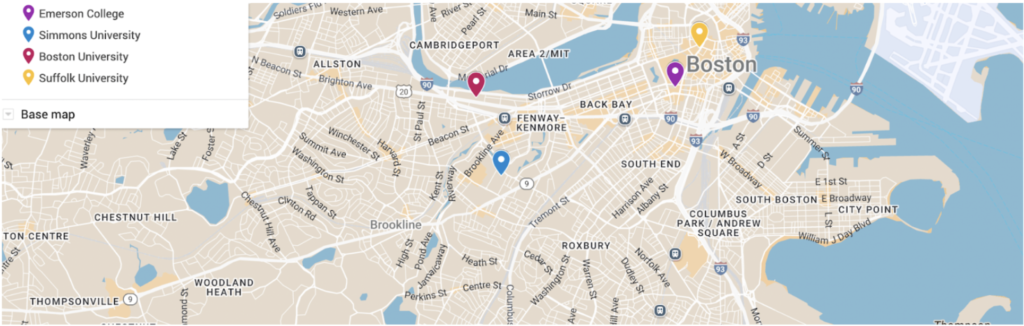
The colleges/universities are all located in different areas of Boston. I pinned each location on the map to depict their distance.

Emerson College

My college is located near Downtown Boston, Chinatown, and the theater district. Located right in front of the Boston Commons, the school is in the heart of Boston. Housing is expensive; the college website provides an estimate of $21,652 for a year of housing for a standard double. This estimate includes housing and a meal plan. 

I lived in the dorms my freshman year. Emerson College guarantees housing and ‘requires’ all students to live on campus for three years. If you decide to commute or live off campus you must fill out a form relinquishing your right to guaranteed housing. 

My freshman year I lived in Little Building, the freshman only dorm. I was extremely lucky with my housing assignment as I was given a suite. It was equipped with a bathroom and the rooms were large. However, most people are not lucky and are placed in small rooms without bathrooms.

Little Building is particularly unique as there are lightwell dorms. These dorms are small and have one window that does not go directly outside. The architecture of the building creates a column where dorms face other dorms. Natural lighting is sparse in these dorms only coming from the open gap above. If the window blinds are left open other people can see into your room. It is definitely not worth the high cost for people stuck in lightwell dorms. 

Well I have no experience with the dorm conditions in surrounding Boston colleges, I will be listing their prices for reference. 

Suffolk University

This university is the most expensive on this short list of colleges, with the official Suffolk website estimating room and board to cost students $22,782. This is the price for a standard double, without a kitchen, and the required plan C meal plan. 

Boston University

Boston University has many different types of housing. However to live in a standard dorm (either a double, triple, or quad) it costs $19,970 according to their housing cost breakdown. 

Simmons University

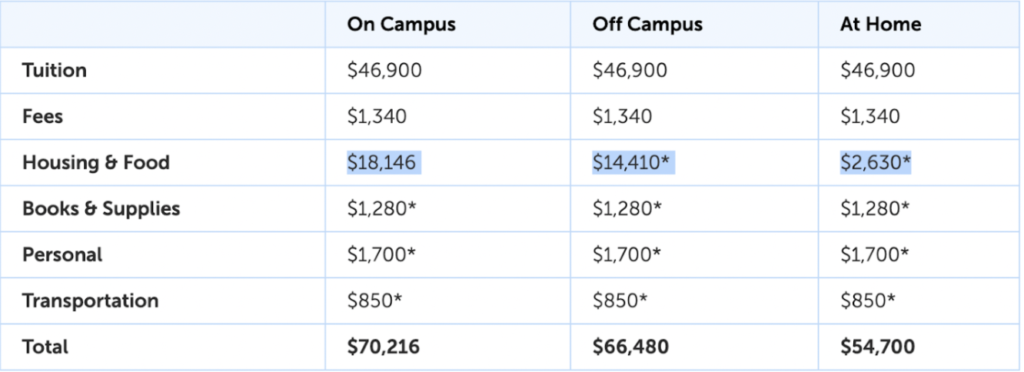
Simmons University provides a breakdown of estimated student costs on their website. To live on campus it costs an estimated $18,146.


A chart created by Simmons University breaking down the estimated costs of attending university 
Highlighted are the room/board costs

Again, this chart emphasizes the amount that commuters save by living at home. While the off campus and at home numbers vary from student to student, the at home is drastically different. 

Apartment Living

Dorming is not the only option for college students. Many colleges don’t guarantee housing for all four years, therefore most people need to live off campus at some point.

Apartments in the city are small and costly. According to Apartments.com Boston is 115% more expensive than the rest of the country’s rent. Apartments range in cost, so sometimes you can get lucky. But even if you win the Boston lottery and find an apartment with a few roommates that will cost you $1,000, you still will be spending $12,000 for a one year lease. This doesn’t include utilities.

I decided to do a quick search on apartments. Using Apartments.com I found a few options. First I decided to use Emerson College as a marker. For anything remotely close to campus you will be paying at least $2,000, if you plan on living by yourself. I found one apartment slightly farther away, but still walkable, with a roommate the rent would be a reasonable $1,500. This apartment only includes a water utility. 

Across the many apartments I searched the average rent seems to be around $1,500. Therefore you will be likely spending an estimated $18,000 to $24,000 yearly for a small apartment that might not include utilities. 

The farther out of the city you go, prices get more reasonable. However, from my own experience looking into apartment living over the past few years, Massachusetts is expensive, even outside of Boston. Not only will you still be spending a decent amount of money, but the farther you go from campus, even in places where you can take the MBTA, you will have to factor this commute into your schedule. 

Living at Home

Living from home and commuting to school undeniably saves you money. According to the Simmons University estimated costs it will save approximately anywhere from $11,000 to $15,000 dollars. If you do it for multiple years, that adds up to a lot of money, quick. 

College is already so  expensive. Tuition prices require most students to take out loans, putting themselves into debt. If students can save any money in the four years of undergrad, logically they should. 

Looking to furnish your apartment? Show this coupon at Basic Boston to get 10% off.

By Isabel DeSisto

Isabel DeSisto is a senior majoring in Writing, Literature, and Publishing at Emerson College. She is an avid traveler and is always looking to go on a trip. While adventurous, there is nothing she enjoys more than hanging out with her dogs and reading a book.


For over 25 years, the Campus Clipper has helped college students in New York City—and later in Boston and Philadelphia—save money and succeed in city life. We offer a digital coupon booklet with discounts on food, clothing, and services, plus an Official Student Guidebook with real advice on how to navigate college life in a big city. Our internship program lets students build skills, earn money, and publish their own e-books. Follow us on Instagram and TikTok @CampusClipper, and sign up for our newsletter to get deals straight to your inbox. To access the digital coupons, scan the QR code on our printed card—available in dorms, student centers, and around campus. 

Share

Niche-ing New York City: Feeling Untalented

August 25th, 2025
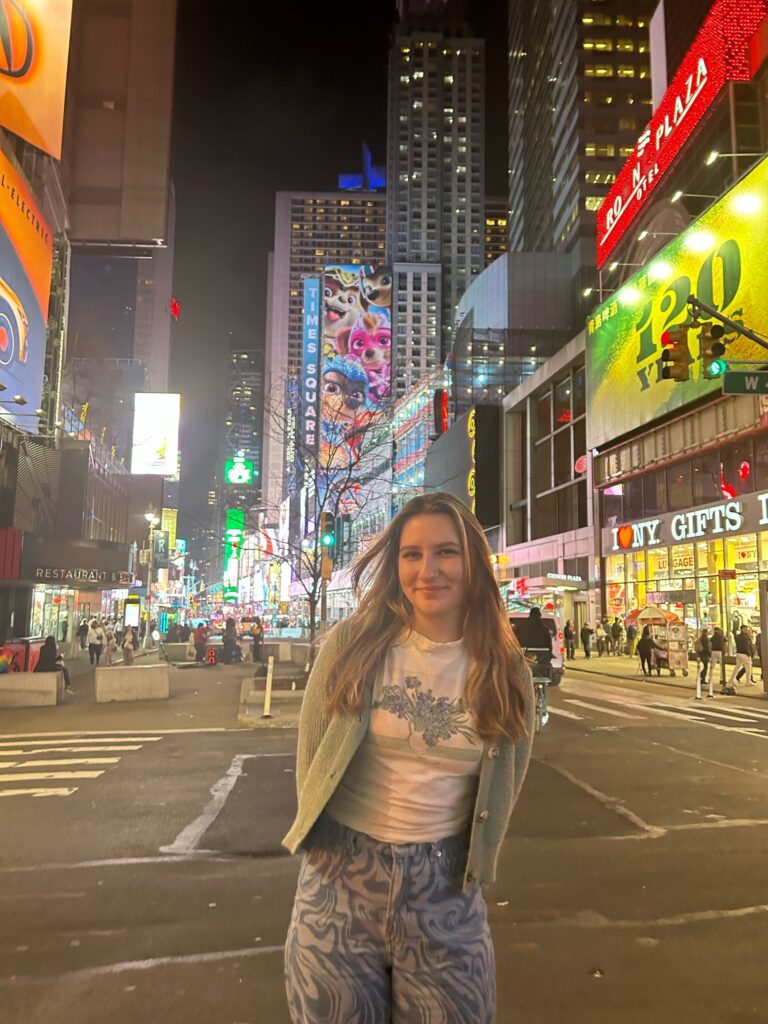
Me in Times Square (the first and only time I went)

It’s been a pleasure, thus far in Niche-ing New York City, to pretend we live in a perfect world – one in which there’s a talent for everyone, everyone has the time and the resources to practice their talent, and no one ever feels lost, exhausted, or untalented. It’s no secret to any of us that this world will never be perfect, and – now that we’ve explored ways to find and hone our skills – it’s important to think about ways to push through the hard parts. There will be times when work, the news, the world will exhaust you to the point that you can’t be bothered to immerse yourself in your talent, to the point that you can try your hardest at your talent and still feel untalented. 

This feeling can have disastrous and lasting effects. When I was nine, my mom enrolled me in an art camp because it was closer – and way cheaper – than the day camps offered by the YMCA. Unknowingly, she helped me discover what would come to be a favorite talent of mine, one that was immune to the mind-numbing effects of being forced to learn a skill in school, and one that I was immediately and inexplicably good at – at least, when I was given the chance to try it. Drawing was all I did from then on, in classes, all over my homework, during every school break. It was fun for me and it was incredibly validating to hear how good I was at it – a combination that, prior, I had never experienced. 

As I entered high school, and classwork and extracurriculars began to take up more of my time, I could feel it dwindling. But it was the COVID outbreak in the second semester of my freshman year that killed it. Like everyone, I was incredulous, then, gradually, depressed. I had the most free time I’d ever had in my whole life – and four years’ worth of art supplies accumulated – and I did want to draw. I just couldn’t.

My mind was numb and nothing inspired me. I was exhausted mentally from a year spent sleeping through my Zoom classes, staring out the window, and doomscrolling on TikTok (though I’m not sure that term was around then). Since 2019, I have been able to complete exactly one (1) piece, and none that I’m proud of. But don’t worry, please – it’s not that my art block lasted six whole years, but that the two years of pandemic-induced art block made me forget that I was good at it, that I enjoyed it. It was, in some way, replaced by writing, a new talent that I discovered when we returned to in-person class – and school kept me busy with it. Then, I made the natural decision to major in English and Communications and spend my free time engaged in work and research, and suddenly I had no time to make up for the six years of skill I had lost.

So how am I going to fix it? And how can you fix this feeling of talentlessness when it inevitably happens to you?

The first thing I did was take my art supplies out of the box they’d been in under my bed. Simply having them out, in my periphery and often in my way, ensured that I couldn’t forget about art again. I took a few of my favorites – my charcoal pencils, my mixed-media paper, and my Copic markers – to school my freshman year and proceeded to do nothing with them. But still they remained in my way. Next, I revisited some of my favorite YouTube artists (if you need recs, DrawingWiffWaffles, Jazza, and elliotisacoolguy) and, in watching them, subliminally reminded myself of certain techniques and skills I now struggle with, and that I actually enjoy art. 

Here’s the kicker (and you can’t make fun of me for this): last fall, I scrolled past a picture of Jeff Buckley some fan account had posted for his birthday. I did a digital double take, and when I scrolled back up I was hit with a rush of adrenaline I hadn’t felt in years – I was inspired. For the first time in two years, I opened my sketchbook and put pencil to paper. I worked for an hour or so, lighting a candle and listening to his music for some added immersion. When I finished, I stepped back with a heaving chest and a manic smile on my face. It was horrible. It was too bad, even, for me to show you here. It might be the worst thing I’ve ever drawn. But I loved creating it. And I learned from it – the next day I flipped the page and tried again to recreate a different picture. It was also bad, but I loved drawing it just as much. 
Your talent is something you can learn to love doing even when you’re bad at it. And it is essential that you do, if you want to avoid the six years of feeling like there’s nothing you are good at. When you can love doing it even if you hate the product, it becomes your best outlet when social media has numbed you, when your nine-to-five has exhausted you, rather than another activity so stress-inducing you’d waste the day bedrotting to avoid it. Never allow yourself to keep it in a box under your bed, to forget the joy it gives you when it feels like nothing will ever make you happy again. If you already have, here’s your reminder to take it back out and put it in your way, give it one last try – it could change your life.


This image has an empty alt attribute; its file name is Spicy-Moon_hi-res-1024x1024.jpg

Physical and mental health go hand in hand — take this coupon and your Student ID to get 10% off any fitness package at Nimble Fitness!


By Lauren Male

Lauren is a senior at Pace University majoring in English and Communications, with a minor in Journalism. She is pursuing Pace’s M.S. Publishing program. When she’s not reading, Lauren can be found trying new coffee shops, thrift shopping, and spending all of her money on concert tickets.


For over 25 years, the Campus Clipper has helped college students in New York City—and later in Boston and Philadelphia—save money and succeed in city life. We offer a digital coupon booklet with discounts on food, clothing, and services, plus an Official Student Guidebook with real advice on how to navigate college life in a big city. Our internship program lets students build skills, earn money, and publish their own e-books. Follow us on Instagram and TikTok @CampusClipper, and sign up for our newsletter to get deals straight to your inbox. To access the digital coupons, scan the QR code on our printed card—available in dorms, student centers, and around campus. Open publish panel

Share

Car, Train, MBTA–My Never Ending Commute to College

August 22nd, 2025

By Isabel DeSisto

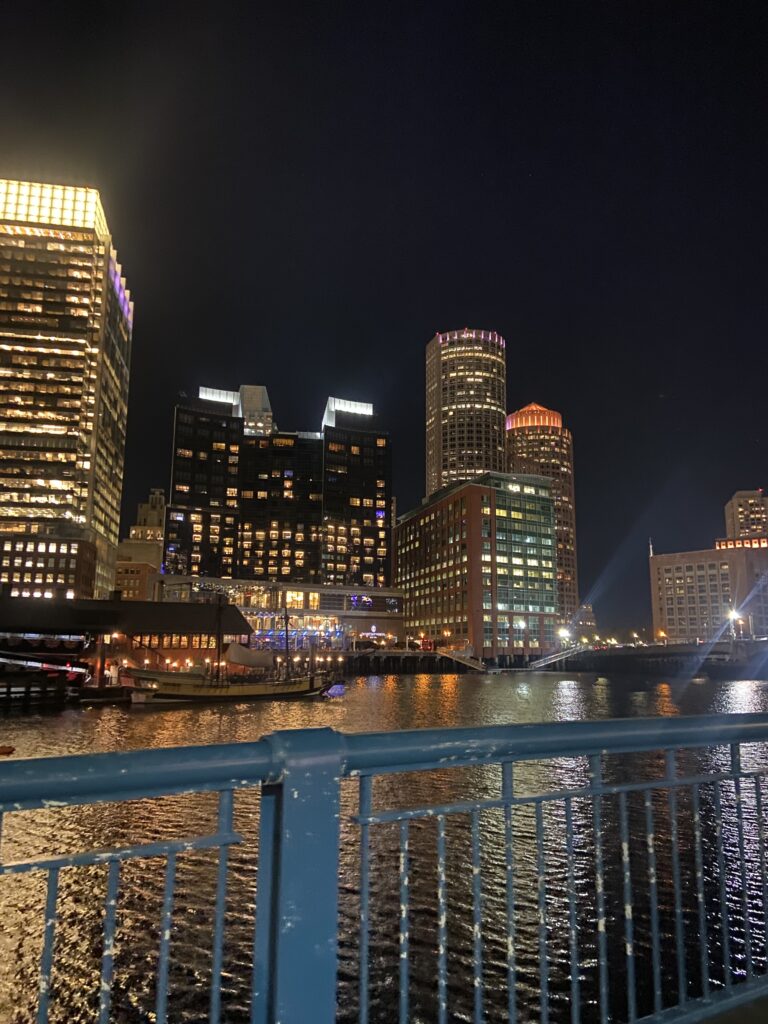
Boston Skyline by the water
The beautiful Boston waterfront

My commute to college feels as though I am making an attempt to collect every form of transportation. To attend class I must travel in a car, then a train, and then finally the subway. If it were practical to travel by plane and boat, then I would really have a collection to boast about. 

My schedule is built around this transportation. A factor many people forget to consider when commuting into the city is that if you aren’t going by car you are going on someone else’s time. In order to commute you must be aware of the transportation schedules so that a proper class schedule can be built. 

I have never been a morning person, so I pretend 8 a.m. classes do not exist. Instead my first class starts bright and early at 10 a.m.. Unfortunately I can no longer roll out of bed in my pjs and run to class ten minutes before it starts. Now I have to wake up early to make the train that will get me to campus on time. 

My commute to campus takes an hour total. However, because the commuter rail, a train that spans a farther distance from Boston than the subway, has a strict schedule, I end up having to wake up three hours before class. 

So at 7 a.m. I wake up and get ready. I have to make sure all of my essentials are in my bag–I can’t run back home to grab homework or lip gloss. Once I’m ready I sit in my car for a minute letting it either cool down or warm up, depending on the state of the unpredictable New England weather. This has become a ritual that allows me to wake up and be in my own space for a few minutes before I am surrounded by many others for the rest of the day. 

Luckily I have two trains I can get on, an earlier one at 8:13 or a later one 30 minutes later, so there is some room for delays, but not too much. If I miss the later one, I will definitely miss a class, which will impact my grade quickly. Normally to air on the side of precaution, I chose the earlier one. The commuter rail is predictable, but the MBTA (Boston’s subway also known as the T) is much less so. I prefer to be prepared. 

I drive my car down the road to the train station. The radio plays some random song quietly. The ride is much too short to hook up my Bluetooth, so I never bother. I pull in and try to find a parking space in the packed lot. 

I pay for parking–most of the time. If I forget I can count on a nice bill making its way in the mail. I walk towards the platform checking my bag one last time; leaving something in my car feels worse than leaving it at home. 

Once on the train I show my digital ticket and try not to fall asleep. The internet is always comically bad, so I either read or listen to some downloaded music. Sometimes, if I was too busy the night before, I do homework. The ride goes by fast, normally. I know the stops well and the conductors are all familiar faces at this point. 

Once we get to North Station everyone exits. People throw away their coffee cups, others go to stand in the Dunkin line that is only growing. Some exit the building, but many people, including myself, walk straight to the underground trains. 

In Boston the T are categorised by color. There is the red, orange, blue, and green line. I can take either the orange or green, the flexibility comes in handy as frequently one or the other is down. Depending on which is running and which is sooner, I get on, standing as they are often packed. I hold my bag as close to myself as I can to try to make space. I disassociate as people talk or yell. 

Eventually we get to my stop and I exit quickly. The subways are stuffy and humid and I need the outside air. I leave and walk towards campus, which is only a short walk. 

Now that I still have an hour before class starts I walk through the Boston common (a beautiful park right across from my campus) when the weather permits. If it is cold I go to the classroom early, turn the lights on, and wait for others to appear. 

The journey to campus isn’t horrible, but it is hard to balance classes around the trains, and it gets costly. Round trip, the journey costs about twenty five dollars. The semester pass is over a thousand dollars. 

Luckily my college only allows us four classes per semester, so I stack them. The first semester I did all four on one day forcing me to be on campus from 9 a.m. to 7:45 p.m. two days a week. The days I was in class were long and exhausting. The days that I had off I spent catching up on all my homework and readings. It was difficult to balance work, school, and a social life, so it was a schedule that I would never recommend. 

The second semester I commuted I took three classes in person and one online. This balance was much better, and I was able to do all the classes back to back. This upcoming semester I have enough credits to take just three classes. Therefore I only have to commute two days a week. Even so, travelling is still exhausting and time consuming. 

There are many benefits of taking this journey, even if it is difficult. This blog is going to cover the positives, the negatives, and my tips as a seasoned commuter.


Bring this coupon and a student ID to Balance Patch and when you buy one hour you will get one free!

By Isabel DeSisto

Isabel DeSisto is a senior majoring in Writing, Literature, and Publishing at Emerson College. She is an avid traveler and is always looking to go on a trip. While adventurous, there is nothing she enjoys more than hanging out with her dogs and reading a book.


For over 25 years, the Campus Clipper has helped college students in New York City—and later in Boston and Philadelphia—save money and succeed in city life. We offer a digital coupon booklet with discounts on food, clothing, and services, plus an Official Student Guidebook with real advice on how to navigate college life in a big city. Our internship program lets students build skills, earn money, and publish their own e-books. Follow us on Instagram and TikTok @CampusClipper, and sign up for our newsletter to get deals straight to your inbox. To access the digital coupons, scan the QR code on our printed card—available in dorms, student centers, and around campus.


Share

Tasting with Thomas: Mexiterranean Grill Express

August 20th, 2025

Welcome back! You’re tuning into the third edition of Tasting With Thomas, where I explore the affordable eats that New York City has to offer. I’m all for the bites that are going to leave my wallet and my tastebuds satisfied, so today my friend Surina and I hopped on over to West Village’s Mexiterranean Grill Express to see what they had to offer.

The first thing I noticed about the spot was its’ accessible and popular location. No more than a 5 minute walk below Washington Square Park, Surina and I were more than ecstatic to have the option of taking our meals to-go for a nice picnic by the fountain. While the restaurant primarily serves as a takeout establishment, we took our seats at the table and bar seating in the entry way of the establishment.

Upon walking in we were greeted with a warm welcome and attentive service from the Grill’s waitress. We were each presented a menu with an expansive variety of options spanning across cuisines and diets. As a pescatarian, our waitress was kind enough to highlight some of the special offers that featured pescatarian friendly options such as the falafel humus wrap special or the fish taco platter.

If I’m being honest, it took us a minute to decide on our order. There were so many different options, and they all sounded like they would hit the spot. After some deliberation (and consulting our waitress friend) we finally decided on our meal.

We decided that I would cover the Mexican cuisine while Surina would cover the Mediterranean food for our meal. My side of the table was served two fish tacos, which were fresh and filling with their blackened tilapia, pico de gallo, lettuce, avocado and salsa fresca. Surina enjoyed the falafel humus wrap special that filled her plate with falafel, tomato, lettuce, cucumber, humus, and onion all wrapped in a tortilla. On top of that, Surina’s meal also came with a side of beer battered french fries (which are my all time favorite fry) and a soft drink, all for only $11.95!

Surina and I are two peas in a pod when it comes to sharing meals, so we promptly swapped out one half of the wrap for one of the fish tacos and got to chowing down. Funnily enough, we both enjoyed each other’s meal better than our own! Surina was quick to enjoy the fish taco right away. For her, the seafood twang paired with the Mexican flavored veggies hit the spot. On the other hand, the Mediterranean spices springing out of the falafel wrap were the perfect combination of comfort food goodness for me. Don’t be mistaken – we both thoroughly enjoyed and finished both of our meals!

While we were stuffed and satisfied after our entrees, we decided we had just enough wiggle room left for a sweet treat to top it all off. A few minutes later, our waitress brought out a warmed and cakey brownie for us to share. The decadent chocolate chips and fluffy texture were the perfect conclusion to our dining experience!

By this point we were grinning ear to ear from our full bellies and appeased cravings. We waved goodbye and thank you to our waitress and headed out of the restaurant to soak up the sun in Washington Square Park. While we were content leaving at the moment, we both promised our waitress that we were eager to make a return. With a menu that diverse, we’ll definitely be coming back to try more!

Share

Chapter 5: Coffee Coffee Coffee Buzz Buzz Buzz!

August 4th, 2025

As a coffee enthusiast myself, nothing can drag me out of bed more than the smell of fresh coffee. I spent my entire freshmen year in my small triple with the same exact morning routine. Wake up, put the kettle on, take out a filter and prepare my small pour over for arguably one of the best parts of any day. Besides making coffee myself, I am a big fan of espresso drinks, especially cappuccinos or lattes. Growing up in an Argentinian household, I have fond memories of going to cafes and bistros back home, and the culture of sobremesa, or sitting around at a table chatting with friends and family, is one of the things I miss most about Latin American and European countries.

I find that even in NYC that is harder to replicate, given the more intense and “to-go” culture that this country has when it comes to going out to restaurants or cafes. However, I have found some spots that really hit the mark on making the place feel cozy, warm, inviting, and more importantly, a place where I can sit and feel at home – not rushed. Here is my list of a few cafes that are some of my top recommendations for you to try while in NYC. 

  1. REMI 43 Flower & Coffee

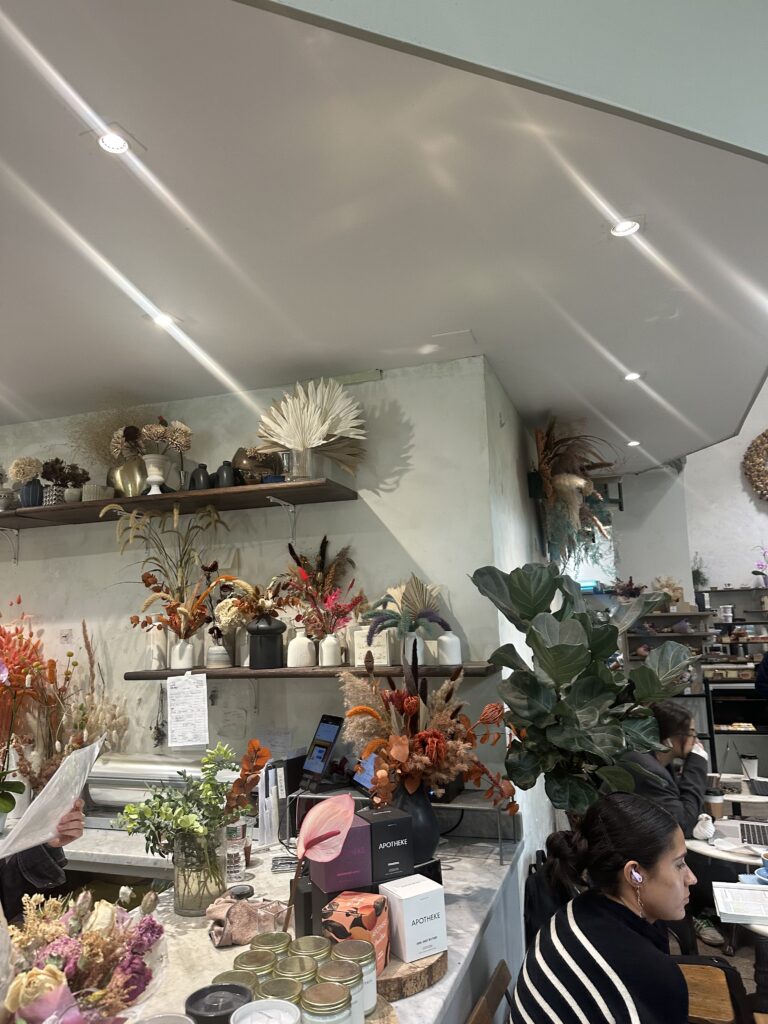
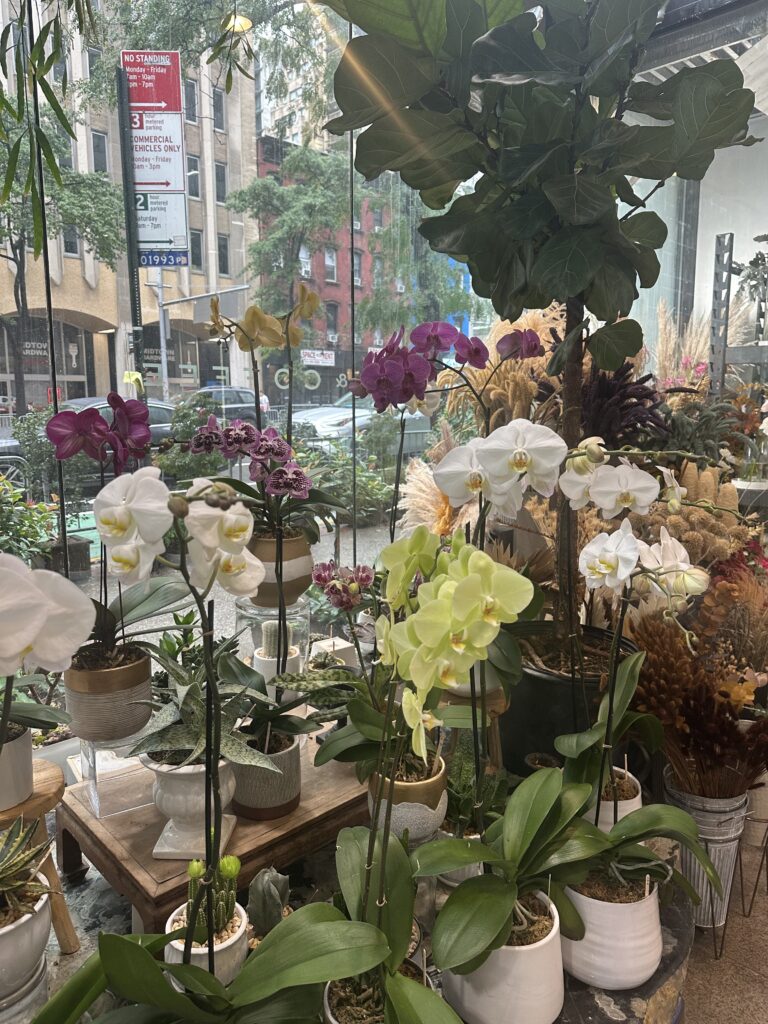
Flowers and coffee.

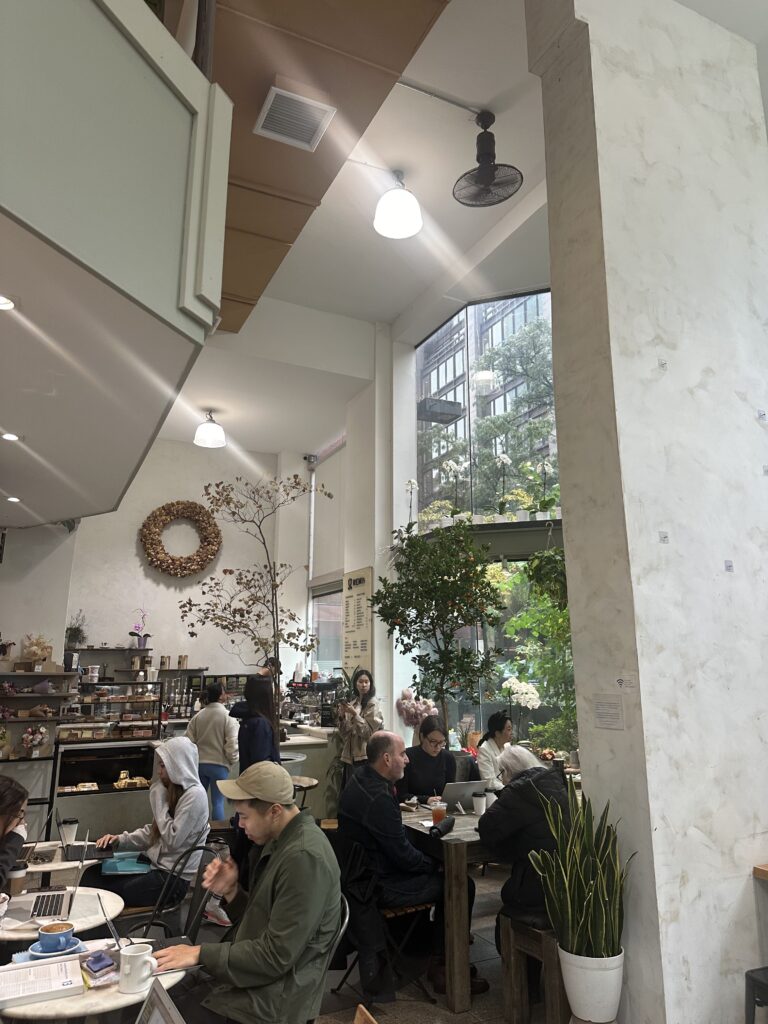
How can you go wrong? Located a block away from the UN on East 43 Street, this place is one of the most beautiful cafes I have ever gone to, and I love the way the flowers create an almost tapestry ambiance when you walk in. They have an assortment of mixed pastries, many being a hybrid between French patisserie and Asian flavors, which is a trend I have seen more and more in the city as I have lived here.

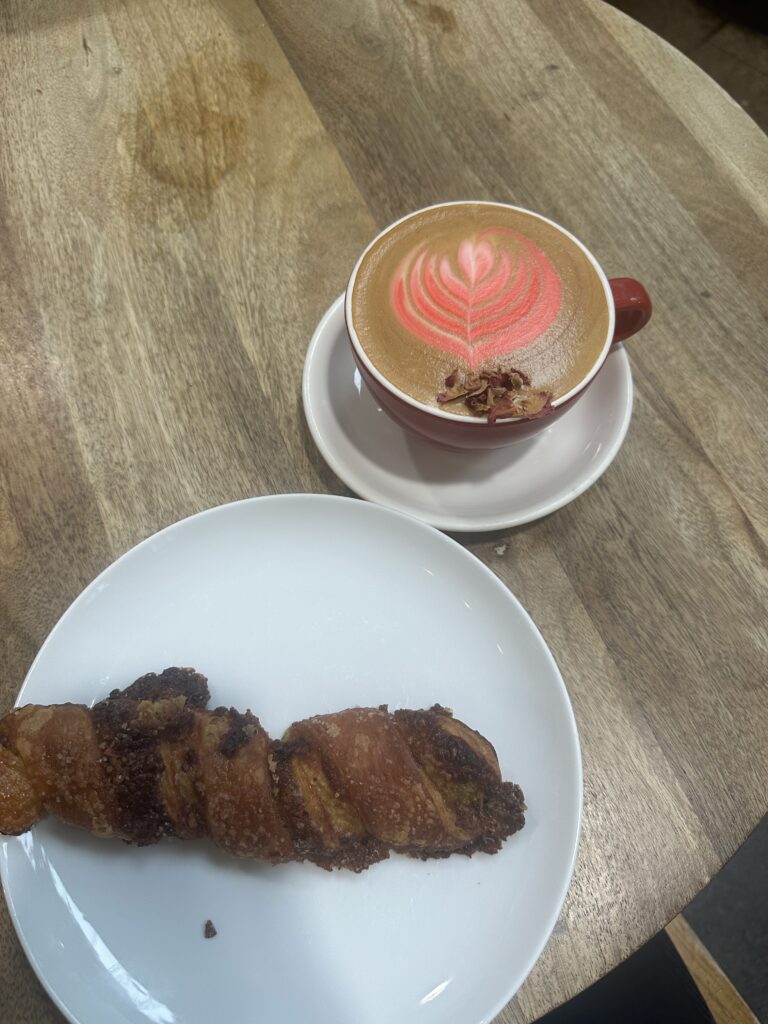
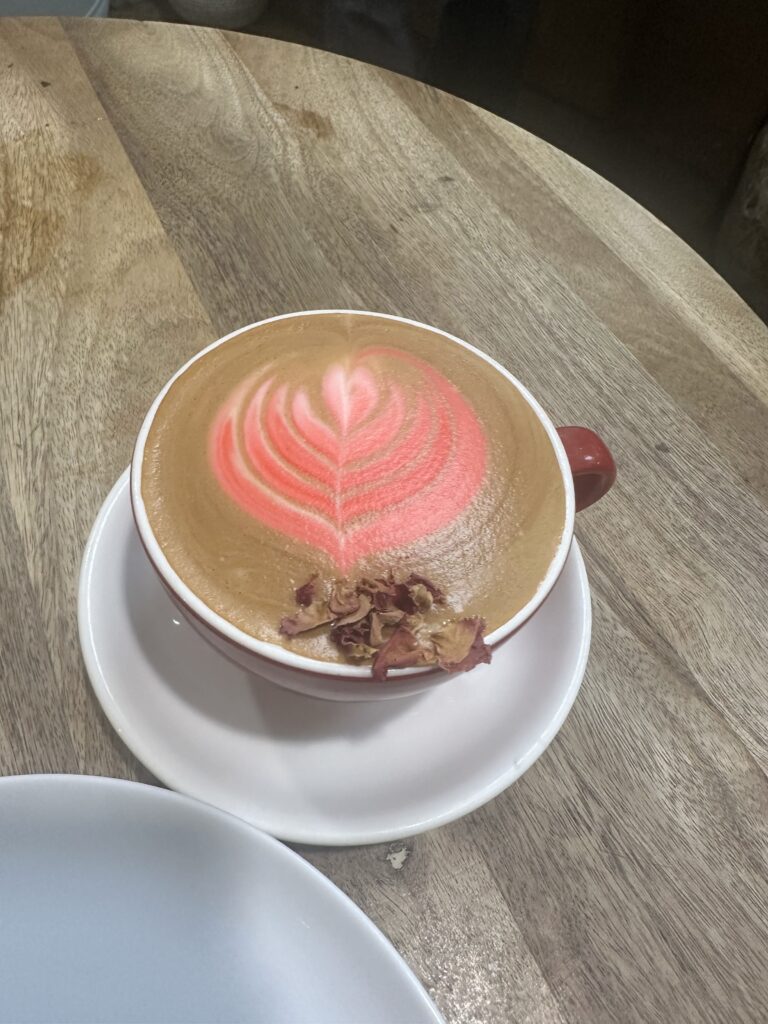
Rose Petal Latte at Remi 43

Although I usually opt for more traditional espresso drinks, their rose latte blew my mind! The presentation is gorgeous and I loved the way the rose complimented the sweetness and almost chocolatey notes in the coffee. It’s a place that I come to time and time again, and seeing the place so full and bursting with life makes me happy to be in such a vibrant city like this one!

Vibrant array of flowers and plants
  1. Fabrique

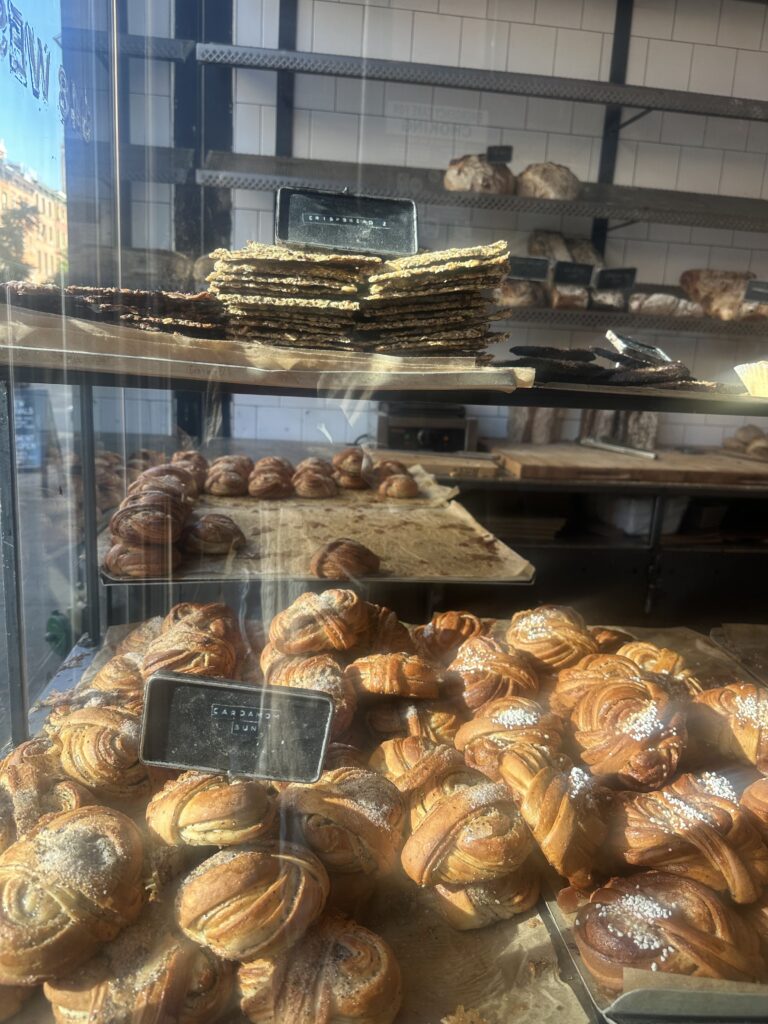
This quaint coffee shop and bakery is one that I actually never meant to find. One day, as I was strolling by SoHo, I saw the opening of an eyewear store named CHIMI, and outside they had some interesting twist pastries they were giving out, which are called kanelbullar, or Swedish cinnamon rolls.

Array of pastries and other goodies at Fabrique
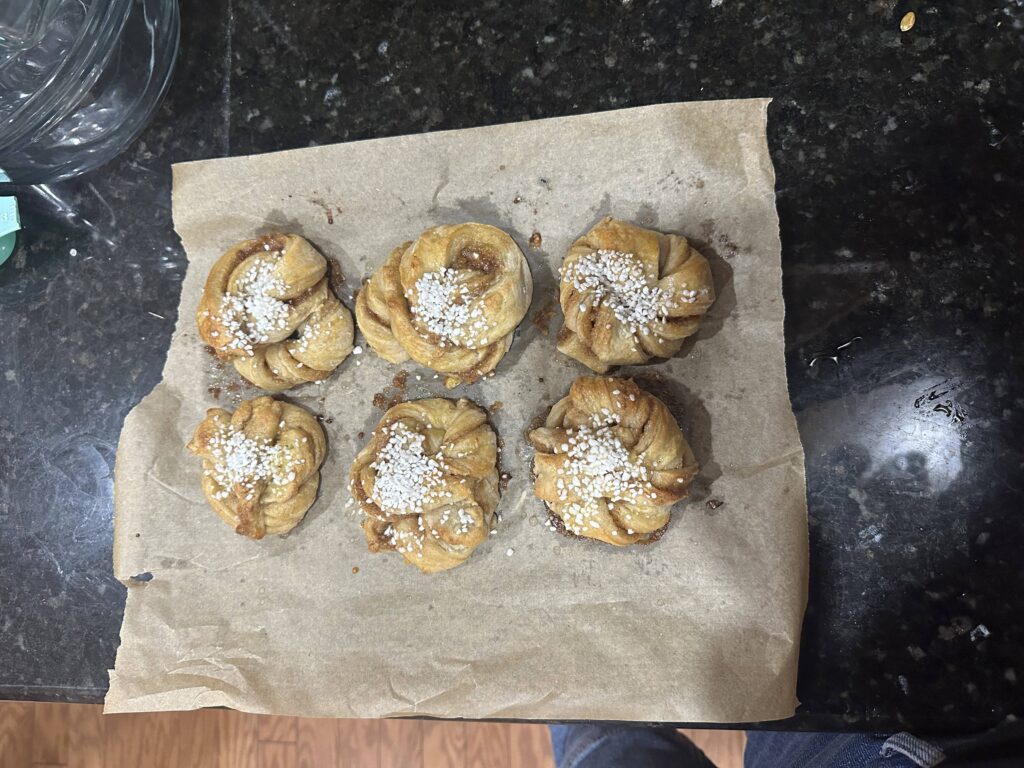
During winter break, I missed these so much I decided to find how to make them!

Being so fascinated by the blend of cardamom, cinnamon, and clove, I asked them where they got them, and behold how I found this place. Serving drinks in cute teal mugs and baking everything in stone ovens, their coffee is perfectly strong and balanced, and I love the way they pair with their cinnamon rolls.

Some other great must-tries here are their seeded crackers and smoked salmon sandwiches. They have two locations, one on West 14th Street near the Whitney Museum and another on 550 Fifth Avenue near Rockefeller. Absolute must try if you have a sweet tooth like mine!

  1. Moshava Coffee

This place takes the community to the next level! Offering a variety of free activities each week such as watercolor painting and crochet classes, this coffee shop is bringing back that concept of having third spaces when days get overwhelming, offering an escape from either being in a dorm, or being on campus. I have gone a few times to watercolor, and being able to put my phone and computer down and just let my creativity drive me is something that sometimes is so hard to do, even as an artist like myself.

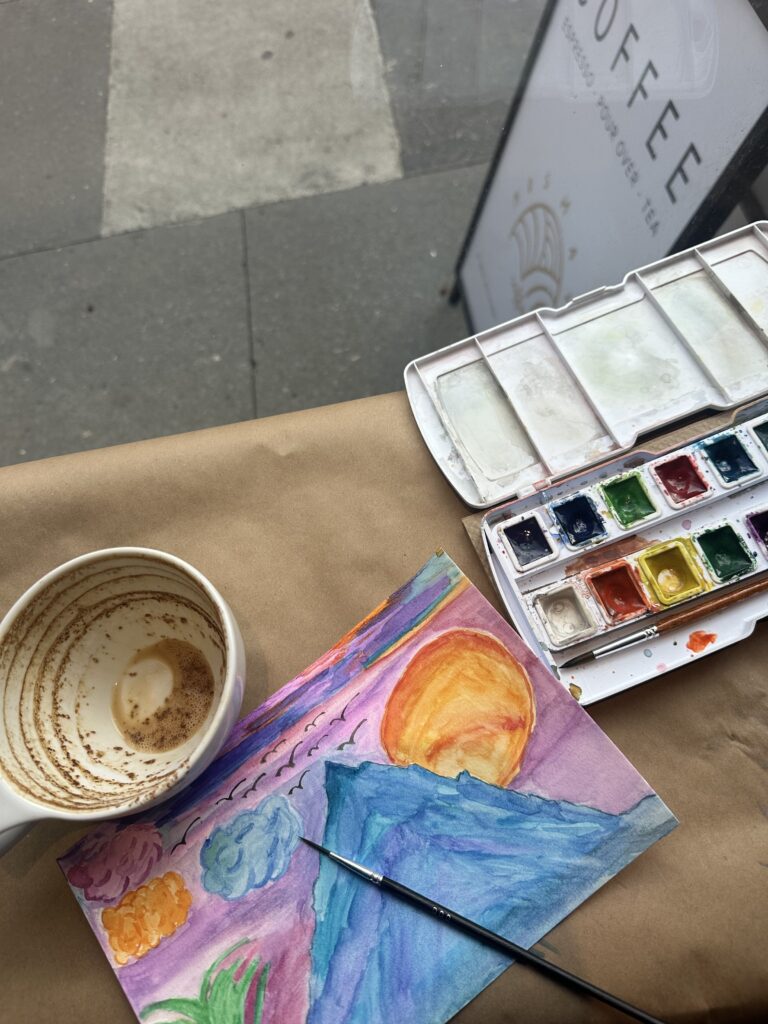
Painting at Moshava Coffee

I think places like these help us be able to give ourselves some fun and also serve as perfect opportunities for solo dates which are just as important to prioritise! They have also done fun events for finals week (giving out free teas, snacks, and cold brew!) as it is super close to NYU’s campus, offers discounts for students, plays live music, has reading hours, and overall blends what it’s like to be a coffee shop and a third space all together. A must try if you are in the city and a student!

You may go somewhere in the city expecting to get a great cup of coffee, a latte, or simply a sweet treat, and come out getting more community, surprises, and enjoyment than you could’ve imagined otherwise. That’s the beauty of being in a city of eight million – you’ll never know what you’ll find! I hope these places too will become your favorites and regulars like they are mine.


Love coffee and sweet treats like I do? Then check out Compilation Coffee Roasters and get 10% off your next order — YUM!


By Avril Walter

Avril Walter is a Sophomore at New York University, majoring in Drama and Cinema Studies. Coming from an Argentinian background, she loves anything related to futbol, steak, and dulce de leche. When she is not in class, she can be found playing the violin, running, cooking, or at the movie theatre.


For over 25 years, the Campus Clipper has helped college students in New York City—and later in Boston and Philadelphia—save money and succeed in city life. We offer a digital coupon booklet with discounts on food, clothing, and services, plus an Official Student Guidebook with real advice on how to navigate college life in a big city. Our internship program lets students build skills, earn money, and publish their own e-books. Follow us on Instagram and TikTok @CampusClipper, and sign up for our newsletter to get deals straight to your inbox. To access the digital coupons, scan the QR code on our printed card—available in dorms, student centers, and around campus.



Share

Niche-ing New York City: Honing Your Talent (Affordably!)

August 2nd, 2025

Congratulations! You’ve found your niche and you want to start putting your talent into practice. 

While simply being good at something is often free, honing that talent can get expensive – in terms of both money and time. Many of us will not get the chance (or have the time and money to spend) to earn a degree in our talents, but this doesn’t mean that we shouldn’t be able to develop those talents. In fact, it is often necessary; like we heard from Heather earlier in this series, many corporate employees in New York City live a double life to maintain their mental health and work-life balance through a creative outlet – accounting by day and painting by night, for example. Others depend on the income from two jobs, the way a Broadway actor might wait tables between shows. While you’re studying finance in preparation for your mind-numbingly boring career in banking compliance, there are plenty of ways to fill your free time productively and creatively. Here are some accessible and affordable ways to hone your talent in the city:

Free Classes and Workshops 

  1. The New York Public Library system is great not only in the amount of free events and workshops it offers, but also in the spread of library branches across the boroughs. They have a helpful filtering system to choose between the 93,000 programs they offer every year, such as date, location, topic, and audience types and age groups. Supplies are provided for the most part, making the vast majority of these classes completely free. Some examples include tango and flamenco dance lessons, creative writing workshops, and classes to help you create your first business
  2. Club Free Time is a great resource for finding other free events in the city, including workshops in a wide range of talents like portrait photography, juggling, and singing in a choir. Club Free Time also lists free concerts, lectures and presentations, galleries, tours, and more. If you’re interested in theatre, becoming a member at CFT can also get you 2 to 5 free tickets to small and innovative (but pricey) shows!
  3. Shape Up NYC is a free group fitness program with events in parks all over the city. If you’re a talented fitness teacher, you can volunteer to lead these classes and give back to your community. Or, if you’re just breaking into your future in fitness, you can join classes like Caribbean dance, intenSati (kickboxing meets yoga), and dynamic stretching.

Affordable Classes and Workshops 

  1. One of the most expensive talents to pursue is a musical instrument, but it is also one of the most rewarding and beneficial to your brain health. The Brooklyn Conservatory of Music offers hour-long group lessons or ensemble sessions in 16-week semesters for $40-50 per lesson. It’s a great way to continue practicing your instrument or to start a new instrument as a beginner. They also offer financial aid, as well as free and cheap one-off events to help you pursue your talent as affordably as possible.
  2. The Brooklyn Brainery is a helpful resource for affordable classes that may be more targeted toward your niche than many free options. For example, there are classes on cyanotype, Shibori, and decoupage if you want to dive into a skill that most people have never heard of – and are unable to pronounce. Their teachers also offer walking tours, unique book launches, and online classes that all land in a range of $20-100.
  3. CourseHorse is a similar resource with a much broader range of classes and activities – and thus, a broader price range. For example, they list a drink and draw event for $15, but also a hybrid, 658-hour software engineering certificate program for $10,995 (which, at $17 per hour, is still quite affordable). They offer everything from dance classes to tours to mig welding workshops – a great one-stop shop for any and all talents.
On a networking panel.

Networking Events

  1. For those with less hands-on or purely artistic talents, networking is a great way to build skills like public speaking, strategic communication, and – of course – networking while building your community and learning more about your niche and others’. Eventbrite has a great list of free and low-cost networking events in the city with a wide variety of subjects, such as influencers, AI startups, and the entertainment industry
  2. Similarly, Luma lists some of the biggest events in the city, with waitlists hundreds of people long. While these can get expensive and might require registration months in advance, some of the cheaper options include Climate Changemakers Manhattan’s free community picnic and a mid-summer momentum panel and mixer for interns in New York City. 

The great thing about living in NYC is that whatever you’re into, someone else is into it too – and they’re willing to teach you (and if not, there’s plenty of people out there who can teach you how to turn your hyper-specific talent into a business of your own). Take some time this summer to follow your passion and hone your talent!


Get a $16.95 lunch at Spicy Moon this summer when you show this coupon at checkout!


By Lauren Male

Lauren is a senior at Pace University majoring in English and Communications, with a minor in Journalism. She is pursuing Pace’s M.S. Publishing program. When she’s not reading, Lauren can be found trying new coffee shops, thrift shopping, and spending all of her money on concert tickets.


For over 25 years, the Campus Clipper has helped college students in New York City—and later in Boston and Philadelphia—save money and succeed in city life. We offer a digital coupon booklet with discounts on food, clothing, and services, plus an Official Student Guidebook with real advice on how to navigate college life in a big city. Our internship program lets students build skills, earn money, and publish their own e-books. Follow us on Instagram and TikTok @CampusClipper, and sign up for our newsletter to get deals straight to your inbox. To access the digital coupons, scan the QR code on our printed card—available in dorms, student centers, and around campus.

Share