Archive for the ‘onEntertainment’ Category

Poetry Review: David Mutschlecner’s Enigma and Light – Not Your Everyday Ekphrasis

Wednesday, June 13th, 2012

“Enigma and Light offers up a poetry unlike anything I’ve recently encountered: intelligent, fearless, engrossed in the rigors of its own journey.” – Elizabeth Robinson

      The exercise of ekphrasis – a literary description or critique of a visual work of art, intended to illuminate an essence which reveals itself (perhaps exclusively) in the dialogue between two mediums   – is not new. Dating back to ancient times, the term’s original definition extended to a description of anything: person, place, art, or even experience. Rooted in the Greek, ek and phrasis, translating to “out” and “speak;” to literally “speak out” to or identify an inanimate object by name. Unoffically originating in Plato’s discussion of the forms, the rhetorical device can be found throughout literary and philosophical history. Socrates and Phaedrus had ekphrastic discussions. Virgil used it in the Aeneid; Homer in the Iliad; Melville in Moby Dick; Cervantes in Don Quixote. But perhaps the most demonstrative – and notable – use of ekphrasis comes to us in Oscar Wilde’s Sui generis The Picture of Dorian Gray. While it also has robustly traceable roots in poetry, from the work of the Pre-Ralphaelite Brotherhood to William Carlos Williams to W.H Auden, the most contemporary, prominent example is found in the eponymous opening poem of John Ashbery’s Self-portrait in a Convex Mirror (which of course takes its name from Parmigianino’s famous micro-painting). To put it mildly, Ashbery exploded on to the scene following the book’s release, a worthy recipient of what has been dubbed the “Triple Crown” of poetry awards (the Pulitzer Prize, National Book Award, and National Book Critics Circle Award). Ekphrastic poetry has, ever since– more due to Self-portrait‘s notoriety than comparative critical reception – lived in the shadow of Ashbery’s landmark collection.

That is, until now.

David Mutschlecner’s newest book of poetry (author of Sign and Esse) titled Enigma and Light is an exquisitely crafted (a capacity which Ahsahta Press has recently exhibited industry-leading proficiency for) intertextual gateway to a world whose borders are typically only penetrated via hallucinogenic/augmented imaginative assistance. Past its mesmerizing grey-canvas wrapping – once an adequate attention is attained – inside one is greeted with familiar names unfamiliarly juxtaposed to familiar names, as titles. Mutschlecner adamantly takes his departure from the rhetoric’s Platonic origins, and then proceeds to gracefully transcend it.

My own personal experience with ekphrastic discourse goes back to freshman history in high-school, where I had the serendipitous pleasure of encountering one of the most brilliant people I have ever met. Not only was his knowledge encyclopedic, but his diverse and expansive array of areas of expertise would put most encyclopedias to shame (he memorized libraries while we refused to commit even the Bill of Rights). Yet, it was one fairly well known anecdote, haphazardly proclaimed, that has managed to stick with me some 8 years later. Mr. McShane was in the habit of playing music in class, which given his impeccable taste, was a welcome addition to an otherwise traditionally obtuse syllabus. On one such occasion, without warning (as he was also in the habit of doing) he played “Subterranean Homesick Blues” by Bob Dylan, followed by abruptly slamming the pause button (as he was never in the habit of doing) after the line, “you don’t need the weatherman to know which way the wind blows.” If it wasn’t a Dylan song, I don’t know that I, or anyone else in the class, would have even realized the words prior to this anomalous occasion (keep in mind this was around the advent of “artists” such as Lil’Wayne and E40). Of course we would eventually learn that the song and the lyric in particular, was the inspiration behind the Weather Underground, a radical organization started in 1969 which went on to become one of the faces of the New Left.

Dylan somehow (this is another article altogether) captured a zeitgeist buried in young people that they could not bring into aperture themselves. In his art, his message, his essence was the Rosetta Stone they had been waiting for to translate their own ideals (which were more or less parallel to Dylan’s in Blues) into a full-blown movement. To put it simply, it spoke to them, in a language they could finally understand.

David Mutschlecner accomplishes a similar goal, tantalizing his own latent curiosities to uncover ones in the reader he or she didn’t know were there. The poetry grounds its tension in the struggle of a man drowning in ideas and a faith that seem to be at odds. What occurs in Enigma and Light is rare, and does so immediately. A few pages into the opening poem, as David Peak of The Rumpus keenly observes, Mutschlecner gives us six lines that work as a quasi-micro-orientation, a layered ekphrastic invitation itself of what is to come, a revelation of the pulse that sustains each of his scintillating conversations.

“Martin’s marks are Stein’s
word stipplings,
both inter-patterning one another

as they could not
without the clear delineation—
each word girded by the grid.”

This is the precious commodity with which the poet performs his alchemy. The marks and words which inter-pattern one another, the invisible thread of thought which extends beyond eras, mediums, and death itself between artists and thinkers (and us all) alike. Mutschlecner states in the author’s statement that “seeking the inherit similarity in dissimilars is the work of the Holy Spirit;… this is, to me the highest goal of poetry” (which, unsurprisingly, could just as easily could be the words of Ashbery – less “Holy Spirit”), a pursuit satisfying not just an artistic hunger, but metabolic need to digest the work of those who title his extrapolative discussions. On the surface, Mutschlecner‘s work is a serial poem, but a more perspicacious description would be an amalgam of philosophical discourse, an extended and fragmented essay on art, a treatise on form and message and meaning; a meditation on medium.

Gertrude Stein and Agnes Martin, Martin Heidegger and Ezra Pound, Thomas Aquinas and Emily Dickinson, Robert Duncan and Dante Alighieri, Joan Mitchell and Charles Olson, Georges Rouault and Robert Motherwell: just a selection of the intriguing – to say the least – pairings which compose this unusual and beautiful work. Names like Herman Melville, Nicholas of Cusa, Robert Ryman, Karl Rahner, Saint Faustina and the Gee’s Bend Quilters, alongside so many more, are used by Mutschlecner to sketch a stimulating, abstract, time-bending map of voices he follows until excavating the fault lines where centuries of celebrated art and ideas intersect.

You might be saying to yourself, this idea seems fresh, interesting, intelligent and perhaps even worth the purchase price on its own. But it might also seem a bit pretentious, implying a necessary body of knowledge very few, if any, potential readers will possess upon checkout. Despite the fact that Mutschlecner’s lifetime of intense study and obsession with detail are (albeit quite elegantly) on open display in essentially ever y other line, this is not necessarily the case. This is, because, and not despite, the premise the work takes. By choosing the unknowable, highly subjective domain that exists in these contrived discourses between artists of his choice; using settings mundane as empty rooms and cracks of sunlight sneaking through veiled curtains as his meditative arenas; a vigorous stripping of line and length, producing a perfectly rationed minimalistic prose; Mutschlecner provides ample avenues of accessibility into his own idiosyncratic thought process and associations. The “world view” which reveals itself at the bottom of the glass of this cerebral concoction is an original one. It is a view that comes more and more into focus with every poem, with the diction, pace and measured metronome of each consistently aesthetically pleasing. The grey area that Mutschlecner’s unique combination of knowledge and inquiry inhabits is a place opened to the reader, where he is then able to infuse his own philosophy and curiosities to a discussion that never ends, and if we are to side with our guide, perhaps never was. A place where the patterns of being that are generated only appear to do so; they have been there all along, our experience is simply the recognition, the girding of each word to the grid.   Consider an excerpt from “Karl Rahner / The Dusky Seaside Sparrow”:

“There is no improvement
can spark substance. The message dead
in this bottle, and yet the message

still, is read: Dusky—“Orange”
—Last one
Died 16 June 87

tagged to the lid. . . .”

It is in such benign everyday moments, ones we all must tolerate, that our most deeply ingrained (whether through internal or external means) patterns seem to correlate; a phenomena for which Mutschlecner has (perhaps unknowingly) conditioned his eye. It is for the same reasons, we are able to make that eye our own, to see from a place where allusions are the horizon on which “thought rolls and turns and” can be followed to gaze upon our most substantial, and lasting constructs: those composed of agreed-upon meaning.

I highly recommend this new collection poetry not just because of its sublime musicality, but it is educational, provocative, and demands an active and thinking mind beginning to end – most of which without the reader even knowing it. If you’re like me, then it won’t take very many lines to inspire the inner artist in you – regardless of whatever you consider your primary walk of life – so why not use the student advantage provided (below) by your friends at #CampusClipper for some awesome art supplies at Da Vinci (they have a great selection of moleskine notebooks too in case Enigma inspires the poet or writer in you as well!).

Mahad Zara, The University of Arizona and Columbia University, Read my blog and follow me on Twitter

Click here to download the Campus Clipper iTunes App!

Follow Campus Clipper on Twitter or keep current by liking us onFacebook

Interested in more deals for student savings? Sign up for our bi-weekly newsletter to get the latest in student discounts and promotions. For savings on-the-go, download our printable coupon e-book


Share

Woody Allen’s Hannah and Her Sisters (Come to Terms with Unhappiness)

Wednesday, June 13th, 2012

Hannah (Mia Farrow) is caring and giving. She’s closed off emotionally.

Lee (Barbara Hershey) is beautiful and passionate. She’s sleeping with Hannah’s husband.

Holly (Dianne West) is funny and vivacious. She’s a recovering coke addict.

Hannah and Her Sisters


These are Hannah and her sisters, the stars of Woody Allen’s drama about the complicated relationships of a family of middle-class New Yorkers. Though one could argue for the inclusion of and their Men at the end of the title, this story is really about the three sisters and the intertwining of their romantic lives. Hannah’s husband Elliot (Michael Caine) becomes involved with Lee, while Hannah’s ex-husband Mickey (Woody Allen), who once dated Holly to disastrous results, finds himself facing an existential crisis after suffering a cancer scare.

Some parts of Allen’s film feel reminiscent of a Raymond Carver story, with its examination of New England, upper-middle class dissatisfaction. It’s distinctly lighter in tone, though, with the usual Allen assurance that even though life’s dull and complicated, we might as well enjoy it when we can. One can probably see the director’s own struggle with faith and religion in Mickey’s search for God (in one amusing sequence, Mickey goes home to tell his Jewish parents he’s decided to become a Catholic).

Micky hits bottom


Caine and Hershey both deliver powerful performances as adulterous lovers Elliot and Lee. Though Lee conceals a quiet passion in every glance, it is the devoted, bespectacled Elliot who surprises us with his professions of undying love, especially when one considers Hannah’s caring nature. Then again, it is this very aspect of Hannah’s personality—her self-sufficiency, both in life and in bed—that Elliot finds so difficult to endure. As for Lee, she feels stifled by her partner Frederick, a misanthropic artist who claims that Lee is his only connection to the world. Feeling burdened and perhaps even a little dismayed by the notion of being a recluse’s anchor to reality, Lee decides to take the risk of seeing her sister’s husband behind the doors of a hotel room.

Hannah and Her Sisters succeeds most brilliantly through its inclusion of moments of internal dialogue on the part of the characters. In one scene, Holly berates herself for not being more forward as she travels in a taxi with friend/competitor April (Carrie Fisher) and their mutual love interest. In another, Elliot urges himself to be cautious and prudent about revealing his feelings for Lee. A moment later he has pressed his lips upon her mouth in a desperate profession of love. These scenes display the pull between desire and social expectation in the lives of Allen’s New Yorkers.

These characters are not the victims of disaster. Don’t look for car crashes or unexpected declarations of paternity. Even the cancer storyline couldn’t be more different from your usual soap opera fare. But problems lurk below the surface, simmering slowly, sometimes hot and sometimes cold. Despite the safety of material comfort, marital and existential happiness remain elusive–always sought, but unappreciated when found.

As with many of Allen’s films, the characters are followed with almost claustrophobic focus and regularity. This neurotic intensity of the camera denies us any grand shots of New York, or even sometimes just a little room to breathe and gather our thoughts. Though some may find it uncomfortable, it reminds me that this moody actor/director called Woody Allen loves people. It’s not a romantic love, nor is it unchanging. Rather, it’s a love that watches with fascination, equal parts amused and enchanted by the absurdity of the world.

Enjoy our great student discounts today with this coupon for Ballaro Caffe Prosciutteria!

Andres Oliver, Emory University
Check out my blog and twitter!

Click here to download the Campus Clipper iTunes App!

Follow Campus Clipper on Twitter or keep current by liking us on Facebook.

Interested in more deals for students? Sign up for our bi-weekly newsletter to get the latest in student discounts and promotions  and follow our Tumblr and Pinterest. For savings on-the-go, download our printable coupon e-book.

Share

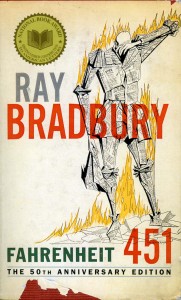
Ray Bradbury Tribute: Fahrenheit 451 – “There is more than one way to burn a book. And the world is full of people running about with lit matches.”

Wednesday, June 13th, 2012

“”One of the most brilliant overall jobs of social satire.”
The Nation

“My art is on its final breaths, and chances are it will be dead, buried, and forgotten before most of you walk out of here with degrees.” The seismic words fell so hard on the 400 undergraduate shoulders surrounding me in an ASU lecture mega-hall that I can still vividly recall nearly falling out of my seat. The class was titled “Mass Media & Society” and the speaker was not (to everyone’s delight) our elegant, and aging instructor – the excruciatingly eccentric “original Dr.FUN” (who literally wrote the book on how media portrays sex, love, and relationships and its consequences) – but rather a previous radio executive and disc jockey, and current “expert scholar”; which apparently included spending time in front of groups like an intro elective course at a public university. Regardless of his overt melodramatic undertone, the speaker’s sentiment was hard not to empathize with as an aspiring creative type myself. If you haven’t figured it out by now, this industry insider was – quite broadly – referring to all the “cool new shit (his words, not mine)” that was causing radio to progressively fade into obscurity until only a handful of super-stations would remain. To be more specific, his presentation focused on the greatest threat to radio since television itself: internet in cars. It doesn’t take a genius to put two and two together to realize that once moto-WiFi is as common as removable cup-holders that most people – particularly those with roots elsewhere than the state on their license plate – if given a choice out of every radio station on the planet, will pick something other than their commercial-littered local indie jukebox for the drive home.

Assuming you possess an average reader’s attention span, right now you’re probably thinking, “cool story bro (assuming you also possess an average reader’s courtesy), but what does this have to do with Ray Bradbury, his death, or Fahrenheit 451 – you know, the book this review is supposed to be on.” Beyond the painfully obvious parallel of “technology is killing art” theme that F451 is remembered for (among other reasons), here, right before my eyes – in whatever relatively infinitesimal, isolated form – was Bradbury’s meticulously crafted nightmare coming true. Something, unfortunately, that is now – given a watchful and interested eye – observable on a daily basis. It wasn’t just that technology like internet-enabled Honda’s would be the death of the “his art” (partly, yes) that precipitated the invisible tears I saw running down the side of the speaker’s face for 65 minutes. It was what that death meant for the rest of us.

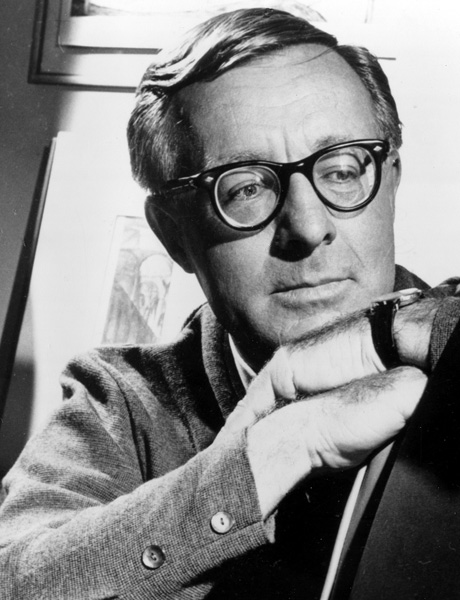
Ray Bradbury is one of only a small handful of names that would undoubtedly be on every list of nominees for the Mt. Rushmore of Science Fiction (if such an awesome monument were ever to be erected). With his place among an echelon of genre juggernauts such as Arthur Clarke, Isaac Asimov, and Robert Heinlein; his influence on future masters in their own right including Ursula Le Guin ,Phillip K. Dick, and Neil Gaiman; his work garnering comparison over the years to the likes of George Orwell – with over 500 publications and a laundry list of awards; Mr. Bradbury’s passing is a significant one.

You might say it was peculiar that I found myself researching a secret bookstore called Brazenhead in New York the day it happened; a physical symptom of Bradbury’s great diagnosis. You might say it was peculiar that the day before I was sketching an idea for a piece on outdoor libraries and breathtaking bookshelves; more attempts at fighting a war that is already lost. You might say it was less peculiar that almost every writer/literary/culture/arts/creative/humane type I knew had something to say in the form of everything from status updates, Tweets, and blog entries; to using what other great writers had to say about this great writer to say what he meant to them. To say the very least, on June 6th, 2012 there was a painfully gaping hole pierced into the heart of the American cultural landscape. And while I am in no way qualified to write an ode worthy of patching even a pixel of it, I however can pay homage by using this week’s first review to re-visit one of his most paramount works.

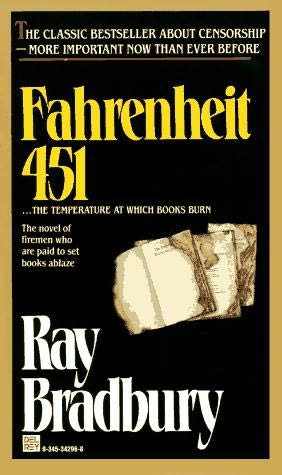
The occasion that lead to my first reading of Fahrenheit 451 is a fairy universal one: assigned reading. Oddly enough, I originally encountered the title on my preparatory summer reading list for sophomore chemistry class (a coincidence that led to some very imaginative interpretations of the title, as I grew up around adults who strictly read, and shelved, the classics – in the most archaic sense of the term). Four-hundred and fifty-one degrees: the temperature at which paper burns. The reference to which perhaps is reason why the first thing that most people think of in regards to the book is book burning – or censorship – itself. The publishers of the mass market paperback version – Del Ray Books – certainly seemed to think so, adorning the more commercial than praising byline of “The Classic Bestseller About Censorship – More Important Now Than Ever Before.” The latter half of which is more interesting, given the edition came out in 1987, as the observation remained a consistent one over the course of the book’s 50+ year lifetime. Ironically enough, less than a fifth of the class had read the book when the first day of class eventually came. But that didn’t stop Guy Montag from – horrible pun incoming – igniting a debate that an innocent onlooker might mistake for an actual scholastic discussion. This of course, speaks less in support for the matter, and more for the subject. No one wanted to be in a generation that was too dumb to realize that it was too dumb to realize anything. Wherein of course lays the dilemma, if we ever did reach that point, how would we know?

What has always impressed me most about Bradbury’s masterpiece is the immersive world he creates. A quick survey of only a few reviews over the past half-century will tell you I am not alone. While Fahrenheit’s America is a comprehensive one that stylishly emanates the dismal and spiritless aura Bradbury intended with a visceral force, the reason its setting is so remarkable (to me anyway) is how it defies all genre conventions, yet remains one of its staple achievements. Science fiction novels are supposed to be filled with flying cars, shiny clothes that talk, sleek gravity-and-architecture defying mountains of pristine steel, ubiquitous bliss and void of disease. But there is none of this in Fahrenheit 451. In fact the only discernible difference between our world and the one Bradbury constructed in 1953 is that books aren’t banned and that firefighters are still just that – and not firestarters. Hell, are the homes that Bradbury’s characters inhabit, with their four-walled television surroundings, igloos of mind-numbing media, any different than our iPhone-tablet-notebook-cinema-3DTV-HD modern day cyber-cemented environment? In this fictional society, happiness is commoditized, allotted, and distributed; and the proliferation of books – thoughts and ideas – only reduces the supply, the quality, while also most importantly, raises the price. Perhaps Montag’s boss, Chief Beatty, says it best:

“Give the people contests they win by remembering the words to more popular songs or the names of state capitals or how much corn Iowa grew last year. Cram them full of non-combustible data, chock them so damned full of ‘facts’ they feel stuffed, but absolutely ‘brilliant’ with information. Then they’ll feel they’re thinking, they’ll get a sense of motion without moving. And they’ll be happy, because facts of that sort don’t change. Don’t give them any slippery stuff like philosophy or sociology to tie things up with. That way lies melancholy. (61)”

However, this book is not about book burning or censorship. As Bradbury himself has openly stated, it is about how television has corroded the literate circuits of society’s neurology. It is about the virus that makes it more appealing to drool upon one’s Cheetos covered flesh in a La-Z-Boy than browsing on one’s knees in some dusty library to find a relevant 10 hour cerebral journey. It is about the danger of believing in the “sense of motion without moving.” It is about the burning of culture. At their core (at least in theory), our technology is always intended to enrich the human experience. Facebook was supposed to make it easier to connect. Twitter was supposed to make it easier to communicate. Television was supposed to make it easier to tell stories. The internet was supposed to bring us all together. Even with appropriate historical deviations from these (admittedly trivial reductions) mentioned, the intentions can, more or less, be generalized as noble. And the results don’t necessarily support the opposite as the current digital-zeitgeist might suggest. Some people do use technology to enrich life, rather than permitting its erosion, as this TED talk by Stefana Broadbent eloquently, and empirically, expresses.

In other words, Bradbury’s message is not “we should say to hell with the machine”, but rather, “we will find ourselves to be hell if we become like the machine.” We allowed Facebook to turn friendship into a list of “friends” and preferring to “like” instead of love. We allowed Twitter to turn talking to tweeting. We kept watching Jersey Shore instead of The History Channel (or were inexplicably late in recognizing art like The Wire). The two sides at war here are not technology and man, but rather two forms of happiness: the hedonist and the spiritualist. Happiness doesn’t come in megabytes of data; it comes from taking mega bites out of the source. Books as they stand, both in Bradbury’s time as much as our own (though this is less and less becoming the case) were merely the review of the fruit – intended to entice. They are merely vessels for carrying the history of those who “braved the storm of life and lived” so that the rest of us may know that such a courage exists in us all. Bradbury says it best, ventriloquizing through ex-professor and Montag’s second significant mentor, Faber:

“It would be funny if it were not serious. It’s not books you need; it’s some of the things that once were in books. The same things could be in the ‘parlor families’ today. The same infinite detail and awareness could be projected through the radios and televisors, but are not. No, no, it’s not books at all you’re looking for! Take it where you can find it, in old phonograph records, old motion pictures, and in old friends; look for it in nature and look for it in yourself. Books were only one type of receptacle where we stored a lot of things we were afraid we might forget. There is nothing magical in them at all. The magic is only in what books say, how they stitched the patches of the universe together into one garment for us. (82).”

So, go forth and find your own cosmic sewing machine; whether it burns at 451 degrees or not. Because otherwise the same flames will consume your exposed, naked mind – and you’ll believe in the “sense of motion, without moving at all”. Chances are you can find a copy of Fahrenheit 451 sitting on one of those side-walk book buys on your way to or from work (especially during the next few weeks).

And in honor of Ray Bradbury and intelligent thinking and meaningful human interaction everywhere – take a trip out to the New York Public Library. Remind yourself of the breathtaking resource tucked away in the heart of downtown. Read Fahrenheit 451 in a way and place similar to how and where it was written. While you’re at it, either before or after, stop by BareBurger for a great bite – and take advantage of the great student discount (below) provided by your friends at #CampusClipper!

Mahad Zara, The University of Arizona and Columbia University, Read my blog and follow me on Twitter

Click here to download the Campus Clipper iTunes App!

Follow Campus Clipper on Twitter or keep current by liking us on Facebook

Interested in more deals for student savings? Sign up for our bi-weekly newsletter to get the latest in student discounts and promotions. For savings on-the-go, download our printable coupon e-book


Share

The Forgotten People: Gangs of New York

Sunday, June 10th, 2012

Gangs of New York

I’ve never gone on one of those websites that does your family tree for you, but I can understand the draw. The thought that we creatures of Apple, Walmart, Facebook, and suburbia may count kings and queens among our ancestors is exciting, or incredibly depressing if you think about it. Nations want the same thing. They create myths surrounding their origins, as if playing king of the sandbox with the rest of the world—“we were here first, we’ve always been here.” America is a young nation, so we have no King Arthur and his knights. But we do have the myth of Opportunity, and considering two centuries of almost uninterrupted immigration, one could say it’s a commodity well marketed. In Gangs of New York, Martin Scorsese follows the myth to its source—New York City. It was here that Irish, Chinese, and Eastern European immigrants poured in by the boatload, and it was here they found a city as much a window into opportunity as a comic parody of that same myth.

Scorsese’s epic unfolds in the Five Points, the meeting-place of five streets in Lower Manhattan where both immigrants and “natives” were thrown together in squalor and in blood. After the death of his father, “Priest Vallon” (Liam Neeson), in a literal war between the Irish and the native gangs led by “Bill the Butcher” Cutting (Daniel-Day Lewis in usual top form), Amsterdam (Cian McCormack, later Leonardo DiCaprio) spends fifteen years an orphan in Hellgate.  Though sworn to avenge his father after his release, he finds himself a gang member back in Five Points under the protection of the very man he seeks to kill. Cutting bleeds men and pigs with equal pleasure and precision, however, so any thought of murder must also be accompanied by consideration for the tender parts of one’s own torso.

Through Amsterdam’s eyes, we see not only his own personal quest for vengeance but also the unfolding of one of the most tumultuous periods in American history. In one particularly compelling sequence, Amsterdam’s and Cutting’s respective Irish and native forces go head to head as New York bubbles over with the heat of the Draft Riots, which were aimed at overturning Lincoln’s conscription of men into the Union army. What a time it was, Scorsese tells us—a time when the army of the Union fired upon the same men they would have join them, and a time when foreign and native fought with knife and cudgel in the alleys of the city as North and South took turns facing the barrel of the cannon upon the field.


Odd loyalties were formed and broken. Though Jimmy Spoils (Larry Gilliard Jr. of The Wire), the sole black member of one of the Five Points’ own band of thieves, once may have found acceptance among the Irish—both minorities, both hated and feared—when the riots break out, to an angry mob he is the cause of Lincoln’s war and competition for their labor. Amsterdam and love interest Jenny (Cameron Diaz) find him stretched out upon the stones of Five Points, his body lit by candlelight in a row of a hundred others nameless.

Scorsese no doubt takes some liberties with the myth of New York—though not so many as one might think. Many of the gangs depicted in the film operated throughout the 19th century, and Five Points may have been even more terrifying in real life than it was in the movie. And Hellcat Maggie, the wild-haired gangstress with the sharpened teeth and claws? Really existed.

I went walking down South Street Seaport the other day with some friends. The street carts were out selling Dippin Dots and lemonade, and there atop the quaint rows of brick houses that once would have greeted the merchants as they unloaded at port sit the shining logos of Abercrombie, cafes, and bars full of the young and the fashionable. Suspend this enchanting touristic vision for a moment, however, and imagine what this might once have been. One of many doorways onto a city of multitudes, where Americans were not yet a people but people, merely. Suspend disbelief, and you can almost imagine one of Scorsese’s young rogues leaning casually against a back alley wall, hat turned down to conceal his eyes. Imagine this, and listen to the thousand voices of the city that once were and are now forgotten, their owners’ bones beneath the very stones that now scream out in strident tones: “Dippin Dots! Get cher’ Dippin Dooots!”

Speaking of Dippin Dots… go get yourself something sweet with this coupon for free bubble tea at T-magic!


Andres Oliver, Emory University
Check out my blog and twitter!

Click here to download the Campus Clipper iTunes App!

Follow Campus Clipper on Twitter or keep current by liking us on Facebook.

Interested in more deals for students? Sign up for our bi-weekly newsletter to get the latest in student discounts and promotions  and follow our Tumblr and Pinterest. For savings on-the-go, download our printable coupon e-book.

Share

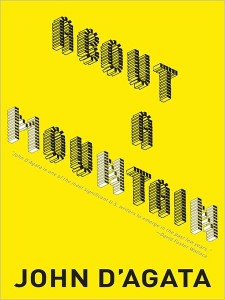
Book Review: About a Mountain by John D’Agata – “To whomever I did not help.”

Thursday, June 7th, 2012

"...one of the most significant U.S writers to emerge in the past few years." - David Foster Wallace

It seemed to us we we’re a very great people” – The United States of America

John D'Agata

      A week into November of last year at the University of Arizona, right around when the leaves of date palms litter the walkways all over Tucson, I found myself in a familiar place: nose wedged in a book, eyes drowned in its ephemeral words, limbs temporarily frozen and forgotten; I was lost. My wasteland: the nuclear storage fields at Yucca Mountain, Nevada. My drug: our future. My spirit guide: John D’Agata. About a Mountain is one of those rare firecrackers of books that not only sparks  widespread controversy, but does so for a reason only other writers, penetrating thinkers, acerbic comedians and unattractive vampires can appreciate – being misunderstood. It took all of 10 pages before someone who didn’t fall into one of those categories – ironically, a geology professor (who is a leader in his field, and thus remain unnamed) – was overwhelmed by what could only have been a personal agitation that superseded general human etiquette, to point out – let’s say less than eloquently – that an entire book was dedicated to fact-checking the 200 pages of brilliance that laid in my hands, and unequivocally supported a conclusion that many readers had come to: in About a Mountain, John D’Agata is at his best, and John D’Agata is  completely full of shit.

      It isn’t hard to see why. Consider the book’s opening lines, describing Las Vegas’ centennial: “If you take the population of Las Vegas, Nevada, and you divide that by the number of days in the year, there should be 5,000 people in the city and its suburbs with a birthday on the same day that Las Vegas began. On the hundredth anniversary of its founding, however, Las Vegas had only gathered twenty-nine of those people.” Alongside lines such as the dedicatory inscription at the beginning of this review – in particular, one’s seemingly intended for an exceedingly enlightened, mysterious audience somewhere in the distant future – D’Agata immediately introduces readers to his favorite (and, unsurprisingly, most misunderstood) move: bending time and place while simultaneously trapezing between the ledges of fact and fiction. It is in this uncomfortable domain of the known and unknown where D’Agata’s peculiar logic, his idiosyncratic mind, and fascinating personal experience are employed (and shine) to reexamine not only where we are, but also where we’ve been; and most portent – where we are going.

      You might have noticed that I’ve reached several hundred words without actually diving into the masterful narrative that Charles Bock of The New York Times called “unquestionably art, a breathtaking piece of writing.” A review that reprimanded – and derided – the artist only a few paragraphs later for the same reasons for which it initially protruded with admiring jaundice: “I don’t know what to think. What’s specific or representative or smudged? Pandora’s box is wide open.” What Mr. Bock fails to realize, despite his awareness of D’Agata’s explicit claim that “I[He] is in search of art” and not fact is that this was precisely the book’s purpose – one that (perhaps without the reader’s acknowledgement) it polemically fulfills.

So why should you, or anyone, really care? The overarching message of About a Mountain serves as a messianic compass as we attempt to successfully navigate our way through this precarious storm of cultural and technological chaos. More than ever, the ability to critically parse between fact and fiction, numbers and art, truth and wisdom is paramount to our continued existence; one that is worth preserving anyway. The book itself weaves an in-depth coverage of the political suave and maneuvers used to re-interpret a million year problem into a 10,000 year solution (an absolutely stunning metaphor for the pattern of thinking that has lead us here) along with the tragic story of Levi Presley – a boy who jumped off the Stratosphere tower in Vegas – and the connection of his death to D’Agata’s own experience answering calls on a suicide hotline. It is because, not despite, this discordance that D’Agata’s ambition and pursuit of art is realized. Here, the details that are debated  (resolved with end notes in later editions) – from the significant, such as the day of Levi’s death, to the minuscule, such as the actual color of hills in the Nevadan autumn – are irrelevant. Keeping up? Good. Because it is through this very deliberate and aesthetically striking ridiculing of fact, or knowledge, that any of the information is made relevant.

credit: IowaNow

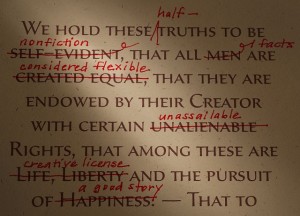
      Creative Nonfiction is not journalism – D’Agata despises the term, instead championing the “essay”, invoking Montaigne’s “essai”, meaning ‘an attempt or trial’ to route the journey of consciousness throughout a narrative; a provocative stance to say the least. His elastic perspective regarding this paradigm is manifested in the titles of the book’s chapters: starting with the journalistic staples of “Who, What, How, Where and When” and concluding with a trifecta that outlaws objectivity entirely, “Why, Why, Why.” Certainly, this complex concept is beautifully articulated when he writes, “Clear that if I point to something like significance, there is the possibility that nothing real is there. Sometimes we misplace knowledge in pursuit of information. Sometimes our wisdom, too, in pursuit of what’s called knowledge.” Indeed this is a hefty price to pay for maintaining the beloved boundary, the artificial security, between objectivity and subjectivity, where intellectual vertigo and doubt are priceless casualties in the name of conventional tradition. D’Agata’s perspicacious observation is further reflected in the portrayal of back-door politicians who recommend the feasible option instead of confronting the truth with wisdom. Despite the borderline infinite data on Yucca Mountain, “a place that we have studied more thoroughly at this point than any other parcel of land in the world… still it remains unknown, revealing only the fragility of our capacity to know.”

“When we are not sure, we are alive.” – Graham Greene

While I can’t direct you anywhere in the city with palm trees year round, there are plenty of opinionated strangers everywhere. So why not grab a copy of  About a Mountain  and head to Cafe Mocha, fill up with a great sandwich, then focus in with a free Cappuccino (using the coupon below), and if you absolutely can’t help yourself, ‘fact-check’ this monumental work with their free WiFi.

Mahad Zara, The University of Arizona and Columbia University, Read my blog and follow me on Twitter

Click here to download the Campus Clipper iTunes App!

Follow Campus Clipper on Twitter or keep current by liking us on Facebook

Interested in more deals for students? Sign up for our bi-weekly newsletter to get the latest in student discounts and promotions. For savings on-the-go, download our printable coupon e-book

Share

The Roots Beneath the City: Leon the Professional

Monday, June 4th, 2012

Leon cleans his little potted plant every day, spraying water on the leaves and wiping them down like he’s bathing his child.

“You love your plant, don’t you?” Matilda asks.

“It’s my best friend,” he responds. “Always happy. No questions. And it’s like me, you see? No roots.”

Roots, Medvednica, Croatia

Roots: he has none (Photo credit: Wikipedia)

This man speaking so tenderly of his plant is an immigrant, root-less, alone in the city of New York. He is a hitman. He likes milk and Singin in the Rain. In Luc Besson’s thriller Leon the Professional, Jean Reno plays Leo, an assassin who finds his lonely life of murder for hire interrupted by the events down the hall from his apartment. Maybe murder’s not the right word. After all, he’s a professional.

After coming home to find her family murdered by corrupt DEA cop Norman Stansfield (Gary Oldman) and his crew over cocaine dealings, Mathilda Lando (a young, precocious Natalie Portman) seeks refuge with Leo, her up-to-then unknown neighbor. Leo, who seems to foresee an intrusion into his solitary rhythm of life, takes a moment to consider Mathilda through the keyhole before grudgingly allowing her inside. From this point, the foul-mouthed yet devoted Mathilda slowly draws Leo out of his shell as she talks him into teaching her the ways of the hitman. The two eventually come head to head with Stansfield as Mathilda seeks revenge for her slain brother—the only one she really loved out of her family members.

With Leo living in a gritty, multicultural corner of Little Italy, Besson’s New York is anything but glamorous. Shots of the world outside Leo’s apparent seem suffused with a yellow hue, as if a thick carpet of dust had been collecting behind the lens. But even more than the setting, it’s the people in Besson’s film that give us a glimpse into New York’s underside. At the beginning of the film, we learn that Mathilda has both been truant from her school for troubled young girls and is the subject of abuse from her father, and neglect from everyone else except her little brother. And Leon? That’s right, don’t look for happy characters here. Having fled to America after murdering his forbidden love’s father, Leo has not had a relationship with a woman—or, it seems, anyone who doesn’t end up on the wrong end of his gun or knife—for over a decade. And despite the almost ludicrous nature of Oldman’s villain, it’s not difficult to imagine some parallels with police corruption in New York’s history.

Stan clarifies his statement

Both Leon’s and Mathilda’s stories tell us the importance of taking root somewhere. From what I hear, many of the old ethnic boundaries that once divided New York have given way to gentrification. But a quick walk down a few blocks down from my apartment lets me see the deep roots that still cling in the city, and those that have formed more recently. Go down one block—Hispanic district. 2 more—Chinatown. Go even further and you’ll hit a neighborhood of Orthodox Jews, a discovery I made one Sunday morning after getting off at the wrong subway stop. It’s the desire to know you’re growing in familiar soil—something a quiet, milk-loving hitman finds in a chain-smoking girl outside his doorstep.

Looking for killer burgers and fries? Take this 10% off coupon for Goodburger and enjoy!

Andres Oliver, Emory University
Check out my blog and twitter!

Click here  to download the Campus Clipper iTunes App!

Follow Campus Clipper on Twitter or keep current by liking us on Facebook

Interested in more deals for students? Sign up for our bi-weekly newsletter to get the latest in student discounts and promotions. For savings on-the-go, download our printable coupon e-book!

Share

When Harry Met Sally: Who Wants to be Just Friends?

Sunday, June 3rd, 2012

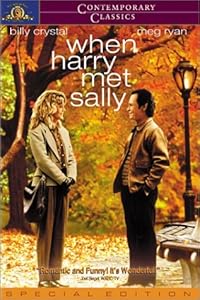
Cover of "When Harry Met Sally"

Though I stated in a previous post that I would be reviewing movies in general, I decided to hone in on a specific topic in order to better match the tone of Campus Clipper. Therefore, I’ll be focusing on movies centered on or dealing with the city of New York. Considering that almost every movie either takes place in New York from the beginning or has the characters go there during the climax—because lets face it, New York City is always the first target during an alien invasion, and love stories just don’t cut it unless they’re New York stories—the options are almost limitless. But I’m going to focus on movies that gave me the strongest sense of New York—the ones that you can watch and say that’s New York even before the first shot of Central Park or the Empire State Building. First up in the list is Rob Reiner’s well-loved romantic comedy, When Harry Met Sally.

Out of all the films that I could have chosen as my first, When Harry Met Sally stood out inexplicably from the rest. Screenwriter Nora Ephron’s and director Rob Reiner’s take one the age-old question of “can men and women really be friends” savors of New York from the moment Harry (Billy Crystal) and Sally (Meg Ryan) first part ways at the Washington Square Arch to when Crystal decides to run after her while standing under it. But its more than just the location. Sure, take out the shots of Central Park, Katz’s Deli, and the Metropolitan Museum, and you’re left with another romantic comedy about two young people who take ninety minutes to finally get around to liking each other—an epidemic that Hollywood’s carried to an untold number of cities.

The first time I saw the movie, I knew instantly that this must be how people live in New York. Not L.A. or Seattle or London. They go powerwalking in the park and eat hot dogs at street carts. They wonder about the emptiness of being single while surrounded by people at every avenue. The real draw of the movie, though, isn’t that Reiner has his characters work out these universal problems against the backdrop of New York. It’s that life in The City makes these questions all the more pertinent, especially for college-age individuals such as ourselves.

Harry and Sally are both well-off professionals with at least a handful of close friendships. Why, then, can’t they be satisfied with being just friends? Could it be boredom? At least the first 20 years of our lives are set off as a sort of constant challenge—a hoped-for transition from complete dependence to independence. There’s the various stages of compulsory education, then college, then career. And then what? Once you graduate college, most of your ties to your closest friends are severed, and you’re faced with the terrifying prospect of forming an entirely new circle in an unknown city. Sure, you can make some good friends in time. If you’re lucky, you might even like your job and decide to devote your life to singlehandedly transforming that little corner shop into a multinational money maker. But even so, you have to think, can’t help but realize at some point, that you have fifty years or so to kill until you die (add ten if you happen to live in Japan or Denmark). The thought of having to whittle away at all those hours, days, and years alone is truly terrifying.

Maybe that’s why no religion mandates celibacy (priests are married to God, I suppose). Because Jesus and Buddha and all the others knew that even scarier than the thought of some distant eternity of punishment is the idea of sixty years of sitting at home alone with late-night television, murder mysteries, and cats for company. “Celibacy?” they must have thought. “We’d lose the fan base in a second!”

I don’t know what this means for us as people about to embark on our own lives as functioning members of society. I’m not saying shave your head and find yourself a nice cave to begin your life as a hermit. Nor am I telling you to get out of their chair and go find yourself a wife or husband so you don’t end up a cat lady—or cat man, the lesser-known cousin of the same species. While I’m telling you what I’m not telling you, I should also say that I am still out on the question of whether men or women can be friends. I’m inclined to think the answer is no, but watch When Harry Met Sally, and then this video. And then you’ll agree with me.


For those of you who do believe in friendship between the sexes–bring a friend out to fete coffee for some stimulating conversation over pastries!


Andres Oliver, Emory University
Check out my blog and twitter!

Click here  to download the Campus Clipper iTunes App!

Follow Campus Clipper on Twitter or keep current by liking us on Facebook

Interested in more deals for students? Sign up for our bi-weekly newsletter to get the latest in student discounts and promotions. For savings on-the-go, download our printable coupon e-book!

Share

Existential Anguish: Longing for the Past in Woody Allen’s Midnight in Paris

Wednesday, May 23rd, 2012

In Woody Allen’s Midnight in Paris, Owen Wilson rubs shoulders with the likes of F. Scott Fitzgerald and Ernest Hemingway, all while musing about man’s dissatisfaction with his place in time. Though viewers may consider such existential crises standard Allen fare, Owen’s turn as the deep, insecure writer departs from his usual role as the still insecure yet shallow bachelor. He broods, he vacillates, he jokes drily. We know its Allen who’s doing the talking, but with Wilson as the mouth it comes off lighter and more optimistic than usual.

Wilson’s Gil Pender is a Hollywood screenwriter and closeted novelist on vacation in Paris with fiancée Inez (Wedding Crashers costar and love interest Rachel McAdams) and her parents. As Inez and her wealthy parents live the high life at upscale restaurants, Gil feels an itching to go off and wander the streets of Paris, which he claims is most beautiful in the rain. This is trademark Allen—during an interview, he once mentioned that London’s rainy weather best suited his personality.

Gil in Rain


But with Gil, we see something more than Allen’s trademark melancholy. We see romanticism, the same kind that brings the fictitious Tom Baxter to life in Allen’s Purple Rose of Cairo. As with the main character in that film, though, we see the ridiculousness of Gil’s romantic notions. How else but by sheer absurdity could Gil find himself pulled into a 1920s cab one night and transported to the world of Fitzgerald, Gertrude Stein, and Hemingway?

Gil, who has been nursing his novel for years without letting anyone read it, brings it to the house of Gertrude Stein where he meets Pablo Picasso’s charming young mistress Adriana (Marion Cotillard). Though Inez can’t understand why Gil centers his novel on an antiquities shop filled with what she no doubt considers worthless junk, Adriana feels drawn to Gil and his pining for the past. As Gil returns night after night to 1920s Paris to continue seeing Adriana while meeting other notables like Dali (Adrien Brody) and the surrealists, Inez is secretly having an affair with Paul (Michael Sheen), her friend’s pedantic husband. Like Gil, we don’t want this pleasant dream to end. Like Gil, we know it must.

Looking at Allen’s work as a whole, it can be difficult to separate the man from the comic persona. He’s mastered the art of studied dissatisfaction, of not getting too excited because you know you’ll just spoil it later—or something will do it for you. As contrived as that might be, you can’t help but think that it has some basis in the real Allen, though maybe film is just his way of rising above the melancholy.

Midnight in Paris isn’t necessarily a happy movie, but it is an optimistic one. Gil has to let go of a few notions by the end of the movie, and his trip to France’s belle époque with Adriana reveals the impossibility of trying to be completely happy with the age  you were born in. However, Gil’s statement near the end of the movie is the most telling: in the same way that we long to escape our present by looking to the past, future generations may look to our own era as the best of times. Does this mean we should be happy living in our  time? Probably not. Allen revels in half-unhappiness, so it would be too much to say he’s telling us that things are fine. But we can’t let our longing for the past stop us living and advancing. We too will be longed for someday. Years from now, when person-to-person communication has become all but obsolete, our phones will sit inside antique shop windows, and passersby will stop and say, “How quaint those people were, at that time. How charming it all was!

Andres Oliver, Emory University
Check out my blog and twitter!

Click here  to download the Campus Clipper iTunes App!

Follow Campus Clipper on Twitter or keep current by liking us on Facebook

Interested in more deals for students? Sign up for our bi-weekly newsletter to get the latest in student discounts and promotions. For savings on-the-go, download our printable coupon e-book!


Share

A Few Words of Introduction

Monday, May 21st, 2012

My dad has always been a big film buff. You could say that’s been passed down, definitely in my upbringing, though possibly genetically as well. I watched Disney when I was younger just like any other kid, but then there were the others–Cinema Paradiso, Zorba the Greek, basically the complete works of Jack Lemmon–not your standard childhood viewing. Back then I’d start protesting as soon as he put in the VHS and I noticed that the movie was in black and white. This was a sure sign of heavy themes and thought-provoking commentary on the human condition.  What kind of kid wants to have to think when he’s watching a movie? But years later, I look back on those grainy black and white films and I know beyond a shadow of a doubt that they’re the reason I don’t spend weekends watching Michael Bay movies. I think I would have liked cinema regardless of my upbringing, but I’ve got my dad to thank for having some semblance of taste.

Did I introduce myself? My name is Andres Oliver. I’m a 21-year-old student at Emory University majoring in creative writing and Japanese, and this summer I’ll be doing movie reviews for The Campus Clipper. This means my film likes and dislikes will be out there for the world to read, discuss, and quite possibly debate hotly over dinner, creating new friends of enemies and tearing families apart. Ok, I’ll tone it down. I love movies, but this is the first time I’ve been given free rein to comment upon them in a public space, so forgive me if I get a little carried away. Some of my favorite films include Blade Runner, Once Upon a Time in the West, The Lord of the Rings trilogy, and Sleuth. I’ll be covering recent films as well as some of the older ones that might not be as familiar to college students. There’s a lot of material to pick out–race relations, gender portrayals, violence and profanity–and I’ll be doing the picking. Look forward to a summer’s worth of material

Andres Oliver, Emory University
Check out my blog!

Click here  to download the Campus Clipper iTunes App!

Follow Campus Clipper on Twitter or keep current by liking us on Facebook

Interested in more deals for students? Sign up for our bi-weekly newsletter to get the latest in student discounts and promotions. For savings on-the-go, download our printable coupon e-book!


Share

Cabin in the Woods: You think you know the story?

Monday, April 23rd, 2012

 I saw the trailer for this movie a month ago and it started as any other horror movie would start: A bunch of young people going off into the woods only to later be murdered by some unknown monster. Typical and predictable. Then in the middle of the trailer words appear in an eerie white font, “You think you know the story?” and I thought to myself, “Yes, I do think I know the story but prove me wrong because now I am interested.” What they showed next was a mixture of flashing images of force fields, monsters, blood, people screaming, things twisting, stuff turning and finally what really won me over was the name of the writer: Joss Whedon.

I am a big fan of this man’s work. He wrote Buffy the Vampire Slayer, Angel, Firefly, and several X-men comics. He is a talented writer who can really perfect characterization and take typical concepts and twist them into an extraordinary experience. He also has a quirky and sometimes disturbing sense of humor.

Onto the movie itself, Cabin in the Woods was AMAZING. The movie tricks the audience into thinking they know what is going to happen and then the movie morphs out of your expectations creating an environment of thrills, suspense, and excitement. The movie switched between moments of complete comfort of knowing what was happening to the group of protagonists, moments of complete horror, and moments of oddly placed humor which adds to the disturbing effect Whedon creates so well.

The movie overwhelmed my expectations. Yes, a lot of parts of the movie seemed obvious such as the old man warning them that they won’t be able to get back, the characters being foolish enough to play with items and read out demonic latin words that lead to blood and sacrifice. Yes, that is a bit cliche  and not hard to predict. However, it is not a movie that takes itself seriously. It is fun and meant to play with the audience with its campy spirit. The acting and characterization were perfect and the twists either scared me (like they should have), shocked me, or a combination of the first two followed by spontaneous laughter or disbelief at what was going on.

Also, there is a suprise guest at the end, though not everyone would know or appreciate this addition.

I have come to a conclusion that Joss Whedon never dissapoints and that this movie is given the rating of AWESOME. Go see it for yourselves if you don’t believe me. Don’t look for spoilers though. That just ruins the entire movie.

For after movie munchies, remember to take advantage of student discounts and the great offers at Campus Clipper.

Sophia, Rochester Institute of Technology

Check out my blog!

Click here to download the Campus Clipper iTunes App!

Follow Campus Clipper on Twitter or keep current by liking us onFacebook

Interested in more deals for students? Sign up for our bi-weekly newsletter to get the latest in student discounts and promotions. For savings on-the-go, download our printable coupon e-book!

Share