Regardless of what we like to call the thing that motivates us, many, if not most, undergraduate students experience the arbitrary pressure to be or become someone extraordinary. Yet, despite the accolades we accumulate, the colleges we were accepted into, or the jobs we’ve held, it may never feel like we’re qualified enough to lay claim to any of it or like we’re even on our way to reaching a point when we will be.
Either we let this sense of inadequacy hold us back or propel us into a cycle of working harder, committing to more, and, ultimately, burning out quicker. This only helps to reinforce our fears that we are not capable of achieving our goals, will not find success or stability, cannot surpass the condition of our current phase in life, or even that we may regress.
As a student in New York City, I am no stranger to imposter syndrome, that deep-seated doubt in my skills and accomplishments. That relentless anxiety that I will be exposed as a fraud. However, as an intensely reflective personality, I like to think that I’ve come to understand a bit more about the source of my insecurities and a lot more about how I, personally, cope with them better. So let me offer you a few tidbits that I gained in my first two years of university so that you too can begin deciphering how you cope best with this “syndrome.”
Firstly, I decided to work on building my confidence beyond academia, my career, and the aesthetics. Since the virtual world has become a major part of my daily life, this required reframing my relationship with digital content. I’m sure many of us can relate to being envious of the successful lives we scroll across online or being discouraged by not seeing a radical change in our lives after indulging in an inspirational book, talk, social media post, or film.
However, one day, I watched a YouTube video on the idea that our personalities are starting to feel borrowed, and the suggestion that stuck with me involved using the media we consume as real inspiration. Now, I set dates to actually try the interesting recipes, crafts, or activities I saved on Instagram. I make time to journal about the insights I glean from the inspirational quotes, short-form videos, and carousels that fill my social media feeds.
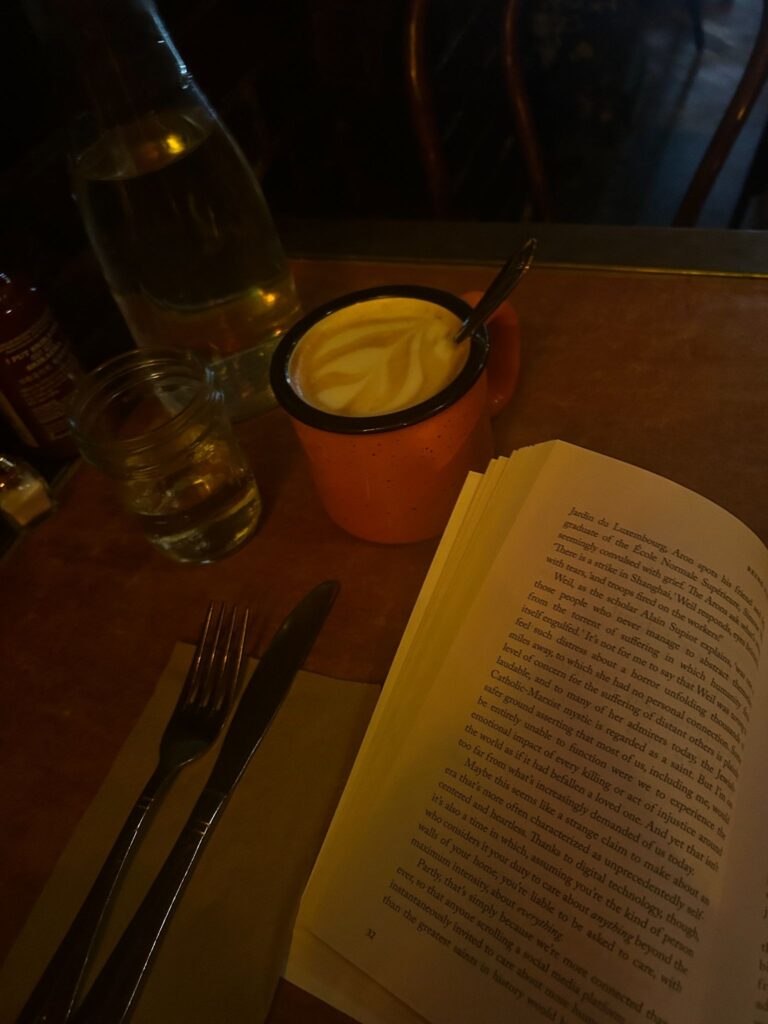
By implementing aspects of the content that strikes me into my habits and approach to living, I am gradually coming to believe that I am as interesting and capable as the creators that I envied seem to be. Not only this, but I am also learning to act more attuned to my personal goals, interests, and personality by making the experiences that I’m virtually witnessing my own. This leads me to my next couple tips.
This past January, I was introduced to the idea of “doing less and achieving more” by an episode of The Psychology of Your 20s podcast. After listening, I decided to reflect upon which of my goals are truly mine, which are not suitable for the chapter of life I am currently living in, and which are optimal to prioritize now. Following the host’s advice, I listed fifteen life goals that would allow me to find fulfillment free from external rewards, teach me to enjoy the challenges that expand my skillset, and not only positively impact myself but others as well. Then, I drew a line beneath the first three—an indication that they must be seen through, or at least that my real desire for them be worn out—before I proceed to fulfill any of the goals listed beneath them.
Taking this idea a step further, I took the advice of Oliver Burkeman, author of Meditations for Mortals, and started breaking up my daily to-do lists into “must do,” “should do,” “could do,” and “done” lists. With my “must-dos” never exceeding three tasks, I aim to complete them first, and I make sure to write down every productive task I complete during the day so that even if I wasn’t able to complete all of my “must-dos,” I’m able to visualize the totality of my success that day, including those tasks that weren’t written down at the start. This practice has helped me end my days feeling accomplished without feeling drained because I can say that I made time to work toward my goals or just keep my life in order, even if the steps I took were small or unplanned.
Now, your journey to feeling more confident may not begin with reassessing how you plug in to the wide, digital world. But really my first step to overcoming imposter syndrome was to define what fulfillment meant for me. It will take time for self-assurance to transform from self-doubt, and there will still be moments when your confidence falters. But you shouldn’t try to force that transformation by over-working yourself. Aligning your approach to life with your goals, interests, and daily ability will kindly reward you by slowly exchanging your pursuit of being extraordinary for the belief that you already are.

By Lauren Gascon
Lauren Gascon studies Media, Culture, and Communication at NYU and enjoys discussing people’s relationships with each other and themselves. When she’s not on campus, you can find her café hopping, browsing bookstores, or enjoying lunch in one of New York City’s many beautiful parks.
For over 25 years, the Campus Clipper has helped college students in New York City—and later in Boston and Philadelphia—save money and succeed in city life. We offer a digital coupon booklet with discounts on food, clothing, and services, plus an Official Student Guidebook with real advice on how to navigate college life in a big city. Our internship program lets students build skills, earn money, and publish their own e-books. Follow us on Instagram and TikTok @CampusClipper, and sign up for our newsletter to get deals straight to your inbox. To access the digital coupons, scan the QR code on our printed card—available in dorms, student centers, and around campus.

Tags: exploration, goals, imposter syndrome, journaling, self help books, self-confidence, self-improvement, Social Media