
Before a road trip could really begin, there was always breakfast.
On early mornings, my family would sometimes stop for stir-fried potatoes, warm paratha, and sweet halwa before leaving Brooklyn. Half-awake in the backseat, I would tear pieces of paratha with my hands, moving between sweet and savory bites while watching the city slowly disappear through the window as the familiar streets gave way to highways. Years later, I still think about those breakfasts and find myself craving that oily feeling on my fingertips.
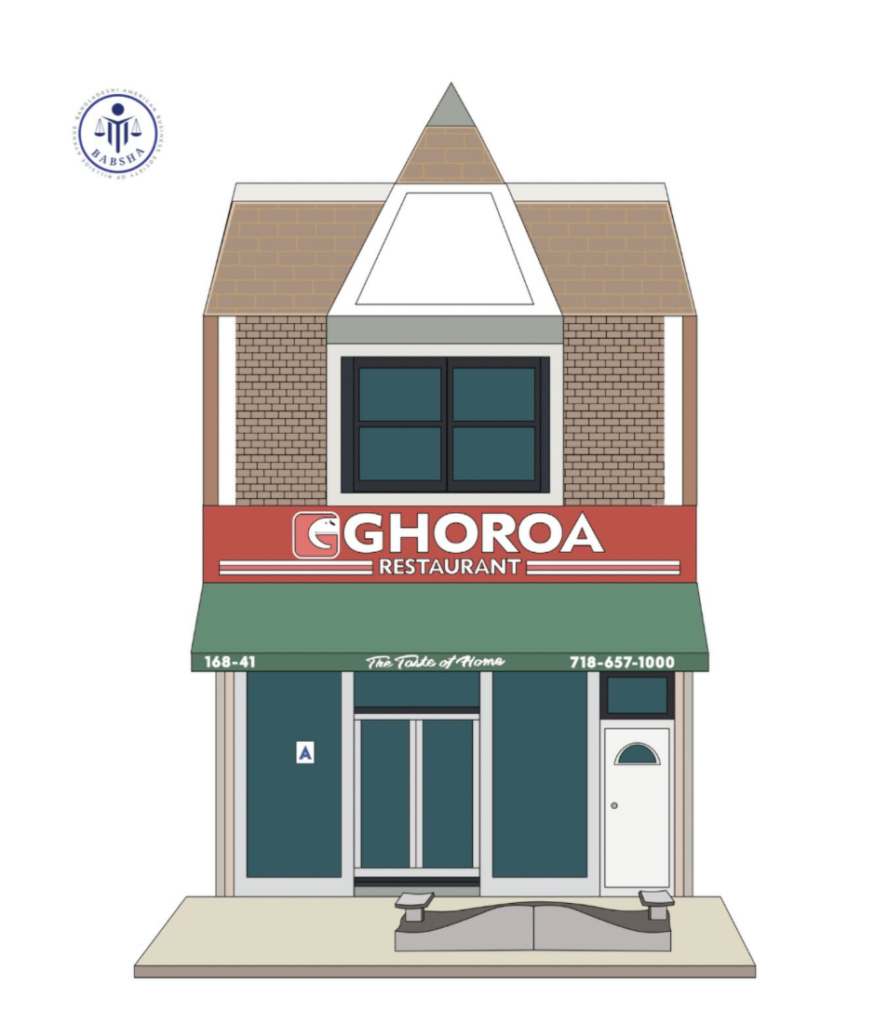
That is part of what makes Ghoroa so meaningful to me, with locations in both Jackson Heights and Kensington, two New York neighborhoods with deep Bangladeshi roots. For me, the Kensington location carries an especially personal connection. I grew up in the neighborhood, so walking into Ghoroa feels a little like walking into a memory.
Established in 2004, Ghoroa has become a neighborhood staple. People come in after long days, families gather around tables, and plates arrive with the unmistakable confidence of food meant to be shared. It is also remarkably affordable by New York standards: nothing on the menu exceeds $35, with most dishes being in the $10-20 range, and the portions are extremely generous.
I would start with the beef tehari, a close cousin to the biryani but with a more fragrant aroma and more subdued spice. The classic roast and pulao is a must have — it pairs tender chicken with a rich, yogurt-based curry and rice. And, if you make it there on a weekend, look for the kacchi biryani, the traditional Bangladeshi style biryani born in the capital, Dhaka.
But Ghoroa’s real charm is not just what comes out of the kitchen, but who is behind it. Moms and Aunties. Women who seem to possess the ability to cook for fifty people without breaking a sweat. They are making the food that reminds people of home, even when home is thousands of miles away.
For New York’s immigrant communities, food can make thousands of miles feel like a manageable distance. A plate of rice and curry can carry memories of a city left behind. Restaurants become gathering places, and for someone who has never been to Bangladesh, sitting down to a plate of tehari can be a small way of stepping into that world.
And that is the magic of food; you do not need to share someone’s history to share their table.
And if you find yourself in Jackson Heights, you might as well commit to the adventure. Make a whole food crawl out of it. Start with Bangladeshi tehari at Ghoroa, wander around for some Nepali momos, and wash it all down with an Indian mango lassi. Or, if you are at the Kensington location, grab your food to go and take the roughly 15-minute walk to Prospect Park, find a patch of grass, and turn lunch into a scenic afternoon.
You can start with a dish that is completely unfamiliar, wander through a neighborhood shaped by generations of immigrants, and end up sitting in a park eating food from a culture you may know very little about. New York makes that possible. Food gives you an easy way in. You can start with curiosity, stay for the conversation, and leave with a new favorite dish or just a better understanding of the people that make up the city around you.
So bring a friend. Bring your family. Come hungry. Ask what you should order. Try something you have never had before!

By Sameena Saudah
Sameena Saudah is a student at NYU studying Nutrition and Dietetics. Outside of calculating macronutrients, you can find her enjoying a good book or trying to fulfill her lifetime goal of trying a new restaurant every week.
For over 25 years, the Campus Clipper has helped college students in New York City—and later in Boston and Philadelphia—save money and succeed in city life. We offer a digital coupon booklet with discounts on food, clothing, and services, plus an Official Student Guidebook with real advice on how to navigate college life in a big city. Our internship program lets students build skills, earn money, and publish their own e-books. Follow us on Instagramand TikTok @CampusClipper, and sign up for our newsletter to get deals straight to your inbox. To access the digital coupons, scan the QR code on our printed card—available in dorms, student centers, and around campus.

Tags: Adventure, community, food, New York City, Restaurant