
One holiday that always stood out to me was Rosh Hashanah, the Jewish New Year. It was a time of reflection, fresh beginnings, and spending time with family in South Florida. We would gather around the dinner table and enjoy symbolic foods that represented our hopes for the year ahead. Apples dipped in honey symbolized the wish for a sweet new year, while other traditional foods reminded us of the importance of gratitude and self-improvement. Although I didn’t fully understand the significance of these traditions when I was younger, I appreciated the opportunity to be surrounded by family and celebrate together. As I have grown older, I have come to realize that these traditions were not only about religion but also about creating memories that continue to stay with me years later.
Hanukkah brought a different atmosphere into our home. Each evening we lit another candle on the menorah until all eight candles burned together on the final night. The warm glow of the candles became a familiar sight throughout my childhood. Family members gathered together, shared meals, and celebrated traditions that had been passed down for generations. Like many children, I looked forward to the excitement surrounding the holiday, but looking back, I recognize that the greatest part of Hanukkah wasn’t the gifts or celebrations—it was the time spent together. Those evenings reminded me that traditions often become meaningful because of the people we share them with rather than the customs themselves.

Food was always at the center of these celebrations. Every holiday had its own dishes, each carrying a story that connected us to generations before us. As a child, I simply enjoyed eating the meals that appeared on our table. I rarely stopped to think about why certain foods were served or what they represented. It wasn’t until I became older that I realized recipes often survive much longer than memories. A single dish can preserve a family’s history, connect children with grandparents, and keep traditions alive even after people move across the world.
Growing up in a kosher household also taught me to pay attention to food in ways many of my friends never had to. Going out to eat wasn’t always as simple as choosing the closest restaurant. My family often researched restaurants in advance or planned meals around places that followed kosher dietary laws. Grocery shopping meant looking for kosher certification on products, something that became second nature to me. At school or birthday parties, I occasionally noticed that my meals looked different from those of my classmates, but because this lifestyle was all I had ever known, I rarely questioned it.
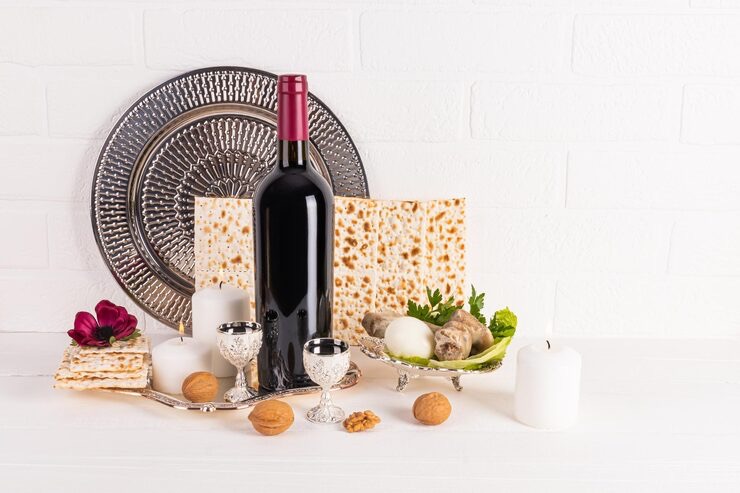
As I became older, I began to understand that every culture has its own traditions surrounding food. Some families avoid certain ingredients because of religion, others prepare meals based on centuries-old customs, and many recipes have been passed down through generations. What once felt unique to my own upbringing slowly became something I noticed everywhere I traveled. Although the specific foods changed from country to country, the reasons behind them often remained surprisingly similar: celebrating important moments, bringing families together, and preserving cultural identity.
Being raised by a mother who immigrated from the Middle East also shaped my understanding of culture in ways I did not fully appreciate until adulthood. Our home reflected influences from two different parts of the world. While I grew up in South Florida surrounded by American culture, my family’s traditions reminded me that our history stretched far beyond the United States. Through family stories, recipes, and celebrations, I learned that immigration is not simply about moving from one country to another. People bring their customs, values, languages, and traditions with them, creating a bridge between the past and the future.
As I started traveling, I found myself becoming more curious about the stories behind the meals I encountered. Instead of simply asking whether food tasted good, I wanted to understand where it came from. I found myself wondering why certain ingredients were common, how recipes had evolved over time, and what role those dishes played within local communities. Visiting another country became more than checking famous landmarks off a list—it became an opportunity to better understand the people who lived there.
One of the biggest lessons travel has taught me is that food serves as a universal language. Even when people speak different languages or come from different backgrounds, sharing a meal creates an opportunity to connect. Sitting around a table encourages conversation, storytelling, and hospitality in ways that few other experiences can. Some of my favorite travel memories are not necessarily tied to famous attractions but to the restaurants, cafés, markets, and family-owned businesses where I experienced a country’s culture through its cuisine.
Travel has also encouraged me to become more open-minded. Growing up, I naturally viewed the world through the lens of my own experiences. Visiting new places challenged those assumptions and introduced me to traditions that were completely different from my own. I learned that no single culture has all the answers. Instead, every community has developed customs that reflect its history, geography, beliefs, and values. Experiencing these differences firsthand has helped me become more understanding and appreciative of perspectives beyond my own.
Looking back, I now realize that my childhood prepared me for this curiosity long before I ever boarded an airplane. Growing up surrounded by religious traditions, cultural celebrations, and family recipes taught me that food has always been about much more than satisfying hunger. Every meal carries a story, every tradition reflects a community’s history, and every shared table offers an opportunity to learn something new.
Today, whenever I travel, I try to approach each destination with curiosity rather than expectation. I enjoy trying local specialties, learning the stories behind regional dishes, and observing how food brings people together. These experiences have deepened my appreciation not only for the countries I visit but also for the traditions that shaped my own upbringing. Although my perspective has evolved over time, I remain grateful for the values my family instilled in me. They taught me that understanding another culture often begins with something as simple as sitting down, sharing a meal, and listening to the stories that accompany it.

Are you looking forward to eating something nutritious? Well look no further, Try The Halal Guys when showing your student ID for 10% off.
By Aaron Newman
Aaron Newman is an Education Studies major minoring in Digital Studies. Originally from Fort Lauderdale, he writes about relationships, entertainment and fashion. He also writes about the hardship and being optimistic about his struggles and looking forward to the present and future.
For over 25 years, the Campus Clipper has helped college students in New York City—and later in Boston and Philadelphia—save money and succeed in city life. We offer a digital coupon booklet with discounts on food, clothing, and services, plus an Official Student Guidebook with real advice on how to navigate college life in a big city. Our internship program lets students build skills, earn money, and publish their own e-books. Follow us on Instagram and TikTok @CampusClipper, and sign up for our newsletter to get deals straight to your inbox. To access the digital coupons, scan the QR code on our printed card—available in dorms, student centers, and around campus.
